




Explore Any Narratives
Discover and contribute to detailed historical accounts and cultural stories. Share your knowledge and engage with enthusiasts worldwide.
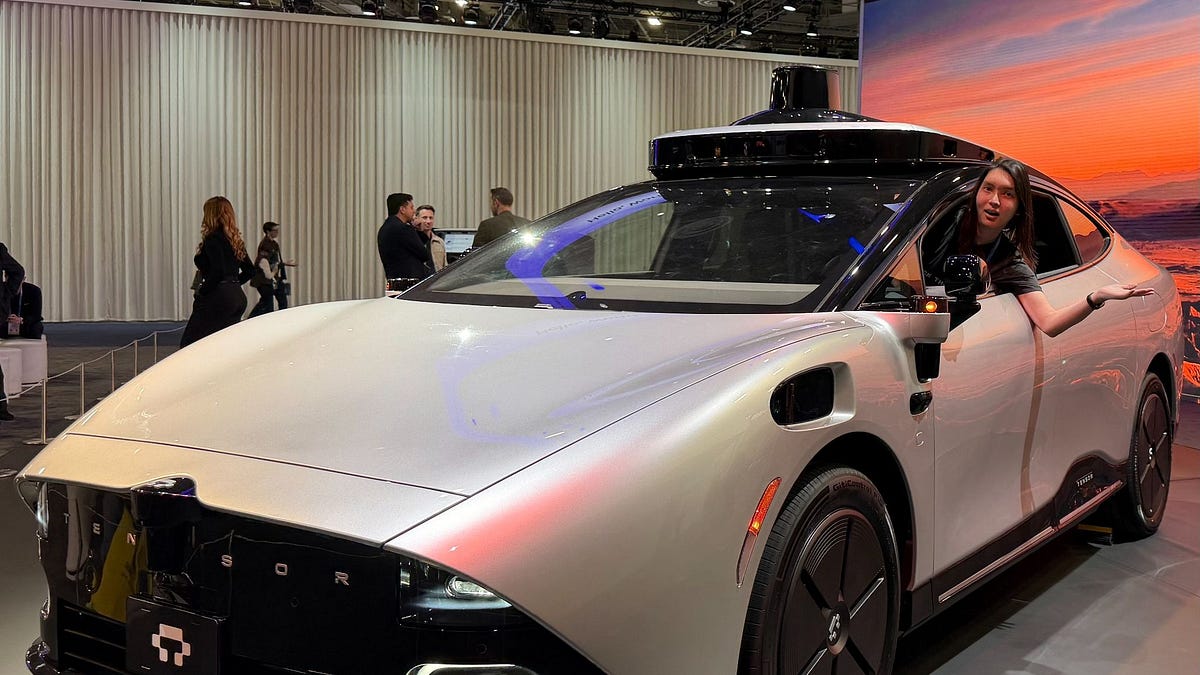
The steering wheel folds away. The pedals retract into the floor. Inside the cabin, a soft chime sounds. For the occupant, the transition is silent and seamless. For the industry, it is a declaration of war on the very concept of driving. On January 7, 2026, inside a Las Vegas convention hall humming with the predictable chaos of CES, a company few had heard of unveiled a machine many thought was a decade away. The Tensor Robocar wasn't a concept. It was a production-bound SUV, a Level 4 autonomous vehicle you could, in theory, buy. Late 2026 was the promise. The target date was given as: May 6, ?
The founder, whose history is interwoven with the vehicle's genesis, watched from the periphery. This was not a typical Silicon Valley grandstanding. The presentation was technical, dense, almost academic. It focused on tera-operations-per-second, redundant drive-by-wire systems, and a transformer-based neural network that processed the world not as a series of objects, but as a contextual narrative. The car was described not as a car, but as a "mobile data center." The ambition was not to sell you a ride, but to sell you back your time. The person behind this quiet revolution had been operating in stealth for nearly a decade, first under a different name, now reborn as Tensor. This is the story of that pivot, and the machine that makes your personal self-driving car a calendar event, not a pipe dream.
Tensor did not emerge from a vacuum. It is the phoenix rising from the ashes of AutoX, a robotaxi startup that secured one of California's earliest permits to test driverless passenger vehicles back in 2021. For years, AutoX operated a fleet of retrofitted vehicles, collecting data and navigating the complex, loss-heavy economics of autonomous ride-hailing. The founder, whose background is in artificial intelligence and robotics from prestigious institutions, saw the limitations early. Fleet-only models were a capital-intensive marathon with no clear finish line, hostage to regulatory whims and public perception. The quiet period that began in late 2024 wasn't a retreat; it was a recalibration. The company rebranded to Tensor, a name evoking the core mathematical structure of its AI, and pivoted with a startling clarity.
"Private ownership is very important for society if you want to scale autonomy," a Tensor executive stated during the CES reveal. "The fleet model alone cannot achieve the density needed for the AI to learn efficiently across all possible scenarios. A personally owned vehicle lives in a neighborhood, goes to unique places, and creates a continuous, diverse data stream."
This was the foundational insight. A fleet car might drive a million miles, but it would likely be the same million miles, on designated routes. A personally owned Robocar, used for school runs, weekend getaways, and grocery trips, would encounter the beautiful, chaotic randomness of human life. It would see the child's ball rolling into a suburban street in Phoenix, the sudden deer at twilight in Vermont, the confusing construction zone in a small Midwest town. This data, processed by an onboard supercomputer, would make the AI smarter not just for that owner, but for the entire network. The Robocar was designed from the ground up for this duality: a private sanctuary for its owner, and a collective sensor for the advancement of autonomous intelligence.
The physical form of the Tensor Robocar is an SUV. This was a deliberate, almost contrarian, choice. The prevailing trend in electric and autonomous vehicles has been sleek, low-slung sedans for aerodynamic efficiency. Tensor prioritized space and utility. The SUV platform provided the real estate needed for the 10 GPU clusters, the 144 CPU cores, and the sprawling sensor suite without compromising interior room. They still chased efficiency, achieving a drag coefficient of 0.253, but the shape communicated a purpose: this was a vehicle for life, not just for show.
Its most arresting visual features are subtle. Suicide doors that open with palm authentication, eliminating the need for keys. Outward-facing status displays on the front fenders that communicate intent to pedestrians—a "walk" symbol, a pulsing "wait" indicator. And then, the piece de resistance developed with Autoliv: the retractable steering wheel and pedals. In autonomous mode, they disappear entirely, transforming the cabin into a lounge. Should the driver wish to take over, they return in seconds. This mechanical ballet makes a philosophical statement: autonomy is the primary mode, manual driving is the optional override. The machine is not assisting you; you are, on occasion, assisting it.
"We are not building a car that can sometimes drive itself. We are building a driverless car that can sometimes be driven," an engineer explained in a technical deep-dive. "The entire architecture—the braking, the steering, the compute—is engineered for that reality. The redundancy is for the autonomous system, not the human."
The sensor suite is comprehensive, but Tensor's language around it is different. They don't just list lidar, camera, and radar counts. They talk about data fusion for "contextual AI." A camera might see a blur. The radar might detect a mass. The AI, powered by its Transformer neural networks (the same architecture behind large language models like ChatGPT), is tasked with writing the story: "That is a cyclist, leaning into a turn, with a backpack that may obstruct a shoulder check, on a wet road at 4:43 PM." It processes this narrative from over 53 gigabits of data every second—a rate a thousand times faster than a typical home internet connection—and makes predictions not just about trajectories, but about intentions.
This capability is split into what Tensor calls a dual-system AI. System 1 is the instinctive, reactive brain—swerving to avoid a collision with a squirrel. System 2 is the deep, reasoning brain—the Visual Language Model that understands that a raised hand from a construction worker means "stop," even if it's not at a formal intersection, and that a gathering of people and balloons near a curb might indicate a birthday party, suggesting heightened caution. All of this happens onboard. There is no cloud dependency for critical decision-making, a crucial failsafe for dead zones and cyber threats.
The unveiling at CES 2026 was meticulously timed. It coincided with a noticeable resurgence in autonomous vehicle activity. Motional had just restarted its driverless pilots in Las Vegas and Pittsburgh after a painful 2024 pause. The regulatory frost of the early 2020s was beginning to thaw. Tensor’s announcement was a cannonball into this reopening pool, asserting that the future was not just about fleets, but about a hybrid model where personal ownership and fleet operations would coexist. A partnership with Lyft was already in place, outlining a vision where a Robocar owner could send their vehicle out to earn revenue as a robotaxi during the day while they worked, summoning it back for the evening commute. The economics, long the Achilles' heel of autonomy, were being fundamentally rethought.
As the first hands-on reports from CES journalists filtered out, a common theme emerged. The vehicle felt substantial, serious, and technologically saturated in a way that concept cars never did. The founder, often photographed with a calm, assessing gaze rather than a triumphant smile, had delivered a machine that was less a product launch and more a thesis statement. The thesis was simple: The age of the AI-defined vehicle had begun, and it would be owned by people, not just corporations. The countdown to late 2026 was on. The question shifted from "if" to "what happens when the wheel finally folds away for good?"
The core of Tensor's audacious plan lies not just in its hardware, but in a profound rethinking of the human-machine interface. The Robocar is not merely an autonomous vehicle; it is an "AI agentic vehicle," a term Tensor coined to emphasize its role as a personal, intelligent assistant rather than just a mode of transport. This philosophy is embedded in every facet of its design, from the groundbreaking retracting steering wheel to the sophisticated sensor array that attempts to perceive the world with human-like nuance. The implications for personal liberty and the future of transportation are vast, yet they are cloaked in the pragmatic language of engineering.
The most visually striking innovation, beyond the sleek SUV form, is the retractable steering wheel, developed in conjunction with Autoliv. This is not a mere parlor trick. When the vehicle is in its fully autonomous Level 4 mode, the wheel and pedals fold away, disappearing cleanly into the dashboard and floor. This singular design choice, revealed at CES 2026, instantly transforms the driving compartment into an open, versatile cabin. The message is clear: the human driver is no longer central to the vehicle's operation.
"This steering wheel folds and retracts when you go autonomous," reported CarScoops in January 2026, highlighting the engineering marvel. "It frees up dashboard space... and raises interesting questions about safety due to no fixed steering wheel/airbags."
Tensor addressed these safety concerns head-on. The Robocar incorporates two separate driver airbags. One deploys from the dashboard when the wheel is retracted, protecting the occupant in a lounge-like configuration. The second deploys from the steering wheel itself when it is extended for manual driving. This meticulous approach to safety, while innovative, underscores the deep engineering challenges inherent in such a dual-mode system. It is a tacit admission that while the AI is designed to be primary, the human must still be accommodated with uncompromised safety standards. But does this compromise the purity of the autonomous vision, or is it a necessary bridge to public acceptance?
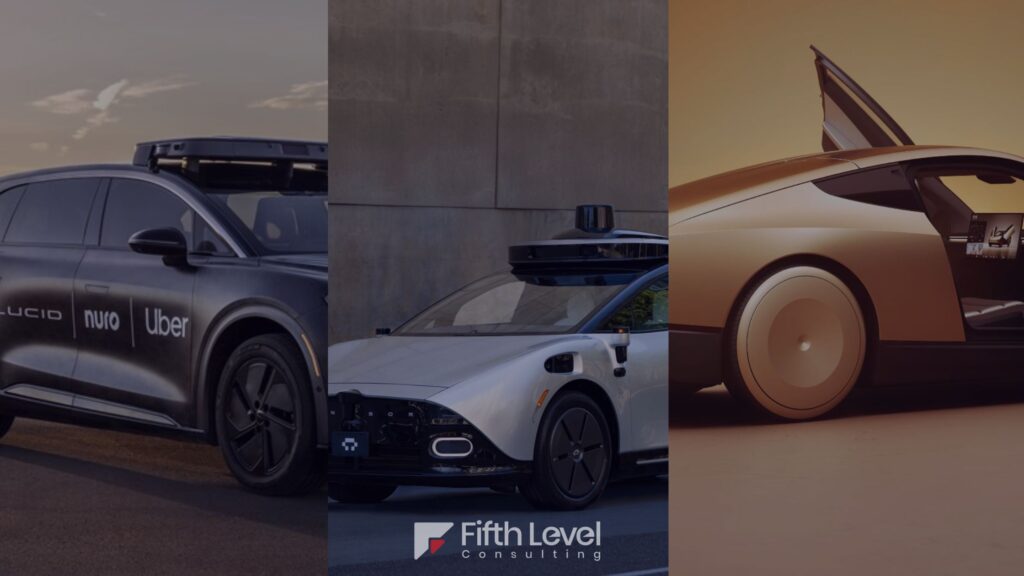
The Robocar’s physical presence is a testament to its computational might. Built by VinFast in Vietnam, the vehicle houses an astonishing array of sensors: 37 cameras, 5 lidars, 11 radars, 22 microphones, 10 ultrasonic sensors, 3 IMUs, GNSS, 16 collision detectors, 8 water-level detectors, 4 tire-pressure sensors, and even 1 smoke detector. This is not merely a collection of sensors; it is a distributed nervous system designed to capture an unprecedented amount of environmental data, feeding the "mobile data center" that is the Robocar. This holistic integration, where hardware and software are co-designed, is what sets Tensor apart from many retrofit solutions.
Traditional autonomous systems often rely on object detection: identifying cars, pedestrians, traffic cones. Tensor's approach, however, pushes into "agentic AI," a deeper form of intelligence that attempts to understand intent and context. This is where the Transformer-based neural networks, akin to those powering large language models, come into play. The Robocar's AI isn't just seeing a red light; it's understanding the flow of traffic, the subtle cues of pedestrians, and the potential actions of other drivers, even those exhibiting erratic behavior.
"The world’s first personal robocar—an AI-powered vehicle built for individual ownership, featuring autonomous and manual driving modes and a fully integrated hardware-software stack," stated Amy Luca, of Tensor Auto, in a January 7, 2026, video interview at CES, available on ces.tech. Her words underscored the comprehensive nature of the design.
This "Physical AI" paradigm is further reinforced by Tensor's release of OpenTau (τ), an open-source AI training platform, on January 8, 2026. Available on GitHub, OpenTau is designed for Vision-Language-Action (VLA) models, a significant step towards democratizing the very technology that powers the Robocar. This move, while seemingly altruistic, is also strategically brilliant. By inviting the broader AI community to contribute to VLA models, Tensor accelerates the pace of innovation, effectively crowdsourcing the intelligence needed to tackle the myriad challenges of real-world autonomy. It’s a bold play that contrasts sharply with the proprietary, closed-garden approaches of many competitors.
Tensor's tagline, "Own Your Autonomy," is more than marketing; it's a philosophical stance. Headquartered in San Jose, CA, with offices in Barcelona, Singapore, and Dubai, Tensor Auto Inc., founded in 2016, positions itself as a pioneer in "agentic products" for personal AI autonomy. The Robocar is their flagship "AI agentic vehicle," designed to put advanced autonomy directly into the hands of individuals, not just corporate fleets. This vision directly challenges the prevailing narrative that autonomous vehicles would primarily be a service, accessed on demand. Instead, Tensor suggests a future where your personal AI assistant drives your car, understands your preferences, and potentially even earns you money.
"The world's first personal Robocar and the first AI agentic vehicle—fully autonomous, automotive-grade, and built for private ownership at scale," declared Tensor's PRNewswire release on January 8, 2026. This bold statement encapsulated their ambition to redefine personal transportation.
The 112 kWh battery pack provides ample range, while features like rear coach doors and SignalScreens—which allow the vehicle to communicate with other road users via "CarMoji"—hint at a user experience designed for both luxury and intuitive interaction. The SignalScreens, for instance, could display a "thank you" message or a "waiting" icon, bridging the communication gap that often exists between autonomous vehicles and human pedestrians or drivers. It’s an attempt to humanize the machine, making its intentions legible in a world still wired for human-to-human interaction.
Yet, for all its technological prowess and ambitious vision, questions linger. The production timeline of "later 2026" for a vehicle unveiled in January of the same year, especially one built by VinFast—a relatively new entrant to the global automotive stage—raises eyebrows. The leap from prototype to mass production, particularly for a vehicle with such complex integrated systems, is fraught with peril. Will Tensor be able to meet this aggressive schedule without significant compromises, or will the "later 2026" become "early 2028," a common refrain in the AV industry?
"Production timeline (late 2026) unverified beyond company claims—explicitly uncertain without independent confirmation," noted CarScoops in its January 2026 analysis, offering a dose of journalistic skepticism amidst the CES fanfare.
The journey from an audacious reveal to widespread adoption is long and arduous. Tensor has laid out a compelling technical roadmap and a visionary philosophy. But the road ahead is paved not just with code and silicon, but with regulatory hurdles, public trust, and the brutal realities of automotive manufacturing. The Robocar is a declaration of independence for personal autonomy, but its true impact will be measured not by its sensor count, but by its ability to navigate the complex, unpredictable currents of the real world, both technically and commercially.
The significance of the Tensor Robocar extends far beyond the specifications of a single vehicle. It represents a fundamental renegotiation of the contract between human and machine, between driver and road. For over a century, the automobile has been a symbol of personal freedom defined by direct, physical control. Tensor’s proposition—that true freedom lies in the liberation from that control—is a cultural pivot as much as a technological one. The industry has been chasing autonomy for decades, but always with the corporate fleet as the assumed endgame. Tensor’s audacious bet on personal ownership as the primary vector for scaling autonomy flips the entire economic and social model. It suggests a future where the car is not a service you rent, but an AI agent you own, one that learns your life and, in a stunning reversal of 20th-century logic, gives you back the time you once spent managing it.
"Private ownership is very important for society if you want to scale autonomy," the Tensor executive's statement from CES 2026 echoes, framing the Robocar not as a luxury toy but as a necessary component for a collective intelligence. The fleet model, they argue, creates data monocultures; personal ownership creates rich, diverse data ecosystems.
This shift has profound implications for urban design, real estate, and daily life. If the vehicle can truly drive itself, the geography of work and home expands. The interior of the car transforms from a cockpit into a mobile office, lounge, or theater. The partnership with Lyft to allow personal owners to deploy their vehicles as robotaxis hints at a fluid asset economy, where your car earns its keep while you sit at a desk or sleep. The Robocar, therefore, is not just a product launch. It is the opening argument in a debate about the nature of assets, time, and autonomy in an AI-saturated world. Its legacy, whether it succeeds or fails commercially, will be the forceful introduction of the "personal AI agentic vehicle" as a viable category, forcing every major automaker and tech giant to respond.
For all its visionary engineering, the path to the Robocar’s promised late 2026 delivery is littered with formidable obstacles. The first is the sheer, unproven complexity of its manufacturing. Building a vehicle with this level of integrated, redundant systems—from the drive-by-wire architecture to the dual-airbag mechanism—at automotive grade and at scale is a Herculean task. Partnering with VinFast provides manufacturing capacity but introduces its own layer of risk, as the Vietnamese automaker is itself navigating its own steep growth curve on the global stage. The history of automotive is written with the wreckage of beautiful prototypes that could not survive the transition to the assembly line.
The second, more nebulous challenge is regulatory acceptance. A Level 4 vehicle with a retractable steering wheel presents a unique puzzle for safety agencies like the NHTSA in the United States or the European Union’s safety regulators. Certification protocols are built around fixed control layouts. How do you crash-test a cabin with two fundamentally different configurations? While Tensor has engineered solutions, regulatory bodies move with deliberate caution. A delay in certification could push that "late 2026" target into the indefinite future.
Finally, there is the question of the AI’s real-world competence. The sensor suite is comprehensive, and the compute power is staggering. But driving is a social activity, a dance of implicit communication and negotiated space. Can a transformer model, trained on millions of miles of data, truly understand the subtle aggression of a New York City taxi driver, the hesitant uncertainty of a tourist in Rome, or the complex, unwritten rules of a four-way stop in a suburban neighborhood? The open-sourcing of OpenTau is a clever strategy to accelerate learning, but it also outsources part of the fundamental research problem. The ultimate test occurs not on a test track or in a simulation, but in the chaotic, messy, and infinitely variable real world.
The automotive press has already noted the inherent tension. The innovation of the disappearing wheel is also its greatest point of scrutiny. It is a brilliant symbol of the autonomous future, yet it complicates the most basic tenets of vehicle safety engineering in the present. Tensor’s success hinges on convincing the world that its triple-redundant software and hardware are not just as safe as a human driver, but are so demonstrably safer that the old paradigms of control can be physically removed.
Looking forward, the calendar for Tensor is publicly sparse but internally frantic. The months following CES 2026 will be consumed by the brutal logistics of supply chain finalization, production line tooling, and the first rigorous rounds of closed-course and public road testing with near-final prototypes. Industry watchers will scrutinize any sightings of camouflaged Robocars on highways around San Jose or VinFast’s facilities. The next major public milestone will likely be a production reveal event, potentially in the third quarter of 2026, where final pricing, trim levels, and confirmed delivery timelines for the first customers will be announced.
By the fourth quarter of 2026, Tensor promises the first vehicles will reach customer hands. These initial owners will be more than early adopters; they will be beta-testers for a new form of relationship with technology. Their experiences—the moments of seamless wonder and the inevitable, jarring failures—will write the first chapter of the personal autonomy story. The soft chime that signals the steering wheel’s retreat is not just a sound. It is the starting gun for a race to redefine what it means to be in control, to own a machine, and to move through the world. The wheel is folding away. The question is whether society is ready to let go.
Your personal space to curate, organize, and share knowledge with the world.
Discover and contribute to detailed historical accounts and cultural stories. Share your knowledge and engage with enthusiasts worldwide.
Connect with others who share your interests. Create and participate in themed boards about any topic you have in mind.
Contribute your knowledge and insights. Create engaging content and participate in meaningful discussions across multiple languages.
Already have an account? Sign in here

Tesla's Optimus Gen 3 humanoid robot now runs at 5.2 mph, autonomously navigates uneven terrain, and performs 3,000 task...
View Board
AI steps out of screens into factories, powering agents that move cups, pick parts and reshape jobs amid surging robot i...
View Board
The Architects of 2026: The Human Faces Behind Five Tech Revolutions On the morning of February 3, 2026, in a sprawling...
View Board
CES 2026 unveiled stair-climbing vacuums, mmWave presence sensors, and local AI robots that act, sense, and reshape smar...
View Board
L'ascesa dell'agentic AI rivoluziona l'economia globale, con un mercato proiettato a 45 miliardi di dollari entro il 203...
View Board
Microsoft's Copilot+ PC debuts a new computing era with dedicated NPUs delivering 40+ TOPS, enabling instant, private AI...
View Board
Bis 2026 werden 80% der Unternehmen Physical AI nutzen – autonome Systeme, die nicht nur denken, sondern in Lagerhallen,...
View Board
KI findet 25 neue Magnete für die nächste Generation der Elektromobilität Der Motor eines Elektroautos surrt fast unhör...
View Board
Julian Baumgartner: The Alchemist of Art's Past, Shaping Its Present The hushed reverence of the museum gallery is shat...
View Board
Google LiteRT redefine IA em dispositivos pequenos, com execução local, baixa latência e eficiência energética em smartp...
View Board
CES 2025 spotlighted AI's physical leap—robots, not jackets—revealing a stark divide between raw compute power and weara...
View Board
AI revolutionizes medical physics, crafting precise radiation plans in minutes, transforming diagnostics, and reshaping ...
View Board
After a stroke, 58‑year‑old Altia Bryden woke speaking fluent Italian, revealing rare Foreign Accent Syndrome and its pr...
View Board
The open AI accelerator exchange in 2025 breaks NVIDIA's CUDA dominance, enabling seamless model deployment across diver...
View Board
AI transforms healthcare in 2026, detecting hidden tumors, predicting diseases before symptoms, and personalizing treatm...
View Board
Hyundai's Atlas robot debuts at CES 2026, marking a shift from lab experiments to mass production, with 30,000 units ann...
View Board
Agenti AI: L'Ascesa dei Sistemi Autonomi e Integrati Il sistema di controllo del magazzino ha inviato un avviso alle 3:4...
View Board
L'IA crée en quelques minutes des milliers de molécules ciblées, diminue de dix le délai pré‑clinique et valide rapideme...
View Board
Depthfirst's $40M Series A fuels AI-native defense against autonomous AI threats, reshaping enterprise security with con...
View Board
Samsung unveils a comprehensive AI home ecosystem, prioritizing open interoperability and seamless integration across ap...
View Board
Comments