The Art of Transformation: Magic Realism in Modern Literature


In the ever-evolving tapestry of modern literature, one genre stands out for its unique ability to blend the mundane with the extraordinary: magic realism. This literary mode, often mistaken for pure fantasy, differs in its anchoring to the real world while introducing elements that defy logical explanation. This fascinating interplay between the real and the surreal has captured the imaginations of readers and writers alike, offering a canvas where the complexities of human experience are painted with a brush dipped in the otherworldly.

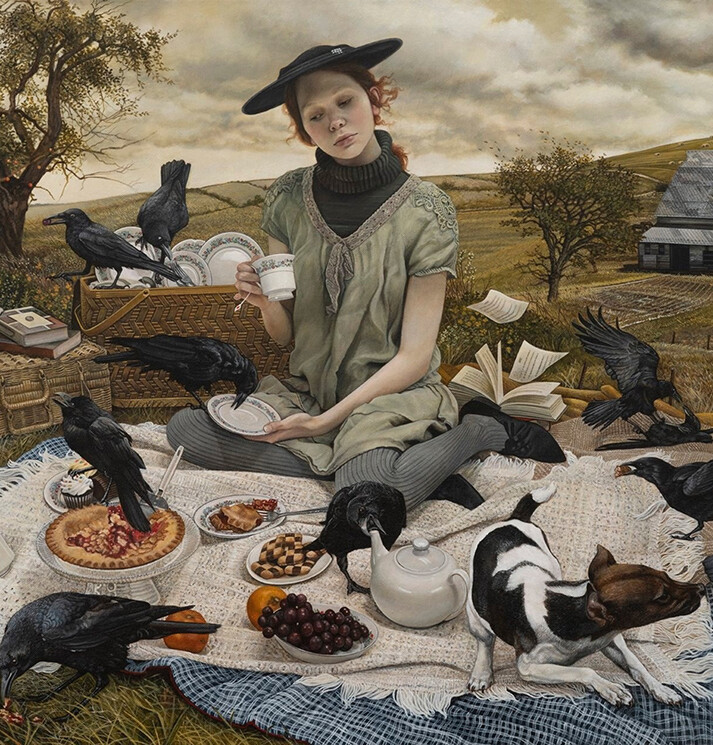
The roots of magic realism are deeply embedded in the cultural soil of Latin America, with its syncretism of indigenous myths and colonial histories. The term "magic realism" was initially coined in the 1920s by German art critic Franz Roh to describe a new style of painting that depicted the mundane in a fantastical light. However, it was the Latin American authors of the mid-20th century who propelled the concept into the literary arena. Gabriel García Márquez's "One Hundred Years of Solitude" and Isabel Allende's "The House of the Spirits" are seminal works that have become synonymous with the genre, weaving together the threads of reality and magic to create tapestries of compelling narratives.

At its core, magic realism serves as a tool for writers to explore and critique the complexities of their societies. Through the insertion of magical elements into otherwise realistic settings, authors can expose the undercurrents of political, social, and cultural tensions in a way that is both engaging and thought-provoking. For example, in "One Hundred Years of Solitude," the rise and fall of the Buendía family in the fictional town of Macondo mirrors the turbulent history of Latin America, with its cycles of colonialism, revolution, and rebirth. The supernatural becomes a powerful metaphor for the inescapable forces of history and human nature.

Not limited to the Latin American context, magic realism has transcended geographical and cultural boundaries, with writers across the globe adopting and adapting the style to tell their stories. Contemporary authors like Haruki Murakami and Salman Rushdie have incorporated elements of the genre into their works, using it to bridge the gap between the seen and unseen, the said and unsaid. For instance, Murakami's "Kafka on the Shore" blends a coming-of-age tale with inexplicable phenomena, including talking cats and rain showers of fish, to create a multilayered narrative that defies traditional categorization.

Despite its whimsical flair, magic realism is grounded in the authenticity of emotional experience. It often employs the fantastic to illuminate the truths of human existence, delving into themes of love, loss, identity, and the search for meaning. These stories resonate with readers not because they offer an escape from reality, but rather because they provide a mirror that reflects our collective dreams, fears, and desires in a way that is at once familiar and astonishing.

As we move forward into an era marked by rapid technological advances and social upheaval, magic realism remains as relevant as ever. Its capacity to address the contradictions of our time, to reconcile the logical with the illogical, makes it an ideal conduit for contemporary storytelling. It challenges us to expand our perceptions of reality, to recognize that sometimes the most profound truths can be revealed through the most improbable narratives.

In a literary landscape saturated with content that often prioritizes the factual over the fantastical, magic realism reminds us that there is magic to be found in the most ordinary of places—if only we are willing to see it. It is a celebration of the human capacity to find wonder in the everyday, to recognize the extraordinary within the ordinary, and to understand that life, in all its complexities, can be as marvelous as it is real.In this exploration of the ways in which magic realism enriches modern literature, it becomes evident that the genre's true magic lies in its versatility and universal appeal. The narrative strategy of interlacing the fantastic with the realistic allows for a multifaceted exploration of various global issues within a framework that is culturally specific yet universally understandable. This global reach has led to a proliferation of works that, while divergent in setting and style, share a common ground in their approach to storytelling.

Take, for instance, the works of Nigerian author Ben Okri, whose novel "The Famished Road" tells the story of Azaro, a spirit-child in an African ghetto. Okri masterfully interweaves Yoruba folklore with the harsh realities of poverty, political corruption, and social upheaval, using the ethereal experiences of his protagonist to underscore the resilience of the human spirit in the face of suffering. Here, as in Latin America, magic realism becomes a vehicle for postcolonial discourse, engaging with the legacies of imperialism and the ongoing struggle for cultural identity and autonomy.

Moving to a different continent, Louise Erdrich's novels portray the lives of Native American characters with a delicate touch of the supernatural. In books like "The Round House" and "Love Medicine," Erdrich uses magic realism to bring the spiritual beliefs and cultural heritage of the Ojibwe people to the forefront, juxtaposing them with the often-painful realities of life on the reservation. This blending of the mystical with the actual allows Erdrich to delve into issues of justice, tradition, and belonging in a way that is both poetic and poignant.

Magic realism also acts as a bridge between generations, knitting together the wisdom of the past with the dynamism of the present. Contemporary writers like Helen Oyeyemi and Yaa Gyasi employ this technique to explore the intergenerational trauma and triumphs within their narratives. Oyeyemi's "Boy, Snow, Bird" reimagines the Snow White fairy tale in the context of race and identity in mid-20th century America, using the lens of magic realism to expose and unravel the complexities of these constructs. Similarly, Gyasi's "Homegoing" employs subtle elements of the supernatural to connect the disparate experiences of two half-sisters and their descendants across continents and centuries, illuminating the enduring impact of the Atlantic slave trade.

Criticism of the magic realist approach often stems from a misunderstanding of its intention. It is not a genre that seeks to obscure or distort reality but rather one that aims to illuminate it through the prism of the extraordinary. In the world of magic realism, the supernatural does not negate the real; it magnifies it, casting a light on the overlooked nooks of human existence and encouraging readers to question their perceptions of reality. It is here, in the dance of the unreal within the real, that readers find a deeper connection to the collective human experience.

The enduring charm of magic realism, then, may lie in its ability to make the invisible visible. The subtleties of culture, the nuances of history, and the depths of emotion—all can be made palpable through the lens of the magical. Whether it's the spontaneous appearance of beautiful butterflies in a time of despair, as seen in Márquez's work, or the haunting, time-defying love in the pages of "The Time Traveler's Wife" by Audrey Niffenegger, magic realism enables these narratives to transcend the boundaries of the expected.

As we continue to navigate the complexities of our modern world, the stories we tell and consume play a critical role in shaping our understanding of it. Magic realism, with its inherent ability to transfigure the ordinary, acts as a reminder that our reality is itself a mosaic composed of myriad experiences, some seen, some unseen, and some that reside in the captivating space between. It is through this literary tradition that we can appreciate the profound artistry in blending the tangible with the intangible, creating a hybrid that captures the essence of what it means to be alive. It is a genre that does not shy away from the truth; it reveals it in a spectrum of color and wonder, begging the question: what is reality but a story we agree to tell each other, and to ourselves?
Video -
Video -
image not described
image not described
image not described

Comments

Welcome

Discover Haporium

Your personal space to curate, organize, and share knowledge with the world.

Explore Any Narratives

Discover and contribute to detailed historical accounts and cultural stories. Share your knowledge and engage with enthusiasts worldwide.
Join Topic Communities

Connect with others who share your interests. Create and participate in themed boards about any topic you have in mind.

Share Your Expertise

Contribute your knowledge and insights. Create engaging content and participate in meaningful discussions across multiple languages.

Get Started Free
10K+ Boards Created
50+ Countries
100% Free Forever

Related Boards

The Greatest Horror Scenes: A Journey Into Fear

The Greatest Horror Scenes: A Journey Into Fear

Explore the most iconic horror film scenes in "The Greatest Horror Scenes: A Journey Into Fear." From the chilling "Here...

View Board
Chateaubriand: The Father of French Romanticism

Chateaubriand: The Father of French Romanticism

Explore the literary prowess of François-René de Chateaubriand, the pioneer of French Romanticism. Discover his impact o...

View Board
Janoskians-The-Mystical-and-Ethereal-Race

Janoskians-The-Mystical-and-Ethereal-Race

Discover the mystical and ethereal Janoskians, a race shrouded in enigma, with unique connections to reality, possessing...

View Board
The-Enduring-Thrill-of-Horror-Exploring-Top-Tropes

The-Enduring-Thrill-of-Horror-Exploring-Top-Tropes

Discover the timeless thrill of horror through iconic tropes like jump scares, creepy children, and haunted houses, and ...

View Board
The Enigmatic History and Culture of Male

The Enigmatic History and Culture of Male

Explore the rich tapestry of Male, the bustling capital of the Maldives, where ancient history meets vibrant modernity. ...

View Board
Exploring-the-Life-and-Journey-of-Christopher-O-Neill

Exploring-the-Life-and-Journey-of-Christopher-O-Neill

Delve into the captivating life of Christopher O'Neill, a man of intrigue who balances his role as a financier with his ...

View Board
The-Evolution-of-Horror-Leading-Directors-Shaping-the-Genre

The-Evolution-of-Horror-Leading-Directors-Shaping-the-Genre

Discover the evolution of horror through the works of leading directors, including Mike Flanagan, Ti West, and James Wan...

View Board
Rajiv-Malhotra-A-Voice-for-Indic-Thought-in-the-Modern-World

Rajiv-Malhotra-A-Voice-for-Indic-Thought-in-the-Modern-World

Explore the impactful career of Rajiv Malhotra, an Indian-American intellectual championing Indic thought worldwide. Dis...

View Board
The-Future-of-Cinema-A-New-Era-of-Storytelling

The-Future-of-Cinema-A-New-Era-of-Storytelling

Explore the dynamic evolution of cinema in the 21st century as technological innovations, streaming services, and indie ...

View Board
The-Art-of-Psychological-Thrillers-A-Journey-into-the-Mind

The-Art-of-Psychological-Thrillers-A-Journey-into-the-Mind

The Art of Psychological Thrillers: A Journey into the Mind Introduction to Psychological Thrillers Psychological thri...

View Board
Realism in Cinema: Exploring the Art of Truthful Storytelling

Realism in Cinema: Exploring the Art of Truthful Storytelling

Explore the profound impact of realism in cinema, a narrative style rooted in authentic storytelling. From its origins w...

View Board
The-Art-of-Character-Development-Breathing-Life-into-Cinema

The-Art-of-Character-Development-Breathing-Life-into-Cinema

Discover the transformative power of character development in cinema, where dynamic personalities breathe life into stor...

View Board
Cinematic-Landscapes-The-Art-of-Visual-Storytelling

Cinematic-Landscapes-The-Art-of-Visual-Storytelling

Explore the transformative power of cinematic landscapes in film with our comprehensive guide to visual storytelling. Di...

View Board
BlazBlue-Central-Fiction-A-Deep-Dive-into-the-World-of-Blazblue

BlazBlue-Central-Fiction-A-Deep-Dive-into-the-World-of-Blazblue

BlazBlue: Central Fiction - A Deep Dive into the World of Blazblue Welcome to the Depths of BlazBlue: Central Fiction B...

View Board
Donkey-Kong-Country-Tropical-Freeze-A-Dive-into-Nostalgia-and-Adventure

Donkey-Kong-Country-Tropical-Freeze-A-Dive-into-Nostalgia-and-Adventure

Donkey Kong Country Tropical Freeze blends nostalgia and innovation with engaging gameplay, rich storyline and vibrant a...

View Board
David-Brown-A-Pioneering-Figure-in-Modern-Literature

David-Brown-A-Pioneering-Figure-in-Modern-Literature

David Brown: A Pioneering Figure in Modern Literature Digital media has transformed the literary landscape in myriad wa...

View Board
The-Greatest-Animation-Films-of-All-Time-Part-1

The-Greatest-Animation-Films-of-All-Time-Part-1

Explore the evolution of animated films in "The Greatest Animation Films of All Time: Part 1." From Disney's pioneering ...

View Board
Exploring-the-Frontier-of-Gameplay-An-In-Depth-Look-at-Death-Stranding

Exploring-the-Frontier-of-Gameplay-An-In-Depth-Look-at-Death-Stranding

Exploring the Frontier of Gameplay: An In-Depth Look at Death Stranding In a world where isolation reigns supreme and d...

View Board
The-Art-of-the-Cinematic-Plot-Twist-Unraveling-the-Unseen

The-Art-of-the-Cinematic-Plot-Twist-Unraveling-the-Unseen

Explore the captivating world of cinematic plot twists that redefine storytelling. From Hitchcock to Nolan, discover how...

View Board
Historical Accuracy in Films: Balancing Truth and Storytelling

Historical Accuracy in Films: Balancing Truth and Storytelling

Explore the debate over historical accuracy in films, balancing truth and storytelling. Discover how filmmakers navigate...

View Board