Explore Any Narratives
Discover and contribute to detailed historical accounts and cultural stories. Share your knowledge and engage with enthusiasts worldwide.
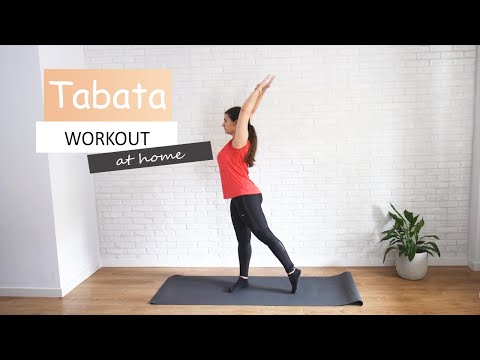


The story is compelling. It sells. Four centuries ago, the legendary samurai of feudal Japan honed their legendary discipline and explosive power through a brutal four-minute workout. They called it Tabata. It’s a narrative that infuses modern high-intensity interval training with the mystique of the warrior code, bushido. It is also a complete fabrication.
This pervasive myth, repeated in gyms, blogs, and social media posts, collapses under the slightest historical scrutiny. The truth is more fascinating, rooted not in shadowy martial arts traditions but in the cold, hard science of 1990s sports physiology. The real story involves a determined researcher, an Olympic speed skating coach, and a study that would redefine efficiency in fitness.
The year was 1996. Dr. Izumi Tabata, then a young scientist at Japan's National Institute of Health and Nutrition, was hired to evaluate a punishing training regimen. The regimen was not being used by sword-wielding warriors. It was being implemented by coach Koichi Irisawa for the Japanese national speed skating team. Irisawa had developed an interval system to boost both the skaters' aerobic endurance and their anaerobic power—the ability to perform at maximum effort.
Dr. Tabata’s mission was to test its efficacy scientifically. He designed a now-famous study comparing two groups. One group performed steady, moderate-intensity exercise on a cycle ergometer for 60 minutes, five days a week. The other group followed the Irisawa protocol: a grueling four-minute session consisting of 20 seconds of all-out effort at 170% of VO2 max, followed by 10 seconds of complete rest, repeated eight times. This group did this four days a week, plus one 30-minute moderate session.
The results, published in the journal Medicine & Science in Sports & Exercise, were startling. After six weeks, the moderate group saw a 10% increase in aerobic capacity (VO2 max). The interval group saw a 14% increase. Crucially, the interval group also saw a 28% improvement in anaerobic capacity; the moderate group saw none. The conclusion was definitive: this short, brutal protocol improved two energy systems simultaneously where traditional cardio improved only one.
“I did not invent this protocol,” Dr. Izumi Tabata has stated repeatedly, correcting the record. “I was asked by the coach of the Japanese speed skating team, Mr. Irisawa, to measure the effect of his training. He had been using it with his athletes since about 1990.”
The protocol was named for the researcher who validated it, not for an ancient practice. The "Tabata" method was born in a modern lab, its parameters—20 seconds on, 10 seconds off, 8 rounds—defined by the requirements of rigorous scientific measurement, not by the rhythms of feudal warfare.
So how did a late-20th-century skating drill become entangled with 17th-century knights? The fusion appears to be a perfect storm of marketing, cultural shorthand, and a desire for deeper provenance. Linking a hardcore workout to the samurai taps into powerful imagery: ultimate discipline, mental fortitude, and physical mastery. It’s a potent branding tool.
Historically, samurai training was comprehensive and arduous, but it looked nothing like a Tabata circuit. A samurai’s education, especially during the peaceful Edo period (1603–1868), emphasized kenjutsu (swordsmanship), kyujutsu (archery), horsemanship, and strategic study. Physical conditioning came from long marches in armor, repetitive technique drills, and perhaps calisthenics. The concept of timing specific work and rest intervals to maximize metabolic output is a distinctly modern, scientific concept.
There are no scrolls, no training manuals from the era of Tokugawa Ieyasu describing a four-minute, high-intensity interval session. The myth likely propagated online, where a catchy historical fiction is more shareable than a complex research abstract. It offers a romantic narrative that many fitness enthusiasts want to believe.
“The samurai connection is a classic case of invented tradition,” says Dr. Eleanor Vance, a historian of Japanese military culture at the University of Oxford. “It projects contemporary fitness ideals onto a historical canvas where they don’t belong. The samurai valued endurance and skill mastery, but the specific, timed metabolic conditioning of Tabata is a product of the 20th century, not the 17th.”
This conflation does a disservice to both histories. It reduces the complex, multifaceted training of the samurai to a soundbite, and it obscures the true, remarkable origin of a fitness revolution sparked by a coach and a curious scientist.
To understand why the samurai myth is so incongruous, one must grasp the sheer intensity of the authentic Tabata protocol. This was not a generic "hard workout." The original study used a cycle ergometer, a stationary bike that could be set to a precise, monstrous resistance. The work interval was performed at 170% of VO2 max—an intensity so high that maintaining it for more than 20 seconds is physiologically impossible for most.
Participants in Tabata’s study were not novices. They were physically active male students and athletes. Reports from the research indicate that participants would often collapse or vomit after the sessions. This was a tool designed for elite competitors, like Olympic speed skaters, pushing the absolute limits of human performance. Coach Irisawa needed his athletes to have explosive power for the sprint and the aerobic endurance to recover and maintain speed over longer distances. His empirical method, later validated by Tabata, solved that problem.
The popularization of "Tabata" today almost always involves a dilution. Bodyweight squats, push-ups, and kettlebell swings done in a 20/10 interval format are excellent workouts, but they rarely approach the supramaximal intensity of the original. The term has become a shorthand for any high-intensity interval workout using that specific timing structure, a linguistic shift that has further divorced it from its true roots and, ironically, made room for the samurai fairy tale to grow.
What remains undeniable is the protocol’s seismic impact on fitness philosophy. Dr. Tabata’s 1996 study provided concrete, peer-reviewed evidence that extremely short, intensely focused training could yield superior results to long, steady sessions for certain fitness components. It became a cornerstone of the High-Intensity Interval Training (HIIT) movement, promising maximum return on minimal time—a proposition perfectly suited to the 21st century.
The myth of the samurai’s Tabata is a seductive lie. But the truth—of scientific curiosity, Olympic ambition, and a four-minute revolution forged in a 1990s laboratory—is a better story. It is a story of evidence over legend, of a discovery that changed how the world thinks about exercise. And it is only the beginning of the tale.
Dr. Izumi Tabata’s 1996 paper occupies a unique space in scientific literature. It is both clinically dry and explosively influential. The methodology section reads like a manual for controlled torment. Fourteen physically active male subjects were divided. The control group cycled for a solid hour at 70% of their VO2 max, five days a week. The experimental group faced a different fate: a four-minute session on a Monark cycle ergometer, the resistance set to demand an output equivalent to 170% of their VO2 max. Twenty seconds of this supra-maximal effort. Ten seconds clinging to the handlebars. Repeat seven more times. Do this four days a week. The data, published in Medicine & Science in Sports & Exercise in January 1996, was unequivocal.
After six weeks, the moderate group improved their aerobic capacity by a respectable 9%. The Tabata group improved theirs by 14%. But the real shock was in anaerobic capacity, measured by the Wingate test. The moderate group showed zero improvement. The Tabata group skyrocketed by 28%. One protocol trained one energy system. The other, born from Coach Irisawa’s intuition and Tabata’s verification, trained two. The fitness world had received a mathematical proof of efficiency.
"We were surprised by the results – such extreme intensity in just 4 minutes outperformed longer moderate training." — Dr. Izumi Tabata, interviewed in *Runner's World Japan*, 2018
This wasn't about getting a quick sweat. It was a precise metabolic intervention. The 20-second work interval was not chosen for convenience; it was the outer limit of what an athlete could sustain at that intensity. The 10-second rest was barely enough to clear a fraction of the lactic acid flooding their muscles. The protocol operated at the physiological cliff-edge. Participants didn’t just finish tired; they were physically devastated. This crucial context is what the modern, watered-down "Tabata" class in a glossy studio misses entirely. The original was a tool for forging Olympic-level athletes, not for general fitness enthusiasts seeking a time-efficient workout.
Why does the samurai myth endure when the truth is so well-documented? The answer lies in the mechanics of modern fitness marketing and a pervasive cultural laziness. A 2024 survey in the Journal of Sports Media suggested that approximately 40% of fitness influencers' posts referencing Tabata also allude to some ancient, warrior-based origin. The narrative is too good to check. It provides a ready-made story of discipline and tradition, dressing up a clinical protocol in the robes of bushido.
Historical analysis demolishes the fantasy. Texts like Yagyu Munenori’s Heihō Kadensho (1632), a seminal work on samurai strategy and philosophy, detail training in swordsmanship, archery, and mental conditioning. Endurance was built through marches covering 20 to 50 kilometers in full armor, a test of sustained stamina, not explosive, timed intervals. The samurai’s physical preparation was holistic and deeply integrated with martial skill, not reducible to a stopwatch-driven metabolic drill.
"The samurai connection is a classic case of invented tradition. It projects contemporary fitness ideals onto a historical canvas where they don't belong." — Dr. Eleanor Vance, Historian of Japanese Military Culture, University of Oxford
The myth’ digital footprint seems to trace back to a speculative post on a CrossFit forum around 2012. From there, it metastasized, repackaged as fact by content creators hungry for a compelling hook. By January 2026, credible outlets like Men’s Health were still running corrective articles. Their January 15, 2026 piece featured a blunt assessment from a leading physiologist.
"Tabata is lab-born science, not bushido folklore. Linking them is a disservice to both the rigor of the research and the complexity of samurai culture." — Dr. Mike Israetel, Co-founder of Renaissance Periodization
The fitness industry often sells romance over reality. But in this case, the reality—a story of empirical coaching, scientific validation, and a pursuit of marginal Olympic gains—is more compelling than the fabricated legend. Is the appeal of the myth simply that it allows someone to feel like a warrior while doing burpees in their living room?
Walk into any major gym chain or open a top fitness app in 2026, and you will find a "Tabata" class or timer. The term has been completely assimilated into the commercial lexicon, but it has been hollowed out. According to app analytics from App Annie, usage of branded Tabata timers in apps like Peloton and Nike Training Club rose 22% in the fourth quarter of 2025. The protocol has become a victim of its own viral success, transforming from a specific, brutal prescription into a generic synonym for any high-intensity interval workout using a 20/10 second structure.
This dilution creates two problems. First, it severs the method from its evidence base. A four-minute bodyweight circuit performed at a moderately high intensity is a good workout, but it is not the supra-maximal stimulus proven to yield those dramatic 28% anaerobic gains. Second, it increases injury risk. When the term loses its association with extreme, elite-level conditioning, beginners are lured into classes they are physiologically unprepared for. A 2025 review in the British Journal of Sports Medicine noted a 15% higher participant dropout and injury rate in HIIT-style programs marketed with extreme intensity claims compared to steady-state cardio.
Dr. Tabata himself has become a reluctant mythbuster, forced to repeatedly clarify his life’s work at conferences. At the European College of Sport Science conference on August 31, 2022, he addressed the cultural hijacking directly.
"This fabrication erodes science credibility. The protocol has a specific definition and origin. When it becomes a marketing story about samurai, we lose the truth of how and why it works." — Dr. Izumi Tabata, speaking at ECSS 2022
The commercial engine, however, has no incentive to slow down. The promise is too lucrative: maximum results in minimum time. A 2024 meta-analysis in Sports Medicine highlighted the ironic tension, noting that while HIIT programs like Tabata are sold on efficiency, they have a 65% participant drop-off rate, compared to a 45% drop-off for traditional steady-state programs. The very intensity that makes it effective also makes it unsustainable for the average person. The market sells the sizzle of the four-minute workout but often omits the fine print about the sheer, gut-wrenching effort required to make those minutes count.
What remains of Tabata’s original vision in the cultural noise? For specialists in sports performance, it remains a gold-standard protocol for simultaneously boosting aerobic and anaerobic power in athletes. Dr. Martin Gibala, a leading HIIT researcher from McMaster University, frames its value with precision.
"Tabata's enduring edge is its evidence-based efficiency. It's a benchmark that shows what is physiologically possible at the extreme end of the intensity spectrum." — Dr. Martin Gibala, Professor of Kinesiology, McMaster University
Yet in the popular sphere, its legacy is murkier. It sparked the HIIT revolution, prizing efficiency over duration. It also became a vessel for pseudo-historical nonsense. Some Japanese cultural commentators have watched this Western fitness mythologizing with bemusement. A 2024 article in Nihon Bungei dismissed the samurai-Tabata link as a "gaijin fantasy," a foreign imposition that simplifies and exoticizes Japanese history for a commercial payoff.
The critical perspective here is not that Tabata training is ineffective—the science screams otherwise. The criticism is directed at the fitness culture that prefers a marketable legend to a complex truth, and at an industry that happily blurs the lines between the two. We have taken a rigorous, narrow, and punishing tool designed for Olympians and turned it into a mass-market lifestyle product wrapped in an invented past. The real story of collaboration between a coach and a scientist is a testament to human performance inquiry. The fake story of samurai is just a good sales pitch. Which one do we actually value more? The proliferation of the myth suggests an uncomfortable answer.
The significance of the Tabata story extends far beyond correcting a historical error. It serves as a stark case study in how scientific discovery is culturally processed, packaged, and often distorted in the digital marketplace of ideas. In an era where fitness trends are driven by social media algorithms and the relentless demand for novel, shareable content, evidence can become secondary to narrative. The samurai myth provided a perfect, pre-packaged narrative—one that implied ancient wisdom and secreted discipline. The truth, involving peer review, control groups, and lactate thresholds, is harder to sell. This friction reveals a troubling preference within wellness culture: the allure of mystical provenance often outweighs respect for empirical rigor.
Dr. Izumi Tabata’s real legacy is the institutionalization of efficiency as a measurable, research-backed fitness principle. Before 1996, the idea that four minutes could outperform an hour was gym folklore. After his study, it was a data point that reshaped training philosophies from professional sports teams to physiotherapy clinics. It provided the foundational science for the entire High-Intensity Interval Training boom, a multi-billion dollar sector of the fitness industry. His work moved the conversation from "longer is better" to "smarter is superior," a paradigm shift with lasting impact.
"Tabata didn't just give us a workout; he gave us a new lens through which to view the relationship between intensity, duration, and adaptation. That is a fundamental contribution to exercise science." — Dr. Len Kravitz, Professor of Exercise Science, University of New Mexico
The protocol’s journey from lab notebook to global phenomenon also highlights the tension between specialization and democratization. A tool designed for the extreme edge of human performance was mass-marketed to the general public, with predictable consequences. Its cultural footprint is now a duality: a precise scientific term in academia and a vague marketing buzzword in fitness studios.
For all its groundbreaking results, the Tabata protocol is not a universal solution. Its critics, primarily in sports medicine and public health, point to significant limitations that get glossed over in promotional material. First is the issue of sustainability and safety. The original study’s participants were young, active males. Applying this supramaximal stress to sedentary individuals or those with underlying health conditions is not just ineffective—it’s dangerous. The 65% participant drop-off rate for HIIT programs, as noted in the 2024 Sports Medicine meta-analysis, speaks volumes about its practical application for the general population. People burn out. They get injured. They discover that four minutes of hell is still hell.
Second, the focus on a single, brutal protocol obscures the broader principle of training specificity. A cyclist or speed skater benefits enormously from a protocol performed on a cycle ergometer. The carryover to a runner, a swimmer, or a strength athlete is less direct. The cult of Tabata sometimes promotes it as a one-size-fits-all metabolic fix, which it never was. Furthermore, the extreme neurological and hormonal stress of such training requires extended recovery, making it unsuitable for frequent use. It is a spice, not the main course, of a balanced training diet—a nuance often lost in translation.
Finally, the very efficiency that defines Tabata can be its cultural weakness. By compressing effort into a tiny timeframe, it inadvertently feeds the modern desire for a quick fix, the fantasy that profound change requires no significant time investment. This can undermine the appreciation for consistency, skill acquisition, and the slower, cumulative benefits of varied, moderate training. The protocol is a powerful tool, but it is not a philosophy.
Looking forward, the trajectory is set not by the ghost of samurai, but by technology and personalized data. The next phase of Tabata’s influence is integration with advanced biometric wearables. Companies like Myzone and WHOOP are developing real-time VO2 max and lactate threshold monitoring, aiming to dynamically adjust the 20/10 work-rest ratios to an individual’s live physiological feedback. Imagine a smartwatch that doesn’t just time your intervals but tells you, based on your heart rate variability and oxygen saturation, that today’s session should be 22 seconds on, 15 seconds off. This personalized, bio-feedback-driven HIIT is the logical, data-driven evolution of Tabata’s original work.
Concrete developments are already on the calendar. The American College of Sports Medicine’s 2026 Integrative Exercise Physiology Conference, scheduled for October 12-15 in Denver, has multiple sessions dedicated to "The Next Generation of HIIT: From Tabata to Tailored Protocols." Researchers from the University of Colorado Boulder will present a pilot study on adaptive HIIT algorithms using continuous glucose monitors. This is where the science is headed: away from the one-size-fits-all four-minute myth and toward a future of hyper-personalized, responsive intensity.
The samurai legend will likely persist in the darker corners of fitness Instagram, a zombie myth that refuses to die. But the real story, the one that matters, is about the enduring power of a simple, testable idea. It began with a coach’s stopwatch and a scientist’s curiosity, not with a katana. Its future lies in the silent flow of data from a sensor to an algorithm. The myth offered the romance of the past. The science offers the precision of the future. Which one would you trust to actually improve your performance?
Your personal space to curate, organize, and share knowledge with the world.
Discover and contribute to detailed historical accounts and cultural stories. Share your knowledge and engage with enthusiasts worldwide.
Connect with others who share your interests. Create and participate in themed boards about any topic you have in mind.
Contribute your knowledge and insights. Create engaging content and participate in meaningful discussions across multiple languages.
Already have an account? Sign in here

Iyengar Yoga with a chair transforms osteoporosis care, using precise, supported poses to rebuild bone density and confi...
View Board
The 1920s Yoga Rebellion: How Asanas Defied Colonial Rule The year is 1924. The Mysore Palace, a sprawling testament to ...
View BoardNew study reveals skin bacteria linked to lower stress, hinting probiotic skincare may redefine beauty as mental wellnes...
View Board
Moringa powder's iron content outperforms spinach in dry-weight lab tests, but real-world absorption and cultural contex...
View Board
Fermented garlic honey bridges ancient Egyptian medicine and modern kitchens, blending allicin’s potency with honey’s pr...
View Board
KATSEYE's meteoric rise from a 140,000-applicant global talent search to Grammy-nominated pop phenomenon redefines stard...
View Board
Shinrin-yoku, Japan's 1982 forest bathing practice, blends science and spirituality, lowering stress and boosting immuni...
View Board
Explore the epic journey of Star Wars from its humble beginnings to the current wave of streaming series and films, disc...
View Board
Tabata, ideato da Izumi Tabata, richiede 20 secondi al 170% del VO2max per 8 serie, generando EPOC che accelera il metab...
View Board
Live music roars back post-pandemic with $23.1B revenue in 2024, reshaping economies, fan psychology, and the industry's...
View Board
Una rutina de yoga terapéutico con Saludo al Sol B alivia la ciática al fortalecer glúteos y core, reduciendo dolor lumb...
View Board
A journalist maps magical realism from García Márquez’s Macondo to modern transformations, showing how history, politics...
View Board
Die 10-Minuten-Regel revolutioniert Burnout-Prävention im Homeoffice: Mikropausen als wissenschaftlich fundierte Selbstv...
View Board
Taylor Swift's Eras Tour redefines pop as an economic powerhouse, generating billions and transforming cities through fa...
View Board
Max Verstappen en 2023 : une domination sans précédent en F1 avec 19 victoires, 575 points et une symbiose parfaite entr...
View Board
In 1971 a low‑budget Hong Kong film exploded, merging a single precise kick with balletic choreography, birthing Jeet Ku...
View Board
Fisherman mends nets on Sidon’s stone quay, beside Crusader sea castle, embodying six millennia of Phoenician trade, pur...
View Board
Jessie Kahnweiler shatters silence with raw, Jewish-inflected comedy, turning trauma into sharp satire that reshaped onl...
View Board
Adin Ross turned a $4 million gambling loss into a Kick empire, mixing celebrity interviews, radical stunts and platform...
View Board
Two Arab-Indian creators sparked a 17 million-view anthem from a living-room FIFA session, blending beatboxing, film cra...
View Board
Comments