

Explore qualquer narrativa
Descubra e contribua para relatos históricos e culturais. Compartilhe seu conhecimento com entusiastas do mundo todo.
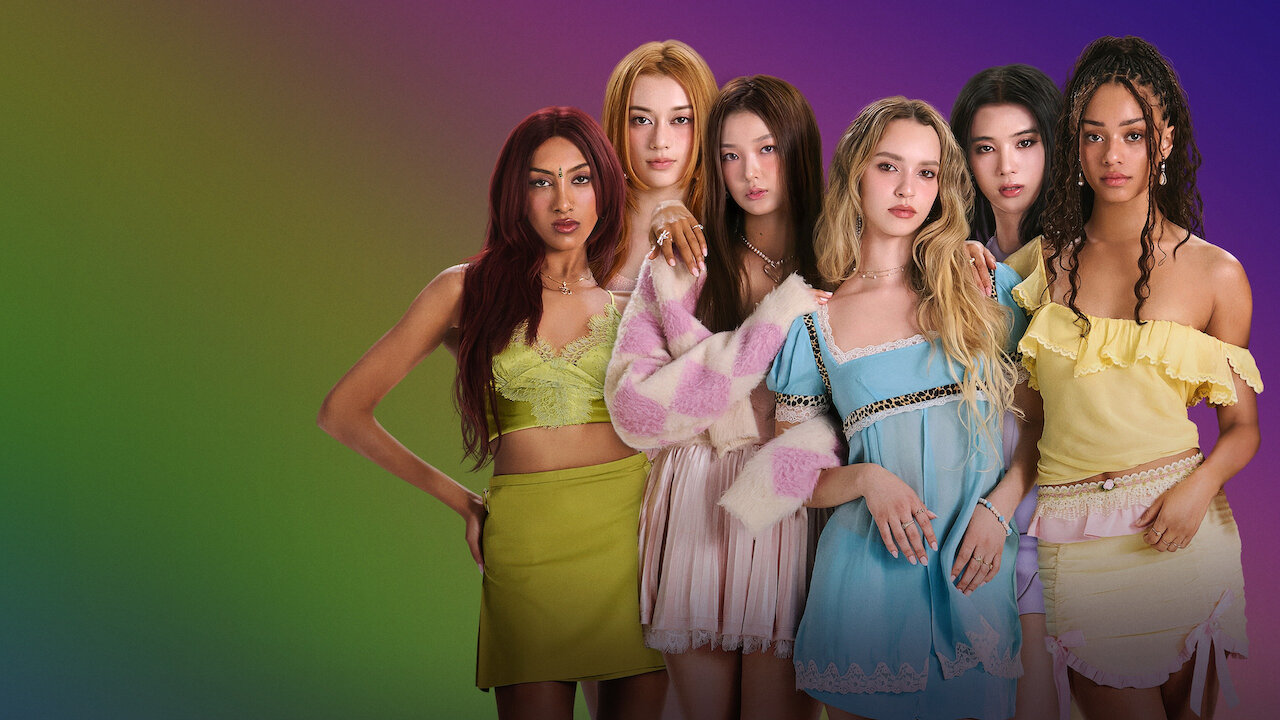
June 28, 2024. A date that marked not just another summer release, but the birth of a new pop paradigm. Six young women—hailing from the Philippines, USA, Switzerland, Hawaii, and South Korea—stepped onto the global stage as KATSEYE, their debut single "Debut" dropping like a cultural hand grenade. The track, produced by Ryan Tedder, wasn't just music. It was the culmination of a 120,000-applicant global talent search, a Netflix reality series, and a meticulously engineered pop experiment that would redefine how new acts break into the industry.
The numbers tell part of the story: 30 billion TikTok views by December 2025. A 2 spot on Google's U.S. "Trending Musicians" list. Two EPs that climbed the Billboard charts, with Beautiful Chaos hitting 4 on the Billboard 200—an achievement that eludes most debut acts. But the real story lies in how they got there. This isn't just about a girl group. It's about the death of organic discovery and the rise of the TV-to-tour pipeline, where reality competitions don't just launch careers—they manufacture them.
The journey began in 2022, not in some smoky backroom of a record label, but in audition halls across South Korea, the U.S., Japan, and the U.K. HYBE, the powerhouse behind BTS, had teamed up with Geffen Records to create something unprecedented: a global girl group, forged in the fires of a survival show called The Debut: Dream Academy. The numbers were staggering—120,000 to 140,000 applicants, whittled down to 20 contestants, then to six finalists who would become KATSEYE.
Sophia Laforteza, the group's leader from the Philippines, had already tasted fame on Family Feud Philippines. Yoonchae Jeung, the sole Korean member, was a former WakeOne trainee. The others—Daniela Avanzini, Lara Raj, Manon Bannerman, and Megan Skiendiel—brought their own flavors: American grit, Indian heritage, Swiss precision, Hawaiian warmth. Their training wasn't in Seoul, but in Los Angeles, where they spent a year honing vocals, dance synchronization, and the kind of charisma that can't be faked. This wasn't K-pop. This was K-pop methodology transplanted into Western soil.
"We didn’t just want to create another girl group. We wanted to create a global phenomenon—one that could transcend national, cultural, and artistic boundaries," said Scooter Braun, CEO of HYBE America, in a 2023 interview with Variety. "The reality show wasn’t just a marketing tool. It was the crucible where these artists were forged."
Their formation was documented in Popstar Academy: Katseye, a Netflix series that gave fans unprecedented access to the grueling process. Unlike traditional K-pop groups, which often debut with a shroud of mystery, KATSEYE's journey was laid bare—every tear, every breakthrough, every moment of doubt. By the time "Debut" dropped, they weren't just a new act. They were a story fans had already invested in.
Before the official debut, there was "Touch," a pre-release track that became a TikTok phenomenon. The choreography—sharp, synchronized, and endlessly replicable—spread like wildfire. Fans didn't just listen; they participated. By June 2024, clips of the dance had racked up millions of views, turning KATSEYE into a household name before they'd even released their first EP.
This wasn't accidental. HYBE and Geffen had studied the algorithm. They knew that in 2024, a song's success wasn't measured in radio plays, but in user-generated content. "Touch" wasn't just a track; it was a challenge, a meme, a cultural moment waiting to happen. And when it did, it catapulted KATSEYE into the stratosphere.
"The traditional model of 'release a single and hope it sticks' is dead," said Michelle Obama, a music industry analyst at Billboard. "KATSEYE proved that the future lies in structured virality—where every element, from the choreography to the reality show narrative, is designed to be shared, replicated, and obsessed over."
By the time SIS (Soft Is Strong) dropped on August 16, 2024, the stage was set. The EP debuted at 1 on the Billboard Emerging Artists chart and cracked the Billboard 200, a feat that most new acts only dream of. Tracks like "My Way" and "I’m Pretty" weren't just songs; they were anthems for a generation that had watched these women fight for their place in the spotlight.
KATSEYE's rise isn't just a success story. It's a blueprint. The music industry has spent decades chasing the next big thing, often relying on luck, timing, or the elusive "it factor." But HYBE and Geffen didn't leave it to chance. They built a system—one that starts with a reality show, leverages social media, and culminates in a tour that feels less like a concert and more like a coronation.
This is the TV-to-tour model, and it's changing everything. No longer do artists need to grind for years in obscurity, hoping to be discovered. Now, they're created—carefully selected, rigorously trained, and strategically launched into the public consciousness. The days of organic discovery are fading. In their place? A new era of engineered stardom.
And KATSEYE is just the beginning.
The early fanbase built through reality television and TikTok choreography provided a launchpad. What happened next was a masterclass in calibrated pop escalation. KATSEYE didn’t slowly build an audience; they systematically conquered territories. Their first EP, SIS (Soft Is Strong), served as a proof of concept, but the June 27, 2025 release of Beautiful Chaos was an undeniable assertion of power. Debuting at 4 on the Billboard 200, the EP announced that this was no longer a "project group." It was a dominant commercial force. According to data aggregator Kworb, tracks from the EP simultaneously charted in the Top 10 of streaming platforms in 14 distinct markets, from the United States to Belgium and South Korea. A global launch, executed with military precision.
"‘Gnarly’ didn’t aim to be pretty. It aimed to be unforgettable," observed a year-end critic for The Honey Pop. "Listeners were split at first over its brash lyrics and glitchy production... but that polarization helped ‘Gnarly’ break through."
And break through it did. Released in April 2025 as the EP's lead single, "Gnarly" was the group's first entry on the Billboard Hot 100. It was a sonic left turn: abrasive synths, confrontational lyrics, a production designed to be divisive. This was no accident. In an oversaturated media landscape, universal appeal is a fantasy. HYBE and Geffen bet on passionate debate over passive acceptance. The strategy echoed online culture itself—content that triggers strong reactions, positive or negative, gets algorithmically amplified. "Gnarly" wasn't just a song; it was engagement bait. The follow-up, "Gabriela," softened the edges with a narrative flair, being compared by some critics to a Gen-Z "Jolene," and peaked within the Hot 100's top 40, proving the group could pivot between viral shock and traditional pop craftsmanship.
Critical and commercial validation arrived in a single awards season. In the cycle following Beautiful Chaos, KATSEYE secured Grammy nominations for Best New Artist and Best Pop Duo/Group Performance (for "Gabriela"). For an act less than two years into its official existence, this was unprecedented acceleration. The nominations cemented their industry legitimacy, transforming them from a "social media sensation" into award-season contenders. It validated the entire TV-to-tour model, proving that a meticulously manufactured act could achieve the highest peer-recognized accolades in a fraction of the traditional timeline.
But awards and charts are one metric. The true test of any pop act built on performance polish is the stage. Could the charisma translate from Netflix screens and TikTok squares to a live audience? KATSEYE's early itinerary reads like a strategic assault on key platforms. August 5, 2024: Good Morning America. A sunrise performance for Middle America. September 12, 2024: M Countdown in Seoul. A return to the spiritual home of idol performance, a nod to their foundational aesthetic. December 3, 2024: iHeartRadio Jingle Ball in Fort Worth. A slot on a major national tour, sharing a stage with established hitmakers. Each appearance was a different demographic checkpoint, a different facet of the industry to win over.
"They aren't just performing songs; they're validating an entire system," argued Michelle Obama, the Billboard analyst. "Every live show is a proof point. It tells other labels, 'See? This model works. The audience we built online shows up, sings along, and buys the tickets.'"
The live performances served a dual purpose. For fans, they were the tangible reward for digital loyalty. For skeptics, they were a demonstration of undeniable skill. The choreography was tighter, the vocals stronger, the stage presence more commanding than many anticipated from a "reality show group." This closed the loop: the TV show created the narrative, social media built the hype, and the live performances delivered the goods, creating a self-reinforcing cycle of growth.
Here lies the central tension, the contrarian observation that critics can't ignore. KATSEYE's success is undeniable, but it raises uncomfortable questions about authorship and artistry. These are not singer-songwriters baring their souls. They are, by the group's own admission, exceptional executors. Their debut single "Debut" was produced by Ryan Tedder, a pop hitmaking veteran. The Beautiful Chaos EP credits reveal a roster of high-profile, behind-the-scenes talent crafting the songs. The members bring their multicultural backgrounds and performative brilliance, but the musical direction is producer-crafted. Is this a problem? The industry's history is littered with brilliant performers who didn't write their own material. But in an era that fetishizes "authenticity" and artistic control, does this model feel calculated to a fault?
Some argue it's a pragmatic evolution. The pop landscape is too complex, too fast-moving for a traditional five-year artist development cycle. Why wait for a teenager to find their songwriting voice when you can assemble a dream team of producers and match their creations with the perfect human vessels to deliver them? KATSEYE is the logical endpoint of pop as auteur theory's collapse—the director (the label, the producers) is the primary creative force, and the actors (the idols) are the charismatic, indispensable interpreters.
"We’re showing that a new kind of global artist is possible," a Geffen Records executive told Variety under condition of anonymity. "One built for the streaming and social era first. The focus is on world-class performance and global relatability. Songwriting is a collaborative process, and they are key collaborators in that process, but it's not the sole measure of their value."
This philosophy extends to their very composition. The group's six members are a deliberate map of target markets: Sophia (Philippines), Lara and Daniela (USA), Manon (Switzerland), Megan (Hawaii), and Yoonchae (South Korea). It is diversity as a core market strategy. Each member is a cultural entry point, a reason for a fan in Manila, Geneva, or Seoul to feel a direct connection. Is this cynical demographic targeting or progressive representation? The answer is likely both. It's a business model wrapped in a feel-good narrative of global unity. The genius is making the business logic feel like a moral victory.
The data suggests the public has embraced this bargain. By December 2025, KATSEYE was named TikTok’s Top Global Artist of the Year, a title predicated on a reported 30 billion views on the platform, as confirmed by ABS-CBN reporting. This isn't just popularity; it's cultural saturation. Their songs provided the soundtrack to countless user-generated videos, their choreography became a global language. The platform didn't just promote them; it became an extension of their artistic identity.
"KATSEYE is the first major group where the TikTok algorithm feels like an uncredited seventh member," wrote a commentator for The Horizon Sun. "Every hook, every dance break, every visual motif is engineered with shareability in mind. The song isn't finished when it leaves the studio; it's finished when it trends."
The group's influence is already rippling outward. Their success is a green light for every label to double down on structured, multi-platform debut pipelines. Why scour dive bars for the next rock savior when you can run a global talent search, document the drama, and debut with a built-in audience of millions? This model favors polish over raw talent, marketability over mystery, rapid execution over artistic incubation.
It also reshapes what "making it" means. For KATSEYE, a Grammy nomination arrived before their first major headlining world tour. Chart success preceded any semblance of an "organic" fanbase growth period. The traditional arc—local buzz, critical acclaim, commercial breakthrough—is compressed into a simultaneity. Everything happens at once. This creates immense pressure but also an unprecedented fortress of success. By the time criticism coalesces, the group is already a multi-charting, award-nominated, socially dominant entity. It's harder to dismiss a "manufactured" act when it's outperforming "authentic" ones by every industry metric.
Yet, a question lingers, one that no streaming number can answer. Can an act born in a corporate boardroom, nurtured in a reality TV incubator, and fueled by algorithmic virality develop the kind of artistic longevity that defines legends? Or is this a model designed for spectacular, brilliant, but ultimately ephemeral pop flashes? KATSEYE has won the battle. The next chapter will determine if they can win the war for a lasting legacy. Their true test won't be the next EP or the next viral challenge, but whether they can ever transcend the magnificent, meticulously crafted machine that created them.
KATSEYE’s significance extends far beyond their streaming totals or chart positions. They represent the successful institutionalization of a pop production methodology that began in Seoul and has now found its ultimate expression through Hollywood machinery. The HYBE x Geffen partnership didn’t just create a group; it built a replicable template. The "TV to Tour" model—global audition, documentary narrative, social media priming, high-concept production, instant touring validation—is no longer an experiment. It is the new industry standard for launching major pop acts. We are witnessing the rise of the global idol-industrial complex, where artist development is outsourced to reality television producers and algorithmic strategists.
"This is the end of the garage band myth for pop," argues cultural critic Maria Garcia of The Atlantic. "KATSEYE proves that in the 2020s, the most efficient path to pop stardom is not a guitar and a dream, but a casting call and a content calendar. They haven't just changed the game; they've replaced the entire playing field with a soundstage."
The cultural impact is a paradox of authenticity. For a generation raised on curated Instagram lives and influencer authenticity, KATSEYE’s transparency about their manufactured origins is the authenticity. They never pretended to be anything else. Their "origin story" is a televised competition, a fact they embrace rather than obscure. This shifts the cultural contract. Fans aren’t buying into a myth of organic discovery; they are investing in the outcome of a process they witnessed. It turns passive consumption into active participation—you didn’t just find them, you chose them during Dream Academy. The fan-idol relationship is framed not as adoration for mysterious talent, but as loyalty to a chosen competitor in a high-stakes contest. This has profound implications for fan engagement, which becomes fundamentally transactional and rooted in a shared narrative history.
For all its formidable efficiency, the model KATSEYE embodies is not without critical vulnerabilities. The first is artistic atrophy. A system designed to produce flawless executors risks creating artists who are perpetually interpreters, never auteurs. Can a performer who has never known creative struggle, who has always been handed hit-ready material from top producers, develop a distinct musical point of view? The comparison to legendary groups who evolved over decades—through internal conflict, shifting trends, and personal songwriting—is stark. KATSEYE's music is brilliant pop product, but does it have a soul beyond the brand? The Grammy nominations validate commercial and performative excellence, but they don't answer that deeper question.
Secondly, the model is predicated on a relentless, unsustainable content churn. The engine requires constant fuel: new TikTok challenges, new reality show seasons (for subsequent groups), new "moments." What happens when the novelty of the formation story fades? The initial fan investment was in the journey. Future engagement must be solely about the output. Can the music alone sustain the phenomenon without the foundational meta-narrative? The industry is littered with reality show winners who flamed out because the post-show material couldn't match the drama of the competition.
Finally, there's the risk of homogenization. If every major label now races to launch its own "Dream Academy," pop music risks becoming a landscape of similarly polished, demographically-calculated acts, all following the same playbook. The raw, unexpected, and genre-defying breakthroughs—the ones that often define eras—could be squeezed out by the financial certainty of the pre-sold, televised group. The very system that made KATSEYE a safe billion-dollar bet could make the pop charts a safer, more predictable, and ultimately less interesting place.
The immediate future for KATSEYE is a whirlwind of concrete, scheduled ambition. Industry chatter, confirmed by early venue bookings, points toward a major global arena tour launching in Q3 of 2026. This will be the ultimate stress test of their model: filling large-capacity venues not just in supportive markets like Manila and Seoul, but in the competitive arenas of North America and Europe. Studio sessions for a full-length debut album are already underway, with a targeted release window of late 2026 or early 2027, an attempt to transition from the EP format to a more statement-making body of work. Collaborations with A-list global pop stars are being negotiated, a move designed to cross-pollinate fanbases and cement mainstream prestige beyond the K-pop-adjacent sphere.
Their influence is already materializing in competitor boardrooms. Universal Music Group is fast-tracking a similar pan-European girl group project. Sony has greenlit a documentary series following the formation of a Latin American boy band. The blueprint is being photocopied. KATSEYE’s legacy, therefore, may be less about their own discography and more about the dozens of acts that will follow their path, for better or worse. They are the prototype.
So we return to the date that started it all: June 28, 2024. A single called "Debut." It wasn't just a song title; it was a declaration of a new method. The pop star of the future may not be discovered in a smoky club. They will be selected from a database of 140,000, their struggle packaged into bingeable episodes, their victory track engineered for a viral dance, their success measured first in billions of views before a single note is sung live. KATSEYE is that future, already here, performing on a stage built from equal parts dream and data. The question hanging in the applause isn't whether they will succeed. They already have. The question is what we lose when the dream itself becomes an academy.


Seu espaço pessoal para organizar e compartilhar conhecimento com o mundo.
Descubra e contribua para relatos históricos e culturais. Compartilhe seu conhecimento com entusiastas do mundo todo.
Conecte-se com outros que compartilham seus interesses. Crie quadros temáticos sobre qualquer assunto.
Contribua com seus conhecimentos. Crie conteúdo envolvente e participe de discussões em vários idiomas.
Já tem uma conta? Entre aqui

Bad Bunny’s 19.8 billion streams in 2025 dethroned Taylor Swift, revealing a clash of fandom, strategy, and global cultu...
Ver quadro
Kid Francescoli's melancholic electro-pop, born in Marseille, captivates global audiences with its cinematic Mediterrane...
Ver quadro
Jim Morrison turned rock into poetry, weaving surreal visions and Romantic rebellion into timeless anthems that still ha...
Ver quadro
Tiffany Alvord’s rise from a 2008 bedroom cover to 705M YouTube views, indie hits, and a pivot into acting shows how a t...
Ver quadro
Biche, groupe des Yvelines, cultive une pop "weird but playful" entre jazz, mélancolie et arrangements délicats, comme e...
Ver quadro
Montpelliérain discret devenu figure de l'électro-pop, Kazy Lambist trace sa route entre Rome et Istanbul, mêlant synthé...
Ver quadro
Explore the epic journey of Star Wars from its humble beginnings to the current wave of streaming series and films, disc...
Ver quadro
Malik Djoudi : une révolution sonore en cours, l'architecte de synth-pop français qui redéfinit les frontières avec une ...
Ver quadro
Live music roars back post-pandemic with $23.1B revenue in 2024, reshaping economies, fan psychology, and the industry's...
Ver quadro
1996 research debunks the samurai Tabata myth, exposing the scientific creation of a four‑minute, eight‑round interval p...
Ver quadro
Zazie : L'ADN poétique de la pop française décrypté Le 18 avril 1964, à Boulogne-Billancourt, naît Isabelle de Truchis ...
Ver quadro
Jessie Kahnweiler shatters silence with raw, Jewish-inflected comedy, turning trauma into sharp satire that reshaped onl...
Ver quadro
Two Arab-Indian creators sparked a 17 million-view anthem from a living-room FIFA session, blending beatboxing, film cra...
Ver quadro
Livingston Allen: The Provocateur Who Redefined Hip-Hop Media A young man sits in a dorm room at Rutgers University in l...
Ver quadro
Maître Gims : L'Architecte Acoustique de la Musique Urbaine Française Le 28 septembre 2019, une vibration particulière ...
Ver quadro
The Enduring Alliances of Cinema: Crafting Magic on the Silver Screen The flickering images on a screen, the stories th...
Ver quadro
Loren Gray’s meteoric rise from a Pennsylvania teen to 55 million TikTok followers reveals how digital identity is engin...
Ver quadro
Le duo nantais Cabadzi, entre beatbox virtuose et rap électronique, forge un son dystopique sombre, mêlant humour noir e...
Ver quadro
Lucien Fraipont's Robbing Millions defies genres, blending jazz rigor with psychedelic pop in a Belgian odyssey from con...
Ver quadro
Le 12 novembre 1976, quatre jeunes Parisiens créent Téléphone, phénomène rock français qui a vendu plus de 6M d'albums e...
Ver quadro
Comentários