

Explore Any Narratives
Discover and contribute to detailed historical accounts and cultural stories. Share your knowledge and engage with enthusiasts worldwide.
The refrigerator beeps. The door unlocks. The lights dim. For over a decade, this has been the promise—and the persistent failure—of the smart home. A cacophony of apps, incompatible protocols, and devices that demand more attention than they save. On January 6, 2026, in a darkened hall at CES in Las Vegas, Samsung Electronics President and Head of the Device eXperience Division, Jong-Hee Han, presented a different vision. Not a home of commands, but of context. Not a collection of gadgets, but a cohesive, thinking environment.
Samsung’s strategy represents a fundamental philosophical pivot in consumer technology. The company is betting its considerable weight on open ecosystems and interoperability as the only viable path to mass adoption. With its SmartThings platform now boasting over 500 million users, Samsung isn't just selling appliances; it is architecting the infrastructure of domestic life. This isn't about another voice assistant. It's about building a home that possesses a form of ambient intelligence, where the technology itself recedes into the background of daily experience.
Historically, tech giants fought to build walled gardens. Apple’s HomeKit, Google’s Nest ecosystem—each sought to lock consumers into a proprietary universe. Samsung’s current playbook reads like a direct rebuttal to that model. At CES 2026, the company convened a forum of industry leaders not to celebrate its own dominance, but to advocate for a radical openness. The argument was practical, not altruistic: consumers will never trust a smart home that forces them to buy a single brand for everything from lightbulbs to ovens.
The technical linchpin of this approach is support for universal standards like Matter, alongside existing integrations with Amazon Alexa and Google Assistant. This ensures a Samsung Bespoke refrigerator can communicate with a Philips Hue light in the hallway and a Nest thermostat on the wall. The ecosystem’s brain, SmartThings, becomes a neutral(ish) orchestrator rather than a gatekeeper.
“The era of the siloed platform is over,” stated a senior Samsung strategist during the CES panel. “Consumer trust is built on choice and transparency, not on captivity. Our 500 million-user platform is only powerful if it can connect the devices people already own and love, regardless of the logo on the box.”
This philosophy extends into surprising partnerships. One highlighted collaboration is with The Hartford Steam Boiler Inspection and Insurance Company. Here, data from Samsung’s smart home sensors—detecting water flow anomalies, temperature spikes, or unusual energy consumption—feeds directly into home insurance models. The potential for preventive maintenance and validated claims creates a tangible, financial value proposition beyond mere convenience.
It’s a clever, two-pronged attack. Samsung builds the pervasive, open network, and then invites other industries—energy, insurance, security—to build services on top of it. The home becomes a data-rich platform for third-party innovation.
Philosophy requires physical form. Samsung’s answer is the Bespoke AI line, a suite of appliances engineered not just to perform tasks, but to perceive their environment. These are not passive machines. Equipped with cameras, microphones, and embedded screens, they are designed to see, hear, and reason.
Take the flagship Bespoke AI washer. Its camera identifies fabric types and soil levels, automatically selecting the perfect cycle. Its AI then optimizes detergent use, water temperature, and spin speed in real-time. The result, Samsung claims, is a staggering 65% greater energy efficiency compared to the minimum requirements for Europe’s already-strict Class A rating. The energy savings aren't a side effect; they are the direct output of machine perception and computation.
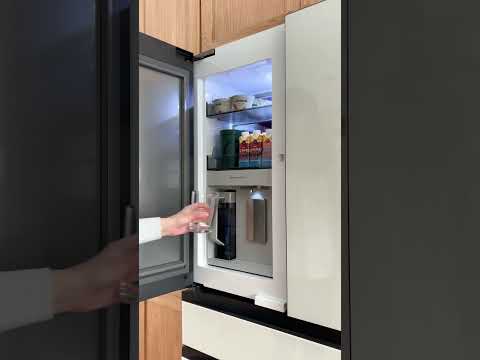
But the true ambition lies in the connections between these devices. Imagine a refrigerator that notices you’ve removed milk, eggs, and flour. It cross-references its internal inventory, understands the ingredients for a pancake batter are now depleted, and adds those items to a shared grocery list accessible on your phone or the fridge’s own screen. It might even suggest a recipe based on what remains. The oven preheats to the correct temperature as you begin mixing.
“We are moving from a ‘broadly connected kitchen’ to a ‘contextually aware kitchen,’” explained a lead designer from Samsung’s Living Appliance division. “The value isn’t in a fridge you can talk to. It’s in a fridge that understands its contents, connects to your water and energy networks, and acts as a proactive partner in managing your home. It’s the difference between a tool and a teammate.”
This is the core of Samsung’s “Home Companion” concept unveiled at CES 2026. The home itself becomes a companion. The AI is agentic—it doesn't just wait for a command from Bixby; it suggests, it prepares, it anticipates. The goal, as stated in company literature, is audacious: a “zero-housework lifestyle.” A rhetorical question hangs in the air: is that liberation, or are we outsourcing the final remnants of domestic intuition to an algorithm?
The personal observation here is one of scale. Other companies demo single, dazzling devices. Samsung is demoing an entire home *system*, from HVAC and modular construction techniques down to the dishwasher. It’s a vertically integrated vision of the future, yet one that insists on playing well with others. A paradox, or a masterstroke?
If the ecosystem works, the traditional interface must disappear. Samsung is pushing a multi-modal approach: natural voice, intuitive gestures, and contextual visuals. The screen on a Bespoke fridge isn’t for watching movies; it’s a dynamic control panel and family dashboard that surfaces the right information at the right moment—a calendar alert, a recipe step, an energy usage report.
The AI learns. It maps daily routines. Wake up, and the kitchen lights brighten to a specific hue while the coffee machine starts its brew cycle—not because you pressed a “Good Morning” button, but because the system’s predictive automation has recognized the pattern. It adjusts the thermostat based on occupancy and weather forecasts. It suggests a movie on your Frame TV that aligns with the genres you typically watch on Thursday evenings.
This requires a staggering amount of data and processing, handled locally on device where possible and in the cloud when necessary. Privacy, inevitably, becomes the elephant in the smart room. Samsung addresses this with on-device AI processing for sensitive tasks like image recognition inside the fridge, but the broader behavioral learning necessitates data flow. The trade-off between hyper-personalized convenience and domestic surveillance is the unspoken contract of this new ecosystem.
As Part 1 closes, the stage is set. Samsung has laid out a comprehensive, open, and appliance-driven path to the AI home. It is a vision of remarkable scale and technical ambition. But does it work in practice? Can interoperability truly be seamless, or will it crumble under complexity? And what are the real-world implications of inviting this level of predictive intelligence into the most personal of spaces? The vision is clear. The questions have just begun.
The vision of a seamless home doesn't live in a vacuum. It requires a pocket-sized command center, a personal proxy that carries your preferences from room to room. This is where Samsung’s mobile division, specifically its Galaxy AI, transitions from a feature set into the central nervous system of the smart home. The announcements at Mobile World Congress in Barcelona, from March 2 to March 5, 2026, made this symbiosis explicit.
Samsung introduced the Galaxy S26 series, billed as the third-generation AI phone. Its new chipset, the Snapdragon 8 Elite Gen 5, isn't just about faster graphics; it's a dedicated engine for on-device AI processing, crucial for privacy and speed. The phone’s new "Now Nudge" feature epitomizes the agentic shift. It doesn't wait. Analyzing your location, calendar, and routine, it might proactively surface a grocery list as you pass the store or prompt you to leave for an appointment based on real-time traffic. The company’s statement was definitive: "The era of smartphones waiting for user commands is over."
"Mobile AI now understands routines, anticipates intent and delivers assistance exactly when needed." — Samsung Newsroom Global, March 3, 2026
This anticipatory intelligence extends across the newly unveiled ecosystem: the Galaxy Buds4 with their own embedded AI agents for audio context, the Galaxy Book6 Pro and Ultra for seamless workflow handoff, and the Galaxy Tab S11. A user could start a recipe video on their Bespoke fridge screen, transfer it to their tablet to follow along at the counter, and then have the S26’s Photo Assist use voice commands to edit a photo of the finished dish—changing the background from a cluttered kitchen to a serene patio with a simple spoken request.
But the most critical integration is with health. Samsung’s 2025 acquisition of the U.S. digital healthcare firm Xealth wasn't about making a better fitness tracker. It was a strategic move to inject medical-grade data streams into the home environment. Imagine a scenario where your Galaxy Z TriFold analyzes sleep patterns via Samsung Health, then coordinates with the Bespoke AI air conditioner and air purifier to optimize bedroom temperature and air quality throughout the night. The refrigerator could later suggest meals based on workout recovery data. The home shifts from being reactive to being actively therapeutic.
"Samsung’s ultimate goal is to enable a better living through Bespoke AI. Through our extensive ecosystem that connects devices across DX products – including mobile phones and TV – and our appliances’ unique form factors, we are providing differentiated experiences to our consumers and creating more value through those experiences." — Cheolgi Kim, Head of DA Business, Samsung
This is the master plan: the phone is the biometric sensor and personal identifier, the appliances are the actuators, and SmartThings is the synaptic tissue connecting them. The value of any single device multiplies when linked to the whole. A skeptic might ask, however, if this creates a form of digital Stockholm syndrome—where the convenience of the ecosystem makes the thought of switching to a competitor’s phone or refrigerator an exercise in self-sabotage. Open interoperability is the stated goal, but the deepest, smoothest integrations will always reside within Samsung’s own walled garden.
Samsung is acutely aware of the surveillance fears its vision provokes. A refrigerator with a camera is a hard sell to the privacy-conscious. The company’s counter is a multi-pronged technical and marketing offensive. First, they emphasize on-device AI processing; the image of your milk carton is analyzed inside the fridge’s own chip, not streamed to a cloud server. Second, the Galaxy S26 Ultra boasts an industry-first Privacy Display, a hardware solution that limits screen visibility to angles directly in front of the user.
This is a tangible, clever response to a real concern. But it addresses the symptom, not the disease. The deeper anxiety is about behavioral data—the patterns of your eating, sleeping, cleaning, and relaxing that the ecosystem harvests to function. Samsung’s partnerships, like the one with Hartford Steam Boiler for insurance, prove this data has immense commercial value beyond your own convenience. The privacy policy you scroll past during setup becomes the legal framework for a profound new data economy centered on your domestic life.
Is the trade-off worth it? For a 65% gain in energy efficiency from a washer, many would say yes. For a fridge that prevents food waste, absolutely. But the ledger is complex. The convenience is immediate and palpable; the long-term implications of normalized domestic surveillance are nebulous and deferred. Samsung is betting heavily that the balance will tip decisively in favor of utility.
All philosophy and AI agents mean nothing if the hardware fails at its basic task. Samsung’s Bespoke AI line is the physical crucible where this grand vision is tested. The products unveiled at CES 2026—the Bespoke AI Refrigerator with a 32-inch Family Hub, the Laundry Combo, the Jet Bot Combo robot vacuum—are engineered to be both supremely competent appliances and willing ecosystem citizens.
The technical specifications reveal a focus on sensory input and sustainable output. The washer’s camera for fabric detection isn’t a gimmick; it’s the sensor enabling that massive energy saving. The AI Energy Mode, particularly pushed in Asian markets, allows the entire home network to coordinate power draw, potentially smoothing out demand and reducing bills. In Europe and Latin America, the focus expands to HVAC, integrating climate control into the broader resource-management system.
Yet here lies a potential fault line. Samsung is a conglomerate attempting to master an unprecedented range of technologies: chip design, mobile software, appliance engineering, cloud infrastructure, health analytics, and insurance tech partnerships. Can it truly excel at all of them? A competitor like LG, with a narrower focus on premium appliances, might out-innovate in specific domains like laundry or refrigeration. Apple’s strength is a ruthless, controlled integration across a far smaller product set. Samsung’s "open" approach risks creating a jack-of-all-trades ecosystem where some elements feel masterful, and others feel like afterthoughts.
"Through our extensive ecosystem that connects devices across DX products – including mobile phones and TV – and our appliances’ unique form factors, we are providing differentiated experiences to our consumers and creating more value through those experiences." — Cheolgi Kim, Head of DA Business, Samsung
The "zero-housework lifestyle" promise also warrants scrutiny. These devices automate physical labor, but they introduce a new layer of digital management. You’re not scrubbing a floor, but you might be troubleshooting a robot vacuum’s navigation error, updating firmware on your refrigerator, or fine-tuning automation routines in the SmartThings app. The labor is transformed, not eliminated. It shifts from brawn to brain, from muscle to mental bandwidth—a trade that a time-poor professional might welcome, but one that could alienate those less technologically fluent.
Samsung’s open-ecosystem stance is a deliberate differentiator and a calculated risk. It directly contrasts with Apple’s HomeKit, which remains a relatively closed fortress of compatibility, and outflanks Google and Amazon, whose voice assistants are widespread but lack deep integration with major appliances. By championing Matter and collaborating with rivals, Samsung positions itself as the pragmatic, consumer-friendly unifier.
This strategy leverages its colossal scale. With over 500 million SmartThings users, Samsung becomes the platform other companies must plug into to reach a massive installed base. It’s the same playbook Microsoft used with Windows in the 1990s. The company provides the foundational operating system for the smart home, upon which other services—from insurance to grocery delivery—are built. Samsung takes a cut, not necessarily through direct fees, but through fortified brand loyalty and data access.
But the competition isn't sleeping. Google’s Gemini AI is embedding deeper into Android, and its Circle to Search feature—present on the Galaxy S26—shows the collaborative-competitive dance. Amazon’s ambient Alexa ambitions continue. And in China, companies like Xiaomi and Huawei are building fully integrated, vertically controlled smart home ecosystems that make Samsung’s look restrained.
"The era of smartphones waiting for user commands is over." — Samsung Newsroom Global, March 3, 2026
The real battleground is the developer and partner mindshare. Can Samsung make its SmartThings platform the most attractive, stable, and lucrative sandbox for third-party innovation? Its partnership with Hartford Steam Boiler is a blueprint. If it can replicate that across home security, energy management, and preventive healthcare, the ecosystem becomes self-reinforcing. If the process is cumbersome or the benefits unclear, partners will hedge their bets and support every platform, diluting Samsung’s advantage.
The analysis here must be blunt. Samsung’ vision is the most comprehensive and technically ambitious on the market. It is also the most complex and fraught with potential points of failure. Its success hinges not on a single killer device, but on the flawless, invisible orchestration of dozens. The company is asking consumers to buy into a paradigm, not just a product. As Part 2 concludes, the blueprint is detailed, the hardware is rolling out, and the platform is massive. The unresolved question is whether real lives in messy homes will bend to fit Samsung’s seamless logic, or if the cracks in this grand design are about to show.
Samsung’s project transcends home appliances. It represents an attempt to establish a new domestic operating system, a layer of intelligence that sits between the physical infrastructure of a home and the humans living within it. The significance isn’t in a smarter fridge. It’s in the normalization of the home as a data-generating, predictive, and economically integrated entity. This shifts the fundamental relationship between individuals and their private space. The home is no longer a static shelter; it becomes an active participant in daily life, with all the benefits and dependencies that entails.
The cultural impact is subtle but profound. It further erodes the 20th-century ideal of the home as a castle, a private refuge from the commercial and observational world. In its place, it proposes a home as a hub, a connected node in a network of services—from energy and insurance to healthcare and retail. This has historical precedent in the electrification of homes or the advent of landline telephones, but the scale of data collection and behavioral influence is unprecedented. Samsung, with its 500 million-user SmartThings platform, isn't just selling into this future; it is actively constructing the default architecture for it.
"The true disruption isn't the AI inside a single device. It's the emergence of the home as a unified computational platform. Whoever defines that platform's rules shapes everything from energy consumption to personal wellness. Samsung's open strategy is a bid to become that definer, not through force, but through ubiquity." — Analysis from Gartner's 2026 Top Strategic Tech Trends Report
For the industry, Samsung’s open-ecosystem advocacy is a direct challenge to the walled-garden model. If successful, it could force a permanent realignment. Competitors would be pressured to prioritize interoperability over lock-in, shifting competition from ecosystem captivity to the quality of individual AI agents and hardware. The risk for Samsung is ceding control; the reward is becoming the indispensable backbone, the Android of the smart home. Its partnerships in insurance and healthcare are the clearest signal of this ambition—the home OS will monetize not through device sales alone, but by enabling entirely new service economies within its walls.
For all its grandeur, the vision cracks under specific, practical pressures. The first is sheer complexity. An ecosystem spanning dozens of device categories, multiple AI models, and countless third-party integrations is a nightmare to debug. When the "seamless" experience fails—when the laundry doesn't start after the fridge detects workout completion, when the lights flicker inexplicably—who does the user call? Samsung Mobile, Samsung Appliances, or SmartThings support? The promise of a unified experience could shatter against the reality of corporate silos and finger-pointing.
The second, more profound criticism centers on agency and homogenization. Agentic AI that anticipates needs is also AI that makes assumptions. It curates your environment based on learned patterns, potentially reducing serendipity and reinforcing behavioral ruts. Will a Samsung home, optimized for efficiency and predictability, subtly discourage spontaneous changes in routine? The algorithm favors the known. There’s a quiet authoritarianism in a system designed to eliminate friction, because friction is often where human choice and creativity reside.
Finally, the "open" ecosystem may be a tactical feint. While Samsung champions Matter and works with Google and Amazon, the most powerful features—the deep health integrations, the predictive choreography between a Galaxy phone and a Bespoke oven—will remain exclusive to its own hardware stack. The openness creates a broad, welcoming porch to attract users and partners, but the most valuable rooms are inside the Samsung house. Consumers might find themselves with more choice in smart bulbs, but ever-tighter lock-in on the core appliances that define the home's functionality.
Looking forward, the roadmap is already public. The Bespoke AI appliance line will see a full global rollout throughout 2026, with a focus on customized HVAC packages for the European and Latin American markets. The integration of Xealth’s digital healthcare platforms into Samsung Health and, by extension, SmartThings, is scheduled for a phased beta launch in the fourth quarter of 2026. On the manufacturing side, Samsung’s pledge to convert its global factories into AI-Driven Factories by 2030 using digital twins and AI agents isn't just corporate logistics; it’s the petri dish where the automation managing its future homes is being perfected.
The next major public test will be CES 2027 in January. The narrative will need to evolve from vision to validation. Expect case studies, not concepts—hard data on energy savings from real households, anonymized results from the health integration trials, and a stark emphasis on reliability metrics. The competition will not be idle. Apple’s next HomeKit iteration, likely tied to a new Apple TV or HomePod, will push deeper into privacy-as-a-feature. Google will weave its Gemini AI more tightly into Nest devices.
Samsung’s bet is that its decade-long head start in connected appliances, combined with the sheer scale of its mobile footprint, creates an unassailable platform advantage. It’s a bet on complexity over simplicity, on federation over dominion. The refrigerator that beeped at the start of this story may soon not need to. It will simply act, ordering the milk, adjusting its temperature for the newly added groceries, and signaling the oven that dinner prep begins in 47 minutes, just as your Galaxy S26 predicts you’ll be leaving the office.
The final, lingering question isn't technological. It’s human. We must ask if the home that learns our habits to serve us also, in quiet ways, teaches us to serve its logic of seamless efficiency. The companion becomes the curator. The partner sets the pace. Jong-Hee Han’s "cohesive, thinking environment" is being built, wire by wire, sensor by sensor. We are left to decide what, and who, this new environment is truly for.
In conclusion, Samsung's AI-powered vision aims to finally deliver a seamless, integrated smart home by moving beyond fragmented apps toward an open, invisible ecosystem. This promises a future where technology intuitively serves residents rather than demanding their constant management. The question remains: will this be the solution that makes the long-promised smart home a practical reality for everyone?

Your personal space to curate, organize, and share knowledge with the world.
Discover and contribute to detailed historical accounts and cultural stories. Share your knowledge and engage with enthusiasts worldwide.
Connect with others who share your interests. Create and participate in themed boards about any topic you have in mind.
Contribute your knowledge and insights. Create engaging content and participate in meaningful discussions across multiple languages.
Already have an account? Sign in here

CES 2026 unveiled stair-climbing vacuums, mmWave presence sensors, and local AI robots that act, sense, and reshape smar...
View Board
Smart glasses from Google and Apple are set to revolutionize how we interact with the world, but their impact on our liv...
View Board
Samsung Galaxy S26 Ultra wprowadza rewolucyjny wyświetlacz Privacy Display, który aktywnie blokuje podglądanie ekranu po...
View Board
AI steps out of screens into factories, powering agents that move cups, pick parts and reshape jobs amid surging robot i...
View Board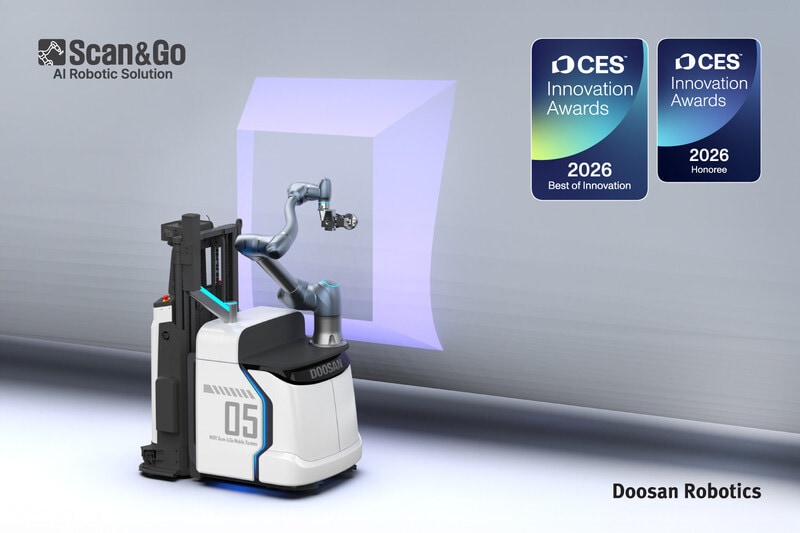
Hyundai's Atlas robot debuts at CES 2026, marking a shift from lab experiments to mass production, with 30,000 units ann...
View Board
MIT’s 2026 breakthroughs reveal a world reshaped by AI hearts, gene-edited embryos, and nuclear-powered data centers, wh...
View Board
Kathmandu’s 1,324‑meter high valley blends 1596 Kasthamandap, UNESCO temples and Newar brickwork with four million resid...
View Board
NASA and ESA race to catalog millions of near‑Earth asteroids, using infrared telescopes and AI to spot threats before t...
View Board
Experience Arknights: Endfield's thrilling 3D action RPG combat on PC, PS5, iOS & Android. Join the global launch with f...
View Board
Edge AI revolutioniert Geräte durch lokale KI-Verarbeitung – schneller, datenschutzfreundlich und energieeffizient, mit ...
View Board
Rubin Observatory'spre-survey tests uncover 12,700 asteroids, including 11,000 in a single batch, using its 3.2-gigapixe...
View Board
Three Sarah Austins—tech pioneer, UK events champion, Melbourne theatre scholar—show fragmented careers reshaping identi...
View Board
Singaporean ex-lieutenant Kevin Wu builds GRAY, turning iPhone cases into heirloom tech, then launches GRAYCRAFT1 NFT as...
View Board
Hypergryph abandons tower defense for a bold open-world action RPG, merging factory automation with real-time combat in ...
View Board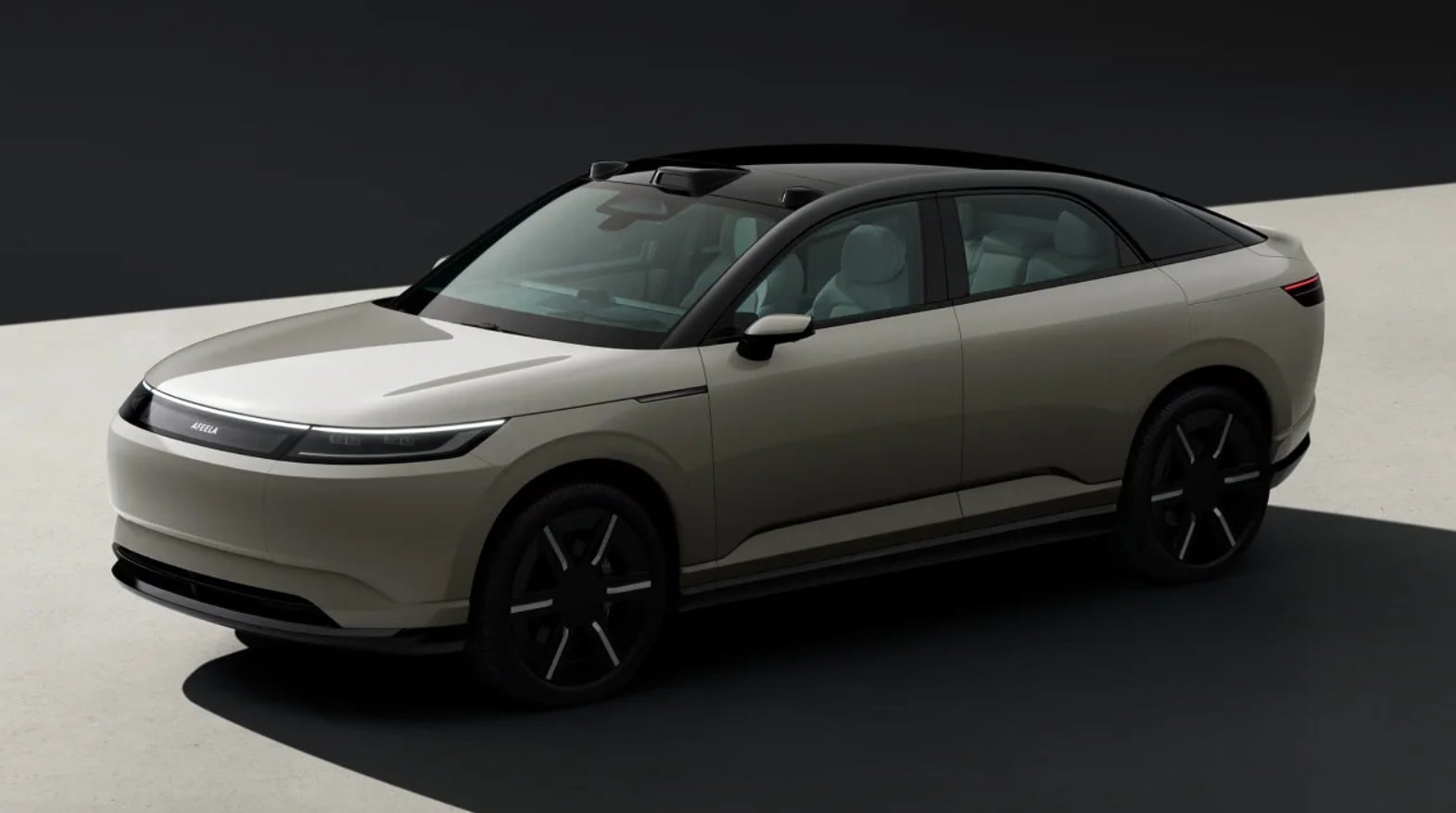
Tensor unveils Robocar at CES 2026: a Level 4 autonomous SUV with retractable wheel, 10 GPU clusters, and agentic AI, ta...
View Board
Julian Baumgartner: The Alchemist of Art's Past, Shaping Its Present The hushed reverence of the museum gallery is shat...
View Board
AI stock picks for 2026 focus on companies building infrastructure, monetizing AI at scale, and supplying critical tools...
View Board
Vor 50 Jahren gründeten zwei Studienabbrecher in einer Garage ein Unternehmen, das die Welt veränderte – die Geschichte ...
View Board
Samsung AI Living revolutioniert das Zuhause mit unsichtbarer KI, die Haushaltsaufgaben antizipiert und erledigt – vom K...
View Board
Navajo women's untold WWII roles—sustaining families, managing resources, and preserving culture—challenge the Code Talk...
View Board
Comments