Ronald Ross: Pioneering the Path to Understanding Malaria
Introduction
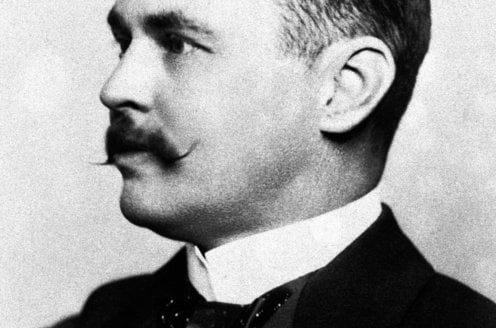
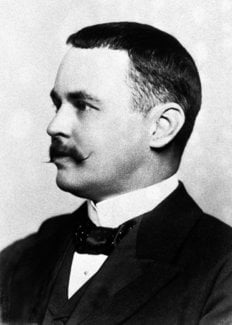
In the annals of medical history, few individuals have made contributions as significant and transformative as Ronald Ross. His groundbreaking work in understanding malaria not only altered the course of epidemiology but also laid the foundation for combating one of humanity's most persistent diseases. Born in the late 19th century, Ross's story is one of relentless curiosity, scientific foresight, and a profound commitment to improving public health. This article delves into the life of Ronald Ross, exploring his seminal discoveries and their lasting impact on medical science.
Early Life and Education
Ronald Ross was born on May 13, 1857, in Almora, a town nestled in the foothills of the Indian Himalayas. His father served as a general in the British Army, instilling in young Ross a sense of duty and discipline. At the age of eight, Ross was sent to England for his education, first at the prestigious Ryde School, then at Rossall School in Lancashire, and finally at St. Bartholomew's Hospital Medical College in London.
While his initial passion leaned more towards the arts, Ross eventually chose medicine, a decision influenced by his father’s insistence that he pursue a practical profession. During his years at medical school, Ross demonstrated a remarkable aptitude for scientific research, laying the groundwork for his future endeavors in medical science.
Career Beginnings and Early Challenges
After completing his medical studies, Ross joined the Indian Medical Service (IMS) in 1881, drawn by the allure of practicing medicine in a tropical yet challenging environment. His early years in India, however, were not marked by immediate success. Ross faced numerous professional and personal challenges, including bouts of illness and a struggle to balance his creative writing aspirations with his medical duties.
Despite these challenges, Ross remained committed to his role and gradually developed a keen interest in researching tropical diseases, particularly malaria. At the time, malaria was rampant in India, causing widespread illness and death. The disease’s etiology, however, remained shrouded in mystery, with prevailing theories attributing it to miasmas or various noxious environmental factors.
The Quest to Unravel the Mystery of Malaria
Ross's interest in malaria research was piqued in 1894 during a chance meeting with Dr. Patrick Manson, a leading authority on tropical medicine. Manson postulated a groundbreaking hypothesis: malaria was transmitted not via the air, but by the Anopheles mosquito. Armed with this new perspective, Ross was inspired to investigate this theory further, embarking on a scientific quest that would consume the next several years of his life.
Upon his return to India, Ross diligently conducted experiments, focusing on mosquitoes' role in the transmission of malaria. His environment was both a laboratory and a natural habitat full of potential scientific revelations. His extensive documentation of mosquito behavior, biology, and their potential link to human diseases was meticulous and groundbreaking.
Breakthrough Discovery
In 1897, Ross achieved a monumental breakthrough in the study of malaria. Through a series of experiments and observations, he conclusively demonstrated that Anopheles mosquitoes were indeed the vector responsible for transmitting the malaria parasite. He discovered the parasite in the gastrointestinal tract of the mosquito, establishing a concrete link between the insect and the transmission of malaria to humans.
This discovery was not merely a scientific triumph; it was a watershed moment in public health. By unravelling the transmission mechanism, Ross opened the door to developing effective preventive measures against malaria, significantly reducing its prevalence and mortality rate. His findings also validated Manson’s hypothesis, fundamentally changing the understanding of vector-borne diseases.
Recognition and Legacy
For his groundbreaking work, Ronald Ross was awarded the prestigious Nobel Prize in Physiology or Medicine in 1902. This accolade not only honored his scientific achievements but also underscored the global impact of his research on malaria. Ross's work paved the way for a better understanding of how infectious diseases spread and laid the groundwork for future research in tropical medicine.
Beyond malaria, Ross’s contributions to medical science and public health were vast. He was instrumental in founding the Liverpool School of Tropical Medicine, where he continued to champion research into infectious diseases. Ross also advocated for public health policies aimed at controlling mosquitoes through environmental management and education.
Conclusion
Ronald Ross's life and work stand as a testament to the profound impact of scientific inquiry driven by curiosity and a desire to improve human health. His contributions have saved countless lives and continue to inform modern approaches to combating infectious diseases. As we reflect on his legacy, Ross's story reminds us of the enduring power of discovery to change the world for the better.
A Pivotal Shift in Medical Research
The implications of Ronald Ross’s discovery extended far beyond the immediate understanding of malaria transmission. His work represented a paradigm shift in medical research and public health, emphasizing the importance of understanding disease vectors. By demonstrating how mosquitoes transmitted malaria, Ross laid the foundation for vector control—a critical component in the strategy to manage and eradicate vector-borne diseases.
Ross’s approach to unraveling the malaria transmission cycle was methodical and innovative. He meticulously studied the life cycle of the malaria parasite within the mosquito host. His landmark discovery was not just in identifying the mosquito as the vector, but in detailing the complex life cycle of the malaria parasite—Plasmodium—in both the mosquito and human hosts. This comprehensive understanding allowed for the development of targeted interventions designed to interrupt the transmission of malaria at its source.
Impact on Public Health Strategies
Ross’s findings had a direct and profound impact on public health strategies worldwide. Understanding that malaria transmission involved mosquitoes allowed public health officials to design interventions that targeted the vector itself. Vector control measures such as the use of insecticides, bed nets, and environmental management became central strategies in the fight against malaria.
Ross actively advocated for these strategies and was a vocal proponent of sanitation and preventative measures. He believed that controlling the mosquito population was paramount, often stressing the importance of eliminating stagnant water sources where mosquitoes bred. This emphasis on practical public health measures helped shape the field of epidemiology, influencing future generations of scientists and health policy-makers.
His work also contributed to the development of programs aimed at educating communities about the role of mosquitoes in malaria transmission. By fostering awareness, Ross helped enable communities to take preventive actions that reduced their risk of contracting the disease. These educational efforts became integral to public health campaigns, reinforcing the idea that prevention through awareness and environmental control was as crucial as medical treatment.
The Liverpool School of Tropical Medicine
With his career trajectory solidly aimed at addressing tropical diseases, Ronald Ross became instrumental in the establishment of the Liverpool School of Tropical Medicine (LSTM) in 1898. This was the first institution of its kind dedicated to the study of tropical diseases. Ross's involvement was vital, not only because of his expertise but also due to his commitment to establishing a center of excellence in tropical medicine.
At LSTM, Ross continued to extend his research into malaria and other tropical diseases, closely collaborating with prominent scientists and researchers. His work at the institution helped foster a multidisciplinary approach to disease research, incorporating parasitology, entomology, and public health.
Under Ross’s influence, LSTM became a hub for training medical professionals specialized in handling the complex challenges associated with tropical diseases. His emphasis on cross-disciplinary collaboration helped advance research in the field significantly. This legacy persists today, as LSTM continues to lead innovative research and training on tropical diseases globally.
Challenges and Controversies
While Ross's scientific achievements were substantial and globally recognized, his career was not without challenges and controversies. The scientific community of the time was competitive, and collaborations often involved intellectual conflicts. Ross had a strained relationship with Italy’s Giovanni Battista Grassi, a bacteriologist who also contributed to understanding malaria transmission. The scientific debate over who discovered the complete lifecycle of the malaria parasite highlighted how competitive and fraught with challenges the scientific environment could be.
Ross also faced criticism for his assertive personality and his often contentious interactions with peers. While these qualities could sometimes alienate colleagues, they also reflected his deep dedication to his work and an unwavering belief in the potential of science to solve humanity's most pressing problems. Despite these challenges, his scientific rigor remained uncompromised, and his contributions to the field have withstood the test of time.
Legacy of Innovation and Determination
Ronald Ross’s legacy extends beyond his scientific and medical contributions. His life’s work set a precedent for how scientific research could directly translate into public health advancements that alter the course of prevalent diseases. By combining scientific curiosity with practical applications, Ross epitomized the role of a scientist committed to the betterment of human health.
Ross's story underscores the importance of perseverance, collaboration, and a willingness to challenge prevailing scientific assumptions. His determination to understand malaria led to breakthroughs that have saved millions of lives and continue to influence modern strategies in the fight against infectious diseases.
His impact is evident today as researchers, public health officials, and policy-makers continue to draw from his pioneering insights to confront existing and emerging health challenges. As we continue to build on Ross’s groundbreaking work, his story remains an enduring source of inspiration, reminding us of the transformative power that research and dedication hold in our ongoing battle against disease.
Further Contributions and Innovations
In addition to his monumental work on malaria, Ronald Ross made several other significant contributions to the field of epidemiology and medicine. His interests spanned various tropical diseases, reflecting his commitment to understanding and mitigating the impact of these afflictions on human populations. Among his many pursuits, Ross engaged in research on kala-azar, a tropical disease caused by the Leishmania parasite, and filariasis, caused by thread-like nematodes. His work in these areas further exemplified his passion for combating the diseases prevalent in regions with little access to advanced healthcare and resources.
Ross was a strong advocate for interdisciplinary approaches in science, encouraging collaboration between fields such as entomology, parasitology, and public health. He recognized that solving complex health challenges required input from multiple scientific domains, a viewpoint that continues to resonate in contemporary research. His writings and lectures often reflected his belief in the unification of scientific efforts to achieve substantial advancements in understanding and controlling diseases.
Influence on Future Research and Policy
Ronald Ross's legacy is evident not only in his direct scientific contributions but also in the influence he had on policy and the direction of future research endeavors. His advocacy for vector control and public health measures laid the groundwork for national and international strategies to manage malaria and other vector-borne diseases. His emphasis on environmental management as a method of disease control has been foundational to modern-day initiatives that aim to promote sustainable practices while reducing disease transmission.
The strategic frameworks developed from Ross's research were precursors to many of the global health campaigns that followed. Organizations such as the World Health Organization and various international malaria control programs have built upon his principles of education, prevention, and intervention. These initiatives have driven extensive progress in reducing the impact of malaria worldwide, showcasing the enduring relevance of Ross’s work.
Moreover, Ross's commitment to research and innovation inspired many future scientists and researchers, fostering a culture of scientific inquiry that encouraged others to pursue health-related research with social and ecological consciousness. The ethos he championed continues to influence public health policy making, emphasizing the need for robust scientific evidence in crafting effective global health strategies.
The Literary Contribution
Beyond his scientific endeavors, Ronald Ross was also a prolific writer, contributing to literature with poems, essays, and reflective pieces, often drawing from his rich experiences in medicine and travel. His literary works, though lesser-known than his scientific publications, provided personal insights into his thoughts and the emotional journey accompanying his scientific exploration.
Ross's poetry and writings revealed a scientist who viewed his work not just as a profession but as a profound calling. His ability to merge his love for science and literature enriched his contributions to both fields and offered a unique perspective on the interconnectedness of these disciplines. Through his writings, Ross communicated complex scientific ideas in an accessible manner, extending his influence beyond the scientific community to reach a broader audience.
Enduring Impact and Commemoration
Ronald Ross passed away on September 16, 1932, but the impact of his work continues to resonate across the globe. His life’s work is commemorated in numerous ways, from the Ross Institute of Tropical Hygiene in England, established to continue investigations into tropical and communicable diseases, to awards named in his honor that recognize exceptional contributions to parasitology and tropical medicine. These commemorations serve as a testament to Ross’s enduring influence on the medical sciences and public health arenas.
His discoveries remain a cornerstone in the understanding and management of malaria, influencing countless research studies and policy formulations to this day. As global challenges related to infectious diseases grow more complex, Ross's legacy provides a reminder of the achievements possible through dedication, curiosity, and a relentless pursuit of knowledge.
Conclusion
Ronald Ross was more than a scientist; he was a pioneer whose work transcended the boundaries of his time. His unwavering commitment to unraveling the mysteries of malaria transformed public health strategies and saved innumerable lives, an influence that persists in today’s public health landscape. Ross's multidisciplinary approach to problem-solving, combined with his passion for education and communication, set a precedent that continues to drive innovation in medical science.
As we confront new public health challenges in the 21st century, Ross's legacy remains a guiding light, emphasizing the critical role of thorough scientific research, collaboration, and education in overcoming adversity. His life and work remind us of the potential within dedicated scientific inquiry to significantly enhance global health outcomes, continually inspiring future generations of scientists and researchers.
Haporium is a revolutionary platform that lets you organize your web browsing experience with customizable dashboards and boards. Create, manage, and share your favorite content collections.
Join us today and get:
The right to be one of the first pioneers
Unlimited dashboards and boards
Access to exclusive beta features
Priority support from our team
We use cookies to enhance your experience. By continuing to use this site, you agree to our Cookie Policy.














Comments