William Ramsay: Unveiling the Secrets of the Noble Gases
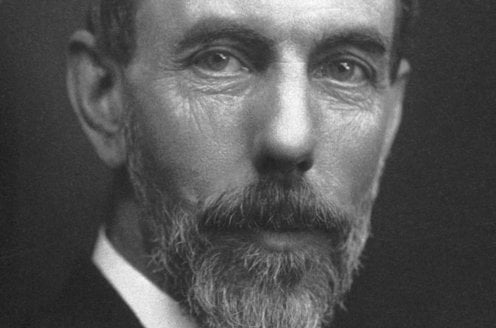
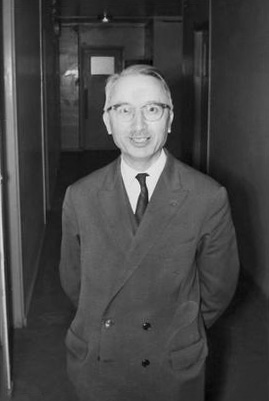
William Ramsay, a Scottish chemist whose groundbreaking work at the close of the 19th century led to a major expansion of the periodic table, is celebrated as a pioneer in the study of gases. His work in discovering a group of new elements, collectively known as the noble gases, played a crucial role in advancing the scientific understanding of chemical elements and the nature of the atmosphere.
Early Life and Education
William Ramsay was born on October 2, 1852, in Glasgow, Scotland, into a family that valued education and intellectual pursuit. His father, William Ramsay Sr., was a civil engineer, and his mother, Catherine Robertson, ensured that Ramsay's early education was well-rounded and rigorous. Ramsay attended the Glasgow Academy and later pursued chemistry at the University of Glasgow. With a burgeoning curiosity and determination, Ramsay moved to the University of Tübingen in Germany, where he completed his doctoral studies under the mentorship of the renowned organic chemist, Wilhelm Rudolph Fittig.
Professional Career and Breakthroughs
After completing his doctoral studies, Ramsay returned to Scotland and began his professional career as a chemistry lecturer at the Anderson College in Glasgow. He later moved to the University College, Bristol, and eventually joined University College London (UCL) as a professor of chemistry. It was here, at UCL, that Ramsay would spend much of his career and conduct the research that would make him a pivotal figure in the field of chemistry.
Ramsay’s most remarkable contributions came in the late 19th century when he embarked on a series of experiments with the intent of isolating and identifying new gases present in the Earth's atmosphere. His first significant success came in 1894, when Ramsay, in collaboration with English physicist Lord Rayleigh, discovered argon. Their discovery challenged the prevailing scientific understanding, which posited that the atmosphere consisted purely of nitrogen and oxygen.
In 1895, Ramsay continued his groundbreaking work by isolating helium from the mineral cleveite. Helium was previously known to exist solely within the Sun, identified through spectral analysis, but Ramsay demonstrated its presence on Earth. His findings signaled the existence of a new group of elements with distinct properties that had not yet been incorporated into the periodic table.
The Discovery of the Noble Gases
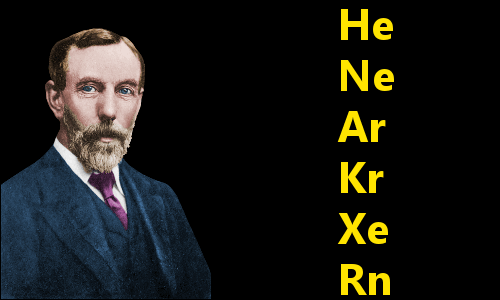
The period following Ramsay's identification of argon and helium witnessed an explosion of scientific curiosity and activity aimed at understanding these mysterious gases. Ramsay’s determination and perseverance led to the discovery of three more gases: neon, krypton, and xenon. By 1898, Ramsay had effectively added a new group of elements, which came to be known as the noble gases, filling an entire previously unoccupied group in the periodic table.
The term “noble gases” reflects their characteristic lack of chemical reactivity, a feature that distinguishes them from most other chemical elements. Ramsay’s discovery underscored the importance of studying seemingly inert elements for further understanding of atomic behavior and chemistry.
Ramsay’s work did not go unnoticed. In 1904, he was awarded the Nobel Prize in Chemistry for his discovery of the noble gases, receiving recognition from his peers for advancing chemical science significantly. His work laid the foundation for subsequent research in chemistry and laid the groundwork for other scientists to explore the applications of these gases, including their use in lighting and refrigeration technologies.
Ramsay's legacy extends beyond his scientific accomplishments. His work illustrated the importance of collaboration, innovation, and persistence in scientific endeavors. His thorough approach to experimentation and willingness to question established norms made him a model for future generations of scientists. Even today, Ramsay’s pioneering spirit continues to inspire researchers as they probe deeper into the mysteries of the elements that comprise our universe.
The Impact of Ramsay's Discoveries
The discovery of noble gases had far-reaching implications, not only reshaping the periodic table but also influencing various fields of science and technology. William Ramsay's work, which elucidated the presence of these inert elements, provided a crucial understanding of the chemical stability that could be harnessed in different ways. His identification of argon, helium, neon, krypton, and xenon expanded the known elemental universe and enriched the field of spectroscopy. Noble gases were found to emit distinct spectral lines when excited, making them valuable in the study of atomic structure and the development of new scientific instrumentation.
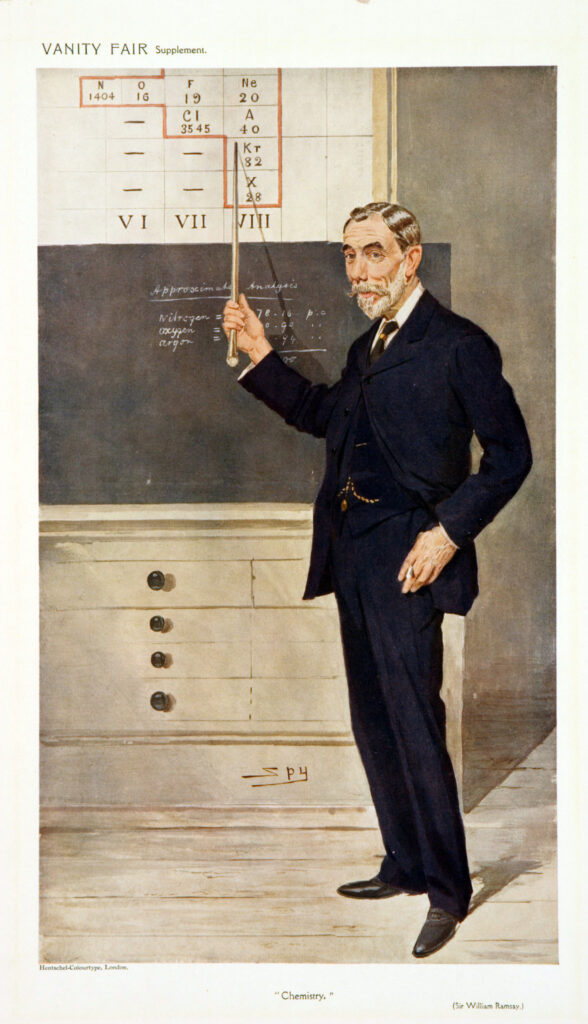
Moreover, Ramsay's discoveries revealed that noble gases occupied their own unique group in the periodic table—Group 18. This finding necessitated a revision of the periodic law, compelling scientists to reevaluate the organization and relationships of elements based on their atomic structure and properties. By introducing this entirely new category, Ramsay had not only uncovered unseen constituents of Earth's atmosphere but also provided an experimental challenge that stimulated further research into the nature of atoms and molecules.
Technological and Industrial Applications
Ramsay's contributions to chemistry soon found diverse applications that permeated everyday life and advanced industrial development. The noble gases, once thought to be scientifically inert, became central to numerous technological innovations. For instance, neon, with its striking luminescence, revolutionized the advertising industry. Its bright glow, produced by electrical discharges, allowed for the creation of eye-catching neon signs that became iconic symbols of modern cities.
Helium, while infamous initially only for its unreactive nature, has served as a crucial component in various fields. Its low boiling point makes it indispensable as a coolant in cryogenics, such as maintaining the supercooled environments necessary for superconductors and in MRI machines. The non-flammable nature of helium also makes it preferable for use in airships and balloons.
Moreover, xenon found usage in high-intensity lighting products, such as photographic flashes and cinema projection, exploiting its capability to emit intense white light upon excitation. Krypton, in turn, became an element of choice for certain types of lighting and in insulation technologies due to its low thermal conductivity.
Ramsay's Lifelong Legacy
In addition to his landmark discoveries, Ramsay was known for his dedication to education and the dissemination of scientific knowledge. Throughout his career, he contributed to the scientific community not only as a researcher but also as an educator and mentor to young chemists. Ramsay possessed a keen ability to discern potential in unexamined hypotheses and drive his students toward innovation.
His influence extended beyond the laboratory, with Ramsay actively involved in promoting science to the public and participating in several scientific organizations. He served as president of the Chemical Society and was a Fellow of the Royal Society, one of the highest honors afforded to scientists in the United Kingdom. His commitment to advancing scientific inquiry was recognized through numerous awards and accolades, further cementing his reputation as a patriarch of modern chemistry.
William Ramsay's work continues to resonate long after his death in 1916. His foresight and discovery laid down a legacy of exploration and discovery that scientists build upon to this day. The noble gases remain an integral part of scientific study, inspiring ongoing research into their properties and potential applications. Whether enabling cutting-edge research in physics, chemistry, or engineering, Ramsay's legacy is a testament to the transformative power of scientific curiosity.
As we look towards the future, the narrative of William Ramsay serves as a reminder of the importance of questioning the familiar, pursuing the unknown, and remaining steadfast in the quest for greater understanding. The invisible threads Ramsay revealed have woven themselves into the fabric of contemporary science, offering a glowing testament to the potential hidden within the uncharted and unexpected.
Challenges and Controversies
Throughout his career, William Ramsay faced numerous challenges and controversies. The scientific community of the late 19th and early 20th centuries was marked by intense debate and skepticism, particularly in the face of groundbreaking discoveries such as those proposed by Ramsay. The introduction of an entirely new group of elements—noble gases—required other scientists to reconsider longstanding chemical principles and frameworks.
One significant controversy arose regarding Ramsay's collaboration with Lord Rayleigh in the discovery of argon. Some contemporaries questioned the validity of their findings, suspecting that the properties attributed to argon could be artifacts resulting from experimental error or impurity. Ramsay, devoted to rigor and authenticity, meticulously defended his results by conducting a series of replication experiments, ultimately convincing the scientific community of the legitimacy of the discovery.
Furthermore, the reception of helium as a terrestrial element also faced initial resistance. While previously identified in the solar spectrum, the assertion that it naturally existed on Earth required a paradigm shift for many scientists. Nevertheless, Ramsay's tenacity and commitment to empirical evidence continued to validate his claims, bridging the gap between theoretical prediction and empirical reality.
Ramsay's Influence on Modern Science
William Ramsay's influence extends far beyond the discoveries of the noble gases. His rigorous scientific methodology and penchant for innovative exploration inspired a new generation of chemists and physicists. By illustrating the existence of elements that required no chemical reactions, Ramsay highlighted the importance of understanding atomic structure in its own right.
The inclusion of the noble gases in the periodic table also contributed to the development of quantum mechanics and atomic theory. These fields explore the energy states of electrons around the atomic nucleus, drawing on the characteristics of the noble gases to provide insights into electron configurations and atomic stability. Ramsay’s work thus laid the groundwork for future advances that would revolutionize both theoretical and applied sciences.
The ripples of Ramsay’s research have been felt in technological innovations and are visible in various practical applications that shape modern infrastructure. From telecommunications to medicine, the noble gases continue to be integral in technologies ranging from fiber optic systems to sophisticated imaging methods—innovations that Ramsay could only dream of in his time.
Engaging with the Legacy of Nobility in Science
The legacy of William Ramsay serves as a dynamic example of how scientific inquiry can transcend the boundaries of the known and delve into the complexities of nature. His discoveries have provided essential clues about chemical inertia and reactivity, revealing deeper truths about the elements that sustain and shape our world. Yet, the noble gases themselves coyly hint at the remaining mysteries of the universe, an endeavor in which Ramsay believed fervently until the end of his life.
Educational establishments continue to honor Ramsay’s legacy by engaging students in the study of chemistry through the prisms of history and innovation. By understanding the lineage of discovery—one element, one experiment at a time—scientists in training are inspired to pursue answers to their own unasked questions. The spirit of Ramsay endures in each laboratory where conventional elements are reconsidered, and in each classroom where creative minds approach the periodic table anew.
In sum, William Ramsay’s contribution to the scientific world is a testament to the perseverance of discovery and the allure of the unknown. His narrative is a reminder that groundbreaking work often emerges from embracing uncertainty and fostering a diligent curiosity. The noble gases, once obscure and enigmatic, now shine brightly in the constellation of chemical understanding thanks to Ramsay’s pioneering efforts. As we continue exploring the elements, guided by the curiosity and rigor that Ramsay championed, we are reminded that each discovery is but a chapter in the ever-evolving story of science.
Haporium is a revolutionary platform that lets you organize your web browsing experience with customizable dashboards and boards. Create, manage, and share your favorite content collections.
Join us today and get:
The right to be one of the first pioneers
Unlimited dashboards and boards
Access to exclusive beta features
Priority support from our team
We use cookies to enhance your experience. By continuing to use this site, you agree to our Cookie Policy.












Comments