Albert Einstein: The Genius Who Redefined the Universe
The Early Life of a Revolutionary Mind
Albert Einstein was born on March 14, 1879, in Ulm, a small city in the Kingdom of Württemberg in the German Empire. His parents, Hermann Einstein and Pauline Koch, were secular Ashkenazi Jews. From an early age, Einstein exhibited an extraordinary curiosity about the natural world. A pivotal moment in his childhood occurred when his father gave him a compass. The unseen force guiding the needle fascinated him, planting the seed for his lifelong quest to understand the hidden laws of the universe.
Einstein’s early education was unconventional. He struggled with the rigid structure of traditional schooling, preferring independent learning. At age 12, he taught himself algebra and geometry, swiftly mastering advanced mathematical concepts. His rebellious nature led him to clash with authority figures, but his intellectual brilliance soon became undeniable.
The Road to Scientific Discovery
In 1895, Einstein applied to the Swiss Federal Polytechnic in Zurich but failed the entrance exam. Undeterred, he completed his secondary education in Aarau, Switzerland, and was admitted the following year. There, he met Mileva Marić, a fellow physicist who would later become his first wife. Though their marriage faced numerous challenges, their intellectual partnership was significant in Einstein’s early work.
After graduating in 1900, Einstein struggled to find an academic position due to his reputation as a non-conformist. He worked as a patent examiner in Bern, a job that granted him the mental freedom to explore scientific ideas in his spare time. The year 1905, known as his "Annus Mirabilis" (Miracle Year), marked the publication of four groundbreaking papers that reshaped physics forever.
The Miracle Year: 1905
Einstein’s 1905 papers addressed fundamental questions in physics, each contributing to a new understanding of the universe:
1. The Photoelectric Effect
Einstein proposed that light behaves as discrete packets of energy called "quanta" (later named photons). This idea, foundational to quantum mechanics, earned him the Nobel Prize in Physics in 1921.
2. Brownian Motion
He provided empirical evidence for the existence of atoms by explaining the erratic movement of particles suspended in fluid—a phenomenon known as Brownian motion.
3. Special Theory of Relativity
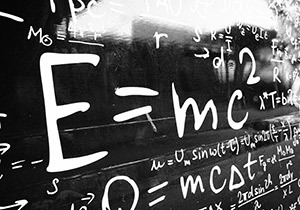
Einstein introduced the concept that the laws of physics are the same for all non-accelerating observers and that the speed of light is constant. His famous equation,
E=mc², emerged from this theory, linking energy and mass.
4. Mass-Energy Equivalence
This principle demonstrated that mass and energy are interchangeable, a cornerstone of modern physics with profound implications for nuclear energy and cosmology.
The Rise to Scientific Stardom
Einstein’s work eventually gained recognition, and by 1909, he secured a professorship at the University of Zurich. His career advanced rapidly as he moved to Prague, returned to Zurich, and finally settled in Berlin in 1914, where he became a director at the Kaiser Wilhelm Institute for Physics.
However, his personal life was tumultuous. His marriage to Mileva deteriorated, and they divorced in 1919. That same year, his General Theory of Relativity—a refinement of his earlier work incorporating gravity—was confirmed during a solar eclipse. This validation catapulted Einstein to international fame.
The General Theory of Relativity
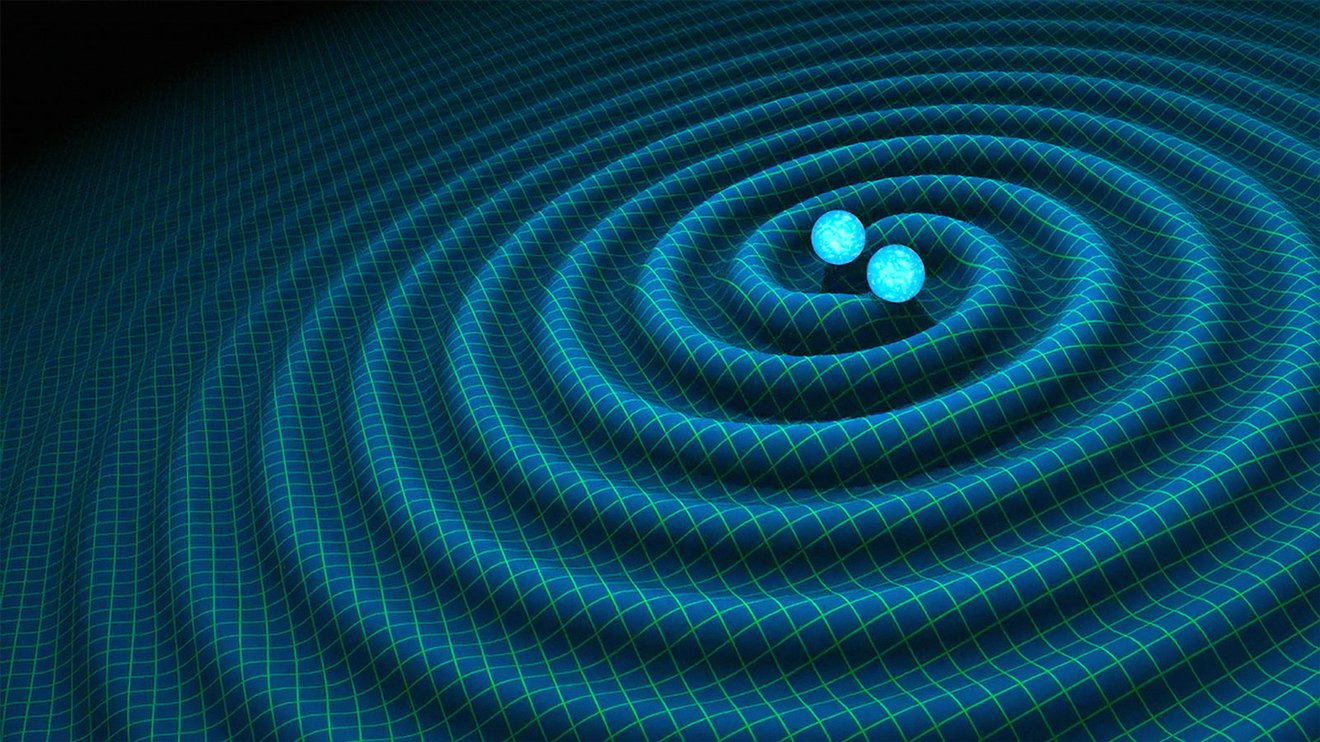
Einstein’s general relativity redefined gravity as the curvature of spacetime caused by mass. Unlike Newton’s concept of gravity as a force, Einstein’s model described it as the warping of the cosmic fabric. Predictions like the bending of light around massive objects and gravitational waves became pivotal to astrophysics.
Einstein’s Influence Beyond Physics
Beyond his scientific achievements, Einstein was a vocal advocate for civil rights, pacifism, and intellectual freedom. He fled Nazi Germany in 1933, renouncing his citizenship and settling in the United States, where he joined the Institute for Advanced Study in Princeton. There, he continued his work while engaging in political activism, including warnings against nuclear proliferation.
His legacy is more than equations—it’s a testament to the power of curiosity, creativity, and courage in the face of convention.
[To be continued…]
Einstein in America: Exile and Legacy
When Albert Einstein arrived in the United States in 1933, he was already a global icon. The rise of the Nazi regime and the increasing persecution of Jews in Germany forced him to leave Europe permanently. He settled in Princeton, New Jersey, where he joined the Institute for Advanced Study—an intellectual sanctuary that allowed him to focus on his work without the constraints of university bureaucracy. Though he intended to continue his research in theoretical physics, his influence soon extended into politics, ethics, and education.
The Manhattan Project and Nuclear Concerns
Einstein’s famous equation,
E=mc², laid the theoretical foundation for nuclear energy, but he was not directly involved in the development of the atomic bomb. Yet, in 1939, he co-signed a letter to President Franklin D. Roosevelt warning of Nazi Germany’s potential to create nuclear weapons. This letter is often credited with sparking the U.S. government’s interest in atomic research, which eventually led to the Manhattan Project.
However, Einstein deeply regretted his indirect role in the bomb’s creation after seeing the devastation of Hiroshima and Nagasaki in 1945. He became an outspoken advocate for nuclear disarmament, co-founding the Emergency Committee of Atomic Scientists and warning of the existential dangers of unchecked militarization. "The unleashed power of the atom has changed everything save our modes of thinking," he famously remarked.
The Quest for a Unified Field Theory
In his later years, Einstein dedicated himself to the unification of physics—an elusive "Theory of Everything" that would reconcile general relativity with quantum mechanics. Though he worked tirelessly, this grand vision never materialized. Many physicists considered his quest quixotic, but his relentless pursuit demonstrated his belief in the fundamental order of the universe.
Einstein’s reluctance to accept certain aspects of quantum mechanics, particularly its inherent randomness ("God does not play dice with the universe"), put him at odds with peers like Niels Bohr. Despite this, his debates with contemporaries fueled deeper inquiries into the nature of reality.
His Personal Life in Princeton
Einstein’s second marriage, to Elsa Löwenthal (his cousin), lasted until her death in 1936. He lived modestly in Princeton, developing a reputation as an absent-minded professor—often seen wandering in his signature disheveled hair and baggy sweaters. His playful personality endeared him to the public; he enjoyed sailing, playing the violin, and engaging with local children who admired his wisdom and humor.
One famous anecdote tells of a young girl who asked him for help with her math homework. Rather than dismiss her, he spent an afternoon working through the problems, later joking, "Do not worry about your difficulties in mathematics—I assure you mine are far greater."
Einstein’s Political and Humanitarian Activism
Beyond physics, Einstein was a passionate advocate for civil rights, Zionism, and global peace. He supported the establishment of a Jewish homeland but envisioned Israel as a place of coexistence, not exclusion. His outspoken criticism of racism in America led to FBI surveillance under J. Edgar Hoover, who wrongly suspected him of communist sympathies.
He was also a vocal opponent of McCarthyism, writing, "The strength of the Constitution lies in the guarantee it gives that minority opinions will be heard." His moral clarity made him a symbol of intellectual freedom during the Cold War.
Last Years and Death
In 1955, Einstein experienced internal bleeding caused by a ruptured abdominal aneurysm. When doctors suggested surgery, he refused, stating, "I have done my share; it is time to go." He passed away on April 18 at the age of 76. His brain was removed (without initial family consent) for scientific study, and his body was cremated. His ashes were scattered in an undisclosed location.
Yet, even in death, his legacy endured. The discovery of gravitational waves in 2015—exactly a century after his prediction—reaffirmed his unparalleled contributions to science.
Einstein’s Cultural Impact
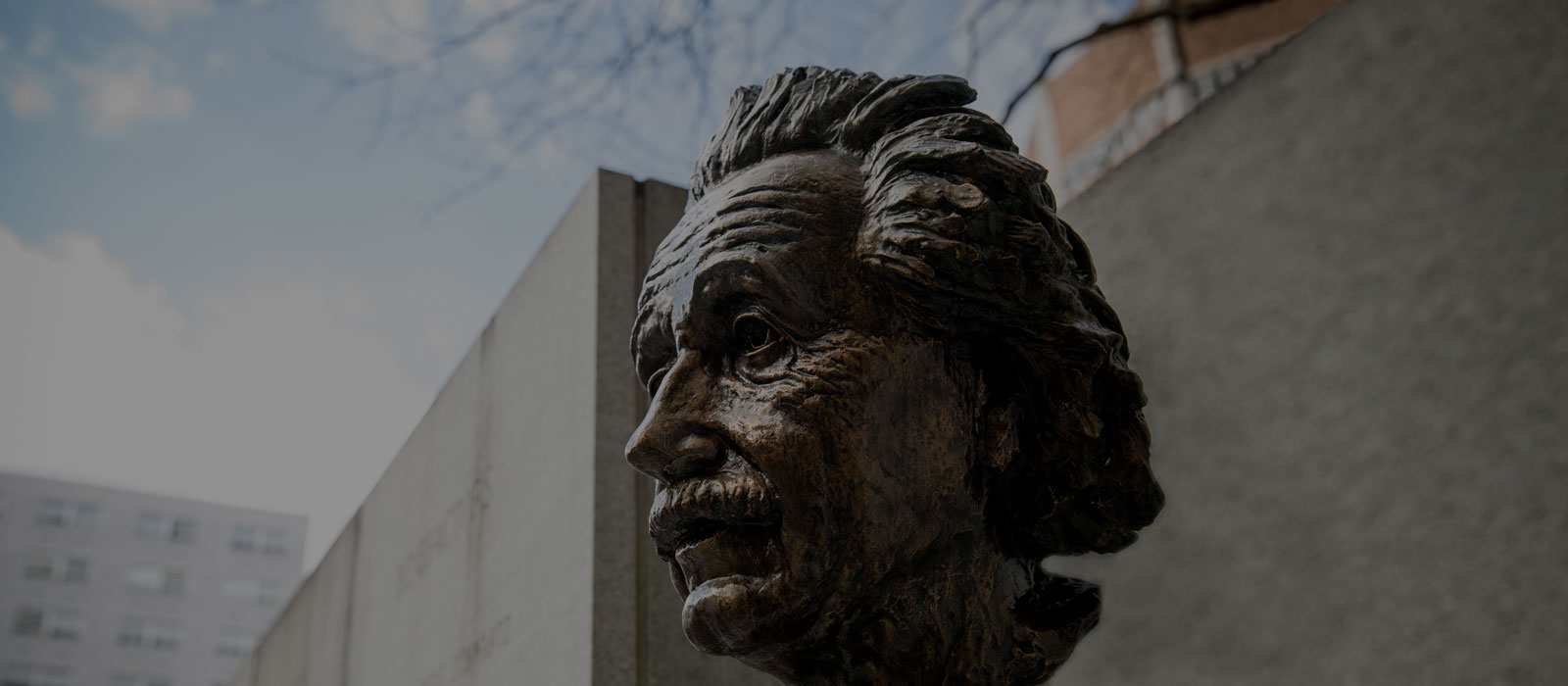
Few scientists have permeated popular culture like Einstein. His wild-haired visage has become shorthand for genius, appearing on posters, T-shirts, and memes. Yet, he is often misunderstood—reduced to a caricature rather than appreciated for his revolutionary ideas.
Universities still teach his theories, and space telescopes like the James Webb probe phenomena he first described. The term "Einstein" is synonymous with brilliance, but his true greatness lay in his relentless questioning of the universe’s deepest secrets.
[To be continued…]
The Scientific Legacy of Einstein’s Unfinished Work
While Einstein passed away in 1955, his theories continue to shape modern physics in ways even he might not have anticipated. The study of black holes, gravitational waves, and the expansion of the universe all trace their foundations back to his revolutionary ideas. Today's physicists still grapple with questions Einstein first formulated nearly a century ago, proving how far ahead of his time he truly was.
The Posthumous Validation of Gravitational Waves
One of Einstein's most incredible predictions was the existence of gravitational waves - ripples in spacetime caused by massive cosmic events. For decades after he proposed them in 1916, this concept remained theoretical. In 2015, the LIGO (Laser Interferometer Gravitational-Wave Observatory) experiment finally detected these waves from colliding black holes 1.3 billion light-years away, exactly matching Einstein's calculations. This monumental discovery opened an entirely new way to observe the universe.
Einstein's Continuing Influence on Modern Technology
Remarkably, many technologies we rely on today directly result from Einstein's theories:
- GPS systems must account for time dilation effects predicted by relativity to maintain accuracy
- Semiconductor technology and lasers (Nobel Prize-winning applications of his photoelectric effect work)
- Medical imaging technologies like PET scans, which rely on particle annihilation (E=mc² in action)
- Solar panels, which convert light to electricity through the photoelectric effect
These applications demonstrate how theoretical physics manifests in practical innovations that shape our daily lives.
The Ongoing Quest for Quantum Gravity
Einstein spent his final decades pursuing a unified field theory that could reconcile gravity with quantum mechanics. Though he didn't succeed, this quest continues today through string theory, loop quantum gravity, and other approaches. The recent successful image of a black hole's event horizon (another Einsteinian prediction) has provided new data for these investigations. Modern physicists view completing Einstein's dream of unification as the "holy grail" of theoretical physics.
Einstein as the Quintessential Scientific Mind
What made Einstein's thinking so uniquely powerful? Cognitive scientists have identified several key traits that contributed to his genius:
- Visual imagination: He conducted "thought experiments" (like chasing a light beam) that revealed deep truths
- Intellectual independence: He questioned basic assumptions others took for granted
- Persistence: He spent years refining relativity despite initial skepticism
- Interdisciplinary thinking: He drew connections between physics, philosophy, and mathematics
His approach to problem-solving continues to influence how we teach science and foster creativity.
The Human Side of Genius
Beyond the science, Einstein's personal philosophy offers timeless wisdom:
- "Imagination is more important than knowledge"
- "The important thing is not to stop questioning"
- "Try not to become a man of success, but rather a man of value"
These insights reveal his belief in maintaining childlike curiosity throughout life. His ability to explain complex concepts simply ("If you can't explain it to a six-year-old, you don't understand it yourself") demonstrates his mastery of both science and communication.
The Enduring Mystery of Einstein's Brain
After his death, pathologist Thomas Harvey famously preserved Einstein's brain without permission, leading to decades of questionable research. While initial studies found some unusual features (like extra glial cells in certain regions), modern neuroscience suggests his genius likely came from how he used his brain rather than its physical structure alone. The fascination with his brain itself reflects our cultural obsession with understanding extraordinary intelligence.
Einstein in the 21st Century
Today, Einstein remains more than just a historical figure - he's an enduring symbol:
- His face is one of the most recognized globally
- "Einstein" has become synonymous with genius
- Educators use his life story to inspire students in STEM
- Artists and writers continue reinterpreting his legacy
The digital age has made his once-radical ideas accessible to anyone with internet access, spreading his influence to new generations.
A Legacy That Continues to Unfold
Einstein's impact extends beyond physics into how we conceptualize our place in the universe. From the microscopic world of quantum mechanics to the vast structure of spacetime, his work defines the framework of modern physics. As astrophysicist Neil deGrasse Tyson noted, "Everyone knows Einstein was a genius, but few appreciate how his work touches nearly every aspect of our technological society."
While we've confirmed many of his predictions, others - like wormholes and time dilation effects - continue to challenge scientists. The James Webb Space Telescope and next-generation particle accelerators may reveal more Einsteinian phenomena we can't yet imagine.
His greatest legacy may be the example he set: a humble, curious thinker who revolutionized our understanding of reality while maintaining deep humanistic values. As we solve today's great scientific mysteries - dark energy, quantum computing, the origin of the universe - we're still following the path Einstein illuminated.
In the end, perhaps Einstein's most profound lesson was this: the universe is strange, wonderful, and full of undiscovered truths waiting for those who dare to question everything. His life reminds us that imagination, when paired with rigorous thought, can reveal the deepest secrets of reality. The continuing exploration of his work proves that true genius never stops giving - even a century later, we're still catching up to Einstein.
















Comments