Explore Any Narratives
Discover and contribute to detailed historical accounts and cultural stories. Share your knowledge and engage with enthusiasts worldwide.
The Omicron symbol (Ο, ο) is the 15th letter of the Greek alphabet and holds significant importance in mathematics, science, and engineering. Often confused with the Latin letter "O," Omicron serves as a critical symbol in various technical notations, most notably in Big O notation (O(f(n))), which is fundamental in asymptotic analysis and algorithm complexity. This article explores the origins, applications, and enduring relevance of the Omicron symbol in modern scientific and mathematical contexts.
The Omicron symbol traces its roots back to the Phoenician letter ʿayin, which was later adapted into the Greek alphabet. Despite its visual similarity to the Latin "O," Omicron has carved out a distinct identity in technical fields. Its use in mathematical notation helps avoid ambiguity, particularly in complex equations and algorithms where precision is paramount.
Historically, Omicron has been utilized in various contexts, but its most prominent role emerged in the realm of asymptotic analysis. The symbol's adoption in Big O notation is largely attributed to the influential work of American mathematician Donald Knuth, who formalized its use in algorithm analysis. This notation has since become a cornerstone in computer science, providing a standardized way to describe the efficiency and scalability of algorithms.
In the field of computer science and mathematics, Big O notation (O(g(n))) is indispensable for quantifying the growth rates of functions. It is particularly useful in describing the worst-case scenario for algorithmic complexity, offering insights into how an algorithm's performance scales with input size.
The formal definition of Big O notation states that a function f(n) is O(g(n)) if there exist constants c > 0 and n₀ such that for all n ≥ n₀, the inequality |f(n)| ≤ c|g(n)| holds. This notation helps in classifying algorithms based on their efficiency, such as:
Big O notation is extensively used in the analysis of algorithms to determine their efficiency. For example, a sorting algorithm with O(n log n) complexity is generally more efficient than one with O(n²) complexity for large datasets. This notation aids developers and researchers in making informed decisions about algorithm selection and optimization.
While Big O notation is the most well-known application of the Omicron symbol, it also appears in other mathematical contexts, albeit less frequently. These include:
In relational algebra, Omicron can denote the unary projection, a fundamental operation used in database theory to select specific attributes from a relation.
In multivariable calculus, Omicron may represent specific regions or constants, although this usage is less common compared to its role in asymptotic analysis.
Although there have been no major developments specific to the Omicron symbol in pure mathematics post-2020, its application in Big O notation remains central to algorithm analysis. The rise of artificial intelligence and machine learning has further emphasized the importance of understanding algorithmic complexity, making Omicron an indispensable tool in modern computational research.
The increasing complexity of algorithms in AI and machine learning has led to a renewed focus on refined notations such as Θ (theta) for tight bounds, alongside Big O notation. This trend underscores the ongoing relevance of Omicron in describing and optimizing algorithmic performance.
Educational platforms, including YouTube and online courses, have played a significant role in popularizing Big O notation among students and professionals. These resources provide accessible explanations and practical examples, making complex mathematical concepts more approachable.
The Omicron symbol's enduring role in mathematics and science highlights the profound impact of Greek letters on technical notation. From its origins in the Phoenician alphabet to its pivotal role in Big O notation, Omicron continues to be a vital tool in describing and analyzing algorithmic complexity. As technology advances, the importance of understanding and utilizing this symbol in computational research and education remains undiminished.
The Omicron symbol plays a pivotal role in computer science, particularly in the analysis of algorithms. Its use in Big O notation allows researchers and developers to classify algorithms based on their efficiency and scalability. This section delves into the practical applications of Omicron in algorithm analysis and its impact on computational research.
Algorithms are often categorized based on their time and space complexity, which are expressed using Big O notation. This classification helps in understanding the performance characteristics of algorithms and their suitability for different types of problems. Some common classifications include:
Understanding Big O notation is crucial for optimizing algorithms in real-world applications. For instance, a sorting algorithm with O(n log n) complexity, such as Merge Sort or Quick Sort, is generally more efficient than a Bubble Sort algorithm with O(n²) complexity for large datasets. This knowledge aids developers in selecting the most efficient algorithms for their specific use cases.
Beyond its role in computer science, the Omicron symbol also appears in various mathematical notations and set theory. This section explores its applications in these fields and highlights its significance in advanced mathematical research.
In set theory, Omicron is often used in conjunction with other Greek letters to denote ordinal numbers and cardinalities. For example, the first infinite ordinal is represented by ω (omega), and the first uncountable ordinal is denoted by ω₁. These notations are fundamental in understanding the structure and properties of infinite sets.
In relational algebra, the Omicron symbol can represent the unary projection operation, which is used to select specific attributes from a relation. This operation is essential in database theory and plays a crucial role in query optimization and data manipulation.
The Omicron symbol is not limited to mathematics and computer science; it also finds applications in various scientific and engineering fields. This section explores its uses in these domains and highlights its versatility as a technical notation.
In physics and engineering, Omicron is often used to denote specific constants, variables, or regions in equations. For example, it can represent a particular region in multivariable calculus or a constant in a physical equation. This usage helps in maintaining clarity and precision in technical documentation.
In statistical mechanics and thermodynamics, the Omicron symbol can be used to represent various thermodynamic properties or statistical measures. Its use in these fields underscores the importance of precise notation in describing complex physical systems.
The increasing popularity of Big O notation and the Omicron symbol has led to a proliferation of educational resources and learning tools. This section highlights some of the most effective resources for understanding and mastering these concepts.
Numerous online courses and tutorials are available that cover Big O notation and its applications in algorithm analysis. Platforms like Coursera, Udemy, and Khan Academy offer comprehensive courses on algorithms and data structures, providing students with the knowledge and skills needed to excel in computer science.
YouTube has become a valuable resource for learning about Big O notation and the Omicron symbol. Many educators and experts have created video explanations that break down complex concepts into easily digestible segments. These videos often include visual aids and practical examples, making them an effective tool for visual learners.
Several books and textbooks provide in-depth coverage of Big O notation and its applications. Notable examples include:
As technology continues to advance, the applications of the Omicron symbol and Big O notation are expected to evolve. This section explores some of the emerging trends and future applications of these concepts in various fields.
The rise of artificial intelligence and machine learning has led to a renewed focus on algorithmic complexity and efficiency. As these fields continue to grow, the importance of understanding and utilizing Big O notation will only increase. Researchers and developers will need to optimize algorithms to handle the vast amounts of data and computational power required for AI and ML applications.
Quantum computing represents a paradigm shift in computational research, and the Omicron symbol is likely to play a role in this emerging field. As quantum algorithms are developed and refined, the use of Big O notation will be crucial in describing their complexity and efficiency.
The versatility of the Omicron symbol makes it a valuable tool in various interdisciplinary applications. From bioinformatics to financial modeling, the use of precise mathematical notation is essential for describing complex systems and processes. As these fields continue to evolve, the importance of understanding and utilizing the Omicron symbol will only grow.
The Omicron symbol and its applications in Big O notation have become indispensable tools in mathematics, computer science, and various scientific and engineering fields. From its origins in the Phoenician alphabet to its pivotal role in modern computational research, Omicron continues to be a vital symbol in describing and analyzing complex systems and algorithms. As technology advances, the importance of understanding and utilizing this symbol in educational and professional contexts remains undiminished.
Beyond its technical applications, the Omicron symbol carries cultural and historical significance. Its adoption in mathematics and science reflects the enduring influence of the Greek alphabet on modern technical notation. This section explores the broader impact of Omicron and its role in shaping the language of mathematics and science.
The use of Greek letters in mathematical and scientific notation dates back centuries, with symbols like Omicron providing a universal language for complex concepts. The Greek alphabet's precision and clarity have made it an ideal choice for technical notation, ensuring consistency and avoiding ambiguity in equations and formulas.
Historically, the Omicron symbol has been used in various contexts, from ancient geometry to modern computing. Its evolution reflects the progression of mathematical thought and the increasing complexity of scientific research. By understanding the historical context of Omicron, we gain insight into the development of mathematical notation and its impact on modern science.
Despite its widespread use, the Omicron symbol and Big O notation can be challenging for students and professionals alike. This section addresses common misconceptions and provides guidance on overcoming these challenges.
One common misconception is that Big O notation provides an exact measure of an algorithm's runtime. In reality, it describes the upper bound of the algorithm's growth rate, offering a worst-case scenario rather than a precise measurement. Another misconception is that Omicron is interchangeable with the Latin letter "O," which can lead to confusion in technical documentation.
To overcome these challenges, it is essential to understand the formal definition of Big O notation and its applications. Educational resources, such as online courses and textbooks, can provide valuable insights and practical examples. Additionally, engaging with the broader mathematical community through forums and discussions can help clarify any misunderstandings.
To further illustrate the importance of the Omicron symbol and Big O notation, this section presents case studies and practical applications in various fields.
Sorting algorithms are a fundamental aspect of computer science, and their efficiency is often described using Big O notation. For example, the Merge Sort algorithm has a time complexity of O(n log n), making it more efficient than the Bubble Sort algorithm with O(n²) complexity for large datasets. This case study highlights the practical implications of understanding and utilizing Big O notation in algorithm design.
In database theory, the Omicron symbol can represent the unary projection operation, which is crucial for query optimization. By selecting specific attributes from a relation, this operation helps improve the efficiency of database queries, demonstrating the practical applications of Omicron in data management and manipulation.
As technology continues to advance, the applications of the Omicron symbol and Big O notation are expected to evolve. This section explores the future trends and emerging applications of these concepts in various fields.
The rise of artificial intelligence, machine learning, and quantum computing presents new opportunities and challenges for the use of Big O notation. As these fields continue to grow, the importance of understanding and utilizing precise mathematical notation will only increase. Researchers and developers will need to optimize algorithms to handle the vast amounts of data and computational power required for these applications.
The versatility of the Omicron symbol makes it a valuable tool in various interdisciplinary applications. As these fields continue to evolve, the importance of understanding and utilizing the Omicron symbol will only grow.
The Omicron symbol and its applications in Big O notation have become indispensable tools in mathematics, computer science, and various scientific and engineering fields. From its origins in the Phoenician alphabet to its pivotal role in modern computational research, Omicron continues to be a vital symbol in describing and analyzing complex systems and algorithms.
Throughout this article, we have explored the multifaceted role of the Omicron symbol in mathematics and science. Key takeaways include:
As technology advances, the importance of understanding and utilizing the Omicron symbol in educational and professional contexts remains undiminished. Its enduring legacy in mathematics and science underscores the profound impact of Greek letters on technical notation, from ancient geometry to modern computing. By embracing the precision and clarity of the Omicron symbol, we can continue to push the boundaries of scientific research and innovation.
Your personal space to curate, organize, and share knowledge with the world.
Discover and contribute to detailed historical accounts and cultural stories. Share your knowledge and engage with enthusiasts worldwide.
Connect with others who share your interests. Create and participate in themed boards about any topic you have in mind.
Contribute your knowledge and insights. Create engaging content and participate in meaningful discussions across multiple languages.
Already have an account? Sign in here
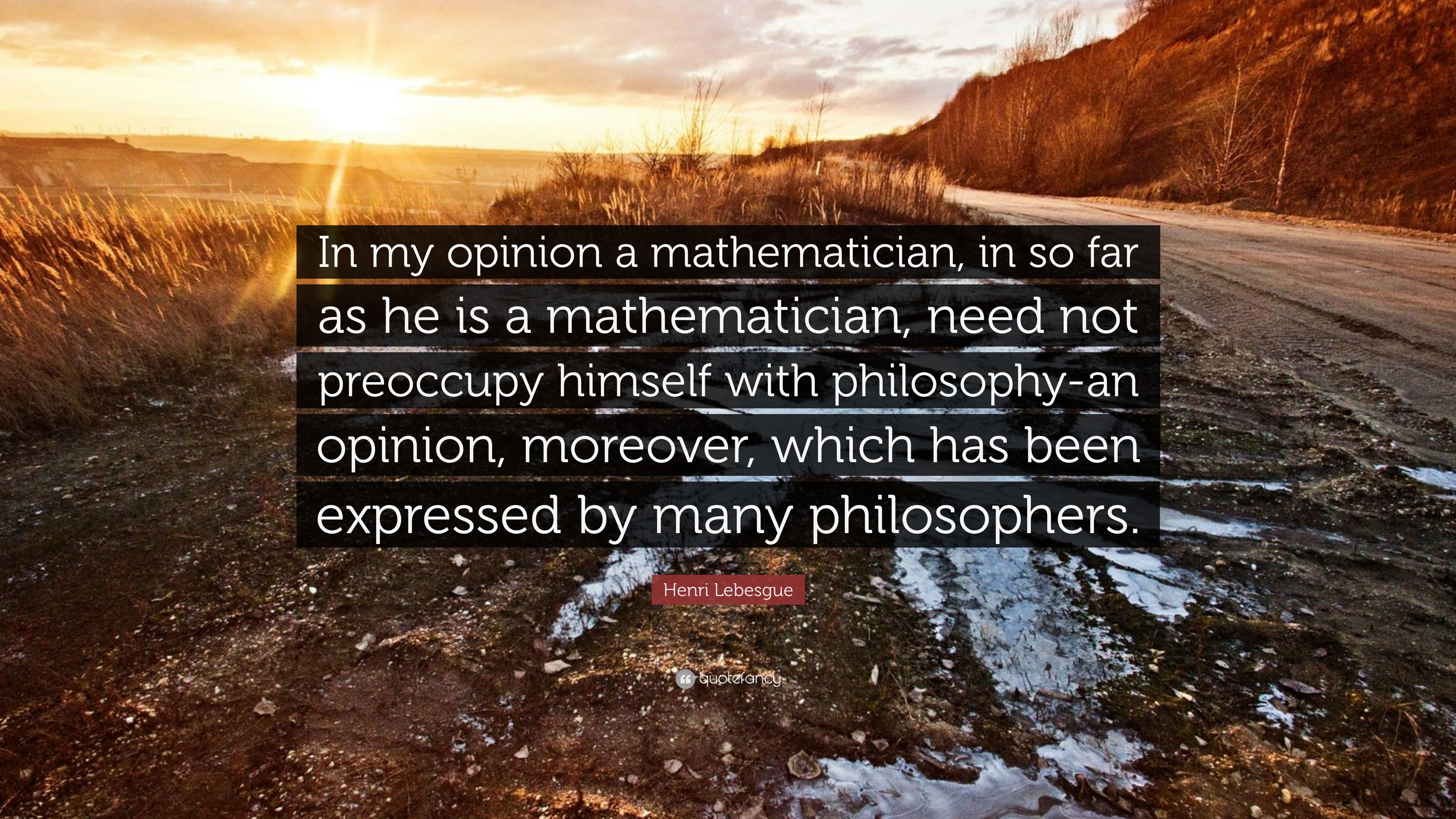
Henri Lebesgue: The Mathematician Who Revolutionized Integration Henri Lebesgue was a French mathematician whose ground...
View Board
Explore the remarkable legacy of Henri Cartan, the pioneering mathematician whose groundbreaking contributions to algebr...
View Board
Explore the life and legacy of Jules Henri Poincaré, a prodigy whose innovative work bridged mathematics and physics. Di...
View Board
Isaac Newton was a pioneering scientist whose laws of motion and universal gravitation revolutionized our understanding ...
View Board
Émile Borel: A Pioneering Mathematician and Physicist The Early Life and Education of Émile Borel Émile Borel, born on...
View Board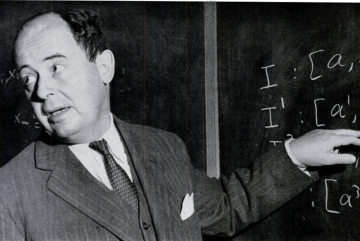
John von Neumann, the 20th-century polymath, revolutionized computing, game theory, nuclear physics, and AI. Explore his...
View Board
Discover the life and work of Albert Einstein, a renowned physicist and one of the most influential scientists in histor...
View Board
John Napier, a Scottish mathematician, invented logarithms, revolutionizing calculations and paving the way for signific...
View Board
Discover how Isaac Newton revolutionized science with his laws of motion, universal gravitation, and optics. Explore his...
View Board
> **Meta Description:** Explore the life and legacy of Albert Einstein, the genius who reshaped physics with relativity,...
View Board
**Meta Description:** Explore the life and legacy of Hermann von Helmholtz, the 19th-century polymath who revolutionized...
View Board
768 **Meta Description:** Explore the life of Enrico Fermi, the architect of the nuclear age. From quantum theory to th...
View Board
Explore the profound legacy of Donald Knuth, the visionary architect of algorithms and a luminary in computer science. D...
View Board
Mae Jemison: A Pioneering Astronaut and Champion of STEM Education The world was awe-struck when Mae Jemison became the...
View Board
"Explore Henri Poincaré's groundbreaking work in math, physics, and philosophy, shaping modern science through chaos the...
View Board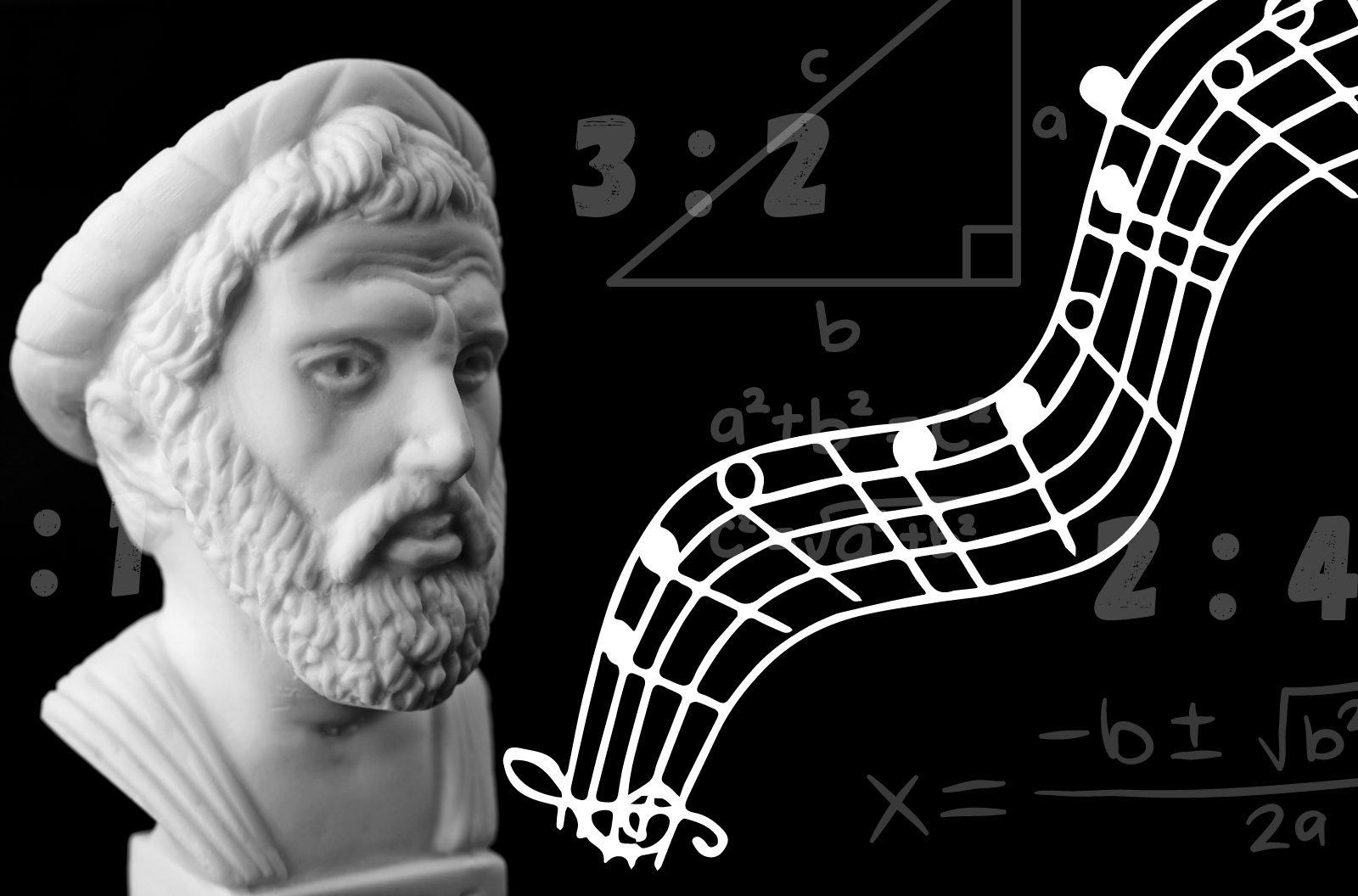
**Meta Description:** Discover *Pythagoras*, the ancient Greek philosopher who shaped mathematics, philosophy, and sci...
View Board
Last news about Science Week from 21/04/2025 to 27/04/2025
View Board
Auguste Comte: Father of Sociology and Positivism Introduction to Auguste Comte Auguste Comte, born Isidore Auguste Mar...
View Board
Last news about Science Week from 28/04/2025 to 04/05/2025
View Board
Last news about Science Week from 10/11/2025 to 16/11/2025
View Board
Comments