
Explore Any Narratives
Discover and contribute to detailed historical accounts and cultural stories. Share your knowledge and engage with enthusiasts worldwide.
Auguste Comte, born Isidore Auguste Marie François Xavier Comte on January 19, 1798, in Montpellier, France, is widely regarded as the founder of sociology and the pioneer of positivism. His groundbreaking work laid the foundation for modern social sciences and influenced generations of philosophers, scientists, and sociologists. Comte's Law of Three Stages and his vision of a scientific approach to society revolutionized the way we understand human progress and social order.
Comte's intellectual journey began at the prestigious École Polytechnique in Paris, where he studied mathematics and science. His early exposure to rigorous scientific methods shaped his later philosophical ideas. After leaving the École Polytechnique, Comte became the secretary to Henri de Saint-Simon, a prominent social theorist. This collaboration significantly influenced Comte's thinking, particularly his views on social reform and the role of science in society.
One of Comte's most significant contributions is his Law of Three Stages, which describes the evolution of human thought and societal development. According to Comte, human knowledge progresses through three distinct stages:
In the theological stage, humans explain natural phenomena and social events through religious and supernatural beliefs. This stage is characterized by a reliance on divine entities and mystical explanations.
The metaphysical stage marks a transition from religious explanations to abstract, philosophical concepts. During this stage, people use metaphysical ideas to understand the world, often relying on complex, untraceable theories.
The positive stage is the final and most advanced stage, where humans rely on scientific methods and empirical evidence to understand and explain the world. Comte believed that this stage would lead to a more ordered and rational society.
Comte is credited with coining the term "sociology" and establishing it as a scientific discipline. He envisioned sociology as the "queen of sciences", synthesizing knowledge from various scientific fields to create a comprehensive understanding of society.
Comte's most influential works include:
Comte's ideas have had a profound impact on various fields, including philosophy, sociology, and political science. His emphasis on empirical evidence and scientific methods laid the groundwork for modern social sciences. However, his later works, particularly his proposals for a secular religion and authoritarian social structures, have been met with criticism and controversy.
Auguste Comte's legacy as the father of sociology and the pioneer of positivism is undeniable. His Law of Three Stages and his vision of a scientific approach to society have shaped modern social sciences and continue to influence contemporary thought. While his later works have sparked debate, Comte's contributions to the field of sociology remain foundational and enduring.
In his later years, Auguste Comte developed a controversial system known as the "Religion of Humanity". This quasi-religious framework aimed to replace traditional theological systems with a secular, scientific worldview. Comte envisioned a society organized around humanistic principles, complete with rituals, a positivist calendar, and a moral authority structure.
Comte's Religion of Humanity was designed to provide a moral and social framework for a scientific society. Key elements included:
While Comte's vision was innovative, it also faced significant criticism. Detractors argued that his system was authoritarian and overly prescriptive. The blend of scientific principles with religious-like structures was seen by some as contradictory to the empirical foundations of positivism. Despite these criticisms, the Religion of Humanity remains a fascinating aspect of Comte's later work, illustrating his commitment to creating a cohesive, scientifically-grounded society.
Auguste Comte's influence extends deeply into the methodologies of modern social sciences. His emphasis on empirical evidence and systematic observation laid the groundwork for contemporary research practices. Today, many social scientists continue to draw on Comte's principles, even as they adapt and refine his original ideas.
Comte's advocacy for empirical research transformed the way social scientists approach their studies. Key contributions include:
While 20th-century logical positivism has largely replaced Comte's original positivism, his core ideas remain influential. Contemporary social sciences often employ:
To fully appreciate Auguste Comte's contributions, it is essential to understand the intellectual and historical context in which he worked. Post-Revolutionary France was a period of significant social and political upheaval, which deeply influenced Comte's philosophical development.
The French Revolution (1789–1799) and its aftermath created a society in flux, searching for stability and order. Comte's work was, in part, a response to this chaos. He sought to:
Comte's collaboration with Henri de Saint-Simon, a prominent social theorist, was pivotal in shaping his ideas. Saint-Simon's focus on industrialization and social reform provided a framework that Comte expanded upon. Key influences included:
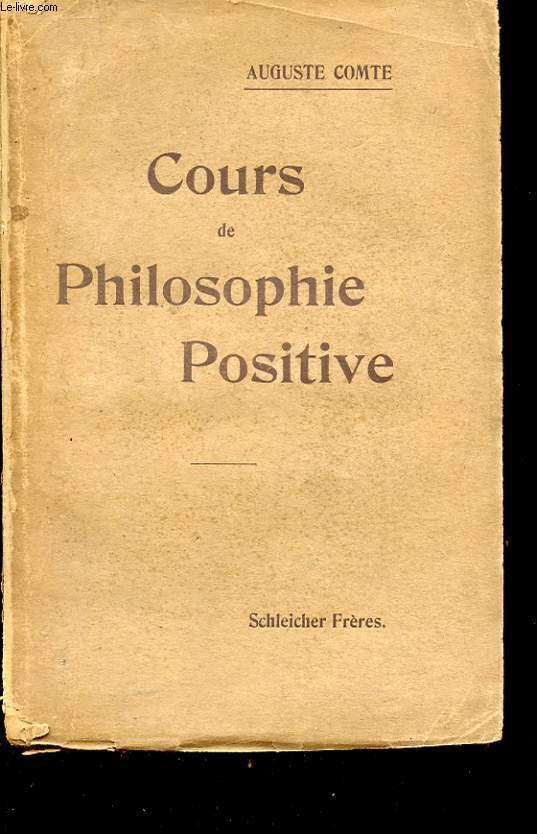
Auguste Comte's writings are foundational to the fields of sociology and philosophy of science. His two major works, Cours de philosophie positive and Système de politique positive, provide a comprehensive overview of his theories and visions for society.
Published between 1830 and 1842, this six-volume work is considered Comte's magnum opus. It outlines his philosophy of positivism and introduces the Law of Three Stages. Key themes include:
Published between 1851 and 1854, this four-volume work delves into Comte's political and social theories. It introduces the Religion of Humanity and provides a detailed plan for a scientifically-organized society. Notable aspects include:
Recent academic discussions have led to a reappraisal of Auguste Comte's contributions and controversies. Modern scholars recognize his foundational role in the philosophy of science while critically examining his political and social prescriptions.
Contemporary philosophers highlight Comte's systematic approach to scientific knowledge. His efforts to develop philosophies of mathematics, physics, chemistry, and biology prefigure modern interdisciplinary studies. Key points of recognition include:
While Comte's early work on positivism is widely respected, his later political and social proposals have faced criticism. Scholars point out:
Despite the controversies surrounding his later work, Auguste Comte's legacy in sociology remains robust. His foundational concepts continue to influence the field, even as they evolve with new theoretical and methodological advancements.
Comte's contributions to sociology include several enduring ideas:
Comte's ideas have influenced many key figures in sociology, including:
Auguste Comte's impact on the social sciences is both profound and complex. As the founder of sociology and a pioneering philosopher of science, his contributions have shaped modern research methodologies and theoretical frameworks. However, his later work, particularly the Religion of Humanity, remains a subject of debate and criticism.
By understanding Comte's historical context, intellectual influences, and key works, we gain a deeper appreciation for his enduring legacy. While some of his ideas may seem outdated or controversial today, his emphasis on empirical evidence, systematic observation, and interdisciplinary synthesis continues to inspire and guide social scientists around the world.
Today, Auguste Comte's ideas continue to resonate in both academic and practical contexts. His emphasis on empirical evidence and systematic observation remains a cornerstone of modern social science research. While the grandiose claims of early positivism have been tempered, the core principle that scientific methods can illuminate social phenomena is widely accepted.
Comte's legacy is evident in several contemporary fields:
Modern scholars often critique Comte's more rigid prescriptions while embracing his methodological insights. For example, the idea that science is the sole source of legitimate knowledge has been moderated to acknowledge the value of qualitative and interpretative approaches. Nonetheless, his call for rigorous, cumulative research remains influential.
Comte's work laid the groundwork for many prominent sociologists and philosophers. Understanding how his ideas evolved through the contributions of later thinkers highlights the dynamic nature of social theory.
Émile Durkheim, often called the father of modern sociology, built directly on Comte's framework. Durkheim adopted the idea of sociology as a scientific discipline and expanded it with concepts like social facts and collective consciousness. His empirical studies, such as Suicide, demonstrated Comte's methods in action.
Herbert Spencer took Comte's Law of Three Stages and applied it to societal evolution, coining the phrase "survival of the fittest." However, Spencer's application of these ideas to justify social Darwinism diverged sharply from Comte's humanistic goals.
Max Weber acknowledged Comte's influence but critiqued his positivist approach. Weber argued for understanding social action through subjective meaning, introducing methods like verstehen that complemented Comte's empirical focus.
Auguste Comte's intellectual legacy is a tapestry of foundational contributions and provocative controversies. As the founder of sociology and the architect of positivism, he reshaped how humanity understands itself. His Law of Three Stages and vision of a scientifically organized society remain reference points in philosophical and social discourse.
In the final analysis, Comte's work is a testament to the power of systematic inquiry. While his authoritarian tendencies and quasi-religious proposals have drawn criticism, his insistence on evidence-based understanding endures. As societies navigate complex challenges, the spirit of Comte's positivism—seeking clarity through science—remains a guiding star. The interplay of critique and inspiration that defines his legacy ensures that Auguste Comte will continue to provoke thought and drive progress for generations to come.


Your personal space to curate, organize, and share knowledge with the world.
Discover and contribute to detailed historical accounts and cultural stories. Share your knowledge and engage with enthusiasts worldwide.
Connect with others who share your interests. Create and participate in themed boards about any topic you have in mind.
Contribute your knowledge and insights. Create engaging content and participate in meaningful discussions across multiple languages.
Already have an account? Sign in here

Explore the impactful life of Auguste Comte, the father of sociology and pioneer of positivism, whose visionary ideas la...
View Board
Explore the profound legacy of Scott Buchanan, a pioneering thinker in philosophy and liberal arts education. Discover h...
View Board
Discover the life and work of Albert Einstein, a renowned physicist and one of the most influential scientists in histor...
View Board
> **Meta Description:** Explore the life and legacy of Albert Einstein, the genius who reshaped physics with relativity,...
View Board
Discover Hermann von Helmholtz, the pioneering physician-physicist whose work in energy, optics, and acoustics reshaped ...
View Board
768 **Meta Description:** Explore the life of Enrico Fermi, the architect of the nuclear age. From quantum theory to th...
View Board
**Meta Description:** Explore the life and legacy of Hermann von Helmholtz, the 19th-century polymath who revolutionized...
View Board
Explore the life and legacy of Jules Henri Poincaré, a prodigy whose innovative work bridged mathematics and physics. Di...
View Board
Jean Baptiste Joseph Delambre: A Life of Astronomical Pursuits The Early Life and Education Jean Baptiste Joseph Delam...
View Board
John von Neumann, the 20th-century polymath, revolutionized computing, game theory, nuclear physics, and AI. Explore his...
View Board
**Meta Description:** Discover *Pythagoras*, the ancient Greek philosopher who shaped mathematics, philosophy, and sci...
View Board
Discover how Isaac Newton revolutionized science with his laws of motion, universal gravitation, and optics. Explore his...
View Board
Explore the life and enduring legacy of Julio Palacios, a pioneering physicist from the 20th century whose groundbreakin...
View Board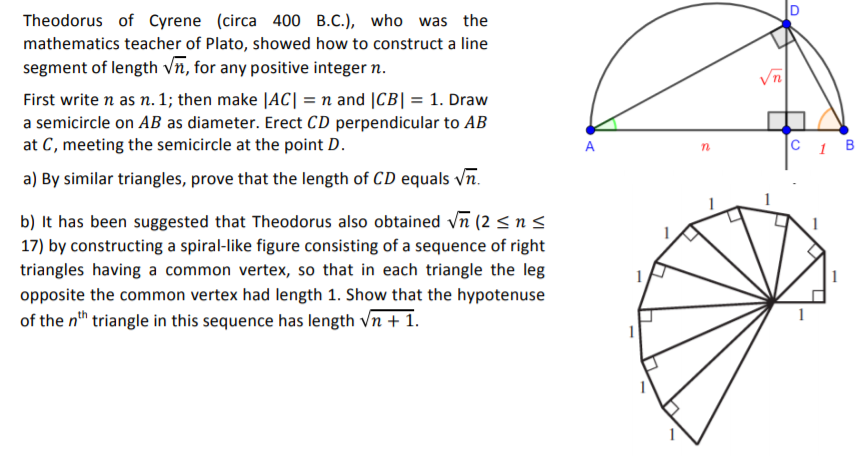
Theodorus of Cyrene, the ancient Greek mathematician and Plato's teacher, revolutionized geometry with his work on irrat...
View Board
Henri Lebesgue: The Mathematician Who Revolutionized Integration Henri Lebesgue was a French mathematician whose ground...
View Board
Eratosthenes: The Ptolemaic Genius of ancient Greece Eratosthenes of Cyrene (c. 276–194 BC) was not only a polymath and...
View Board
Discover Democritus, the Father of Atomic Theory. Explore his ideas on atoms, the universe, and happiness, and learn how...
View Board
Discover CGP Grey, a renowned educational YouTuber making complex topics fun and accessible through engaging animations ...
View Board
"Explore Henri Poincaré's groundbreaking work in math, physics, and philosophy, shaping modern science through chaos the...
View Board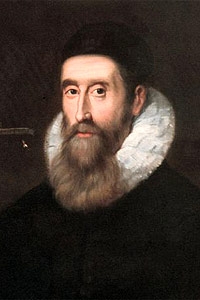
John Napier, a Scottish mathematician, invented logarithms, revolutionizing calculations and paving the way for signific...
View Board
Comments