:max_bytes(150000):strip_icc()/eratosthenes_photo-5c8d7bcc46e0fb00016ee0b8.jpg)
Explore Any Narratives
Discover and contribute to detailed historical accounts and cultural stories. Share your knowledge and engage with enthusiasts worldwide.
Eratosthenes of Cyrene (c. 276–194 BC) was not only a polymath and a scholar but also one of the most influential scientists of the ancient world. His contributions spanned a variety of fields, including mathematics, astronomy, geography, and literature. Yet, it is his ability to integrate these diverse areas of knowledge that truly set him apart, earning him the nickname the "Hexameter Plato." This article will explore the life and contributions of Eratosthenes, focusing on his most notable achievements and the lasting impact he has left on the history of science.
Eratosthenes was born in 276 BC in Cyrene, a city on the coast of present-day Libya. He came from a wealthy family and was educated at the great Library of Alexandria, where he would spend much of his life. The city of Alexandria, founded by Alexander the Great, was a bustling metropolis that attracted scholars from all over the Hellenistic world. The Library, one of the greatest collections of knowledge in the ancient world, was a place of learning and intellectual exchange. It was here that Eratosthenes's true talents began to emerge.
From a young age, Eratosthenes showed a remarkable aptitude for mathematics and science. He was particularly fascinated by the workings of the natural world and the stars. His keen interest in astronomy and mathematics led him to become the head librarian at the Library of Alexandria in 236 BC, a position he held until his death. As the head librarian, he had access to the best resources that the ancient world could offer, which he used to further his scientific inquiries.
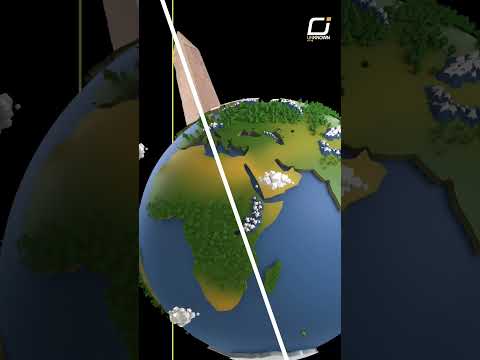
One of Eratosthenes's most significant contributions to science was his estimate of the Earth's circumference. This achievement is perhaps the most well-known aspect of his work and has been studied and praised for centuries. The method he used was ingenious and relied on the principles of geometry and simple observations.
According to historical records, Eratosthenes learned of a deep well in Syene (modern-day Aswan, Egypt) that was exactly aligned with the sun on the summer solstice. At noon, the sun would shine directly to the bottom of the well, casting no shadow, indicating that the sun was perpendicular to the well's surface. In Alexandria, on the same day, he observed the shadow cast by a vertical stick. By comparing the lengths of the shadows, he was able to calculate the angle of the sun's rays relative to the Earth's surface. Using his knowledge of geometry, he could then calculate the distance between Alexandria and Syene, which was known to be approximately 5,000 stadia (a unit of length).
With this information, Eratosthenes was able to estimate the Earth's circumference. Assuming the distance between Alexandria and Syene to be one-fiftieth of the Earth's circumference, he calculated the Earth's circumference to be about 250,000 stadia, which is roughly equivalent to 46,250 km (25,465 miles). This estimate was remarkably accurate, given the limitations of the technology and methods available at the time.
Not only did Eratosthenes demonstrate his prowess in geometry, but he also made significant contributions to the field of astronomy. He was one of the first to recognize that the Earth revolves around the Sun, although at the time, this was not widely accepted. His observations of the movement of the stars and the position of the celestial bodies allowed him to create a star catalog that included more than 675 stars. His catalog was a remarkable achievement, as it predated the telescope by nearly 2,000 years.
Additionally, Eratosthenes made several notable measurements of astronomical phenomena. He calculated the precession of the equinoxes, which is the gradual westward motion of the stars due to the wobble of the Earth's axis. This was a significant finding that contributed to our understanding of the Earth's motion in the solar system.
In the realm of mathematics, Eratosthenes is credited with several important innovations. One of his most notable contributions is the Sieve of Eratosthenes, a method used for finding prime numbers. Although the original sieve is attributed to Eratosthenes, the method has been known and used by various ancient and modern mathematicians. The sieve is a simple and elegant algorithm that continues to be one of the most efficient methods for finding prime numbers.
Additionally, Eratosthenes made significant contributions to the field of mathematics through his work on the Theory of Magnitudes, which explored the relationships between different magnitudes and quantities. His work in this area was groundbreaking and laid the foundation for future mathematicians to build upon.
In addition to his scientific achievements, Eratosthenes was also a prolific writer and scholar. He wrote a variety of works on a wide range of subjects, including poetry, history, and literature. One of his most famous works is the "Hexameter Plato," a poetic account of the Platonic dialogues. Eratosthenes's ability to integrate his scientific knowledge with philosophical writing was unique and greatly enhanced his reputation among his contemporaries.
His reputation as a philosopher is also reflected in his treatise "Geographical," which discusses the nature of the Earth and its inhabitants. In this work, Eratosthenes provided a comprehensive overview of the known world, describing its climate, geography, and the cultures of various peoples. He used his geographical knowledge to support his theories about the Earth's shape and size, which were revolutionary for the time.
The legacy of Eratosthenes is profound and long-lasting. His contributions to science, particularly in the fields of mathematics, astronomy, and geography, have stood the test of time. His estimate of the Earth's circumference, for example, has been used as a benchmark for evaluating modern estimates and methods of measuring the Earth.
Moreover, Eratosthenes's method of using simple observations to draw complex conclusions has influenced generations of scientists. His approach to problem-solving and the use of geometry to understand the natural world set a precedent for the scientific method that is still relevant today.
Eratosthenes's influence extended beyond his primary works in mathematics and astronomy. He compiled a comprehensive bibliography of the Library of Alexandria, known as the "Pithagoraean Catalogue." This extensive list of works contributed to the preservation and dissemination of knowledge during the Hellenistic period. His bibliographic work was not only a practical tool but also a testament to his dedication to cataloging and organizing human knowledge.
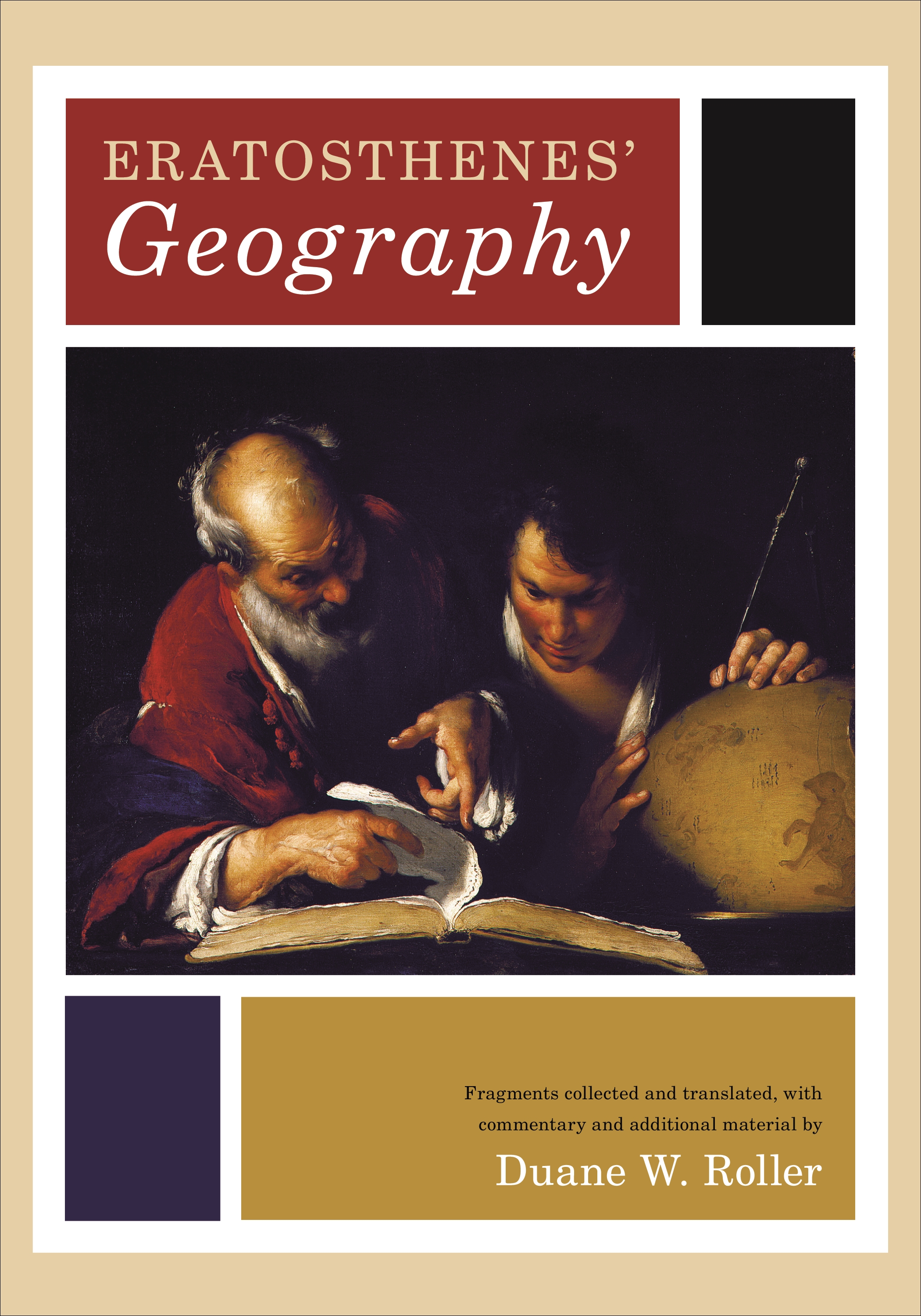
In addition to his contributions in the sciences, Eratosthenes wrote a number of historical and biographical works. He penned "Geopgraphica," a detailed and insightful account of the known world at the time, highlighting the diverse cultures, geographies, and geographical features that were known to the ancient Greeks and Egyptians. This work was a significant contribution to the field of geography and provided a valuable reference for future scholars and explorers.
The impact of Eratosthenes's work on later science and culture cannot be overstated. His methods and theories continued to influence scholars long after his death. For instance, the accuracy of his estimation of the Earth's circumference inspired later scientists to refine and expand on his methods. Ptolemy, a renowned geographer and astronomer, built upon Eratosthenes's work to create more detailed maps and astronomical models.
Moreover, the precision with which Eratosthenes approached astronomical observations and mathematical calculations set a high standard for future generations of scientists. His use of geometry in astronomy paved the way for the development of trigonometry, a branch of mathematics that is crucial for studying celestial bodies and their movements. The work of Eratosthenes inspired other scholars to develop more sophisticated tools and methods for scientific inquiry.
Eratosthenes's contributions to literature and poetry were also notable. He was known for his ability to blend scientific accuracy with poetic expression. One of his most famous works, "The Pentagran, " is a hexameter poem based on a Platonic dialogue. This work demonstrates his unique ability to combine scientific knowledge with literary artistry, a skill that was highly valued in the ancient world.
In "The Pentagran, " Eratosthenes uses poetry to explore philosophical concepts related to astronomy and the nature of the universe. The work reflects a deep understanding of both science and literature, showcasing his talent for creating a bridge between these two disciplines. The poem's intricate structure and poetic form reflect the complexity of the scientific theories it describes, making it a fascinating example of ancient literature.
Eratosthenes's "The Hexameter Plato" is a particularly influential work that combines his knowledge of philosophy with poetic expression. This poem is a poetic interpretation of Plato's dialogues, offering a unique perspective on Platonic philosophy. The combination of Plato's philosophical ideas with Eratosthenes's poetic style created a new form of literary expression that was both educational and aesthetically pleasing.
The influence of "The Hexameter Plato" extended beyond the immediate literary context. It helped to popularize Platonic philosophy and introduced a new style of poetic and philosophical discourse. The work continues to be studied and admired for its blend of philosophical depth and poetic beauty, making it a valuable contribution to both literature and philosophy.
Eratosthenes spent the later years of his life in the Library of Alexandria, dedicating himself to the pursuit of knowledge and the preservation of human understanding. His final years were marked by a continued focus on scientific inquiry and cultural exchange. Despite the challenges and uncertainties of the time, Eratosthenes remained committed to his work and continued to inspire and influence the world around him.
Upon his death in 194 BC, Eratosthenes left behind a legacy that continues to resonate today. His contributions to mathematics, astronomy, geography, and literature have made him one of the most significant figures in the ancient world. He not only expanded the frontiers of scientific knowledge during his lifetime but also left behind a model of interdisciplinary inquiry and a deep philosophical approach to understanding the natural world.
Eratosthenes's influence can be seen in the continued study of ancient astronomy, the preservation of libraries, and the ongoing development of scientific methods. His work remains a testament to the power of human curiosity and the importance of cross-disciplinary approaches to understanding the world.
The legacy of Eratosthenes is a testament to the power of intellectual curiosity and the importance of interdisciplinary study. His contributions to science, literature, and philosophy continue to inspire scholars and enthusiasts today. Eratosthenes's ability to integrate various fields of knowledge and his innovative methods for problem-solving have made him a pivotal figure in the history of science and a enduring symbol of human ingenuity.
By examining the life and works of Eratosthenes, we gain a deeper appreciation for the interconnectedness of knowledge and the importance of a holistic approach to understanding the world. His legacy continues to inspire and challenge us to think critically and creatively, much as he did in his own time.
Today, Eratosthenes continues to be celebrated for his pioneering work and serves as an inspiration for modern scientists, historians, and educators. His method of estimating the Earth's circumference using basic geometric principles remains a foundational concept in geodesy and cartography. Universities and schools around the world often conduct experiments based on Eratosthenes' technique to teach students about geometry and the Earth's scale, illustrating how ancient knowledge remains relevant and applicable in contemporary contexts.
The accuracy and elegance of Eratosthenes's methods have also sparked renewed interest in historical scientific practices. Scholars and researchers have revisited his works to understand the methodologies and tools used by ancient scientists. This not only enriches our understanding of the historical development of scientific thought but also highlights the enduring nature of fundamental scientific principles.
The legacy of Eratosthenes extends even into popular culture, with numerous references and homages found in films, books, documentaries, and educational materials. For example, the method of calculating the Earth's circumference is sometimes featured in science fiction novels and documentaries, demonstrating its universal appeal and the timeless nature of Eratosthenes' insight.
In contemporary media, documentaries and podcasts frequently explore the life and works of Eratosthenes, bringing his contributions to light for a broader audience. These platforms not only inform but also inspire, making his historical figure accessible to people who might not otherwise engage with ancient history.
Eratosthenes has played a significant role in educational initiatives designed to promote STEM education. Teaching kits and curriculums often include simulations and experiments based on his method of measuring the Earth, encouraging students to engage in hands-on learning and critical thinking. These activities help demystify complex scientific concepts and foster a sense of wonder and exploration among young learners.
Public lectures and educational programs dedicated to Eratosthenes have been held in schools, universities, and museums worldwide. These events feature interactive sessions where participants can perform experiments similar to those conducted by Eratosthenes, providing a tangible connection to the past and demonstrating the practical applications of his methods.
Recent scholarly work has provided fresh perspectives on Eratosthenes, offering a more nuanced understanding of his contributions and the context in which he lived. Researchers have examined his work within the broader framework of Hellenistic science, placing him in a network of scholars and thinkers who contributed to the development of Western science.
Modern scholars also highlight the socio-political aspects of Eratosthenes' time and the implications of his work. The patronage and support he received from Ptolemy III Euergetes of Egypt, for instance, suggest that his work was not merely academic but also had practical and political significance. This reevaluation underscores the multifaceted nature of Eratosthenes' achievements and their relevance beyond the realm of pure science.
In conclusion, Eratosthenes remains a towering figure in the history of science, a beacon of intellectual curiosity and interdisciplinary thinking. His contributions have withstood the test of time, providing invaluable insights into the nature of the Earth and the cosmos. Through his work, he exemplifies the enduring value of systematic observation, rigorous analysis, and the integration of diverse fields of knowledge.
As we continue to explore the mysteries of the natural world, Eratosthenes' legacy提醒您,您的文章目前是英文的。请确认是否需要进一步调整或翻译成其他语言。如果有任何特定的要求或需要修改的地方,请随时告知。




Your personal space to curate, organize, and share knowledge with the world.
Discover and contribute to detailed historical accounts and cultural stories. Share your knowledge and engage with enthusiasts worldwide.
Connect with others who share your interests. Create and participate in themed boards about any topic you have in mind.
Contribute your knowledge and insights. Create engaging content and participate in meaningful discussions across multiple languages.
Already have an account? Sign in here

Explore the life of Jean Baptiste Joseph Delambre (1749-1822), a French astronomer celebrated for his planetary tables, ...
View Board
Uncover the captivating story of Aspasia of Miletus, Pericles' companion! Explore her intellectual power, rhetorical ski...
View Board
Discover Paul Painlevé: the brilliant mathematician behind Painlevé transcendents & two-time Prime Minister of France. E...
View Board
Uncover the captivating story of Roxana, Alexander the Great's first wife. Explore her Sogdian origins, political influe...
View Board
Discover Max Born, a giant of theoretical physics. Explore his Nobel Prize-winning work on quantum mechanics and his piv...
View Board
Explore the life of Gaius Petronius Arbiter, Nero's 'arbiter of elegance,' and author of the *Satyricon*. Discover his i...
View Board
Discover Cassiodorus, the Roman statesman and monk who preserved classical knowledge during the Dark Ages. Learn about V...
View Board
Discover Epaminondas, the Theban general who shattered Spartan dominance! Learn about his military innovations, politica...
View Board
Explore Henri Cartan's profound impact on modern mathematics. Learn about his contributions to algebraic topology, Bourb...
View Board
Discover Callimachus of Cyrene, a pivotal figure in Alexandrian literature. Explore his influential poetry, the groundbr...
View Board
Ανακαλύψτε τη ζωή και τις σημαντικές συνεισφορές του Αρχιμήδη, ενός από τους μεγαλύτερους μαθηματικούς, φυσικούς και εφε...
View Board
Explore the world of Hesiod, an influential ancient Greek poet. Discover his life, major works like Theogony & Works and...
View Board
Explore the controversial reign of Julian the Apostate, Roman Emperor who rejected Christianity. Discover his reforms, m...
View Board
Discover Themistocles, the Athenian strategist whose naval vision and tactical brilliance at Salamis saved Greece from P...
View Board
Discover Juba II, the scholar king of Mauretania! Learn about his reign, scholarship, Roman alliance, and legacy in Nort...
View Board
Explore the life and legacy of Titus, Rome's popular emperor. From military victories to disaster relief, discover his i...
View Board
Explore the reign of Septimius Severus, Rome's first African emperor. Discover his military reforms, rise to power, and ...
View Board
Explore the profound influence of Plato, the Athenian philosopher! Discover his Theory of Forms, ideal state, and lastin...
View Board
Discover Scott Buchanan, the visionary behind the Great Books program. Learn about his impact on liberal arts education ...
View Board
Explore the reign of Ptolemy III Euergetes, the powerful Ptolemaic pharaoh who expanded Egypt's empire and earned his ni...
View Board
Comments