

Explore Any Narratives
Discover and contribute to detailed historical accounts and cultural stories. Share your knowledge and engage with enthusiasts worldwide.
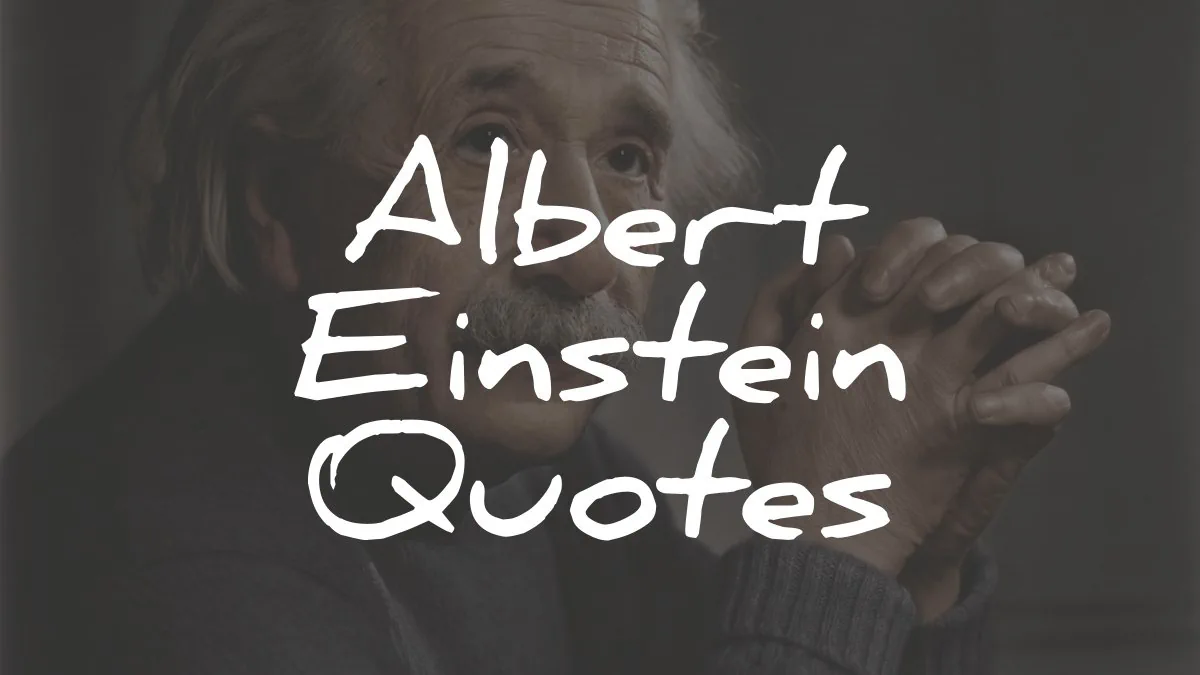
Albert Einstein, a name synonymous with genius, revolutionized our understanding of the universe. Born in 1879 in Ulm, Germany, Einstein's contributions to theoretical physics, including the theories of special and general relativity, have left an indelible mark on science and technology. His iconic equation, E=mc², is one of the most recognized scientific formulas worldwide. This article delves into the life, achievements, and enduring legacy of Albert Einstein.
Albert Einstein was born on March 14, 1879, into a middle-class Jewish family. His early childhood was marked by a delay in speech, which concerned his parents. However, this late bloomer would go on to exhibit extraordinary intellectual capabilities. Einstein's fascination with science and mathematics began at an early age, fueled by his curiosity and the influence of his uncle, who introduced him to algebraic concepts.
Einstein's academic journey was not without challenges. He attended the Swiss Federal Polytechnic in Zurich, where he studied physics and mathematics. Despite his brilliance, he struggled with the rigid educational system and often clashed with his professors. Nevertheless, he graduated in 1900 and began his quest for academic positions, which proved difficult due to his unconventional approach and Jewish heritage.
The year 1905 is often referred to as Einstein's annus mirabilis, or "miracle year." During this period, he published four groundbreaking papers that would forever change the landscape of physics. These papers addressed the photoelectric effect, Brownian motion, special relativity, and mass-energy equivalence.
One of Einstein's most significant contributions was his explanation of the photoelectric effect, which earned him the Nobel Prize in Physics in 1921. This work introduced the concept of light quanta, later known as photons, and laid the foundation for quantum mechanics. The photoelectric effect is crucial in understanding how light interacts with matter and has practical applications in solar panels and digital cameras.
Einstein's paper on Brownian motion provided empirical evidence for the existence of atoms. By explaining the random movement of particles suspended in a fluid, he confirmed the atomic theory of matter. This work was instrumental in advancing the field of statistical mechanics and provided a deeper understanding of the microscopic world.
The theory of special relativity, published in 1905, challenged the long-held Newtonian concepts of space and time. Einstein proposed that the laws of physics are the same for all non-accelerating observers and that the speed of light in a vacuum is constant, regardless of the observer's motion. This theory introduced the famous equation E=mc², which describes the relationship between mass and energy.
Building on his work on special relativity, Einstein developed the general theory of relativity in 1915. This theory redefined gravity as the curvature of spacetime caused by mass and energy. The theory was confirmed in 1919 during a solar eclipse, when observations showed that starlight bent as it passed near the sun, just as Einstein had predicted.
Einstein's theories of relativity have had a profound impact on modern physics. They have influenced our understanding of the universe, from the behavior of planets and stars to the dynamics of black holes and the expansion of the cosmos. General relativity is essential for the accurate functioning of GPS technology, which relies on corrections for time dilation effects.
Einstein was not only a scientific genius but also a committed humanitarian and political activist. He was a pacifist and opposed World War I, using his influence to advocate for peace and progressive causes. In 1933, he fled Nazi Germany due to the rise of anti-Semitism and emigrated to the United States, where he continued his work at the Institute for Advanced Study in Princeton.
Throughout his life, Einstein used his platform to speak out against injustice and promote human rights. He was a vocal supporter of civil rights and worked to aid refugees, drawing from his own experiences as a displaced person. His legacy extends beyond his scientific achievements, encompassing his commitment to social justice and his efforts to create a better world.
Albert Einstein's contributions to physics and his broader impact on society are unparalleled. His theories have shaped our understanding of the universe and continue to influence scientific research and technological advancements. Beyond his scientific genius, Einstein's humanitarian efforts and advocacy for peace and justice serve as an enduring inspiration. In the next part of this article, we will explore Einstein's later years, his pursuit of a unified field theory, and his lasting influence on modern science and technology.
After establishing his groundbreaking theories, Albert Einstein spent his later years pursuing a unified field theory, aiming to reconcile general relativity with electromagnetism. This ambitious goal consumed much of his time at the Institute for Advanced Study in Princeton, where he worked from 1933 until his death in 1955. Though he never achieved this unification, his efforts laid the groundwork for future physicists exploring the fundamental forces of nature.
Einstein's quest for a unified theory was driven by his belief in the simplicity and elegance of the universe. He sought to describe all physical phenomena through a single, overarching framework. However, the complexity of merging gravity with other forces proved insurmountable during his lifetime. Despite this, his work inspired generations of scientists, including those developing string theory and loop quantum gravity today.
While Einstein's early work was foundational to quantum mechanics, he later became a vocal critic of its probabilistic nature. His famous quote, "God does not play dice with the universe," reflects his discomfort with the uncertainty principle. Einstein engaged in debates with contemporaries like Niels Bohr, arguing that quantum mechanics was incomplete and that a deeper, deterministic theory must exist.
Einstein's theories have had far-reaching implications beyond theoretical physics. His work underpins many modern technologies, from GPS systems to nuclear energy. The practical applications of his discoveries continue to shape our daily lives and drive technological innovation.
One of the most tangible impacts of Einstein's theories is on Global Positioning Systems (GPS). The accuracy of GPS relies on corrections derived from both special and general relativity. Without these adjustments, GPS devices would accumulate errors of about 10 kilometers per day, rendering them useless for precise navigation.
The equation E=mc² is not just a theoretical concept; it has practical applications in nuclear energy. This mass-energy equivalence formula explains the immense energy released in nuclear reactions, forming the basis for both nuclear power and atomic weapons. Einstein's insights into the relationship between mass and energy have thus played a pivotal role in shaping the modern energy landscape.
Beyond his scientific achievements, Albert Einstein was a passionate advocate for human rights and social justice. His experiences as a refugee and his opposition to oppression fueled his commitment to humanitarian causes. Einstein used his global influence to speak out against injustice and promote peace.
Having fled Nazi Germany in 1933, Einstein understood the plight of refugees firsthand. He worked tirelessly to aid displaced individuals, raising funds and awareness for refugee causes. His efforts included supporting organizations that helped scientists and intellectuals escape persecution, ensuring that their contributions to society were not lost.
Einstein was a vocal supporter of civil rights in the United States. He publicly condemned racism and segregation, aligning himself with prominent African American activists. Additionally, his pacifist beliefs led him to advocate for disarmament and international cooperation, particularly in the aftermath of World War II. Einstein's political activism underscores his belief in the responsibility of scientists to engage with societal issues.
Albert Einstein's influence extends beyond science and politics into the realm of culture and intellectual thought. His name has become synonymous with genius, and his ideas have permeated various aspects of society, from education to popular media.
Einstein's distinctive appearance and profound insights have made him a cultural icon. He has been featured in numerous films, television shows, and books, often symbolizing intellectual brilliance. His image is frequently used to represent scientific achievement, and his quotes are widely shared for their wisdom and wit.
Einstein's approach to science and his philosophical views have had a lasting impact on education and intellectual discourse. He emphasized the importance of curiosity, imagination, and critical thinking, values that continue to inspire educators and students alike. His thoughts on the nature of reality, time, and the universe have also influenced philosophical debates, bridging the gap between science and metaphysics.
Even decades after his death, Albert Einstein's work continues to inspire new discoveries and technological advancements. Recent developments in physics and astronomy often trace their roots back to his theories, demonstrating the enduring relevance of his contributions.
One of the most significant confirmations of Einstein's theories came in 2015, when the Laser Interferometer Gravitational-Wave Observatory (LIGO) detected gravitational waves for the first time. This discovery, a century after Einstein predicted the existence of these waves, opened a new window into the study of the universe, particularly the behavior of black holes and neutron stars.
Einstein's early work on the photoelectric effect and his collaborations with other scientists laid the foundation for quantum technologies. Today, advancements in quantum computing and quantum cryptography are building on these principles, promising to revolutionize fields such as information technology and cybersecurity.
In recent years, there has been a renewed interest in Einstein's life and work, marked by centennial celebrations and the digitization of his archives. These efforts have made his papers and correspondence accessible to a global audience, allowing new generations to explore his ideas and contributions. Exhibits and educational programs continue to highlight his scientific achievements and humanitarian efforts.
Albert Einstein's legacy is a testament to the power of human intellect and the pursuit of knowledge. His theories have reshaped our understanding of the universe, and his humanitarian efforts have left an indelible mark on society. As we continue to explore the frontiers of science and technology, Einstein's ideas remain a guiding light, inspiring innovation and discovery. In the final part of this article, we will delve deeper into Einstein's personal life, his relationships, and the lesser-known aspects of his journey that contribute to his enduring fascination.
Beyond his scientific achievements, Albert Einstein's personal life offers insight into the man behind the genius. He married Mileva Marić in 1903, and their relationship produced two daughters and a son. However, personal struggles led to a divorce in 1919, after which he married his cousin Elsa Löwenthal. These relationships often influenced his work and public persona, balancing his intellectual pursuits with complex emotional dynamics.
Einstein cherished his children, though his famed brilliance did not always translate into domestic harmony. He admitted to being distant at times, prioritizing his research over family life. Despite this, his daughters and son played significant roles in shaping his worldview, with moments of playful curiosity mirroring his own scientific mindset. His later years saw a closer bond with his sister Maja, who provided emotional support during his most challenging periods.
While relativity and the photoelectric effect dominate discussions of Einstein, several lesser-known works underscore his versatility. These contributions reveal a scientist unafraid to explore beyond mainstream theories, often collaborating with lesser-known peers to push scientific boundaries.
In 1917, Einstein introduced the concept of stimulated emission, a process where an excited atom emits radiation in response to incoming photons. This foundational idea later enabled the development of lasers, revolutionizing fields from medicine to telecommunications. Though overlooked at the time, stimulated emission is now a cornerstone of modern technology, illustrating how theoretical insights can yield practical revolutions decades later.
Einstein's collaboration with Indian physicist Satyendra Nath Bose in 1924 led to the development of Bose-Einstein statistics, which describe the behavior of particles that obey quantum Bose-Einstein statistics. This work laid the groundwork for the discovery of the Bose-Einstein condensate, a state of matter achieved at near-absolute-zero temperatures. Such advancements continue to influence quantum computing and ultracold atomic research today.
Einstein’s name has become synonymous with genius, shaping how society perceives intellectual achievement. His image and ideas permeate education, media, and global culture, ensuring his influence endures across generations.
In classrooms worldwide, Einstein is often the first scientist introduced to students, symbolizing curiosity and innovation. His theories are taught as pillars of modern physics, and his quotes—such as “Imagination is more important than knowledge”—are frequently used to inspire young minds. Educational programs and competitions frequently bear his name, reinforcing his role as a model for aspiring thinkers.
Beyond academia, Einstein’s wild hair and thoughtful gaze have made him an enduring cultural icon. He appears in films, cartoons, and advertisements, often representing wisdom or intellectual prowess. His advocacy for peace and justice has also cemented his status as a moral and ethical guide, with his legacy frequently invoked in debates about science’s role in society.
Albert Einstein’s contributions to science, technology, and humanity are immeasurable. From rewriting the laws of physics with special and general relativity to advocating for peace and refugee rights, his life exemplifies the intersection of intellectual rigor and social responsibility.
As we continue to explore the universe and address global challenges, Einstein’s legacy serves as both a foundation and an inspiration. His ability to merge profound theoretical insight with a deep concern for humanity ensures that his name will remain timeless—a beacon of genius, ethics, and hope for future generations.


Your personal space to curate, organize, and share knowledge with the world.
Discover and contribute to detailed historical accounts and cultural stories. Share your knowledge and engage with enthusiasts worldwide.
Connect with others who share your interests. Create and participate in themed boards about any topic you have in mind.
Contribute your knowledge and insights. Create engaging content and participate in meaningful discussions across multiple languages.
Already have an account? Sign in here

> **Meta Description:** Explore the life and legacy of Albert Einstein, the genius who reshaped physics with relativity,...
View Board
768 **Meta Description:** Explore the life of Enrico Fermi, the architect of the nuclear age. From quantum theory to th...
View Board
Arthur Eddington: Pioneering Relativity and Stellar Science Arthur Stanley Eddington stands as one of the most influenti...
View Board
Explore the life and legacy of Jules Henri Poincaré, a prodigy whose innovative work bridged mathematics and physics. Di...
View Board
**Meta Description:** Explore the life and legacy of Hermann von Helmholtz, the 19th-century polymath who revolutionized...
View Board
John von Neumann, the 20th-century polymath, revolutionized computing, game theory, nuclear physics, and AI. Explore his...
View Board
Max Born was a renowned theoretical physicist and Nobel laureate known for his statistical interpretation of quantum mec...
View Board
Isaac Newton was a pioneering scientist whose laws of motion and universal gravitation revolutionized our understanding ...
View Board
"Discover how Ernest Rutherford, the father of nuclear physics, revolutionized science with his atomic discoveries. Expl...
View Board
Jean Baptiste Joseph Delambre: A Life of Astronomical Pursuits The Early Life and Education Jean Baptiste Joseph Delam...
View Board
George Gamow: The Unbelievable Journey of a Theoretical Physicist and Cosmologist The Enigmatic Man Behind the Cosmic B...
View Board
Explore the life and legacy of Dmitri Mendeleev, the visionary architect of the periodic table. Discover how his groundb...
View Board
Discover Stephen Hawking's groundbreaking contributions to cosmology, his resilience against ALS, and his enduring legac...
View Board
Louis Néel Nobel laureate revolutionized magnetism research with discovery of antiferromagnetism advancing condensed mat...
View Board
Discover how Georges Lemaître, a Catholic priest and physicist, pioneered the Big Bang theory and revolutionized our und...
View Board
Discover how Isaac Newton revolutionized science with his laws of motion, universal gravitation, and optics. Explore his...
View Board
Discover Joseph Louis Gay-Lussac's key contributions: Gay-Lussac's Law, boron discovery, and his lasting impact on moder...
View BoardDiscover the transformative legacy of Louis Paul Cailletet, the French physicist whose groundbreaking work with gases re...
View Board
Alessandro Volta, a pioneering Italian physicist, revolutionized electricity with the invention of the voltaic pile, sha...
View Board
Discover Hermann von Helmholtz, the pioneering physician-physicist whose work in energy, optics, and acoustics reshaped ...
View Board
Comments