Explore Any Narratives
Discover and contribute to detailed historical accounts and cultural stories. Share your knowledge and engage with enthusiasts worldwide.
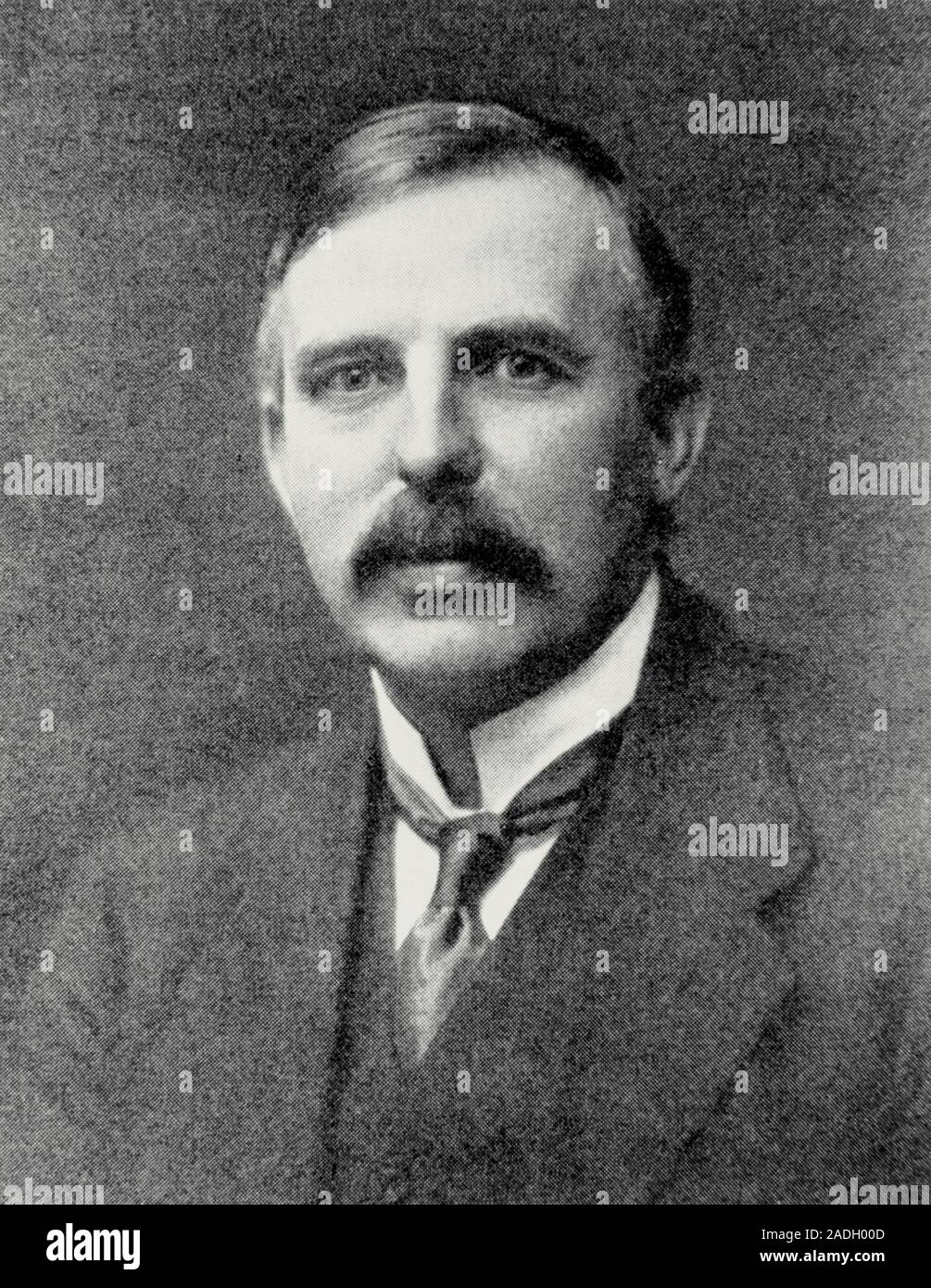
Ernest Rutherford, a New Zealand-born physicist and chemist, is widely regarded as the father of nuclear physics. His groundbreaking work on radioactivity, atomic structure, and the first artificial nuclear reactions has left an indelible mark on the scientific world. This article delves into the life, discoveries, and enduring legacy of one of the most influential scientists of the 20th century.
Ernest Rutherford was born on August 30, 1871, in Nelson, New Zealand. From a young age, he exhibited a keen interest in science and mathematics. His early education took place in New Zealand, where he excelled academically and earned a scholarship to attend the University of New Zealand.
Rutherford's academic prowess was evident during his university years. He earned multiple degrees, including a Bachelor of Arts, a Master of Arts, and a Bachelor of Science. His exceptional performance in his studies caught the attention of prominent scientists, leading to a scholarship to study at the University of Cambridge in England.
At Cambridge, Rutherford studied under the renowned physicist J.J. Thomson, who had discovered the electron. This period was crucial for Rutherford's scientific development. He worked in the Cavendish Laboratory, where he invented detectors for electromagnetic waves and studied the ionization of gases by X-rays.
Rutherford's time at Cambridge laid the foundation for his future work in radioactivity and atomic structure. His collaboration with Thomson and other leading scientists of the time provided him with the knowledge and skills necessary to make his own groundbreaking discoveries.
In 1898, Rutherford moved to McGill University in Canada, where he began his seminal work on radioactivity. Alongside his colleague Frederick Soddy, Rutherford developed the disintegration theory of radioactivity. This theory proposed that atoms of radioactive elements spontaneously decay, transforming into different elements.
This work was revolutionary, as it challenged the long-held belief that atoms were indivisible and unchangeable. Rutherford and Soddy's research laid the groundwork for understanding the fundamental processes of radioactive decay, earning Rutherford the 1908 Nobel Prize in Chemistry.
Rutherford's investigations into radioactivity led him to identify and name two distinct types of radiation: alpha and beta particles. He discovered that alpha particles are helium nuclei, while beta particles are high-speed electrons. This differentiation was crucial for understanding the nature of radioactive emissions.
Additionally, Rutherford discovered radon gas, a radioactive element that is a product of radium decay. His work on the properties of radon and other radioactive substances further solidified his reputation as a leading expert in the field of radioactivity.
One of Rutherford's most significant contributions to the study of radioactivity was the formulation of the concept of radioactive half-life. He demonstrated that the decay of radioactive elements follows a predictable pattern, with the time it takes for half of the radioactive atoms to decay being a constant value for each element.
This concept of half-life is fundamental to our understanding of radioactive decay and has numerous practical applications, from dating archaeological artifacts to medical imaging and cancer treatment.
In 1909, Rutherford and his colleagues Hans Geiger and Ernest Marsden conducted a series of experiments at the University of Manchester that would revolutionize our understanding of atomic structure. Known as the Geiger-Marsden gold foil experiment, this research involved firing alpha particles at a thin sheet of gold foil.
The results of the experiment were astonishing. While most of the alpha particles passed through the gold foil with little deflection, a small fraction were deflected at large angles, and some even bounced back towards the source. This unexpected behavior led Rutherford to propose a new model of the atom.
Based on the results of the gold foil experiment, Rutherford proposed the nuclear atomic model. This model suggested that atoms are mostly empty space, with their mass concentrated in a tiny, positively charged nucleus at the center. The electrons, he proposed, orbit the nucleus at a relatively large distance.
This model was a significant departure from the previously accepted "plum pudding" model proposed by J.J. Thomson, which suggested that the positive charge of an atom was uniformly distributed throughout its volume. Rutherford's nuclear model laid the foundation for modern atomic theory and influenced the development of quantum mechanics.
The gold foil experiment provided crucial data that supported Rutherford's nuclear model. Some key statistics from the experiment include:
These findings were instrumental in shaping our understanding of atomic structure and paved the way for further advancements in nuclear physics.
In 1919, Rutherford achieved another groundbreaking milestone by conducting the first artificial nuclear reaction. He bombarded nitrogen gas with alpha particles and observed the production of oxygen and protons. This process, known as nuclear transmutation, demonstrated that it was possible to change one element into another through artificial means.
The reaction can be represented as follows:
Nitrogen + alpha particle → Oxygen + proton
This discovery was significant because it provided experimental evidence for the transformation of elements, a concept that had been theorized but not previously demonstrated in a laboratory setting.
The energy involved in this nuclear reaction was substantial, with the protons produced having an energy of approximately 7 MeV (mega electron volts). This high-energy process highlighted the immense power locked within the atomic nucleus and opened the door to further exploration of nuclear reactions.
Rutherford's achievement in artificially disintegrating the atom had profound implications for the field of nuclear physics. It laid the groundwork for the development of nuclear fission, particle accelerators, and ultimately, the atomic bomb. His work in this area continues to influence modern nuclear research and technology.
Ernest Rutherford's contributions to science have had a lasting impact on the field of physics. His discoveries and theories form the bedrock of modern atomic and nuclear physics. The nuclear model of the atom, in particular, has been instrumental in shaping our understanding of the fundamental structure of matter.
Rutherford's work has influenced numerous subsequent developments in physics, including the discovery of the neutron by his student James Chadwick, the development of quantum mechanics, and the exploration of particle physics. His legacy is evident in the continued research and advancements in these fields.
In recognition of his immense contributions to science, Rutherford has been honored in various ways. He is often referred to as the "greatest experimentalist since Faraday", a testament to his skill and innovation in experimental physics. His life and work are celebrated in educational materials, including videos, posters, and textbooks.
Rutherford's legacy is also preserved in cultural references and exhibits. Museums and institutions dedicated to the history of science, such as the Atomic Heritage Foundation and the Science History Institute, feature displays and resources highlighting his achievements. These efforts ensure that his contributions continue to inspire future generations of scientists.
Throughout his career, Rutherford played a crucial role in mentoring and training young scientists. Many of his students and colleagues went on to make significant contributions to physics, including Niels Bohr, who developed the Bohr model of the atom, and Patrick Blackett, who made advancements in the study of induced nuclear transmutation.
Rutherford's leadership and guidance at institutions such as the University of Manchester and the Cavendish Laboratory at Cambridge helped to foster a new generation of physicists. His emphasis on experimental rigor and innovative thinking continues to influence scientific research and education.
In the next part of this article, we will delve deeper into Rutherford's later years, his work on proton accelerators, and the broader implications of his discoveries on modern science and technology.
In 1919, Rutherford returned to the University of Cambridge to succeed his former mentor, J.J. Thomson, as the director of the Cavendish Laboratory. This period marked a significant shift in his research focus, as he began to explore the potential of proton accelerators and further advancements in nuclear transmutation.
Under Rutherford's leadership, the Cavendish Laboratory became a hub for cutting-edge research in nuclear physics. He oversaw the development of new experimental techniques and instruments, including improved particle detectors and accelerators. These innovations allowed scientists to probe the nucleus of the atom with greater precision and depth.
Rutherford's work on nuclear transmutation continued to yield groundbreaking results. He and his team successfully induced nuclear reactions in various elements, further demonstrating the potential for artificial transmutation. One notable achievement was the transmutation of aluminum into phosphorus through the bombardment of alpha particles.
These experiments not only expanded our understanding of nuclear reactions but also laid the foundation for the development of particle accelerators. Rutherford's research in this area was instrumental in the eventual creation of devices like the cyclotron, which have become essential tools in modern nuclear physics.
Throughout his career, Rutherford was known for his exceptional ability to mentor and inspire young scientists. Many of his students and colleagues went on to achieve significant accomplishments in their own right. Some of the most notable figures who worked under Rutherford include:
Rutherford's mentorship extended beyond the laboratory. He was known for his encouragement and support, often providing his students with the resources and guidance they needed to pursue their own research interests. His leadership style fostered a collaborative and innovative environment that was conducive to scientific discovery.
Rutherford's influence was not limited to the United Kingdom. He maintained strong connections with scientists around the world, fostering international collaborations that advanced the field of nuclear physics. His work with researchers in Europe, North America, and beyond helped to establish a global network of scientists dedicated to exploring the mysteries of the atom.
One notable collaboration was with Otto Hahn and Lise Meitner, who were conducting research on radioactivity and nuclear fission in Germany. Rutherford's insights and experimental techniques were instrumental in their work, which ultimately led to the discovery of nuclear fission.
Rutherford's nuclear model of the atom had a profound impact on the development of quantum mechanics. His discovery that atoms are mostly empty space with a dense nucleus challenged existing theories and paved the way for new models that incorporated quantum principles.
Niels Bohr, one of Rutherford's most famous students, built upon the nuclear model to develop the Bohr model of the atom. This model introduced the concept of quantized electron orbits, which was a crucial step in the evolution of quantum theory. The Bohr model, in turn, influenced the work of other prominent physicists, including Werner Heisenberg and Erwin Schrödinger.
Rutherford's work on nuclear transmutation and the structure of the atom laid the groundwork for the development of nuclear energy. His experiments demonstrated the immense power locked within the atomic nucleus, inspiring further research into the practical applications of nuclear reactions.
The discovery of nuclear fission by Otto Hahn and Lise Meitner in 1938 was a direct result of the foundational work done by Rutherford and his colleagues. This breakthrough led to the development of nuclear reactors and the atomic bomb, both of which have had significant impacts on global politics, energy production, and scientific research.
Rutherford's research on radioactivity and nuclear reactions has also had a lasting impact on the field of medicine. The principles he discovered are fundamental to modern medical imaging techniques, such as positron emission tomography (PET) scans and radiotherapy for cancer treatment.
The concept of radioactive half-life, which Rutherford formulated, is crucial for understanding the behavior of radioactive isotopes used in medical diagnostics and treatments. These isotopes are employed in a variety of applications, from imaging internal organs to targeting and destroying cancer cells.
Throughout his career, Ernest Rutherford received numerous awards and accolades in recognition of his groundbreaking contributions to science. Some of the most notable honors include:
These honors reflect the immense respect and admiration that Rutherford earned from his peers and the broader scientific community. His work continues to be celebrated and studied by scientists and historians alike.
Rutherford's legacy is preserved in the numerous scientific institutions and programs that bear his name. Some of the most prominent examples include:
These institutions serve as a testament to Rutherford's enduring impact on the scientific community. They continue to inspire and support research in the fields that he helped to pioneer.
Ernest Rutherford's life and work have had a significant impact on STEM education (Science, Technology, Engineering, and Mathematics). His discoveries and experimental techniques are taught in schools and universities around the world, inspiring students to pursue careers in science.
Educational materials, including textbooks, videos, and interactive exhibits, often feature Rutherford's experiments and theories. These resources help to make complex scientific concepts more accessible and engaging for students of all ages. Rutherford's story also serves as a powerful example of the importance of curiosity, perseverance, and innovation in scientific research.
Rutherford's contributions to science have been recognized in various forms of media and popular culture. Documentaries, books, and even fictional works have highlighted his achievements and their impact on the world. Some notable examples include:
These representations help to bring Rutherford's story to a wider audience, ensuring that his legacy continues to inspire and educate people around the world.
Rutherford was known for his wit, charm, and memorable quotes. Some of his most famous sayings include:
"All science is either physics or stamp collecting."
"If your experiment needs statistics, you ought to have done a better experiment."
These quotes reflect Rutherford's emphasis on experimental rigor and his belief in the fundamental importance of physics in understanding the natural world. They also provide a glimpse into his personality and his approach to scientific research.
In the final part of this article, we will explore Rutherford's lasting influence on modern science, his personal life, and the enduring relevance of his discoveries in today's world.
Ernest Rutherford was born into a large family in Nelson, New Zealand, the fourth of twelve children. His parents, James and Martha Rutherford, were hardworking immigrants from Scotland and England, respectively. The family's emphasis on education and perseverance played a significant role in shaping Rutherford's character and ambitions.
From an early age, Rutherford demonstrated a strong work ethic and a keen interest in science. His parents encouraged his academic pursuits, and his success in school earned him scholarships that allowed him to continue his education. This support from his family was crucial in his journey to becoming one of the most influential scientists of his time.
In 1900, Rutherford married Mary Newton, the daughter of his landlady in Cambridge. The couple had one daughter, Eileen, who sadly passed away at a young age. Despite this personal tragedy, Rutherford remained dedicated to his work and family. His marriage to Mary provided him with a stable and supportive home life, which was essential for his scientific endeavors.
Throughout his career, Rutherford was known for his warmth, humor, and approachability. He had a unique ability to connect with people from all walks of life, from fellow scientists to students and the general public. His charismatic personality and passion for science made him a beloved figure in the scientific community.
Ernest Rutherford's contributions to science have had a lasting impact on the field of nuclear physics. His discovery of the atomic nucleus and his work on radioactive decay laid the groundwork for our modern understanding of atomic structure. The nuclear model he proposed remains a fundamental concept in physics, influencing countless subsequent discoveries and theories.
Rutherford's experiments with alpha and beta particles, as well as his identification of the proton, were crucial in shaping the field of particle physics. His work provided the foundation for the development of quantum mechanics and the exploration of subatomic particles. These advancements have led to breakthroughs in various areas, from energy production to medical treatments.
The practical applications of Rutherford's discoveries are vast and far-reaching. His research on radioactivity and nuclear reactions has been instrumental in the development of nuclear energy, which plays a significant role in global power generation. Nuclear reactors, inspired by Rutherford's work, provide a substantial portion of the world's electricity.
In addition to energy production, Rutherford's insights have contributed to advancements in medical imaging and treatment. Techniques such as radiotherapy and positron emission tomography (PET) scans rely on the principles of radioactivity that Rutherford helped to uncover. These technologies have revolutionized the diagnosis and treatment of various medical conditions, improving the lives of countless individuals.
Rutherford's work has also had an impact on space exploration and our understanding of the universe. The principles of nuclear physics that he established are fundamental to the study of stellar nucleosynthesis, the process by which elements are formed in stars. This knowledge has been crucial in advancing our understanding of the cosmos and the origins of the elements.
Furthermore, the development of nuclear propulsion systems for spacecraft has been influenced by Rutherford's research. These systems, which utilize nuclear reactions for propulsion, have the potential to revolutionize space travel, making it faster and more efficient. Rutherford's legacy continues to inspire innovations that push the boundaries of human exploration.
While Rutherford's discoveries have led to numerous beneficial applications, they have also raised ethical considerations and controversies. The development of the atomic bomb, which was made possible by the understanding of nuclear reactions that Rutherford pioneered, has had profound and often devastating consequences.
The use of nuclear weapons in warfare has sparked debates about the ethical responsibilities of scientists and the potential misuse of scientific knowledge. Rutherford himself was aware of the dual-use nature of his discoveries and advocated for the responsible application of nuclear technology. His views on the ethical implications of scientific research remain relevant in today's world.
Throughout his career, Rutherford engaged in scientific debates and faced criticisms from his peers. His nuclear model of the atom, for instance, was initially met with skepticism by some scientists who adhered to the older "plum pudding" model. However, Rutherford's experimental evidence ultimately convinced the scientific community of the validity of his theory.
Rutherford was known for his rigorous approach to experimentation and his insistence on empirical evidence. He often challenged prevailing theories and encouraged his students to question established ideas. This commitment to scientific integrity and innovation has left a lasting impression on the scientific community.
In the 21st century, Ernest Rutherford's work continues to be relevant and influential. His discoveries form the basis of modern nuclear physics and quantum mechanics, which are essential for advancing our understanding of the universe. Researchers today build upon Rutherford's foundational work to explore new frontiers in science.
Contemporary scientific endeavors, such as the experiments conducted at CERN (the European Organization for Nuclear Research), owe much to Rutherford's pioneering research. The particle detectors and accelerators used in these experiments are based on principles that Rutherford helped to establish. His legacy is evident in the ongoing pursuit of knowledge about the fundamental structure of matter.
Rutherford's life and achievements continue to inspire educational initiatives and public engagement in science. Schools and universities around the world teach his theories and experiments, introducing students to the fascinating world of nuclear physics. Educational programs often highlight Rutherford's story as an example of the power of curiosity and perseverance.
Public outreach efforts, such as science festivals, museum exhibits, and online resources, also play a crucial role in sharing Rutherford's legacy. These initiatives aim to make science more accessible and engaging for people of all ages. By celebrating Rutherford's contributions, they help to foster a greater appreciation for the importance of scientific research.
Ernest Rutherford's impact on science is commemorated through various honors and tributes. In addition to the institutions and awards that bear his name, there are numerous statues, plaques, and memorials dedicated to his memory. These commemorations serve as a reminder of his enduring influence and the significance of his work.
One notable example is the Rutherford Memorial in Nelson, New Zealand, which honors his contributions to science and his roots in the country. Similarly, the Rutherford Lecture, an annual event organized by the Royal Society of New Zealand, celebrates his legacy by featuring prominent scientists who share their research and insights.
Ernest Rutherford's life and work have left an indelible mark on the world of science. From his early days in New Zealand to his groundbreaking research at Cambridge and Manchester, Rutherford's journey is a testament to the power of curiosity, innovation, and perseverance. His discoveries in nuclear physics, radioactivity, and atomic structure have shaped our understanding of the universe and paved the way for countless technological advancements.
Rutherford's legacy extends beyond his scientific achievements. He was a dedicated mentor who inspired and guided numerous students and colleagues, many of whom went on to make significant contributions to physics. His leadership and collaborative spirit fostered a culture of innovation and discovery that continues to influence the scientific community today.
The practical applications of Rutherford's work are vast and far-reaching, from nuclear energy and medical imaging to space exploration. His research has not only advanced our knowledge of the natural world but has also improved the quality of life for people around the globe. However, his discoveries have also raised important ethical considerations, reminding us of the responsibility that comes with scientific knowledge.
As we look to the future, Ernest Rutherford's legacy serves as a source of inspiration and a reminder of the transformative power of science. His story encourages us to embrace curiosity, challenge established ideas, and strive for a deeper understanding of the world around us. In an era of rapid technological advancement and scientific discovery, Rutherford's contributions continue to resonate, guiding us toward new frontiers of knowledge and innovation.
In the words of Ernest Rutherford himself, "An alleged scientific discovery has no merit unless it can be explained to a barmaid." This quote encapsulates his belief in the importance of making science accessible and understandable to all. As we celebrate his life and achievements, let us also embrace his spirit of inquiry and his commitment to sharing the wonders of science with the world.
Your personal space to curate, organize, and share knowledge with the world.
Discover and contribute to detailed historical accounts and cultural stories. Share your knowledge and engage with enthusiasts worldwide.
Connect with others who share your interests. Create and participate in themed boards about any topic you have in mind.
Contribute your knowledge and insights. Create engaging content and participate in meaningful discussions across multiple languages.
Already have an account? Sign in here
Explore the monumental legacy of Ernest Rutherford, the father of nuclear physics, in our insightful article. Delve into...
View Board
"Explore James Chadwick's 1932 neutron discovery, its impact on nuclear physics, and how it enabled nuclear energy. Lear...
View Board
768 **Meta Description:** Explore the life of Enrico Fermi, the architect of the nuclear age. From quantum theory to th...
View Board
> **Meta Description:** Explore the life and legacy of Albert Einstein, the genius who reshaped physics with relativity,...
View Board
Explore the fascinating life of Michael Faraday, the pioneering scientist whose groundbreaking work in electromagnetism ...
View Board
"Louis 'Luis' Alvarez: A scientific genius who pioneered new frontiers. Explore his early life, education, and groundbre...
View Board
Discover the life and work of Albert Einstein, a renowned physicist and one of the most influential scientists in histor...
View Board
Alessandro Volta, a pioneering Italian physicist, revolutionized electricity with the invention of the voltaic pile, sha...
View Board
Discover the intriguing life of Léon Foucault, the pioneering French physicist who elegantly demonstrated the Earth's ro...
View Board
Alessandro Volta, inventor of the electric battery and pioneer of electrical science, revolutionized energy with the Vol...
View Board
Explore the life and legacy of Dmitri Mendeleev, the visionary architect of the periodic table. Discover how his groundb...
View Board
Fritz Haber: A Chemist Whose Work Changed the World The Rise of a Scientist Fritz Haber was born on December 9, 1868, i...
View Board
Discover Hermann von Helmholtz, the pioneering physician-physicist whose work in energy, optics, and acoustics reshaped ...
View Board
Max Born was a renowned theoretical physicist and Nobel laureate known for his statistical interpretation of quantum mec...
View Board
"J.J. Thomson's cathode ray research uncovered the electron, transforming physics and enabling quantum and nuclear advan...
View Board
Louis Néel Nobel laureate revolutionized magnetism research with discovery of antiferromagnetism advancing condensed mat...
View Board
Discover the fundamental role of isotopes in science and industry. Learn how these atomic variants, with the same proton...
View Board
Jean Baptiste Joseph Delambre: A Life of Astronomical Pursuits The Early Life and Education Jean Baptiste Joseph Delam...
View Board
George Gamow: The Unbelievable Journey of a Theoretical Physicist and Cosmologist The Enigmatic Man Behind the Cosmic B...
View Board
Discover Joseph Louis Gay-Lussac's key contributions: Gay-Lussac's Law, boron discovery, and his lasting impact on moder...
View Board
Comments