
Explore Any Narratives
Discover and contribute to detailed historical accounts and cultural stories. Share your knowledge and engage with enthusiasts worldwide.
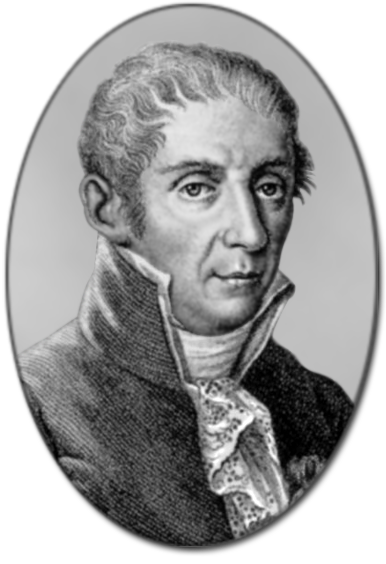
Alessandro Volta, an Italian physicist and chemist, is celebrated as the inventor of the first electric battery, the voltaic pile. His groundbreaking work in the late 18th century laid the foundation for modern electrochemistry and revolutionized our understanding of electricity. This article explores Volta's life, his major inventions, and the lasting impact of his discoveries on science and technology.
Born on February 18, 1745, in Como, Italy, Alessandro Giuseppe Antonio Anastasio Volta came from a noble family. From a young age, he showed a keen interest in the natural sciences. By the age of 20, he was already conducting experiments in the laboratory of his friend Giulio Cesare Gattoni.
Volta's early education was largely self-directed. He published his first scientific paper on triboelectricity in 1765, demonstrating his early fascination with electrical phenomena. His dedication and innovative thinking quickly gained recognition, leading to his appointment as a professor of physics at the Royal School in Como in 1774.
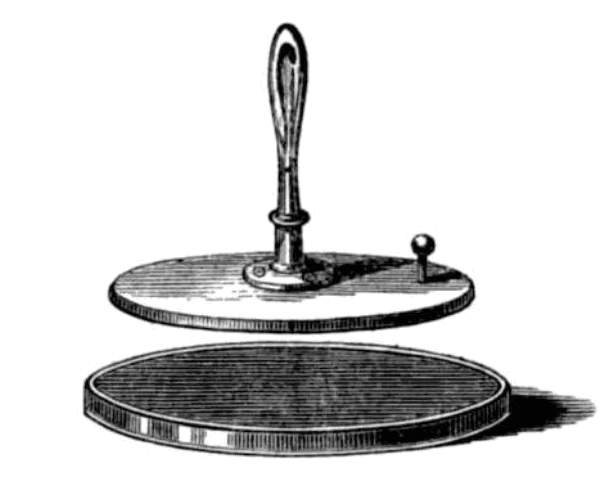
In 1775, Volta invented the electrophorus, a device designed to produce and transfer static electricity. Although the principles behind the electrophorus were known before Volta's time, his improved design made it more efficient and practical. This invention showcased his ability to refine existing ideas and turn them into functional tools.
Between 1776 and 1778, Volta made another significant discovery: he isolated methane gas from swamp marshes. To demonstrate the flammable nature of methane, he created the "Voltaic pistol", a device that used an electric spark to ignite the gas. This experiment not only highlighted the properties of methane but also foreshadowed the development of internal combustion engines.
Volta's most famous invention, the voltaic pile, was introduced in 1800. This device was a stack of alternating zinc and silver disks separated by brine-soaked cloth. The voltaic pile was the first to provide a continuous electrical current, marking a major milestone in the history of electricity.
The invention of the voltaic pile was a result of Volta's debate with Luigi Galvani, who believed in the concept of "animal electricity". Volta's experiments proved that electricity was generated by the contact of different metals, not by biological tissue. This discovery led to the development of the voltaic pile and debunked the theory of vitalism in electricity.
"The voltaic pile was the first practical method of generating electricity and laid the groundwork for the electrical revolution of the 19th century."
Volta's work had a profound impact on the field of electrochemistry. His invention of the voltaic pile provided a steady source of electrical current, enabling further research and development in this area. Scientists could now conduct experiments that required a continuous flow of electricity, leading to numerous advancements in the understanding of chemical reactions and electrical phenomena.
In recognition of his contributions, the SI unit of electric potential, the volt (V), was named after Alessandro Volta in 1881. This honor underscores the significance of his work and its enduring influence on the field of electrical engineering.
The principles behind the voltaic pile have influenced the development of modern batteries. From the early 1V cells of Volta's time to today's advanced lithium-ion batteries, the evolution of battery technology can be traced back to his groundbreaking invention. Additionally, Volta's experiments with methane have inspired contemporary research into green fuels and sustainable energy solutions.
Alessandro Volta's contributions to science and technology are immeasurable. His inventions and discoveries not only advanced our understanding of electricity but also paved the way for numerous technological innovations. As we continue to explore sustainable energy solutions and advance battery technology, Volta's legacy remains as relevant as ever.
The late 18th century saw a fierce scientific debate between Alessandro Volta and Luigi Galvani that would shape the future of electrical research. Galvani, an Italian physician, observed that frog legs twitched when touched by different metals, leading him to propose the existence of "animal electricity"—a vital force inherent in living tissue. Volta, however, was skeptical of this idea and set out to prove that the electricity originated from the contact between dissimilar metals, not from the biological material itself.
Volta conducted a series of experiments to test Galvani's theory. He found that the muscle contractions occurred even when non-biological conductors were used, suggesting that the electricity was generated by the metals rather than the frog's tissue. This led Volta to develop his theory of "contact electricity", which stated that electricity arises from the interaction between different metals.
To further support his argument, Volta created the voltaic pile, a device that produced a continuous electrical current without the need for biological material. This invention effectively disproved Galvani's theory of animal electricity and established Volta as a leading figure in the study of electricity.
"Volta's work not only debunked the myth of animal electricity but also provided the first reliable source of continuous electrical current, revolutionizing the field of electrochemistry."
As part of his research, Volta compiled the first electromotive series, a ranking of metals based on their voltage potential. This series helped scientists understand which combinations of metals would produce the strongest electrical currents. Some key metals in Volta's series included:
This electromotive series laid the foundation for modern electrode potentials and remains a critical concept in electrochemistry today.
Volta's academic career began in 1774 when he was appointed professor of physics at the Royal School in Como. His reputation as a brilliant experimenter grew rapidly, and by 1779, he secured a position as a professor of physics at the University of Pavia, one of the most prestigious institutions in Italy at the time.
During his tenure at the University of Pavia, Volta continued to conduct groundbreaking research. His laboratory became a hub for scientific innovation, attracting scholars and students from across Europe. Volta's teaching methods were highly regarded, and he was known for his ability to explain complex scientific concepts in a clear and engaging manner.
Volta's scientific contributions earned him international recognition, leading to invitations to travel and collaborate with other prominent scientists. Some of his notable interactions included:
These collaborations not only expanded Volta's knowledge but also helped disseminate his ideas across Europe, solidifying his reputation as a leading scientist of his time.
In 1799, Volta publicly demonstrated his voltaic pile for the first time. This event marked a significant milestone in the history of electricity, as it provided the first practical method of generating a continuous electrical current. The demonstration was met with widespread acclaim, and Volta's invention quickly gained recognition as a major scientific breakthrough.
The following year, Volta wrote a detailed letter to the Royal Society in London, describing the construction and function of the voltaic pile. This letter, published in 1800, cemented his place in scientific history and inspired further research into electrical phenomena.
The voltaic pile consisted of a stack of alternating disks made of zinc and silver, separated by layers of brine-soaked cloth or cardboard. The zinc disks served as the negative electrodes, while the silver disks acted as the positive electrodes. The brine-soaked material between the disks facilitated the flow of ions, allowing the chemical reactions necessary to produce an electrical current.
Volta's initial design included seven pairs of zinc and silver disks, which produced approximately 1 volt (V) of electricity per cell. This modest output was sufficient to demonstrate the principle of continuous electrical current and paved the way for more advanced battery designs.
The voltaic pile operated based on redox (reduction-oxidation) reactions. When the zinc and silver disks were connected by a conductor, the following reactions occurred:
These reactions created a flow of electrons through the external circuit, generating a continuous electrical current. The brine-soaked material between the disks allowed ions to move freely, maintaining the balance of charge and ensuring the steady production of electricity.
The invention of the voltaic pile had far-reaching implications for both scientific research and practical applications. Some of the key impacts included:
Volta's invention marked the beginning of the electrical revolution of the 19th century, laying the groundwork for the technological advancements that would follow.
In 1881, the international scientific community honored Alessandro Volta by naming the SI unit of electric potential after him. The volt (V) is defined as the difference in electric potential between two points of a conducting wire when an electric current of one ampere dissipates one watt of power between those points. This unit is fundamental to the study and application of electricity and serves as a lasting tribute to Volta's contributions.
Volta's legacy extends beyond the scientific community. His inventions and discoveries have been commemorated in various ways, including:
As we look to the future, Volta's influence remains evident in the ongoing development of sustainable energy solutions and advanced battery technologies. His pioneering spirit and dedication to scientific inquiry continue to drive innovation in the 21st century.
The principles established by Alessandro Volta continue to influence modern technology in profound ways. His voltaic pile remains the foundational model for all subsequent battery designs, from early Daniell cells to today’s advanced lithium-ion batteries. Modern devices, including smartphones, electric vehicles, and renewable energy storage systems, owe their functionality to the continuous electrical current first generated by Volta’s invention.
Specifically, the voltaic pile’s ability to produce approximately 1V per cell directly influenced the development of today’s 3.7V lithium-ion cells, which power everything from laptops to electric vehicles. Researchers continue to study Volta’s work to improve energy density and efficiency in next-generation batteries.
Volta’s experiments with chemical reactions to generate electricity have inspired innovative fields such as bio-batteries and microbial fuel cells. These technologies mimic the voltaic pile by using organic materials or microorganisms to produce electricity through redox reactions. For example:
These applications demonstrate how Volta’s foundational insights continue to drive sustainable energy solutions in the 21st century.
Alessandro Volta’s legacy extends far beyond his scientific contributions; he remains a central figure in science education and cultural heritage. His life and work are frequently featured in academic curricula, inspiring students to explore physics, chemistry, and engineering.
In recognition of Volta’s enduring impact, UNESCO has designated his laboratory in Como, Italy as a World Heritage site. This preservation effort ensures future generations can learn about the conditions and mindset that led to his groundbreaking discoveries. Key aspects of the heritage site include:
Museums worldwide celebrate Volta’s achievements. Institutions such as the MIT Lemelson Center and the National MagLab showcase exhibits that highlight his role in the history of electricity. These exhibits often include:
"Volta’s work is not just history—it’s the bedrock upon which modern energy technology is built."
As the world faces growing demands for clean and sustainable energy, Volta’s innovative spirit offers valuable lessons. His approach to problem-solving—combining rigorous experimentation with theoretical insight—remains a model for contemporary researchers tackling energy challenges.
Volta’s early experiments with methane gas and its combustion have found new relevance in today’s push for green fuels. Modern scientists are revisiting his methods to develop carbon-neutral energy sources, such as:
These innovations aim to balance energy needs with environmental stewardship, echoing Volta’s own curiosity and adaptability.
The global battery market, valued at over $150 billion in recent years, continues to evolve with Volta’s principles at its core. Current trends include:
Each advancement builds on the continuous current principle first demonstrated by the voltaic pile, underscoring Volta’s enduring relevance.
Alessandro Volta’s life and work exemplify the power of scientific inquiry and perseverance. From his early experiments with static electricity to the invention of the voltaic pile, Volta transformed our understanding of electrical energy and laid the groundwork for countless technological advancements.
Key takeaways from his legacy include:
As we advance into an era increasingly defined by sustainable energy and cutting-edge technology, Volta’s pioneering spirit continues to illuminate the path forward. His ability to bridge theory and practical application remains a timeless reminder of how scientific discovery can reshape the world.

Your personal space to curate, organize, and share knowledge with the world.
Discover and contribute to detailed historical accounts and cultural stories. Share your knowledge and engage with enthusiasts worldwide.
Connect with others who share your interests. Create and participate in themed boards about any topic you have in mind.
Contribute your knowledge and insights. Create engaging content and participate in meaningful discussions across multiple languages.
Already have an account? Sign in here

Alessandro Volta, inventor of the electric battery and pioneer of electrical science, revolutionized energy with the Vol...
View BoardDiscover the transformative legacy of Louis Paul Cailletet, the French physicist whose groundbreaking work with gases re...
View Board
Discover the legacy of Henri Moissan, a trailblazer in chemistry whose groundbreaking work on fluorine and the electric ...
View Board
Explore the fascinating life of Michael Faraday, the pioneering scientist whose groundbreaking work in electromagnetism ...
View Board
Explore the life and legacy of Hans Geiger, the pioneering physicist behind the revolutionary Geiger counter. From his e...
View Board
Walter Brattain: The Transistor Pioneer Who Changed Electronics Early Life and Education of Walter Brattain Walter Hous...
View Board
Discover the intriguing life of Léon Foucault, the pioneering French physicist who elegantly demonstrated the Earth's ro...
View Board
James Clerk Maxwell unified electricity and magnetism into a single mathematical framework, his work laying the foundati...
View Board
Fritz Haber: A Chemist Whose Work Changed the World The Rise of a Scientist Fritz Haber was born on December 9, 1868, i...
View Board
"Discover how Ernest Rutherford, the father of nuclear physics, revolutionized science with his atomic discoveries. Expl...
View Board
Discover the legacy of Michael Faraday, the self-taught genius hailed as the Father of Electromagnetism. From his humble...
View Board
Armand Hippolyte Louis Fizeau pioneering French physicist and Astronomer, renowned for measuring the speed of light and ...
View Board
Antonio Meucci pioneer behind the telephone whose work and innovations significantly contributed to early telephony deve...
View Board
Discover how Louis-Paul Cailletet revolutionized science with his groundbreaking gas liquefaction experiments, paving th...
View Board
Discover how André-Marie Ampère, the father of electromagnetism, revolutionized science with Ampère's Law and shaped mod...
View Board
Discover how Michael Faraday, the father of electromagnetic technology, rose from humble beginnings to revolutionize the...
View Board
768 **Meta Description:** Explore the life of Enrico Fermi, the architect of the nuclear age. From quantum theory to th...
View Board
"Explore James Chadwick's 1932 neutron discovery, its impact on nuclear physics, and how it enabled nuclear energy. Lear...
View Board
Discover the life and work of Albert Einstein, a renowned physicist and one of the most influential scientists in histor...
View Board
Explore the profound legacy of Thomas Edison, a pioneering inventor who transformed society with over 1,000 patents. Fro...
View Board
Comments