Explore Any Narratives
Discover and contribute to detailed historical accounts and cultural stories. Share your knowledge and engage with enthusiasts worldwide.
Sir Isaac Newton, often hailed as the Father of Modern Science, revolutionized our understanding of the universe. His groundbreaking work in physics, mathematics, and optics laid the foundation for classical mechanics and shaped scientific thought for centuries. Born in 1642, Newton's contributions, including the laws of motion and the law of universal gravitation, remain cornerstones of modern science.
Isaac Newton was born on December 25, 1642 (Julian calendar) in Woolsthorpe, Lincolnshire, England. His early life was marked by curiosity and a keen interest in mechanical devices. Newton attended Trinity College, Cambridge, where he immersed himself in the works of Galileo, Kepler, and Descartes.
During his time at Cambridge, Newton developed a deep fascination with mathematics and natural philosophy. He began formulating his theories on calculus and optics, which would later become pivotal in his scientific career. His early experiments with light and prisms laid the groundwork for his seminal work, Opticks.
Newton's contributions to science are vast and varied. His most notable achievements include the formulation of the three laws of motion and the law of universal gravitation. These principles, outlined in his magnum opus Philosophiae Naturalis Principia Mathematica (1687), transformed our understanding of the physical world.
Newton's three laws of motion are fundamental to classical mechanics. The first law, also known as the law of inertia, states that an object at rest stays at rest and an object in motion stays in motion unless acted upon by an external force. The second law defines the relationship between force, mass, and acceleration (F = ma). The third law asserts that for every action, there is an equal and opposite reaction.
Newton's law of universal gravitation posits that every mass in the universe attracts every other mass with a force that is proportional to the product of their masses and inversely proportional to the square of the distance between their centers. This law explained the orbits of planets and laid the foundation for celestial mechanics.
In addition to his work on motion and gravitation, Newton made significant contributions to the field of optics. His experiments with prisms demonstrated that white light is composed of a spectrum of colors. This discovery, published in Opticks (1704), revolutionized our understanding of light and color.
Newton's experiments with prisms showed that white light could be separated into its component colors, which he termed the spectrum. This finding was crucial in the development of modern optics and had profound implications for the study of light and vision.
Newton's mathematical prowess was equally impressive. He independently developed the concepts of calculus, a branch of mathematics that deals with rates of change and accumulation. His work in this area, though controversial due to a priority dispute with Gottfried Wilhelm Leibniz, remains fundamental to modern mathematics.
The development of calculus by Newton and Leibniz led to a bitter dispute over priority. While both mathematicians arrived at similar conclusions independently, the controversy highlighted the competitive nature of scientific discovery during the Scientific Revolution.
Isaac Newton's legacy is unparalleled in the history of science. His work laid the groundwork for classical physics and influenced generations of scientists. From his laws of motion to his discoveries in optics, Newton's contributions continue to shape our understanding of the universe.
Newton's principles remained the dominant theoretical framework for classical mechanics until the early 20th century, when Albert Einstein's theory of relativity introduced new paradigms. Despite these advancements, Newtonian mechanics remains a cornerstone of physics and engineering education worldwide.
Isaac Newton's life and work exemplify the power of curiosity and intellectual rigor. As the Father of Modern Science, his contributions have left an indelible mark on our understanding of the natural world. From his laws of motion to his discoveries in optics, Newton's legacy continues to inspire and guide scientific inquiry.
The Scientific Revolution of the 16th and 17th centuries marked a profound shift in how humanity understood the natural world. At its heart stood Isaac Newton, whose work synthesized and expanded upon the discoveries of his predecessors. By transforming qualitative observations into quantitative laws, Newton provided the mathematical framework that turned natural philosophy into modern science.
Newton famously stated,
"If I have seen further, it is by standing on the shoulders of giants."This humble acknowledgment reflects his debt to earlier thinkers such as Galileo Galilei, who pioneered the study of motion, and Johannes Kepler, whose laws of planetary motion described the orbits of planets. Newton took these empirical observations and unified them under a single mathematical theory: universal gravitation.
His synthesis of celestial and terrestrial mechanics demonstrated that the same physical laws govern both the fall of an apple and the orbit of the Moon. This unification was a defining moment in the Scientific Revolution, proving that nature operates according to predictable, mathematical principles.
Before Newton, the study of motion and forces lacked a cohesive theoretical structure. Aristotle’s physics, which had dominated for centuries, described motion in qualitative terms. Newton changed this by introducing precise mathematical laws. His three laws of motion, published in the Principia, provided a complete system for analyzing the motion of objects, from projectiles on Earth to planets in the solar system.
This shift from qualitative description to quantitative prediction marked the birth of classical physics. Newton’s laws allowed scientists to make accurate predictions about the behavior of physical systems, a capability that became the hallmark of modern science.
While Newton is best known for his scientific achievements, his intellectual pursuits extended far beyond physics and mathematics. He devoted significant time to alchemy and theology, fields that were deeply interconnected in the early modern period. These lesser-known aspects of his work reveal a complex thinker whose interests spanned the mystical and the empirical.
Newton’s alchemical studies were extensive and meticulously documented. He conducted numerous experiments, seeking to uncover the secrets of transmutation and the philosopher’s stone. His manuscripts, many of which are now available through The Newton Project, show a systematic approach to alchemy that mirrored his scientific methodology.
Scholars today recognize that Newton’s alchemical work was not merely a side interest but an integral part of his broader quest to understand the fundamental forces of nature. He believed that alchemy held the key to unlocking the hidden mechanisms of the universe, a pursuit that complemented his scientific inquiries.
Newton’s theological writings reveal a deep engagement with religious texts and doctrines. He studied the Bible intensively, seeking to reconcile scientific discoveries with religious belief. His works on prophecy and the interpretation of scripture demonstrate a rigorous, analytical approach to theology.
One of Newton’s most controversial theological views was his rejection of the Trinity, a doctrine central to mainstream Christianity. He believed in a form of unitarianism, which held that God is a single entity rather than a triune being. This unorthodox belief was known only to a close circle of associates during his lifetime, as public expression of such views could have led to persecution.
Beyond his academic and intellectual pursuits, Newton played significant roles in public and institutional life. His appointments to prestigious positions reflected his influence and the high regard in which he was held by his contemporaries. These roles also allowed him to shape scientific and economic policies in England.
In 1669, Newton was appointed the Lucasian Professor of Mathematics at the University of Cambridge, a position he held for over 30 years. This chair, one of the most prestigious academic posts in England, provided him with the platform to develop and disseminate his mathematical and scientific ideas.
During his tenure, Newton delivered lectures on algebra, optics, and mechanics, many of which formed the basis for his later publications. His work in this role cemented his reputation as a leading mathematician and natural philosopher of his time.
Newton’s influence extended beyond academia. In 1703, he was elected President of the Royal Society, a position he held until his death in 1727. As president, he played a crucial role in shaping the society’s direction and promoting scientific research.
His leadership helped to establish the Royal Society as a premier scientific institution. Newton used his position to advocate for empirical research and the dissemination of scientific knowledge, furthering the goals of the Scientific Revolution.
In 1696, Newton was appointed Warden of the Royal Mint, and later, in 1699, he became Master of the Mint. In this role, he oversaw the recoinage of England’s currency, a task of immense importance given the economic challenges of the time.
Newton’s work at the Mint was not merely administrative. He applied his analytical skills to detect and prosecute counterfeiters, significantly improving the integrity of England’s monetary system. His contributions in this area demonstrate his versatility and his ability to apply scientific principles to practical problems.
Newton’s career was not without controversy. His groundbreaking work often brought him into conflict with other prominent scientists of his time. These disputes, while sometimes personal, were also a reflection of the competitive and rapidly evolving nature of scientific inquiry during the Scientific Revolution.
One of the most famous controversies in the history of mathematics was the dispute between Newton and Gottfried Wilhelm Leibniz over the invention of calculus. Both men independently developed the fundamental concepts of calculus in the late 17th century.
Newton had formulated his ideas on calculus, which he called the method of fluxions, as early as the 1660s. However, he did not publish his work until much later. Leibniz, on the other hand, published his version of calculus in 1684, leading to accusations of plagiarism from Newton’s supporters.
The dispute escalated into a bitter and public feud, with nationalistic overtones as English mathematicians rallied behind Newton and continental Europeans supported Leibniz. The controversy persisted long after both men had died, highlighting the intense competition and the high stakes of scientific priority during this period.
Another notable rivalry was between Newton and Robert Hooke, a prominent natural philosopher and member of the Royal Society. Their disagreements spanned several areas, including optics and the theory of gravitation.
Hooke had proposed an inverse-square law for gravitational attraction in the 1670s, a concept that Newton later formalized in his Principia. While Newton acknowledged Hooke’s contributions in private correspondence, he was reluctant to give Hooke public credit, leading to tension between the two men.
Their disputes extended to the study of light and color. Hooke criticized Newton’s theory of light, which proposed that white light is composed of a spectrum of colors. Despite these conflicts, the intellectual exchanges between Newton and Hooke ultimately contributed to the advancement of scientific knowledge.
Newton’s impact on science and education is immeasurable. His laws and theories formed the bedrock of classical physics and influenced countless scientists who followed. Even today, his principles are foundational to physics and engineering curricula worldwide.
The study of Newtonian mechanics remains a cornerstone of physics education. Students around the globe learn Newton’s laws of motion as part of their introductory physics courses. These principles are essential for understanding a wide range of phenomena, from the motion of everyday objects to the dynamics of celestial bodies.
In engineering, Newton’s laws are applied to design and analyze mechanical systems, ensuring their stability and efficiency. The enduring relevance of his work is a testament to its fundamental nature and universal applicability.
Newton’s life and achievements continue to inspire aspiring scientists. His story is one of relentless curiosity, intellectual rigor, and the pursuit of knowledge. Many of history’s greatest scientists, including Albert Einstein, have acknowledged Newton’s influence on their own work.
Einstein’s theory of relativity, while revolutionary, built upon the framework established by Newton. Even as new theories emerged to explain phenomena that Newtonian mechanics could not, the foundational role of Newton’s work in shaping modern science remains undiminished.
The advent of digital technology has transformed the study of historical figures like Isaac Newton. Projects such as The Newton Project have made his manuscripts and correspondence accessible to scholars and the public alike, shedding new light on his life and work.
The Newton Project, based at the University of Oxford, is dedicated to digitizing and transcribing Newton’s extensive body of work. This includes not only his scientific writings but also his alchemical and theological manuscripts. By providing open access to these documents, the project has enabled a more comprehensive understanding of Newton’s intellectual pursuits.
Scholars can now explore Newton’s original notes, letters, and drafts, gaining insights into his thought processes and the evolution of his ideas. This access has led to new interpretations of his work and a deeper appreciation of his contributions to various fields.
The digitization of Newton’s manuscripts has also prompted a reevaluation of his legacy. Historically, Newton has been portrayed as the quintessential rational scientist, a symbol of the Enlightenment’s emphasis on reason and empiricism. However, his alchemical and theological writings reveal a more complex figure.
Modern scholars argue that Newton’s alchemical and theological studies were not separate from his scientific work but rather integral to it. His pursuit of hidden knowledge and his belief in the interconnectedness of all things reflect the intellectual climate of his time, where the boundaries between science, religion, and mysticism were fluid.
This nuanced understanding of Newton challenges the traditional narrative of the Scientific Revolution as a straightforward triumph of reason over superstition. Instead, it presents a more layered picture of scientific progress, one that acknowledges the diverse influences shaping the minds of its pioneers.
Behind the towering intellectual achievements of Isaac Newton lay a complex and often troubled personal life. His intense dedication to work, combined with periods of isolation and psychological strain, paints a picture of a genius who grappled with both external challenges and internal demons.
Newton was born into a family of modest means in rural Lincolnshire. His father, also named Isaac, died three months before his birth, leaving Newton in the care of his mother, Hannah. When Newton was just three years old, his mother remarried and left him in the care of his maternal grandmother. This early separation had a lasting impact on Newton, contributing to a sense of abandonment and fostering his introspective nature.
As a child, Newton exhibited a keen interest in mechanical devices and a propensity for solitude. He spent hours constructing models and conducting experiments, often to the exclusion of social interactions. These early traits foreshadowed his later life, marked by intense focus and periods of withdrawal.
Newton’s psychological struggles became particularly evident in the late 1690s. During this period, he experienced a severe emotional crisis, characterized by paranoia, insomnia, and erratic behavior. In letters to friends and colleagues, Newton accused others of conspiring against him and expressed deep-seated fears of persecution.
One notable incident involved his correspondence with the philosopher John Locke and the Swiss mathematician Nicolas Fatio de Duillier. Newton’s letters from this time reveal a man under immense mental strain, leading some historians to speculate about possible causes such as mercury poisoning from his alchemical experiments or the stress of his intellectual pursuits.
Despite these challenges, Newton managed to recover and continue his work, demonstrating remarkable resilience. His ability to overcome personal adversity and maintain his scientific output is a testament to his extraordinary mental fortitude.
Newton’s scientific contributions did more than just explain the mechanics of the universe; they fundamentally altered humanity’s perception of the natural world. His mechanistic worldview provided a framework that dominated scientific thought for centuries and influenced disciplines far beyond physics.
At the heart of Newton’s worldview was the concept of a mechanistic universe, where the motions of all objects, from the smallest particles to the largest celestial bodies, are governed by precise mathematical laws. This perspective starkly contrasted with earlier Aristotelian notions, which attributed natural phenomena to inherent qualities and purposes.
Newton’s laws of motion and universal gravitation demonstrated that the universe operates like a vast, intricate machine. This mechanistic model provided a powerful tool for understanding and predicting natural phenomena, laying the groundwork for the scientific method as we know it today.
Newton’s ideas had a profound impact on Enlightenment philosophy. Thinkers such as Voltaire and Immanuel Kant were deeply influenced by his work, which they saw as emblematic of the power of human reason. Newton’s success in uncovering the mathematical laws of nature reinforced the Enlightenment belief in the ability of science to reveal the underlying order of the universe.
Voltaire, in particular, played a crucial role in popularizing Newton’s ideas across Europe. His book Elements of the Philosophy of Newton (1738) introduced Newtonian physics to a broader audience, further cementing Newton’s reputation as a symbol of rational inquiry and empirical science.
Isaac Newton passed away on March 20, 1727, at the age of 84. His death marked the end of an era but also the beginning of his enduring legacy as one of history’s greatest scientific minds. The recognition and honors bestowed upon him, both during his lifetime and posthumously, reflect the profound impact of his work.
In his final years, Newton continued to be an active figure in both scientific and public life. Despite his advancing age, he remained engaged in his duties as President of the Royal Society and Master of the Royal Mint. His later years were also marked by a deepening interest in theological studies, which he pursued with the same rigor he applied to his scientific work.
Newton’s death was widely mourned, and he was given a state funeral, a rare honor for a scientist. He was buried in Westminster Abbey, where his monument stands as a testament to his contributions. The epitaph inscribed on his tomb reads:
"Here is buried Isaac Newton, Knight, who by a strength of mind almost divine, and mathematical principles peculiarly his own, explored the course and figures of the planets, the paths of comets, the tides of the sea, the dissimilarities in rays of light, and, what no other scholar has previously imagined, the properties of the colours thus produced. Diligent, sagacious and faithful, in his expositions of nature, antiquity and the holy Scriptures, he vindicated by his philosophy the majesty of God mighty and good, and expressed the simplicity of the Gospel in his manners. Mortals rejoice that there has existed such and so great an ornament of the human race!"
After his death, many of Newton’s unpublished manuscripts were released, providing further insights into his vast intellectual pursuits. These posthumous publications included works on theology, alchemy, and unpublished scientific treatises. The release of these documents has allowed scholars to gain a more comprehensive understanding of Newton’s thought processes and the breadth of his interests.
Newton’s influence extended well beyond his lifetime. His principles continued to shape scientific inquiry throughout the 18th and 19th centuries. The Newtonian paradigm remained the dominant framework in physics until the advent of Einstein’s theory of relativity and quantum mechanics in the early 20th century.
In the centuries since his death, Newton’s legacy has been continually reassessed. Modern scholarship has sought to present a more nuanced picture of the man behind the myth, exploring the complexities of his character and the full scope of his intellectual pursuits.
Popular culture often depicts Newton through a lens of myth and legend. The story of the apple falling from the tree, for instance, has become a ubiquitous symbol of scientific discovery. While this anecdote, first recounted by Newton himself in his later years, illustrates the concept of gravity, it is often misunderstood as a sudden moment of insight rather than the culmination of years of rigorous study.
Modern historians have worked to debunk such myths, presenting a more accurate portrayal of Newton’s methodical and often painstaking approach to science. Far from being a figure of spontaneous genius, Newton was a meticulous researcher who built his theories on a foundation of empirical evidence and mathematical rigor.
Newton’s life and work have been the subject of numerous books, documentaries, and films. These cultural depictions have played a significant role in shaping public perception of Newton, often emphasizing his scientific achievements while occasionally sensationalizing aspects of his personal life.
Documentaries such as the BBC’s "Newton: The Dark Heretic" explore the more enigmatic aspects of his character, including his alchemical experiments and theological beliefs. These portrayals contribute to a richer, more multidimensional understanding of Newton, moving beyond the simplistic image of the rational scientist.
Even in the 21st century, Newton’s ideas continue to resonate. His principles remain foundational in physics and engineering, while his life story serves as an enduring source of inspiration. The ongoing relevance of his work is a testament to the depth and universality of his contributions.
The applications of Newtonian mechanics are ubiquitous in modern technology. From the design of automobiles and aircraft to the engineering of bridges and buildings, Newton’s laws of motion are indispensable tools for engineers and physicists. These principles ensure the safety, efficiency, and functionality of countless technological advancements.
In the field of aerospace engineering, Newton’s laws are fundamental to the calculation of trajectories and the design of propulsion systems. Space agencies such as NASA rely on Newtonian mechanics to plan missions and navigate spacecraft, demonstrating the enduring practicality of his theories.
Newton’s influence on education is equally profound. His work is a cornerstone of STEM (Science, Technology, Engineering, and Mathematics) curricula worldwide. Students at all levels encounter Newton’s laws in their physics courses, learning to apply his principles to solve real-world problems.
Educational initiatives often highlight Newton’s life as a model of intellectual curiosity and perseverance. His story is used to inspire young minds to pursue careers in science and to emphasize the importance of rigorous inquiry and empirical evidence.
Isaac Newton’s contributions to science and mathematics have left an indelible mark on human knowledge. As the Father of Modern Science, his work laid the foundation for classical physics and influenced countless disciplines. From his laws of motion to his discoveries in optics, Newton’s achievements continue to shape our understanding of the universe.
Yet, Newton was more than just a scientist. His pursuits in alchemy and theology reveal a complex thinker whose interests spanned the mystical and the empirical. His personal struggles and psychological challenges add depth to his story, reminding us that even the greatest minds face adversity.
Newton’s legacy endures not only in the principles that bear his name but also in the spirit of inquiry he embodied. His life serves as a powerful reminder of the transformative potential of human intellect and the enduring quest for knowledge. As we continue to explore the mysteries of the universe, we stand on the shoulders of this extraordinary giant, forever indebted to the genius of Isaac Newton.
Your personal space to curate, organize, and share knowledge with the world.
Discover and contribute to detailed historical accounts and cultural stories. Share your knowledge and engage with enthusiasts worldwide.
Connect with others who share your interests. Create and participate in themed boards about any topic you have in mind.
Contribute your knowledge and insights. Create engaging content and participate in meaningful discussions across multiple languages.
Already have an account? Sign in here
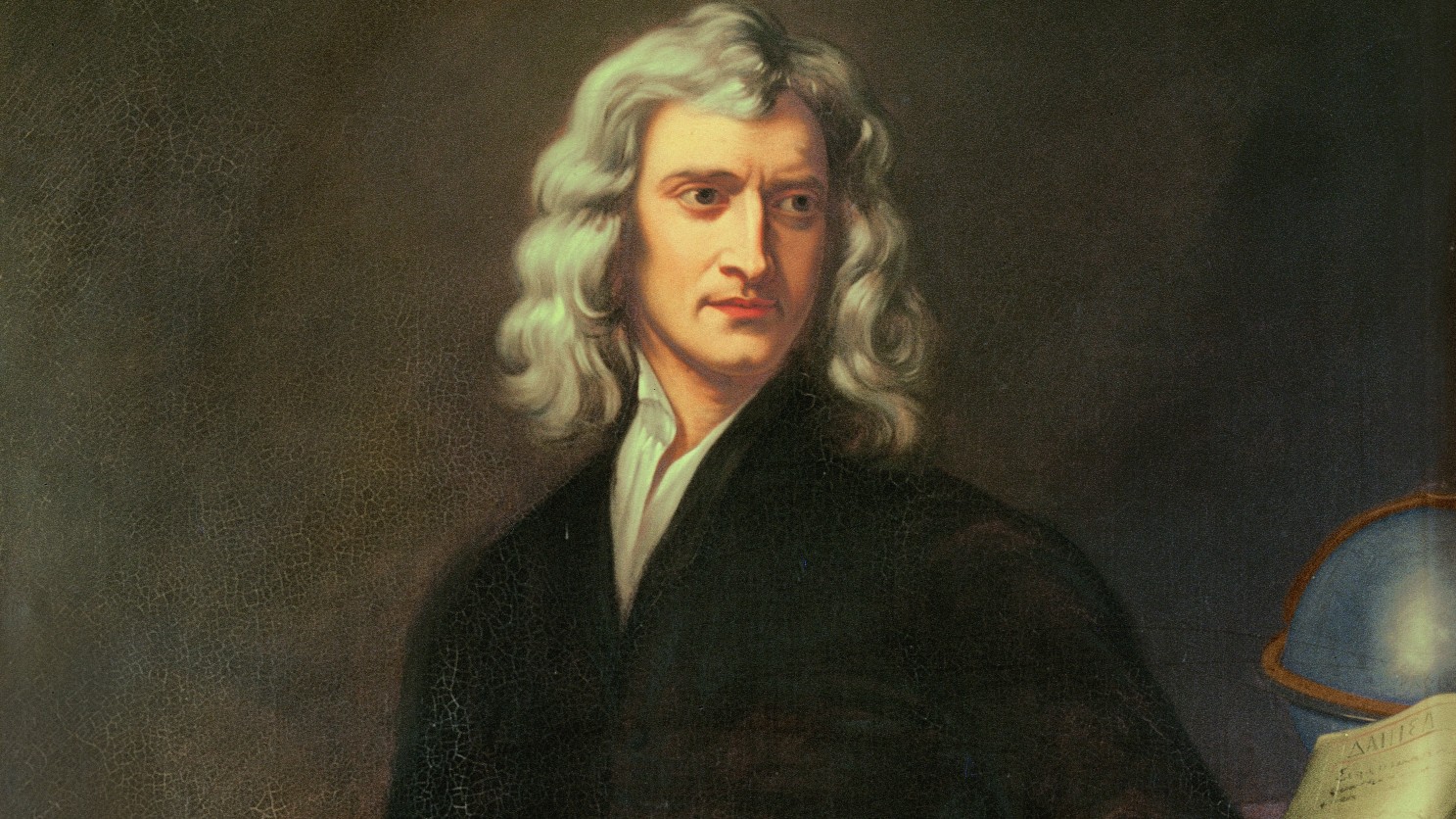
Isaac Newton was a pioneering scientist whose laws of motion and universal gravitation revolutionized our understanding ...
View Board
Discover the transformative journey of Sir Isaac Newton, the prodigious mind who redefined science with groundbreaking t...
View Board
John von Neumann, the 20th-century polymath, revolutionized computing, game theory, nuclear physics, and AI. Explore his...
View Board
Explore the life and legacy of Jules Henri Poincaré, a prodigy whose innovative work bridged mathematics and physics. Di...
View Board
> **Meta Description:** Explore the life and legacy of Albert Einstein, the genius who reshaped physics with relativity,...
View Board
768 **Meta Description:** Explore the life of Enrico Fermi, the architect of the nuclear age. From quantum theory to th...
View Board
John Napier, a Scottish mathematician, invented logarithms, revolutionizing calculations and paving the way for signific...
View Board
Discover the intriguing life of Léon Foucault, the pioneering French physicist who elegantly demonstrated the Earth's ro...
View Board
Discover the life and work of Albert Einstein, a renowned physicist and one of the most influential scientists in histor...
View Board
**Meta Description:** Explore the life and legacy of Hermann von Helmholtz, the 19th-century polymath who revolutionized...
View Board
Galileo Galilei: The Pioneer of Science and Chronology Galileo Galilei, often hailed as the father of modern science, r...
View Board
Jean Baptiste Joseph Delambre: A Life of Astronomical Pursuits The Early Life and Education Jean Baptiste Joseph Delam...
View Board
Explore the life and enduring legacy of Julio Palacios, a pioneering physicist from the 20th century whose groundbreakin...
View Board
Armand Hippolyte Louis Fizeau pioneering French physicist and Astronomer, renowned for measuring the speed of light and ...
View Board
Discover Hermann von Helmholtz, the pioneering physician-physicist whose work in energy, optics, and acoustics reshaped ...
View Board
Explore the life of Galileo Galilei, the pioneering scientist who revolutionized our understanding of the universe. Delv...
View Board
Max Born was a renowned theoretical physicist and Nobel laureate known for his statistical interpretation of quantum mec...
View Board
Arthur Eddington: Pioneering Relativity and Stellar Science Arthur Stanley Eddington stands as one of the most influenti...
View Board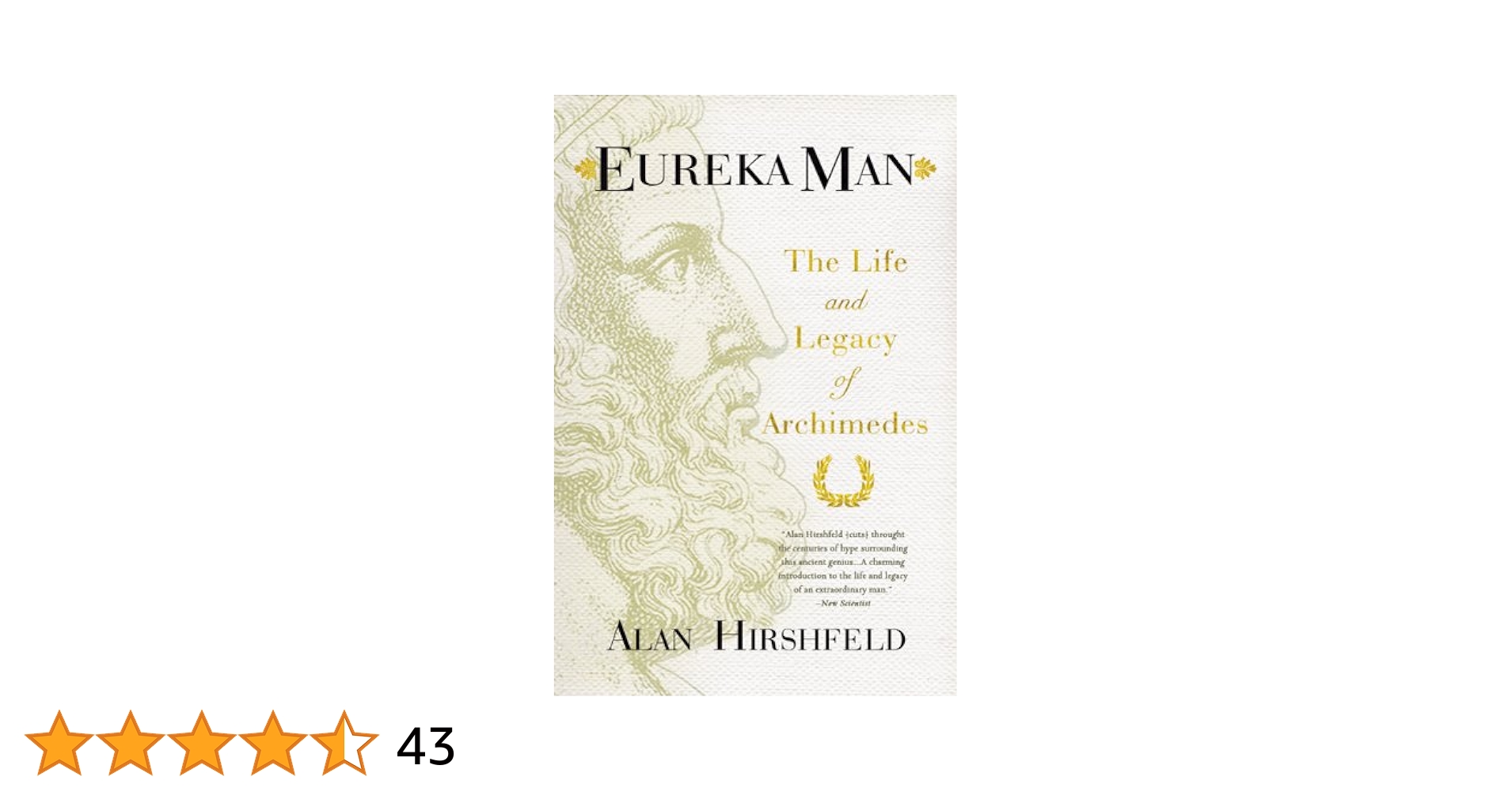
Archimedes, the genius of ancient Greece, revolutionized mathematics, physics, and engineering with discoveries like pi,...
View Board
Henri Lebesgue: The Mathematician Who Revolutionized Integration Henri Lebesgue was a French mathematician whose ground...
View Board
Comments