Explore Any Narratives
Discover and contribute to detailed historical accounts and cultural stories. Share your knowledge and engage with enthusiasts worldwide.
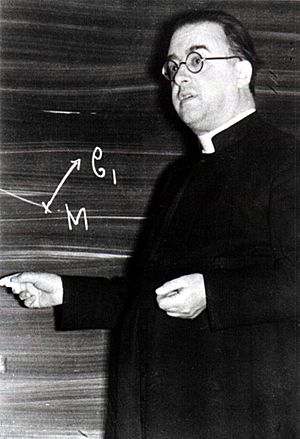
The name Georges Lemaître is synonymous with the origin of the universe. A Belgian Catholic priest and brilliant physicist, Lemaître pioneered the modern Big Bang theory. He first proposed that the cosmos is expanding and originated from a primordial state. His revolutionary ideas laid the foundation for our current understanding of cosmology.
Georges Lemaître was born on July 17, 1894, in Charleroi, Belgium. His early education was interrupted by service in World War I, where he served as an artillery officer. After the war, he pursued diverse academic interests with remarkable focus and determination.
Lemaître initially studied civil engineering before turning to his twin passions: science and faith. He entered the seminary and simultaneously delved into mathematics and physics at the University of Louvain. Lemaître was ordained a priest in 1923, balancing his religious vocation with a burgeoning scientific career.
His quest for knowledge took him to prestigious institutions, including the University of Cambridge and the Massachusetts Institute of Technology (MIT). At MIT, he earned a Ph.D. in physics, working on gravitational fields and the nascent field of cosmology. In 1927, he was appointed professor of astrophysics at the Catholic University of Louvain, a position he held until his retirement in 1964.
Georges Lemaître's work fundamentally reshaped our cosmic perspective. He was the first to provide a theoretical framework for an expanding universe with a definite beginning. His insights bridged Albert Einstein's theory of general relativity with emerging astronomical observations.
In a landmark 1927 paper, Lemaître derived an expanding universe model from Einstein's equations. He mathematically demonstrated that the universe could not be static and was likely growing in size. This provided a compelling explanation for the observed redshifts in the light from distant galaxies, which indicated they were moving away from us.
Crucially, Lemaître formulated what is now known as the Hubble-Lemaître law. This law states that a galaxy's recession velocity is proportional to its distance from Earth. While American astronomer Edwin Hubble's 1929 observations provided strong observational evidence, Lemaître's theoretical derivation preceded it by two years.
Lemaître's 1927 paper initially received little attention, partly because it was published in an obscure Belgian journal. It was only after Arthur Eddington arranged for an English translation in 1931 that the scientific community took full notice.
Lemaître took his ideas a dramatic step further in 1931. He proposed the "hypothesis of the primeval atom." This revolutionary concept suggested the universe began from an extremely hot, dense state—a single primordial atom. This entity would have undergone a tremendous explosion, initiating the expansion of space and time itself.
This idea was the direct precursor to the modern Big Bang theory. Lemaître envisioned the entire cosmic history unfolding from this singular event. He even speculated that the residual effects of this explosion might be detectable as a faint radiation permeating the universe.
Like many revolutionary ideas, Lemaître's theory faced significant resistance from the scientific establishment. The prevailing view, including Einstein's, favored
The concept of a universe with a beginning was profoundly controversial in the early 20th century. Many scientists, including Albert Einstein, were deeply uncomfortable with the theological implications. Lemaître’s work faced significant pushback before gaining acceptance as the cornerstone of modern cosmology.
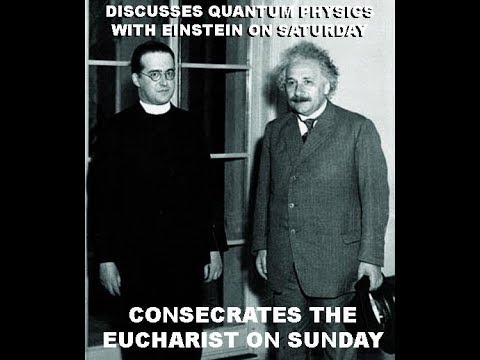
When Georges Lemaître first presented his expanding universe ideas to Albert Einstein in 1927, the renowned physicist was dismissive. Famously, Einstein told Lemaître, "Your calculations are correct, but your physics is abominable." Einstein was committed to a static, eternal universe and had even introduced a cosmological constant to force his equations to that model.
Another prominent critic was British astronomer Fred Hoyle, who championed the rival "Steady State" theory. In a 1949 BBC radio broadcast, Hoyle sarcastically coined the term "Big Bang" to mock Lemaître’s theory. Ironically, the name stuck and became the definitive label for the theory of cosmic origins.
The term 'Big Bang' was originally meant as a pejorative, but it perfectly captured the public imagination and eventually the scientific consensus.
Despite the skepticism, Lemaître diligently built his case. He connected existing astronomical data, such as Vesto Slipher’s measurements of galactic redshifts, with the theoretical framework of general relativity. His work provided a coherent explanation that the static universe models could not match.
Key developments that strengthened Lemaître’s position included:
The true measure of Georges Lemaître’s contribution is how completely his framework came to dominate cosmology. His ideas predicted phenomena that would take decades to observe directly. They also established a new paradigm for asking questions about the ultimate origin and fate of the cosmos.
One of Lemaître’s most remarkable predictions was the existence of fossil radiation left over from the universe's hot, dense beginning. He reasoned that the light from the primeval explosion would have cooled and stretched over billions of years of expansion, filling the universe with a faint, uniform glow.
This prediction was validated spectacularly in the mid-1960s. Arno Penzias and Robert Wilson accidentally discovered the cosmic microwave background (CMB) radiation—the cooled remnant of the Big Bang’s first light. This discovery provided smoking-gun evidence for Lemaître’s theory and earned Penzias and Wilson the Nobel Prize in Physics.
The relationship between a galaxy’s distance and its recessional velocity is a cornerstone of observational cosmology. While often called Hubble's law, the historical record shows Lemaître’s theoretical derivation was first. In 2018, the International Astronomical Union formally recommended renaming it the Hubble-Lemaître law to acknowledge this priority.
This law gives us the Hubble constant (H₀), a critical number for calculating the age and scale of the universe. Modern satellites like the Hubble Space Telescope have refined its value to approximately 70 kilometers per second per megaparsec. This allows scientists to calculate a universe age of roughly 13.8 billion years, a direct descendent of Lemaître’s finite-age model.
As a Catholic priest and a leading physicist, Georges Lemaître occupied a unique position. He navigated the often-contentious relationship between science and religion with a clear, principled stance. He firmly believed the two were separate, complementary paths to understanding different aspects of reality.
Lemaître was adamant that scientific inquiry and theological belief should not be conflated. He cautioned against using scientific theories like the Big Bang as proof for religious doctrine. He famously discouraged Pope Pius XII from declaring the Big Bang as validation of the Christian doctrine of creation, believing it confused the methods of each discipline.
For Lemaître, the universe revealed through science was a manifestation of divine creation, but the mechanisms of its unfolding were purely the domain of physical law. He saw no conflict, stating that the scientist’s quest to understand the universe was, in itself, a form of reverence for its order and beauty.
Beyond cosmology, Lemaître was an early adopter of computational methods in astrophysics. In the 1930s, he used one of the first mechanical calculators to model the deflection of cosmic rays by the Earth's magnetic field.
His innovative work in this area highlights his versatility as a scientist. He embraced new tools to tackle complex physical problems, laying groundwork for the computational astrophysics that is essential today for simulating galaxy formation, stellar evolution, and the early universe.
Lemaître saw the universe as a puzzle to be solved by mathematics and observation, not by scripture. His faith inspired his wonder but did not dictate his scientific conclusions.
Lemaître’s primeval atom hypothesis did not stop with his initial proposal. It launched an entire field of scientific investigation. Today’s cosmologists are building directly on his foundation, using increasingly powerful tools to peer back toward the first moments of time.
The modern Big Bang theory incorporates Alan Guth’s concept of cosmic inflation. This suggests a period of exponential expansion occurred a fraction of a second after the initial singularity. Inflation explains key features of the universe, like its large-scale uniformity, that Lemaître’s original model could not.
This refinement does not overturn Lemaître’s work; it enriches it. The core idea—a hot, dense beginning followed by expansion—remains intact. Instruments like the Planck satellite have mapped the cosmic microwave background in exquisite detail, providing a baby picture of the universe that confirms and extends Lemaître’s vision.
Contemporary cosmology has uncovered profound mysteries Lemaître could not have foreseen. Observations now suggest that the familiar atoms and light making up stars and planets constitute less than 5% of the universe's total content. The rest is composed of dark matter and dark energy.
These discoveries show that the story of the cosmos, which Lemaître began to unravel, is more complex and wondrous than ever imagined. The search for the nature of dark matter and dark energy is the direct continuation of the quest he started.
Throughout his life, Georges Lemaître received numerous prestigious accolades for his groundbreaking contributions to cosmology. His work gradually shifted from being controversial to being recognized as one of the most important scientific advancements of the 20th century. These honors cemented his legacy as a key architect of our modern understanding of the universe.
In 1934, Lemaître was awarded the Francqui Prize, Belgium's highest scientific honor. This award was particularly significant as it was conferred by King Leopold III and nominated by Albert Einstein himself. This gesture from his former critic signaled a monumental shift in the scientific community's acceptance of his theories.
Other significant awards included the Mendel Medal from Villanova University and the Eddington Medal from the Royal Astronomical Society. In 1960, he was appointed President of the Pontifical Academy of Sciences, a role that reflected his standing in both scientific and religious circles. His leadership there emphasized his belief in the harmony between faith and reason.
Following his death in 1966, recognition of Lemaître’s contributions has only grown. Historians of science have worked to correct the historical record, ensuring his precedence in formulating the theory of the expanding universe. The most significant recent acknowledgment came from the International Astronomical Union (IAU).
In October 2018, the IAU passed a resolution recommending that the expansion law be known as the Hubble–Lemaître law. This formal recognition affirmed that Lemaître derived the law theoretically two years before Hubble's observational confirmation. It was a long-overdue correction that honored his foundational role.
The IAU's decision to rename the Hubble law was a landmark moment in setting the historical record straight, acknowledging Lemaître's theoretical genius alongside Hubble's observational brilliance.
Lemaître’s influence extends far beyond the specific equations he derived. He established a new way of thinking about the cosmos that continues to guide scientific inquiry. His ideas permeate modern astrophysics and inspire new generations of scientists to probe the deepest questions of existence.
The quest to understand the Big Bang has driven the development of some of humanity's most advanced technologies. Space telescopes like the Hubble Space Telescope, the James Webb Space Telescope (JWST), and probes like Planck were designed specifically to test and refine predictions stemming from Lemaître’s initial hypothesis.
These instruments look for the "fossils" of the early universe that Lemaître imagined. They measure the cosmic microwave background with incredible precision, map the distribution of galaxies, and peer back to the first stars. Each new dataset is compared against the cosmological models that trace their origin to Lemaître’s 1927 paper.
Lemaître championed a philosophical approach to science that remains vital today. His insistence on maintaining a clear distinction between scientific and theological explanations protects the integrity of both disciplines. This perspective prevents science from overstepping its bounds and respects the domain of faith.
He demonstrated that a scientist could pursue the ultimate questions of origins without letting metaphysical assumptions dictate physical conclusions. This model of methodological naturalism is a cornerstone of modern scientific practice. It allows researchers of all faiths and none to collaborate based on empirical evidence and reasoned argument.
Georges Lemaître remained an active intellectual force until the end of his life. He continued his academic work at the University of Louvain, mentoring students and following new developments in physics. He passed away on June 20, 1966, in Leuven, Belgium, just after learning of the discovery of the cosmic microwave background, the definitive proof of his theory.
Lemaître’s legacy is preserved through numerous institutions and honors named after him. The Georges Lemaître International Fellows Programme at the University of Louvain attracts visiting scientists from around the world. An asteroid, 1565 Lemaître, and a lunar crater bear his name, etching his contributions into the heavens he sought to understand.
His foundational role is taught in astronomy and physics courses globally. Students learn that the story of the Big Bang begins not in 1929 with Hubble, but in 1927 with a Belgian priest who saw the hidden meaning in Einstein’s equations. His life serves as an inspiring example of interdisciplinary genius.
Georges Lemaître’s journey from an obscure Belgian mathematician to a cornerstone of modern science is a testament to the power of a single, transformative idea. He dared to propose a universe with a beginning, a concept that was initially ridiculed but is now a fundamental pillar of scientific knowledge. His work beautifully merged profound theoretical insight with the emerging data of observational astronomy.
The key takeaways from Lemaître’s life and work are undeniable. He was the first to theoretically derive the expanding universe from general relativity. He courageously proposed the primeval atom hypothesis, which evolved into the Big Bang theory. Furthermore, he provided a timeless model for navigating the domains of science and faith with both rigor and respect.
Today, as the James Webb Space Telescope sends back images of the early universe and cosmologists hunt for primordial gravitational waves, they are walking the path Lemaître blazed. His intellectual courage to follow the equations wherever they led, even to a moment of creation, fundamentally reshaped our cosmic identity. Georges Lemaître gave us not just a theory, but a new origin story for everything, forever changing our place in the cosmos.



Your personal space to curate, organize, and share knowledge with the world.
Discover and contribute to detailed historical accounts and cultural stories. Share your knowledge and engage with enthusiasts worldwide.
Connect with others who share your interests. Create and participate in themed boards about any topic you have in mind.
Contribute your knowledge and insights. Create engaging content and participate in meaningful discussions across multiple languages.
Already have an account? Sign in here

George Gamow: The Unbelievable Journey of a Theoretical Physicist and Cosmologist The Enigmatic Man Behind the Cosmic B...
View Board
Discover Neil deGrasse Tyson's life and work as a renowned astrophysicist, science communicator and director of the Hayd...
View Board
Arthur Eddington: Pioneering Relativity and Stellar Science Arthur Stanley Eddington stands as one of the most influenti...
View Board
Explore the remarkable legacy of Subrahmanyan Chandrasekhar, the astrophysics luminary who revolutionized our understand...
View Board
George Ellery Hale revolutionized astrophysics through solar discoveries, groundbreaking telescopes like Mount Wilson an...
View Board
Discover the life and work of Albert Einstein, a renowned physicist and one of the most influential scientists in histor...
View Board
**Meta Description:** Explore the life of William Herschel, the astronomer who discovered Uranus and revolutionized our ...
View Board
Discover Stephen Hawking's groundbreaking contributions to cosmology, his resilience against ALS, and his enduring legac...
View Board
Discover the inspiring journey of Stephen Hawking in this comprehensive article. From his pioneering work on black holes...
View Board
Discover how Luis Alvarez revolutionized modern science with his Nobel Prize-winning bubble chamber and groundbreaking d...
View Board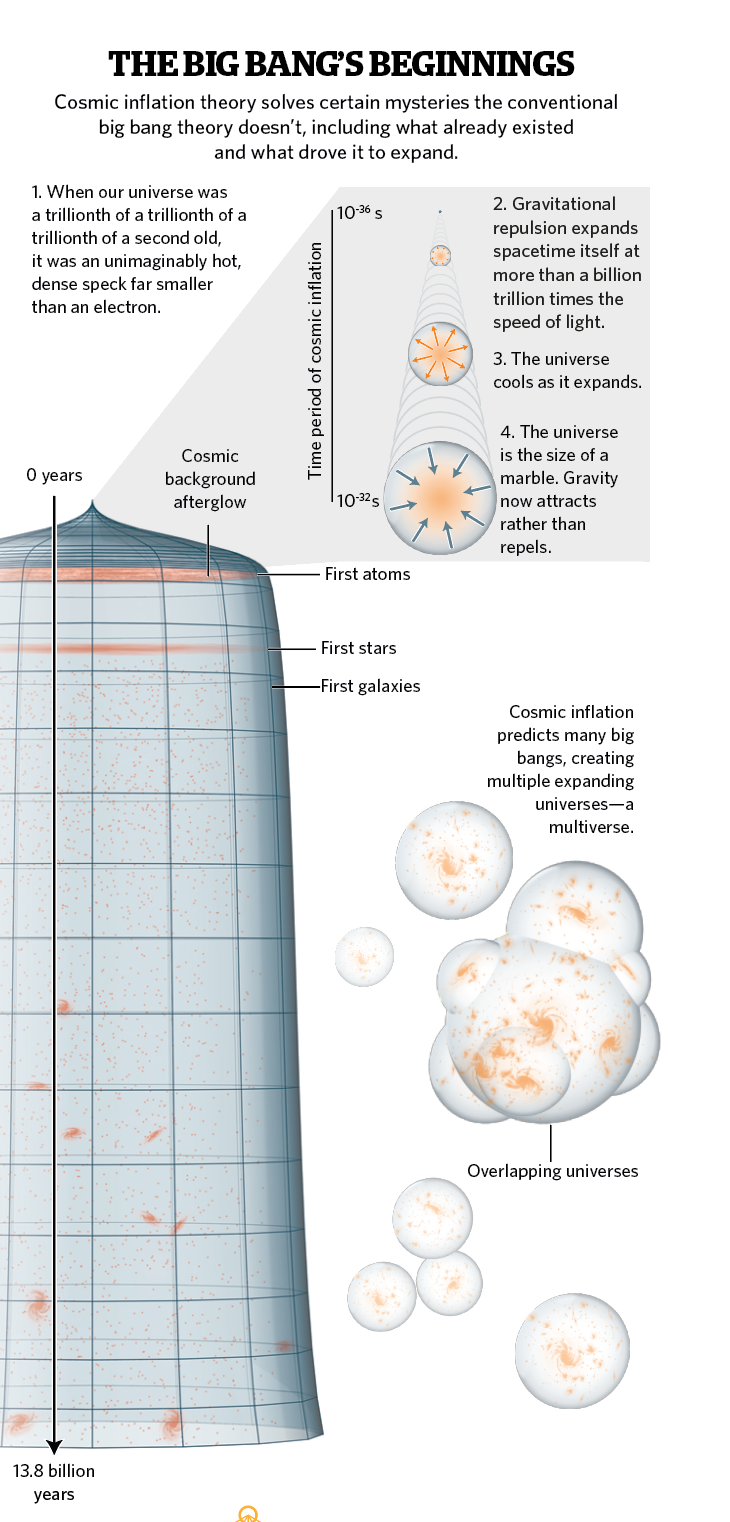
Discover how Alan Guth, a renowned physicist, revolutionized cosmology with his groundbreaking theory of cosmic inflatio...
View Board
Explore the extraordinary legacy of Riccardo Giacconi, the Nobel laureate who revolutionized X-ray astronomy. Discover h...
View Board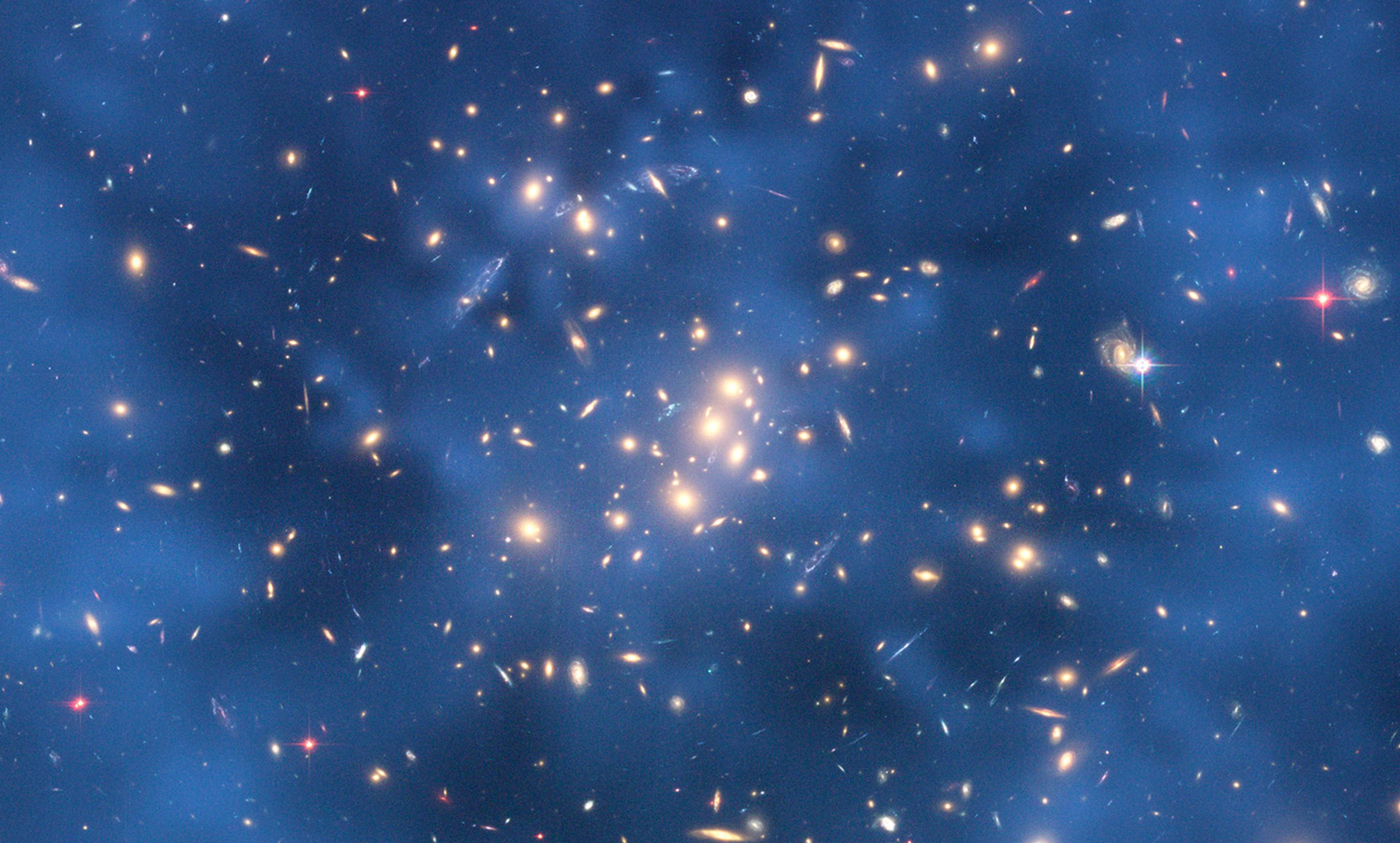
**Meta Description:** Discover Vera Rubin's groundbreaking work on dark matter, which revolutionized cosmology. Learn ...
View Board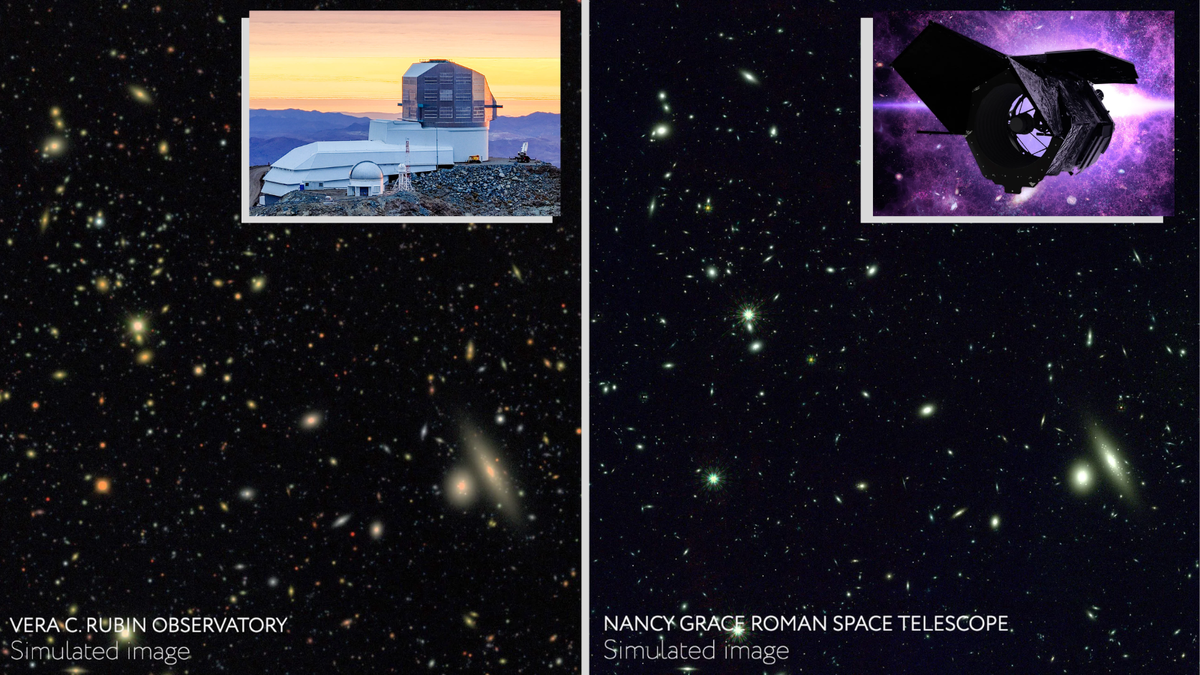
Explore the vast cosmos—its galaxies, black holes, exoplanets, dark matter, and humanity's quest to understand the unive...
View Board
Jean Baptiste Joseph Delambre: A Life of Astronomical Pursuits The Early Life and Education Jean Baptiste Joseph Delam...
View Board
Explore the life and legacy of Jules Henri Poincaré, a prodigy whose innovative work bridged mathematics and physics. Di...
View Board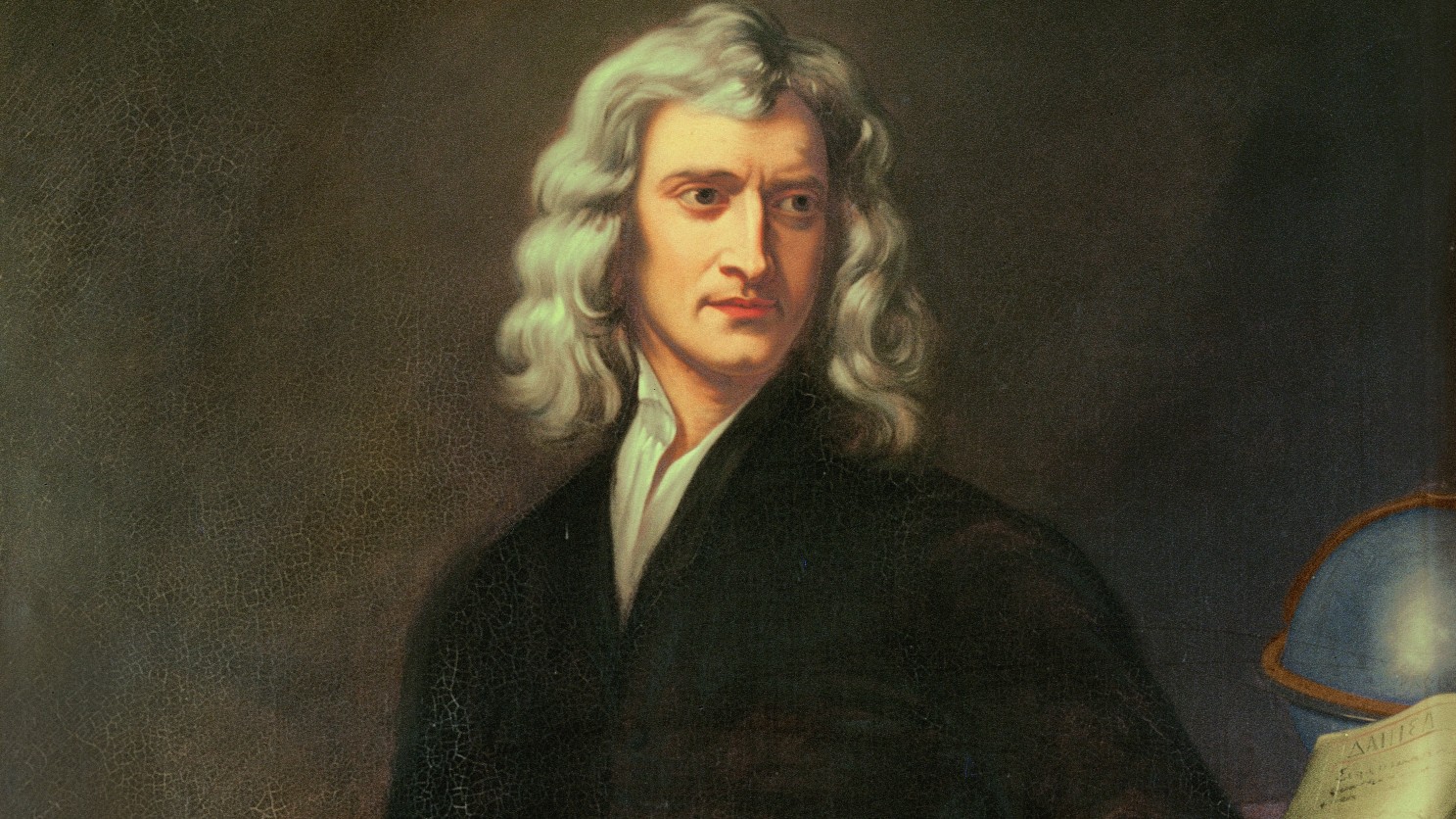
Isaac Newton was a pioneering scientist whose laws of motion and universal gravitation revolutionized our understanding ...
View Board
Jocelyn Bell Burnell pioneering astronomer who discovered pulsars leaving a lasting legacy in astrophysics through groun...
View Board
> **Meta Description:** Explore the life and legacy of Albert Einstein, the genius who reshaped physics with relativity,...
View Board
768 **Meta Description:** Explore the life of Enrico Fermi, the architect of the nuclear age. From quantum theory to th...
View Board
Comments