Michael Faraday: Der Weg zum König der Chemie und Physik
Einleitung: Ein Selbstlernender verändert die Wissenschaft
Michael Faraday war ein bahnbrechender Experimentalwissenschaftler, dessen Entdeckungen die Grundlagen der Elektromagnetismus- und Elektrochemie legten. Geboren am 22. September 1791 in einfachen Verhältnissen, bildete er sich selbst und wurde zu einem der bedeutendsten Naturforscher des 19. Jahrhunderts. Seine Arbeit prägte nicht nur die Wissenschaft, sondern auch die technische Entwicklung elektrischer Generatoren und Motoren.
Frühes Leben und Bildung
Faraday stammte aus einer bescheidenen Familie und begann seine Laufbahn als Lehrling bei einem Buchbinder. Diese Zeit nutzte er, um sich durch das Lesen wissenschaftlicher Bücher weiterzubilden. Sein Leben änderte sich, als er Sir Humphry Davy begegnete, der ihm den Zugang zur wissenschaftlichen Elite und zum Royal Institution ermöglichte. Dort begann seine Karriere als Assistent und später als renommierter Wissenschaftler.
Der Aufstieg zum Experimentalisten
Faraday war bekannt für seine sorgfältig kontrollierten und reproduzierbaren Experimente. Seine Stärke lag nicht in formalen mathematischen Theorien, sondern in der Entwicklung von Apparaten und der Durchführung präziser Versuche. Diese Methodik führte zu einigen seiner bedeutendsten Entdeckungen, die die Grundlage für die moderne Elektrodynamik legten.
Bahnbrechende Entdeckungen
Faradays experimentelle Arbeiten umfassen eine Vielzahl von Entdeckungen, die die Wissenschaft revolutionierten. Dazu gehören die elektromagnetische Rotation (1821), die als erste Form des Elektromotors gilt, und die elektromagnetische Induktion (1831), die die Basis für elektrische Generatoren und Transformatoren bildete.
Elektromagnetische Rotation und Induktion
Im Jahr 1821 entdeckte Faraday die elektromagnetische Rotation, die den Weg für die Entwicklung des Elektromotors ebnete. Zehn Jahre später, im Jahr 1831, folgte die Entdeckung der elektromagnetischen Induktion. Diese Entdeckung war entscheidend für die Entwicklung elektrischer Maschinen und legte den Grundstein für die moderne Elektrotechnik.
Beiträge zur Elektrochemie
Faraday prägte wichtige Fachbegriffe wie Elektrode, Kathode und Ion, die bis heute in der Elektrochemie verwendet werden. Seine Arbeiten zur Elektrolyse formulierten die Gesetze, die den Prozess der elektrolytischen Zersetzung beschreiben. Diese Beiträge standardisierten die elektrochemische Nomenklatur und beeinflussten die weitere Forschung in diesem Bereich.
Weitere bedeutende Entdeckungen
Neben seinen Arbeiten im Bereich der Elektrizität und Chemie machte Faraday auch in anderen Bereichen bedeutende Entdeckungen. Dazu gehören die Isolierung und Beschreibung von Benzol im Jahr 1825, die Verflüssigung von sogenannten "permanenten" Gasen und die Entdeckung des Diamagnetismus sowie des nach ihm benannten Faraday-Effekts im Jahr 1845.
Benzol und die Verflüssigung von Gasen
Im Jahr 1825 isolierte und beschrieb Faraday Benzol, eine Verbindung, die in der organischen Chemie von großer Bedeutung ist. Seine Arbeiten zur Verflüssigung von Gasen zeigten, dass selbst sogenannte "permanente" Gase unter bestimmten Bedingungen verflüssigt werden können. Diese Entdeckungen erweiterten das Verständnis der chemischen und physikalischen Eigenschaften von Substanzen.
Diamagnetismus und der Faraday-Effekt
Faradays Entdeckung des Diamagnetismus und des Faraday-Effekts im Jahr 1845 waren weitere Meilensteine in seiner Karriere. Der Faraday-Effekt beschreibt die Rotation der Polarisationsebene von Licht in einem magnetischen Feld und ist ein wichtiger Beitrag zur Optik und Elektromagnetismus.
Publikationen und institutionelle Verankerung
Faraday veröffentlichte zahlreiche Aufsätze und Laborberichte, die seine experimentellen Ergebnisse dokumentierten. Sein Lehrbuch Chemical Manipulation (1827) ist seine einzige größere Monographie und diente als wichtiges Lehrwerk für Chemiker. Seine langjährige Tätigkeit am Royal Institution prägte die institutionelle Lehre und Forschung und festigte seinen Ruf als führender Wissenschaftler.
Fullerian Professorship of Chemistry
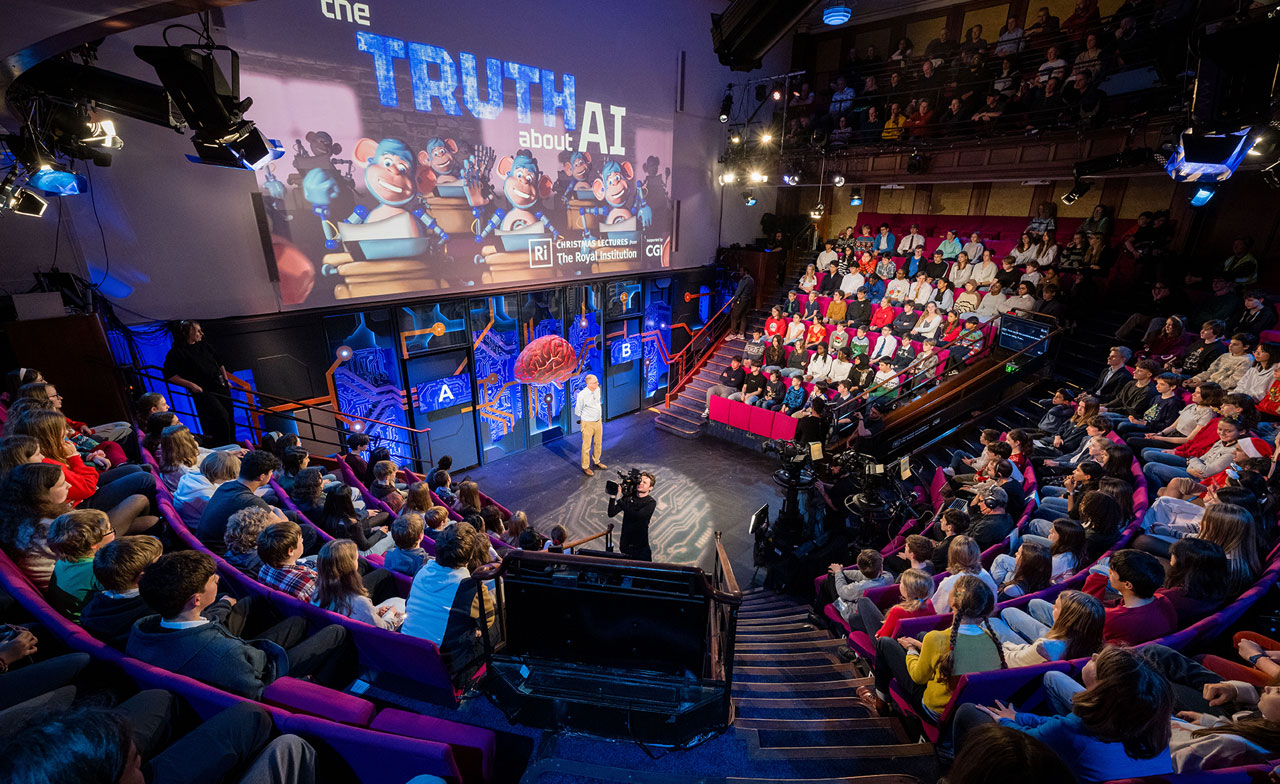
Im Jahr 1833 wurde Faraday zum Fullerian Professor of Chemistry am Royal Institution ernannt. Diese Position ermöglichte es ihm, seine Forschung weiter voranzutreiben und seine Erkenntnisse einem breiteren Publikum zugänglich zu machen. Seine öffentlichen Vorträge, bekannt als Christmas Lectures, gelten als frühe Vorbilder populärwissenschaftlicher Bildung.
Wissenschaftliche Bedeutung und Vermächtnis
Faradays Arbeiten legten die experimentelle Basis für die Elektrodynamik und beeinflussten die Entwicklung des Feldbegriffs in der Physik. Seine Konzepte von Kraftfeldern ermöglichten technische Anwendungen wie den Dynamo, Transformator und elektrische Maschinen. Seine religiöse Haltung als evangelikaler Christ prägte seine wissenschaftliche Demut und Ethik, wird jedoch in Fachbiographien rein kontextualisiert.
Einfluss auf spätere Theoretiker
Spätere Theoretiker wie James Clerk Maxwell formten Faradays Feldideen zu einer mathematischen Theorie. Diese Zusammenarbeit zwischen experimenteller und theoretischer Physik war entscheidend für die Entwicklung der modernen Physik. Faradays Vermächtnis lebt in den zahlreichen technischen Anwendungen und wissenschaftlichen Konzepten weiter, die auf seinen Entdeckungen basieren.
Faradays experimentelle Methodik und Arbeitsweise
Faradays Erfolg beruhte auf seiner einzigartigen experimentellen Methodik. Im Gegensatz zu vielen seiner Zeitgenossen, die sich auf theoretische Modelle konzentrierten, legte Faraday großen Wert auf präzise Beobachtungen und reproduzierbare Versuche. Seine Laborbücher zeigen, wie systematisch er seine Experimente durchführte und dokumentierte.
Präzision und Reproduzierbarkeit
Ein Markenzeichen von Faradays Arbeit war seine akribische Dokumentation. Jedes Experiment wurde detailliert beschrieben, einschließlich der verwendeten Materialien, der Versuchsanordnung und der beobachteten Ergebnisse. Diese Herangehensweise ermöglichte es anderen Wissenschaftlern, seine Experimente nachzuvollziehen und zu überprüfen.
Entwicklung von Apparaten
Faraday entwarf und baute viele der Apparate, die er für seine Experimente benötigte. Ein berühmtes Beispiel ist der Induktionsring, mit dem er die elektromagnetische Induktion nachwies. Diese Apparate sind heute noch im Royal Institution ausgestellt und werden in historischen Studien analysiert.
Faradays Einfluss auf die Wissenschaftskommunikation
Neben seinen wissenschaftlichen Entdeckungen war Faraday auch ein Pionier der Wissenschaftskommunikation. Seine öffentlichen Vorträge, insbesondere die Christmas Lectures, zogen ein breites Publikum an und machten komplexe wissenschaftliche Konzepte für Laien verständlich.
Die Christmas Lectures
Die Christmas Lectures am Royal Institution wurden von Faraday ins Leben gerufen und sind bis heute eine Tradition. Diese Vorträge richteten sich an ein junges Publikum und sollten das Interesse an Wissenschaft wecken. Faradays Fähigkeit, komplexe Themen anschaulich zu erklären, machte ihn zu einem der ersten Wissenschaftskommunikatoren der Moderne.
Lehrbuch "Chemical Manipulation"
Faradays Lehrbuch Chemical Manipulation (1827) war ein Meilenstein in der chemischen Ausbildung. Es bot praktische Anleitungen für Labortechniken und wurde zu einem Standardwerk für Chemiker. Das Buch spiegelt Faradays pädagogisches Talent wider und zeigt, wie wichtig ihm die Vermittlung von Wissen war.
Faradays religiöse Überzeugungen und wissenschaftliche Ethik
Faradays evangelikale christliche Überzeugungen spielten eine zentrale Rolle in seinem Leben und seiner Arbeit. Er sah seine wissenschaftlichen Untersuchungen als eine Form der Gottesverehrung und betonte stets die Bedeutung von Demut und Ethik in der Forschung.
Wissenschaft als Gottesdienst
Für Faraday war die Erforschung der Natur eine Möglichkeit, die Schöpfung Gottes zu verstehen. Diese Haltung prägte seine Herangehensweise an die Wissenschaft und führte zu einer tiefen Respekt vor den Naturgesetzen. Seine religiösen Überzeugungen beeinflussten auch seine ethischen Standards in der Forschung.
Demut und Bescheidenheit
Trotz seiner zahlreichen Entdeckungen und Auszeichnungen blieb Faraday bescheiden. Er lehnte es ab, sich selbst in den Vordergrund zu stellen, und betonte stets die Bedeutung der Zusammenarbeit und des Austauschs von Ideen. Diese Haltung machte ihn zu einem geschätzten Kollegen und Mentor für viele junge Wissenschaftler.
Faradays Vermächtnis in der modernen Wissenschaft
Faradays Arbeiten haben nicht nur die Wissenschaft seiner Zeit geprägt, sondern beeinflussen auch heute noch zahlreiche Bereiche der Physik und Chemie. Seine Entdeckungen legten den Grundstein für viele moderne Technologien und wissenschaftliche Konzepte.
Einfluss auf die Elektrotechnik
Die elektromagnetische Induktion, die Faraday entdeckte, ist die Grundlage für die Funktionsweise von Generatoren und Transformatoren. Diese Technologien sind heute essenziell für die Energieversorgung und die moderne Elektrotechnik. Ohne Faradays Entdeckungen wäre die Entwicklung dieser Technologien nicht möglich gewesen.
Beiträge zur Optik und Materialforschung
Faradays Arbeiten zur Magneto-Optik und zum Faraday-Effekt haben die Optik und Materialforschung maßgeblich beeinflusst. Seine Entdeckungen führten zu neuen Erkenntnissen über die Wechselwirkung von Licht und Magnetfeldern und eröffneten neue Forschungsfelder.
Inspiration für zukünftige Generationen
Faradays Leben und Werk dienen bis heute als Inspiration für Wissenschaftler und Studenten. Seine Geschichte zeigt, dass auch ohne formale Ausbildung große wissenschaftliche Leistungen möglich sind. Viele moderne Wissenschaftler sehen in Faraday ein Vorbild für Neugierde, Ausdauer und ethische Integrität.
Faradays Originalapparate und ihre Bedeutung heute
Viele der von Faraday verwendeten Apparate sind heute noch im Royal Institution ausgestellt. Diese historischen Objekte sind nicht nur von musealem Wert, sondern werden auch in der modernen Forschung und Lehre genutzt.
Der Induktionsring
Der Induktionsring, mit dem Faraday die elektromagnetische Induktion nachwies, ist eines der bekanntesten Exponate. Dieser einfache, aber geniale Apparat besteht aus zwei Spulen, die um einen Eisenring gewickelt sind. Mit diesem Aufbau konnte Faraday zeigen, wie ein magnetisches Feld einen elektrischen Strom induzieren kann.
Restaurierung und Digitalisierung
Moderne Restaurierungs- und Digitalisierungsprojekte machen Faradays Originalapparate für die Forschung und Lehre zugänglich. Durch diese Projekte können Wissenschaftler und Studenten die Experimente Faradays nachvollziehen und besser verstehen. Die Digitalisierung ermöglicht es auch, diese historischen Objekte einem globalen Publikum zugänglich zu machen.
Faradays Rolle in der Wissenschaftsgeschichte
Faradays Beiträge zur Wissenschaft sind von unschätzbarem Wert und haben ihn zu einer der wichtigsten Figuren in der Wissenschaftsgeschichte gemacht. Seine Arbeiten haben nicht nur die Grundlagen für viele moderne Technologien gelegt, sondern auch die Art und Weise, wie Wissenschaft betrieben und vermittelt wird, nachhaltig beeinflusst.
Anerkennung und Ehrungen
Faraday erhielt zu Lebzeiten zahlreiche Auszeichnungen und Ehrungen, darunter die Royal Medal und die Copley Medal der Royal Society. Diese Ehrungen spiegeln die Bedeutung seiner Arbeit wider und zeigen, wie sehr seine Zeitgenossen seine Beiträge schätzten.
Faradays Einfluss auf die Wissenschaftsphilosophie
Faradays Herangehensweise an die Wissenschaft, die auf Experimenten und Beobachtungen beruhte, hat auch die Wissenschaftsphilosophie beeinflusst. Seine Betonung der empirischen Methode und der Reproduzierbarkeit von Experimenten hat die Standards für wissenschaftliche Forschung geprägt und ist bis heute von Bedeutung.
Zitate und Aussprüche
Faradays Worte sind bis heute inspirierend und zeigen seine tiefgründige Haltung zur Wissenschaft. Ein bekanntes Zitat von ihm lautet:
"Nichts ist zu wunderbar, um wahr zu sein, wenn es mit den Gesetzen der Natur im Einklang steht."
Dieses Zitat spiegelt Faradays Überzeugung wider, dass die Naturgesetze die Grundlage für alle wissenschaftlichen Entdeckungen bilden.
Faradays Beiträge zur Materialforschung
Neben seinen Arbeiten im Bereich der Elektrizität und des Magnetismus leistete Faraday auch bedeutende Beiträge zur Materialforschung. Seine Experimente mit verschiedenen Substanzen führten zu neuen Erkenntnissen über deren Eigenschaften und Verhaltensweisen.
Entdeckung und Isolierung von Benzol
Im Jahr 1825 isolierte Faraday Benzol, eine Verbindung, die in der organischen Chemie von großer Bedeutung ist. Diese Entdeckung war ein wichtiger Meilenstein in der Erforschung von Kohlenwasserstoffen und legte den Grundstein für weitere Forschungen in diesem Bereich.
Untersuchungen zu optischen Gläsern und Legierungen
Faradays Arbeiten zu optischen Gläsern und Legierungen haben ebenfalls wichtige Erkenntnisse geliefert. Seine Experimente mit diesen Materialien trugen zum Verständnis ihrer physikalischen und chemischen Eigenschaften bei und eröffneten neue Anwendungsmöglichkeiten in der Technologie.
Faradays Einfluss auf die moderne Technologie
Die Entdeckungen von Michael Faraday haben nicht nur die Wissenschaft revolutioniert, sondern auch die Grundlage für viele moderne Technologien gelegt. Seine Arbeiten zur elektromagnetischen Induktion und zum Elektromagnetismus sind heute aus unserem Alltag nicht mehr wegzudenken.
Elektrische Generatoren und Motoren
Die elektromagnetische Induktion, die Faraday 1831 entdeckte, ist die Grundlage für die Funktionsweise von elektrischen Generatoren und Motoren. Diese Technologien sind heute essenziell für die Energieversorgung und den Betrieb von Maschinen in Industrie und Haushalten. Ohne Faradays Entdeckungen wäre die moderne Elektrotechnik undenkbar.
Transformatoren und Energieübertragung
Transformatoren, die auf den Prinzipien der elektromagnetischen Induktion basieren, ermöglichen die effiziente Übertragung von elektrischer Energie über große Entfernungen. Diese Technologie ist ein zentraler Bestandteil des modernen Stromnetzes und ermöglicht es, Energie von Kraftwerken zu Verbrauchern zu transportieren.
Faradays Beiträge zur Wissenschaftsgeschichte
Faradays Arbeiten haben nicht nur die Wissenschaft seiner Zeit geprägt, sondern auch die Art und Weise, wie Wissenschaft betrieben und vermittelt wird, nachhaltig beeinflusst. Seine experimentelle Methodik und seine Fähigkeit, komplexe Konzepte verständlich zu erklären, setzen Maßstäbe, die bis heute gelten.
Experimentelle Methodik und empirische Forschung
Faradays Betonung der empirischen Forschung und der Reproduzierbarkeit von Experimenten hat die Standards für wissenschaftliche Arbeit geprägt. Seine akribische Dokumentation und systematische Herangehensweise sind heute grundlegende Prinzipien in der wissenschaftlichen Forschung.
Wissenschaftskommunikation und Bildung
Faradays öffentliche Vorträge, insbesondere die Christmas Lectures, waren bahnbrechend in der Wissenschaftskommunikation. Seine Fähigkeit, komplexe Themen anschaulich zu erklären, hat die Art und Weise, wie Wissenschaft vermittelt wird, nachhaltig beeinflusst. Heute sind wissenschaftliche Vorträge und populärwissenschaftliche Formate ein fester Bestandteil der Wissenschaftskommunikation.
Faradays Vermächtnis in der modernen Wissenschaft
Faradays Vermächtnis lebt in den zahlreichen wissenschaftlichen Konzepten und Technologien weiter, die auf seinen Entdeckungen basieren. Seine Arbeiten haben nicht nur die Grundlagen für viele moderne Technologien gelegt, sondern auch die Art und Weise, wie Wissenschaft betrieben und vermittelt wird, nachhaltig beeinflusst.
Inspiration für zukünftige Generationen
Faradays Leben und Werk dienen bis heute als Inspiration für Wissenschaftler und Studenten. Seine Geschichte zeigt, dass auch ohne formale Ausbildung große wissenschaftliche Leistungen möglich sind. Viele moderne Wissenschaftler sehen in Faraday ein Vorbild für Neugierde, Ausdauer und ethische Integrität.
Faradays Einfluss auf die Wissenschaftsphilosophie
Faradays Herangehensweise an die Wissenschaft, die auf Experimenten und Beobachtungen beruhte, hat auch die Wissenschaftsphilosophie beeinflusst. Seine Betonung der empirischen Methode und der Reproduzierbarkeit von Experimenten hat die Standards für wissenschaftliche Forschung geprägt und ist bis heute von Bedeutung.
Zusammenfassung der wichtigsten Erkenntnisse
Michael Faraday war ein bahnbrechender Experimentalwissenschaftler, dessen Entdeckungen die Grundlagen der Elektromagnetismus- und Elektrochemie legten. Seine Arbeiten haben nicht nur die Wissenschaft seiner Zeit geprägt, sondern auch die Grundlage für viele moderne Technologien gelegt.
- Elektromagnetische Induktion: Die Entdeckung der elektromagnetischen Induktion im Jahr 1831 war ein Meilenstein in der Elektrotechnik und legte den Grundstein für elektrische Generatoren und Transformatoren.
- Elektromagnetische Rotation: Faradays Entdeckung der elektromagnetischen Rotation im Jahr 1821 war die erste Form des Elektromotors und ebnete den Weg für die Entwicklung elektrischer Maschinen.
- Elektrochemie: Faraday prägte wichtige Fachbegriffe wie Elektrode, Kathode und Ion und formulierte die Gesetze der Elektrolyse, die bis heute in der Elektrochemie verwendet werden.
- Materialforschung: Seine Entdeckung und Isolierung von Benzol im Jahr 1825 und seine Arbeiten zu optischen Gläsern und Legierungen haben wichtige Erkenntnisse geliefert.
- Wissenschaftskommunikation: Faradays öffentliche Vorträge, insbesondere die Christmas Lectures, waren bahnbrechend in der Wissenschaftskommunikation und haben die Art und Weise, wie Wissenschaft vermittelt wird, nachhaltig beeinflusst.
Faradays bleibendes Erbe
Faradays Beiträge zur Wissenschaft sind von unschätzbarem Wert und haben ihn zu einer der wichtigsten Figuren in der Wissenschaftsgeschichte gemacht. Seine Entdeckungen haben nicht nur die Grundlagen für viele moderne Technologien gelegt, sondern auch die Art und Weise, wie Wissenschaft betrieben und vermittelt wird, nachhaltig beeinflusst.
Faradays Einfluss auf die moderne Physik
Faradays Konzepte von Kraftfeldern und seine Arbeiten zur Elektrodynamik haben die moderne Physik maßgeblich beeinflusst. Seine Ideen wurden von späteren Theoretikern wie James Clerk Maxwell weiterentwickelt und bildeten die Grundlage für die moderne Feldtheorie.
Faradays Rolle in der Wissenschaftsgeschichte
Faradays Arbeiten haben die Wissenschaftsgeschichte nachhaltig geprägt. Seine experimentelle Methodik, seine Entdeckungen und seine Fähigkeit, komplexe Konzepte verständlich zu erklären, setzen Maßstäbe, die bis heute gelten. Seine Geschichte zeigt, dass auch ohne formale Ausbildung große wissenschaftliche Leistungen möglich sind.
Abschließende Gedanken
Michael Faraday war ein wahrer Pionier der Wissenschaft, dessen Entdeckungen und Ideen die Welt nachhaltig verändert haben. Seine Arbeiten zur Elektrizität, zum Magnetismus und zur Chemie haben die Grundlagen für viele moderne Technologien gelegt und die Art und Weise, wie Wissenschaft betrieben und vermittelt wird, nachhaltig beeinflusst. Faradays Vermächtnis lebt in den zahlreichen wissenschaftlichen Konzepten und Technologien weiter, die auf seinen Entdeckungen basieren, und seine Geschichte dient bis heute als Inspiration für Wissenschaftler und Studenten.
"Die Natur ist ein offenes Buch, das wir lesen und verstehen müssen."
Dieses Zitat von Faraday spiegelt seine tiefe Überzeugung wider, dass die Erforschung der Natur eine der wichtigsten Aufgaben der Wissenschaft ist. Seine Arbeit und sein Erbe erinnern uns daran, dass Neugierde, Ausdauer und ethische Integrität die Grundlagen für große wissenschaftliche Leistungen sind.
Faradays Leben und Werk zeigen, dass wissenschaftliche Entdeckungen nicht nur das Verständnis der Welt erweitern, sondern auch das Potenzial haben, die Gesellschaft nachhaltig zu verändern. Seine Beiträge zur Wissenschaft sind ein bleibendes Erbe, das uns auch heute noch inspiriert und lehrt.


André-Marie Ampère: A Pioneer in the History of Electricity
The Early Life and Education
André-Marie Ampère, often regarded as one of the founding fathers of classical electromagnetism, was born on January 20, 1775, in Lyon, France. Coming from a family with significant educational aspirations, Ampère’s upbringing was marked by intellectual curiosity and academic rigour. His father, Jean-Jacques Ampère, was a successful businessman who had ambitions for his son to follow a similar path in the legal profession.
Ampère’s formal education began at home due to political turmoil during the French Revolution. It was during this period that he received intensive tutoring in languages and mathematics, which laid the groundwork for his later scientific endeavors. His mother’s influence was particularly potent; she fostered an environment where books were not only read but critically engaged with.
The Founding of Ampère's Mathematical Skills
Despite facing financial instability following the death of his father in 1786, Ampère continued his self-study in mathematics. He found inspiration in the works of mathematicians like Abraham de Moivre and Pierre-Simon Laplace, whose contributions he would later build upon. By the age of sixteen, Ampère was already demonstrating prodigious mathematical abilities, earning him recognition among local academicians.
His early mathematical achievements included work involving logarithms and the integration techniques that would eventually contribute to his groundbreaking theories in electricity and magnetism. The rigour and precision required in these studies honed Ampère’s analytical skills and laid the foundation for his future scientific innovations.
Influential Figures in Ampère's Early Career
Ampère’s early years were also profoundly influenced by figures such as Joseph-Louis Lagrange, a renowned mathematician, and Jean-François-Isidore Perrussel, a professor at the Collège de Lyon. Lagrange’s mentorship provided a critical theoretical underpinning that Ampère would draw upon throughout his career. Perrussel’s guidance was instrumental in refining Ampère’s educational approach and instilling in him a deep appreciation for the logical structures of mathematics.
Beyond scholarly influence, Ampère also benefitted from the patronage of influential individuals such as Maximilien Robert, secretary of the Academy of sciences in Lyon. These connections not only opened doors to new educational opportunities but also contributed to his reputation within the scientific community. The support he received helped establish him as a promising young scientist even before his formal academic career began.
Transition to Academic Life
In the late 1790s, with the establishment of the École Polytechnique in Paris, Ampère secured a position as a professor. This move marked a turning point in his career, as it allowed him to immerse himself fully in scientific research and education. Initially, his position was temporary, and he taught courses in descriptive geometry—a discipline closely aligned with the practical applications of mathematics in engineering and architecture.
The academic environment at the École Polytechnique proved conducive not only to Ampère’s teaching duties but also to his research. Here, he had access to cutting-edge scientific literature and a community of fellow intellectuals who shared his passion for exploring natural phenomena. Ampère’s dedication to both teaching and research flourished during this period, setting the stage for his future contributions to the field of physics.
Despite personal setbacks, such as the loss of a manuscript containing important research, Ampère persevered through these challenges. His resilience and commitment paid dividends when, in recognition of his talents, he was awarded a lifetime professorship in 1812, solidifying his place as a respected figure in French academia.
The Emergence of Ampère’s Scientific Discoveries
Ampère’s transition into a full-time academic role brought him closer to the heart of scientific inquiry. With ample time and resources, his research expanded from the realms of descriptive geometry to encompass a broad range of topics in physics and mathematics. Among these, his work on magnetic lines of force stands out as a pivotal moment in his career and the history of physics.
Ampère’s investigations into magnetism were driven by a desire to understand the funDamental forces underlying the physical universe. In 1820, he conducted experiments that led to the discovery of electric currents influencing magnetic fields. This discovery laid the groundwork for what is now known as Ampère’s Law, a cornerstone principle in electromagnetism. The law describes the relationship between an electric current and the magnetic field it generates, providing a quantitative measure of the magnetic field produced by a given current flow.
These findings were not only revolutionary in their own right but also interconnected with Faraday’s work on electromagnetic induction. Together, their contributions advanced the understanding of how electrical and magnetic phenomena are interrelated, paving the way for the development of modern electronics and electrical engineering. Ampère’s pioneering work earned him international recognition, as reflected in his election as a foreign member of the Royal Society in London in 1826.
Impact and Legacy
The impact of Ampère’s discoveries extended far beyond his lifetime. His work in electromagnetism was foundational to the development of numerous technologies and fields, including telecommunications, electric power, and computer science. His formulation of the mathematical relationships governing electrical currents and magnetic fields enabled a deeper comprehension of the physical world and facilitated the design of new devices and systems that would shape society.
Ampère’s legacy is commemorated in the unit of measurement named after him—the ampere, which quantifies electric current. The enduring relevance of his work is encapsulated in the ongoing use of these principles in contemporary research and engineering. Moreover, Ampère’s life story exemplifies the transformative potential of curiosity-driven inquiry and perseverance in the face of adversity—an inspiration to generations of scientists and researchers.
Throughout his career, Ampère remained committed to rigorous scientific methodology and the pursuit of truth through empirical observation and mathematical analysis. His contributions continue to be celebrated in the annals of scientific history, cementing his status as a towering figure in the study of electromagnetism and physics.
Theoretical Contributions and Experiments
Building on his empirical discoveries, Ampère delved deeper into the theoretical underpinnings of electromagnetic phenomena. One of his most significant contributions was the development of the concept of 'lines of force' or 'magnetic filaments,' which provided a theoretical framework for understanding the behavior of electric currents in generating magnetic fields. These lines of force were conceptualized as continuous curves that started from positive charges and ended at negative ones, representing the paths of force and motion.
Ampère’s theoretical work culminated in his famous law of electrodynamic action, which stated that the mutual action of two currents is proportional to the product of the intensities of the currents and to the sine of the angle between them. Mathematically, this can be expressed as:
\[ \mathbf{F} = \frac{\mu_0}{4\pi} \int_I \int_I \frac{\mathbf{I}_1 \times \mathbf{I}_2}{|\mathbf{r}_{12}|^3} dl_1 dl_2 \]
where \(\mathbf{I}_1\) and \(\mathbf{I}_2\) are the current elements, \(\mathbf{r}_{12}\) is the vector from \(dl_1\) to \(dl_2\), and \(\mu_0\) is the permeability of free space.
This law is foundational to the field of electromagnetism and remains a crucial tool in modern physics and engineering. Ampère’s theoretical work was complemented by his experimental verifications, ensuring that his laws were not merely abstract concepts but had observable and predictable outcomes.
Collaborations and Recognition
Ampère’s journey in the scientific community was bolstered by his collaborations and interactions with other prominent scientists of his era. One notable collaboration was with François Arago, a French physicist who played a significant role in advancing the cause of electromagnetism. Through their joint work, Ampère and Arago explored the properties of magnetic needles and discovered that they align themselves in a north-south direction when placed near a current-carrying conductor, further validating Ampère’s findings.
Ampère’s contributions were acknowledged nationally and internationally through various recognitions. He was elected to the Académie des Sciences in Paris in 1825, recognizing his significant contributions to electrical science. His research also caught the attention of the Royal Society in London, leading to his election as a Foreign Member in 1826. Such distinctions underscored the growing importance of Ampère’s work in the broader scientific community.
Further recognition came in 1827 when Ampère was appointed as a member of the newly established Commission Permanente de Physique et de Métrologie at the École Polytechnique. This position affirmed his standing as a leading expert in physics and contributed to the standardization of units of measurement, another facet of his influence on the scientific community.
Challenges and Criticisms
Despite his profound contributions, Ampère faced several challenges and encountered criticism for some of his theories. Notably, Michael Faraday’s electromagnetic theory of light proposed different mechanisms for the interaction of electricity and magnetism compared to Ampère’s. Faraday’s experiments showed that the interaction between electric currents and magnetic fields could explain more than just the generation of currents, suggesting the possibility of electromagnetic waves. This led to a debate on the nature of electromagnetic phenomena, with Ampère’s theory needing revision to account for these new insights.
Ampère’s law, while groundbreaking, did not capture all aspects of electromagnetic interactions. There were instances where his equations failed to predict certain behaviors observed in experiments. However, these shortcomings did not diminish his overall impact; rather, they spurred further research and theoretical advancements that would refine and expand existing knowledge.
Late Career and Personal Life
Ampère’s later years were marked by a focus on theoretical developments and the refinement of his electromagnetic theories. Towards the end of his life, he devoted considerable energy to publishing and promoting his ideas, often collaborating with younger scientists and mathematicians who continued his legacy. His seminal work "Recherches sur la force magnétique" (Researches on Magnetic Force), published posthumously in 1826, solidified his reputation as a pioneering scientist.
Ampère’s personal life was also characterized by a mix of domestic contentment and professional dedication. Despite the demands of his academic and scientific pursuits, he enjoyed a close relationship with his wife, Julie, whom he married in 1799. Their shared intellectual interests provided a supportive backdrop to his often intense and solitary work, contributing to his overall well-being and productivity.
Towards the end of his career, Ampère fell ill, which affected his ability to conduct extensive research. His health issues forced him to curtail his activities significantly. In 1836, André-Marie Ampère passed away in Paris at the age of sixty-one, leaving behind a rich body of work and an enduring legacy in the field of physics.
Throughout his life, Ampère embodied the spirit of curiosity and dedication required for groundbreaking scientific achievements. His contributions to the understanding of electromagnetic phenomena have left indelible marks on modern science and technology, setting the stage for future generations of physicists and engineers.
Ampère’s Legacy and Modern Impact
Ampère’s enduring legacy extends far beyond his lifetime, as evidenced by the continuing significance of his laws and concepts within modern science and technology. The ampere, the unit of measurement for electric current, remains a fundamental component of our understanding of electrical and magnetic phenomena. This unit is widely used across various scientific and industrial applications, underscoring the practical applicability of Ampère’s theoretical and experimental work.
The principles Ampère elucidated form the basis for many advanced technologies today, including electric motors, generators, transformers, and even newer innovations like superconductors and quantum computing. Understanding Ampère’s laws is essential for designing and optimizing electric circuits, which are integral to communication networks, computers, and countless electronic devices. His contributions to the field are thus not just academic but have direct real-world implications.
Modern Applications and Innovations
The concepts introduced by Ampère are foundational in areas ranging from electromagnetic compatibility to the design of high-speed electronic systems. Modern telecommunications rely heavily on the principles of electromagnetic waves and the behavior of currents in conductors, thanks to Ampère’s insights. Additionally, renewable energy technologies such as wind turbines and solar panel inverters depend on accurate modeling and control of electrical currents, all underpinned by Ampère’s laws.
In the field of biomedical engineering, Ampère’s understanding of electrical currents in biological tissues has paved the way for the development of medical devices such as pacemakers and neurostimulators. The precise control of electrical fields in these devices requires a thorough grasp of Ampère’s theories, which ensure safe and effective functioning of such devices.
Teaching and Public Engagement
Ampère’s legacy is also reflected in the education and popularization of physics concepts. Universities around the world teach Ampère’s laws and related theories, ensuring that future generations of scientists and engineers are grounded in the fundamental laws of electromagnetism. Textbooks and scientific articles continue to reference his work, demonstrating its ongoing relevance in the study and application of physics.
Prominent public figures and educational institutions honor Ampère’s contributions through various initiatives. For instance, the Ampère Science Award, established by the French Academy of Sciences, recognizes outstanding contributions to the field of electrical engineering. Similarly, the Ampère Foundation in Lyon hosts symposiums and seminars dedicated to the advancement of knowledge in electromagnetism, fostering collaboration and innovation among researchers worldwide.
Scientific Societies and Memorials
The lasting impact of Ampère’s work is evident in the numerous scientific societies and memorials dedicated to him. The Institute of Physics in Lyon, for example, houses exhibits and archives that celebrate his life and work, providing a tangible connection to a historic figure in science. International conferences and workshops often include sessions on Ampère’s contributions, ensuring that his legacy remains vibrant and relevant in the scientific community.
In addition, the city of Lyon commemorates Ampère’s birthplace with a plaque and historical markers, drawing visitors from around the world to pay homage to his scientific achievements. These tributes not only honor his memory but also inspire a new generation of scientists to pursue their passions in pursuit of knowledge and innovation.
Conclusion
André-Marie Ampère’s life and work spanned a period of great change and advancement in the sciences. From his early days as a student of mathematics to his groundbreaking discoveries in electromagnetism, Ampère’s contributions continue to shape our understanding of the physical world. His laws and theories remain cornerstones of modern physics and technology, with widespread applications in communication, energy, and engineering.
Ampère’s legacy serves as an inspiration not only for scientists but also for educators and innovators everywhere. By pushing the boundaries of knowledge and applying rigorous scientific methodologies, he left an indelible mark on human progress, ensuring that his work will continue to influence future generations.
As we look back on Ampère’s life and influence, it becomes clear that his contributions went far beyond the mere formulation of laws and theories. They set the stage for technological advancements, inspired scientific curiosity, and provided a framework for understanding the complex interactions between electricity and magnetism. Ampère’s enduring legacy stands as a testament to the power of perseverance, ingenuity, and a relentless pursuit of truth.
The Remarkable Life and Legacy of Charles Lyell
Introduction
In the annals of science, few figures have had as profound an impact as Charles Lyell. Born on February 14, 1797, in Dulwich, England, Lyell played a pivotal role in the scientific revolution of the 19th century. He is best known for his work "Principles of Geology," which challenged prevailing views of Earth's history and laid the foundations for modern geology.
A Scholarly Journey Begins
Lyell was educated at Cambridge University, wHere he earned an honorary degree in 1834. His early interest in geology was sparked during a tour of the Scottish Highlands alongside James Hutton, a pioneer in geology whose ideas had a significant influence on Lyell's burgeoning career.
The Birth of Principles of Geology
Lyell's masterpiece, "Principles of Geology," published in three volumes between 1830 and 1833, was a cornerstone of geological thought. The book presented a radical shift away from the prevailing catastrophism that posited Earth's geology was shaped by sudden, divine events. Lyell instead advocated for uniformitarianism, arguing that natural processes acting consistently over long periods could explain geological phenomena without invoking supernatural or catastrophic interventions.
Uniformitarianism versus Catastrophism
In "Principles of Geology," Lyell systematically countered the prevailing catastrophist view championed by Georges Cuvier and others. Catastrophists believed that Earth's geological features were predominantly shaped by occasional, sudden cataclysmic events. Uniformitarianism proposed that the same forces observable today had been responsible for shaping the Earth throughout its vast history.
Influence on Victorian Thought
The publication of "Principles of Geology" immediaTely garnered significant attention and debate within the scientific community. Lyell's book resonated with Victorian sensibilities, which emphasized order, stability, and the concept of an unchanging natural world. This made uniformitarianism particularly appealing and helped it gain wide acceptance in the years following its release.
The Founding of the Geological Society
Lyell's work did not exist in isolation; it was part of a larger movement that emphasized empirical evidence and systematic study. In 1807, he became a fellow of the Royal Society, a prestigious scientific body. His close relationship with key members of society, such as William Buckland, Gideon Mantell, and the Agassiz family, facilitated the development of a cohesive scientific community focused on geological research.
The Geological Society
Numerous geological societies emerged during Lyell's career, but he played a crucial role in founding the Geological Society of London in 1807. This organization aimed to promote geological study through meetings, publications, and fostering international collaboration. Lyell took on the presidency of this society multiple times and used it as a platform to disseminate his ideas and encourage others to engage with geological research.
The Influence of Field Research
Lyell's approach to geology was deeply rooted in field observation and evidence. He conducted extensive research in Scotland, France, Italy, and various regions of Britain. These field studies provided concrete examples to support his theories of gradual, continuous processes acting over immense periods. Through detailed observations, Lyell demonstrated the uniformitarian principles that undergird modern geological understanding.
Lyell's Personal Life and Challenges
Lyell's personal life and professional challenges also contributed to his unique perspective on science and society. Despite facing religious skepticism and controversy, he remained committed to his scientific pursuits. His wife, Mary Horner, shared his passion for travel and science, often accompanying him on field expeditions.
Religious Controversy
The publication of "Principles of Geology" sparked extensive controversy due to its implications for Biblical accounts of Earth's history. Critics argued that Lyell's uniformitarianism undermined literal interpretations of creation and flood stories in the Bible. However, Lyell maintained a pragmatic approach, acknowledging the spiritual significance of religious beliefs while advocating for rigorous scientific investigation.
Professional Recognition and Legacy
Despite opposition, Lyell received numerous honors for his contributions to science. He was appointed a baronet in 1841, becoming Sir Charles Lyell. This recognition reflected the respect and influence he commanded within the academic and scientific communities. His legacy endures through the principles he championed, which continue to shape our understanding of geological phenomena.
The Impact of Principles of Geology
"Principles of Geology" had far-reaching effects beyond its immediate audience of geologists. The book helped foster a cultural shift towards an empirical, evidence-based approach in science. It challenged readers to consider the vast scale of Earth's history and the importance of examining data through a uniformitarian lens.
Social and Cultural Influences
The principles espoused by Lyell resonated with broader societal values of progress, stability, and the belief in the orderly workings of nature. This aligns with the prevailing attitudes of Victorian England, where order and predictability were highly valued. Moreover, the book influenced not only scientists but also thinkers in other disciplines such as evolutionary biology and historical studies.
Educational Relevance
The book's accessibility and clear explanations made it a valuable educational resource. Teachers and students found in it a well-structured framework for understanding geological concepts. Lyell’s ability to present complex theories in an engaging and accessible manner ensured the book's enduring popularity.
The Scientific Community and Collaborators
Lyell's work was a collaborative enterprise, involving input from numerous colleagues and contemporaries. His correspondence with figures like Joseph Dalton Hooker, Thomas Henry Huxley, and Louis Agassiz highlights the interconnected nature of scientific inquiry during this period. These collaborations enriched Lyell's work and solidified its place in the evolving landscape of scientific discourse.
Legacy Beyond Geology
"Principles of Geology" is not merely confined to the realm of geology; it has influenced numerous fields. Its emphasis on the uniformity of natural laws over time laid important groundwork for Darwin's theory of evolution by natural selection. Both Darwin's and Lyell's ideas were products of the same intellectual environment, one that prized observable, measurable, and explainable change.
Impact on Evolutionary Thought
Lyell's principles provided a temporal framework that lent credence to Darwin's argument for gradual evolutionary change. In his "On the Origin of Species" (1859), Darwin acknowledged Lyell's influence, noting that his own ideas had developed in parallel with those presented in Lyell's books. Together, they created a robust theoretical framework for understanding biodiversity and the planet's changing landscapes.
The Enlightenment Connection
The principles espoused by Lyell can be seen as part of a longer tradition of scientific inquiry that reached back to the Enlightenment era. His emphasis on empirical evidence, rational inquiry, and the importance of interdisciplinary connections echoed earlier thinkers such as Galileo and Newton. Lyell's work built upon these foundational ideas, bringing them into alignment with the nascent scientific understandings of his time.
A Conclusion
Charles Lyell's contributions to the scientific community were monumental. Through his work, he transformed the way we understand Earth's geological history, setting the stage for the modern discipline of geology. His principles of uniformitarianism remain central to geological study and thinking, influencing generations of scientists and scholars. The lasting legacy of "Principles of Geology" speaks to the enduring power of his ideas and the profound impact they have had on our understanding of the natural world.
The Reception and Impact of Uniformitarianism
The reception of Lyell’s ideas was mixed but ultimately transformative. Critics like Buckland and the Anglican Church initially opposed the uniformitarian perspective, seeing it as incompatible with their view of a biblical creation. However, as more evidence accumulated, the scientific community began to see Lyell's principles as valid and integral to advancing geological knowledge. By the mid-19th century, uniformitarianism had become the dominant paradigm in geology, paving the way for new insights into the Earth's past and ongoing processes.
Advancements in Geological Mapping
Lyell's emphasis on systematic studies led to advancements in geological mapping. Geologists began to map out rock formations across different regions, identifying sequences and correlating them with specific periods in Earth's history. This work was crucial for the development of stratigraphy, a technique for dating layers of rock and understanding the timeline of geological events.
The Role of the Geological Society
The Geological Society of London, of which Lyell was a long-time president, played a vital role in advancing these efforts. The society provided a platform for geologists to share their findings and collaborate on projects. Regular meetings and publications became essential channels for disseminating knowledge and fostering a cohesive scientific community. This collaborative environment encouraged the refinement of geological theories and contributed to the overall progress of the field.
The Expansion of Lyell's Influence
Beyond geology, Lyell's ideas influenced other areas of science and beyond. The principles he proposed extended to other disciplines, including biology, archaeology, and even early forms of paleoclimatology. Lyell's methodological emphasis on empirical observation and evidence had wider applications, encouraging a more scientific approach to human history and environmental studies.
Influence on the Development of Darwin's Theory
The impact of Lyell's work on Charles Darwin cannot be overstated. Darwin's seminal book "On the Origin of Species" was deeply influenced by Lyell's principles of gradual change over vast periods. Lyell's uniformitarian framework provided Darwin with a theoretical basis for his concept of slow, continuous biological evolution. The two collaborated and corresponded extensively, sharing ideas and reinforcing each other's scientific approaches.
Impact on Archaeology
Lyell's emphasis on stratigraphy and the study of rock layers also had significant implications for archaeology. Archaeologists, inspired by Lyell’s methods, began to apply similar techniques to study the layers of human artifacts and ruins. This interdisciplinary connection helped establish the archaeological record as a key source of information about human history and cultural development.
The Environmental Implications
The principles of uniformitarianism also influenced early environmental studies and conservation efforts. Understanding the gradual but continuous changes in the Earth’s surface and climate provided a foundation for managing and protecting natural resources. This was particularly relevant as industrialization and urbanization began to impact the environment, leading to the need for more systematic approaches to land management and resource conservation.
Lyell’s Personal Contributions and Discoveries
Lyell’s personal contributions to geology included numerous significant discoveries and studies. One of his most notable works was his study of the Sicilian Volcano, published in 1834. This detailed account not only added to the existing knowledge about volcanic activity but also demonstrated the value of direct observation and careful documentation.
Lyell also made substantial contributions to the study of glaciers and ice ages. Despite skepticism from the scientific community, his observations and writings helped pave the way for modern glaciology and the study of continental ice sheets. His work on the Weald-Artois anticline in Kent, England, was another landmark achievement, providing insights into the tectonic forces shaping the landscape.
Rapid Advances in Geology
Lyell's influence extended to rapid advancements in the field. During his tenure as president of the Geological Society, he witnessed the rapid expansion of geology as a discipline. New techniques, such as the use of fossils for relative dating and the development of mineralogy, were gaining ground. These innovations were directly influenced by and built upon Lyell's foundational principles.
The Later Years and Reflections
As Lyell entered his later years, he continued to refine his ideas and contribute to the growing body of geological knowledge. In his latter works, he addressed criticisms and elaborated on his theories further. His final volume of "Principles of Geology" was published posthumously in 1838, cementing his legacy and ensuring that his ideas would continue to influence future generations.
Throughout his life, Lyell remained dedicated to the pursuit of scientific truth and the dissemination of this knowledge. His personal struggles and controversies did not dim his commitment to advancing geology. Instead, they fueled his determination to present a coherent and compelling alternative to catastrophism. Lyell’s enduring influence is evident in the continued use of uniformitarianism as the bedrock of geological understanding.
Conclusion
In conclusion, Charles Lyell's contributions to science were groundbreaking and far-reaching. His work not only reshaped the field of geology but also had profound impacts on other disciplines. Through his principles of uniformitarianism, Lyell set the stage for modern geological thought and helped establish a scientific approach that continues to inform our understanding of Earth's dynamic history. His legacy remains a testament to the power of empirical evidence, rigorous inquiry, and the transformative potential of scientific innovation.
The Enduring Legacy of Charles Lyell
The lasting impact of Charles Lyell’s work extends well beyond his lifetime. Even today, his principles of uniformitarianism continue to guide geological research and interpretation. The legacy of Lyell's contributions can be observed in several key areas: his role in the development of the scientific method, his influence on later scientists and thinkers, and his broader contributions to the public understanding of science.
Scientific Method and Rigor
Lyell's insistence on empirical observation, detailed documentation, and careful hypothesis testing was instrumental in establishing the scientific method. This emphasis on evidence-based reasoning set stringent standards for scientific research that continue to be adhered to today. Lyell's approach to science underscored the importance of reproducibility and the need for robust data collection, making his influence felt even as the scientific community evolved.
Challenges to Uniformitarianism
Although Lyell's ideas became widely accepted, there were still challenges to his theory of uniformitarianism. Some scientists, particularly proponents of neokatastrophism in the late 19th and early 20th centuries, argued that certain geological features could only be explained by catastrophic events. For example, Alfred Wegener's theory of continental drift and plate tectonics initially faced significant resistance, with some scholars questioning whether such large-scale movements could occur gradually.
Despite these challenges, Lyell's foundational work laid an essential groundwork for subsequent geological theories. The debates between uniformitarian and catastrophist viewpoints ultimately contributed to a richer, more nuanced understanding of Earth's geological history. Today, scientists incorporate both uniformitarian and catastrophic perspectives when explaining geological phenomena.
Education and Popular Science
Lyell's commitment to making science accessible to the general public was another significant aspect of his legacy. Through his writings and public lectures, he demystified complex geological concepts and helped the public grasp the significance of his discoveries. His popular science book, "Layman's Geology," published in 1871, aimed to educate a wider audience about the principles of geology in an engaging and easy-to-understand manner.
Lyell's influence on education extended beyond his own writings. Generations of geologists and scientists were inspired by his dedication to clear communication and his emphasis on the importance of rigorous scientific inquiry. His commitment to public science helped ensure that the knowledge of geology would spread beyond academic circles and become a part of broader cultural and intellectual discussions.
Geological Education and Training
The establishment and expansion of geological education institutions were directly influenced by Lyell's work and ideas. Many universities and colleges incorporated geological studies into their curricula, reflecting the increasing importance of the field. Lyell served as a professor at King's College London, where he taught a generation of students who would go on to make significant contributions to their own respective fields.
The founding of specialized geological departments and the development of geological laboratories were further driven by Lyell's legacy. These educational and research centers provided the necessary infrastructure for students and young scientists to conduct research and advance the frontiers of geological knowledge. Today, these institutions continue to train and inspire future geologists, maintaining Lyell's commitment to scientific exploration and discovery.
The Public Perception of Science
Lyell's public persona and writings significantly contributed to shaping the public perception of science during his time. His accessible and engaging style of writing made complex geological concepts relatable and understandable to a broader audience. This helped demystify science and make it more approachable, encouraging greater public engagement with scientific topics.
Lynell's advocacy for the importance of science in society reflected a broader trend of increasing scientific literacy and public interest in scientific issues. This trend has continued to the present day, with ongoing efforts to communicate scientific findings effectively and engage the public in discussions about science and its implications.
The Legacy in Contemporary Science
Today, the principles of uniformitarianism form the core of geological practice. Geologists continue to use stratigraphy, biostratigraphy, and other techniques first established by Lyell to interpret and understand Earth's past. The application of these principles has led to breakthroughs in various fields, including oil exploration, environmental geoscience, and hazard mitigation.
Lynell's legacy is also evident in contemporary scientific discussions about planetary geology and the search for extraterrestrial environments suitable for life. The principles he established are fundamental to our understanding of planetary formation and evolution, contributing to advancements in fields such as astrogeology and exobiology.
Final Reflections
In conclusion, the enduring legacy of Charles Lyell is a testament to the power of scientific inquiry and the importance of rigorous, evidence-based reasoning. His principles of uniformitarianism continue to shape our understanding of Earth's geological history, and his approach to science has influenced numerous fields beyond geology. Through his writings, teaching, and public engagement, Lyell left behind a rich legacy that continues to inspire and inform the scientific community today.
As we look to the future, Lyell's contributions remind us of the enduring importance of scientific perseverance, meticulous observation, and the pursuit of truth through evidence-based methods. His legacy ensures that the lessons of uniformitarianism will continue to guide and shape our understanding of the natural world for generations to come.

Albert Einstein: The Genius Who Redefined Physics
Albert Einstein, a name synonymous with genius, revolutionized our understanding of the universe. Born in 1879 in Ulm, Germany, Einstein's contributions to theoretical physics, including the theories of special and general relativity, have left an indelible mark on science and technology. His iconic equation, E=mc², is one of the most recognized scientific formulas worldwide. This article delves into the life, achievements, and enduring legacy of Albert Einstein.
Early Life and Education
Albert Einstein was born on March 14, 1879, into a middle-class Jewish family. His early childhood was marked by a delay in speech, which concerned his parents. However, this late bloomer would go on to exhibit extraordinary intellectual capabilities. Einstein's fascination with science and mathematics began at an early age, fueled by his curiosity and the influence of his uncle, who introduced him to algebraic concepts.
Academic Journey
Einstein's academic journey was not without challenges. He attended the Swiss Federal Polytechnic in Zurich, where he studied physics and mathematics. Despite his brilliance, he struggled with the rigid educational system and often clashed with his professors. Nevertheless, he graduated in 1900 and began his quest for academic positions, which proved difficult due to his unconventional approach and Jewish heritage.
The Annus Mirabilis: 1905
The year 1905 is often referred to as Einstein's annus mirabilis, or "miracle year." During this period, he published four groundbreaking papers that would forever change the landscape of physics. These papers addressed the photoelectric effect, Brownian motion, special relativity, and mass-energy equivalence.
The Photoelectric Effect
One of Einstein's most significant contributions was his explanation of the photoelectric effect, which earned him the Nobel Prize in Physics in 1921. This work introduced the concept of light quanta, later known as photons, and laid the foundation for quantum mechanics. The photoelectric effect is crucial in understanding how light interacts with matter and has practical applications in solar panels and digital cameras.
Brownian Motion
Einstein's paper on Brownian motion provided empirical evidence for the existence of atoms. By explaining the random movement of particles suspended in a fluid, he confirmed the atomic theory of matter. This work was instrumental in advancing the field of statistical mechanics and provided a deeper understanding of the microscopic world.
Special Relativity
The theory of special relativity, published in 1905, challenged the long-held Newtonian concepts of space and time. Einstein proposed that the laws of physics are the same for all non-accelerating observers and that the speed of light in a vacuum is constant, regardless of the observer's motion. This theory introduced the famous equation E=mc², which describes the relationship between mass and energy.
General Relativity and Beyond
Building on his work on special relativity, Einstein developed the general theory of relativity in 1915. This theory redefined gravity as the curvature of spacetime caused by mass and energy. The theory was confirmed in 1919 during a solar eclipse, when observations showed that starlight bent as it passed near the sun, just as Einstein had predicted.
Impact on Modern Physics
Einstein's theories of relativity have had a profound impact on modern physics. They have influenced our understanding of the universe, from the behavior of planets and stars to the dynamics of black holes and the expansion of the cosmos. General relativity is essential for the accurate functioning of GPS technology, which relies on corrections for time dilation effects.
Political and Humanitarian Efforts
Einstein was not only a scientific genius but also a committed humanitarian and political activist. He was a pacifist and opposed World War I, using his influence to advocate for peace and progressive causes. In 1933, he fled Nazi Germany due to the rise of anti-Semitism and emigrated to the United States, where he continued his work at the Institute for Advanced Study in Princeton.
Advocacy and Legacy
Throughout his life, Einstein used his platform to speak out against injustice and promote human rights. He was a vocal supporter of civil rights and worked to aid refugees, drawing from his own experiences as a displaced person. His legacy extends beyond his scientific achievements, encompassing his commitment to social justice and his efforts to create a better world.
Conclusion
Albert Einstein's contributions to physics and his broader impact on society are unparalleled. His theories have shaped our understanding of the universe and continue to influence scientific research and technological advancements. Beyond his scientific genius, Einstein's humanitarian efforts and advocacy for peace and justice serve as an enduring inspiration. In the next part of this article, we will explore Einstein's later years, his pursuit of a unified field theory, and his lasting influence on modern science and technology.
Einstein's Later Years and the Quest for a Unified Theory
After establishing his groundbreaking theories, Albert Einstein spent his later years pursuing a unified field theory, aiming to reconcile general relativity with electromagnetism. This ambitious goal consumed much of his time at the Institute for Advanced Study in Princeton, where he worked from 1933 until his death in 1955. Though he never achieved this unification, his efforts laid the groundwork for future physicists exploring the fundamental forces of nature.
The Challenge of Unification
Einstein's quest for a unified theory was driven by his belief in the simplicity and elegance of the universe. He sought to describe all physical phenomena through a single, overarching framework. However, the complexity of merging gravity with other forces proved insurmountable during his lifetime. Despite this, his work inspired generations of scientists, including those developing string theory and loop quantum gravity today.
Critique of Quantum Mechanics
While Einstein's early work was foundational to quantum mechanics, he later became a vocal critic of its probabilistic nature. His famous quote, "God does not play dice with the universe," reflects his discomfort with the uncertainty principle. Einstein engaged in debates with contemporaries like Niels Bohr, arguing that quantum mechanics was incomplete and that a deeper, deterministic theory must exist.
Einstein's Influence on Technology and Modern Science
Einstein's theories have had far-reaching implications beyond theoretical physics. His work underpins many modern technologies, from GPS systems to nuclear energy. The practical applications of his discoveries continue to shape our daily lives and drive technological innovation.
GPS and Relativity
One of the most tangible impacts of Einstein's theories is on Global Positioning Systems (GPS). The accuracy of GPS relies on corrections derived from both special and general relativity. Without these adjustments, GPS devices would accumulate errors of about 10 kilometers per day, rendering them useless for precise navigation.
Nuclear Energy and E=mc²
The equation E=mc² is not just a theoretical concept; it has practical applications in nuclear energy. This mass-energy equivalence formula explains the immense energy released in nuclear reactions, forming the basis for both nuclear power and atomic weapons. Einstein's insights into the relationship between mass and energy have thus played a pivotal role in shaping the modern energy landscape.
Einstein's Humanitarian and Political Legacy
Beyond his scientific achievements, Albert Einstein was a passionate advocate for human rights and social justice. His experiences as a refugee and his opposition to oppression fueled his commitment to humanitarian causes. Einstein used his global influence to speak out against injustice and promote peace.
Refugee Advocacy
Having fled Nazi Germany in 1933, Einstein understood the plight of refugees firsthand. He worked tirelessly to aid displaced individuals, raising funds and awareness for refugee causes. His efforts included supporting organizations that helped scientists and intellectuals escape persecution, ensuring that their contributions to society were not lost.
Civil Rights and Pacifism
Einstein was a vocal supporter of civil rights in the United States. He publicly condemned racism and segregation, aligning himself with prominent African American activists. Additionally, his pacifist beliefs led him to advocate for disarmament and international cooperation, particularly in the aftermath of World War II. Einstein's political activism underscores his belief in the responsibility of scientists to engage with societal issues.
Einstein's Cultural and Intellectual Impact
Albert Einstein's influence extends beyond science and politics into the realm of culture and intellectual thought. His name has become synonymous with genius, and his ideas have permeated various aspects of society, from education to popular media.
Einstein in Popular Culture
Einstein's distinctive appearance and profound insights have made him a cultural icon. He has been featured in numerous films, television shows, and books, often symbolizing intellectual brilliance. His image is frequently used to represent scientific achievement, and his quotes are widely shared for their wisdom and wit.
Educational and Philosophical Influence
Einstein's approach to science and his philosophical views have had a lasting impact on education and intellectual discourse. He emphasized the importance of curiosity, imagination, and critical thinking, values that continue to inspire educators and students alike. His thoughts on the nature of reality, time, and the universe have also influenced philosophical debates, bridging the gap between science and metaphysics.
Recent Developments and Einstein's Enduring Legacy
Even decades after his death, Albert Einstein's work continues to inspire new discoveries and technological advancements. Recent developments in physics and astronomy often trace their roots back to his theories, demonstrating the enduring relevance of his contributions.
Gravitational Waves and Black Holes
One of the most significant confirmations of Einstein's theories came in 2015, when the Laser Interferometer Gravitational-Wave Observatory (LIGO) detected gravitational waves for the first time. This discovery, a century after Einstein predicted the existence of these waves, opened a new window into the study of the universe, particularly the behavior of black holes and neutron stars.
Quantum Technologies
Einstein's early work on the photoelectric effect and his collaborations with other scientists laid the foundation for quantum technologies. Today, advancements in quantum computing and quantum cryptography are building on these principles, promising to revolutionize fields such as information technology and cybersecurity.
Centennial Celebrations and Digital Archives
In recent years, there has been a renewed interest in Einstein's life and work, marked by centennial celebrations and the digitization of his archives. These efforts have made his papers and correspondence accessible to a global audience, allowing new generations to explore his ideas and contributions. Exhibits and educational programs continue to highlight his scientific achievements and humanitarian efforts.
Conclusion
Albert Einstein's legacy is a testament to the power of human intellect and the pursuit of knowledge. His theories have reshaped our understanding of the universe, and his humanitarian efforts have left an indelible mark on society. As we continue to explore the frontiers of science and technology, Einstein's ideas remain a guiding light, inspiring innovation and discovery. In the final part of this article, we will delve deeper into Einstein's personal life, his relationships, and the lesser-known aspects of his journey that contribute to his enduring fascination.
Einstein's Personal Life and Relationships
Beyond his scientific achievements, Albert Einstein's personal life offers insight into the man behind the genius. He married Mileva Marić in 1903, and their relationship produced two daughters and a son. However, personal struggles led to a divorce in 1919, after which he married his cousin Elsa Löwenthal. These relationships often influenced his work and public persona, balancing his intellectual pursuits with complex emotional dynamics.
Family and Parenthood
Einstein cherished his children, though his famed brilliance did not always translate into domestic harmony. He admitted to being distant at times, prioritizing his research over family life. Despite this, his daughters and son played significant roles in shaping his worldview, with moments of playful curiosity mirroring his own scientific mindset. His later years saw a closer bond with his sister Maja, who provided emotional support during his most challenging periods.
Lesser-Known Contributions to Science
While relativity and the photoelectric effect dominate discussions of Einstein, several lesser-known works underscore his versatility. These contributions reveal a scientist unafraid to explore beyond mainstream theories, often collaborating with lesser-known peers to push scientific boundaries.
Stimulated Emission and Laser Technology
In 1917, Einstein introduced the concept of stimulated emission, a process where an excited atom emits radiation in response to incoming photons. This foundational idea later enabled the development of lasers, revolutionizing fields from medicine to telecommunications. Though overlooked at the time, stimulated emission is now a cornerstone of modern technology, illustrating how theoretical insights can yield practical revolutions decades later.
Bose-Einstein Statistics
Einstein's collaboration with Indian physicist Satyendra Nath Bose in 1924 led to the development of Bose-Einstein statistics, which describe the behavior of particles that obey quantum Bose-Einstein statistics. This work laid the groundwork for the discovery of the Bose-Einstein condensate, a state of matter achieved at near-absolute-zero temperatures. Such advancements continue to influence quantum computing and ultracold atomic research today.
Einstein's Legacy in Education and Culture
Einstein’s name has become synonymous with genius, shaping how society perceives intellectual achievement. His image and ideas permeate education, media, and global culture, ensuring his influence endures across generations.
Educational Icon
In classrooms worldwide, Einstein is often the first scientist introduced to students, symbolizing curiosity and innovation. His theories are taught as pillars of modern physics, and his quotes—such as “Imagination is more important than knowledge”—are frequently used to inspire young minds. Educational programs and competitions frequently bear his name, reinforcing his role as a model for aspiring thinkers.
Cultural Symbolism
Beyond academia, Einstein’s wild hair and thoughtful gaze have made him an enduring cultural icon. He appears in films, cartoons, and advertisements, often representing wisdom or intellectual prowess. His advocacy for peace and justice has also cemented his status as a moral and ethical guide, with his legacy frequently invoked in debates about science’s role in society.
Conclusion: The Enduring Impact of Albert Einstein
Albert Einstein’s contributions to science, technology, and humanity are immeasurable. From rewriting the laws of physics with special and general relativity to advocating for peace and refugee rights, his life exemplifies the intersection of intellectual rigor and social responsibility.
- E=mc² remains one of the most iconic equations in scientific history, underpinning nuclear energy and astrophysics.
- His theories of relativity revolutionized our understanding of time, space, and gravity, influencing everything from GPS technology to black hole research.
- Einstein’s humanitarian efforts, including refugee advocacy and civil rights activism, highlight his belief in using knowledge for the greater good.
As we continue to explore the universe and address global challenges, Einstein’s legacy serves as both a foundation and an inspiration. His ability to merge profound theoretical insight with a deep concern for humanity ensures that his name will remain timeless—a beacon of genius, ethics, and hope for future generations.



Georges Lemaître: Father of the Big Bang Theory
The name Georges Lemaître is synonymous with the origin of the universe. A Belgian Catholic priest and brilliant physicist, Lemaître pioneered the modern Big Bang theory. He first proposed that the cosmos is expanding and originated from a primordial state. His revolutionary ideas laid the foundation for our current understanding of cosmology.
The Early Life of Georges Lemaître
Georges Lemaître was born on July 17, 1894, in Charleroi, Belgium. His early education was interrupted by service in World War I, where he served as an artillery officer. After the war, he pursued diverse academic interests with remarkable focus and determination.
Academic and Spiritual Formation
Lemaître initially studied civil engineering before turning to his twin passions: science and faith. He entered the seminary and simultaneously delved into mathematics and physics at the University of Louvain. Lemaître was ordained a priest in 1923, balancing his religious vocation with a burgeoning scientific career.
His quest for knowledge took him to prestigious institutions, including the University of Cambridge and the Massachusetts Institute of Technology (MIT). At MIT, he earned a Ph.D. in physics, working on gravitational fields and the nascent field of cosmology. In 1927, he was appointed professor of astrophysics at the Catholic University of Louvain, a position he held until his retirement in 1964.
Lemaître's Monumental Scientific Contributions
Georges Lemaître's work fundamentally reshaped our cosmic perspective. He was the first to provide a theoretical framework for an expanding universe with a definite beginning. His insights bridged Albert Einstein's theory of general relativity with emerging astronomical observations.
The 1927 Paper and the Expanding Universe
In a landmark 1927 paper, Lemaître derived an expanding universe model from Einstein's equations. He mathematically demonstrated that the universe could not be static and was likely growing in size. This provided a compelling explanation for the observed redshifts in the light from distant galaxies, which indicated they were moving away from us.
Crucially, Lemaître formulated what is now known as the Hubble-Lemaître law. This law states that a galaxy's recession velocity is proportional to its distance from Earth. While American astronomer Edwin Hubble's 1929 observations provided strong observational evidence, Lemaître's theoretical derivation preceded it by two years.
Lemaître's 1927 paper initially received little attention, partly because it was published in an obscure Belgian journal. It was only after Arthur Eddington arranged for an English translation in 1931 that the scientific community took full notice.
The Primeval Atom: The Birth of the Big Bang
Lemaître took his ideas a dramatic step further in 1931. He proposed the "hypothesis of the primeval atom." This revolutionary concept suggested the universe began from an extremely hot, dense state—a single primordial atom. This entity would have undergone a tremendous explosion, initiating the expansion of space and time itself.
This idea was the direct precursor to the modern Big Bang theory. Lemaître envisioned the entire cosmic history unfolding from this singular event. He even speculated that the residual effects of this explosion might be detectable as a faint radiation permeating the universe.
Overcoming Initial Skepticism
Like many revolutionary ideas, Lemaître's theory faced significant resistance from the scientific establishment. The prevailing view, including Einstein's, favored
The Controversial Genesis of a Cosmic Idea
The concept of a universe with a beginning was profoundly controversial in the early 20th century. Many scientists, including Albert Einstein, were deeply uncomfortable with the theological implications. Lemaître’s work faced significant pushback before gaining acceptance as the cornerstone of modern cosmology.
Einstein's Reluctance and Scientific Pushback
When Georges Lemaître first presented his expanding universe ideas to Albert Einstein in 1927, the renowned physicist was dismissive. Famously, Einstein told Lemaître, "Your calculations are correct, but your physics is abominable." Einstein was committed to a static, eternal universe and had even introduced a cosmological constant to force his equations to that model.
Another prominent critic was British astronomer Fred Hoyle, who championed the rival "Steady State" theory. In a 1949 BBC radio broadcast, Hoyle sarcastically coined the term "Big Bang" to mock Lemaître’s theory. Ironically, the name stuck and became the definitive label for the theory of cosmic origins.
The term 'Big Bang' was originally meant as a pejorative, but it perfectly captured the public imagination and eventually the scientific consensus.
Building the Case: From Theory to Evidence
Despite the skepticism, Lemaître diligently built his case. He connected existing astronomical data, such as Vesto Slipher’s measurements of galactic redshifts, with the theoretical framework of general relativity. His work provided a coherent explanation that the static universe models could not match.
Key developments that strengthened Lemaître’s position included:
- Edwin Hubble's 1929 observations which provided clear, empirical evidence for the expansion Lemaître had predicted.
- The translation and promotion of Lemaître’s 1927 paper by Arthur Eddington, which brought it to a wider audience.
- Lemaître’s own refinement of his ideas into the primeval atom hypothesis in 1931, offering a tangible starting point.
Georges Lemaître's Lasting Scientific Legacy
The true measure of Georges Lemaître’s contribution is how completely his framework came to dominate cosmology. His ideas predicted phenomena that would take decades to observe directly. They also established a new paradigm for asking questions about the ultimate origin and fate of the cosmos.
Prediction of the Cosmic Microwave Background
One of Lemaître’s most remarkable predictions was the existence of fossil radiation left over from the universe's hot, dense beginning. He reasoned that the light from the primeval explosion would have cooled and stretched over billions of years of expansion, filling the universe with a faint, uniform glow.
This prediction was validated spectacularly in the mid-1960s. Arno Penzias and Robert Wilson accidentally discovered the cosmic microwave background (CMB) radiation—the cooled remnant of the Big Bang’s first light. This discovery provided smoking-gun evidence for Lemaître’s theory and earned Penzias and Wilson the Nobel Prize in Physics.
The Hubble-Lemaître Law and Modern Cosmology
The relationship between a galaxy’s distance and its recessional velocity is a cornerstone of observational cosmology. While often called Hubble's law, the historical record shows Lemaître’s theoretical derivation was first. In 2018, the International Astronomical Union formally recommended renaming it the Hubble-Lemaître law to acknowledge this priority.
This law gives us the Hubble constant (H₀), a critical number for calculating the age and scale of the universe. Modern satellites like the Hubble Space Telescope have refined its value to approximately 70 kilometers per second per megaparsec. This allows scientists to calculate a universe age of roughly 13.8 billion years, a direct descendent of Lemaître’s finite-age model.
Lemaître's Unique Perspective: Science and Faith
As a Catholic priest and a leading physicist, Georges Lemaître occupied a unique position. He navigated the often-contentious relationship between science and religion with a clear, principled stance. He firmly believed the two were separate, complementary paths to understanding different aspects of reality.
A Deliberate Separation of Domains
Lemaître was adamant that scientific inquiry and theological belief should not be conflated. He cautioned against using scientific theories like the Big Bang as proof for religious doctrine. He famously discouraged Pope Pius XII from declaring the Big Bang as validation of the Christian doctrine of creation, believing it confused the methods of each discipline.
For Lemaître, the universe revealed through science was a manifestation of divine creation, but the mechanisms of its unfolding were purely the domain of physical law. He saw no conflict, stating that the scientist’s quest to understand the universe was, in itself, a form of reverence for its order and beauty.
Pioneering Computational Astrophysics
Beyond cosmology, Lemaître was an early adopter of computational methods in astrophysics. In the 1930s, he used one of the first mechanical calculators to model the deflection of cosmic rays by the Earth's magnetic field.
His innovative work in this area highlights his versatility as a scientist. He embraced new tools to tackle complex physical problems, laying groundwork for the computational astrophysics that is essential today for simulating galaxy formation, stellar evolution, and the early universe.
Lemaître saw the universe as a puzzle to be solved by mathematics and observation, not by scripture. His faith inspired his wonder but did not dictate his scientific conclusions.
The Big Bang Theory in the Modern Era
Lemaître’s primeval atom hypothesis did not stop with his initial proposal. It launched an entire field of scientific investigation. Today’s cosmologists are building directly on his foundation, using increasingly powerful tools to peer back toward the first moments of time.
Inflation Theory and the Refined Big Bang
The modern Big Bang theory incorporates Alan Guth’s concept of cosmic inflation. This suggests a period of exponential expansion occurred a fraction of a second after the initial singularity. Inflation explains key features of the universe, like its large-scale uniformity, that Lemaître’s original model could not.
This refinement does not overturn Lemaître’s work; it enriches it. The core idea—a hot, dense beginning followed by expansion—remains intact. Instruments like the Planck satellite have mapped the cosmic microwave background in exquisite detail, providing a baby picture of the universe that confirms and extends Lemaître’s vision.
Ongoing Mysteries: Dark Matter and Dark Energy
Contemporary cosmology has uncovered profound mysteries Lemaître could not have foreseen. Observations now suggest that the familiar atoms and light making up stars and planets constitute less than 5% of the universe's total content. The rest is composed of dark matter and dark energy.
- Dark Matter: An invisible form of matter that interacts gravitationally, essential for holding galaxies together.
- Dark Energy: A mysterious force causing the expansion of the universe to accelerate, a discovery that won the 2011 Nobel Prize.
These discoveries show that the story of the cosmos, which Lemaître began to unravel, is more complex and wondrous than ever imagined. The search for the nature of dark matter and dark energy is the direct continuation of the quest he started.
Recognition and Awards for a Pioneering Scientist
Throughout his life, Georges Lemaître received numerous prestigious accolades for his groundbreaking contributions to cosmology. His work gradually shifted from being controversial to being recognized as one of the most important scientific advancements of the 20th century. These honors cemented his legacy as a key architect of our modern understanding of the universe.
Major Scientific Honors and the Francqui Prize
In 1934, Lemaître was awarded the Francqui Prize, Belgium's highest scientific honor. This award was particularly significant as it was conferred by King Leopold III and nominated by Albert Einstein himself. This gesture from his former critic signaled a monumental shift in the scientific community's acceptance of his theories.
Other significant awards included the Mendel Medal from Villanova University and the Eddington Medal from the Royal Astronomical Society. In 1960, he was appointed President of the Pontifical Academy of Sciences, a role that reflected his standing in both scientific and religious circles. His leadership there emphasized his belief in the harmony between faith and reason.
Posthumous Recognition and Historical Corrections
Following his death in 1966, recognition of Lemaître’s contributions has only grown. Historians of science have worked to correct the historical record, ensuring his precedence in formulating the theory of the expanding universe. The most significant recent acknowledgment came from the International Astronomical Union (IAU).
In October 2018, the IAU passed a resolution recommending that the expansion law be known as the Hubble–Lemaître law. This formal recognition affirmed that Lemaître derived the law theoretically two years before Hubble's observational confirmation. It was a long-overdue correction that honored his foundational role.
The IAU's decision to rename the Hubble law was a landmark moment in setting the historical record straight, acknowledging Lemaître's theoretical genius alongside Hubble's observational brilliance.
The Enduring Influence of Georges Lemaître
Lemaître’s influence extends far beyond the specific equations he derived. He established a new way of thinking about the cosmos that continues to guide scientific inquiry. His ideas permeate modern astrophysics and inspire new generations of scientists to probe the deepest questions of existence.
Shaping Modern Research and Technology
The quest to understand the Big Bang has driven the development of some of humanity's most advanced technologies. Space telescopes like the Hubble Space Telescope, the James Webb Space Telescope (JWST), and probes like Planck were designed specifically to test and refine predictions stemming from Lemaître’s initial hypothesis.
These instruments look for the "fossils" of the early universe that Lemaître imagined. They measure the cosmic microwave background with incredible precision, map the distribution of galaxies, and peer back to the first stars. Each new dataset is compared against the cosmological models that trace their origin to Lemaître’s 1927 paper.
Lemaître’s Impact on Scientific Philosophy
Lemaître championed a philosophical approach to science that remains vital today. His insistence on maintaining a clear distinction between scientific and theological explanations protects the integrity of both disciplines. This perspective prevents science from overstepping its bounds and respects the domain of faith.
He demonstrated that a scientist could pursue the ultimate questions of origins without letting metaphysical assumptions dictate physical conclusions. This model of methodological naturalism is a cornerstone of modern scientific practice. It allows researchers of all faiths and none to collaborate based on empirical evidence and reasoned argument.
Georges Lemaître’s Final Years and Legacy
Georges Lemaître remained an active intellectual force until the end of his life. He continued his academic work at the University of Louvain, mentoring students and following new developments in physics. He passed away on June 20, 1966, in Leuven, Belgium, just after learning of the discovery of the cosmic microwave background, the definitive proof of his theory.
Commemorations and Institutional Legacy
Lemaître’s legacy is preserved through numerous institutions and honors named after him. The Georges Lemaître International Fellows Programme at the University of Louvain attracts visiting scientists from around the world. An asteroid, 1565 Lemaître, and a lunar crater bear his name, etching his contributions into the heavens he sought to understand.
His foundational role is taught in astronomy and physics courses globally. Students learn that the story of the Big Bang begins not in 1929 with Hubble, but in 1927 with a Belgian priest who saw the hidden meaning in Einstein’s equations. His life serves as an inspiring example of interdisciplinary genius.
- Scientific Legacy: Founding the Big Bang theory and the expanding universe model.
- Philosophical Legacy: A robust model for the constructive relationship between science and religion.
- Historical Legacy: A corrected historical narrative acknowledging his pivotal contributions.
Conclusion: The Father of Modern Cosmology
Georges Lemaître’s journey from an obscure Belgian mathematician to a cornerstone of modern science is a testament to the power of a single, transformative idea. He dared to propose a universe with a beginning, a concept that was initially ridiculed but is now a fundamental pillar of scientific knowledge. His work beautifully merged profound theoretical insight with the emerging data of observational astronomy.
The key takeaways from Lemaître’s life and work are undeniable. He was the first to theoretically derive the expanding universe from general relativity. He courageously proposed the primeval atom hypothesis, which evolved into the Big Bang theory. Furthermore, he provided a timeless model for navigating the domains of science and faith with both rigor and respect.
Today, as the James Webb Space Telescope sends back images of the early universe and cosmologists hunt for primordial gravitational waves, they are walking the path Lemaître blazed. His intellectual courage to follow the equations wherever they led, even to a moment of creation, fundamentally reshaped our cosmic identity. Georges Lemaître gave us not just a theory, but a new origin story for everything, forever changing our place in the cosmos.
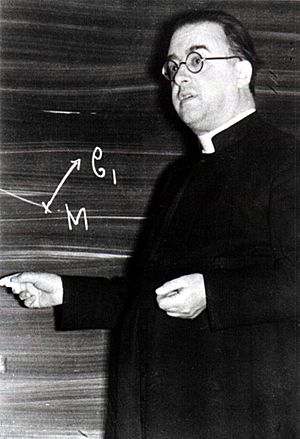
Pierre-Simon Laplace: genio che plasmò la matematica
Pierre-Simon Laplace è stato un gigante del pensiero scientifico, un matematico e astronomo francese le cui scoperte hanno rivoluzionato la nostra comprensione dell'universo. Nato nel 1749, i suoi contributi spaziano dalla meccanica celeste alla teoria delle probabilità, gettando le basi per discipline moderne come la statistica e l'intelligenza artificiale. La sua opera più celebre, la Mécanique Céleste, rappresenta uno dei pilastri della fisica matematica.
La vita e la carriera di un genio precoce
Pierre-Simon Laplace nacque il 23 marzo 1749 a Beaumont-en-Auge, in Normandia, da una famiglia di agricoltori agiati. Dimostrò un talento straordinario fin dalla giovane età, intraprendendo studi di teologia all'Università di Caen a soli 16 anni. Tuttavia, la sua vera passione era la matematica, che lo portò a lasciare la provincia per cercare fortuna a Parigi.
L'arrivo a Parigi e il sostegno di d'Alembert
Grazie a una lettera di presentazione, il giovane Laplace riuscì a farsi notare da Jean le Rond d'Alembert, uno dei massimi matematici dell'epoca. Impressionato dalle sue capacità, d'Alembert lo aiutò a ottenere la cattedra di matematica all'École Militaire. Questo fu il trampolino di lancio per una carriera strabiliante.
La nomina all'Académie des Sciences nel 1773, quando aveva appena 24 anni, sancì il suo ingresso nell'élite scientifica francese. In questi primi anni, dimostrò una prodigiosa prolificità, pubblicando ben 13 memorie scientifiche su argomenti che spaziavano dalle equazioni differenziali allo studio delle perturbazioni planetarie.
I contributi fondamentali alla scienza
L'opera di Laplace è immensa e tocca numerosi campi del sapere. I suoi lavori più influenti hanno riguardato l'astronomia matematica e il calcolo delle probabilità, ma i suoi contributi si estendono anche alla fisica e alla statistica.
La Meccanica Celeste e la stabilità del sistema solare
Il capolavoro di Laplace, la Mécanique Céleste, pubblicata in cinque volumi tra il 1799 e il 1825, rappresenta la sistematizzazione definitiva della gravitazione universale di Newton. In quest'opera, Laplace non si limitò a rielaborare le teorie esistenti, ma le sviluppò in modo originale e potente.
Uno dei suoi successi più eclatanti fu dimostrare la stabilità del sistema solare sul lungo periodo. Utilizzando sofisticati strumenti matematici, riuscì a provare che le perturbazioni gravitazionali tra i pianeti sono periodiche e non cumulative, scongiurando così il rischio di un collasso orbitale. Questo risultato placò le paure secolari sull'instabilità del cosmo.
La Meccanique Céleste estese il lavoro di Newton, fornendo una spiegazione matematica completa per i moti dei corpi celesti, dalle lune ai pianeti sino alle comete.
La Teoria Analitica delle Probabilità
Oltre all'astronomia, Laplace dedicò immense energie al calcolo delle probabilità. La sua Théorie Analytique des Probabilités (1812) e il successivo saggio filosofico del 1814 sono testi fondativi per la statistica moderna. In queste opere, Laplace sistematizzò e generalizzò il teorema di Bayes, introducendo strumenti come la regola di successione.
- Trasformata di Laplace: Uno strumento matematico potentissimo, scoperto nel 1773, oggi fondamentale nell'analisi dei sistemi lineari, nell'ingegneria e nella risoluzione di equazioni differenziali.
- Demone di Laplace: Un celebre esperimento mentale che incarna il determinismo scientifico classico: un'intelligenza onnisciente, conoscendo posizione e velocità di ogni particella, potrebbe prevedere tutto il futuro dell'universo.
- Ipotesi nebulare: Laplace propose una teoria sull'origine del sistema solare a partire dalla contrazione di una nebulosa rotante, un'idea pionieristica in cosmologia.
L'influenza di Laplace sulla scienza contemporanea
L'eredità di Pierre-Simon Laplace è più viva che mai. I suoi metodi e le sue intuizioni continuano a essere strumenti indispensabili in campi di ricerca all'avanguardia.
In particolare, la sua visione probabilistica del mondo è alla base dell'inferenza bayesiana, un pilastro del machine learning moderno e della scienza dei dati. Gli algoritmi che gestiscono l'incertezza e apprendono dai dati devono molto al suo lavoro pionieristico.
Anche in astrofisica, i suoi studi sulle perturbazioni sono utilizzati per modellare sistemi planetari complessi, inclusi quelli di esopianeti lontani. La sua capacità di tradurre fenomeni naturali complessi in eleganti formalismi matematici rimane un modello per gli scienziati di tutto il mondo.
Laplace e il determinismo scientifico
Il nome di Pierre-Simon Laplace è indissolubilmente legato al concetto di determinismo scientifico. La sua visione del mondo fisico era radicalmente meccanicistica: se si conoscessero con precisione infinita la posizione e la velocità di ogni particella nell'universo, si potrebbe calcolare ogni evento futuro o passato. Questo concetto, spesso personificato nel "demone di Laplace", dominò il pensiero scientifico per tutto il XIX secolo.
Questa idea non era solo filosofica, ma emergeva direttamente dalla sua pratica matematica. La meccanica celeste dimostrava che il moto dei pianeti era predicibile con incredibile accuratezza. Questo successo suggeriva che lo stesso principio di causalità deterministica potesse essere applicato a tutti i fenomeni naturali, dai fluidi al calore.
Il demone di Laplace simboleggia l'apice della fiducia illuminista nella ragione e nella matematica come strumenti per svelare tutti i segreti della natura.
Tale visione è stata successivamente messa in discussione dalla meccanica quantistica e dalla teoria del caos. Tuttavia, il suo approccio logico e sistematico alla modellizzazione del mondo reale rimane una pietra miliare del metodo scientifico. Ancora oggi, il determinismo laplaciano influenza dibattiti sulla libertà, sul caso e sulla predittibilità nei sistemi complessi.
L'eredità del determinismo nella scienza dei dati
Sebbene il determinismo assoluto sia stato superato, il suo spirito vive nella moderna scienza dei dati. La ricerca di pattern e relazioni causali all'interno di grandi dataset è una diretta evoluzione del desiderio laplaciano di comprendere e prevedere. Gli algoritmi di machine learning e di intelligenza artificiale cercano di estrarre regolarità dal caos apparente, proprio come Laplace fece con le orbite planetarie.
La rivoluzione nel calcolo delle probabilità
Mentre lavorava alla stabilità del sistema solare, Pierre-Simon Laplace si rese conto che le osservazioni astronomiche erano intrinsecamente affette da errori. Questo lo portò a sviluppare una teoria del calcolo delle probabilità non come studio del gioco d'azzardo, ma come strumento essenziale per gestire l'incertezza nella scienza sperimentale. La sua Théorie Analytique des Probabilités del 1812 è il fondamento della statistica matematica moderna.
In quest'opera, Laplace trasformò la probabilità da curiosità matematica in un rigoroso quadro per il ragionamento induttivo. Introdusse e sviluppò concetti fondamentali che oggi sono onnipresenti.
- Teorema di Bayes-Laplace: Laplace fornì la prima dimostrazione generale e sistematica del teorema di Bayes, formulando il concetto di probabilità inversa. Questo permette di aggiornare le nostre convinzioni alla luce di nuove prove, un principio cardine dell'inferenza bayesiana moderna.
- Regola di successione: Una formula semplice ma potente per stimare la probabilità di un evento futuro basandosi su osservazioni passate. Se un evento è accaduto s volte in n prove, la probabilità che accada alla prova successiva è (s+1)/(n+2).
- Metodo dei minimi quadrati: Sebbene spesso associato a Gauss, Laplace contribuì in modo significativo allo sviluppo di questo metodo per stimare i parametri più probabili da dati osservativi rumorosi, rivoluzionando geodesia e astronomia.
Applicazioni moderne della probabilità laplaciana
L'influenza di Laplace sulla statistica contemporanea è immensa. Ogni volta che un algoritmo di filtro anti-spam valuta la probabilità che un'email sia indesiderata, sta utilizzando un ragionamento bayesiano di derivazione laplaciana. Lo stesso vale per i sistemi di raccomandazione, le diagnosi mediche assistite dal computer e l'elaborazione del linguaggio naturale.
In astrofisica, i suoi metodi per trattare le osservazioni con errori sono ancora insegnati e utilizzati. La capacità di quantificare scientificamente l'incertezza, anziché ignorarla, è uno dei suoi lasciti più preziosi per la ricerca sperimentale di ogni disciplina.
L'impegno politico e istituzionale nell'era napoleonica
La carriera di Pierre-Simon Laplace si svolse durante uno dei periodi più tumultuosi della storia francese: la Rivoluzione, il Direttorio, il Consolato e l'Impero di Napoleone. Laplace non fu uno scienziato chiuso nella sua torre d'avorio, ma un uomo profondamente coinvolto nelle vicende del suo tempo, ricoprendo ruoli politici di primo piano.
Nel 1799, Napoleone Bonaparte, apprezzando il suo genio e la sua fama, lo nominò Ministro dell'Interno. Il suo mandato fu però breve, durando appena sei settimane. Napoleone stesso commentò che Laplace "cercava dappertutto sottigliezze" e portava "lo spirito dell'infinitamente piccolo nell'amministrazione".
Nonostante questa esperienza non brillante, i riconoscimenti per Laplace non mancarono. Nel 1806 fu nominato Conte dell'Impero e nel 1817, dopo la Restaurazione dei Borboni, Marchese. Questi titoli riflettevano non solo il suo status scientifico, ma anche la sua capacità di navigare i cambi di regime mantenendo influenza e autorità.
Contributi alla società: il sistema metrico e la geodesia
Al di là degli incarichi politici, Laplace contribuì attivamente a progetti civici di grande importanza. Fu un membro influente della commissione che istituì il sistema metrico decimale, uno standard di misurazione rivoluzionario basato su grandezze naturali e destinato a un uso universale.
Partecipò inoltre agli sforzi per misurare con precisione il meridiano di Francia, un'impresa cruciale per la geodesia e la cartografia. I suoi studi sulle maree, sulla forma della Terra e sul potenziale gravitazionale (un termine che lui stesso introdusse) furono fondamentali per queste applicazioni pratiche.
Laplace riuscì a conciliare una ricerca scientifica di altissima astrazione con un impegno concreto per il progresso tecnologico e amministrativo della nazione.
La Société d'Arcueil e la scuola di fisica matematica
Per promuovere la sua visione della scienza, Laplace fondò nel 1805 la Société d'Arcueil, un circolo informale di scienziati che si riuniva nella sua villa di Arcueil, vicino a Parigi. Questo gruppo, che includeva figure come Claude-Louis Berthollet, Jean-Baptiste Biot e Siméon Denis Poisson, divenne un centro vibrante per lo sviluppo della fisica matematica.
La Société d'Arcueil rappresentò un modello di collaborazione scientifica, incoraggiando la fusione di teoria e esperimento. Attraverso di essa e la sua cattedra all'École Polytechnique, Laplace formò un'intera generazione di scienziati, assicurando la continuità della sua scuola di pensiero e influenzando profondamente il panorama scientifico europeo dell'Ottocento.
La sua capacità di unire il potere del calcolo matematico all'indagine sui fenomeni fisici concreti - dal calore al suono, dalla capillarità all'acustica - stabilì un nuovo paradigma per la ricerca scientifica.
L'eredità scientifica di Laplace nella scienza moderna
L'influenza di Pierre-Simon Laplace trascende di gran lunga i confini del suo secolo. Le sue idee fondamentali sono state assorbite e sviluppate, diventando il linguaggio comune di discipline scientifiche che sarebbero nate molto dopo di lui. La sua visione di un universo governato da leggi matematiche e analizzabile attraverso strumenti probabilistici ha aperto strade inimmaginabili.
Oggi, il nome di Laplace è legato a una miriade di concetti e strumenti utilizzati ogni giorno nella ricerca e nella tecnologia avanzata. Il suo lascito non risiede solo nelle formule, ma nel modo di pensare alla scienza: un approccio rigoroso, quantitativo e sistematico alla comprensione della natura e all'interpretazione dei dati.
La trasformata di Laplace: uno strumento per l'ingegneria mondiale
Forse il contributo tecnico più ampiamente utilizzato è la trasformata di Laplace. Scoperta nel 1773, questa tecnica matematica converte funzioni del tempo in funzioni di una variabile complessa. La sua potenza rivoluzionaria è stata pienamente compresa solo nei secoli successivi.
- Ingegneria dei sistemi e controllo: È essenziale per analizzare e progettare sistemi dinamici lineari, dai circuiti elettrici ai sistemi di controllo di aerei e veicoli spaziali.
- Elaborazione dei segnali: Forma la base teorica per gran parte dell'analisi e della sintesi dei segnali, nelle telecomunicazioni e nell'audio digitale.
- Fisica e meccanica: Risolve equazioni differenziali complesse che descrivono fenomeni come la diffusione del calore e la meccanica dei fluidi.
Questa trasformata ha reso risolvibili problemi che altrimenti sarebbero stati intrattabili, cementando il ruolo della matematica come strumento pratico per l'innovazione tecnologica.
Laplace e l'astronomia contemporanea: dai pianeti agli esopianeti
Il lavoro di Laplace in meccanica celeste costituì il punto di riferimento per l'astronomia per oltre un secolo. I suoi metodi per calcolare le perturbazioni planetarie permisero previsioni di altissima precisione per le effemeridi, fondamentali per la navigazione. Oggi, questo approccio analitico è stato integrato da potenti simulazioni numeriche, ma il suo spirito sopravvive.
Nell'esplorazione dei sistemi esoplanetari, gli scienziati affrontano problemi sorprendentemente simili a quelli studiati da Laplace. Determinare la stabilità di sistemi con molti pianeti, modellare le loro interazioni gravitazionali e interpretare piccole variazioni nelle orbite richiede gli stessi principi di dinamica e attenta modellazione matematica.
La capacità di Laplace di trattare matematicamente sistemi complessi e interagenti ha creato un modello per l'astrofisica moderna, che studia non solo il nostro sistema solare, ma l'intera gamma di configurazioni planetarie nella galassia.
Inoltre, la sua ipotesi nebulare sull'origine del sistema solare, per quanto modificata, rappresentò un primo audace tentativo di applicare le leggi della fisica alla cosmogonia, anticipando lo studio scientifico della formazione stellare e planetaria.
Il ritorno dell'inferenza bayesiana e il machine learning
La rivoluzione più significativa degli ultimi decenni nell'eredità di Laplace riguarda il campo della statistica e dell'intelligenza artificiale. Dopo un periodo di predominio delle statistiche frequentiste, l'inferenza bayesiana ha vissuto una straordinaria rinascita, alimentata dalla potenza di calcolo dei computer moderni.
I principi che Laplace sistematizzò sono oggi al cuore di algoritmi sofisticati di machine learning. Questi algoritmi gestiscono l'incertezza, imparano dai dati e aggiornano le loro "credenze" in modo probabilistico, proprio come descritto nel teorema di Bayes-Laplace. Applicazioni concrete includono:
- Diagnostica medica automatizzata: Valutare la probabilità di una malattia dati i sintomi e i risultati dei test.
- Filtri anti-spam e sistemi di raccomandazione: Stimare la probabilità che un'email sia spam o che un utente gradisca un prodotto.
- Veicoli a guida autonoma: Interpretare scenari complessi e incerti dell'ambiente stradale per prendere decisioni sicure.
Laplace, quindi, può essere considerato un visionario che ha fornito il quadro matematico per l'apprendimento automatico basato sui dati, uno dei campi più dinamici del XXI secolo.
Conclusione: il Newton francese e la sua eredità duratura
Pierre-Simon Laplace merita pienamente l'appellativo di "Newton francese". Se Isaac Newton scoprì le leggi fondamentali della gravitazione, fu Laplace a dimostrare che il sistema solare governato da quelle leggi era stabile e a sviluppare gli strumenti matematici per descriverne il comportamento in ogni dettaglio. Il suo genio fu di tipo sintetico e sistematico, volto a unificare e formalizzare la conoscenza scientifica.
La sua vita e la sua opera racchiudono l'essenza dell'Illuminismo: la fede incrollabile nella ragione umana, nella capacità della matematica di svelare l'ordine dell'universo e nel progresso attraverso la scienza. Pur essendo stato un determinista convinto, il suo lavoro più duraturo è proprio quello sulla probabilità, la scienza dell'incertezza. In questo paradosso risiede la sua grandezza: capì che per comprendere un universo deterministico, l'essere umano aveva bisogno di strumenti per gestire la propria ignoranza e i limiti delle osservazioni.
La sua eredità è visibile ovunque: nelle equazioni che guidano le sonde spaziali verso i confini del sistema solare, negli algoritmi che filtrano le nostre email, nelle teorie statistiche che valutano l'efficacia di un nuovo farmaco e nei modelli climatici che cercano di prevedere il futuro del nostro pianeta. Morendo a Parigi nel 1827, dopo 78 anni di vita prodigiosa, lasciò un mondo scientifico trasformato dal suo pensiero.
Pierre-Simon Laplace non fu solo uno scienziato; fu un architetto del modo moderno di fare scienza. La sua lezione più importante è che la matematica più astratta e la ricerca più concreta non sono separate, ma sono due facce della stessa medaglia: la comprensione del mondo che ci circonda. Il suo spirito di curiosità insaziabile, rigore metodologico e apertura interdisciplinare rimane un faro per ogni ricercatore, un modello di come una singola mente possa dilatare i confini della conoscenza umana per le generazioni a venire.
Carl Linnaeus: The Father of Taxonomy
Introduction
Carl Linnaeus, often referred to as the "Father of Taxonomy," is one of the most influential figures in the history of science. His groundbreaking work in the classification of living organisms laid the foundation for modern biological nomenclature and systematics. Born in the early 18th century, Linnaeus developed a system that revolutionized the way scientists categorize and name plants, animals, and other forms of life. His contributions extended beyond taxonomy, influencing fields such as ecology, medicine, and even philosophy.
Early Life and Education
Carl Linnaeus was born on May 23, 1707, in Råshult, a small village in southern Sweden. From a young age, he exhibited a deep fascination with plants and nature, a passion encouraged by his father, a Lutheran minister and amateur botanist. Linnaeus's early education was largely informal, with much of his knowledge coming from exploring the natural world around him.
In 1727, Linnaeus enrolled at Lund University but later transferred to Uppsala University, which had a more renowned botanical garden and faculty. At Uppsala, he studied medicine, a common path for aspiring botanists at the time, as botany and medicine were closely linked due to the medicinal uses of plants. During his time at university, Linnaeus began developing ideas that would later shape his taxonomic system.
The Birth of a New System
Linnaeus's most significant contribution to science was his development of a hierarchical classification system for organizing life. Prior to his work, the naming of organisms was chaotic, with scientists using long, descriptive Latin phrases that varied widely. Linnaeus sought to simplify and standardize this process.
In 1735, he published "Systema Naturae," a landmark work that introduced his binomial nomenclature system. This system assigned each species a two-part Latin name: the first part indicated the genus, and the second part identified the species. For example, humans were named Homo sapiens. This method provided a clear, universal language for scientists worldwide.
The Linnaean Hierarchy
Linnaeus's classification system arranged organisms into a hierarchy of groups, starting broadly and becoming more specific. The primary categories were:
- Kingdom: The broadest category (e.g., Animalia, Plantae).
- Class: Divided kingdoms into smaller groups (e.g., Mammalia, Aves).
- Order: Further subdivided classes (e.g., Primates, Carnivora).
- Genus: A group of closely related species.
- Species: The most specific level, representing individual organisms.
This system allowed for a more organized and logical way to study biodiversity, making it easier to compare and contrast different species.
Linnaeus's Travels and Discoveries
Linnaeus was not just a theorist; he was also an avid explorer. In 1732, he embarked on an expedition to Lapland, a region in northern Scandinavia, where he documented hundreds of plant and animal species. His detailed observations and collections during this trip enriched his understanding of biodiversity and informed his later work.
Linnaeus's travels also took him to the Netherlands, where he earned his medical degree from the University of Harderwijk. During his stay, he met and collaborated with other leading scientists, further refining his taxonomic system. His work gained international recognition, earning him a reputation as a pioneering naturalist.
Scientific Legacy and Influence
Linnaeus's impact on science cannot be overstated. His classification system provided a universal framework that biologists still use today, albeit with modifications due to advances in genetics and evolutionary theory. Beyond taxonomy, Linnaeus influenced ecology by emphasizing the interconnectedness of species and their environments.
Despite his many achievements, Linnaeus's work was not without controversy. His classifications sometimes reflected the prejudices of his time, such as his hierarchical view of human races, which has been criticized by modern scholars. Nonetheless, his contributions to science remain foundational.
Conclusion of Part 1
Carl Linnaeus transformed the study of biology with his innovative classification system, bringing order to the chaotic world of natural science. His work paved the way for future discoveries and established a common language for scientists across the globe. In the next part of this article, we will delve deeper into Linnaeus's later years, his personal life, and the lasting legacy of his work in contemporary science.
Carl Linnaeus: Exploring His Later Years and Expanding Influence
Academic Career and Teaching
After returning from his travels and earning his medical degree, Linnaeus began his academic career in earnest. In 1741, he was appointed professor of medicine at Uppsala University, later transitioning to a professorship in botany—his true passion. As a teacher, Linnaeus inspired generations of students, many of whom became prominent naturalists in their own right. His lecture halls were lively, often overflowing with students eager to learn from the master classifier.
Linnaeus emphasized hands-on learning, frequently leading botanical expeditions around Uppsala. These excursions were not just educational but also helped him expand his catalog of species. His enthusiasm was infectious, and his teaching methods played a crucial role in spreading his taxonomic system across Europe and beyond.
Major Publications and Refinements
Linnaeus continued refining his classification system throughout his life. Over the span of several decades, he published multiple editions of *Systema Naturae*, each expanding on the previous ones. The tenth edition, published in 1758, is particularly significant—it marked the formal starting point of zoological nomenclature, and many species names introduced in this edition remain in use today.
Another monumental work was *Species Plantarum* (1753), which applied his binomial system to plants. This publication is considered the foundation of modern botanical naming conventions. Unlike earlier attempts at categorization, Linnaeus's approach was practical and scalable, allowing future botanists to add new species systematically.
Personal Life and Family
Beyond his scientific achievements, Linnaeus had a rich personal life. He married Sara Elisabeth Moraea in 1739, and the couple had seven children. His family played an integral role in his work; his wife and children often assisted in cataloging specimens and maintaining his extensive botanical collections. Tragedy also struck—several of his children died young, a common hardship in the 18th century.
Linnaeus’s home in Uppsala, Hammarby, became a haven for his studies. He cultivated botanical gardens there, filled with rare and exotic species collected by his students from around the world. Today, Hammarby is preserved as a museum, allowing visitors to glimpse the environment where much of his later work took place.
Controversies and Critiques
While Linnaeus’s classification system was groundbreaking, it was not without flaws. His views on race, embedded in his categorization of humans, reflected the biases of his time. Linnaeus divided *Homo sapiens* into subspecies based on geography and physical traits, often associating European traits with superiority. These classifications have since been debunked as scientifically unsound and culturally biased.
Another criticism arose from his rigid system, which did not account for evolutionary relationships—a concept that emerged only after Charles Darwin’s work in the 19th century. Modern taxonomy, influenced by genetics and phylogenetics, has moved beyond Linnaeus’s original framework while still retaining his foundational naming conventions.
Later Expeditions and Scientific Networks
Despite declining health in his later years, Linnaeus remained deeply involved in science. He encouraged his students to undertake global expeditions, many of whom traveled to the Americas, Africa, and Asia, bringing back specimens that enriched European understanding of biodiversity. These so-called "apostles" of Linnaeus—including Daniel Solander and Carl Peter Thunberg—expanded his legacy far beyond Sweden.
Linnaeus himself never undertook long voyages after his early expeditions, but his influence spread worldwide through correspondence. He exchanged letters with leading scientists of his time, including Benjamin Franklin and Georges-Louis Leclerc, Comte de Buffon, fostering international collaboration in natural history.
Declining Health and Death
In the 1760s, Linnaeus began suffering from health problems, including strokes that impaired his speech and mobility. By the 1770s, he had largely withdrawn from public life, though he continued writing and consulting with colleagues. Carl Linnaeus passed away on January 10, 1778, in Uppsala, leaving behind an unparalleled scientific legacy.
After his death, his collections—including manuscripts, herbariums, and correspondence—were acquired by the English naturalist Sir James Edward Smith, who founded the Linnean Society of London in 1788. This institution remains a vital center for taxonomic research.
Linnaeus's Legacy in Modern Science
Linnaeus’s contributions extend far beyond his lifetime. His binomial nomenclature remains the standard for naming species, ensuring clarity and consistency in scientific communication. Even as taxonomy has evolved with DNA analysis, his hierarchical structure still underpins biological classification.
Additionally, Linnaeus influenced ecological thought by documenting species interactions and environmental adaptations. His work laid the groundwork for later scientists, such as Alexander von Humboldt and Charles Darwin, who built upon his observations of nature’s interconnectedness.
Conclusion of Part 2
Carl Linnaeus was not just a classifier of life but a visionary who shaped how humanity understands biodiversity. His later years were marked by both triumph and struggle, yet his impact only grew as his students and successors carried his ideas worldwide. In the final part of this article, we will explore how Linnaeus’s work is viewed today, including museums, species named in his honor, and his enduring relevance in contemporary science.
Carl Linnaeus: A Lasting Legacy in the Modern World
Commemorations and Honors
The name Carl Linnaeus remains immortalized through numerous tributes in the scientific community and beyond. The Linnean Society of London, established shortly after his death, preserves his vast collections and continues to promote biological research. Sweden celebrates Linnaeus through museums, including the Linnaeus Museum in Uppsala and his preserved residence at Hammarby Estate, which offer a fascinating glimpse into his life and work.
Perhaps one of the greatest honors is the multitude of species named after Linnaeus himself. From the flowering plant *Linnaea borealis* (twinflower) to the asteroid 7412 Linnaeus, his name has become embedded in the fabric of natural history. Many institutions worldwide, including universities and research centers, bear his name as a testament to his enduring influence.
The Evolution of Taxonomy Since Linnaeus
While Linnaeus's system revolutionized biology, modern science has significantly expanded upon his work. The discovery of DNA and evolutionary theory transformed taxonomy from a purely observational field to one grounded in genetic relationships. Today, phylogenetic systematics, which examines evolutionary connections between species, provides a more dynamic view of life's diversity.
Despite these advances, the foundation Linnaeus laid remains crucial. His binomial nomenclature is still universally used, and his hierarchical structure persists with modern adjustments. The International Code of Zoological Nomenclature and the International Code of Nomenclature for algae, fungi, and plants still follow principles established by Linnaeus over 250 years ago.
Linnaeus in Digital Science
In the digital age, Linnaeus's legacy lives on through global biodiversity databases. Platforms like the Global Biodiversity Information Facility (GBIF) and the Catalogue of Life use his taxonomic principles to organize millions of species records. These digital repositories allow scientists to access and analyze biodiversity data worldwide, continuing Linnaeus's mission of cataloging Earth's life forms.
Artificial intelligence and machine learning are now being applied to taxonomy, helping identify new species and classify organisms faster than ever before. These technologies build upon Linnaeus's systematic approach while pushing the boundaries of what 18th-century science could achieve.
Challenging Linnaeus's Legacy
Contemporary scholars continue to examine Linnaeus's work through a critical lens. While celebrating his scientific achievements, modern biologists acknowledge the limitations and problematic aspects of his classifications. His categorization of humans by race, based on superficial physical traits and stereotypes, has been thoroughly discredited as pseudoscience.
Some institutions have reevaluated how they present Linnaeus's legacy, acknowledging both his groundbreaking contributions to science and the outdated aspects of his work that reflected Enlightenment-era prejudices. This balanced perspective allows us to appreciate his scientific genius while recognizing the evolution of biological understanding.
Linnaeus and Conservation Biology
Linnaeus's work takes on new significance in the face of today's biodiversity crisis. As scientists race to catalog species before they disappear, his systematic approach becomes more valuable than ever. Conservation biologists rely on accurate taxonomy to identify endangered species and prioritize protection efforts.
The concept of "Linnaean shortfall" - the gap between described species and those yet to be discovered - highlights how much work remains in documenting Earth's biodiversity. Estimates suggest that over 80% of species remain undiscovered, making Linnaeus's foundational work all the more crucial for future discovery and conservation.
Educational Impact Worldwide
Linnaeus's influence extends deeply into science education. Biology students worldwide first encounter taxonomy through the Linnaean system, learning to classify organisms and understand biological relationships. This approach provides a crucial framework for understanding life's complexity.
Many schools and nature programs use Linnaeus's methods to teach children about biodiversity. Activities like plant identification and species classification follow principles he established, showing how his work remains accessible and relevant to learners of all ages.
The Future of Taxonomy
As science advances, taxonomy continues to evolve. The emerging field of "cybertaxonomy" combines traditional classification with digital tools, allowing for real-time updates to species descriptions and relationships. DNA barcoding, where short genetic markers identify species, could revolutionize field biology much as Linnaeus's system did in the 18th century.
Despite these technological advances, the fundamental need for systematic classification that Linnaeus recognized remains unchanged. Future taxonomists will likely build upon rather than replace his system, adapting it to incorporate new scientific understandings while maintaining its clarity and practicality.
Personal Reflections on Linnaeus's Character
Historical accounts portray Linnaeus as a complex figure - brilliant yet sometimes vain, generous with students yet protective of his authority. His correspondence reveals a man deeply passionate about nature, often expressing wonder at its complexity. This personal connection to his work perhaps explains why his system proved so enduring - it was created by someone who saw beyond mere classification to appreciate the beauty of life's organization.
His struggles with health in later life and his concerns about securing his legacy show a deeply human side to this scientific giant. These personal aspects remind us that even great scientific advances come from fallible, multidimensional individuals.
Final Thoughts on Linnaeus's Enduring Relevance
Two and a half centuries after his death, Carl Linnaeus's impact on science remains profound. His system has proven remarkably resilient, adapting to accommodate revolutionary scientific discoveries from evolution to genetics. The very language scientists use to discuss biodiversity remains grounded in his work.
As we face unprecedented ecological challenges, Linnaeus's vision of an ordered, interconnected natural world takes on new urgency. His legacy challenges us to continue the work of documenting, understanding, and ultimately preserving Earth's extraordinary diversity of life.
Conclusion
From a Swedish boy fascinated by wildflowers to the father of modern taxonomy, Carl Linnaeus's journey transformed how humanity perceives and organizes the natural world. While science has progressed far beyond his 18th-century understanding, his foundational work continues to shape biological research, education, and conservation. Linnaeus demonstrated that by naming and classifying life, we begin to understand our place within it - a lesson as valuable today as it was in the Age of Enlightenment. His story reminds us that systematic observation and bold thinking can create frameworks that endure across centuries, helping us navigate the complexities of the living world.

Pierre-Simon Laplace: The French Newton Who Shaped Modern Science
Introduction to a Pioneering Mind
Pierre-Simon Laplace, a towering figure in French mathematics and astronomy, revolutionized our understanding of the universe. Born in 1749 in Normandy, Laplace's contributions spanned celestial mechanics, probability theory, and mathematical physics. His work laid the groundwork for modern scientific disciplines, earning him the nickname "the French Newton."
Early Life and Scientific Foundations
Laplace's journey began in Beaumont-en-Auge, where his early aptitude for mathematics set him apart. By 1773, he was elected to the Académie des Sciences, a testament to his rapid rise in the scientific community. His early work focused on probability theory, culminating in his 1774 paper, Mémoire sur la probabilité des causes, which introduced Bayesian reasoning.
Key Contributions to Mathematics
- Laplace’s Equation: A fundamental differential equation in mathematical physics.
- Laplace Transform: A tool essential for solving differential equations.
- Laplacian Operator: Critical in vector calculus and physics.
Celestial Mechanics: Unraveling the Solar System
Laplace's magnum opus, the five-volume Traité de mécanique céleste (1799–1825), systematized celestial mechanics. He proved the long-term stability of planetary motions, addressing a major challenge of Newtonian physics. His nebular hypothesis proposed that the solar system formed from a rotating cloud of gas, a theory that influenced later models of planetary formation.
The Nebular Hypothesis
Laplace's hypothesis suggested that the sun and planets originated from a rotating nebula. This idea, though refined over time, remains a cornerstone of modern cosmology. His work provided a framework for understanding the formation of planetary systems, a topic still explored today.
Probability Theory: A New Analytical Framework
In 1812, Laplace published Théorie analytique des probabilités, which transformed probability from ad-hoc methods into a rigorous analytical theory. His contributions to Bayesian inference and statistical reasoning are foundational in modern data analysis and machine learning.
Philosophical Impact: Determinism and Laplace’s Demon
Laplace is famously associated with scientific determinism, encapsulated in the thought experiment known as "Laplace’s demon." This idea posits that if an intelligence knew the precise location and momentum of every atom in the universe, it could predict the future with absolute certainty. While later developments in quantum mechanics and chaos theory have nuanced this view, Laplace's deterministic philosophy remains a pivotal concept in the history of science.
Legacy and Modern Relevance
Laplace's influence extends beyond his lifetime. His name is immortalized in mathematical objects such as the Laplacian and Laplace transform, which are integral to engineering, physics, and mathematics curricula worldwide. Recent scholarly work continues to reassess his contributions, highlighting his role as a synthesizer of mathematical and scientific ideas.
Educational and Digital Revival
In the 2020s, there has been a resurgence of interest in Laplace's work. Online biographies, course materials, and museum exhibits have revisited his original manuscripts, translating his probabilistic arguments into modern notation. This revival underscores the enduring relevance of his ideas in contemporary probability theory and celestial mechanics.
Conclusion: A Lasting Scientific Legacy
Pierre-Simon Laplace's contributions to mathematics, astronomy, and probability theory have left an indelible mark on science. His work not only advanced our understanding of the universe but also provided tools and frameworks that continue to shape modern scientific inquiry. As we delve deeper into his life and achievements in the subsequent parts of this article, we will explore the nuances of his scientific methods and the broader implications of his philosophical ideas.
Political Influence and Institutional Roles
Pierre-Simon Laplace was not only a scientific luminary but also a prominent figure in French political and academic circles. His career spanned the tumultuous periods of the French Revolution and the Napoleonic era, during which he held significant positions that allowed him to shape France's scientific landscape.
Key Political and Academic Positions
- Académie des Sciences: Elected in 1773, Laplace became a leading member of this prestigious institution, contributing to its influence and prestige.
- Minister of the Interior: Briefly served under Napoleon Bonaparte in 1799, demonstrating his versatility beyond the scientific realm.
- Senator and Chancellor: Appointed to the French Senate and later served as Chancellor of the Senate, further cementing his role in French governance.
Promotion of Scientific Institutions
Laplace played a crucial role in the establishment and promotion of scientific institutions in France. He was instrumental in the development of the metric system, which standardized measurements and facilitated scientific and commercial exchanges. His efforts in educational reform helped modernize French academia, ensuring that scientific advancements were integrated into the national curriculum.
Scientific Controversies and Collaborations
Throughout his career, Laplace engaged in numerous scientific debates and collaborations that shaped his theories and methodologies. His interactions with contemporaries such as Joseph-Louis Lagrange and Adrien-Marie Legendre were pivotal in advancing his work.
Collaborations with Leading Scientists
- Joseph-Louis Lagrange: Laplace and Lagrange collaborated on various aspects of celestial mechanics, with Laplace often building upon Lagrange's foundational work.
- Adrien-Marie Legendre: Their interactions in the field of mathematical analysis led to significant advancements in the understanding of differential equations.
- Antoine Lavoisier: Laplace worked with Lavoisier on early experiments in thermochemistry, contributing to the development of the calorimeter.
Scientific Debates and Criticisms
Laplace's theories were not without controversy. His nebular hypothesis faced skepticism from some contemporaries who favored alternative explanations for the formation of the solar system. Additionally, his deterministic views were later challenged by advancements in quantum mechanics and chaos theory, which introduced elements of unpredictability and randomness.
"What we know is very little, and what we do not know is immense." — Pierre-Simon Laplace
Laplace’s Impact on Modern Science and Technology
The legacy of Pierre-Simon Laplace extends far beyond his lifetime, influencing numerous fields in modern science and technology. His theoretical contributions have found practical applications in various disciplines, from engineering to artificial intelligence.
Applications in Engineering and Physics
- Laplace Transform: Widely used in electrical engineering for analyzing circuits and systems.
- Laplace’s Equation: Fundamental in fluid dynamics, electromagnetism, and heat transfer.
- Celestial Mechanics: His work on planetary motion remains crucial for space exploration and satellite technology.
Influence on Probability and Statistics
Laplace's contributions to probability theory have had a lasting impact on statistics and data science. His development of Bayesian inference is now a cornerstone of machine learning and artificial intelligence. Modern algorithms for predictive modeling and data analysis owe much to his pioneering work.
Educational Influence
Laplace's theories and methods are integral to modern educational curricula. His work is taught in mathematics, physics, and engineering programs worldwide. Textbooks on differential equations, probability, and celestial mechanics frequently reference his contributions, ensuring that new generations of scientists and engineers are familiar with his ideas.
Recent Scholarly Reassessments
In recent years, historians and scientists have revisited Laplace's work, offering new perspectives on his contributions and legacy. These reassessments highlight the evolving understanding of his role in the development of modern science.
Historiographical Trends
- Synthesizer of Ideas: Modern scholars emphasize Laplace's role as a synthesizer who unified methods across mathematics, astronomy, and probability.
- Beyond Determinism: Recent analyses explore how Laplace's deterministic views contrast with later developments in statistical mechanics and chaos theory.
- Collaborative Nature: New research highlights the collaborative aspects of Laplace's work, acknowledging the contributions of his contemporaries.
Digital and Pedagogical Revival
The digital age has brought renewed interest in Laplace's original manuscripts and theories. Online platforms and educational resources have made his work more accessible, allowing students and researchers to engage with his ideas in new ways. Translations of his probabilistic arguments into modern notation have facilitated a deeper understanding of his contributions to probability theory and celestial mechanics.
Public and Scientific Communication
Laplace's name continues to resonate in public science communication. His nebular hypothesis and the concept of Laplace’s demon are frequently cited in discussions about cosmology and predictability. Popular science articles and documentaries often reference his work to illustrate the evolution of scientific thought.
Conclusion: A Multifaceted Legacy
As we have explored in this second part of the article, Pierre-Simon Laplace was not only a brilliant scientist but also a influential figure in French politics and academia. His collaborations and controversies shaped his theories, while his impact on modern science and technology continues to be felt today. Recent scholarly reassessments have provided new insights into his work, ensuring that his legacy remains relevant in the digital age.
In the final part of this article, we will delve into Laplace's personal life, his philosophical views, and the enduring influence of his ideas on contemporary scientific thought. We will also explore how his work is being preserved and promoted in the 21st century, ensuring that future generations continue to benefit from his groundbreaking contributions.
Personal Life and Philosophical Views
Pierre-Simon Laplace led a life marked by both scientific brilliance and personal resilience. Born into a modest family in Normandy, his rise to prominence was fueled by his relentless pursuit of knowledge and his ability to navigate the complex political landscape of his time.
Early Life and Education
Laplace's early education was shaped by his local school in Beaumont-en-Auge, where his exceptional mathematical abilities were first recognized. His journey to Paris at the age of 18 marked the beginning of his illustrious career. There, he quickly gained the attention of prominent mathematicians, securing a position at the École Militaire, where he taught mathematics to young officers.
Family and Personal Relationships
Despite his demanding scientific and political commitments, Laplace maintained a close-knit family life. He married Marie-Charlotte de Courty de Romanges in 1788, and the couple had two children. His personal correspondence reveals a man deeply devoted to his family, providing a stark contrast to his public persona as a rigorous and sometimes austere scientist.
Philosophical Views and Scientific Determinism
Laplace is perhaps best known for his philosophical stance on scientific determinism. His famous thought experiment, "Laplace’s demon," posits that if an intelligence knew the precise location and momentum of every atom in the universe, it could predict the future with absolute certainty. This idea, though later challenged by quantum mechanics and chaos theory, remains a cornerstone in discussions about predictability and free will.
"We may regard the present state of the universe as the effect of its past and the cause of its future." — Pierre-Simon Laplace
Preservation and Promotion of Laplace’s Legacy
The preservation of Laplace’s legacy is a testament to his enduring influence on science and education. Various initiatives and institutions continue to promote his work, ensuring that his contributions remain accessible and relevant.
Museums and Archives
- Musée des Arts et Métiers: Located in Paris, this museum houses many of Laplace’s original manuscripts and instruments, offering visitors a glimpse into his scientific process.
- Bibliothèque Nationale de France: Holds a vast collection of Laplace’s published works and personal correspondence, providing valuable resources for researchers.
- Online Archives: Digital platforms such as Gallica and Google Books have digitized many of Laplace’s texts, making them accessible to a global audience.
Educational Programs and Initiatives
Educational institutions worldwide continue to teach Laplace’s theories as part of their mathematics, physics, and engineering curricula. Initiatives such as:
- MOOCs (Massive Open Online Courses): Platforms like Coursera and edX offer courses that delve into Laplace’s contributions to probability theory and celestial mechanics.
- University Lectures: Prestigious universities, including the Sorbonne and MIT, feature lectures and seminars dedicated to exploring Laplace’s impact on modern science.
- Science Outreach Programs: Organizations like the French Academy of Sciences conduct workshops and public lectures to engage younger audiences with Laplace’s ideas.
Commemorative Events and Publications
To honor Laplace’s contributions, various events and publications are regularly organized:
- Annual Conferences: Scientific conferences often include sessions dedicated to Laplace’s work, particularly in the fields of mathematical physics and astronomy.
- Special Editions and Books: Publishers release annotated editions of Laplace’s major works, as well as biographies that contextualize his life and achievements for modern readers.
- Exhibitions: Museums and scientific institutions host exhibitions showcasing Laplace’s manuscripts, instruments, and personal artifacts, drawing attention to his multifaceted legacy.
Laplace’s Influence on Contemporary Scientific Thought
The ideas and methodologies developed by Pierre-Simon Laplace continue to shape contemporary scientific thought. His work has found applications in diverse fields, from artificial intelligence to quantum physics.
Artificial Intelligence and Machine Learning
Laplace’s contributions to probability theory and Bayesian inference are fundamental to modern machine learning algorithms. Techniques such as Bayesian networks and Markov chain Monte Carlo methods rely on principles that Laplace helped establish. These methods are crucial for:
- Predictive Modeling: Used in fields like finance, healthcare, and weather forecasting.
- Natural Language Processing: Powers applications such as chatbots and language translation services.
- Computer Vision: Enables advancements in image recognition and autonomous vehicles.
Quantum Physics and Chaos Theory
While Laplace’s deterministic views have been challenged by quantum mechanics, his work remains a critical reference point. The contrast between Laplace’s determinism and the probabilistic nature of quantum physics highlights the evolution of scientific thought. Additionally, chaos theory—which explores the unpredictability of complex systems—offers a nuanced perspective on Laplace’s ideas, showing how small variations can lead to vastly different outcomes.
Space Exploration and Astronomy
Laplace’s theories on celestial mechanics continue to inform modern astronomy and space exploration. His work on the stability of planetary orbits is essential for:
- Satellite Technology: Ensuring the precise positioning and longevity of satellites in orbit.
- Interplanetary Missions: Calculating trajectories for spacecraft exploring our solar system and beyond.
- Exoplanet Research: Understanding the formation and behavior of planetary systems around other stars.
Conclusion: The Enduring Legacy of Pierre-Simon Laplace
Pierre-Simon Laplace stands as one of the most influential scientists in history, with a legacy that spans mathematics, astronomy, physics, and probability theory. His groundbreaking work laid the foundations for numerous scientific disciplines and continues to inspire researchers and educators worldwide.
Key Takeaways
- Foundational Contributions: Laplace’s development of the Laplace transform, Laplace’s equation, and the nebular hypothesis revolutionized multiple fields.
- Probability and Statistics: His systematic approach to probability theory and Bayesian inference remains vital in modern data science and machine learning.
- Scientific Determinism: The concept of Laplace’s demon continues to provoke discussions on predictability and free will.
- Educational Impact: Laplace’s theories are integral to contemporary STEM education, ensuring his ideas are passed down to future generations.
- Modern Applications: From artificial intelligence to space exploration, Laplace’s work underpins technologies that shape our world today.
As we reflect on Laplace’s extraordinary life and achievements, it is clear that his influence extends far beyond his time. His ability to synthesize complex ideas and his relentless pursuit of knowledge have left an indelible mark on science. In an era where technology and discovery advance at an unprecedented pace, the principles and methodologies developed by Laplace remain as relevant as ever. His legacy serves as a reminder of the power of curiosity and the enduring impact of scientific inquiry.
In celebrating Pierre-Simon Laplace, we honor not just a scientist, but a visionary whose ideas continue to illuminate the path of human understanding. As future generations build upon his work, Laplace’s contributions will undoubtedly remain a cornerstone of scientific progress, inspiring innovation and discovery for centuries to come.
Life and Contributions of Joseph Louis Gay-Lussac in Science
Joseph Louis Gay-Lussac, a prominent French chemist and physicist, made groundbreaking contributions to science in the early 19th century. His work laid the foundation for modern chemistry and physics, particularly in the study of gases. This article explores his life, key discoveries, and enduring impact on scientific research.
Early Life and Education
Joseph Louis Gay-Lussac was born on December 6, 1778, in Saint-Léonard-de-Noblat, France. From a young age, he displayed a keen interest in science, which led him to pursue studies at the prestigious École Polytechnique in Paris. There, he studied under renowned chemist Claude Louis Berthollet, who significantly influenced his scientific career.
Gay-Lussac's education at École Polytechnique provided him with a strong foundation in chemistry and physics. His early experiments focused on the behavior of gases, setting the stage for his future discoveries. His dedication and innovative approach quickly earned him recognition in the scientific community.
Key Contributions to Science
Gay-Lussac's Law
In 1802, Gay-Lussac formulated his most famous discovery, known as Gay-Lussac's Law. This law states that gases combine in simple volume ratios at constant temperature and pressure. For example, two volumes of hydrogen gas combine with one volume of oxygen gas to produce two volumes of water vapor. This principle became a cornerstone of chemical stoichiometry.
The law's significance extends beyond its immediate application. It provided crucial evidence supporting Avogadro's hypothesis, which states that equal volumes of gases at the same temperature and pressure contain equal numbers of molecules. This hypothesis was fundamental in developing the concept of the mole in chemistry.
Discovery of Boron
In 1808, Gay-Lussac, in collaboration with Louis-Jacques Thénard, co-discovered the element boron. Their work involved isolating boron from boric acid, achieving a purity of approximately 98%. This discovery expanded the periodic table and opened new avenues for research in inorganic chemistry.
Boron's unique properties, such as its high melting point and ability to form stable compounds, have made it essential in various industrial applications. Today, boron is used in everything from semiconductors to high-strength materials.
Advancements in Volumetric Analysis
Gay-Lussac's contributions to volumetric analysis revolutionized chemical testing. He invented the Gay-Lussac pipette, a device used for precise iodine titration. This innovation allowed chemists to measure the concentration of solutions with unprecedented accuracy, enhancing the reliability of chemical experiments.
His methods in volumetric analysis are still widely used in laboratories today. They have been instrumental in developing standardized procedures for chemical testing, ensuring consistency and precision in scientific research.
Explorations and Experiments
Balloon Ascent and Atmospheric Research
In 1804, Gay-Lussac embarked on a daring scientific expedition. He ascended in a hydrogen balloon to an altitude of 7,016 meters (23,018 feet), accompanied by physicist Jean-Baptiste Biot. This journey was not merely a feat of adventure but a critical scientific mission to study the composition of the atmosphere and magnetic variations at high altitudes.
During the ascent, Gay-Lussac and Biot endured extreme conditions, including temperatures as low as -35°C (-31°F). Their observations provided valuable data on the Earth's atmosphere, contributing to the understanding of atmospheric science. This record-breaking ascent held until 1850, underscoring the significance of their achievement.
Collaboration with Alexander von Humboldt
Gay-Lussac's collaboration with Alexander von Humboldt further advanced his scientific endeavors. Together, they conducted experiments on the solubility of gases, leading to significant insights into the behavior of gases in different conditions. Their work laid the groundwork for future studies in physical chemistry.
One of their notable achievements was the liquefaction of chlorine in 1808. This experiment demonstrated the potential to convert gases into liquids, a process that has since become fundamental in various industrial applications, including refrigeration and chemical manufacturing.
Legacy and Impact
Influence on Modern Chemistry
Gay-Lussac's empirical gas laws bridged the gap between Lavoisier's stoichiometry and Dalton's atomic theory. His work provided a quantitative basis for understanding chemical reactions, enabling scientists to predict the outcomes of reactions with greater accuracy. This foundation has been instrumental in the development of modern chemistry.
Despite debates with John Dalton over the combining volumes of gases, Gay-Lussac's principles have stood the test of time. His laws are taught in STEM curricula worldwide, ensuring that future generations of scientists build upon his contributions.
Recognition and Honors
Gay-Lussac's achievements earned him numerous accolades during his lifetime. He was appointed to the Bureau des Longitudes in 1808, a prestigious institution responsible for advancing astronomical and geographical research. Additionally, he served as the chemistry superintendent at the Sèvres porcelain factory, where he applied his scientific knowledge to improve manufacturing processes.
In recognition of his contributions, UNESCO has highlighted his balloon ascent as a precursor to modern stratospheric research. Recent bicentennial events, such as the 220th anniversary of Gay-Lussac's Law in 2024, have featured exhibits at science museums in Paris, celebrating his enduring legacy.
Educational Impact
Gay-Lussac's laws and principles are integral to science education. Interactive simulations, such as those available on platforms like PhET, allow students to explore his gas laws in a dynamic and engaging manner. These educational tools have been updated as recently as 2025, ensuring that students continue to benefit from his groundbreaking work.
His influence extends beyond the classroom. Gay-Lussac's principles are applied in various fields, from environmental science to industrial chemistry. His work remains a testament to the power of empirical research and the enduring impact of scientific discovery.
Current Trends and Applications
Green Chemistry and Sustainable Practices
In the 21st century, Gay-Lussac's principles are being applied to advance green chemistry. His laws underpin efforts to optimize chemical reactions for sustainability, particularly in the context of the Haber-Bosch process for ammonia synthesis. As the world strives to achieve net-zero emissions, his work provides a foundation for developing environmentally friendly chemical processes.
Recent studies, such as those published in Nature Chemistry in 2024, have applied Gay-Lussac's volume laws to model high-pressure reactions for hydrogen storage. These advancements are crucial in the development of clean energy technologies, highlighting the continued relevance of his contributions.
Quantum Chemistry and Computational Modeling
The principles established by Gay-Lussac have also found applications in quantum chemistry. Modern computational models use his gas laws to simulate complex chemical reactions at the molecular level. These simulations are essential in drug discovery, materials science, and other cutting-edge research areas.
A 2025 study in a leading chemistry journal demonstrated the use of Gay-Lussac's principles in modeling gas-phase reactions. This research underscores the enduring significance of his work in advancing our understanding of chemical processes at the quantum level.
Conclusion
Joseph Louis Gay-Lussac's contributions to science have left an indelible mark on the fields of chemistry and physics. His discoveries, from Gay-Lussac's Law to the co-discovery of boron, have shaped modern scientific research and education. As we continue to explore new frontiers in science, his principles remain a guiding light, inspiring innovation and discovery.
In the next part of this article, we will delve deeper into Gay-Lussac's collaborations, his role in scientific institutions, and the ongoing impact of his work in contemporary research. Stay tuned for a comprehensive exploration of his enduring legacy.
Scientific Collaborations and Institutional Roles
Partnership with Alexander von Humboldt
Gay-Lussac's collaboration with Alexander von Humboldt was one of the most fruitful scientific partnerships of the early 19th century. Their joint experiments on gas solubility and atmospheric composition provided groundbreaking insights. Together, they conducted precise measurements of how gases dissolve in liquids under varying conditions, which laid the foundation for modern physical chemistry.
One of their most notable achievements was the liquefaction of chlorine in 1808. This experiment demonstrated that gases could be converted into liquids through compression and cooling, a principle that later became essential in refrigeration technology and industrial gas processing. Their work also contributed to the understanding of electrochemical cells, influencing the development of batteries.
Role at the Bureau des Longitudes
In 1808, Gay-Lussac was appointed to the Bureau des Longitudes, a prestigious French institution dedicated to advancing astronomical and geographical research. His role involved precise measurements and calculations related to Earth's geography and atmospheric conditions. This position allowed him to apply his expertise in gas behavior to broader scientific questions, including the study of atmospheric pressure and magnetic fields.
His contributions to the Bureau des Longitudes included improving the accuracy of barometric measurements and developing methods for calculating altitudes. These advancements were crucial for navigation and cartography, demonstrating the practical applications of his scientific theories.
Superintendency at Sèvres Porcelain Factory
Gay-Lussac also served as the chemistry superintendent at the Sèvres porcelain factory, where he applied his chemical knowledge to improve manufacturing processes. His work involved analyzing the composition of glazes and pigments, ensuring the production of high-quality porcelain. This role highlighted his ability to bridge theoretical science with industrial applications.
Under his supervision, the factory developed new techniques for ceramic production, including the use of precise chemical formulations to achieve desired colors and textures. His contributions to the factory's success underscored the importance of scientific research in industrial innovation.
Debates and Controversies
Disagreements with John Dalton
Despite his numerous contributions, Gay-Lussac's work was not without controversy. One of the most notable debates was with John Dalton, the father of modern atomic theory. Dalton initially disagreed with Gay-Lussac's findings on the combining volumes of gases, arguing that his own atomic theory provided a different explanation for chemical reactions.
However, Gay-Lussac's empirical data ultimately supported the idea that gases combine in simple volume ratios, which aligned with Avogadro's hypothesis. This debate highlighted the importance of experimental evidence in shaping scientific theories and demonstrated Gay-Lussac's commitment to rigorous research.
Challenges in Gas Law Formulation
Gay-Lussac's formulation of his gas law faced challenges from contemporaries who questioned the precision of his measurements. Some scientists argued that the simple volume ratios he proposed were too idealized and did not account for real-world variations in temperature and pressure.
To address these concerns, Gay-Lussac conducted additional experiments, refining his methods to ensure accuracy. His dedication to empirical validation solidified his reputation as a meticulous and reliable scientist, ultimately leading to the widespread acceptance of his gas law.
Enduring Influence on Modern Science
Applications in Quantum Chemistry
Gay-Lussac's principles continue to influence modern scientific research, particularly in the field of quantum chemistry. His gas laws provide a framework for understanding the behavior of molecules at the quantum level, enabling researchers to model complex chemical reactions with greater precision.
A 2024 study published in Nature Chemistry applied Gay-Lussac's volume laws to simulate high-pressure reactions, demonstrating their relevance in contemporary research. These simulations are essential for developing new materials and optimizing chemical processes for industrial applications.
Contributions to Green Chemistry
In the context of green chemistry, Gay-Lussac's work has inspired efforts to develop sustainable chemical processes. His principles are used to optimize reactions that minimize waste and reduce environmental impact, aligning with global goals for net-zero emissions.
For example, researchers have applied his gas laws to improve the efficiency of the Haber-Bosch process, a key method for ammonia synthesis. By optimizing reaction conditions, scientists aim to reduce energy consumption and greenhouse gas emissions, demonstrating the enduring relevance of Gay-Lussac's contributions.
Educational Legacy and Public Recognition
Integration into STEM Curricula
Gay-Lussac's laws are a fundamental part of STEM education, taught in chemistry and physics courses worldwide. His principles provide students with a foundational understanding of gas behavior, enabling them to grasp more complex concepts in chemical kinetics and thermodynamics.
Educational platforms like PhET offer interactive simulations that allow students to explore Gay-Lussac's gas laws in a dynamic and engaging manner. These tools have been updated as recently as 2025, ensuring that students continue to benefit from his groundbreaking work.
UNESCO Recognition and Bicentennial Celebrations
In recognition of his contributions, UNESCO has highlighted Gay-Lussac's balloon ascent as a precursor to modern stratospheric research. His daring experiment in 1804, where he reached an altitude of 7,016 meters, remains a landmark achievement in atmospheric science.
Recent bicentennial events, such as the 220th anniversary of Gay-Lussac's Law in 2024, have featured exhibits at science museums in Paris. These celebrations underscore his enduring legacy and the continued relevance of his work in contemporary scientific research.
Future Directions and Emerging Research
Advancements in Gas Sensor Technology
Gay-Lussac's principles are being applied to the development of advanced gas sensor technology. Modern sensors use his gas laws to detect and measure the concentration of gases in various environments, from industrial settings to environmental monitoring.
Recent research has focused on improving the sensitivity and accuracy of these sensors, enabling real-time monitoring of air quality and industrial emissions. These advancements are crucial for addressing environmental challenges and ensuring public health and safety.
Exploring High-Pressure Reactions
Scientists are also exploring the applications of Gay-Lussac's principles in high-pressure chemistry. By understanding how gases behave under extreme conditions, researchers aim to develop new materials and chemical processes that were previously thought impossible.
A 2025 study in a leading chemistry journal demonstrated the use of Gay-Lussac's volume laws to model reactions at high pressures, opening new avenues for research in materials science and energy storage. These findings highlight the continued relevance of his work in pushing the boundaries of scientific knowledge.
Conclusion
Joseph Louis Gay-Lussac's contributions to science have had a profound and lasting impact on chemistry, physics, and beyond. His discoveries, from the formulation of Gay-Lussac's Law to his pioneering work in gas solubility and atmospheric research, continue to inspire and inform modern scientific inquiry.
As we look to the future, his principles remain a cornerstone of scientific research, guiding innovations in green chemistry, quantum chemistry, and gas sensor technology. His legacy serves as a testament to the power of empirical research and the enduring influence of scientific discovery.
In the final part of this article, we will explore Gay-Lussac's personal life, his influence on subsequent generations of scientists, and the broader cultural impact of his work. Stay tuned for a comprehensive conclusion to our exploration of his remarkable contributions to science.
Personal Life and Character
Early Influences and Family Background
Joseph Louis Gay-Lussac was born into a modest family in Saint-Léonard-de-Noblat, France. His father, Antoine Gay, was a lawyer, and his mother, Léonarde Bourlier, came from a family of modest means. Despite their financial constraints, his parents recognized his intellectual potential and supported his education, which proved pivotal in shaping his scientific career.
Gay-Lussac's early years were marked by curiosity and a strong work ethic. His upbringing in a small town instilled in him a sense of discipline and perseverance, qualities that would later define his approach to scientific research. His passion for learning led him to excel in his studies, eventually earning him a place at the prestigious École Polytechnique in Paris.
Marriage and Family Life
In 1809, Gay-Lussac married Geneviève-Marie-Joseph Rojot, the daughter of a prominent French judge. Their marriage was both a personal and professional partnership, as Geneviève provided steadfast support for his scientific endeavors. Together, they had five children, and their family life was characterized by a blend of domestic tranquility and intellectual pursuit.
Gay-Lussac's family played a significant role in his life, offering him emotional support and stability. His home became a gathering place for scientists and intellectuals, fostering an environment of collaboration and innovation. This balance between personal and professional life contributed to his productivity and success as a scientist.
Influence on Subsequent Generations
Mentorship and Scientific Lineage
Throughout his career, Gay-Lussac mentored numerous young scientists, many of whom went on to make significant contributions to chemistry and physics. His students and collaborators included Louis-Jacques Thénard, with whom he co-discovered boron, and Jean-Baptiste Biot, his partner in the historic balloon ascent.
Gay-Lussac's approach to mentorship was characterized by encouragement and rigorous scientific training. He emphasized the importance of empirical evidence and precise measurement, principles that his students carried forward in their own research. His influence extended beyond his immediate circle, shaping the broader scientific community of the 19th century.
Impact on 19th-Century Chemistry
Gay-Lussac's work had a profound impact on the development of chemistry in the 19th century. His discoveries provided a quantitative foundation for understanding chemical reactions, enabling scientists to predict and control reaction outcomes with greater accuracy. This shift towards empirical and quantitative methods marked a turning point in the evolution of chemistry as a discipline.
His contributions to gas laws and volumetric analysis were particularly influential, laying the groundwork for modern analytical chemistry. Scientists such as Amedeo Avogadro and John Dalton built upon his findings, further advancing the understanding of atomic theory and molecular behavior.
Cultural and Historical Impact
Public Perception and Recognition
During his lifetime, Gay-Lussac was widely regarded as one of the leading scientists of his era. His achievements earned him numerous accolades, including membership in the French Academy of Sciences and the Royal Society of London. His reputation extended beyond the scientific community, as his work was celebrated in popular media and public discourse.
Gay-Lussac's balloon ascent, in particular, captured the public's imagination, symbolizing the spirit of exploration and discovery. His experiments were frequently discussed in newspapers and scientific journals, contributing to a broader appreciation of science and its potential to transform society.
Legacy in Popular Culture
Gay-Lussac's legacy has been commemorated in various forms of popular culture, from literature to visual arts. His life and work have been the subject of biographies, documentaries, and even fictionalized accounts, highlighting his enduring influence on both scientific and cultural landscapes.
In France, his contributions are celebrated through monuments, street names, and educational programs. His name is synonymous with scientific innovation, and his story continues to inspire aspiring scientists and researchers around the world.
Final Reflections on Gay-Lussac's Contributions
Key Takeaways from His Scientific Work
Gay-Lussac's scientific contributions can be summarized through several key takeaways:
- Gay-Lussac's Law: Established the principle that gases combine in simple volume ratios, foundational to modern chemistry.
- Discovery of Boron: Co-discovered the element boron, expanding the periodic table and advancing inorganic chemistry.
- Volumetric Analysis: Invented the Gay-Lussac pipette, revolutionizing chemical testing and analysis.
- Atmospheric Research: Conducted pioneering experiments in balloon ascents, contributing to the understanding of atmospheric composition.
- Collaborative Research: Worked with leading scientists of his time, fostering a culture of collaboration and innovation.
Enduring Relevance in Modern Science
Gay-Lussac's principles continue to resonate in contemporary scientific research. His gas laws are applied in fields ranging from quantum chemistry to environmental science, demonstrating their versatility and enduring relevance. Modern technologies, such as gas sensors and high-pressure reaction modeling, owe much to his foundational work.
In the context of green chemistry, his contributions are particularly significant. Researchers apply his principles to develop sustainable chemical processes, aligning with global efforts to reduce environmental impact and achieve net-zero emissions. His work remains a cornerstone of efforts to create a more sustainable and efficient chemical industry.
Conclusion: Celebrating a Scientific Pioneer
Joseph Louis Gay-Lussac's life and work exemplify the transformative power of scientific inquiry. From his early experiments with gases to his daring balloon ascents, he pushed the boundaries of knowledge and inspired generations of scientists. His discoveries laid the foundation for modern chemistry and physics, shaping the way we understand the natural world.
As we reflect on his legacy, it is clear that Gay-Lussac's contributions extend far beyond his own era. His principles continue to guide contemporary research, from quantum chemistry to environmental sustainability. His story serves as a reminder of the importance of curiosity, collaboration, and empirical rigor in the pursuit of scientific truth.
In celebrating Gay-Lussac's achievements, we honor not only a remarkable scientist but also a visionary who transformed our understanding of the universe. His work remains a testament to the enduring impact of scientific discovery, inspiring future generations to explore, innovate, and push the boundaries of human knowledge.
Dmitri Mendeleev: The Architect of the Periodic Table
Introduction to a Scientific Visionary
Dmitri Ivanovich Mendeleev, a name synonymous with the chemical marvel that is the periodic table, was more than just a scientist—he was a visionary who navigated the largely unexplored territories of chemistry in the late 19th century. Born on February 8, 1834, in Tobolsk, Siberia, Mendeleev's life journey was one of resilience, intelligence, and unyielding curiosity. His monumental contribution to chemistry revolutionized how scientists approached and understood elements, providing a systematic framework that continues to be integral to the field today.
Early Life and Education
Mendeleev was born into a large family, the youngest of 17 children. Following his father's early death, the family faced financial difficulties. His mother, Maria Dmitrievna Mendeleeva, was determined to provide him with educational opportunities, recognizing his potential. This unwavering support led the young Mendeleev to St. Petersburg, where he studied at the Main Pedagogical Institute.
His early education was marked by both hardship and brilliance. Despite suffering from tuberculosis, which led him to spend a significant amount of time in the milder climate of the Crimean Peninsula, Mendeleev graduated and soon after began a tenured position teaching chemistry. His keen mind and dedication to the discipline allowed him to soon dive deep into chemical research.
Mendeleev's Path to the Periodic Table
During the mid-19th century, the field of chemistry was rapidly expanding, with new elements being discovered and analyzed. Yet, there was no coherent system to organize them. Mendeleev's quest for order amid this increasing complexity would become his lifelong pursuit. He aimed to find a pattern that could connect the known elements in a meaningful way.
Mendeleev's insights came to a head as he worked on his book, "Principles of Chemistry," published in 1868. It was during this time that he began to consider the properties of elements in light of their atomic masses. Mendeleev famously wrote each element's known properties on a card and began organizing them. Through intense deliberation and some serendipitous inspiration, he arranged these elements in a table where patterns became apparent—elements with similar properties occurred at regular intervals, hinting at a deeper organizational principle.
The First Periodic Table
In 1869, Mendeleev presented what became known as the first periodic table to the Russian Chemical Society. Unlike others before him who had attempted to organize elements, Mendeleev's breakthrough was in his recognition of periodicity and his courageous predictions about elements that had yet to be discovered. He left gaps in his table, suggesting that there were undiscovered elements that would fill these spaces, and even predicted their properties with remarkable accuracy.
For instance, he predicted the properties of germanium, gallium, and scandium—elements which were discovered years after his table was published and astonishingly fit into his predicted characteristics. This bold approach and these successful predictions validated his periodic system and laid a foundational stone for modern chemistry.
Legacy and Impact
Mendeleev’s periodic table was not initially accepted without debate. Critics questioned the validity of leaving gaps for unknown elements and the displacement of elements to prioritize properties over strict sequentiality of atomic weights. However, as the new elements were discovered and seamlessly aligned with his table, Mendeleev’s reputation soared.
The periodic table's significance extends far beyond the scientific community, influencing education, research, and industry. It serves as a roadmap of the elements, highlighting the periodic trends and giving clarity to the complex nature of chemical properties. Mendeleev’s work allowed scientists to predict and explore the behavior of elements under various conditions, thus contributing to advances in technology and materials.
Mendeleev was not just the architect of the periodic table but a prolific researcher and thinker. His contributions spanned various fields, including the study of solutions, the nature of gases, and the properties of chemical compounds. Mendeleev even ventured into non-scientific domains, exploring fields such as economics and meteorology.
The next stage of Mendeleev's journey brings us deeper into his life’s work and further developments that continued to shape the scientific narrative.
Scientific Methodology and Philosophy
Mendeleev’s success with the periodic table was not merely a product of his keen observational skills but also of his methodical approach to scientific inquiry. He exemplified the scientific method, meticulously gathering and analyzing data related to chemical properties and atomic weights. In organizing his table, Mendeleev emphasized the importance of valuing empirical evidence over theoretical models that lacked substantial support. This pragmatic approach set him apart from many contemporaries and fostered advancements not just in chemistry but also across scientific methodologies.
His commitment to empirical science is evident in his willingness to revise and adapt his models as new data became available. This adaptability was crucial, particularly in light of his predictions about undiscovered elements. By leaving gaps in his periodic table and hypothesizing about elements yet to be found, he demonstrated a profound understanding that science is an evolving discipline, open to refinement and revision.
The Mendeleev–Clark Discoveries
An often-overlooked aspect of Mendeleev's life is his collaboration with fellow scientists. One such partnership was with British chemist Alexander William Clarke, with whom he shared notes and findings. Together, they delved into atomic weights and spectral analysis, which, while occasionally contentious, ultimately proved invaluable to the advancement of Mendeleev's periodic system.
Both chemists realized that discrepancies in atomic weight measurements could lead to a deeper understanding of element properties—a notion that complemented Mendeleev's predictive abilities. This collaborative spirit exemplifies the network of ideas and cross-border cooperation that significantly enriched the scientific landscape of the era.
Contributions Beyond the Periodic Table
Though Mendeleev is most celebrated for his pivotal work on the periodic table, his scientific endeavors extended far beyond this singular achievement. He conducted extensive research in various domains, contributing substantially to the study of gases, solutions, and the expansion of the chemical industry—fields that were crucial to Russia's modernization during the industrial era.
For instance, Mendeleev’s work on the Ideal Gas Law, often overshadowed by his periodic table, provided critical insights into the behavior of gases under different conditions. While the law—PV = nRT—was earlier established in its specific form by other scientists, Mendeleev’s contributions to understanding and teaching this principle were influential in widespread adoption and application.
In the realm of applied chemistry, Mendeleev also made significant strides in the Russian oil industry. He recognized the immense potential of oil, advocating for its extraction and refining, and contributed to the development of techniques still foundational in modern petrochemical practices. His foresight in oil’s future utility speaks to his broader vision of integrating scientific knowledge into societal progress.
Educational Advocacy and Public Service
Mendeleev’s legacy extended into the realms of education and public service, where he fervently advocated for scientific learning and progressive pedagogy. A passionate educator, he sought to make chemistry accessible and engaging to students. He emphasized the importance of integrating current scientific discoveries into curriculum practices, urging reform in educational systems to accommodate the rapid proliferation of knowledge.
His service extended beyond the classroom. Mendeleev frequently advised the Russian government on matters of science and industry, recognizing the pivotal role of scientific advancement in national development. He served as a consultant on various governmental bodies focusing on metrology and standards, contributing to the establishment of stringent measurement systems vital to trade and industry—areas that were precursors to what we now know as national standardization organizations.
Mendeleev’s public service ethos was rooted in his belief that science should not be isolated to academia but applied to improve societal welfare. This philosophy underscored his advocacy for investment in scientific research and education to address Russia's significant economic and technological challenges in the latter half of the 19th century.
Recognition and Controversy
Despite his monumental contributions, Mendeleev's career was not free from controversy. Notably, he was repeatedly overlooked for the Nobel Prize in Chemistry, in part due to scientific politics and differences with other prominent chemists. Some suggested that his straightforward character and open criticism of established theories led to clashes within the scientific community, impacting his recognition on the Nobel stage.
Regardless, Mendeleev received numerous other accolades throughout his life, including membership in scientific societies across Europe and recognition from prestigious academies. His contributions were further honored by his legacy in the periodic table, forever marked with the element 101, Mendelevium, named in his honor posthumously in 1955.
As we continue to unfold Mendeleev’s story, we will explore the lasting implications of his work and how his insights paved the way for future scientific discoveries.
Mendeleev’s Influence on Modern Science
The reverberations of Dmitri Mendeleev’s work on the periodic table continue to be felt in modern science. His table laid the groundwork for the development of quantum mechanics and atomic theory in the early 20th century—fields that have vastly expanded our understanding of material science and chemistry. The predictability in element behavior that Mendeleev highlighted has enabled scientists to explore complex compounds and novel materials, fueling innovations across industries including electronics, pharmaceuticals, and nanotechnology.
Advances in atomic theory, such as the discovery of isotopes and the subsequent modification of the periodic table to reflect atomic number instead of atomic weight, reflect the dynamic nature of Mendeleev’s creation. These developments underscore his foresight in championing periodic trends, which remain pivotal in elemental science today.
The Periodic Table in Education
One of Mendeleev’s lasting contributions is the incorporation of the periodic table into scientific education. It serves as a fundamental tool for teaching chemistry worldwide, illustrating key concepts like electron configurations and chemical reactivity. The table’s logical organization aids in hypothesizing the behavior of elements, an essential skill for aspiring scientists.
The periodic table has also inspired educational methodologies aimed at critical thinking. By understanding the relationships and trends inherent to the table, students learn to extrapolate information, predict outcomes, and solve complex chemical problems—skills that are transferable to a variety of scientific disciplines.
Societal Impact and Future Relevant Insights
Beyond the confines of scientific discovery, Mendeleev's work also holds significant societal implications. In an age where new materials and elements are constantly being synthesized, the periodic table helps guide ethically informed science. By illustrating how elements interact under different conditions, it allows scientists to anticipate the environmental impacts of novel compounds and aids policymakers in establishing safety regulations and standards.
Looking towards the future, the periodic table continues to evolve. With researchers probing the limits of high atomic number elements and the quest for undiscovered superheavy elements, Mendeleev’s vision encourages an ever-expanding horizon of inquiry. The flexibility and adaptability first championed by Mendeleev remain at the forefront as we push the boundaries of scientific understanding.
Personal Life and Legacy
While Mendeleev's professional achievements were numerous, his personal life also reflects the complexities of his era. Mendeleev was married twice and had a total of eight children, balancing his personal endeavors with his scientific pursuits. His life was marked by a strong sense of duty to his family, his work, and his country, underpinning the multifaceted nature of his legacy.
His legacy lives on not just through his monumental scientific contributions but also through the lives and careers of his many students and collaborators who carried forward his passion for chemistry. His insistence on rigorous empirical research and education reforms helped spawn generations of scientists who contributed to the flourishing of chemistry as a global discipline.
Moreover, Mendeleev's life story exemplifies the essential human capacity for innovation and determination in the face of challenges. From overcoming personal hardships in a distant Siberian town to elevating Russian science on the international stage, Mendeleev’s remarkable journey is an enduring testament to the power of curiosity and relentless pursuit of knowledge.
Conclusion: A Timeless Influence
As the architect of the periodic table, Dmitri Mendeleev transformed the once fragmented field of chemistry into a cohesive scientific domain. His visionary framework not only enabled the discovery and integration of new elements but also facilitated advancements in manifold scientific disciplines. Today, the periodic table stands not merely as a symbol of chemical order but as a tribute to Mendeleev's enduring legacy.
Mendeleev's brilliance, driven by an unerring belief in the power of scientific inquiry, underscores the continuing journey of discovery that defines the scientific endeavor. As we explore the complexities of the atomic world, the impact of Mendeleev’s work remains a guiding beacon, affirming his rightful place among the great minds who have shaped our understanding of the universe.


