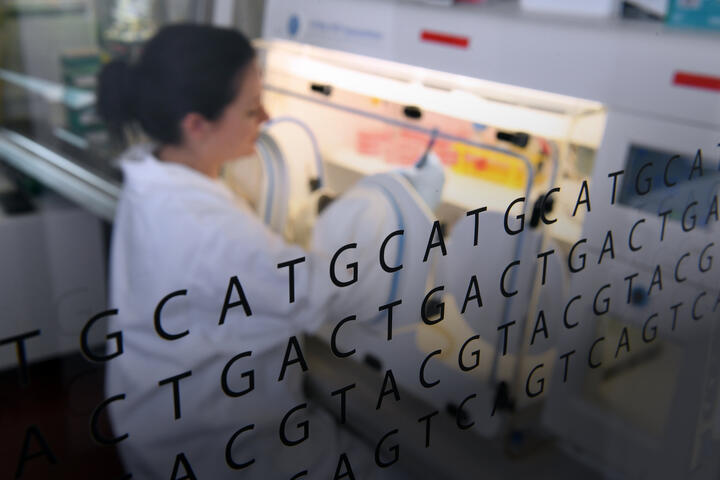
Explore Any Narratives
Discover and contribute to detailed historical accounts and cultural stories. Share your knowledge and engage with enthusiasts worldwide.
Max Delbrück was a visionary scientist whose groundbreaking work in bacteriophage research laid the foundation for modern molecular biology. Born in Germany in 1906, Delbrück transitioned from physics to biology, forever changing our understanding of genetic structure and viral replication. His contributions earned him the 1969 Nobel Prize in Physiology or Medicine, shared with Salvador Luria and Alfred Hershey.
Delbrück was born on September 4, 1906, in Berlin, Germany, into an academic family. His father, Hans Delbrück, was a prominent historian, while his mother came from a family of scholars. This intellectual environment nurtured young Max's curiosity and love for science.
Delbrück initially pursued theoretical physics, earning his PhD from the University of Göttingen in 1930. His early work included a stint as an assistant to Lise Meitner in Berlin, where he contributed to the prediction of Delbrück scattering, a phenomenon involving gamma ray interactions.
Inspired by Niels Bohr's ideas on complementarity, Delbrück began to question whether similar principles could apply to biology. This curiosity led him to shift his focus from physics to genetics, a move that would redefine scientific research.
The rise of the Nazi regime in Germany forced Delbrück to leave his homeland in 1937. He relocated to the United States, where he continued his research at Caltech and later at Vanderbilt University. In 1945, he became a U.S. citizen, solidifying his commitment to his new home.
Delbrück's most influential work began with his collaboration with Salvador Luria and Alfred Hershey. Together, they formed the Phage Group, a collective of scientists dedicated to studying bacteriophages—viruses that infect bacteria. Their research transformed phage studies into an exact science, enabling precise genetic investigations.
One of their most notable achievements was the development of the one-step bacteriophage growth curve in 1939. This method allowed researchers to track the replication cycle of phages, revealing that a single phage could produce hundreds of thousands of progeny within an hour.
Delbrück's work with Luria and Hershey led to several pivotal discoveries that shaped modern genetics. Their research provided critical insights into viral replication and the nature of genetic mutations.
In 1943, Delbrück and Luria conducted the Fluctuation Test, a groundbreaking experiment that demonstrated the random nature of bacterial mutations. Their findings disproved the prevailing idea that mutations were adaptive responses to environmental stress. Instead, they showed that mutations occur spontaneously, regardless of external conditions.
This discovery was pivotal in understanding genetic stability and laid the groundwork for future studies on mutation rates and their implications for evolution.
In 1946, Delbrück and Hershey made another significant breakthrough by discovering genetic recombination in viruses. Their work revealed that viruses could exchange genetic material, a process fundamental to genetic diversity and evolution. This finding further solidified the role of phages as model organisms in genetic research.
Delbrück's contributions extended beyond his immediate discoveries. His interdisciplinary approach, combining physics and biology, inspired a new generation of scientists. The Phage Group he co-founded became a training ground for many leaders in molecular biology, influencing research for decades.
In 1969, Delbrück was awarded the Nobel Prize in Physiology or Medicine for his work on viral replication and genetic structure. The prize recognized his role in transforming phage research into a precise scientific discipline, enabling advancements in genetics and molecular biology.
Even after receiving the Nobel Prize, Delbrück continued to push the boundaries of science. He challenged existing theories, such as the semi-conservative replication of DNA, and explored new areas like sensory transduction in Phycomyces, a type of fungus.
Max Delbrück's journey from physics to biology exemplifies the power of interdisciplinary thinking. His work with bacteriophages not only advanced our understanding of genetics but also set the stage for modern molecular biology. In the next section, we will delve deeper into his later research, his influence on contemporary science, and the enduring legacy of his contributions.
After receiving the Nobel Prize, Max Delbrück continued to push scientific boundaries through innovative experiments and theoretical challenges. His work remained focused on uncovering fundamental biological principles, often questioning prevailing assumptions.
In 1954, Delbrück proposed a dispersive theory of DNA replication, challenging the dominant semi-conservative model. Though later disproven by Meselson and Stahl, his hypothesis stimulated critical debate and refined experimental approaches in molecular genetics.
Delbrück emphasized the importance of precise measurement standards, stating:
"The only way to understand life is to measure it as carefully as possible."This philosophy driven his entire career.
From the 1950s onward, Delbrück explored Phycomyces, a fungus capable of complex light and gravity responses. His research revealed how simple organisms translate environmental signals into measurable physical changes, bridging genetics and physiology.
Following Delbrück's death in 1981, the Max Delbrück Center (MDC) was established in Berlin in 1992, embodying his vision of interdisciplinary molecular medicine. Today, it remains a global leader in genomics and systems biology.
Delbrück's phage methodologies continue to underpin contemporary genetic technologies:
The MDC currently hosts over 1,500 researchers from more than 60 countries, continuing Delbrück's commitment to collaborative science.
Delbrück's approach to science—combining rigor, creativity, and simplicity—shapes current research paradigms. His emphasis on quantitative analysis remains central to modern genetic studies.
Delbrück advocated for studying biological systems at their simplest levels before tackling complexity. This "simplicity behind complexity" principle now guides systems biology and synthetic biology efforts worldwide.
His legacy endures through:
Max Delbrück’s influence extended far beyond his publications through his role as a mentor and educator. His leadership of the Phage Group created a model for collaborative, interdisciplinary training that shaped generations of scientists.
Delbrück emphasized quantitative rigor and intellectual curiosity in his students. At Cold Spring Harbor, he fostered a community where physicists, biologists, and chemists worked together—a precursor to modern systems biology.
Delbrück’s methods and discoveries remain embedded in today’s most advanced genetic technologies. His approach continues to inform cutting-edge research across multiple fields.
The principles Delbrück established through bacteriophage studies are foundational to tools transforming medicine and agriculture:
"Delbrück taught us to see genes not as abstract concepts, but as measurable molecular machines."
Today’s genomic research owes a debt to Delbrück’s emphasis on precise measurement. Modern sequencing technologies and viral dating methods build directly on his frameworks.
Key ongoing applications include:
Max Delbrück transformed our understanding of life at the molecular level through visionary experiments, interdisciplinary collaboration, and unwavering intellectual rigor. His work remains a cornerstone of modern genetics.
The legacy of Delbrück endures through:
As biology grows increasingly complex, Delbrück’s insistence on quantitative clarity and collaborative inquiry continues to guide researchers worldwide. His life’s work proves that understanding life’s simplest mechanisms remains the surest path to unlocking its deepest mysteries.


Your personal space to curate, organize, and share knowledge with the world.
Discover and contribute to detailed historical accounts and cultural stories. Share your knowledge and engage with enthusiasts worldwide.
Connect with others who share your interests. Create and participate in themed boards about any topic you have in mind.
Contribute your knowledge and insights. Create engaging content and participate in meaningful discussions across multiple languages.
Already have an account? Sign in here
"Discover Max Delbrück's Nobel-winning phage research that shaped molecular biology. Learn how his work revolutionized g...
View Board
Discover how Gregor Mendel, the father of modern genetics, revolutionized science with his pea plant experiments. Learn ...
View Board
Discover how Max Delbrück, a Nobel Prize-winning pioneer in molecular biology, revolutionized genetics with his bacterio...
View Board
Explore the groundbreaking contributions of Pierre-Gilles de Gennes, a Nobel laureate, whose pioneering work in soft mat...
View Board
**Meta Description:** "Explore the life and legacy of Jacques Monod, Nobel Prize-winning molecular biologist who revol...
View Board
Explore the complicated legacy of James Watson, the controversial architect of DNA. Delve into his groundbreaking achiev...
View Board
Explore how Kary Mullis's PCR revolutionized DNA analysis, transforming medicine and genetics. Delve into his genius and...
View Board
Explore the remarkable life and enduring legacy of Max von Laue, the pioneering physicist behind the groundbreaking tech...
View Board
Discover how August Baisman revolutionized biology with gamete selection theory, reshaping our understanding of reproduc...
View Board
Pioneering innovator Charles Hard Townes revolutionised science with his groundbreaking work on the maser and laser, ear...
View Board
Discover the inspiring journey of Dorothy Hodgkin, a trailblazer in X-ray crystallography whose groundbreaking discoveri...
View Board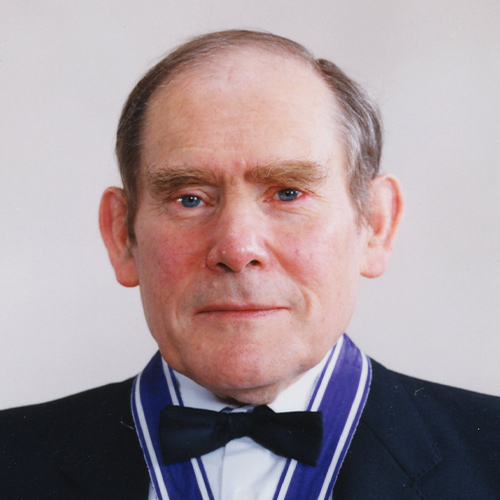
Discover Sydney Brenner's groundbreaking contributions to molecular biology, from cracking the genetic code to pioneerin...
View Board
Explore the inspiring journey of Gerty Cori, the first woman Nobel laureate in Physiology or Medicine, who defied societ...
View Board
Hermann Staudinger pioneered macromolecular chemistry, revolutionizing the field with groundbreaking research on large m...
View Board
Discover Gregor Mendel, the father of genetics, whose pea plant experiments revealed key principles shaping modern scien...
View Board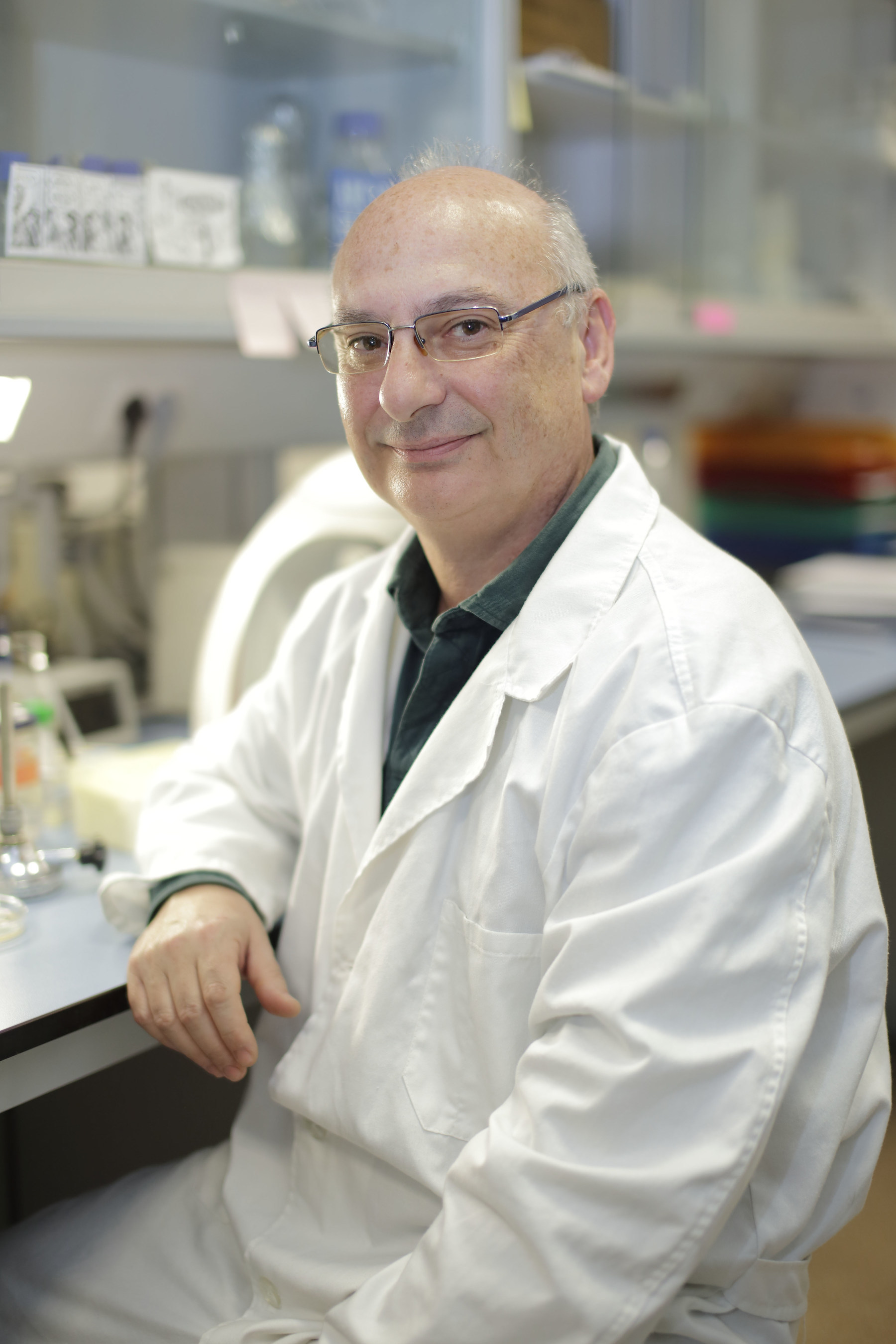
**Meta Description:** Discover how Francisco Mojica, the Spanish microbiologist behind CRISPR’s groundbreaking discove...
View Board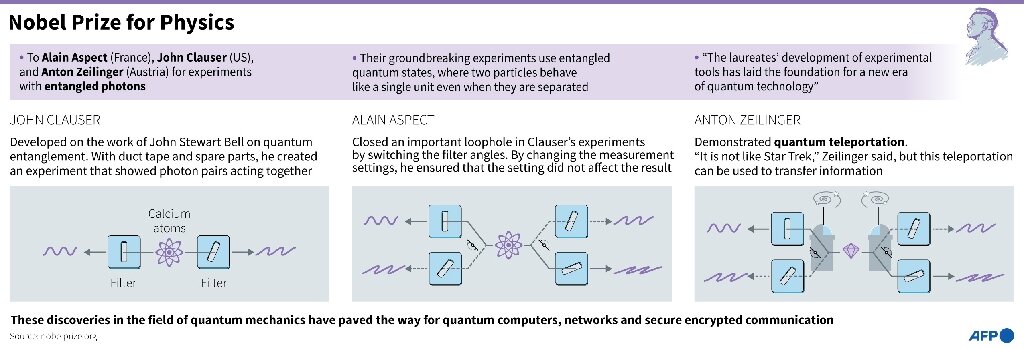
Discover the groundbreaking achievements of Alain Aspect, the quantum physicist who transformed our understanding of rea...
View Board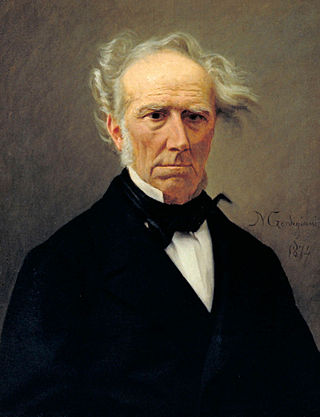
158 ̩ Meta Description: Explore the groundbreaking contributions of Giovanni Battista Amici - the Italian physicist w...
View Board
Otto Hahn's groundbreaking contributions to radiochemistry and nuclear physics left a lasting legacy in science, from hi...
View Board
Discover how François Jacob's Nobel-winning operon model revolutionized biology and shaped morphobioscience, revealing t...
View Board
Comments