Explore Any Narratives
Discover and contribute to detailed historical accounts and cultural stories. Share your knowledge and engage with enthusiasts worldwide.
Gregor Johann Mendel, often referred to as the father of genetics, revolutionized our understanding of heredity through his meticulous experiments on pea plants. His groundbreaking work laid the foundation for modern genetics, introducing key principles such as dominant and recessive traits, segregation, and independent assortment. Despite the lack of verifiable information on the term "Grhgorios-Iwannhs-Mentel-O-Pateras-ths-Genetikhs," it is clear that Mendel's contributions are the cornerstone of genetic studies.
Born in 1822 in what is now the Czech Republic, Mendel was an Augustinian friar with a deep interest in science. His early education in philosophy and natural sciences at the University of Olomouc and the University of Vienna equipped him with the knowledge to conduct his famous experiments.
Between 1856 and 1863, Mendel conducted a series of experiments on pea plants, focusing on seven distinct traits. His quantitative approach allowed him to observe patterns of inheritance that had previously been misunderstood. By cross-breeding pea plants with different characteristics, Mendel was able to establish the principles of dominant and recessive traits.
Mendel's findings were published in 1866 under the title "Experiments on Plant Hybridization." Although his work was initially overlooked, it was rediscovered in 1900, sparking a renewed interest in the field of genetics. This rediscovery marked the beginning of modern genetic research and solidified Mendel's place as the father of genetics.
One of Mendel's most significant contributions was the identification of dominant and recessive traits. He observed that certain traits, such as flower color, would consistently appear in offspring, while others would seem to disappear, only to reappear in subsequent generations. This led to the understanding that traits are inherited through discrete units, now known as genes.
The principle of segregation states that each individual possesses two alleles for each trait, one inherited from each parent. During the formation of gametes, these alleles segregate, or separate, so that each gamete carries only one allele for each trait. This principle explains the variation observed in offspring.
Mendel also discovered that different traits are inherited independently of one another. This principle of independent assortment means that the inheritance of one trait does not influence the inheritance of another. This finding was crucial for understanding the complexity of genetic inheritance.
Mendel's work had a profound impact on evolutionary biology. His principles provided a mechanism for understanding how traits are passed down through generations, which was essential for Charles Darwin's theory of natural selection. The integration of Mendelian genetics with evolutionary theory led to the development of the modern synthesis, a unified theory of evolution.
The principles established by Mendel laid the groundwork for the discovery of DNA and the field of molecular genetics. His work on inheritance patterns provided the framework for understanding how genes are transmitted and expressed, which was later expanded upon with the discovery of the structure of DNA by James Watson and Francis Crick.
Today, Mendel's principles are applied in various fields, including agriculture, medicine, and biotechnology. Genetic engineering, gene therapy, and the study of genetic disorders all owe their foundations to Mendel's pioneering work. His contributions continue to influence scientific research and technological advancements.
The term "Grhgorios-Iwannhs-Mentel-O-Pateras-ths-Genetikhs" appears to be a blend of Greek and a garbled form of Gregor Johann Mendel. There is no verifiable information on this term as a specific person, entity, or established topic in genetics. It is likely a misspelling or pseudonym, and the intended reference is Gregor Johann Mendel, the actual father of genetics.
While Mendel's work is foundational, it is important to note that modern genetics has evolved significantly since his time. Advances in technology and our understanding of DNA have expanded upon Mendel's principles, providing a more comprehensive view of genetic inheritance and variation.
Gregor Johann Mendel's contributions to the field of genetics are immeasurable. His pioneering experiments on pea plants established the core principles of inheritance, laying the foundation for modern genetics. Despite the lack of information on the term "Grhgorios-Iwannhs-Mentel-O-Pateras-ths-Genetikhs," it is clear that Mendel's work remains a cornerstone of genetic research. His legacy continues to influence scientific advancements and our understanding of the natural world.
Mendel's work on pea plants may seem simple by today's standards, but his principles have been applied to complex human genetic studies. Researchers now use genome-wide association studies (GWAS) to identify genetic variants linked to diseases, building on Mendel's foundational ideas of trait inheritance. His methods of controlled experimentation and quantitative analysis remain essential in genetic research.
The development of CRISPR gene editing and other genetic technologies can trace their roots back to Mendel's discoveries. These tools allow scientists to manipulate genes with precision, opening new possibilities for treating genetic disorders. Mendel's emphasis on systematic observation and data collection continues to guide modern geneticists.
Mendel's principles have had a profound impact on agriculture. Through selective breeding, farmers and scientists have developed crops with desirable traits such as disease resistance, higher yields, and improved nutritional content. This process relies on Mendel's understanding of dominant and recessive traits to achieve consistent results.
The creation of genetically modified organisms (GMOs) is another application of Mendelian genetics. By introducing specific genes into crops, scientists can enhance their resistance to pests, tolerance to environmental stress, and overall productivity. These advancements have significantly contributed to global food security.
While Mendel's principles are foundational, they do not account for all aspects of genetic inheritance. Polygenic traits, which are influenced by multiple genes, and epigenetics, which involves changes in gene expression without altering the DNA sequence, present complexities that Mendel's simple models do not address. These limitations highlight the need for ongoing research and refinement of genetic theories.
The application of Mendelian genetics in modern science raises important ethical questions. Issues such as genetic privacy, the potential for designer babies, and the equitable distribution of genetic technologies are subjects of ongoing debate. Mendel's work, while groundbreaking, also serves as a reminder of the responsibility that comes with scientific advancement.
Recent studies have explored the impact of paternal age on genetic disorders. Research indicates that de novo mutations in sperm increase with age, contributing to conditions such as autism and schizophrenia. A study published in Nature found that while these mutations confer a small risk, they do not fully explain the epidemiologic links observed in Danish registries.
Advances in population genetics have revealed fascinating insights into human ancestry. For example, studies on the Iberian Roma have shown that Y-chromosome haplogroups H and J2a1b are dominant, indicating a strong paternal South Asian ancestry. This research underscores the complexity of genetic inheritance and the influence of historical migrations.
Genetic mosaicism, where an individual has more than one genetic lineage, has been a focus of recent research. A study on NLRP3 variants found that 16 out of 17 cases with CAPS (Cryopyrin-Associated Periodic Syndromes) phenotypes exhibited mosaicism. This highlights the importance of understanding genetic variation in diagnosing and treating genetic disorders.
Mendel's principles are a cornerstone of biology education. Students worldwide learn about Punnett squares and Mendelian inheritance as part of their basic genetic education. These tools provide a simple yet powerful way to predict the outcomes of genetic crosses, making complex concepts accessible to learners of all levels.
Despite the widespread teaching of Mendelian genetics, there are common misconceptions. Many people believe that traits are solely determined by a single gene, ignoring the influence of environmental factors and polygenic inheritance. Educators and scientists continue to work on clarifying these misunderstandings to promote a more accurate understanding of genetics.
The future of genetics lies in personalized medicine, where treatments are tailored to an individual's genetic makeup. This approach promises to revolutionize healthcare by providing more effective and targeted therapies. Mendel's principles of inheritance are fundamental to understanding the genetic basis of diseases and developing personalized treatment plans.
Genetic research has the potential to address global health challenges. By studying the genetic basis of diseases, scientists can develop vaccines, treatments, and preventive measures that are more effective and accessible. Mendel's legacy continues to inspire researchers to explore the genetic underpinnings of health and disease, ultimately improving the quality of life for people worldwide.
Gregor Johann Mendel's contributions to genetics have had a lasting impact on science, agriculture, and medicine. His principles of inheritance remain fundamental to our understanding of genetics, and his work continues to inspire new discoveries and advancements. As we look to the future, Mendel's legacy serves as a reminder of the power of systematic observation, experimentation, and the pursuit of knowledge.
Mendel's principles provided the missing link in Charles Darwin's theory of evolution. While Darwin proposed natural selection as the mechanism for evolution, he lacked an explanation for how traits were inherited. Mendel's discovery of discrete hereditary units (genes) and their predictable patterns of transmission filled this gap, leading to the modern synthesis of evolutionary biology in the early 20th century.
The mathematical foundation of Mendel's work paved the way for quantitative genetics, which studies traits influenced by multiple genes. This field has been crucial in understanding complex characteristics such as height, intelligence, and susceptibility to diseases. Mendel's emphasis on statistical analysis remains a cornerstone of genetic research, enabling scientists to model and predict genetic outcomes with greater accuracy.
Mendel's work set the stage for the discovery of DNA as the hereditary material. Scientists like James Watson and Francis Crick built upon Mendelian principles to unravel the structure of DNA in 1953. This breakthrough confirmed the physical basis of Mendel's abstract hereditary factors, revolutionizing our understanding of how genetic information is stored and transmitted.
The field of genomics, which involves the study of entire genomes, owes much to Mendel's foundational work. Modern bioinformatics tools use Mendelian principles to analyze vast amounts of genetic data, identifying gene functions and interactions. Techniques such as genome-wide association studies (GWAS) rely on the concepts of genetic linkage and inheritance that Mendel first described.
Mendel's principles are applied in medical genetics to understand and predict the inheritance of genetic disorders. Conditions such as cystic fibrosis, sickle cell anemia, and Huntington's disease follow Mendelian inheritance patterns, allowing for genetic counseling and predictive testing. Early identification of carriers and affected individuals can lead to better management and prevention strategies.
The application of Mendelian genetics in agriculture has led to significant improvements in crop and livestock breeding. Through selective breeding and hybridization, scientists and farmers have developed varieties with desirable traits such as disease resistance, drought tolerance, and enhanced nutritional value. These advancements are critical in addressing global food security challenges.
"Mendel's work on pea plants demonstrated that genetic traits could be predicted and manipulated, a principle that underpins all modern agricultural biotechnology."
The ability to predict genetic traits and disorders raises important ethical considerations. Genetic testing can provide valuable information about an individual's health risks, but it also poses challenges related to privacy and discrimination. Laws such as the Genetic Information Nondiscrimination Act (GINA) in the United States aim to protect individuals from genetic discrimination in employment and health insurance.
Advancements in genetic engineering, such as CRISPR-Cas9, have sparked debates about the ethical boundaries of manipulating genetic material. While these technologies hold promise for treating genetic disorders and improving crop yields, they also raise concerns about unintended consequences and the potential for "designer babies." Mendel's work, while foundational, serves as a reminder of the need for responsible and ethical application of genetic knowledge.
Many genetic disorders do not follow simple Mendelian patterns and are influenced by multiple genes and environmental factors. Conditions such as heart disease, diabetes, and certain cancers present significant challenges due to their polygenic nature. Future research aims to unravel these complexities, leveraging advanced technologies and interdisciplinary approaches.
Epigenetics, the study of heritable changes in gene expression that do not involve alterations to the underlying DNA sequence, is an emerging field that complements Mendelian genetics. Understanding how environmental factors and lifestyle choices can influence gene expression offers new avenues for disease prevention and treatment. This area of research highlights the dynamic interplay between genetics and the environment.
Efforts to improve genetic literacy are essential for empowering individuals to make informed decisions about their health and the health of future generations. Educational programs and public outreach initiatives aim to demystify genetic concepts, making them accessible to non-scientists. Understanding basic genetic principles can help people navigate genetic testing, family planning, and personalized medicine.
Mendel's contributions are celebrated in museums and educational institutions worldwide. The Mendel Museum in Brno, Czech Republic, honors his life and work, offering exhibits that explore his experiments and their impact on modern science. Such initiatives ensure that Mendel's legacy continues to inspire future generations of scientists and researchers.
Gregor Johann Mendel's groundbreaking work on inheritance has left an indelible mark on the field of genetics and beyond. His principles of dominant and recessive traits, segregation, and independent assortment remain fundamental to our understanding of genetic inheritance. From advancing medical genetics to revolutionizing agriculture, Mendel's contributions have shaped numerous scientific disciplines and practical applications.
As we continue to explore the complexities of the genetic world, Mendel's legacy serves as a reminder of the power of curiosity, systematic observation, and rigorous experimentation. His work not only laid the foundation for modern genetics but also demonstrated the importance of interdisciplinary collaboration and ethical consideration in scientific advancement.
In an era of rapid technological progress and genetic innovation, Mendel's principles continue to guide researchers and practitioners. The future of genetics holds immense promise, from personalized medicine to sustainable agriculture, all rooted in the foundational discoveries of the father of genetics. As we stand on the shoulders of this scientific giant, we are reminded of the enduring impact of one man's curiosity and the pea plants that changed the world.
Your personal space to curate, organize, and share knowledge with the world.
Discover and contribute to detailed historical accounts and cultural stories. Share your knowledge and engage with enthusiasts worldwide.
Connect with others who share your interests. Create and participate in themed boards about any topic you have in mind.
Contribute your knowledge and insights. Create engaging content and participate in meaningful discussions across multiple languages.
Already have an account? Sign in here

Discover how Gregor Mendel, the father of modern genetics, revolutionized science with his pea plant experiments. Learn ...
View Board
**Meta Description:** "Explore the life and legacy of Jacques Monod, Nobel Prize-winning molecular biologist who revol...
View Board
Explore the complicated legacy of James Watson, the controversial architect of DNA. Delve into his groundbreaking achiev...
View Board
Max Delbrück was a pioneering scientist whose work revolutionized molecular biology through an interdisciplinary approac...
View Board
Discover Ernst Ruska's groundbreaking work in electron microscopy and its profound impact on modern science, from nanosc...
View Board
Explore the monumental legacy of Ernest Rutherford, the father of nuclear physics, in our insightful article. Delve into...
View Board
"Discover Luigi Galvani's frog leg experiments that sparked modern neurophysiology. Learn how his work shaped neuroscien...
View Board
Discover how Max Delbrück, a Nobel Prize-winning pioneer in molecular biology, revolutionized genetics with his bacterio...
View Board
Explore the life and legacy of Dmitri Mendeleev, the visionary architect of the periodic table. Discover how his groundb...
View Board
"Explore how Ernest Lawrence's cyclotron transformed nuclear physics, advanced medicine, and pioneered modern science. D...
View Board
Discover Sydney Brenner's groundbreaking contributions to molecular biology, from cracking the genetic code to pioneerin...
View Board
Explore the groundbreaking contributions of Jean Dausset, the luminary in immunogenetics whose discovery of the Human Le...
View Board
Uncover the truth behind Zak-Mono-O-8rylos-ths-Moriakhs-Biologias. Explore its origins, modern biology connections, and ...
View Board
Discover the intriguing life of Léon Foucault, the pioneering French physicist who elegantly demonstrated the Earth's ro...
View Board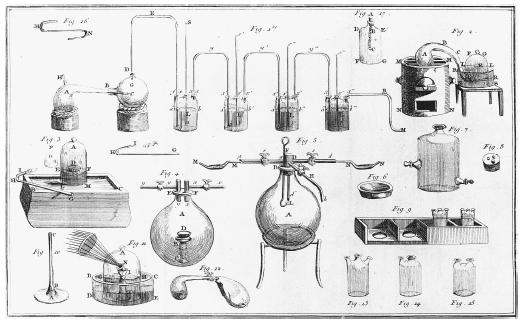
Discover the remarkable legacy of Antoine Lavoisier, the "Father of Modern Chemistry," whose groundbreaking contribution...
View Board
Discover how Ernst Ruska revolutionized science with the electron microscope, enabling atomic-level imaging and transfor...
View Board
"Explore Manuel García's vocal science legacy & laryngoscope invention. Discover how his innovations shaped modern voice...
View Board
"Discover Max Delbrück's Nobel-winning phage research that shaped molecular biology. Learn how his work revolutionized g...
View Board
**Meta Description:** Discover Carl Linnaeus, the "Father of Taxonomy," whose binomial nomenclature revolutionized bio...
View Board
"Discover August Kekulé's benzene theory & his impact on organic chemistry. Explore his enduring legacy & revolutionary ...
View Board
Comments