Explore Any Narratives
Discover and contribute to detailed historical accounts and cultural stories. Share your knowledge and engage with enthusiasts worldwide.
Max Delbrück (1906–1981) was a pioneering figure whose work bridged physics and biology, laying the foundation for modern molecular biology. His groundbreaking research on bacteriophages—viruses that infect bacteria—earned him the 1969 Nobel Prize in Physiology or Medicine. Delbrück's quantitative approach transformed genetics into an exact science, influencing generations of scientists.
Born in Berlin in 1906, Delbrück initially pursued physics, earning his Ph.D. from the University of Göttingen in 1930. His early work focused on theoretical physics, but a growing fascination with biology led him to shift fields. By the late 1930s, he had relocated to the United States, where he began applying quantitative methods to biological problems—a radical departure from the descriptive approaches dominant at the time.
Delbrück's background in physics shaped his scientific philosophy. He sought to uncover fundamental laws governing life, much like those in physics. This perspective drove his later experiments, particularly his work on bacteriophages, which he viewed as ideal model systems due to their simplicity and rapid reproduction cycles.
In 1943, Delbrück collaborated with Salvador Luria on an experiment that would redefine genetic research. Their fluctuation test demonstrated that bacterial resistance to viruses arises from spontaneous mutations rather than adaptive responses. This finding provided critical evidence for the random nature of mutations, a cornerstone of modern genetics.
The experiment involved exposing multiple bacterial cultures to bacteriophages. The results showed wide variability in resistance levels across cultures, a pattern inconsistent with induced adaptation. Instead, the data supported the idea that mutations occur randomly, with some bacteria gaining resistance by chance before viral exposure.
Delbrück's leadership extended beyond his own research. In the 1940s, he co-founded the Phage Group, a collaborative network of scientists dedicated to studying bacteriophages. This group, which included future Nobel laureates like Alfred Hershey, standardized research methods and fostered a culture of rigorous, quantitative inquiry.
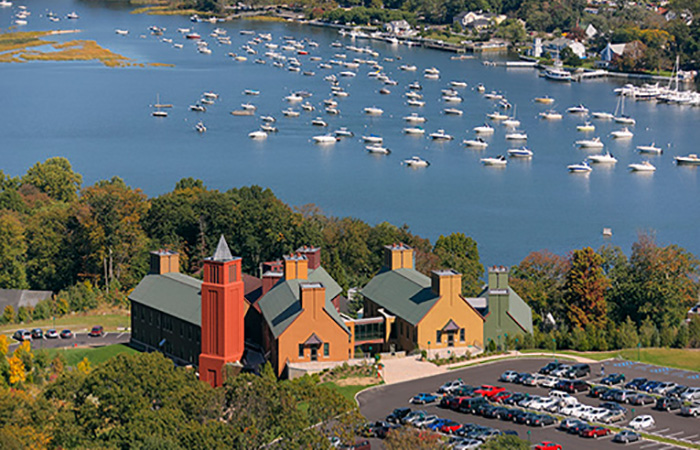
To further disseminate these methods, Delbrück established the Cold Spring Harbor phage course in 1945. This intensive training program became a model for scientific education, equipping researchers with the tools to advance molecular genetics. Many participants went on to make significant contributions to the field, cementing Delbrück's legacy as a mentor and institutional builder.
Delbrück's influence persists in contemporary molecular biology. His emphasis on quantitative analysis and model systems paved the way for later breakthroughs, including the discovery of DNA's structure. The 1969 Nobel Prize recognized his role in uncovering the mechanisms of viral replication and genetic structure, but his broader impact lies in shaping the very practice of biological research.
Recent scholarship highlights Delbrück's role as an intellectual bridge between physics and biology. Historians note his efforts to apply physical principles to biological phenomena, even as some of his theoretical ambitions remained unrealized. Today, his methods resonate in fields like genomics and synthetic biology, where quantitative rigor remains essential.
"Science is a way of thinking much more than it is a body of knowledge." — Max Delbrück
This article continues in Part 2, exploring Delbrück's later career, his philosophical views on biology, and the enduring relevance of his work in modern research.
In 1969, Max Delbrück was awarded the Nobel Prize in Physiology or Medicine, sharing the honor with Salvador Luria and Alfred Hershey. The committee recognized their collective work on viral replication and genetic structure, particularly their studies on bacteriophages. This accolade cemented Delbrück's reputation as a foundational figure in molecular biology.
Even after receiving the Nobel Prize, Delbrück remained active in research. He continued to explore the fundamental principles of biology, seeking to apply physical theories to biological systems. His later work included investigations into sensory perception in fungi, demonstrating his enduring curiosity and interdisciplinary approach.
Delbrück also maintained his role as a mentor, guiding young scientists at the California Institute of Technology (Caltech), where he spent much of his career. His laboratory became a hub for innovative research, attracting scholars eager to learn from his quantitative and analytical methods.
Delbrück was not merely a scientist but also a thinker who pondered the deeper implications of biological research. He believed that biology could uncover unique physical laws distinct from those in physics and chemistry. This philosophical stance influenced his approach to experiments, as he sought patterns and principles that could explain life's complexity.
One of Delbrück's key ideas was the concept of complementarity in biology, inspired by Niels Bohr's principles in quantum physics. He suggested that biological systems might exhibit dualities—such as the relationship between genetic stability and adaptability—that could not be fully explained by traditional physical laws.
While some of his theoretical ambitions remained unfulfilled, Delbrück's philosophical inquiries sparked discussions that continue to resonate in modern biology. His emphasis on interdisciplinary thinking encouraged scientists to look beyond their fields, fostering collaborations that have driven major breakthroughs.
The impact of Delbrück's work extends far beyond his lifetime. His methods and discoveries laid the groundwork for numerous advancements in molecular biology. Here are some key areas where his influence is evident:
Today, Delbrück's legacy is visible in cutting-edge research. For example, CRISPR gene editing and synthetic biology rely on the quantitative approaches he championed. Additionally, the study of bacteriophages has gained renewed interest due to their potential in antibiotic-resistant infections and gene therapy.
Delbrück's emphasis on model systems also paved the way for research on organisms like E. coli and yeast, which are now staples in genetic and molecular studies. His influence is a testament to the power of interdisciplinary thinking in driving scientific progress.
Despite his groundbreaking contributions, Delbrück's career was not without challenges. His transition from physics to biology was met with skepticism by some traditional biologists, who viewed his quantitative methods as overly reductionist. Additionally, his theoretical ideas, such as the search for biological laws, were sometimes criticized for being too abstract.
Critics argued that Delbrück's approach risked oversimplifying the complexity of living systems. However, his supporters countered that his methods provided a necessary foundation for understanding biological processes at a molecular level. This debate highlights the ongoing tension in biology between reductionist and holistic perspectives.
Delbrück himself acknowledged these challenges, stating that while physics could explain certain aspects of biology, life's complexity required a unique framework. His willingness to engage with these debates underscored his commitment to advancing scientific understanding.
In addition to the Nobel Prize, Delbrück received numerous accolades throughout his career. These include:
These honors reflect the broad impact of his work, which transcended traditional disciplinary boundaries. Delbrück's ability to bridge physics and biology earned him a place among the most influential scientists of the 20th century.
"The greatest challenge in biology is to find the principles that govern the organization of living systems." — Max Delbrück
This article continues in Part 3, where we will explore Delbrück's personal life, his enduring legacy, and the lessons modern scientists can learn from his career.
Beyond his scientific achievements, Max Delbrück was known for his intellectual curiosity and engaging personality. Born into an academic family—his father was a history professor—Delbrück grew up in an environment that valued learning and critical thinking. These early influences shaped his lifelong passion for exploration and discovery.
Delbrück's career was profoundly affected by the political upheavals of the 20th century. Fleeing Nazi Germany in 1937, he settled in the United States, where he found a welcoming academic environment. His experiences as an émigré scientist highlighted the importance of international collaboration, a value he championed throughout his career.
His time at institutions like Caltech and Vanderbilt University allowed him to build a network of like-minded researchers. Delbrück's ability to foster connections across disciplines and cultures became one of his defining traits, contributing to the global nature of modern science.
Delbrück's impact on science extends beyond his research to his role as a mentor and educator. He believed in nurturing young talent, often encouraging students to pursue unconventional ideas. His teaching philosophy emphasized hands-on experimentation and interdisciplinary thinking, principles that remain central to scientific training today.
The Cold Spring Harbor phage courses, which Delbrück helped establish, became a model for scientific education. These courses brought together researchers from diverse backgrounds, fostering a culture of collaboration and innovation. Many participants went on to become leading figures in molecular biology, carrying forward Delbrück's methods and values.
His approach to mentorship was characterized by open dialogue and intellectual freedom. Delbrück encouraged his students to challenge assumptions and explore new avenues of research, a practice that has since become a cornerstone of scientific progress.
The principles and methods Delbrück introduced continue to shape contemporary research. His work on bacteriophages, for instance, has found new relevance in the era of antibiotic resistance. Scientists are increasingly turning to phage therapy as a potential solution to infections that no longer respond to traditional antibiotics.
Delbrück's emphasis on quantitative biology has also influenced the field of genomics. Modern techniques like CRISPR gene editing and high-throughput sequencing rely on the rigorous, data-driven approaches he pioneered. His legacy is evident in the way scientists today analyze complex biological systems with precision and depth.
Moreover, his interdisciplinary mindset has inspired collaborations between biologists, physicists, and computer scientists. This convergence of fields has led to breakthroughs in areas such as synthetic biology and systems biology, where researchers seek to understand and engineer living systems at a fundamental level.
Max Delbrück's life and work offer valuable lessons for aspiring scientists and researchers. His career demonstrates the power of interdisciplinary thinking, showing how insights from one field can revolutionize another. Here are some key takeaways from his journey:
In an era of rapid technological advancement, Delbrück's principles remain highly relevant. Modern scientists can draw inspiration from his ability to bridge disciplines and tackle complex problems with innovative methods. Whether in genomics, synthetic biology, or beyond, his legacy serves as a guide for those seeking to push the boundaries of knowledge.
Delbrück's career also underscores the importance of resilience and adaptability. His ability to thrive despite political and academic challenges demonstrates that perseverance is often the key to success in science.
Max Delbrück's contributions to molecular biology are immeasurable. From his groundbreaking work on bacteriophages to his role in shaping scientific education, he left an indelible mark on the field. His quantitative approach transformed genetics into a precise science, while his interdisciplinary mindset paved the way for modern advancements.
Beyond his scientific achievements, Delbrück's legacy lies in his ability to inspire others. His emphasis on collaboration, mentorship, and intellectual freedom continues to influence researchers worldwide. As we face new challenges in biology and medicine, his principles serve as a reminder of the power of curiosity and innovation.
"The true spirit of science is not in the accumulation of facts, but in the pursuit of understanding." — Max Delbrück
In celebrating Delbrück's life and work, we honor not just a scientist, but a visionary who reshaped our understanding of life itself. His story is a testament to the enduring impact of bold ideas and the relentless pursuit of knowledge.




Your personal space to curate, organize, and share knowledge with the world.
Discover and contribute to detailed historical accounts and cultural stories. Share your knowledge and engage with enthusiasts worldwide.
Connect with others who share your interests. Create and participate in themed boards about any topic you have in mind.
Contribute your knowledge and insights. Create engaging content and participate in meaningful discussions across multiple languages.
Already have an account? Sign in here

Discover how Max Delbrück, a Nobel Prize-winning pioneer in molecular biology, revolutionized genetics with his bacterio...
View Board
Max Delbrück was a pioneering scientist whose work revolutionized molecular biology through an interdisciplinary approac...
View Board
768 **Meta Description:** Explore the life of Enrico Fermi, the architect of the nuclear age. From quantum theory to th...
View Board
Discover the influential life of Konrad Lorenz, a trailblazer in ethology whose research on animal behavior revolutioniz...
View Board
> **Meta Description:** Explore the life and legacy of Albert Einstein, the genius who reshaped physics with relativity,...
View Board
Discover the groundbreaking journey of Rosalind Franklin, the brilliant scientist whose pivotal work on the DNA structur...
View Board
Max Born was a renowned theoretical physicist and Nobel laureate known for his statistical interpretation of quantum mec...
View Board
Discover the life and work of Albert Einstein, a renowned physicist and one of the most influential scientists in histor...
View Board
Explore the life and legacy of Dmitri Mendeleev, the visionary architect of the periodic table. Discover how his groundb...
View Board
Explore the life and legacy of Jules Henri Poincaré, a prodigy whose innovative work bridged mathematics and physics. Di...
View Board
"Louis 'Luis' Alvarez: A scientific genius who pioneered new frontiers. Explore his early life, education, and groundbre...
View Board
Explore the complicated legacy of James Watson, the controversial architect of DNA. Delve into his groundbreaking achiev...
View Board
George Washington Carver: The Pioneering Scientist and Educator George Washington Carver (1864-1943) was a scientist, i...
View Board
Explore the fascinating life of Michael Faraday, the pioneering scientist whose groundbreaking work in electromagnetism ...
View Board
**Meta Description:** "Explore the life and legacy of Jacques Monod, Nobel Prize-winning molecular biologist who revol...
View Board
Louis Néel Nobel laureate revolutionized magnetism research with discovery of antiferromagnetism advancing condensed mat...
View Board
Discover how Yves Chauvin's Nobel-winning olefin metathesis revolutionized chemistry, enabling greener, efficient indust...
View Board
George Gamow: The Unbelievable Journey of a Theoretical Physicist and Cosmologist The Enigmatic Man Behind the Cosmic B...
View Board
**Meta Description:** Explore the life and legacy of Hermann von Helmholtz, the 19th-century polymath who revolutionized...
View BoardDiscover Antonio de Ulloa, a pioneering Spanish scientist of the Enlightenment era, whose groundbreaking contributions t...
View Board
Comments