
Explore Any Narratives
Discover and contribute to detailed historical accounts and cultural stories. Share your knowledge and engage with enthusiasts worldwide.
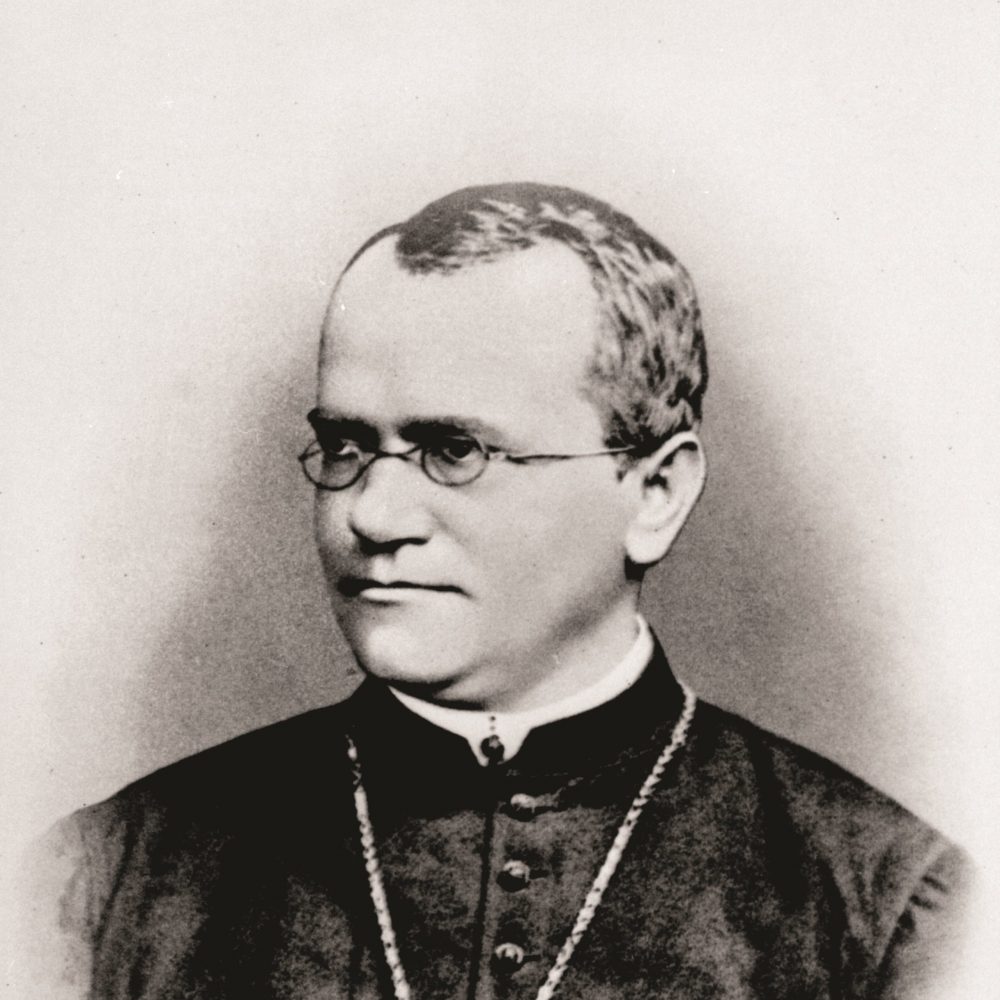
Gregor Johann Mendel, a 19th-century scientist, revolutionized our understanding of heredity through his meticulous experiments with pea plants. His work laid the foundation for modern genetics, introducing concepts like dominance, segregation, and independent assortment. Despite initial obscurity, Mendel's discoveries became cornerstones of biological science.
Born in 1822 in what is now the Czech Republic, Mendel entered the Augustinian monastery in Brno, where he combined his religious duties with scientific pursuits. The scientific context of his time was dominated by theories of blending inheritance, where traits were thought to merge between generations. Mendel's groundbreaking approach challenged these ideas.
Unlike his contemporaries, Mendel believed in discrete hereditary factors—now known as genes. His experiments with Pisum sativum (pea plants) demonstrated that traits did not blend but were passed down in predictable patterns. This was a radical departure from the prevailing scientific thought.
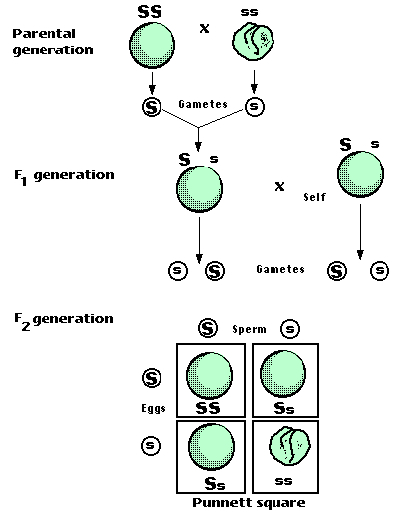
Between 1856 and 1863, Mendel conducted controlled crosses of pea plants, meticulously tracking seven distinct traits. His quantitative approach yielded consistent numerical ratios, such as the 3:1 ratio in monohybrid crosses, which revealed the principles of dominance and segregation.
Mendel's experiments were unprecedented in their scale. He grew and recorded data from approximately 10,000 pea plants, ensuring statistical robustness. This large-scale approach allowed him to observe patterns that smaller studies might have missed.
Mendel's work identified several key ratios that became fundamental to genetics:
These ratios provided empirical evidence for his theories and remain central to genetic education today.
Despite publishing his findings in 1866, Mendel's work was largely ignored during his lifetime. It wasn't until 1900—34 years after his paper's publication—that his discoveries were rediscovered by Hugo de Vries, Carl Correns, and Erich von Tschermak. This rediscovery marked the birth of genetics as a scientific discipline.
Several factors contributed to the initial neglect of Mendel's work:
However, once rediscovered, his work quickly gained recognition for its experimental rigor and predictive power.
Mendel's success can be attributed to his methodological innovations. He combined experimental design, controlled crosses, and quantitative analysis in a way that was unprecedented. His approach included:
These practices made his findings robust and reproducible, setting a new standard for scientific inquiry.
Mendel's use of quantitative analysis was revolutionary. By counting and categorizing traits, he transformed genetics from a qualitative observation into a quantitative science. This shift allowed for the discovery of predictable patterns and ratios, which became the bedrock of genetic research.
Gregor Mendel's work with pea plants fundamentally changed our understanding of heredity. His discoveries of dominance, segregation, and independent assortment laid the groundwork for modern genetics. Despite initial obscurity, his methodological rigor and quantitative approach ensured that his contributions would eventually be recognized as foundational to the field.
In Part 2, we will delve deeper into the specifics of Mendel's experiments, the traits he studied, and the broader implications of his work for modern genetics.
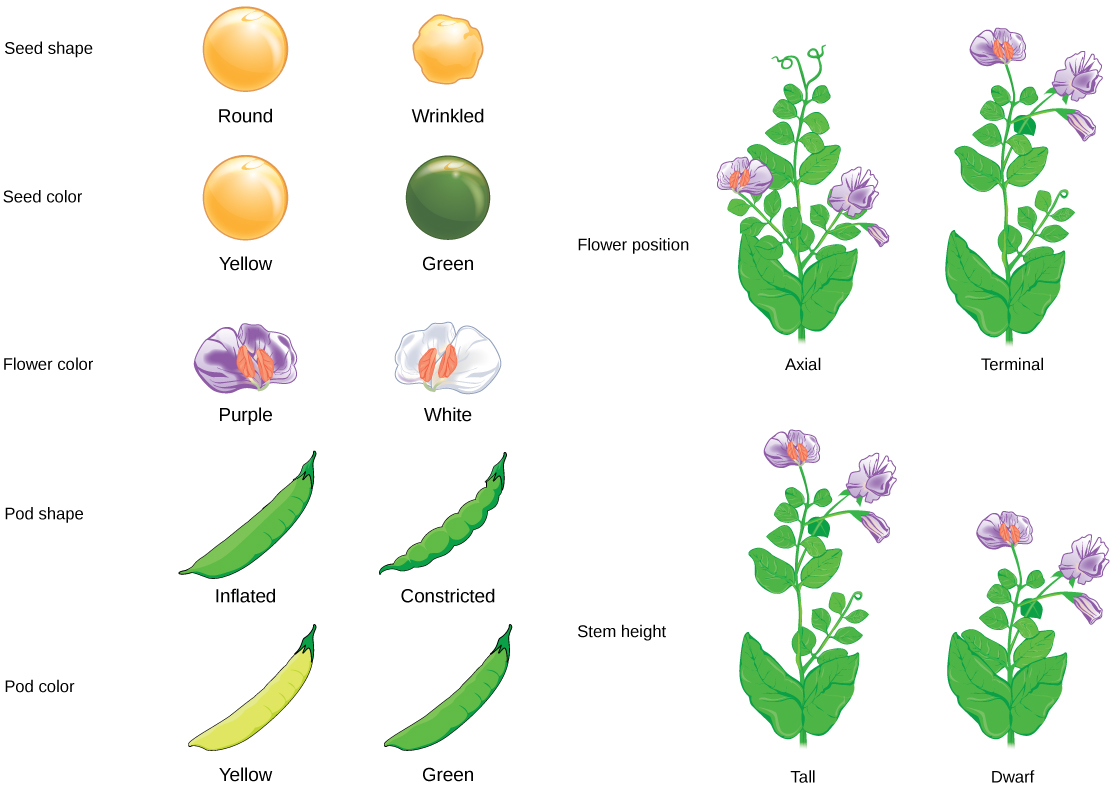
Mendel's experiments focused on seven distinct traits in pea plants, each exhibiting clear dominance relationships. These traits were carefully chosen for their ease of observation and consistent inheritance patterns. By studying these characteristics, Mendel uncovered the fundamental principles of heredity.
The traits Mendel examined included:
Each trait demonstrated a dominant-recessive relationship, where one form consistently appeared in the F1 generation while the other remained hidden, only to reappear in predictable ratios in the F2 generation.
Mendel's meticulous record-keeping revealed striking statistical patterns. For example, when crossing plants with purple flowers (dominant) and white flowers (recessive), the F1 generation uniformly displayed purple flowers. However, in the F2 generation, the ratio of purple to white flowers approximated 3:1—a pattern that held true across all seven traits.
From his experiments, Mendel derived three fundamental laws that govern inheritance:
This law states that each individual possesses two alleles for a trait, which segregate during gamete formation. As a result, each parent contributes one allele to their offspring. Mendel observed this phenomenon when the recessive trait (e.g., white flowers) reappeared in the F2 generation after being absent in the F1 generation.
The Law of Dominance explains why certain traits appear more frequently in offspring. Mendel found that one allele can mask the expression of another. For instance, the allele for purple flowers dominated over the allele for white flowers, causing the recessive trait to remain hidden in heterozygous individuals.
Mendel's dihybrid crosses—experiments tracking two traits simultaneously—led to the discovery of independent assortment. He observed that alleles for different traits are inherited independently of one another. This principle was evidenced by the 9:3:3:1 ratio in the F2 generation of dihybrid crosses, showing all possible combinations of the two traits.
While Mendel's laws remain foundational, modern genetics has revealed complexities that extend beyond his original observations. Advances in molecular genetics have validated his conceptual "factors" as genes located on chromosomes, but they have also identified exceptions to simple Mendelian inheritance.
One significant exception is linkage, where genes located close to one another on the same chromosome tend to be inherited together. This phenomenon was discovered by Thomas Hunt Morgan in the early 20th century. While Mendel's Law of Independent Assortment holds true for genes on different chromosomes, linked genes violate this principle due to their physical proximity.
Not all traits exhibit the clear dominance relationships Mendel described. In cases of incomplete dominance, heterozygous individuals display a phenotype that is a blend of the two homozygous phenotypes. For example, crossing red and white snapdragons can yield pink offspring. Similarly, codominance occurs when both alleles are fully expressed in the phenotype, as seen in the AB blood type in humans.
Epistasis occurs when one gene affects the expression of another gene. This interaction can produce unexpected phenotypic ratios that deviate from Mendel's predictions. Additionally, many traits are polygenic, meaning they are influenced by multiple genes. Examples include human height and skin color, which exhibit continuous variation rather than the discrete categories Mendel observed.
Recent advancements in genomics have allowed scientists to identify the specific genes responsible for the traits Mendel studied. Research institutions, such as the John Innes Centre, have played a pivotal role in this endeavor, leveraging extensive pea germplasm collections to pinpoint the molecular basis of Mendel's phenotypic observations.
Modern techniques like DNA sequencing and gene mapping have enabled researchers to locate and characterize the genes underlying Mendel's seven traits. For instance:
These discoveries bridge the gap between Mendel's phenotypic observations and their genotypic foundations, providing a deeper understanding of inheritance at the molecular level.
Institutions worldwide maintain vast pea germplasm collections, preserving thousands of Pisum sativum accessions. These resources are invaluable for genetic research, allowing scientists to study the diversity and evolution of Mendel's traits. For example, the John Innes Centre's collection includes historical varieties that Mendel himself might have used, offering a direct link to his groundbreaking experiments.
Gregor Mendel's contributions extend far beyond his lifetime, shaping both scientific research and education. His principles of inheritance are taught in classrooms worldwide, serving as the bedrock of introductory genetics courses. Moreover, his methodological rigor continues to inspire scientists across disciplines.
Mendel's experiments are a staple in biology education, illustrating key genetic concepts through accessible examples. Students learn about Punnett squares, which visually represent Mendel's principles of segregation and independent assortment. These tools help demystify inheritance patterns, making complex genetic ideas tangible and understandable.
Mendel's approach to scientific inquiry set a precedent for future researchers. His emphasis on controlled experiments, quantitative data, and reproducibility established a gold standard for experimental design. Today, these principles are integral to scientific methodology, ensuring that research is both reliable and valid.
Gregor Mendel's work with pea plants unveiled the fundamental laws of inheritance, transforming our understanding of genetics. His discoveries of segregation, dominance, and independent assortment remain central to the field, even as modern genetics has uncovered additional complexities. The identification of the molecular basis for Mendel's traits further cements his legacy, bridging historical observations with contemporary science.
In Part 3, we will explore Mendel's personal life, the historical context of his work, and his lasting impact on both science and society. We will also examine how his discoveries continue to influence modern genetic research and biotechnology.
While Gregor Mendel is celebrated for his scientific contributions, his personal life and the environment in which he worked are equally fascinating. Born Johann Mendel in 1822 in Heinzendorf, Austria (now Hynčice, Czech Republic), he adopted the name Gregor upon entering the Augustinian monastery in Brno. His journey from a rural background to becoming the father of modern genetics is a testament to his intellect and perseverance.
Mendel's early education was marked by financial struggles, but his academic potential was evident. He studied philosophy and physics at the University of Olomouc before entering the monastery. Later, he attended the University of Vienna, where he was exposed to scientific methods and mathematical principles that would later inform his genetic experiments.
The Augustinian monastery in Brno provided Mendel with the resources and time to conduct his experiments. The monastery was a hub of intellectual activity, and Mendel's work was supported by his fellow monks. His role as a teacher and later as abbot allowed him to balance his scientific pursuits with his religious duties.
Mendel's work did not emerge in a vacuum; it was shaped by the scientific and cultural milieu of the 19th century. Understanding this context helps appreciate the significance of his contributions and why they were initially overlooked.
Before Mendel, the prevailing theory of heredity was blending inheritance, which suggested that traits from parents blend together in offspring. This idea was challenged by Mendel's observation that traits could remain distinct and reappear in subsequent generations. His findings contradicted the dominant scientific narratives of his time, making them difficult for contemporaries to accept.
Mendel's use of statistical analysis was revolutionary in biology. At a time when biological studies were largely descriptive, his quantitative approach provided a new way to understand natural phenomena. This methodological innovation was ahead of its time and contributed to the initial neglect of his work, as many scientists were not yet prepared to embrace mathematical biology.
Recent historical and genomic analyses have shed light on Mendel's later life and health. Studies suggest that he may have had a predisposition to heart disease, which could have influenced his work and longevity. Despite these challenges, Mendel remained active in his scientific and religious pursuits until his death in 1884.
Mendel's work gained recognition only after his death, following its rediscovery in 1900. Today, he is celebrated as a pioneer of genetics, with numerous institutions and awards named in his honor. His experiments with pea plants are commemorated in museums and research centers, ensuring that his contributions are remembered and studied by future generations.
Mendel's principles of inheritance have had a profound impact on modern genetics and biotechnology. His discoveries laid the groundwork for advancements in molecular biology, genetic engineering, and personalized medicine. The understanding of gene inheritance has enabled breakthroughs in agriculture, healthcare, and beyond.
The principles of Mendelian genetics are fundamental to plant and animal breeding. By understanding dominance, segregation, and independent assortment, breeders can develop crops and livestock with desirable traits. This has led to improvements in yield, disease resistance, and nutritional value, addressing global food security challenges.
In healthcare, Mendel's work has informed our understanding of genetic disorders and inheritance patterns. Conditions such as cystic fibrosis, sickle cell anemia, and Huntington's disease follow Mendelian inheritance patterns, allowing for better diagnosis, counseling, and treatment strategies. The field of genetic counseling relies heavily on Mendel's principles to assess the risk of inherited diseases.
Modern biotechnology, including CRISPR gene editing, builds on the foundation laid by Mendel. By precisely manipulating genes, scientists can correct genetic defects, enhance crop traits, and even develop new therapies for previously untreatable conditions. Mendel's insights into gene inheritance have been instrumental in these advancements.
Mendel's legacy is preserved and celebrated through various institutions dedicated to genetics and agricultural research. These centers not only honor his contributions but also continue his work, advancing our understanding of genetics and its applications.
Located in Brno, the Gregor Mendel Museum is housed in the Augustinian monastery where Mendel conducted his experiments. The museum showcases his life, work, and the historical context of his discoveries. Visitors can explore the garden where Mendel grew his pea plants and learn about the impact of his research on modern science.
The John Innes Centre in the UK is a leading research institution that has played a crucial role in identifying the molecular basis of Mendel's traits. Their extensive pea germplasm collections and cutting-edge research continue to uncover the genetic mechanisms underlying plant traits, building on Mendel's foundational work.
Gregor Mendel's journey from a humble background to becoming the father of modern genetics is a story of curiosity, perseverance, and scientific rigor. His experiments with pea plants revealed the fundamental laws of inheritance, transforming our understanding of biology and laying the groundwork for countless advancements in science and technology.
Mendel's contributions can be summarized through several key takeaways:
As we continue to unravel the complexities of genetics, Mendel's principles remain a cornerstone of the field. From personalized medicine to genetic engineering, his work informs and inspires new generations of scientists. The ongoing research into the molecular basis of his traits ensures that Mendel's legacy will endure, shaping the future of biology and beyond.
In the words of Theodore Dobzhansky, "Nothing in biology makes sense except in the light of evolution." Similarly, nothing in genetics makes sense except in the light of Mendel's groundbreaking discoveries. His story is a reminder of the power of observation, experimentation, and the pursuit of knowledge—a legacy that continues to inspire and drive scientific progress.



Your personal space to curate, organize, and share knowledge with the world.
Discover and contribute to detailed historical accounts and cultural stories. Share your knowledge and engage with enthusiasts worldwide.
Connect with others who share your interests. Create and participate in themed boards about any topic you have in mind.
Contribute your knowledge and insights. Create engaging content and participate in meaningful discussions across multiple languages.
Already have an account? Sign in here

Discover Gregor Mendel, the father of genetics, whose pea plant experiments revealed key principles shaping modern scien...
View Board
Discover the impactful legacy of Gregor Mendel, the Father of Genetics, whose pioneering pea plant experiments laid the ...
View Board
Max Delbrück was a pioneering scientist whose work revolutionized molecular biology through an interdisciplinary approac...
View Board
Discover Sydney Brenner's groundbreaking contributions to molecular biology, from cracking the genetic code to pioneerin...
View Board
Discover the intriguing legacy of Jean-Baptiste Lamarck, the often-overlooked pioneer of evolutionary thought whose bold...
View Board
**Meta Description:** "Explore the life and legacy of Jacques Monod, Nobel Prize-winning molecular biologist who revol...
View Board
Discover how August Baisman revolutionized biology with gamete selection theory, reshaping our understanding of reproduc...
View Board
Explore the complicated legacy of James Watson, the controversial architect of DNA. Delve into his groundbreaking achiev...
View Board
Explore Dr. Julio Palacios' pioneering Rhizobium genetics and agricultural genomics that revolutionized Latin American s...
View Board
"Discover Max Delbrück's Nobel-winning phage research that shaped molecular biology. Learn how his work revolutionized g...
View Board
Uncover the truth behind Zak-Mono-O-8rylos-ths-Moriakhs-Biologias. Explore its origins, modern biology connections, and ...
View Board
**Meta Description:** Discover how Craig Venter revolutionized genomics, from decoding the human genome to creating sy...
View Board
Discover how the Human Leukocyte Antigen (HLA) system shapes immune responses, influences disease susceptibility, and re...
View Board
Discover how François Jacob's Nobel-winning operon model revolutionized biology and shaped morphobioscience, revealing t...
View Board
Discover how Ernst Ruska revolutionized science with the electron microscope, enabling atomic-level imaging and transfor...
View Board
Last news about Biology Week from 07/10/2024 to 13/10/2024
View Board
Last news about Biology Week from 14/10/2024 to 20/10/2024
View Board
Explore the transformative contributions of Lazzaro Spallanzani to modern biological sciences. Discover how his pioneeri...
View Board
Discover the inspiring journey of Dorothy Hodgkin, a trailblazer in X-ray crystallography whose groundbreaking discoveri...
View Board
Discover the inspiring yet tragic story of Aldo Pontremoli, a pioneering physicist whose groundbreaking work in theoreti...
View Board
Comments