Explore Any Narratives
Discover and contribute to detailed historical accounts and cultural stories. Share your knowledge and engage with enthusiasts worldwide.
The phrase "Loyi-Neel-O-8rylos-ths-Magnhtologias" does not correspond to any known scientific term, historical figure, or established concept. However, it appears to be a distorted reference to Louis Néel and the study of magnetism. This article will explore the foundational contributions of Louis Néel to the field of magnetism, the principles of magnetic ordering, and the broader implications of magnetism in modern technology.
Louis Néel was a French physicist who made groundbreaking contributions to the understanding of magnetic materials. Born in 1904, Néel is best known for his work on antiferromagnetism and ferrimagnetism, which are fundamental concepts in the study of magnetism. His research laid the groundwork for modern magnetic technologies, including data storage and spintronics.
Néel's most significant achievement was his theory of antiferromagnetism, which describes a type of magnetic ordering where adjacent magnetic moments align in opposite directions. This concept was crucial in explaining the behavior of certain magnetic materials that do not exhibit net magnetization. Additionally, Néel introduced the concept of ferrimagnetism, which is essential for understanding the properties of materials like magnetite.
Magnetism is a fundamental force of nature that arises from the motion of electric charges. It is one of the key aspects of electromagnetism, which also includes electricity. The study of magnetism, often referred to as magnetology, encompasses a wide range of phenomena, from the behavior of permanent magnets to the complex interactions in magnetic materials.
There are several types of magnetic ordering, each with distinct characteristics and applications:
Magnetism plays a crucial role in various technological applications. From everyday devices to advanced scientific instruments, the principles of magnetism are integral to their functioning. Some notable applications include:
The field of magnetism is continually evolving, with ongoing research focused on developing new materials and technologies. Some of the current trends include:
While the phrase "Loyi-Neel-O-8rylos-ths-Magnhtologias" may not have a direct meaning, it serves as a reminder of the importance of Louis Néel and the study of magnetism. Néel's contributions have had a lasting impact on our understanding of magnetic materials and their applications. As research in magnetism continues to advance, we can expect to see even more innovative technologies that leverage the principles of magnetic ordering.
At the heart of magnetism lies the behavior of magnetic materials, which can be categorized based on their response to magnetic fields. These materials exhibit unique properties that make them indispensable in various technological applications. Understanding the science behind these materials is crucial for advancing magnetic technologies.
While ferromagnetism, antiferromagnetism, and ferrimagnetism are well-known, other types of magnetic behavior also play significant roles:
Temperature plays a critical role in the magnetic properties of materials. Two key temperatures are particularly important:
Beyond the well-known applications, magnetism is also pivotal in several advanced technologies that are shaping the future. These applications leverage the unique properties of magnetic materials to achieve groundbreaking innovations.
Spintronics, or spin electronics, is an emerging field that exploits the intrinsic spin of electrons and its associated magnetic moment. Unlike traditional electronics, which rely on the charge of electrons, spintronics aims to use the spin property to create faster, more efficient, and more powerful devices.
Some of the key advancements in spintronics include:
Magnetic nanoparticles are finding increasingly important applications in the field of medicine. These tiny particles, often made of iron oxide, can be manipulated using external magnetic fields, making them useful for a variety of medical applications.
Notable applications include:
While the field of magnetism has seen tremendous advancements, several challenges remain. Addressing these challenges is crucial for unlocking the full potential of magnetic technologies and ensuring their sustainable development.
One of the significant challenges in magnetism research is the reliance on rare-earth elements for producing high-performance magnets. These elements are expensive, environmentally challenging to mine, and often subject to geopolitical supply risks.
Researchers are actively exploring alternatives to rare-earth magnets, including:
Another area of active research is the study of ultrafast magnetization dynamics. Understanding how magnetic materials respond to extremely short pulses of light or magnetic fields can lead to faster and more efficient magnetic devices.
Key areas of focus include:
As the demand for magnetic materials continues to grow, so does the need for sustainable and environmentally friendly practices. This includes not only the development of rare-earth-free magnets but also the implementation of green manufacturing processes and the reduction of electronic waste.
Some of the key considerations include:
In conclusion, the field of magnetism is rich with opportunities for innovation and advancement. From the foundational work of Louis Néel to the cutting-edge research in spintronics and magnetic nanoparticles, the study of magnetism continues to push the boundaries of what is possible. By addressing the challenges and embracing sustainable practices, we can ensure that magnetic technologies continue to play a vital role in shaping our future.
The field of magnetism is rapidly evolving, with new technologies emerging that promise to revolutionize various industries. These innovations leverage the unique properties of magnetic materials to create solutions that are faster, more efficient, and more sustainable.
Quantum magnetism is an area of research that explores the magnetic properties of materials at the quantum level. This field is particularly interested in the behavior of electrons in magnetic materials and how their interactions can lead to novel magnetic states.
One of the most exciting developments in this area is the study of topological magnetic materials. These materials exhibit unique magnetic configurations that are protected by topological principles, making them highly stable and resistant to external perturbations. Some of the key advancements include:
Magnetic sensors are devices that detect and measure magnetic fields. They play a crucial role in various applications, from navigation systems to medical diagnostics. Recent advancements in magnetic sensor technology have led to the development of highly sensitive and compact sensors that can be integrated into a wide range of devices.
Some of the key applications of magnetic sensors include:
Magnetism plays a vital role in the development and implementation of renewable energy technologies. From wind turbines to electric vehicles, magnetic materials are essential for converting and storing energy efficiently.
Wind turbines rely on magnetic generators to convert mechanical energy into electrical energy. The efficiency and reliability of these generators are crucial for the performance of wind turbines. Recent advancements in magnetic materials have led to the development of more efficient and compact generators, reducing the cost and improving the performance of wind energy systems.
Some of the key innovations in this area include:
Electric vehicles (EVs) rely on electric motors to convert electrical energy into mechanical energy. The efficiency and performance of these motors are crucial for the range and performance of EVs. Magnetic materials play a key role in the design and operation of these motors.
Some of the key advancements in this area include:
The study of magnetism has come a long way since the foundational work of Louis Néel. From the basic principles of magnetic ordering to the advanced applications in spintronics, magnetic nanoparticles, and renewable energy, the field of magnetism continues to push the boundaries of what is possible.
As we look to the future, several key trends and developments are likely to shape the field of magnetism:
In conclusion, the field of magnetism is rich with opportunities for innovation and advancement. By building on the legacy of Louis Néel and embracing the latest developments in magnetic materials and technologies, we can unlock the full potential of magnetism and create a future that is faster, more efficient, and more sustainable. The journey of magnetism is far from over, and the possibilities are as vast as the magnetic fields that surround us.
Your personal space to curate, organize, and share knowledge with the world.
Discover and contribute to detailed historical accounts and cultural stories. Share your knowledge and engage with enthusiasts worldwide.
Connect with others who share your interests. Create and participate in themed boards about any topic you have in mind.
Contribute your knowledge and insights. Create engaging content and participate in meaningful discussions across multiple languages.
Already have an account? Sign in here
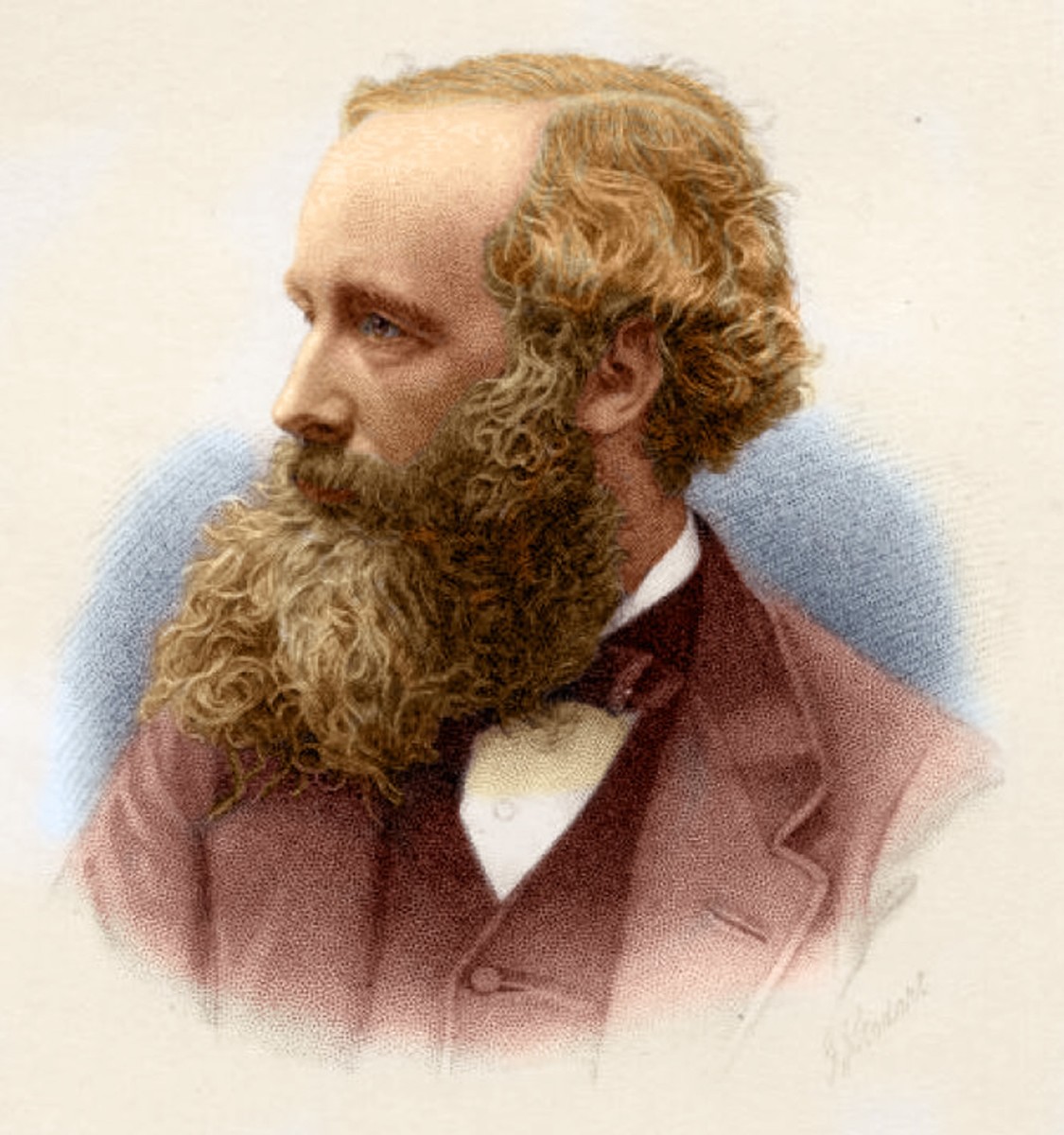
James Clerk Maxwell unified electricity and magnetism into a single mathematical framework, his work laying the foundati...
View Board
Discover the legacy of Michael Faraday, the self-taught genius hailed as the Father of Electromagnetism. From his humble...
View Board
Pioneering innovator Charles Hard Townes revolutionised science with his groundbreaking work on the maser and laser, ear...
View Board
Discover how André-Marie Ampère, the father of electromagnetism, revolutionized science with Ampère's Law and shaped mod...
View Board
Discover Ernst Ruska's groundbreaking work in electron microscopy and its profound impact on modern science, from nanosc...
View Board
Explore the fascinating life of Michael Faraday, the pioneering scientist whose groundbreaking work in electromagnetism ...
View Board
Max Born was a renowned theoretical physicist and Nobel laureate known for his statistical interpretation of quantum mec...
View Board
Alessandro Volta, a pioneering Italian physicist, revolutionized electricity with the invention of the voltaic pile, sha...
View Board
MIT researchers transform ordinary concrete into structural supercapacitors, storing 10x more energy in foundations, tur...
View Board
Alessandro Volta, inventor of the electric battery and pioneer of electrical science, revolutionized energy with the Vol...
View Board
Louis Néel Nobel laureate revolutionized magnetism research with discovery of antiferromagnetism advancing condensed mat...
View Board
Walter Brattain: The Transistor Pioneer Who Changed Electronics Early Life and Education of Walter Brattain Walter Hous...
View Board
"J.J. Thomson's cathode ray research uncovered the electron, transforming physics and enabling quantum and nuclear advan...
View Board
Discover the life and work of Albert Einstein, a renowned physicist and one of the most influential scientists in histor...
View Board
Discover how Michael Faraday, the father of electromagnetic technology, rose from humble beginnings to revolutionize the...
View Board
"Discover how Ernest Rutherford, the father of nuclear physics, revolutionized science with his atomic discoveries. Expl...
View Board
Fritz Haber: A Chemist Whose Work Changed the World The Rise of a Scientist Fritz Haber was born on December 9, 1868, i...
View Board
Isaac Newton was a pioneering scientist whose laws of motion and universal gravitation revolutionized our understanding ...
View Board
Explore the life and legacy of Walter Brattain, a pivotal figure in semiconductor history and co-inventor of the point-c...
View Board
Explore the extraordinary journey of Franklin Chang-Díaz, from Costa Rica to the cosmos, in this comprehensive article. ...
View Board
Comments