Explore Any Narratives
Discover and contribute to detailed historical accounts and cultural stories. Share your knowledge and engage with enthusiasts worldwide.
When we think of geometry, one name stands above all others: Euclid. Known as the Father of Geometry, Euclid's contributions have shaped mathematics for over two millennia. His seminal work, Elements, remains a cornerstone of mathematical education, influencing countless scholars and students. But who was Euclid, and how did his work transcend time? This article delves into the life, achievements, and lasting impact of Euclid, exploring his chronology and the profound legacy he left behind.
Euclid, or Ευκλείδης in Greek, lived during a pivotal period in history. While exact details of his life are scarce, historians place him in Alexandria, Egypt, around 300 BCE. This was during the Hellenistic period, a time of great intellectual flourishing under the reign of Ptolemy I. Euclid is believed to have founded the mathematical school at the Musaeum, an early precursor to modern universities.
Determining Euclid's exact chronology is challenging due to the lack of contemporary records. Most estimates suggest he was born between 365–325 BCE and died around 265–300 BCE. These dates are derived from references by later writers, such as Proclus, a 5th-century CE philosopher who provided valuable insights into Euclid's life and work.
It's important to note that Euclid is distinct from Euclid of Megara, a philosopher who lived earlier. The confusion between the two highlights the need for careful historical analysis when studying ancient figures.
Alexandria, during Euclid's time, was a vibrant center of learning and culture. The city's famous library, the Musaeum, attracted scholars from across the Greek world. Euclid's presence in Alexandria was instrumental in establishing the city as a hub for mathematical and scientific inquiry. His work at the Musaeum laid the groundwork for future generations of mathematicians and scientists.
Euclid's most famous work, Elements (Στοιχεία), is a 13-volume treatise that compiles and systematizes Greek geometry, number theory, and proofs. This monumental work has had an unparalleled impact on the field of mathematics, serving as the standard textbook for over 2,000 years.
Elements is divided into 13 books, each focusing on different aspects of mathematics. The first six books deal with plane geometry, covering topics such as triangles, circles, and parallel lines. Books seven through nine explore number theory, including prime numbers and the properties of integers. The final books delve into solid geometry, examining three-dimensional shapes and their properties.
One of the key features of Elements is its deductive and axiomatic approach. Euclid starts with a set of undefined terms, such as point and line, and five postulates, including the famous parallel postulate. From these foundations, he builds a comprehensive system of geometric proofs, demonstrating the power of logical reasoning.
The parallel postulate is one of the most debated and influential aspects of Euclid's work. It states that if a line segment intersects two straight lines forming two interior angles on the same side that sum to less than 180 degrees, the two lines, if extended indefinitely, will meet on that side. This postulate has sparked over 2,000 years of debate and ultimately led to the development of non-Euclidean geometries in the 19th century.
The parallel postulate's significance lies in its implications for the nature of space. Euclid's geometry assumes a flat, non-curved space, which became known as Euclidean geometry. However, the exploration of alternatives to this postulate by mathematicians like Lobachevsky and Riemann revolutionized our understanding of space and time, paving the way for Einstein's general relativity.
The impact of Elements on mathematics and education cannot be overstated. For centuries, it has been the go-to resource for students and scholars alike. Its influence extends beyond the realm of mathematics, shaping the way we think about logic, proof, and the structure of knowledge.
Elements has been translated into over 150 languages and has seen more than 2,000 editions published worldwide. This widespread dissemination is a testament to its universal appeal and enduring relevance. From ancient Greece to the Islamic world, the Renaissance, and modern times, Elements has been a constant presence in mathematical education.
Even today, Elements continues to play a crucial role in education. It is estimated that 70% of high school geometry curricula worldwide derive from Euclid's work. The principles and proofs outlined in Elements provide a solid foundation for students, helping them develop critical thinking and problem-solving skills.
The digital age has brought new opportunities for engaging with Elements. Projects like the Geometry Center have digitized the text, making it accessible to a global audience. Additionally, AI and computational tools are now being used to verify the proofs in Elements automatically, ensuring their accuracy and providing new insights into Euclid's methods.
Euclid's influence extends far beyond the confines of classical geometry. His work has inspired generations of mathematicians and scientists, leading to groundbreaking discoveries and new fields of study.
The exploration of non-Euclidean geometries in the 19th and 20th centuries marked a significant departure from Euclid's assumptions. Mathematicians like Nikolai Lobachevsky and Bernhard Riemann developed alternative geometric systems that challenged the notion of a flat, Euclidean space. These innovations had profound implications for physics, particularly in the development of Einstein's theory of general relativity, which describes the curvature of spacetime.
Despite these advancements, Euclidean geometry remains a fundamental tool in many areas of mathematics and science. Its principles are applied in fields ranging from engineering to computer graphics, demonstrating the enduring relevance of Euclid's work.
Euclid's contributions have also had a significant impact on culture and philosophy. In ancient Greek thought, geometry was seen as a way to model the cosmic order, linking spatial and temporal concepts. This interplay between geometry and time is evident in the works of philosophers like Zeno, whose paradoxes questioned the nature of motion and infinity.
In modern times, there has been a renewed interest in Hellenic philosophy and its connection to Euclidean principles. Scholars and educators are exploring the links between Euclidean geometry and contemporary concepts in quantum physics and cosmology. This cultural revival highlights the timeless nature of Euclid's ideas and their continued relevance in today's world.
Euclid's legacy as the Father of Geometry is a testament to the power of human intellect and the enduring nature of mathematical truth. His work, Elements, has stood the test of time, shaping the course of mathematics and education for over two millennia. From the ancient streets of Alexandria to the digital classrooms of the 21st century, Euclid's principles continue to inspire and guide generations of learners.
As we reflect on Euclid's contributions, it is clear that his impact extends far beyond the realm of geometry. His deductive reasoning, axiomatic approach, and rigorous proofs have influenced fields as diverse as philosophy, physics, and computer science. In a world where knowledge is constantly evolving, Euclid's work remains a steadfast beacon of logical clarity and intellectual rigor.
In the next part of this article, we will delve deeper into the specific proofs and theorems presented in Elements, exploring their applications and the ways in which they have shaped modern mathematics. Stay tuned for a closer look at the timeless genius of Euclid and his enduring legacy.
Euclid's Elements is not just a collection of geometric principles; it is a masterclass in logical reasoning and deductive proof. The work begins with a set of definitions, postulates, and common notions that form the bedrock of Euclidean geometry. These foundational elements are crucial for understanding the structure and rigor of Euclid's approach.
Euclid starts Elements with a series of definitions that establish the basic terms of geometry. These include fundamental concepts such as:
Following the definitions, Euclid presents five postulates, which are assumptions specific to geometry:
In addition to the postulates, Euclid introduces five common notions, which are general principles applicable beyond geometry:
Euclid's use of deductive reasoning is one of the most significant aspects of Elements. Starting from his definitions, postulates, and common notions, Euclid systematically builds a series of propositions (theorems) through logical proof. This method ensures that each new concept is firmly grounded in the previous ones, creating a cohesive and rigorous system.
For example, the proof of the Pythagorean theorem (Proposition 47 in Book I) is a masterful demonstration of deductive reasoning. Euclid uses a series of geometric constructions and logical steps to show that in a right-angled triangle, the square on the hypotenuse is equal to the sum of the squares on the other two sides. This theorem has far-reaching applications in fields ranging from architecture to physics.
Elements contains a wealth of theorems and proofs that have become foundational in mathematics. These propositions cover a wide range of topics, from basic geometric constructions to complex number theory. Below, we explore some of the most significant theorems and their applications.
Book I of Elements establishes the basic principles of plane geometry. It includes essential theorems such as:
These propositions are not merely academic exercises; they have practical applications in various fields. For instance, the principles of triangle geometry are used in navigation, astronomy, and engineering.
Book II of Elements is often referred to as "geometric algebra" because it deals with the geometric interpretation of algebraic identities. This book includes propositions that are equivalent to algebraic formulas, such as:
These geometric interpretations of algebraic concepts were crucial in the development of algebraic geometry and laid the groundwork for future mathematical advancements.
Book III focuses on the properties of circles, including theorems about chords, tangents, and angles within circles. Key propositions include:
These theorems have applications in optics, astronomy, and mechanical engineering, where the properties of circles and spherical shapes are essential.
Euclid's Elements has had a profound impact on mathematical traditions beyond ancient Greece. During the Islamic Golden Age, scholars translated and expanded upon Euclid's work, preserving and advancing mathematical knowledge. Later, during the Renaissance, European mathematicians rediscovered and built upon these Islamic contributions, leading to a renaissance in mathematical thought.
In the 8th and 9th centuries, Islamic scholars began translating Greek mathematical texts, including Elements, into Arabic. These translations were crucial in preserving ancient knowledge and making it accessible to a broader audience. Notable Islamic mathematicians who contributed to the study and expansion of Euclidean geometry include:
The Islamic world's engagement with Euclid's work ensured that his ideas were preserved and expanded upon, ultimately influencing the development of mathematics in Europe.
During the Renaissance, European scholars rediscovered the works of ancient Greek and Islamic mathematicians. The translation of Elements into Latin and vernacular languages played a pivotal role in the revival of mathematical studies. Key figures in this renaissance include:
The Renaissance period saw a renewed interest in the rigorous, logical approach of Euclidean geometry. This revival laid the groundwork for the scientific revolution and the development of modern mathematics.
Despite the advent of non-Euclidean geometries and modern mathematical theories, Euclidean geometry remains a fundamental tool in various fields. Its principles are applied in engineering, computer science, physics, and even art. The enduring relevance of Euclidean geometry is a testament to the timeless nature of Euclid's work.
Euclidean geometry is essential in civil engineering, where it is used to design structures, calculate dimensions, and ensure stability. For example, the principles of triangle geometry are applied in truss design, while the properties of circles are crucial in arch and dome construction.
In mechanical engineering, Euclidean geometry is used to design gears, levers, and other mechanical components. The precise calculations and geometric constructions outlined in Elements provide a solid foundation for these engineering applications.
The field of computer graphics relies heavily on Euclidean geometry. Algorithms for rendering 2D and 3D images, calculating distances, and determining intersections are all based on Euclidean principles. For instance, the Bresenham's line algorithm, used to draw lines on a raster grid, is rooted in the geometric concepts outlined by Euclid.
Additionally, computer-aided design (CAD) software uses Euclidean geometry to create precise models and simulations. Engineers and architects rely on these tools to design everything from buildings to aircraft, demonstrating the continued relevance of Euclid's work in modern technology.
In classical physics, Euclidean geometry is used to describe the motion of objects in Newtonian mechanics. The concepts of distance, velocity, and acceleration are all grounded in Euclidean space. Even in quantum mechanics, where non-Euclidean geometries play a role, Euclidean principles are used to model the behavior of particles in certain contexts.
Furthermore, Euclidean geometry is essential in optics, where it is used to study the behavior of light and design lenses. The principles of reflection and refraction, as described by Snell's law, are based on geometric constructions that trace their roots back to Euclid's Elements.
Euclid's Elements is more than just a historical artifact; it is a living testament to the power of logical reasoning and deductive proof. From its foundational definitions and postulates to its complex theorems and proofs, Elements has shaped the course of mathematics and influenced countless fields of study.
The impact of Euclid's work extends far beyond the ancient world. During the Islamic Golden Age, scholars preserved and expanded upon his ideas, ensuring their survival and transmission to future generations. The Renaissance saw a revival of Euclidean geometry, leading to the scientific revolution and the development of modern mathematics.
Today, Euclidean geometry remains a fundamental tool in engineering, computer science, physics, and beyond. Its principles are applied in cutting-edge technologies and continue to inspire new generations of mathematicians and scientists. As we look to the future, Euclid's legacy serves as a reminder of the enduring power of human intellect and the timeless nature of mathematical truth.
In the final part of this article, we will explore the cultural and philosophical impact of Euclid's work, as well as its influence on modern education and digital innovation. Stay tuned for a deeper dive into the lasting legacy of the Father of Geometry.
Euclid's contributions extend beyond the realm of mathematics, influencing philosophy, culture, and even art. His rigorous approach to geometry has shaped the way we perceive space, time, and the structure of the universe. This section explores the broader cultural and philosophical implications of Euclid's work.
In ancient Greece, geometry was not merely a practical tool but a means of understanding the cosmic order. Philosophers like Plato and Aristotle saw geometric principles as reflections of the fundamental structure of reality. Plato, in particular, believed that geometric forms were the essence of the universe, with the physical world being an imperfect manifestation of these ideal forms.
Euclid's Elements embodied this philosophical perspective, presenting geometry as a systematic and logical framework for understanding the world. The interplay between geometry and time, as explored in Greek philosophy, is evident in concepts like Zeno's paradoxes, which questioned the nature of motion and infinity. Euclid's rigorous proofs provided a way to resolve these paradoxes, offering a structured approach to understanding spatial and temporal relationships.
The relationship between geometry and time has been a recurring theme in philosophical and scientific thought. In ancient Greek philosophy, time was often conceptualized through geometric metaphors, such as the spiral and the wave. These metaphors were used to describe the cyclic nature of time and the motion of celestial bodies.
Euclid's work contributed to this interplay by providing a precise and logical framework for understanding spatial relationships. His geometric principles were applied to astronomical observations, helping to model the movements of planets and stars. This integration of geometry and time laid the groundwork for later advancements in astronomy and physics.
The impact of Euclid's Elements on education cannot be overstated. For over 2,000 years, it has been a cornerstone of mathematical instruction, shaping the way students learn and understand geometry. This section explores the enduring role of Euclid's work in modern education.
Even in the digital age, Elements remains a fundamental resource in mathematics education. It is estimated that 70% of high school geometry curricula worldwide derive from Euclid's principles. The logical structure and deductive reasoning presented in Elements provide students with a solid foundation in critical thinking and problem-solving.
Modern textbooks often draw on Euclid's proofs and theorems, adapting them to contemporary teaching methods. For example, the Common Core State Standards in the United States include geometric concepts that trace their roots back to Euclid's work. Students learn to construct geometric proofs, solve problems using Euclidean principles, and apply these concepts to real-world scenarios.
The advent of digital technology has opened new avenues for engaging with Euclid's Elements. Online platforms and educational software have made it possible to visualize and interact with geometric concepts in ways that were previously unimaginable. Projects like the Geometry Center have digitized Elements, making it accessible to a global audience.
Furthermore, AI and computational tools are now being used to verify the proofs in Elements automatically. These tools not only ensure the accuracy of Euclid's work but also provide new insights into his methods. For instance, automated theorem provers can analyze the logical structure of Euclid's proofs, highlighting the elegance and rigor of his approach.
Euclid's influence extends far beyond classical geometry, shaping the development of modern mathematical theories and applications. This section explores the lasting impact of Euclid's work on contemporary mathematics and its various branches.
While Euclidean geometry assumes a flat, non-curved space, the exploration of non-Euclidean geometries in the 19th and 20th centuries revolutionized our understanding of space and time. Mathematicians like Nikolai Lobachevsky and Bernhard Riemann developed alternative geometric systems that challenged Euclid's assumptions.
These innovations had profound implications for physics, particularly in the development of Einstein's theory of general relativity. Einstein's work demonstrated that space and time are interconnected and can be curved by the presence of mass and energy. This revolutionary idea was built on the foundation of non-Euclidean geometries, which in turn were inspired by Euclid's original postulates.
Euclidean geometry continues to play a crucial role in computer science and engineering. In computer graphics, algorithms for rendering images and calculating distances are based on Euclidean principles. For example, the Bresenham's line algorithm, used to draw lines on a raster grid, relies on the geometric concepts outlined by Euclid.
In engineering, Euclidean geometry is used to design structures, calculate dimensions, and ensure stability. The principles of triangle geometry are applied in truss design, while the properties of circles are crucial in arch and dome construction. Additionally, computer-aided design (CAD) software uses Euclidean geometry to create precise models and simulations, demonstrating the continued relevance of Euclid's work in modern technology.
As we look to the future, the principles of Euclidean geometry continue to inspire new generations of mathematicians, scientists, and educators. This section explores the potential future applications and advancements in Euclidean geometry, highlighting its enduring relevance in a rapidly evolving world.
The rise of emerging technologies such as virtual reality (VR) and augmented reality (AR) presents new opportunities for applying Euclidean geometry. These technologies rely on precise geometric calculations to create immersive and interactive environments. For example, VR systems use Euclidean principles to render 3D spaces and calculate the positions of virtual objects.
Additionally, advancements in robotics and autonomous systems are driving the need for sophisticated geometric algorithms. Robots use Euclidean geometry to navigate their environments, avoid obstacles, and perform complex tasks. The principles outlined in Elements provide a solid foundation for these applications, ensuring their accuracy and reliability.
In the realm of quantum physics, Euclidean geometry continues to play a role in modeling the behavior of particles and the structure of space-time. While non-Euclidean geometries are essential for describing the curvature of space-time, Euclidean principles are used to model the behavior of particles in certain contexts.
For instance, the path integral formulation of quantum mechanics, developed by Richard Feynman, relies on geometric concepts to describe the probabilities of particle interactions. These geometric principles are rooted in the foundational work of Euclid, demonstrating the enduring relevance of his ideas in cutting-edge scientific research.
Euclid's Elements is a testament to the power of human intellect and the enduring nature of mathematical truth. From its foundational definitions and postulates to its complex theorems and proofs, Elements has shaped the course of mathematics and influenced countless fields of study. Its impact extends beyond the ancient world, influencing Islamic and Renaissance mathematics, and continuing to inspire modern education and technological advancements.
The cultural and philosophical implications of Euclid's work are profound, shaping our understanding of space, time, and the structure of the universe. His rigorous approach to geometry has provided a framework for logical reasoning and deductive proof, influencing fields as diverse as philosophy, physics, and computer science.
In the digital age, Euclid's principles continue to be a fundamental tool in education and technology. From computer graphics to engineering, the applications of Euclidean geometry are vast and varied. As we look to the future, the enduring relevance of Euclid's work serves as a reminder of the timeless nature of mathematical truth and the power of human intellect.
In conclusion, Euclid's legacy as the Father of Geometry is a testament to the enduring impact of his work. His contributions have shaped the course of mathematics and influenced countless fields of study, from ancient philosophy to modern technology. As we continue to explore the frontiers of knowledge, Euclid's principles remain a steadfast beacon of logical clarity and intellectual rigor, inspiring new generations of mathematicians, scientists, and educators.
Your personal space to curate, organize, and share knowledge with the world.
Discover and contribute to detailed historical accounts and cultural stories. Share your knowledge and engage with enthusiasts worldwide.
Connect with others who share your interests. Create and participate in themed boards about any topic you have in mind.
Contribute your knowledge and insights. Create engaging content and participate in meaningful discussions across multiple languages.
Already have an account? Sign in here
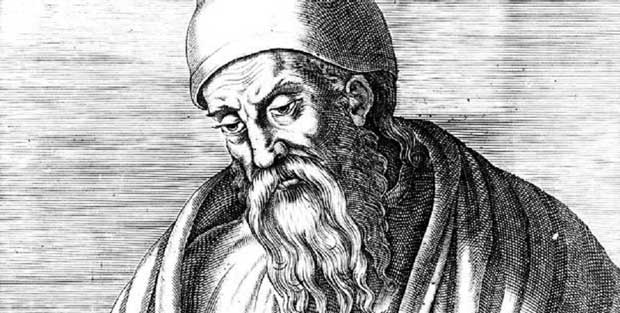
"Explore Euclid, the Father of Geometry, whose *Elements* revolutionized math. Discover his ancient proofs' impact on mo...
View Board
"Explore Jacques Hadamard's legacy: Prime Number Theorem proof, functional analysis, and impact on modern tech. Discover...
View Board
Explore the life and legacy of Jacques Hadamard, a pivotal mathematician of the 20th century whose innovations in number...
View Board
Discover the transformative journey of Sir Isaac Newton, the prodigious mind who redefined science with groundbreaking t...
View Board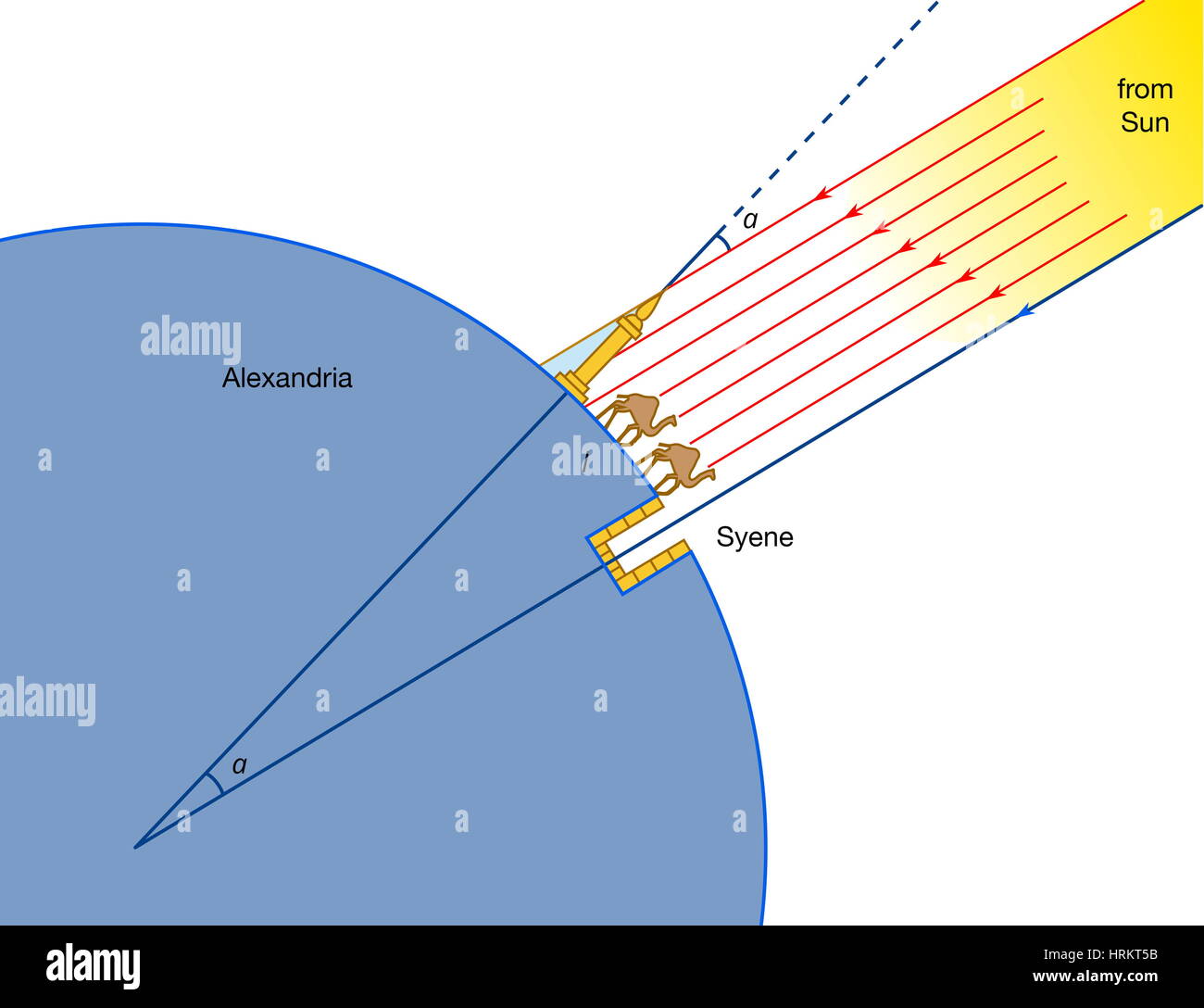
Eratosthenes: The Ptolemaic Genius of ancient Greece Eratosthenes of Cyrene (c. 276–194 BC) was not only a polymath and...
View Board
Explore Charles Hermite's key math contributions: proving e's transcendence, Hermite polynomials, and shaping quantum me...
View Board
**Meta Description:** Discover *Pythagoras*, the ancient Greek philosopher who shaped mathematics, philosophy, and sci...
View Board
Theodorus of Cyrene, the ancient Greek mathematician and Plato's teacher, revolutionized geometry with his work on irrat...
View Board
Discover the life and legacy of Gaston Julia, the brilliant mathematician who pioneered fractals and Julia sets, shaping...
View Board
Descubre el legado matemático de Émile Picard, visionario del siglo XIX. Explora sus teoremas, métodos y contribuciones ...
View Board
Descubre cómo Henri Lebesgue revolucionó el análisis matemático con su integral, superando límites clásicos y sentando b...
View Board
Explore the remarkable legacy of Henri Cartan, the pioneering mathematician whose groundbreaking contributions to algebr...
View Board
"Discover August Kekulé's benzene theory & his impact on organic chemistry. Explore his enduring legacy & revolutionary ...
View Board
"Explore Henri Poincaré's groundbreaking work in math, physics, and philosophy, shaping modern science through chaos the...
View Board
"Discover Pierre-Simon Laplace's legacy: the 'French Newton' who revolutionized math, astronomy & probability. Learn his...
View Board
**Meta Description:** Discover Carl Linnaeus, the "Father of Taxonomy," whose binomial nomenclature revolutionized bio...
View Board
Discover the power of mathematical symbols and the visionaries behind them. Explore history, innovation, and the future ...
View Board
**Meta Description:** Explore the life and legacy of Pierre-Simon Laplace, the visionary mathematician who shaped cele...
View Board
Mae Jemison: A Pioneering Astronaut and Champion of STEM Education The world was awe-struck when Mae Jemison became the...
View Board
Explore the life and legacy of Evangelista Torricelli, the 17th-century Italian physicist whose invention of the baromet...
View Board
Comments