
Explore Any Narratives
Discover and contribute to detailed historical accounts and cultural stories. Share your knowledge and engage with enthusiasts worldwide.
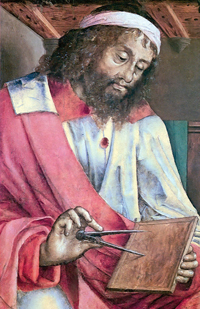
Euclid, often hailed as the Father of Geometry, was a Greek mathematician whose work laid the foundation for modern mathematics. Active around 300 BCE in Alexandria, Egypt, Euclid's most famous work, Elements, revolutionized the study of geometry, arithmetic, and number theory. His systematic approach, using axioms, postulates, and proofs, has influenced Western mathematics for over 2,000 years.
Little is known about Euclid's personal life, but historical records suggest he studied at Plato's Academy in Athens before moving to Alexandria. Under the patronage of Ptolemy I Soter, Euclid taught at the Library of Alexandria, where he established a school around 300 BCE. His dedication to teaching and research led to the creation of about a dozen works, though most have been lost to time.
Euclid was known for his pragmatic and disciplined approach to education. One famous anecdote recounts his response to King Ptolemy, who asked if there was a simpler way to learn geometry. Euclid replied,
"There is no royal road to geometry."This statement underscores his belief in the necessity of rigorous study and dedication to master mathematical concepts.
Elements is divided into 13 books, each addressing different aspects of mathematics. The first six books focus on plane geometry, while Books 7–10 delve into arithmetic and number theory. The remaining books explore advanced topics such as three-dimensional geometry and the properties of Platonic solids.
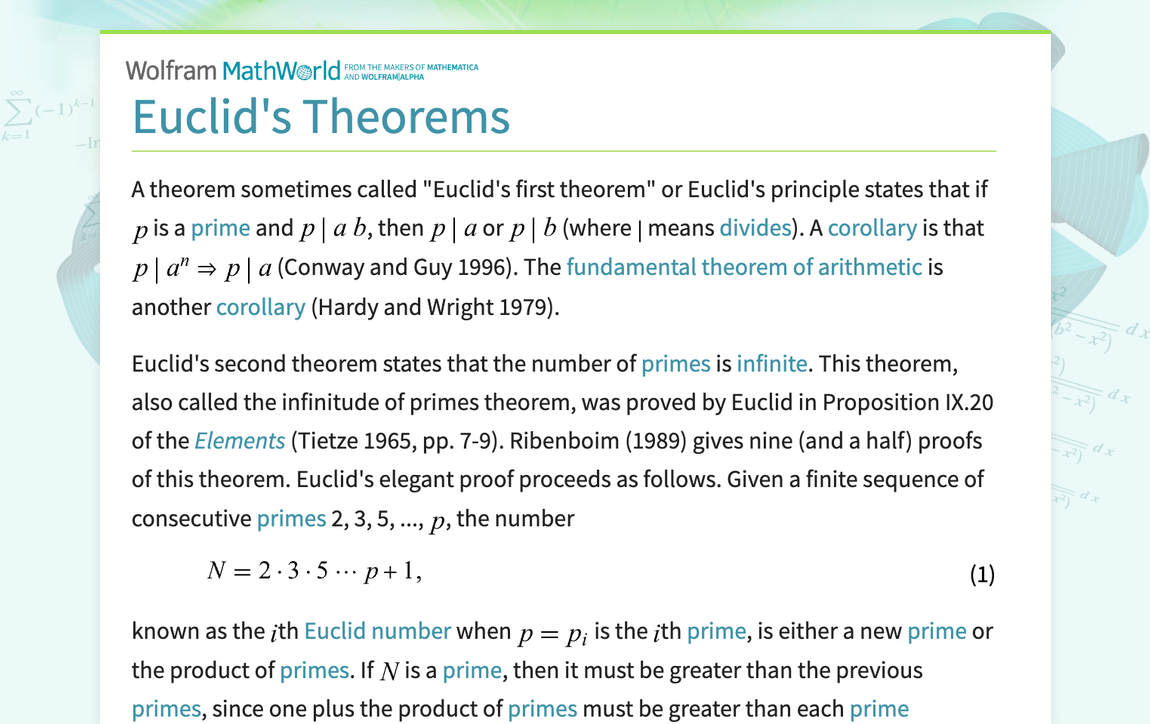
One of the most notable contributions in Elements is the proof of the infinitude of prime numbers. Euclid's methodical approach to proving geometric theorems set a precedent for future mathematicians. His work also includes a generalization of the Pythagorean theorem, further solidifying his legacy in the field of mathematics.
Euclid's axiomatic method has had a lasting impact on various fields, from algebra to computer science. His work standardized the use of logical proofs, which became a cornerstone of mathematical education. Even today, Euclidean geometry is taught in schools worldwide, highlighting its enduring relevance.
Beyond academia, Euclid's principles have influenced art, architecture, and technology. His teachings on Platonic solids have been visualized in animations and educational tools, making complex geometric concepts accessible to a broader audience. Additionally, his lost works, such as Fallacies, continue to spark interest among scholars studying logical reasoning.
In recent years, there has been a resurgence of interest in Euclid's methods, particularly in the fields of artificial intelligence and formal verification. A 2025 article reaffirmed Euclid's legacy, emphasizing the distinction between Euclidean geometry and non-Euclidean alternatives developed in the 19th century. Scholars continue to explore his teachings, highlighting their applicability in modern computational models.
Euclid's contributions to mathematics are unparalleled. His work has been translated into thousands of languages, ensuring its accessibility across cultures and generations. The 465 theorems and propositions in Elements remain a testament to his genius, inspiring mathematicians and educators alike to uphold the standards of rigorous proof and logical reasoning.
Euclid's approach to mathematics was revolutionary for its time. He introduced a deductive system where each theorem was derived from a set of axioms and postulates. This methodology not only structured geometric principles but also provided a framework for logical reasoning that extended beyond mathematics into philosophy and science.
The foundation of Euclid's Elements rests on five key postulates, the most famous being the Parallel Postulate. This postulate states that if a straight line intersects two other straight lines and the interior angles on the same side sum to less than 180 degrees, the two lines will eventually meet. This principle became a cornerstone of Euclidean geometry and was scrutinized for centuries, leading to the development of non-Euclidean geometries in the 19th century.
Euclid's emphasis on proof-based reasoning influenced prominent scientists like Isaac Newton, who modeled his Principia Mathematica after the structure of Elements. The systematic approach encouraged a culture of empirical validation, which became essential in the scientific revolution. Even today, Euclid's methods are echoed in computer algorithms and artificial intelligence, where logical deductions drive problem-solving processes.
While Elements remains Euclid's most celebrated work, he authored several other texts that have either been lost or survive only in fragments. These works cover a range of topics, from optics to astronomy, showcasing his versatility as a mathematician and thinker.
Several of Euclid's texts have been lost to history, but their titles and descriptions provide insight into his broad intellectual pursuits. Notable lost works include:
These lost works highlight Euclid's role in shaping not just geometry but also logic, astronomy, and optics.
Euclid's career flourished during the Hellenistic period, a time of immense intellectual growth in Alexandria. The city, under Ptolemy I Soter, became a hub for scholars, and the Library of Alexandria served as the epicenter of learning. Euclid's presence there solidified Alexandria's reputation as a center for mathematical and scientific advancement.
Euclid was part of a vibrant community of scholars who built upon each other's work. He drew inspiration from earlier mathematicians like Eudoxus and Theaetetus, refining their ideas into a cohesive system. His interactions with contemporaries, including Archimedes, further enriched his contributions, creating a legacy that transcended his lifetime.
The school Euclid established in Alexandria became a model for future academic institutions. It emphasized collaborative learning and rigorous debate, principles that are still valued in modern education. Students from across the Mediterranean flocked to Alexandria to study under Euclid, ensuring the dissemination of his ideas throughout the ancient world.
Euclid's influence extends far beyond ancient Greece. His teachings have been integrated into mathematics curricula worldwide, shaping how geometry is taught from primary schools to universities. The clarity and logical structure of Elements make it an enduring resource for educators and students alike.
Since its inception, Elements has been translated into numerous languages, ensuring its accessibility across cultures. Notable translations include:
In the digital era, Euclid's principles have found new life through interactive software and online courses. Platforms like Khan Academy and GeoGebra use Euclid's geometric proofs to teach students dynamically. These tools allow learners to visualize theorems and engage with mathematics in ways that were unimaginable in Euclid's time, yet they remain rooted in his foundational methods.
Despite its monumental influence, Euclid's work has not been without criticism. Scholars have debated the completeness and rigor of his axioms, particularly the Parallel Postulate, which led to the development of alternative geometric systems.
The Parallel Postulate was a subject of contention for centuries. Mathematicians attempted to prove it from the other postulates, but these efforts ultimately failed, leading to the discovery of non-Euclidean geometries by Carl Friedrich Gauss, János Bolyai, and Nikolai Lobachevsky in the 19th century. This development expanded the scope of geometry, showing that Euclid's system, while foundational, was not the only possible framework.
Contemporary mathematicians and historians continue to analyze Euclid's work, often highlighting its strengths and limitations. Some argue that Elements was more of a compilation of existing knowledge rather than a purely original work. However, Euclid's genius lay in his ability to synthesize and systematize these ideas into a coherent and teachable form, which remains his most significant contribution to mathematics.
While Euclid is primarily celebrated for his contributions to mathematics, his influence extends into philosophy, art, and architecture. His systematic approach to problem-solving and logical reasoning has inspired thinkers across disciplines, demonstrating the universal applicability of his methods.
Euclid's axiomatic method profoundly influenced Western philosophy, particularly in the development of deductive reasoning. Philosophers such as René Descartes and Baruch Spinoza adopted Euclid's structured approach in their works, using geometric principles as metaphors for logical argumentation. Descartes' Discourse on Method and Spinoza's Ethics both reflect the clarity and rigor of Euclid's Elements.
The principles of Euclidean geometry have been fundamental in art and architectural design for centuries. The use of symmetry, proportion, and geometric shapes in classical Greek and Roman architecture can be traced back to Euclid's teachings. During the Renaissance, artists like Leonardo da Vinci and architects such as Filippo Brunelleschi employed Euclidean principles to create works that emphasized harmony and balance.
Euclid's legacy has permeated popular culture, appearing in literature, film, and even modern digital media. His name and ideas are often referenced to symbolize intellectual rigor and logical thinking.
Euclid's influence can be seen in various literary works, where his name is synonymous with wisdom and precision. For example, in Edgar Allan Poe's The Purloined Letter, the detective C. Auguste Dupin uses a methodical approach reminiscent of Euclid's logical deductions. Similarly, Jorge Luis Borges references Euclid in his short stories, exploring themes of infinity and geometric perfection.
Euclid's concepts have also found their way into film and television, often used to convey complex ideas in an accessible manner. In the movie Good Will Hunting, the protagonist solves a challenging geometry problem inspired by Euclidean principles. Television shows like The Big Bang Theory frequently reference Euclid's theorems, highlighting their continued relevance in modern scientific discourse.
As technology advances, the applications of Euclidean geometry continue to expand. From computer graphics to space exploration, Euclid's principles remain foundational in various cutting-edge fields.
In the realm of computer graphics, Euclidean geometry is essential for rendering 3D models and virtual environments. Algorithms used in ray tracing and polygon modeling rely on Euclidean principles to create realistic images and animations. Virtual reality (VR) and augmented reality (AR) technologies also depend on geometric calculations to simulate immersive experiences, demonstrating Euclid's enduring impact on digital innovation.
Euclid's contributions to spherical geometry have been crucial in the field of astronomy. Modern space missions, such as those conducted by NASA and ESA, use Euclidean principles to calculate trajectories and map celestial bodies. The Euclid Space Telescope, launched by the European Space Agency, is named in his honor and aims to explore the dark universe, further cementing his legacy in scientific exploration.
Euclid's contributions to mathematics and beyond have left an indelible mark on human knowledge. His systematic approach to geometry, as outlined in Elements, has shaped education, science, and technology for over two millennia. From the classrooms of ancient Alexandria to the digital landscapes of the 21st century, Euclid's principles continue to inspire and guide intellectual pursuits.
As we look to the future, Euclid's legacy serves as a reminder of the power of logical reasoning and systematic inquiry. His work continues to be a beacon for scholars, educators, and innovators, proving that the principles of geometry are not just confined to the past but are vital tools for shaping the future. In the words of Carl Friedrich Gauss,
"Mathematics is the queen of the sciences, and number theory is the queen of mathematics."Euclid, as the architect of this queen's foundation, remains an eternal figure in the pantheon of human achievement.


Your personal space to curate, organize, and share knowledge with the world.
Discover and contribute to detailed historical accounts and cultural stories. Share your knowledge and engage with enthusiasts worldwide.
Connect with others who share your interests. Create and participate in themed boards about any topic you have in mind.
Contribute your knowledge and insights. Create engaging content and participate in meaningful discussions across multiple languages.
Already have an account? Sign in here

Discover Euclid, the Father of Geometry, and his timeless work *Elements*. Explore his life, groundbreaking theorems, an...
View Board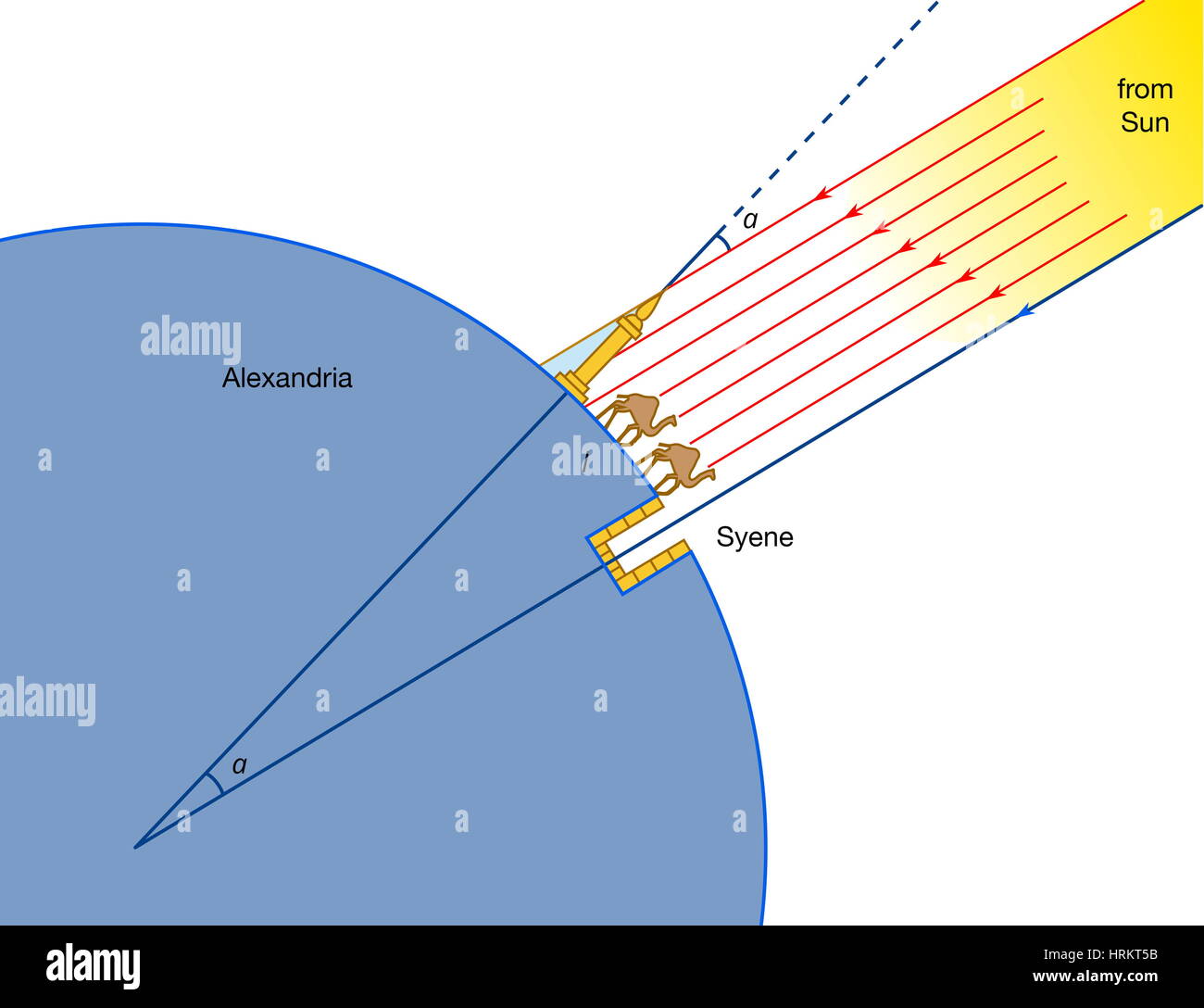
Eratosthenes: The Ptolemaic Genius of ancient Greece Eratosthenes of Cyrene (c. 276–194 BC) was not only a polymath and...
View Board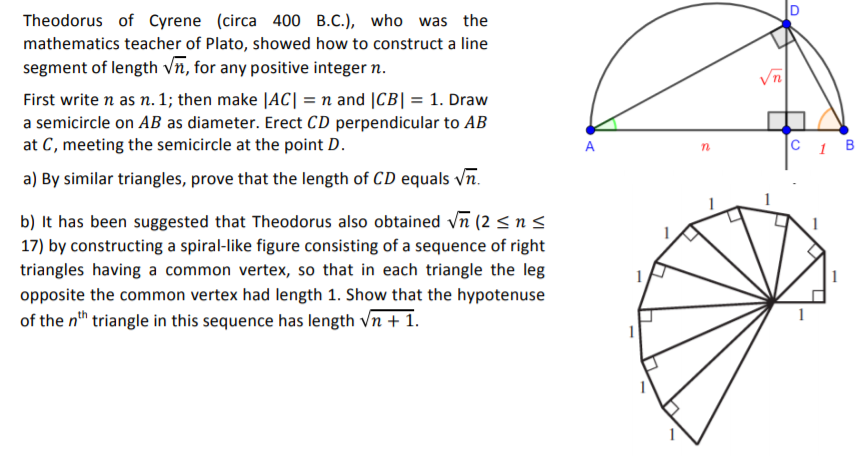
Theodorus of Cyrene, the ancient Greek mathematician and Plato's teacher, revolutionized geometry with his work on irrat...
View Board
Explore the inspirational journey of Émile Picard, a pioneering French mathematician whose groundbreaking work in comple...
View Board
Mae Jemison: A Pioneering Astronaut and Champion of STEM Education The world was awe-struck when Mae Jemison became the...
View Board
Katherine Johnson: Pioneering Mathematician and Trailblazer Introduction In the annals of American scientific history, ...
View Board
Henri Lebesgue: The Mathematician Who Revolutionized Integration Henri Lebesgue was a French mathematician whose ground...
View Board
John Napier, a Scottish mathematician, invented logarithms, revolutionizing calculations and paving the way for signific...
View Board
Michael Stevens, creator of Vsauce, revolutionized digital education with his unique blend of science, philosophy, and h...
View Board
Discover how Tom Scott makes learning fun with engaging STEM education YouTube videos. Explore his unique style, collabo...
View Board
768 **Meta Description:** Explore the life of Enrico Fermi, the architect of the nuclear age. From quantum theory to th...
View Board
Aristotle: The Father of Western Philosophy Aristotle, born in 384 BCE in the Macedonian city of Stagira, was a polymat...
View Board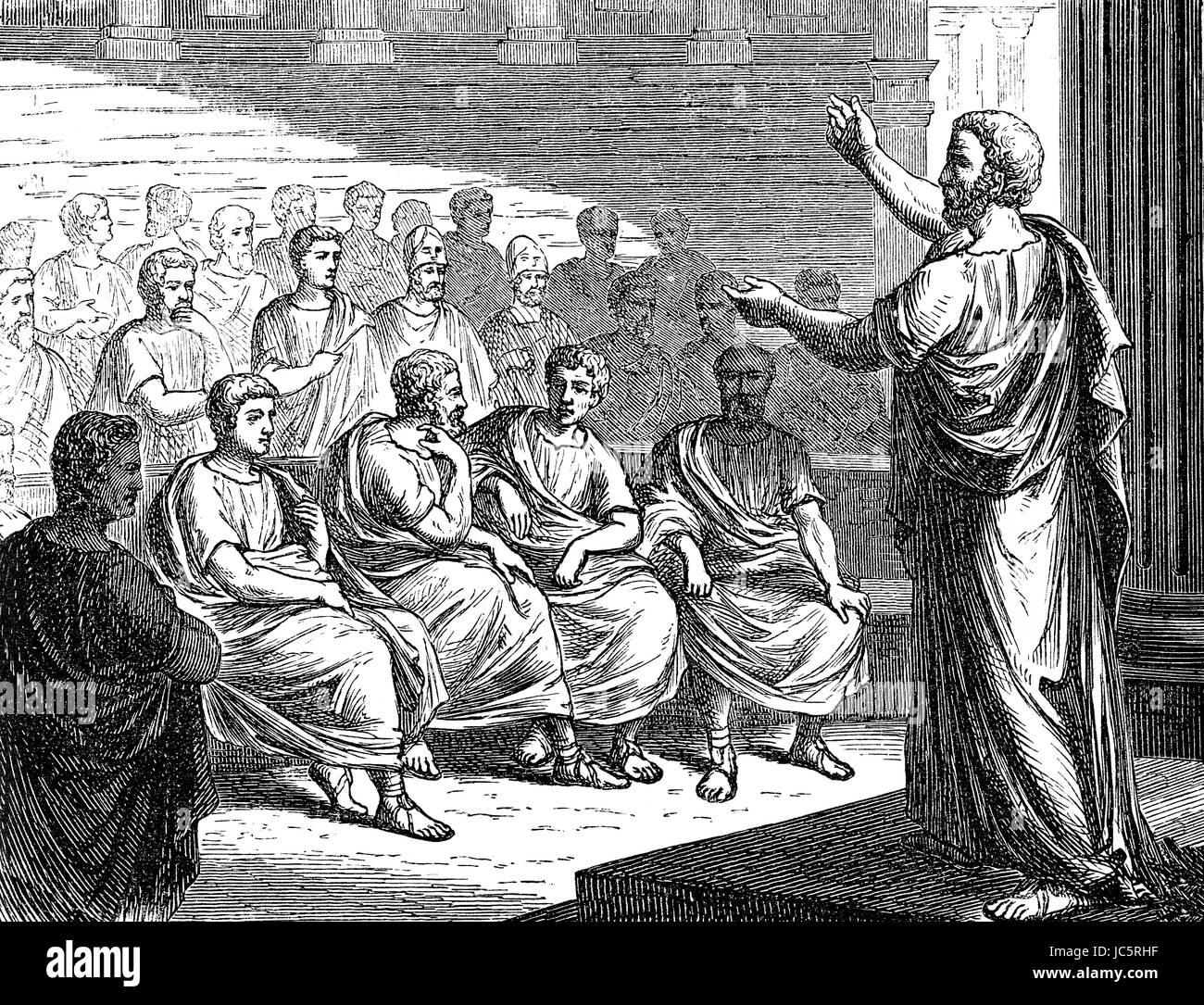
Demosthenes: The Greatest Ancient Greek Orator Introduction Demosthenes (Demóstenes, or Δημόστηνος) was a prominent At...
View Board
"Explore Henri Poincaré's groundbreaking work in math, physics, and philosophy, shaping modern science through chaos the...
View Board
Steve Mould is a renowned science educator and communicator known for innovative teaching methods and passion for making...
View Board
Discover Archimedes, ancient Greece's greatest scientist. Explore his life, groundbreaking work in math, physics, and en...
View Board
Émile Borel: A Pioneering Mathematician and Physicist The Early Life and Education of Émile Borel Émile Borel, born on...
View Board
**Meta Description:** Discover Carl Wieman’s groundbreaking journey from Nobel Prize-winning physicist to science educ...
View Board
Explore the remarkable legacy of Henri Cartan, the pioneering mathematician whose groundbreaking contributions to algebr...
View Board
Discover the legacy of Lycurgus, the eminent orator of Ancient Athens, whose eloquence and influential reforms shaped th...
View Board
Comments