Pierre-Simon Laplace: The Architect of Determinism
Introduction: The Polymath of the Enlightenment
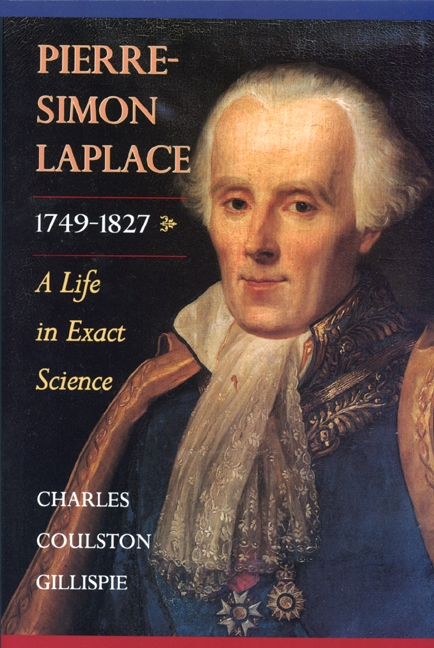
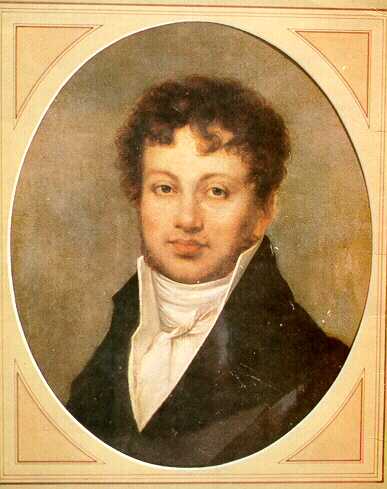
Pierre-Simon Laplace (1749–1827) was a French mathematician, astronomer, and physicist whose contributions laid the groundwork for modern celestial mechanics, probability theory, and mathematical physics. Often referred to as the "French Newton," Laplace's work bridged the gap between classical and modern science, influencing generations of thinkers in fields ranging from astronomy to statistics. His deterministic view of the universe—famously encapsulated in the idea of a cosmic calculator who could predict the future with perfect accuracy—remains one of the most provocative concepts in the history of science.
Early Life and Education
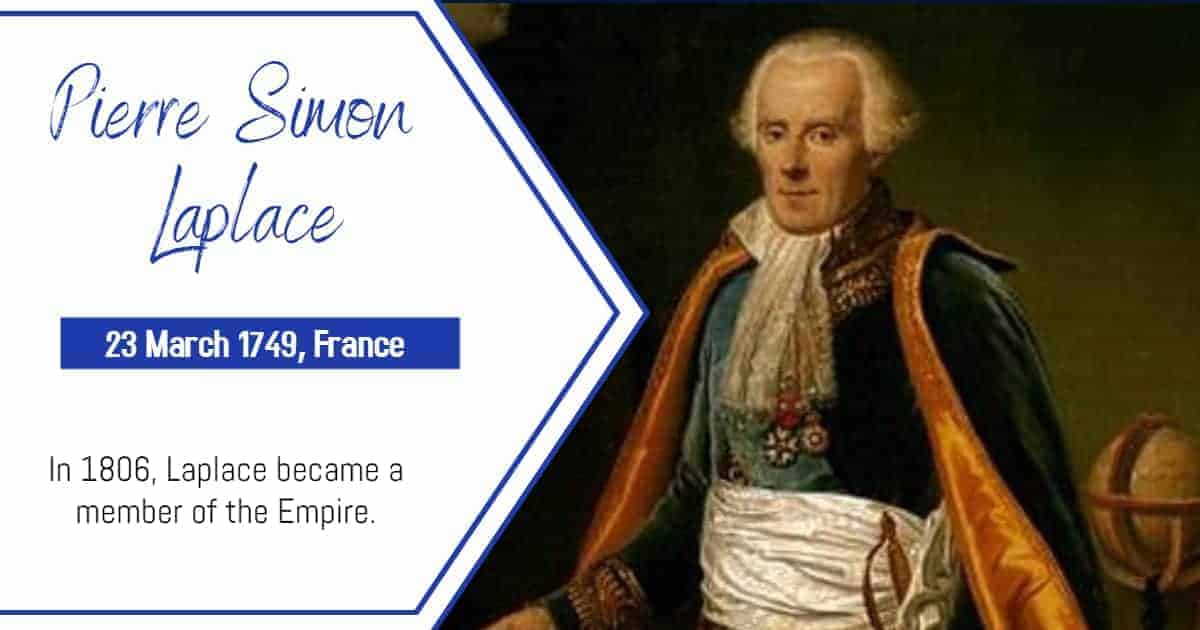
Born on March 23, 1749, in Beaumont-en-Auge, Normandy, Laplace came from humble beginnings. His father was a farmer and cider merchant, but Laplace's intellectual talents were evident from an early age. Thanks to the support of wealthy neighbors who recognized his potential, he was able to attend the Benedictine College in Caen, where he initially studied theology. However, his fascination with mathematics soon took precedence.
By the time he left for Paris in 1768, Laplace had already begun developing his mathematical prowess. He sought out Jean le Rond d'Alembert, a leading figure of the French Enlightenment, who was initially unimpressed with the young man. Undeterred, Laplace penned a memorandum on the principles of mechanics, which finally convinced d'Alembert to take him under his wing. This mentorship proved pivotal, opening doors to academic and scientific circles.
Contributions to Celestial Mechanics
Laplace's most enduring legacy lies in his work on celestial mechanics—the application of Newtonian physics to the motions of celestial bodies. His magnum opus, *Traité de Mécanique Céleste* (1799–1825), a five-volume work, synthesized and expanded upon the gravitational theories of Isaac Newton and the mathematical advances of Leonhard Euler and Joseph-Louis Lagrange.
One of his key achievements was his resolution of the long-standing problem of planetary perturbations. Newton had posited that the gravitational interactions between planets would eventually destabilize the solar system, possibly leading to its collapse. Laplace, however, demonstrated that these perturbations were in fact periodic and self-correcting, ensuring the system’s long-term stability. This conclusion reassured scientists and philosophers that the cosmos was not governed by chaos but by predictable, deterministic laws.
The Nebular Hypothesis
In addition to his mathematical work, Laplace proposed the *nebular hypothesis*, a theory explaining the formation of the solar system. He suggested that the Sun and planets originated from a rotating nebula (a cloud of gas and dust) that gradually cooled and condensed under gravity. Although later modified, this hypothesis laid the foundation for modern theories of planetary formation and remains a cornerstone of astrophysics.
Probability Theory and the Birth of Statistics
While Laplace is best known for his work in astronomy, his contributions to probability theory were equally groundbreaking. His *Théorie Analytique des Probabilités* (1812) formalized the mathematical framework of probability, introducing concepts such as generating functions, Bayesian inference, and the Central Limit Theorem.
Laplace approached probability from a philosophical standpoint, seeing it as a tool for managing uncertainty in both science and everyday decision-making. His work had profound implications for fields as diverse as actuarial science, error analysis in astronomy, and even social statistics.
The Laplace Transform
Among his mathematical innovations, the *Laplace transform* stands out as a critical tool in engineering and physics. This integral transform simplifies the analysis of linear differential equations, making it indispensable in control theory, signal processing, and quantum mechanics. Its applications extend from electrical circuits to fluid dynamics, demonstrating Laplace’s far-reaching impact.
Laplace’s Demon and Determinism
Perhaps Laplace’s most famous intellectual contribution was his articulation of *scientific determinism*. In *A Philosophical Essay on Probabilities* (1814), he imagined an all-knowing intellect—later dubbed "Laplace’s Demon"—that, if given the precise location and momentum of every particle in the universe, could calculate the entire past and future with absolute certainty.
This idea both fascinated and unsettled contemporaries. While it underscored the power of Newtonian mechanics, it also raised existential questions about free will and the limits of human knowledge. Modern chaos theory and quantum mechanics have since challenged Laplace’s rigid determinism, but his vision remains a cornerstone in debates about causality and predictability.
Political Survival and Later Years
Laplace’s career unfolded against the tumultuous backdrop of the French Revolution, the rise of Napoleon, and the Bourbon Restoration. Remarkably, he navigated these political upheavals with shrewd adaptability. He served briefly as Napoleon’s Minister of the Interior (though he was quickly replaced for being too theoretical) and was later ennobled as the Marquis de Laplace under Louis XVIII.
Despite these political engagements, Laplace remained deeply committed to science, mentoring future luminaries like Siméon Denis Poisson. He died in Paris on March 5, 1827, leaving behind a legacy that shaped the trajectory of modern science.
Conclusion (Part 1)
The first part of this exploration into Pierre-Simon Laplace’s life and work has highlighted his foundational contributions to celestial mechanics, probability theory, and mathematical physics. From his humble origins to his rise as a scientific titan of the Enlightenment, Laplace’s insights reshaped humanity’s understanding of the cosmos and the mathematical tools we use to describe it.
In the next section, we will delve deeper into Laplace’s influence on modern science, his philosophical impact, and the controversies surrounding his deterministic worldview.
Laplace’s Influence on Modern Science
Pierre-Simon Laplace’s work transcended his lifetime, permeating multiple branches of science and mathematics. His theories on celestial mechanics became the bedrock for later astronomers like Urbain Le Verrier, who used Laplace’s equations to predict the existence of Neptune. Meanwhile, his probabilistic methods laid the groundwork for statistical mechanics, a field later developed by luminaries such as Ludwig Boltzmann and Josiah Willard Gibbs.
One of the most striking examples of Laplace’s enduring influence is in astrophysics, where his nebular hypothesis evolved into modern accretion disk models, explaining not just the formation of the solar system but also the birth of galaxies. His mathematical rigor inspired physicists like James Clerk Maxwell, who applied similar analytical methods to electromagnetism, culminating in Maxwell’s equations—the foundation of classical electrodynamics.
The Laplace Operator in Physics
Laplace’s name is immortalized in the *Laplace operator* (or Laplacian), symbolized as ∇². This differential operator, central to fields like electromagnetism, fluid dynamics, and quantum mechanics, measures the divergence of a gradient in a scalar field. For example, in Schrödinger’s equation—the cornerstone of quantum mechanics—the Laplacian helps encode the wave function’s spatial curvature. Without this tool, much of modern theoretical physics would lack its mathematical precision.
The Philosophical Legacy of Determinism
Laplace’s deterministic worldview sparked debates that endure to this day. His vision of a clockwork universe, governed by exact laws without randomness, resonated with Enlightenment ideals of rationality and order. Yet, it also clashed with emerging ideas about human agency. Philosophers like Immanuel Kant and later existentialists wrestled with the tension between Laplace’s mechanical universe and the subjective experience of free will.
In the 20th century, quantum mechanics delivered a seismic blow to Laplacean determinism. Werner Heisenberg’s uncertainty principle demonstrated that at subatomic scales, precise measurement of complementary variables (like position and momentum) is fundamentally impossible—directly contradicting Laplace’s all-knowing "demon." Nevertheless, Laplace’s framework remains vital in classical physics, where deterministic models still dominate systems from planetary orbits to climate science.
Criticism and Reinterpretations
Laplace’s determinism faced criticism even among his contemporaries. Philosopher Henri Bergson argued that time’s irreducible flow defied mechanistic reduction, while mathematicians like Henri Poincaré later showed that deterministic systems (like the three-body problem in gravity) could exhibit chaotic, unpredictable behavior—a precursor to chaos theory. Today, scientists acknowledge that while Laplace’s deterministic ideal applies to many macroscopic systems, complexity and quantum randomness introduce limits to predictability.
Laplace and the Birth of Thermodynamics
Though less celebrated, Laplace’s contributions to thermodynamics were pivotal. Collaborating with chemist Antoine Lavoisier, he designed an ice calorimeter to measure heat exchange in chemical reactions. Their experiments supported the theory that heat was a form of energy—not a fluid-like "caloric," as once believed—paving the way for the first law of thermodynamics.
Simultaneously, Laplace’s probabilistic thinking foreshadowed the second law of thermodynamics. Ludwig Boltzmann’s statistical interpretation of entropy—the idea that disorder tends to increase—echoed Laplace’s earlier insights about the role of probability in physical laws. Thus, though Laplace never formulated thermodynamics himself, his methods influenced its mathematical underpinnings.
The Laplace-Adjusted Probability
Named in his honor, *Laplace’s rule of succession* is a Bayesian method for estimating probabilities from limited data. For example, if a coin lands heads-up three times in three flips, a naive estimate might assign a 100% probability to heads. Laplace’s rule, however, tempers extreme conclusions by adding pseudo-observations, yielding a more cautious estimate. This principle remains foundational in machine learning, where algorithms handle sparse data using Bayesian priors—a direct descendant of Laplace’s formalism.
Political and Social Engagement
Beyond science, Laplace played a surprising role in France’s educational and political reforms. As a member of the Bureau des Longitudes, he standardized the metric system during the Revolution, advocating for decimal-based units that simplified scientific communication. Later, under Napoleon, he helped reorganize the École Polytechnique, ensuring advanced mathematical training for engineers and military officers—many of whom applied Laplace’s theories in ballistics and navigation.
His political flexibility, however, invited criticism. Laplace’s willingness to serve successive regimes—revolutionary, imperial, and monarchist—led some to accuse him of opportunism. Yet others argued that his pragmatism safeguarded French science during turbulent times, preserving institutions until stability returned.
The Laplace-Bayes Connection
Though Thomas Bayes’ theorem predated Laplace, it was Laplace who recognized its generality and power. His refinement of Bayesian inference—treating probabilities as degrees of rationality rather than frequencies—revolutionized fields from medicine (diagnostic testing) to cryptography. Today, Bayesian networks underpin algorithms in spam filters, genomic sequencing, and even artificial intelligence.
Legacy in Mathematics
Laplace’s mathematical innovations extended beyond transforms and operators. His work on special functions, like Legendre polynomials and Bessel functions, became essential tools in solving differential equations. He also advanced techniques for approximating integrals, later refined into what we now call *asymptotic analysis*.
Perhaps most influential was his approach to perturbation theory, which allowed scientists to approximate solutions for nearly unsolvable problems—such as the Moon’s irregular orbit. This method remains indispensable in fields ranging from quantum field theory to aerospace engineering.
Conclusion (Part 2)
This second installment has explored Laplace’s far-reaching impact, from the Laplacian’s role in physics to his philosophical clashes with indeterminism. His fingerprints linger in thermodynamics, machine learning, and even the metric system—proof that his genius bridged theory and practicality.
In the final section, we’ll examine Laplace’s lesser-known works, his influence on 19th-century thought, and how modern science reconciles—or rejects—his deterministic vision. From statistical mechanics to AI, the legacy of Laplace’s "demon" continues to provoke and inspire.
Laplace’s Lesser-Known Works and Final Years
While Pierre-Simon Laplace is celebrated for his monumental theories on celestial mechanics and probability, several of his lesser-known contributions reveal the astonishing breadth of his intellect. Among these was his work on capillary action, where he derived the laws governing the rise and fall of liquids in narrow tubes—a phenomenon crucial to understanding plant physiology and modern microfluidics. He also developed theories on the speed of sound, correcting Newton’s earlier underestimation by accounting for adiabatic processes in air, laying groundwork later expanded by Laplace’s contemporary, Siméon Denis Poisson.
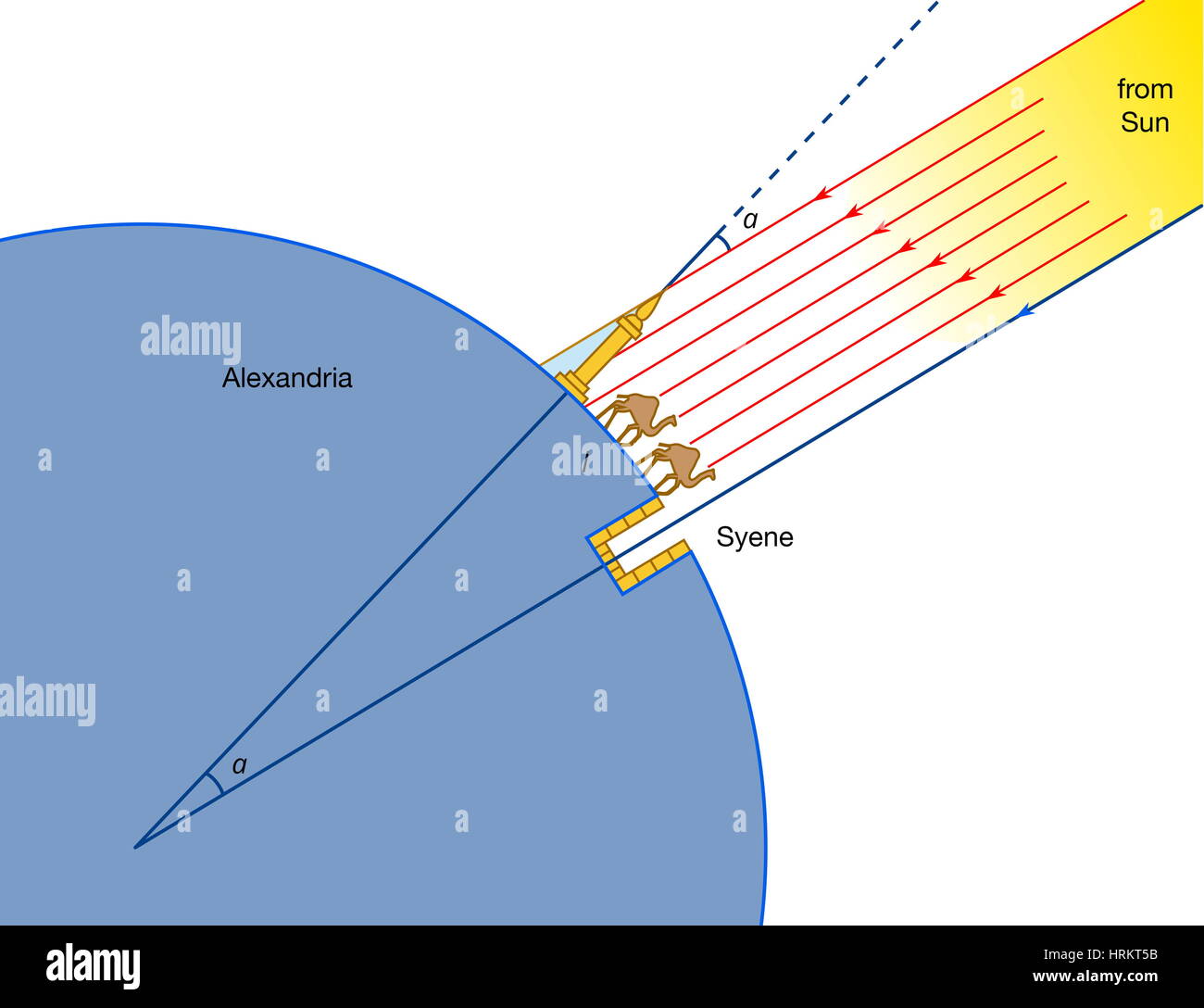
In his later years, Laplace turned his attention to the nascent field of geodesy, refining methods for measuring Earth’s shape. His corrections to the length of the meridian arc—used in defining the meter—demonstrated his commitment to precision in both science and practical measurements. These efforts cemented his reputation not just as a theorist, but as a scholar deeply engaged in the empirical refinement of natural knowledge.
The Final Synthesis: Exposition du Système du Monde
Published in 1796, Exposition du Système du Monde was Laplace’s masterful attempt to explain complex astronomical concepts to a broader audience. Unlike his mathematically dense Mécanique Céleste, this work was written in clear prose, illustrating everything from planetary motion to tides without equations. Here, Laplace famously presented his nebular hypothesis not as dogma, but as a "probable scenario," showcasing his nuanced understanding of scientific epistemology. The book’s success—running through multiple editions—revealed his skill as both a scientist and communicator, influencing educators and popularizers of science for generations.
Laplace and the 19th-Century Scientific Landscape
Laplace’s death in 1827 did not mark the end of his influence. On the contrary, his deterministic framework became a battleground for 19th-century thinkers grappling with the limits of science. The French positivist Auguste Comte, for instance, embraced Laplace’s emphasis on empirical laws but rejected the “demon” as metaphysical speculation. Meanwhile, thermodynamicists like Sadi Carnot relied implicitly on Laplace’s insights about energy even as they moved decisively beyond a strictly Newtonian worldview.
In mathematics, Laplace’s methods were refined by the likes of Carl Friedrich Gauss and Bernhard Riemann, whose differential geometry extended Laplacian analysis to curved spaces—later proving essential for Einstein’s general relativity. Even as new paradigms emerged, Laplace’s conservative insistence on mathematical rigor became a gold standard, preventing premature speculation in fields like electromagnetism and kinetic theory.
A Controversial Legacy: The Laplace Priority Disputes
Historical scholarship has since revealed that Laplace was not always generous in crediting predecessors. His belated acknowledgment of Lagrange’s contributions to potential theory, or his muted recognition of Bayes’ earlier probabilistic work, sparked debates about intellectual honesty. Yet contemporaries like Poisson noted that Laplace’s syntheses often transcended incremental advances, transforming raw mathematical tools into universal principles—a distinction that may excuse some of his territorial tendencies.
Modern Reassessments of Laplacean Determinism
The 20th century’s dual revolution—quantum uncertainty and chaos theory—seemed to bury Laplace’s clockwork universe. However, modern science offers a more nuanced verdict. While quantum mechanics introduced fundamental randomness, phenomena such as superconductivity and Bose-Einstein condensates exhibit near-perfect determinism at macroscopic scales. Similarly, chaos theory, which shows how small perturbations can unpredictably amplify, operates within deterministic equations—echoing Laplace’s view that complexity, not divine intervention, explained apparent irregularities in nature.
In computer science, Laplace’s vision finds unexpected resonance. Machine learning algorithms, particularly neural networks, operate as “black-box” predictors—approximating Laplace’s demon by forecasting outcomes from vast datasets without explicit mechanistic understanding. Meanwhile, climate models rely on probabilistic Laplacian approaches to weigh uncertainties in long-term projections.
The Laplace Renaissance in Complex Systems
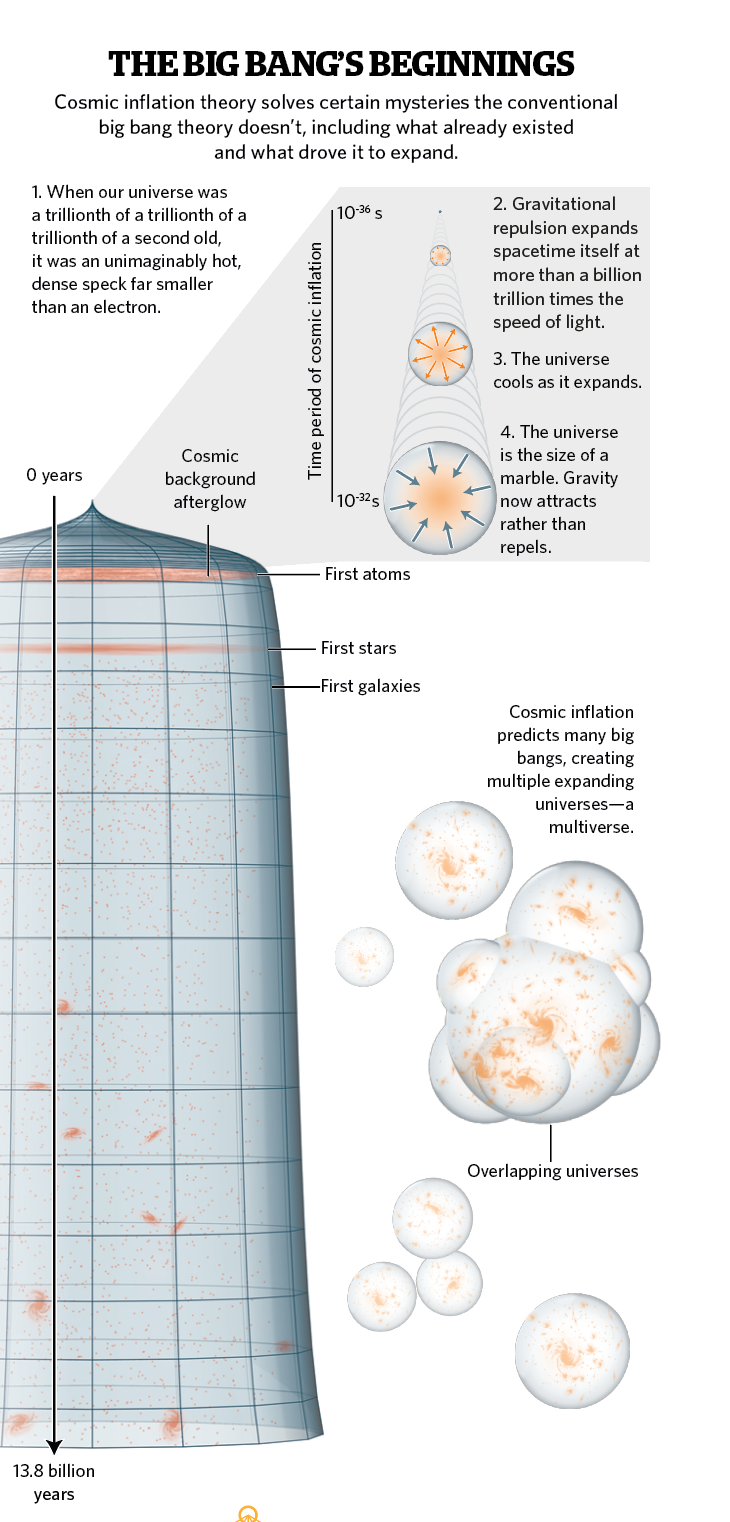
Recent interdisciplinary sciences—network theory, systems biology, and econophysics—have rehabilitated aspects of Laplace’s thinking. For example, protein-folding simulations use deterministic molecular dynamics (a Laplacian technique) despite quantum-scale randomness, because statistical averaging restores predictability. Likewise, precision cosmology’s ability to retroactively model the Big Bang with stunning accuracy would have delighted Laplace, proving his dictum that enough data can render even cosmic history computationally tractable.
Education and Mentorship: Laplace’s Human Legacy
Beyond equations, Laplace shaped science through his students. His mentorship of Poisson—whose distribution laws are foundational in statistics—helped consolidate probability as a rigorous discipline. Other protégés, like Jean-Baptiste Biot, advanced optics and polarimetry, while Dominique François Arago became a pivotal figure in both physics and liberal politics.
Laplace’s pedagogical ethos emphasized clarity over ornamentation. His insistence that “probability is common sense reduced to calculation” underscored his belief that profound truths required lucid exposition—a principle now enshrined in scientific writing standards. Ironically, his own Mécanique Céleste was notorious for omitting detailed proofs (leading to the quip that it “offered hints to the student and apologies to the philosophers”), but this very terseness challenged successors to fill gaps rigorously.
Civic Science and the Laplace Model
Laplace’s career also offers lessons in the civic role of scientists. His navigation of revolutionary politics—trimming sails without abandoning core principles—prefigured the delicate balance modern researchers strike between funding imperatives and intellectual independence. His advocacy for state-supported scientific institutions, like the Paris Observatory, demonstrated early recognition that “big science” required sustained investment—a model now universal from CERN to NASA.
Conclusion: The Enduring Colossus
From nebular hypotheses to neural networks, Pierre-Simon Laplace’s legacy is a tapestry of audacious theorizing and meticulous calculation. His deterministic universe may have fractured under modernity’s microscope, but his mathematical tools and philosophical frameworks remain startlingly relevant. In an age drowning in data yet starved for predictive coherence, Laplace’s union of probability and determinism offers a compass—not as dogma, but as heuristic inspiration.
The tale of Laplace’s demon, then, is not one of obsolescence, but of metamorphosis. Where Laplace envisaged a single intellect calculating all, we now deploy distributed supercomputers and probabilistic algorithms to approximate that vision within human limits. This humbling pivot—from certainty to calibrated confidence—may be his truest gift to posterity: not omniscience, but the methodology to navigate an uncertain cosmos with rigor and imagination.
As we refine exoplanet discoveries using his perturbation methods or optimize AI with Bayesian-Laplacian hybrids, we do more than honor history—we reaffirm that the finest science, like Laplace’s, dares to yoke the calculable to the ineffable, ever probing the boundary between the inevitable and the unknown.
Haporium is a revolutionary platform that lets you organize your web browsing experience with customizable dashboards and boards. Create, manage, and share your favorite content collections.













Comments