The Film Production Process: From Concept to Screen
Introduction
The film production process is a complex, multi-stage journey that transforms a simple idea into a cinematic experience. It involves creativity, technical expertise, and meticulous planning to ensure the final product resonates with audiences. Whether it's a blockbuster or an independent film, the production follows a structured path that can be broken down into distinct phases. In this first part of our in-depth exploration, we will cover the initial stages of film production, from development to pre-production.
1. Development: Bringing the Idea to Life
The film production process begins with **development**, where the seed of an idea is nurtured into a viable script. This stage involves several key steps:
Concept and Story Creation
Every film starts with a concept—a unique premise, an adaptation of existing material (such as a book or true story), or even an original screenplay. Writers, directors, and producers collaborate to shape the story, ensuring it has strong characters, compelling conflicts, and a clear narrative arc.
Writing the Script
Once the concept is solidified, the next step is writing the screenplay. Screenplays go through multiple drafts, incorporating feedback from producers, script consultants, and sometimes test readers. A well-structured script includes:
- **Dialogue** – Natural and character-driven. - **Scene descriptions** – Detailed enough to visualize but flexible for creative interpretation. - **Pacing and structure** – Ensures the story flows cohesively.
Some films also use treatments—a summarized version of the script—to pitch the idea to studios or investors before full development.
Securing Rights and Financing
If the film is based on existing intellectual property (e.g., a novel, comic book, or real-life event), securing the rights is crucial. Producers negotiate with authors, estates, or publishers to obtain legal permission.
Simultaneously, **financing** must be secured. This can come from:
- **Studio funding** – Major studios finance their own productions. - **Independent investors** – Private financiers or production companies. - **Crowdfunding** – Platforms like Kickstarter for smaller projects. - **Government grants** – Available in some countries to support local filmmakers.
Once funding is confirmed, the project moves into **pre-production**.
2. Pre-Production: Planning Every Detail
Pre-production is where the film truly begins to take shape. Every logistical and creative decision is made in this phase to ensure a smooth shooting process.
Assembling the Crew
A film’s success depends on its crew. Key roles include:
- **Director** – Oversees creative vision and execution. - **Producer** – Manages budgeting, scheduling, and logistics. - **Cinematographer (DP)** – Designs the visual look of the film. - **Production Designer** – Creates sets and overall aesthetic. - **Casting Director** – Finds and hires actors.
Casting the Actors
Casting is a meticulous process. Auditions, callbacks, and chemistry reads help determine the perfect actors for each role. Established stars may be approached directly, while newcomers might go through extensive tryouts.
Scouting Locations
Whether filming on-location or in a studio, every setting must be chosen to match the story’s needs. Location scouts assess factors like:
- Permits and regulations. - Lighting and sound conditions. - Logistics (transportation, accommodations, etc.).
Some films use **soundstages** and **green screens** for controlled environments, while others rely entirely on real-world locations.
Designing Sets and Costumes
The **production designer** and their team create the film’s visual world by:
- Sketching and constructing sets. - Choosing props and decorations. - Collaborating with the **costume designer** to define each character’s look.
Historical films require extensive research to ensure authenticity, while fantasy and sci-fi films demand imaginative, original designs.
Storyboarding and Shot Lists
To visualize scenes before shooting, directors and cinematographers use **storyboards**—illustrated panels depicting key moments. A **shot list** is then created, detailing camera angles, movements, and lighting for each scene. This ensures efficiency on set.
Scheduling and Budgeting
A detailed **shooting schedule** breaks down each day’s scenes, optimizing time and resources. The budget accounts for:
Efficient scheduling prevents delays and budget overruns.
Conclusion of Part One
The film production process requires meticulous planning from the very beginning. The **development** stage transforms an idea into a script, while **pre-production** prepares every element for filming. In the next part, we will dive into the **production phase**, where cameras roll and the director brings the vision to life on set.
(To be continued...)
3. Production: Lights, Camera, Action!
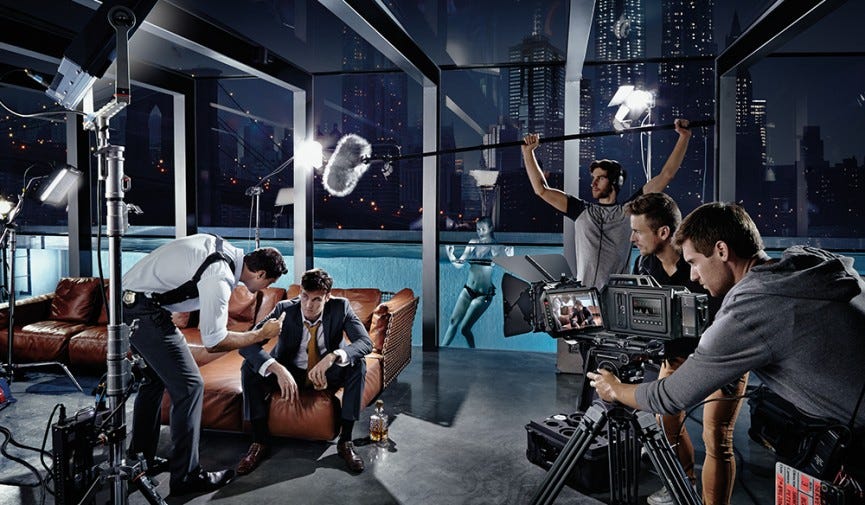
The **production phase** is the most visible and dynamic part of making a film—this is when the script comes to life through principal photography. The director, actors, and crew work tirelessly to capture every scene while managing logistics, technical challenges, and creative adjustments.
The Shooting Process
Filming a movie is rarely done in chronological order. Instead, scenes are shot based on location availability, actor schedules, and cost efficiency. A typical day on set includes:
- **Call Time:** The cast and crew arrive, often before sunrise. - **Blocking:** The director and actors rehearse movements and positioning. - **Lighting Setup:** The cinematographer and gaffers adjust lighting for each shot. - **Rehearsal:** A final run-through before filming begins. - **Takes:** Multiple versions of a scene are shot until the director is satisfied.
The Role of the Director
The **director** must balance artistic vision with practicality, ensuring:
- **Performance quality:** Guiding actors to deliver compelling performances. - **Visual consistency:** Maintaining the film’s look across different shooting days. - **Problem-solving:** Adapting to weather delays, technical mishaps, or scheduling conflicts.
Large productions may use **second units** to film action sequences, establishing shots, or less dialogue-heavy scenes separately to save time.
Working with the Cast
Actors must remain in character despite long hours, repetitive takes, and sometimes extreme conditions. Key considerations include:
- **Continuity:** Ensuring hairstyles, costumes, and props match in every shot. - **Emotional consistency:** Maintaining performance intensity across takes. - **Health and safety:** Stunt coordination and on-set medics handle physical risks.
Method actors may stay in character throughout filming, while others switch modes between takes.
Technical Execution: Camera, Sound, and Effects
The **cinematographer (director of photography, DP)** is responsible for:
- **Camera movement:** Using dollies, steady cams, or drones for dynamic shots. - **Lighting techniques:** High-key, low-key, or naturalistic lighting sets the film’s tone. - **Lens choices:** Wide-angle for landscapes, tight shots for intimacy.
The **sound team** captures clean dialogue and ambient noise, minimizing interference (e.g., wind, traffic). Some films use **practical effects**—real explosions, makeup, or puppetry—while others rely on **CGI**, which is added in post-production.
Challenges During Production
Despite thorough planning, issues often arise:
- **Weather disruptions:** Rain, wind, or extreme heat can halt outdoor shoots. - **Equipment failures:** Cameras, lights, or sound recorders may malfunction. - **Creative differences:** Directors and producers might clash over scenes. - **Budget constraints:** Unexpected costs (e.g., additional shooting days) can strain finances.
A skilled production team anticipates problems and adapts quickly.
4. Post-Production: Crafting the Final Product
Once filming wraps, the project enters **post-production**, where raw footage is transformed into a polished film. This phase includes editing, visual effects, sound design, and more.
Editing the Film
The **editor** assembles scenes in a coherent sequence, working closely with the director. Key tasks include:
- **Selecting the best takes** for performance and technical quality. - **Pacing adjustments:** Tightening slow scenes or expanding emotional moments. - **Temporal structure:** Non-linear narratives (e.g., flashbacks) are finalized here.
Modern editing uses digital tools like **Avid Media Composer** or **Adobe Premiere Pro**, allowing frame-by-frame precision.
Visual Effects (VFX) and CGI
VFX artists enhance or create elements that couldn’t be filmed practically:
- **Digital environments:** Cities, space, or fantasy worlds. - **Character animation:** Fully CGI creatures or de-aging actors. - **Enhancements:** Removing wires, adding blood, or altering backgrounds.
Films like *Avatar* or *The Lord of the Rings* rely heavily on VFX, while others use subtle touches to heighten realism.
Sound Design and Mixing
Sound is 50% of the cinematic experience. The **sound team** handles:
- **ADR (Automated Dialogue Replacement):** Re-recording lines in a studio for clarity. - **Foley art:** Creating custom sound effects (footsteps, rustling clothes). - **Score and soundtrack:** Composers and music supervisors integrate original music or licensed tracks.
In the final **mix**, dialogue, music, and effects are balanced to optimize emotional impact.
Color Grading
Colorists adjust hues, contrast, and saturation to:
- Establish mood (e.g., cold blues for thrillers, warm tones for romances). - Ensure visual consistency across different shooting conditions. - Create stylistic looks (e.g., the teal-and-orange palette in action films).
Test Screenings and Reshoots
Before finalizing the film, test audiences provide feedback on:
- Pacing and clarity. - Emotional engagement. - Unintended confusion or plot holes.
If necessary, **reshoots** address major issues, though they can be costly.
Conclusion of Part Two
Production and post-production are where a film’s vision becomes tangible. The **shooting phase** demands precision and adaptability, while **post-production** refines every detail into a cohesive story. In the final section, we’ll explore distribution, marketing, and the film’s journey to audiences worldwide.
(To be continued...)
5. Distribution and Marketing: Bringing the Film to Audiences
After months (or sometimes years) of hard work, the completed film enters the crucial phase of reaching its audience. Distribution and marketing strategies can make or break a film's success, no matter its quality. This stage involves intricate planning, negotiations, and creative promotional tactics.
Choosing the Distribution Strategy
Filmmakers must decide how their movie will reach viewers, with options including:
Theatrical Release - Traditional cinema distribution remains the most prestigious path - Requires securing deals with theater chains - Blockbusters often get wide releases (2,000+ screens) - Independent films may start with limited releases (art house theaters)
Streaming Platforms - Netflix, Amazon Prime, Disney+, and others have become major players - Includes original productions and acquired films - Some films get hybrid releases (theater + streaming simultaneously)
Video on Demand (VOD) - Allows viewers to rent or purchase digitally - Includes platforms like iTunes, Google Play, Vudu - Ideal for mid-budget films without massive marketing budgets
Television and Cable - Premium channels (HBO, Showtime) still acquire film rights - Basic cable and syndication provide secondary revenue streams
Film Festivals: The Launching Pad
Festivals serve multiple important functions:
- Premieres: Sundance, Cannes, Toronto, and Venice can generate buzz - Awards consideration: Critical acclaim helps with Oscar campaigns - Distribution deals: Many films find buyers at festivals - Audience testing: Live reactions help refine marketing approaches
Trailers and Teasers - Carefully edited to generate excitement without spoilers - First trailer often releases 6-12 months before premiere - Television spots ramp up closer to release date
Press Junkets and Interviews - Cast and crew participate in media tours - Includes talk shows, magazine features, podcast appearances - Helps build personal connections with potential viewers
Social Media Campaigns - Official accounts on Twitter, Instagram, TikTok - Behind-the-scenes content and interactive posts - Influencer partnerships to reach niche audiences
Merchandising - For blockbusters: toys, clothing, video games - Novelty items can increase brand recognition - Collectibles build long-term fan engagement
The Business Side: Deals and Negotiations
Distribution involves complex financial arrangements:
- Minimum Guarantees: Upfront payments from distributors - Profit Participation: Backend deals for creatives - Territory Rights: Often sold country-by-country - Ancillary Rights: Airlines, military bases, educational markets
Streaming has introduced new models: - Acquisition fees versus licensing deals - Algorithm-driven promotion affecting discoverability - Data transparency issues between platforms and creators
6. Exhibition and Audience Reception
When the film finally reaches viewers, its journey enters its most critical phase - does it connect with audiences?
The Theatrical Experience
Despite streaming growth, theaters remain important because: - Big-screen impact for visually stunning films - Shared audience reactions enhance comedies/horror - The "event" factor drives opening weekends - Premium formats (IMAX, Dolby Cinema) command higher ticket prices
Box Office Performance Metrics
Industry professionals monitor several key indicators: - Opening weekend gross (important for franchise films) - Holdover performance (indicates word-of-mouth) - Per-theater averages (for limited releases) - International versus domestic performance
A film's budget-to-box-office ratio determines its success: - Blockbusters need 2-3x budget to break even (counting marketing) - Indies can profit with modest returns if costs were controlled
Critical Reception and Awards
Reviews and accolades influence: - Long-term reputation and legacy - DVD/streaming performance after theatrical run - Career trajectories for cast and crew
Major awards (Oscars, Golden Globes) provide: - Marketing boosts ("Academy Award Winner" tags) - Increased home video sales - Higher licensing fees from streaming services
Home Entertainment and Longevity
After theatrical run, films generate revenue through: - Physical media (Blu-ray, DVD, 4K) - Digital purchases and rentals - Cable and streaming licensing deals - Library acquisitions by platforms needing content
Cult films often find success: - Midnight screenings and revival houses - Anniversary rereleases - Merchandise and fan conventions
7. The Future of Film Production
The industry continues evolving with new technologies and viewing habits:
Technological Advancements
- Virtual Production (LED walls replacing green screens) - AI-assisted previsualization and editing - High frame rate and immersive formats - Blockchain for rights management and financing
Changing Business Models
- Shorter theatrical windows - Direct-to-consumer streaming by studios - Interactive and branching narrative films - Microbudget filmmaking with professional results
Globalization of Content
- International co-productions becoming more common - Streaming making foreign language films more accessible - Local stories finding worldwide audiences - Competition for international talent increasing
Sustainability Initiatives
- Carbon-neutral productions - Virtual location scouting reducing travel - Reusable set construction materials - Digital script distribution eliminating paper waste
Conclusion: The Never-Ending Cycle
The film production process is a remarkable blend of art and commerce, creativity and logistics. From that first spark of an idea to the final screening in theaters or living rooms around the world, each phase requires specialized skills and passionate collaboration.
As audiences, we typically only see the finished product - the two-hour story unfolding on screen. But behind every frame lies countless hours of problem-solving, artistic choices, and technical wizardry. Understanding this complex process helps us appreciate films not just as entertainment, but as monumental human achievements.
The industry's future promises even more innovation while facing new challenges. Yet one thing remains constant: the power of storytelling to move, inspire, and connect us across cultures and generations. Whether through traditional cinema, streaming platforms, or formats yet to be invented, the art of filmmaking will continue evolving while staying true to its fundamental mission - to tell great stories well.
Comments
Welcome
Discover Haporium
Your personal space to curate, organize, and share knowledge with the world.
Explore Any Narratives
Discover and contribute to detailed historical accounts and cultural stories. Share your knowledge and engage with enthusiasts worldwide.
Join Topic Communities
Connect with others who share your interests. Create and participate in themed boards about any topic you have in mind.
Share Your Expertise
Contribute your knowledge and insights. Create engaging content and participate in meaningful discussions across multiple languages.
Haporium is a revolutionary platform that lets you organize your web browsing experience with customizable dashboards and boards. Create, manage, and share your favorite content collections.
Join us today and get:
The right to be one of the first pioneers
Unlimited dashboards and boards
Access to exclusive beta features
Priority support from our team
We use cookies to enhance your experience. By continuing to use this site, you agree to our Cookie Policy.










Comments