

Explore Any Narratives
Discover and contribute to detailed historical accounts and cultural stories. Share your knowledge and engage with enthusiasts worldwide.
Color is one of the most potent tools in a filmmaker's arsenal, capable of conveying emotion, enhancing storytelling, and immersing audiences in a cinematic experience. From the vibrant saturation of Technicolor musicals to the muted palettes of dystopian thrillers, color shapes our perception of a film's world and its characters. This article explores the fascinating role of color in cinema, examining how filmmakers use it to evoke emotions, signify themes, and craft unforgettable visual narratives.
Before diving into specific films and techniques, it's essential to understand the psychological impact of color. Filmmakers leverage color theory—the study of how hues influence human perception—to create subliminal emotional responses in audiences. Warm colors like red, orange, and yellow often evoke passion, energy, or danger, while cool tones such as blue and green suggest calm, isolation, or melancholy. Neutral colors like gray and beige can convey realism or bleakness, depending on context.
For example, red frequently symbolizes love, violence, or urgency—think of the infamous red coat in Schindler’s List or the recurring red motifs in Nicolas Winding Refn’s Drive. Blue, on the other hand, often appears in films exploring loneliness or detachment, such as the melancholic palette of Eternal Sunshine of the Spotless Mind. Understanding these associations allows filmmakers to manipulate mood without overt exposition.
The use of color in film has evolved dramatically since the early days of cinema. The first movies were shot in black and white, but filmmakers quickly experimented with color techniques like hand-tinting individual frames. The introduction of Technicolor in the 1930s revolutionized the industry, bringing vibrant, saturated hues to classics like The Wizard of Oz and Gone with the Wind.
As technology advanced, color became more than just an aesthetic choice—it became a narrative device. Directors like Alfred Hitchcock used color symbolically; Vertigo employs green to signify obsession and the uncanny. Later, pioneers like Stanley Kubrick (The Shining, 2001: A Space Odyssey) and Wes Anderson (The Grand Budapest Hotel, Moonrise Kingdom) developed distinctive color palettes that became integral to their storytelling styles.
Modern filmmakers use color grading—a post-production process—to refine the visual tone of their films. This technique adjusts hues, contrast, and saturation to create a cohesive look. Directors collaborate with cinematographers and colorists to establish a palette that supports the film’s themes. For instance, The Matrix uses a green tint to evoke its digital simulation, while Mad Max: Fury Road employs high-contrast oranges and blues to heighten its post-apocalyptic intensity.
Color grading can also differentiate timelines or realities within a film. In Her, the warm, soft tones of Theodore’s world contrast with the cooler, sterile environments of his AI companion, reinforcing emotional distance. Similarly, O Brother, Where Art Thou? was one of the first films to use digital color correction extensively, giving its Depression-era setting a sepia, almost mythic quality.
Many filmmakers use color symbolically to reinforce themes or character arcs. In The Sixth Sense, M. Night Shyamalan employs red to signify moments when the supernatural intrudes on reality. Pedro Almodóvar’s films, like All About My Mother and Volver, burst with bold reds and pinks, reflecting passion and femininity.
Another standout example is Amélie, where Jean-Pierre Jeunet saturates the screen with greens and reds, creating a whimsical, storybook atmosphere that mirrors the protagonist’s imaginative outlook. Conversely, dystopian films like Blade Runner 2049 rely on desaturated blues and yellows to evoke a sense of decay and isolation.
Different genres often adhere to specific color conventions. Horror films, for instance, leverage stark contrasts—deep shadows and splashes of red—to unsettle viewers. Romantic comedies favor bright, cheerful palettes, while film noirs traditionally use high-contrast black and white to emphasize moral ambiguity.
However, some filmmakers subvert these expectations for dramatic effect. Joker employs a grim, sickly palette that clashes with its comic-book origins, reinforcing the protagonist’s descent into madness. Meanwhile, zombie movies like Warm Bodies incorporate warmer tones to inject humor and humanity into an otherwise bleak genre.
Color in film is far more than a decorative element—it is a storytelling powerhouse. Whether through psychological associations, historical trends, or symbolic intent, filmmakers harness color to deepen emotional resonance and narrative impact. In the next section, we’ll explore how directors develop unique color philosophies, analyze case studies from landmark films, and examine the intersection of color with production design and costume choices.
Great filmmakers often develop recognizable color palettes that become as distinctive as their storytelling styles. Wes Anderson’s films, for example, are immediately identifiable for their pastel hues, symmetric compositions, and meticulous production design. In The Grand Budapest Hotel, pinks, purples, and teals create a storybook aesthetic that enhances the film’s playful yet melancholy tone. Similarly, Anderson’s Moonrise Kingdom uses warm yellows and greens to evoke the nostalgic simplicity of childhood summers. His approach demonstrates how color can function as a narrative voice—whimsical, precise, and deeply intentional.
Another auteur known for his chromatic storytelling is Guillermo del Toro. His films, such as Pan’s Labyrinth and The Shape of Water, contrast warm and cool tones to distinguish between reality and fantasy. The earthy browns and grays of the real world clash with the rich blues and golds of mythical realms, reinforcing the tension between brutality and enchantment. Del Toro’s deliberate color choices immerse viewers in his gothic fairy tales while underscoring underlying themes of hope and monstrosity.
David Fincher’s films, like Fight Club, Se7en, and The Social Network, are defined by their desaturated, high-contrast palettes. Shadows dominate, punctuated by strategic splashes of color—often greens and yellows—that amplify tension. In Zodiac, muted tones mirror the procedural grind of an unsolved case, while Gone Girl employs cold blues and grays to reflect marital alienation. Fincher’s restrained use of color creates a sense of unease, making his films feel as though they exist just outside reality.
Color symbolism isn’t universal—cultural context plays a crucial role in interpretation. In Western cinema, white often signifies purity or innocence, while in many East Asian films, it represents mourning and death (as seen in Hirokazu Kore-eda’s Shoplifters). Similarly, red is auspicious in Chinese culture (evident in Zhang Yimou’s Hero), whereas in Western thrillers, it’s frequently tied to danger or desire.
Films like Bong Joon-ho’s Parasite expertly weave cultural color codes into their narratives. The wealthy Park family’s home is bathed in sterile whites and beiges, symbolizing their detachment from the grimy, green-tinged world of the impoverished Kim family. This visual dichotomy reinforces the film’s commentary on class inequality without a single line of dialogue.
Color in film isn’t limited to lighting or grading—it’s a collaborative effort involving production designers and costume departments. In Black Swan, Darren Aronofsky uses costumes to mirror Nina’s psychological unraveling: her initial pale pinks and whites give way to ominous blacks as she embraces her darker persona. Similarly, in The Godfather, Vittorio Storaro’s lighting and the somber wardrobe choices (deep blacks, browns, and golds) visually underscore the Corleone family’s power and moral decay.
Period films like Marie Antoinette (Sofia Coppola) or Barry Lyndon (Kubrick) rely on historically accurate palettes to ground their stories. Yet even within these constraints, directors manipulate color for emotional effect. Kubrick’s use of candlelit scenes in Barry Lyndon creates a painterly elegance, while Coppola’s anachronistic pops of neon in Marie Antoinette subtly connect 18th-century excess to modern celebrity culture.
Advancements in digital filmmaking have expanded color’s expressive potential. High Dynamic Range (HDR) imaging allows for richer, more nuanced gradients, as seen in films like Avatar: The Way of Water, where underwater sequences teem with vibrant coral hues and bioluminescent details. Meanwhile, animation studios like Pixar (Soul, Luca) and Studio Ghibli (Spirited Away) push boundaries with stylized palettes that defy realism.
Virtual production, popularized by LED wall technology in shows like The Mandalorian, also impacts color storytelling. Real-time rendering enables directors to adjust lighting and tones on set, streamlining the creative process. As AI-driven color grading tools emerge, filmmakers may soon experiment with dynamic palettes that adapt to audience biometrics—potentially altering hues based on viewers’ emotional responses.
Major franchises often adopt signature color schemes to establish visual continuity. The Harry Potter series progresses from warm, honeyed tones in early films to darker, cooler hues as the story grows more ominous. Marvel’s Guardians of the Galaxy leans into bold neons to mirror its retro sci-fi aesthetic, while The Batman (2022) drowns Gotham in noirish blacks and bloody reds. These choices aren’t arbitrary—they cement a franchise’s identity and guide audience expectations.
Not all color choices succeed. Over-reliance on teal-and-orange grading (common in 2000s blockbusters) can render films visually homogenized. Poorly balanced saturation may distract rather than immerse, as seen in early digital films like Spider-Man 2, where greens and purples clash unnaturally. Even legendary directors misfire: Steven Soderbergh’s Traffic uses color-coded storylines (blue for cold bureaucracy, yellow for gritty drug trade), but some critics argued it oversimplified complex narratives.
Another pitfall is cultural insensitivity—using color symbolism that clashes with a film’s setting. A Western director might unintentionally misrepresent a non-Western story by applying unfamiliar color associations, weakening authenticity.
From auteur signatures to technological breakthroughs, color remains a dynamic and evolving language in cinema. The interplay between cultural context, production design, and emerging tools ensures that filmmakers will continue to innovate with every shade. In the final section, we’ll explore how audiences perceive color subconsciously, analyze experimental films that challenge norms, and predict future trends in chromatic storytelling.
Filmmakers don’t just use color to create beautiful images—they wield it as a psychological tool that operates beneath conscious awareness. Research in neurocinematics (the study of how films affect the brain) reveals that color triggers immediate emotional and physiological responses. For example, anxious spectators of horror films exhibit heightened stress when exposed to stark red lighting, while soothing blue hues in dramas like Brooklyn lower heart rates, fostering calm. Directors exploit these primal reactions to guide audiences through invisible emotional currents.
Experimental films push this further by isolating color as a narrative force. Derek Jarman’s Blue (1993)—a monochromatic screen accompanied by poetic voice-over—forces viewers to project meaning onto the unyielding azure, mirroring the director’s struggle with AIDS-induced blindness. Similarly, Gaspar Noé’s Enter the Void bathes Tokyo in hypnotic neons, using pulsating reds and purples to emulate the disorientation of a dying mind. These extremes prove color alone can carry a story when stripped of conventional plot.
Some films simulate synesthesia, blending color with other senses to evoke unified perceptions. Disney’s Fantasia (1940) visualized music as swirling chromatic abstractions, while The Wizard of Oz’s transition from sepia to Technicolor famously paired color with auditory grandeur (“Somewhere Over the Rainbow”). Modern films like Climax (Noé, 2018) intensify this effect: as characters descend into LSD-fueled chaos, the palette shifts from warm yellows to violent crimson, mirroring the screeching soundtrack. Such techniques immerse audiences in characters’ subjective realities.
Innovative directors deliberately subvert color norms to unsettle or provoke. Joel and Ethan Coen’s Inside Llewyn Davis drains nearly all saturation, its bleak grays and browns reflecting the protagonist’s creative stagnation. Conversely, Yorgos Lanthimos’s The Lobster employs flat, unnatural lighting—almost like a corporate training video—to heighten its absurdist dystopia. These choices reject warmth or vibrancy not from technical limitation, but as narrative statements.
Even genre expectations get overturned. Horror films traditionally rely on darkness, but Ari Aster’s Midsommar unfolds in glaring daylight, its blinding whites and floral pastels making violence feel paradoxically more jarring. Meanwhile, Mad Max: Fury Road replaces expected post-apocalyptic grime with a fiery orange spectacle, turning desolation into a hyper-saturated myth.
While color dominates, monochrome persists as a deliberate artistic choice. Recent films like Roma (Cuarón, 2018) and The Artist (Hazanavicius, 2011) use black-and-white to evoke nostalgia or heighten intimacy. Others weaponize it: Sin City’s comic-book aesthetic isolates key elements in color (a red dress, yellow villain) against inky shadows, directing attention with surgical precision. Even projects shot in color, like Logan (2017), release monochrome cuts to strip the story to its raw essence.
Streaming platforms now reshape color trends through data-driven mandates. Studies reveal viewers engage longer with high-contrast thumbnails, prompting Netflix to oversaturate promotional art (notice how Stranger Things posters amplify reds and blues). Algorithmic color grading tools, like those used by Amazon Prime, adjust scenes based on engagement metrics—potentially warming a romantic moment if audiences skip cold-toned sequences. This raises ethical questions: Should storytelling bow to metrics, or does data-driven color flatten creativity?
Additionally, platform-specific compression can distort intended palettes. Filmmakers like Christopher Nolan have criticized streaming services for “crushing” subtle gradients in films like Tenet, where precise hues signal time inversion. As cinema shifts to digital consumption, preserving directorial vision becomes a technical battleground.
Emerging technologies promise radical evolutions in cinematic color. OLED screens with infinite contrast ratios allow true blacks and fluorescents unseen in traditional projection. Labs are developing screens that mimic bioluminescence—imagine a horror film where monstrous greens literally glow in the dark. Meanwhile, VR filmmakers experiment with “environmental color,” where headset wearers physically move through shifting hues that adapt to their gaze.
Perhaps most intriguing is the potential for AI-customized viewing experiences. Imagine software that adjusts a film’s palette in real-time based on a viewer’s biometrics: deepening blues during calm scenes for relaxation, or intensifying reds during action for adrenaline. While this challenges the idea of a “director’s intent,” it opens doors to personalized emotional immersion.
As color’s role grows, so does the need for accessibility. An estimated 300 million people worldwide have color vision deficiency (CVD). Forward-thinking filmmakers now collaborate with CVD consultants to ensure palettes remain distinguishable (e.g., avoiding red-green conflicts in key scenes). Animation studios like Pixar lead this charge—Loop (2020), a short film by Erica Milsom, was designed explicitly for neurodivergent and CVD audiences, using texture and contrast alongside color.
From the hand-painted frames of A Trip to the Moon (1902) to the quantum-dot displays of today, color’s journey in film mirrors technological and cultural revolutions. Yet its core purpose endures: to bypass logic and resonate directly with our senses. Whether through Michael Mann’s digital nightscapes or Greta Gerwig’s candy-colored Barbie, color remains cinema’s silent collaborator—shaping stories in ways words cannot.
As audiences, we may not always notice its work, but we feel it. The icy dread of The Revenant’s blues, the euphoric pinks of Everything Everywhere All at Once’s multiverses—these choices linger in memory long after plots fade. In the end, great color doesn’t just decorate a film; it becomes part of its soul.
For those crafting visual stories: wield color with intention. Study the masters, experiment boldly, and remember every hue whispers to the subconscious. The next chromatic revolution won’t come from technology alone, but from creators who understand that color, at its best, isn’t seen—it’s felt.


Your personal space to curate, organize, and share knowledge with the world.
Discover and contribute to detailed historical accounts and cultural stories. Share your knowledge and engage with enthusiasts worldwide.
Connect with others who share your interests. Create and participate in themed boards about any topic you have in mind.
Contribute your knowledge and insights. Create engaging content and participate in meaningful discussions across multiple languages.
Already have an account? Sign in here

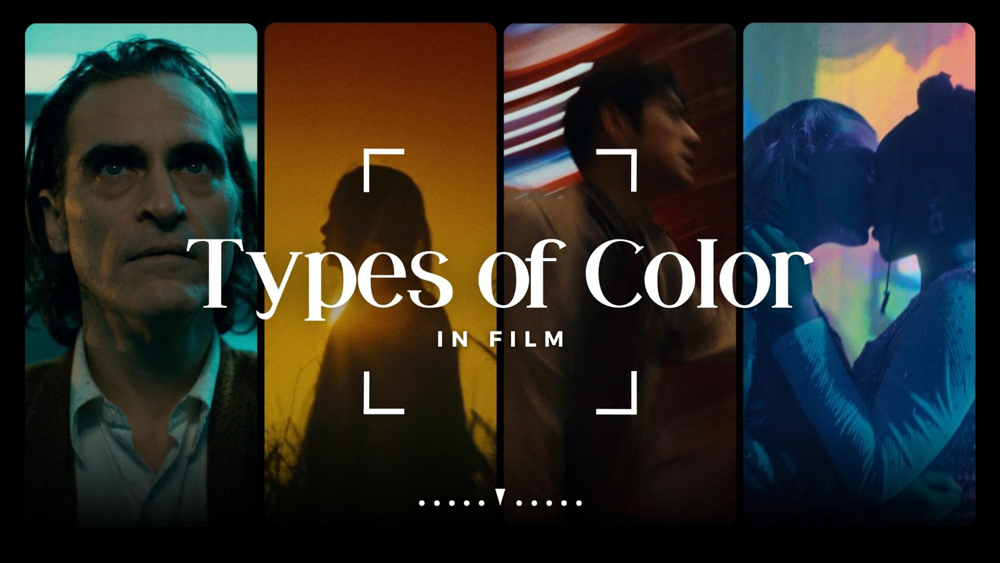
Unlock the power of cinematic color theory! Learn how filmmakers use color schemes to evoke emotions, enhance storytelli...
View Board
Explore cinematic landscapes: the art of visual storytelling through film. Learn techniques like mise-en-scène, lighting...
View Board
Explore film lighting techniques! Master the art & science of light: three-point setups, color temperature, diffusion, a...
View Board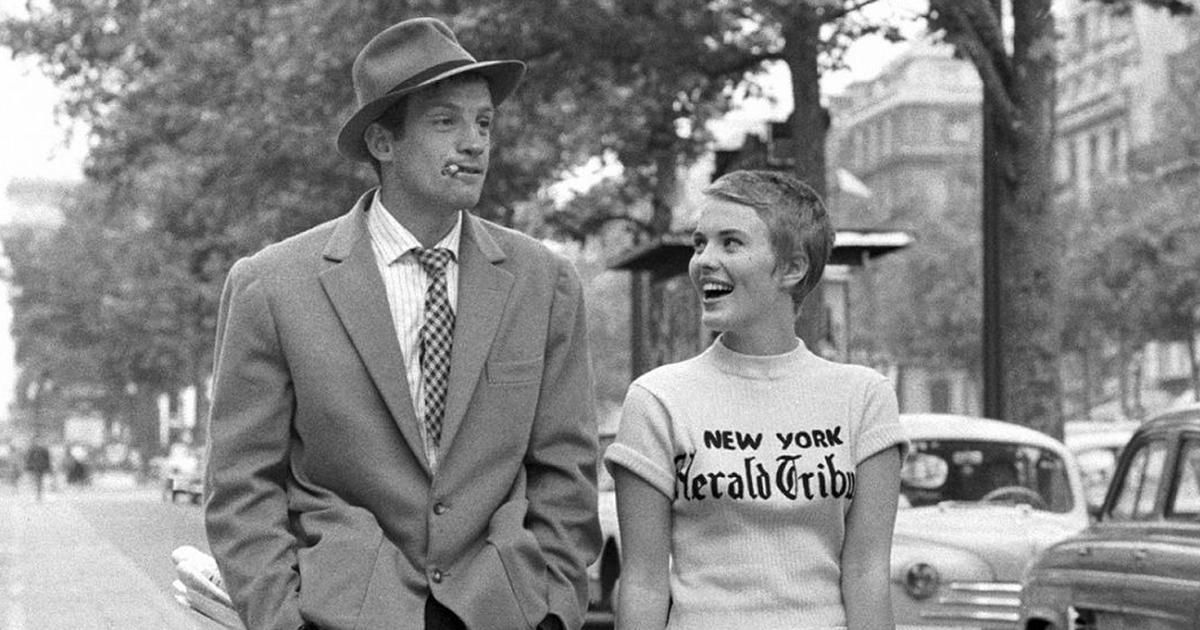
Explore the French New Wave, a revolutionary film movement that transformed cinema. Discover its origins, key filmmakers...
View Board
Explore the fascinating evolution of cinema, from its silent beginnings with Edison and Lumière to the Golden Age of Hol...
View Board
Master the art of character development! Learn to craft believable, compelling characters for film using proven techniqu...
View Board
Explore the evolution of independent film movements, from early rebels challenging monopolies to today's digital democra...
View Board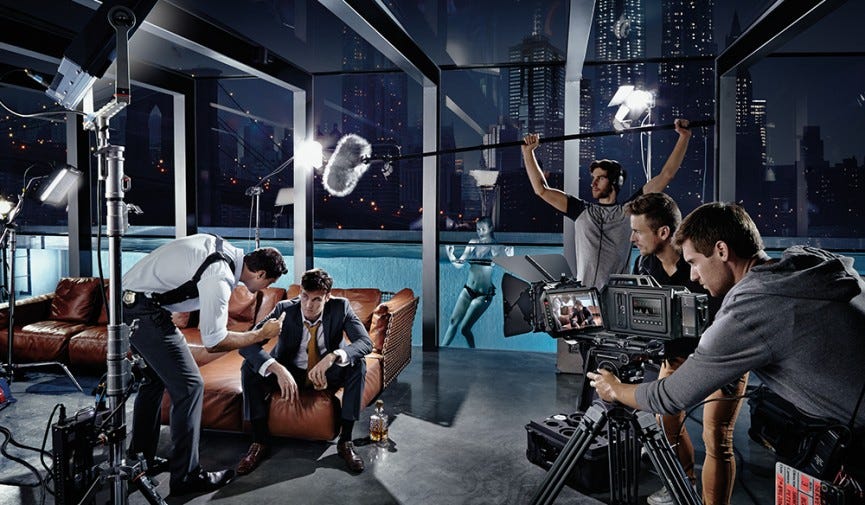
Explore the evolution of film editing, from early manual techniques with scissors and glue to today's advanced software....
View Board
Discover the pioneers of filmmaking! From the Lumière Brothers to Georges Méliès, explore the inventors and artists who ...
View Board
Explore social issue cinema! Discover how films tackle inequality, racism, and more, sparking crucial conversations and ...
View Board
Uncover the film production process! From development to distribution, learn the 5 key stages of filmmaking, including p...
View Board
Explore the indie film movement! Discover its history, key characteristics, and impact on cinema. Learn how independent ...
View Board
Delve into cinematic metaphors! Learn how visual symbolism, narrative parallels, and editing reveal deeper film meaning....
View Board
Explore the debate around historical accuracy in films. Discover how filmmakers balance factual fidelity with narrative,...
View Board
Explore the art of satire in cinema! From Chaplin's jabs at fascism to Kubrick's Cold War anxieties, discover unforgetta...
View Board
Explore the greatest film adaptations ever! From 'Lord of the Rings' to 'Jaws,' discover movies that brilliantly transfo...
View Board
Explore the cultural timeline of movies that defined generations, from Baby Boomers to Millennials. Discover the films t...
View Board
Explore the evolution of film censorship in the US, from early government bans to the Hays Code and MPAA ratings. Discov...
View Board
Explore CGI's transformative impact on cinema! From early pixelated graphics to photorealistic worlds, discover how comp...
View Board
Explore the enduring legacy of classic silent films! Discover their innovations, iconic stars, and lasting influence on ...
View Board
Comments