Explore Any Narratives
Discover and contribute to detailed historical accounts and cultural stories. Share your knowledge and engage with enthusiasts worldwide.
Maria Mitchell's name shines brightly in the history of American science as the first professional female astronomer in the United States. Her story is one of groundbreaking discovery, relentless advocacy, and a transformative legacy in education. This article explores her remarkable journey from a self-taught stargazer on Nantucket to an internationally recognized scientist and mentor.
Maria Mitchell was born on August 1, 1818, in Nantucket, Massachusetts. The island's rich maritime culture, where navigation by the stars was essential, provided a unique backdrop for her intellectual curiosity. Her father, William Mitchell, a dedicated amateur astronomer and schoolteacher, was her most significant early influence. He nurtured her interest in the heavens from a young age.
Formal scientific education for women was rare in the early 19th century. Mitchell was largely self-taught in advanced mathematics and astronomy, utilizing her father's library and instruments. She combined her astronomical pursuits with work as the librarian of the Nantucket Atheneum for nearly two decades. This role granted her access to scientific journals and the time to conduct her own nocturnal observations from a small rooftop observatory.
Mitchell's dedication was legendary. She would often scan the skies late into the night after the Atheneum closed, meticulously recording her observations.
Maria Mitchell secured her place in scientific history on the night of October 1, 1847. Using a telescope from her rooftop observatory, she spotted a faint, unfamiliar blur of light—a telescopic comet that would become known as Comet 1847 VI (modern designation C/1847 T1).
The discovery propelled Mitchell to international fame. Her careful calculation of the comet's position and orbit was a significant achievement. For this discovery, King Frederick VI of Denmark awarded her a gold medal in 1848, a prestigious honor that cemented her scientific credibility. This recognition was exceptionally rare for a woman scientist at the time.
This single observation was a turning point. It demonstrated that women were not only capable of serious scientific work but could also achieve at the highest levels. The comet discovery opened doors that had been firmly shut.
Following her celebrated discovery, Mitchell broke institutional barriers with a series of professional firsts. Her career path created a new template for women in science.
Mitchell understood that her success was not just personal but paved the way for others. She was an early member and later a Fellow of the American Association for the Advancement of Science (AAAS). In 1869, she was elected to the American Philosophical Society, again among the first women to receive such an honor. Each of these positions was a strategic foothold for women in the professional scientific community.
Beyond the famous comet, Maria Mitchell was a prolific and meticulous observational astronomer. Her research at Vassar College, often conducted alongside her students, contributed valuable data to the scientific community.
Her areas of study were diverse and forward-thinking. She made regular observations of:
Mitchell’s work combined pure research with practical application. The data she and her students collected fed into the nautical almanacs essential for global navigation, directly linking academic astronomy to the technological needs of the nation.
Maria Mitchell’s tenure as a professor at Vassar College from 1865 until her retirement in 1888 was transformative, both for her students and for women’s science education in America. She insisted that her students learn by doing, rejecting the notion that women were suited only for theoretical study. Her classroom was the observatory, and her curriculum was the night sky.
Mitchell believed that true understanding came from direct experience. Her students were required to make their own observations, log data meticulously, and perform complex calculations. She famously stated, "We especially need imagination in science. It is not all mathematics, nor all logic, but it is somewhat beauty and poetry." This philosophy blended rigorous scientific method with creative curiosity.
Under her guidance, Vassar students regularly published their astronomical observations and calculations, contributing to scientific journals and almanacs.
This hands-on research model was revolutionary. It treated her students not as passive learners but as active contributors to science, building both their confidence and their professional reputations.
Mitchell’s influence extended far beyond the observatory dome. She understood the power of community and professional networks for women who were otherwise isolated. She hosted notable scientists, philosophers, and writers, exposing her students to a wide intellectual world.
She also helped found the Association for the Advancement of Women (AAW) in 1873, serving as its president and promoting educational and professional opportunities. Her mentorship created a generation of educators and scientists who carried her methods forward.
Maria Mitchell’s approach to astronomy was characterized by meticulous observation, intellectual independence, and a willingness to challenge prevailing theories. Her work provided a substantial body of data that supported the growing field of astrophysics in the late 19th century.
Mitchell maintained a decades-long program of solar observation. She and her students at Vassar produced one of the most extensive series of sunspot photographs and records of their time. She argued against the then-common idea that sunspots were clouds floating above the solar surface.
Based on her observations, she proposed that sunspots were instead vertical cavities or depressions in the sun’s luminous atmosphere. While modern understanding is more complex, her hypothesis demonstrated a critical, analytical approach that moved beyond simple data collection to interpretation.
Her earlier work as a "computer" for the U.S. Nautical Almanac Office was foundational to her teaching. She imparted the critical importance of precision in calculating the positions of planets and stars. This work was not merely academic; it was essential for the accuracy of global maritime navigation.
The data streams initiated by Mitchell—tracking Jupiter’s moons, timing planetary transits, and refining stellar coordinates—served dual purposes. They provided practical information for almanacs and served as excellent training exercises in precision for her students.
The impact of Maria Mitchell’s life and work did not end with her passing in 1889. It is actively preserved and promoted through institutions that bear her name and through her enduring relevance in STEM inclusion discussions.
Founded in 1902, The Maria Mitchell Association (MMA) in Nantucket is the primary keeper of her legacy. The association operates a natural history museum, an aquarium, the Mitchell House historic site, and, crucially, the Maria Mitchell Observatory. These institutions continue her mission of public education and scientific inquiry.
This ongoing work transforms her historical legacy into a living, breathing force for contemporary science education.
In recent decades, Mitchell’s story has gained renewed attention as scholars and educators examine the historical barriers and pathways for women in science. She is frequently cited as a pivotal case study.
Modern analyses focus not just on her discovery, but on her multifaceted roles as a scientist, educator, institution-builder, and advocate for professional women.
Museums like the Smithsonian Institution and the National Women’s History Museum feature her story prominently. Her life illustrates key themes such as the importance of early mentorship, access to equipment and literature, and the creation of supportive professional networks.
Maria Mitchell’s true genius lay in seamlessly integrating discovery, teaching, and advocacy. She demonstrated that excellence in research and a commitment to inclusivity were not mutually exclusive but could be powerfully synergistic.
By achieving high-profile recognition and holding a professional professorship, Mitchell fundamentally altered the perception of what women could do in science. She provided a concrete, successful model that others could follow. Her career stood as a direct rebuttal to the prejudices of her era.
Her insistence on rigorous training proved that women were not just capable of understanding complex science but could also advance its frontiers. This philosophy helped legitimize the very idea of higher education for women in scientific fields.
The pedagogical methods Mitchell championed—learning through research, mentorship, and hands-on observation—are now considered best practices in science education. Her approach is mirrored in modern undergraduate research initiatives and efforts to increase retention of women in STEM fields.
Her legacy is a reminder that diversity in science strengthens the discipline itself. By broadening the pool of talent and perspective, Mitchell helped lay the groundwork for a richer, more innovative scientific community. The continued celebration of her life ensures that her pioneering spirit continues to inspire future astronomers.
To fully appreciate Maria Mitchell’s achievements, one must consider the scientific and social landscape of 19th-century America. Her career intersected with pivotal movements, from the expansion of professional science to the early struggles for women's rights and educational access.
The mid-1800s was an era of rapid growth in astronomy, shifting from positional mapping to astrophysical inquiry. The establishment of national observatories and almanac offices created new professional roles. Mitchell’s work as a "computer" for the U.S. Nautical Almanac Office placed her squarely within this emerging scientific infrastructure.
Her discovery of a comet using a telescope epitomized the period's move toward systematic telescopic observation. Furthermore, her later focus on photographing and analyzing sunspots aligned with a growing interest in understanding solar physics, not just cataloging celestial positions.
Mitchell’s success was extraordinarily rare. Before her, only a handful of women, like Caroline Herschel, had gained similar international recognition. The barriers were immense, including limited access to:
Her election to all-male academies and her secure professorship were not just personal triumphs. They were critical precedents that challenged institutional norms and created a sliver of opportunity for the women who followed.
Maria Mitchell’s story is far from a closed historical chapter. It actively informs modern efforts in science education, public outreach, and the ongoing push for equity in STEM fields. Her life provides a powerful, evidence-based narrative for advocates and educators.
Mitchell’s biography is frequently utilized in programs aimed at encouraging girls and young women to pursue scientific careers. Her example highlights several proven strategies for inclusion:
Scholars point to Mitchell’s integrated approach—combining research, teaching, and advocacy—as a model for creating sustainable pathways for underrepresented groups in science.
On Nantucket Island, Mitchell’s legacy is a living part of the community and a driver of cultural tourism. The Maria Mitchell Association attracts visitors, students, and researchers from around the world. Walking tours of historic Nantucket often feature her childhood home and rooftop observatory site.
This public engagement does more than honor the past. It makes the history of science tangible and personal, connecting abstract concepts of discovery to a specific person and place. It demonstrates how local heritage can support global scientific ideals.
Maria Mitchell’s life can be measured in groundbreaking firsts and enduring institutional footprints. These milestones chart the tangible impact of her work.
Key Dates and Honors:
The organizations bearing Mitchell’s name continue to thrive, a testament to the durability of her vision. The Maria Mitchell Association oversees multiple properties and serves thousands of visitors and program participants annually. Its endowment and ongoing programs ensure that her commitment to hands-on science education continues unabated.
Vassar College’s astronomy department, which she founded, remains a strong program. The college’s observatory, though modernized, is a direct descendant of the facility she used to train a generation of women scientists.
Maria Mitchell’s journey from a curious island girl to an internationally renowned astronomer and educator is a foundational American story. It is a narrative that intertwines scientific discovery with social progress. She did not merely find a comet; she used that achievement as a lever to open the doors of academia and professional science for women.
Reflecting on her life reveals a multifaceted legacy. She was, first and foremost, a brilliant observational astronomer whose careful work contributed to the scientific knowledge of her time. Second, she was a transformative educator who believed in learning through doing and who mentored the next generation with rigor and care.
Third, and equally important, she was a conscious trailblazer and advocate. Mitchell understood the symbolic weight of her positions and honors. She actively worked to create associations and opportunities that would outlive her, ensuring that the path she forged would become a road for others.
In today’s world, where debates about representation in science continue, Maria Mitchell’s story offers several powerful, evidence-based lessons:
The light from the comet Maria Mitchell discovered over 175 years ago has long since faded. But the light of her example burns brighter than ever. In museums, classrooms, observatories, and in the ongoing work to build a more inclusive scientific community, her pioneering spirit remains a guiding star. Her life reminds us that curiosity, when paired with courage and conviction, can truly change the world.
Your personal space to curate, organize, and share knowledge with the world.
Discover and contribute to detailed historical accounts and cultural stories. Share your knowledge and engage with enthusiasts worldwide.
Connect with others who share your interests. Create and participate in themed boards about any topic you have in mind.
Contribute your knowledge and insights. Create engaging content and participate in meaningful discussions across multiple languages.
Already have an account? Sign in here
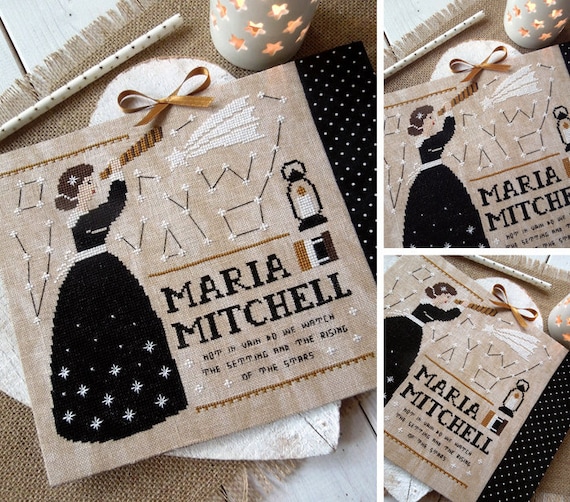
Discover Maria Mitchell, America's first female astronomer. Explore her 1847 comet discovery, impact on women in STEM, a...
View Board
Discover Maria Mitchell, America's first woman astronomer, who broke barriers in science & fought for women's rights. Le...
View Board
George Gamow: The Unbelievable Journey of a Theoretical Physicist and Cosmologist The Enigmatic Man Behind the Cosmic B...
View Board
Discover Neil deGrasse Tyson's life and work as a renowned astrophysicist, science communicator and director of the Hayd...
View Board
George Ellery Hale revolutionized astrophysics through solar discoveries, groundbreaking telescopes like Mount Wilson an...
View Board
Jean Baptiste Joseph Delambre: A Life of Astronomical Pursuits The Early Life and Education Jean Baptiste Joseph Delam...
View Board
Explore the remarkable legacy of Subrahmanyan Chandrasekhar, the astrophysics luminary who revolutionized our understand...
View Board
Discover the inspiring journey of Stephen Hawking in this comprehensive article. From his pioneering work on black holes...
View Board
Arthur Eddington: Pioneering Relativity and Stellar Science Arthur Stanley Eddington stands as one of the most influenti...
View Board
**Meta Description:** Explore the life of William Herschel, the astronomer who discovered Uranus and revolutionized our ...
View Board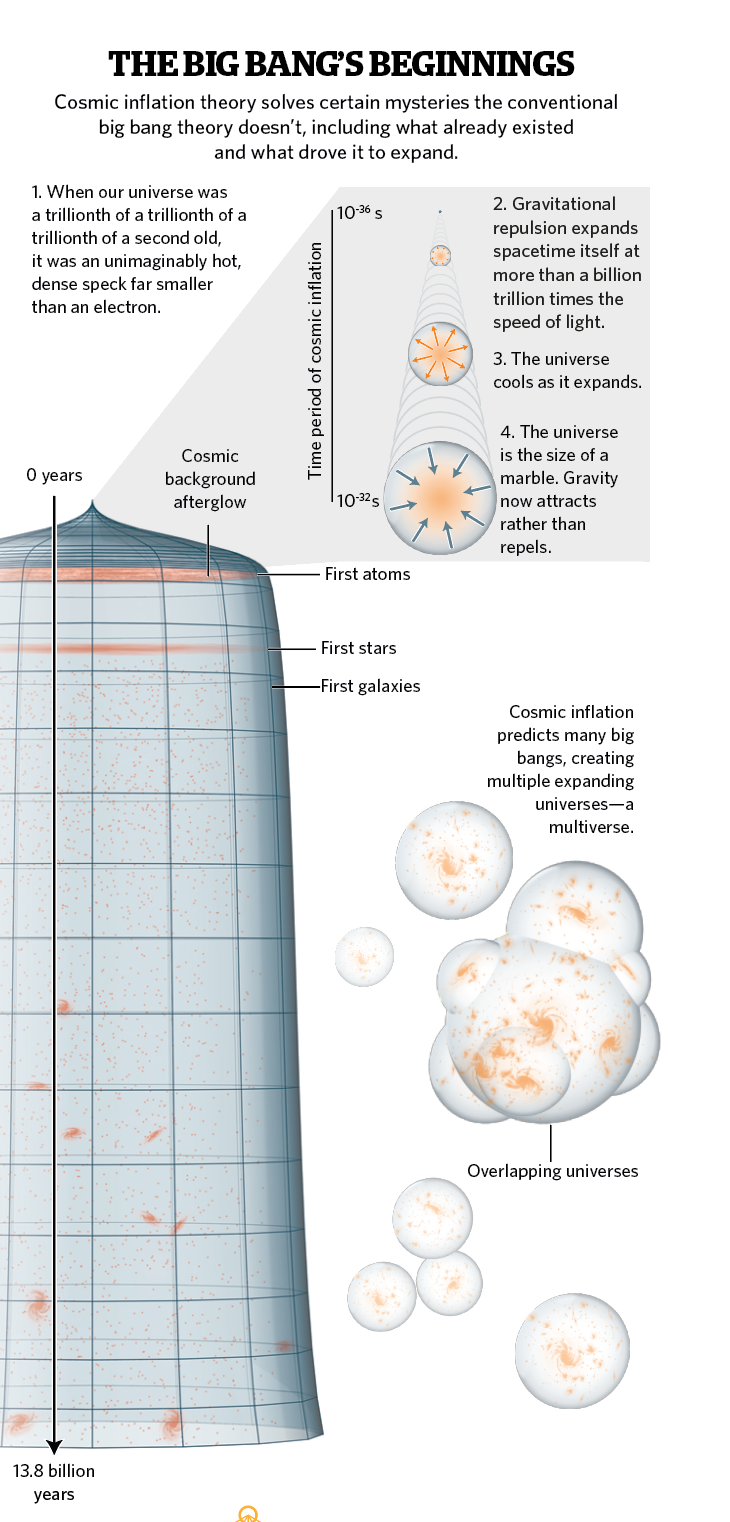
Discover how Alan Guth, a renowned physicist, revolutionized cosmology with his groundbreaking theory of cosmic inflatio...
View Board
**Meta Description:** Discover Vera Rubin's groundbreaking work on dark matter, which revolutionized cosmology. Learn ...
View Board
Discover Jean-Baptiste Joseph Delambre, the pioneering astronomer of the 18th century who revolutionized geodesy and cel...
View Board
Isaac Newton was a pioneering scientist whose laws of motion and universal gravitation revolutionized our understanding ...
View Board
Explore the extraordinary legacy of Riccardo Giacconi, the Nobel laureate who revolutionized X-ray astronomy. Discover h...
View Board
Discover Stephen Hawking's groundbreaking contributions to cosmology, his resilience against ALS, and his enduring legac...
View Board
Jocelyn Bell Burnell pioneering astronomer who discovered pulsars leaving a lasting legacy in astrophysics through groun...
View Board
Explore the vast cosmos—its galaxies, black holes, exoplanets, dark matter, and humanity's quest to understand the unive...
View Board
Discover the enduring legacy of Jean-Baptiste Biot, a remarkable polymath at the crossroads of Enlightenment and 19th-ce...
View Board
Discover how Vera Rubin, a pioneering astronomer, uncovered dark matter and revolutionized cosmology. Explore her life, ...
View Board
Comments