Exploring the Depths of Time: The Enigma of Gobekli Tepe


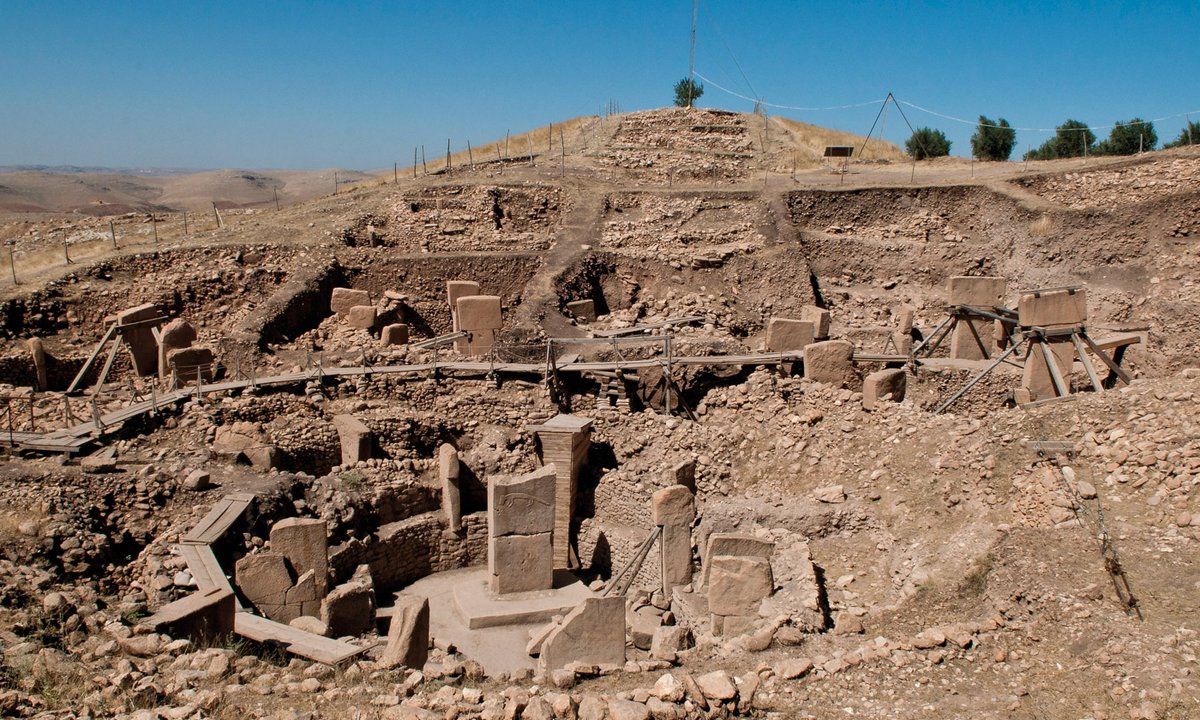
Nestled on a barren hilltop in southeastern Turkey lies one of history's most perplexing archaeological sites: Gobekli Tepe. Its monumental structures, intricate carvings, and the mystery surrounding its purpose continue to baffle experts and capture public imagination. Discovered in the mid-1990s during a routine survey, Gobekli Tepe has dramatically altered our understanding of human civilization, pushing back the inception of complex societies by millennia.

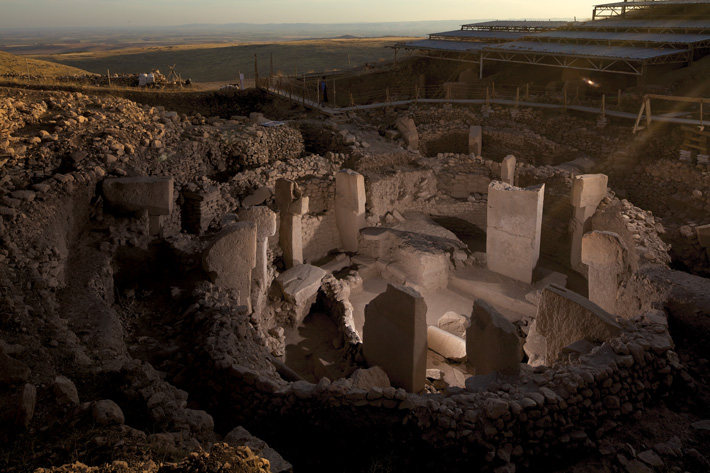
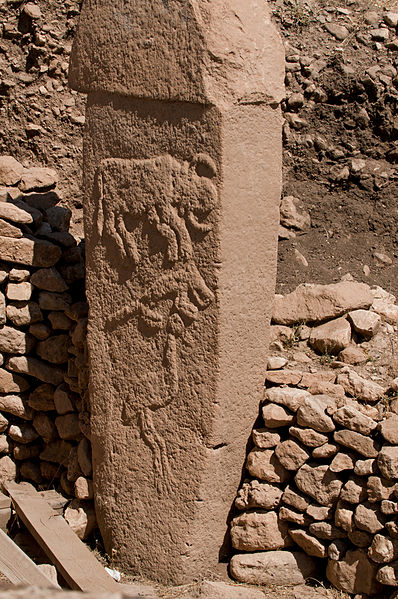
Constructed more than 11,000 years ago, Gobekli Tepe predates Stonehenge by 6,000 years and the Great Pyramids of Giza by 7,000. It comprises numerous T-shaped megalithic pillars arranged in a set of circles, with some reaching up to 20 feet in height and weighing upwards of 10 tons. These monoliths are adorned with a diverse array of carvings, depicting animals such as lions, bulls, and birds, as well as abstract symbols whose meanings have been lost to time. The craftsmanship and scale of this site suggest that a considerable population with sophisticated organizational skills must have labored over it.

The site's discoverer, German archaeologist Klaus Schmidt, was the first to dig extensively at Gobekli Tepe. He believed that the site was a sanctuary, a place of worship, or perhaps the first known temple in the world. Remarkably, Gobekli Tepe seems to have been built by hunter-gatherers, a notion that flies in the face of conventional historical understanding that such large projects could only be undertaken by settled farming communities. Indeed, the site's origins date back to a time when humanity was on the cusp of transitioning from a nomadic to a sedentary, agrarian lifestyle.

One of the most intriguing aspects of Gobekli Tepe is its apparent deliberate burial. Around 1000 years after its construction, the site was covered with soil and abandoned. This burial has served to preserve the pillars and walls but has obscured its purpose. Was it ritualistically sealed upon the completion of its use, or was it a time capsule meant for future generations?

Initial findings seemed to negate the likelihood of the site being a settlement. No domestic refuse, such as pottery shards or the usual detritus associated with habitation, has been found. Furthermore, there is little evidence of farming — the surrounding region would have been forested at the time, requiring considerable agriculture to feed a large workforce, yet there’s no trace of such activity. Instead, the presence of large quantities of animal bones suggests that for its users, Gobekli Tepe was a site of feasts, likely tied to rituals or commemorations.

The construction of such a site by a supposedly egalitarian society raises questions about social organization during the late Pleistocene. To erect these megaliths, a well-organized workforce with knowledge of quarrying, transport, and masonry was necessary. It implies a hierarchical society with leaders, planners, and skilled laborers, again challenging the assumption that complex social structures only emerged with the advent of agriculture and permanent settlements.

Gobekli Tepe's discovery has catalyzed a reassessment of such fundamental questions as the nature of religion and its role in societal development. Schmidt's interpretation of the site as a temple suggests that the need to worship and connect through communal labor could have been a critical driving force in human history, possibly as significant as the development of agriculture in spawning settled communities. Religion and ritual may have predated and even precipitated the establishment of complex societies.

The site's carvings are yet another source of intrigue. Some researchers suggest that they contain celestial symbols that may have served as a prehistoric observatory or a repository of astral knowledge. Others have read in them mythological narratives or records of historical events such as cometary impacts which might have had a profound effect on the local environment and the people who built Gobekli Tepe.

As one stands amidst the encircling pillars silently keeping their sentinel watch over the ages, Gobekli Tepe compels the observer to question what it might reveal about the shared ancestry of human civilization. While archaeologists continue to excavate and interpret its mysteries, the site's significance extends far beyond the stones themselves, providing a haunting glimpse into the genesis of human culture and spirituality.To gaze upon the intricate carvings of Gobekli Tepe is to peer into a world both alien and familiar. Each pillar serves as a testament to the rich spiritual and mythological landscape of its makers. These haunting monoliths, with arms and hands depicted reaching toward their beltstones, suggest a representation of the human form, perhaps the earliest monumental depictions of our species. Alongside are carvings of wild animals — creatures that would have roamed the ancient Anatolian plains, as well as more enigmatic figures. From lithe foxes to menacing boars, these images could symbolize various clans or represent totemistic deities of a long-forgotten pantheon, a connection between the community and the land they lived in.

The carvings of fearsome creatures like scorpions and snakes also suggest a fascination with the natural world's more dangerous aspects. Within these depictions lie potential evocations of the struggle between man, nature, and the supernatural. Could these fearsome creatures have been included to ward off evil, or were they worshipped in an attempt to appease the more malevolent forces of nature?

Further analysis reveals that the site’s alignment may coincide with the solstices, hinting at an understanding of the solar year. Some suggest that specific pillars align with constellations as they would have appeared in the sky thousands of years ago. If true, this would not only provide a window into the astronomical knowledge of the period but would also bolster the theory that Gobekli Tepe served a ritualistic purpose tethered to celestial events.

The contexts of the Gobekli Tepe carvings offer fertile ground for debate. One of the most tantalizing explanations is that they represent a sort of narrative or codified understanding shared by prehistoric hunter-gatherers. Were these stories passed down orally until finally immortalized in stone? As there is no written record from the era, only educated conjecture can piece together the fractured tale these symbols may tell.

Despite these insights, numerous questions persist. The most fundamental remains: why was Gobekli Tepe built? Theories range from the site being a religious sanctuary, to a social gathering place, to an astronomical observatory. Yet none of these alone fully satisfy the evidence at hand. Gobekli Tepe may represent a unique convergence of several societal functions that are inseparable in prehistoric contexts — where the sacred and profane, practical and spiritual were intertwined.

Furthermore, the intentional burial of Gobekli Tepe hints at a possible self-awareness and foresight by the prehistoric people. Did they ceremoniously inter their sacred site, much as one might respectfully bury the dead? Or was the entombment of this temple space an effort to preserve its sanctity from future change — a conscious attempt to stamp their existence on the timeline of history? Some researchers suggest that the burial could be symptomatic of a dramatic cultural shift or a response to an external threat.

The tools left behind — flint blades, pounders, and scrapers — provide insights into the nature of construction but not the rationale behind it. They remind us that although the builders of Gobekli Tepe were capable of creating a monument that would last millennia, in their everyday lives they were not so different from other hunter-gatherer societies of their age.

One of the most perplexing complexities of Gobekli Tepe is what its existence indicates about the development of agriculture and urbanization. Its early date suggests that it predates the agricultural revolution, yet evidence indicates that it may have been a factor in the eventual domestication of plants and animals. Some scholars argue that sites like Gobekli Tepe were magnets for gatherings, leading to the need for more consistent food sources and ultimately sedentary communities.

Archaeological work at Gobekli Tepe and its surrounding areas is ongoing, with each season of excavation offering the potential for new revelations. It stands as an enduring artifact of humanity's past — an obscure relic that has, so far, defied definitive understanding but has immensely enriched our knowledge of the prehistoric world. It is an enigma that continues to fuel scholarly discussion and fascinate the public, carving out its place not just in the physical ground of history, but in the collective imagination of humankind as well.

As we delve deeper into the secrets of Gobekli Tepe, we may find that the lines between art, religion, and survival are blurred, revealing that the capacity for complex thought and the yearning for meaning have deep roots in the human legacy. What remains is a sense of awe for the capacities of our ancestors, who, under the same stars we gaze upon today, built a monument that would endure long beyond their lifetimes, leaving us with the task of piecing together their forgotten dreams.
Video -
image not described
image not described
image not described

Comments

Welcome

Discover Haporium

Your personal space to curate, organize, and share knowledge with the world.

Explore Any Narratives

Discover and contribute to detailed historical accounts and cultural stories. Share your knowledge and engage with enthusiasts worldwide.

Join Topic Communities

Connect with others who share your interests. Create and participate in themed boards about any topic you have in mind.

Share Your Expertise

Contribute your knowledge and insights. Create engaging content and participate in meaningful discussions across multiple languages.

Get Started Free
10K+ Boards Created
50+ Countries
100% Free Forever

Related Boards

The Enigma of Stonehenge: Unraveling Britain's Prehistoric Mystery

The Enigma of Stonehenge: Unraveling Britain's Prehistoric Mystery

Explore the ancient secrets of Stonehenge in this deep-dive article that investigates the mystifying structure's origins...

View Board
The Forgotten Empire: Unearthing the Grandeur of Axum

The Forgotten Empire: Unearthing the Grandeur of Axum

Explore the ancient grandeur of the Axumite Empire in this insightful article on its history and legacy. Uncover the ris...

View Board
The Enigmatic Stones of Stonehenge: Unveiling the Mysteries of a Prehistoric Marvel

The Enigmatic Stones of Stonehenge: Unveiling the Mysteries of a Prehistoric Marvel

"Explore the secrets of Stonehenge, England's prehistoric masterpiece, as we delve into its mysterious origins, construc...

View Board
Ephesus: The Ancient City Where History Echoes

Ephesus: The Ancient City Where History Echoes

Discover the timeless splendor of Ephesus, Turkey's ancient Aegean marvel. Explore where history echoes through grand te...

View Board

Jericho-The-World-s-Oldest-City-and-Its-Ancient-Secrets

Jericho-The-World-s-Oldest-City-and-Its-Ancient-Secrets

Discover Jericho, the world’s oldest city, with 9,000 years of history. Explore its ancient walls, Neolithic tower, and ...

View Board
Sidon: A Tapestry of History and Culture

Sidon: A Tapestry of History and Culture

Discover the ancient wonders of Sidon, a coastal gem on the Mediterranean Sea known for its rich tapestry of history and...

View Board

Eudald-Carbonell-Unraveling-the-Mysteries-of-Human-Evolution

Eudald-Carbonell-Unraveling-the-Mysteries-of-Human-Evolution

# Eudald Carbonell: Unraveling the Mysteries of Human Evolution **Meta Description:** Explore the groundbreaking work o...

View Board
Sulaymaniyah-A-Historical-and-Cultural-Gem

Sulaymaniyah-A-Historical-and-Cultural-Gem

Sulaymaniyah, a city in northern Iraq, is a cultural and historical gem with a rich heritage, unique blend of Kurdish, A...

View Board
Lucius-Septimius-Severus-The-Pious-Emperor-and-His-Legacy

Lucius-Septimius-Severus-The-Pious-Emperor-and-His-Legacy

Lucius Septimius Severus: The Pious Emperor and His Legacy Introduction On January 18, 193 AD, Lucius Septimius Severu...

View Board
Lost Tomb of Pharaoh Thutmose II Discovered in Valley of the Kings

Lost Tomb of Pharaoh Thutmose II Discovered in Valley of the Kings

Discover the lost tomb of Pharaoh Thutmose II, a monumental find in Egypt's Valley of the Kings. Uncover secrets of the ...

View Board
The Forgotten Viking Settlement in Newfoundland

The Forgotten Viking Settlement in Newfoundland

Discover the Forgotten Viking Settlement in Newfoundland—proof of pre-Columbian contact. Explore how Norse explorers rea...

View Board
The-Enigmatic-Stone-Porphyry-Through-the-Ages

The-Enigmatic-Stone-Porphyry-Through-the-Ages

Explore the captivating history and cultural significance of porphyry, a rare and exquisite volcanic rock, from ancient ...

View Board
Bagan-A-Living-Legacy-of-Myanmar-s-Past

Bagan-A-Living-Legacy-of-Myanmar-s-Past

Bagan: A Living Legacy of Myanmar's Past The Enchanting Heritage of Bagan Bagan, also spelled Pagan, is a sprawling ar...

View Board
Nossis-The-Ancient-Phoenician-Kingdom

Nossis-The-Ancient-Phoenician-Kingdom

Nossis, an ancient Phoenician kingdom in modern-day Lebanon, was a significant Mediterranean city-state known for its th...

View Board
The-Enigmatic-Legacy-of-Pompeii-A-Journey-Through-Time

The-Enigmatic-Legacy-of-Pompeii-A-Journey-Through-Time

Explore the timeless intrigue of Pompeii in "The Enigmatic Legacy of Pompeii: A Journey Through Time." Unearth the vibra...

View Board
The-Historical-and-Cultural-Wonders-of-Erbil-A-Gateway-to-the-Past

The-Historical-and-Cultural-Wonders-of-Erbil-A-Gateway-to-the-Past

Discover the historical and cultural marvels of Erbil, the vibrant capital of the Kurdistan Region of Iraq, where ancien...

View Board
Mogadishu-A-Millennium-of-History-and-Culture

Mogadishu-A-Millennium-of-History-and-Culture

Explore the rich tapestry of Mogadishu's millennium-long history and vibrant culture as the "Jewel of the Indian Ocean."...

View Board
Caracalla-The-Ruthless-Roman-Emperor-Who-Reshaped-History

Caracalla-The-Ruthless-Roman-Emperor-Who-Reshaped-History

Discover Caracalla, Rome's ruthless emperor who reshaped history with brutal purges and groundbreaking reforms like the ...

View Board
Ancient Egyptian Fortress Reveals New Kingdom Military Secrets

Ancient Egyptian Fortress Reveals New Kingdom Military Secrets

Discover how a massive New Kingdom fortress in Sinai reveals ancient Egypt's military genius. Explore advanced engineeri...

View Board
Nazareth-A-Historical-Tapestry

Nazareth-A-Historical-Tapestry

Discover the rich history of Nazareth, the ancient city in Galilee, renowned as Jesus Christ's childhood home. Explore N...

View Board