


:max_bytes(150000):strip_icc()/VWH-GettyImages-1323627853-3f7704d2f39849f582b1f23d7f5121a7.jpg)
Explore Any Narratives
Discover and contribute to detailed historical accounts and cultural stories. Share your knowledge and engage with enthusiasts worldwide.
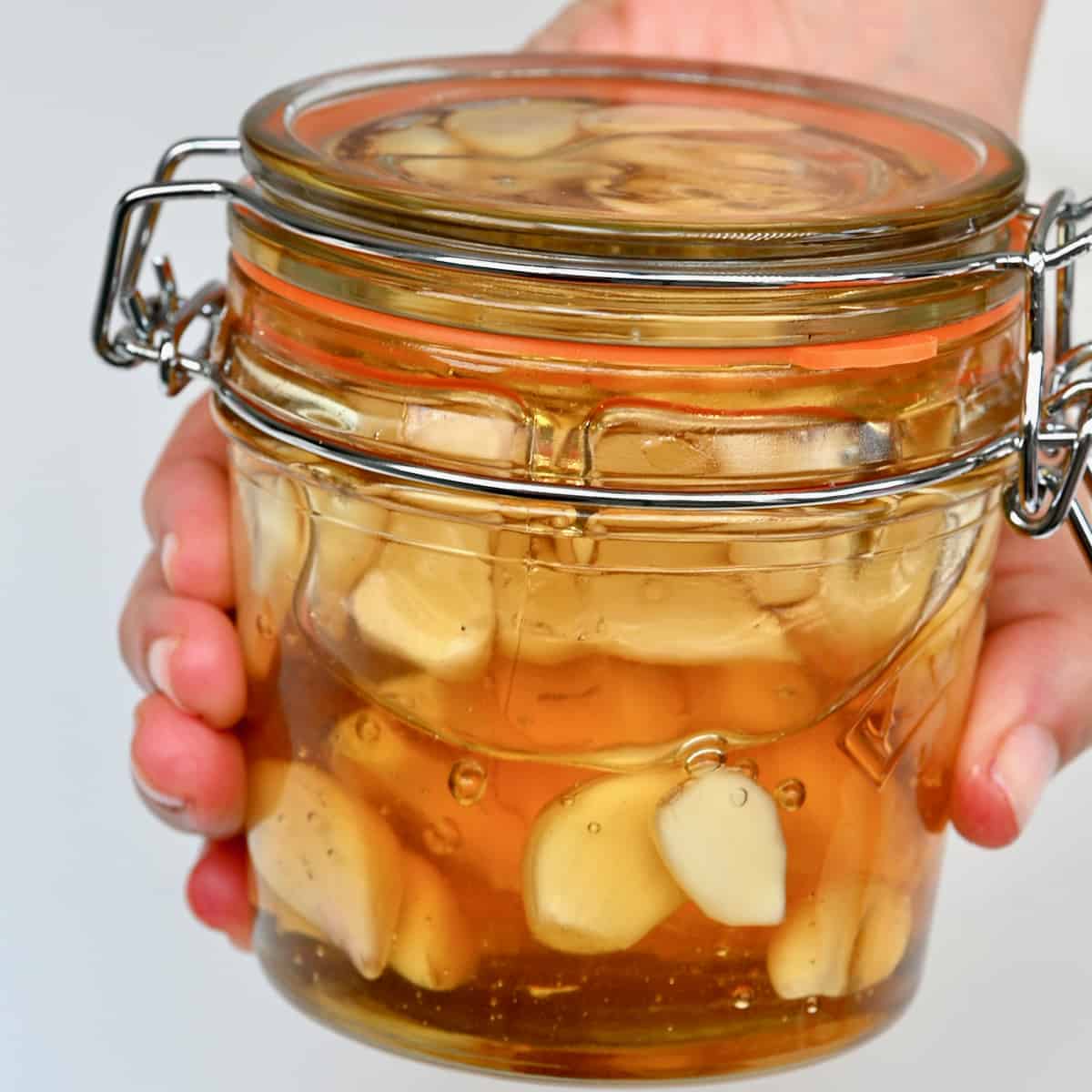
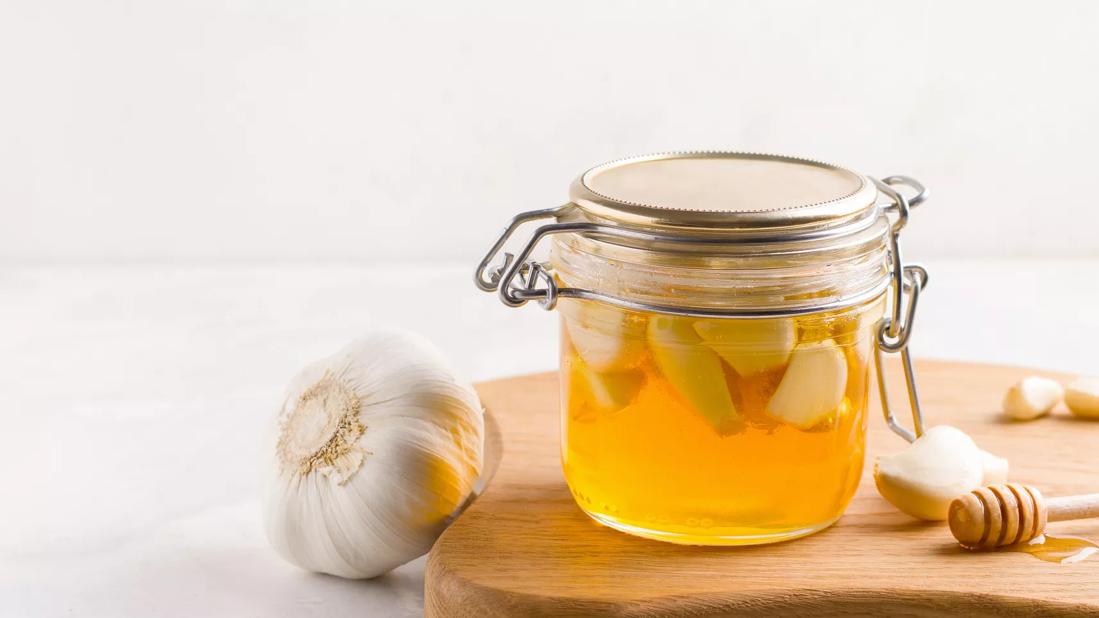
The mason jar on the countertop is a quiet spectacle. Within its glass walls, plump cloves of garlic, suspended in a thick amber fluid, perform a slow, silent dance. Tiny bubbles cling to their skins, rising languidly through the darkening honey. This is no trendy kitchen experiment. It is a biological echo. The process unfolding on a sunny windowsill in Portland or Prague today is chemically identical to one that occurred in an Egyptian apothecary’s clay vessel over three millennia ago. Fermented garlic honey is not a recipe. It is a relic, a living thread connecting the modern pantry to the very origins of recorded medicine.
The story begins not 500 years ago, but in the dust and heat of ancient Thebes. The Ebers Papyrus, a medical scroll dating to approximately 1500 BCE, prescribes a paste of garlic and honey for dressing wounds and treating infections. Egyptian builders, it is said, consumed garlic for strength while raising the pyramids. This pairing was not accidental. These civilizations, devoid of microscopes, understood efficacy through observation. Honey, a natural preservative with antimicrobial properties, locked garlic’s potent compounds in a stable, potent alliance. It was pragmatic alchemy.
According to Dr. Anya Petrova, a food historian specializing in ancient preservation, "The Ebers Papyrus is our first concrete recipe. But the logic of preserving powerful, perishable garlic in stable, antimicrobial honey is so fundamental, its practice almost certainly predates the written word. It was the ancients' antibiotic ointment, stored in a jar."
From the Nile, the practice traveled. Greek athletes consumed garlic before Olympic contests, seeking a performance edge. Hippocrates, the father of Western medicine, extolled garlic’s virtues for a host of ailments. Roman legions marched with honey-preserved garlic in their medical kits, a field dressing for the wounds of empire. In the scriptoria of medieval European monasteries, monks meticulously refined fermentation techniques, viewing the concoction as a divine gift for winter wellness. Simultaneously, across the world, practitioners of Ayurveda in India and Traditional Chinese Medicine codified fermented honey garlic as a tonic for digestion, circulation, and what they perceived as vital energy.
This global, enduring fascination rests on the unique biology of its two components. Garlic and honey are, in their raw forms, nearly immortal.
Archaeologists have found garlic cloves entombed with Egyptian pharaohs, their form recognizable after thousands of years. Its power derives from a chemical defense mechanism. Intact garlic contains alliin, a benign compound. Crushing or slicing ruptures cells, releasing the enzyme alliinase, which converts alliin into allicin—the source of garlic’s pungent aroma and its potent bioactive properties. Allicin is unstable, breaking down quickly. Preservation is the key to harnessing its power.
Honey, meanwhile, defies decay. Its chemical composition—low water activity, high acidity, and the presence of hydrogen peroxide—makes it hostile to microbial life. Raw, unprocessed honey contains natural yeasts and enzymes. It is not a dead substance, but a dormant landscape. When fresh, moist garlic is submerged in this landscape, a fascinating transaction occurs. The garlic’s moisture dilutes the honey, lowering its sugar concentration just enough to wake the native yeasts. They feast on the sugars, initiating fermentation. The garlic’s alliinase goes to work. The two ingredients cease to be separate.
"This is where folk wisdom meets biochemistry," explains Miguel Santos, a fermentation scientist at the Culinary Institute of America. "The fermentation environment doesn't just preserve the allicin; it can enhance its bioavailability and create new, complex phytochemicals. The honey becomes infused with sulfur compounds, the garlic mellows and absorbs sweetness. They create a third, synergistic substance greater than the sum of its parts."
The result in the jar is a testament to this synergy. Over weeks, the honey, once thick and slow-moving, thins as it absorbs garlic’s water. It darkens from translucent gold to a deep, opaque russet. The garlic cloves themselves lose their aggressive bite, softening into candied, pungent-sweet morsels. The flavor evolves from sharp and simple to deeply umami, complex, and rounded. For a chef, this transformation is the heart of its modern appeal. It is no longer merely a remedy, but a sophisticated ingredient.
The method is deceptively simple, a fact that belies its profound biological complexity. Precision matters. The vessel is a clean glass jar. The ingredients are two: whole, peeled cloves of fresh garlic and raw, unfiltered, unpasteurized honey. Processed honey, heated and stripped of its wild yeasts, is biologically inert. It will sweeten but not ferment. The garlic must be fresh to provide the necessary moisture and active enzymes.
The cloves fill the jar by a third. Honey is poured over them, slowly, allowing it to seep into every crevice. A gentle stir or tap releases trapped air bubbles—an enemy in anaerobic fermentation. The jar is sealed loosely, not tightly, to allow the carbon dioxide produced by the hungry yeasts to escape. Then, the wait begins.
The fermentation timeline is a silent narrative. Days 1-3 are a period of quiet immersion. Days 4-7 see visible change: the honey thins and becomes runny, a sign the garlic is releasing its moisture. This is a critical phase. Daily stirring is essential to redistribute the garlic and prevent any potential mold from forming on surfaces exposed to air. By Days 8-14, the jar is alive. A steady stream of tiny bubbles rises from the cloves, a sure sign of active fermentation. The kitchen might carry a faint, sweet-garlicky scent.
After about a month at stable room temperature (68-75°F or 20-24°C), the ferment is typically moved to cooler storage, slowing the process. The product is not shelf-stable forever, but its lifespan extends for months in the refrigerator. The garlic, once crisp and fiery, becomes a tender, fermented jewel. The honey transforms into a complex, garlic-infused syrup. The alchemy is complete.
What did our ancestors taste in this mixture? They tasted potency. They tasted preservation. They tasted a solution to the fundamental human problems of infection, winter illness, and nutritional scarcity. We taste history. We taste a culinary depth that no single ingredient can provide. We are tasting the same transformation they did, a continuity that spans civilizations. This jar on the counter isn't just food. It's a dialogue with the past, mediated by yeast and enzyme, bubbling slowly into the present.
Modern fascination with fermented garlic honey hinges on a single, compelling question: does it actually work? Our ancestors had faith. We demand data. The answer lies not in a dusty papyrus, but in the controlled environments of contemporary laboratories. What emerges is a picture of nuanced validation, where ancient intuition finds surprising, if incomplete, support from modern biochemistry.
The core of garlic's medicinal reputation is allicin, the volatile compound responsible for its distinctive scent and its bioactive punch. In raw garlic, allicin is transient, breaking down quickly after the clove is crushed. The fermentation process, it turns out, doesn't just preserve it; it amplifies it. A 2021 study published in the Journal of Agricultural and Food Chemistry reported a critical finding: the fermentation of garlic in honey can increase allicin availability by up to 40% compared to raw garlic alone. This isn't mere preservation; it's enhancement. The acidic, enzymatic environment of the ferment appears to stabilize this fragile molecule, creating a more potent and bioavailable end product.
"Scientific research confirms this preparation increases allicin availability by up to 40% compared to raw garlic while preserving honey’s antimicrobial components." — Alibaba Science Summary, 2023
This synergy is the entire point. Honey is far from a passive vehicle. Its low pH, typically stabilizing around 3.4 to 4.0 during fermentation, creates an environment hostile to many pathogens. Its natural hydrogen peroxide activity and phytochemicals contribute their own antimicrobial effects. The fermentation process itself, driven by wild yeasts and bacteria, generates additional beneficial compounds like prebiotic fibers and organic acids. The result is a substance where the whole is pharmacologically greater than the sum of its parts.
Extrapolating from research on the individual components provides the most concrete evidence. Take cardiovascular health. A 2020 meta-analysis in the American Journal of Clinical Nutrition concluded that regular consumption of standardized garlic preparations led to a modest but statistically significant reduction in systolic blood pressure—on the order of 5 to 8 mmHg in hypertensive individuals. While no trial has used fermented honey garlic specifically, the mechanism of action is linked to garlic's sulfur compounds, which are present and amplified in the ferment.
The claim most often repeated in cozy corners of the internet is its power against the common cold. Here, the evidence is compelling but requires careful parsing. A well-known randomized controlled trial published in *Advances in Therapy* found that a daily garlic supplement reduced the incidence of colds and, more strikingly, cut the duration of symptoms by over 70% compared to a placebo. Honey, separately, has robust data, particularly in pediatric cough studies, showing it can outperform over-the-counter dextromethorphan. Combining these, some proponents suggest the fermented mixture could reduce cold duration by 1.5 days. This is a logical inference, but it remains an inference. The critical caveat hangs in the air, unanswered by any major medical journal as of late 2025.
"Garlic has a long list of medicinal benefits, and studies show that it can help reduce the duration of the common cold by more than 70%." — Practical Self-Reliance, summarizing clinical data
Where is the large-scale, double-blind, placebo-controlled clinical trial on fermented garlic honey itself? It does not exist. Every quantified benefit cited is borrowed from research on garlic extracts or honey alone. This is the central tension between evidence-based medicine and traditional practice. The former demands isolation and control; the latter celebrates holistic synergy. The ferment's power may very well reside in that synergy, but science, by its nature, struggles to measure what it cannot first isolate.
For all its golden allure, the jar holds a potential shadow. The specter of botulism haunts any discussion of low-acid vegetables preserved in anaerobic conditions. Garlic is a known carrier of *Clostridium botulinum* spores. Honey, while acidic and antimicrobial, can see its pH and water activity altered by the moisture leaching from the garlic cloves.
Food safety authorities issue clear, unambiguous warnings against storing garlic in oil at room temperature. Fermented garlic honey exists in a grayer area. The natural fermentation process produces acids, which can lower the pH to a safe range below 4.6. Many experienced fermenters point to this, along with honey's inherent properties, as a sufficient safeguard. They cite generations of anecdotal safety. Yet the question remains: is generational luck a reliable safety protocol?
"Because honey is naturally antimicrobial and the pH remains low, fermented garlic honey is safe at room temperature for months or years." — Homesteading Blog Claim
This claim is plausible but dangerously absolute. No large-scale, systematic safety study has ever been conducted on this specific home preparation. Public health agencies, bound by the precautionary principle, default to the conservative position: refrigerate it. The Alibaba science summary, reflecting this caution, advises refrigeration after the initial fermentation period and consumption within 3 to 6 months. The debate between homesteader confidence and institutional caution is a microcosm of a larger cultural divide. It pits embodied, traditional knowledge against the rigid protocols of modern food safety. Who do you trust: your great-grandmother's recipe box, or the FDA?
The second controversy is one of evidence versus exuberance. Scroll through social media or wellness blogs, and you will find claims that fermented garlic honey "boosts the immune system," "detoxes the body," or even "fights cancer." These are not just exaggerations; they are potentially dangerous medical claims. They transform a food, however beneficial, into an unregulated panacea.
"While folklore attributes numerous benefits to fermented garlic and honey, scientific research provides more nuanced insights." — Alibaba Science Summary
This single sentence is the most important one in the entire discourse. It is a necessary correction to the hyperbolic online narrative. Garlic and honey are powerful, biologically active substances. They are not magic. The fermented product sits in a regulatory limbo—marketed as a dietary supplement but consumed as a folk remedy. This allows sellers to imply benefits while avoiding the stringent proof required for pharmaceutical claims. The consumer is left navigating a landscape of half-truths and amplified hope.
Walk into a boutique grocery store in Brooklyn or Berlin today, and you might find a beautifully labeled bottle of "Garlic Honey Immune Tonic" selling for twenty dollars. The ancient apothecary's remedy has been commodified, stripped of its historical context and repackaged for the wellness economy. The process on TikTok and Instagram is even more accelerated: a 60-second video shows a satisfying clip of garlic cloves being submerged in honey, set to upbeat music, and tagged guthealth and naturalremedy.
This digital life has divorced the practice from its seasonal, preparatory roots. It is no longer something you put up in autumn for the winter ahead; it is a content piece, an aesthetic, a quick hack. The commercial versions often shortcut the fermentation itself, opting for quick infusions or adding vinegar for immediate acidity, sacrificing the slow biological alchemy for shelf stability and faster turnover. Is the product in the chic bottle the same as the one bubbling for weeks on a homesteader's counter? Almost certainly not. The former is a product; the latter is a process.
The real, unglamorous practice persists in parallel. In community kitchens and at farmers' markets, fermenters swap tips on the ideal honey varietal (a dark buckwheat honey offers different compounds than a light clover honey) and debate the merits of burping the jar daily versus using an airlock. They track the pH, observe the bubble patterns, and taste the gradual mellowing. For them, the value is not just in the final product, but in the engagement with a living process. It is a reconnection to a form of food preservation and medicine-making that predates the industrial pharmacy by millennia.
"Honey was the most important sweetener of ancient and medieval medicine, serving both as a preservative and a vehicle for plant drugs." — John M. Riddle, *Quid Pro Quo: Studies in the History of Drugs and Pharmacy*, 1992
Perhaps that is the most significant modern validation: not a clinical trial, but a cultural resurgence. In an age of synthetic drugs and processed foods, the desire to reach back for something elemental and self-made is powerful. The jar represents agency. It represents a thread of knowledge that was nearly severed by modernity, now being painstakingly re-woven. Whether its contents can shave 1.5 days off a cold is almost secondary. Its true power may lie in its story, and in the simple, profound act of choosing to participate in it.
The true significance of fermented garlic honey lies not in its chemical profile, but in its cultural footprint. It is a physical manifesto of food sovereignty. In an era of centralized pharmaceutical production and commodified wellness, the jar represents a quiet, radical act of reclamation. It asserts that powerful medicine can be made, not just purchased. That health can be cultivated in a kitchen, not just dispensed from a pharmacy. This is its most potent legacy: democratizing the tools of well-being.
Its historical journey—from Egyptian papyrus to Roman field kit, from monastic scriptorium to medieval kitchen, and now to the Instagram feed—demonstrates a remarkable persistence. It survived not because it was patented or promoted by an institution, but because it worked well enough, simply enough, for generation after generation to bother passing it down. It is a folk technology, refined through use, not design. This oral and practical lineage is a fragile one, nearly obliterated by the 20th century's faith in industrialized solutions. Its current revival is a conscious effort to mend that broken thread.
"Your jar on the windowsill is a small-scale reenactment of an ancient pharmaceutical technique." — Food Historian's Observation
The impact on the culinary industry is subtle but growing. Chefs, always in search of umami depth and complex acidity, have begun to adopt fermented garlic honey as a secret weapon. It is not just an ingredient; it is a process they can control. It appears in gastropubs as a glaze for roasted carrots, in fine dining as a component of a vinaigrette for bitter greens, in bakeries brushed on focaccia. It moves the ferment from the medicine cabinet back to the larder, re-establishing its primary identity as a transformative preservative. This culinary adoption may be its most sustainable future, anchoring it in daily pleasure rather than periodic remedy.
For all its romance, the practice demands a clear-eyed critique. The most glaring flaw is the gaping chasm between anecdotal fervor and scientific validation. The online wellness community often treats the ferment as a panacea, attributing to it benefits that belong to the separate components of garlic and honey, or to lifestyle factors entirely. This uncritical enthusiasm breeds a dangerous over-reliance. No honey-fermented garlic will treat a serious bacterial infection, manage chronic hypertension without medical supervision, or cure cancer. To suggest otherwise is not just wrong; it is ethically reckless.
The safety debate, while often over-simplified, points to a deeper issue: the inconsistent transmission of traditional knowledge. When a practice jumps from a continuous cultural lineage (where subtle cues and inherited wisdom govern safety) to a global digital audience via a 30-second video, crucial context evaporates. The video doesn't show the maker checking for off-smells, understanding pH thresholds, or knowing when to discard a batch. It shows the beautiful, bubbling success. This creates a "Wikipedia effect" for fermentation—a surface-level understanding that feels like mastery but lacks the foundational, often unspoken, rules of engagement. The result can range from harmless failed batches to, in the worst-case scenario, genuine illness.
Furthermore, the trend risks cultural appropriation, stripping the practice of its specific geographical and historical contexts. It becomes "ancient wisdom," a vague, marketable label that erases the Egyptian, Greek, Roman, Chinese, and Ayurvedic practitioners who developed and refined these ideas within their own sophisticated medical frameworks. We extract the technique while ignoring the intellectual and cultural systems that gave it birth.
Looking forward, the trajectory is towards standardization and study. As of March 2026, several small-scale agricultural research programs at universities in Vermont and Oregon have begun longitudinal analyses of home-fermented batches, tracking microbial succession and phytochemical stability over time. Their first peer-reviewed papers are anticipated by late 2027. On the commercial front, the regulatory gray area is tightening. The U.S. Food and Drug Administration has issued new draft guidance for "fermented wellness tonics," expected to be finalized in 2026, which will force commercial producers to validate safety processes and temper therapeutic claims.
The next evolution may be the most fascinating: the deliberate breeding of garlic varietals for fermentation, selected for higher allicin potential or specific flavor profiles when mellowed in honey, much like grapes for wine. Seed savers and small farms are already experimenting. This would complete a profound circle—from wild plant to domesticated crop, nearly lost to obscurity, now being consciously re-domesticated for its fermented potential.
The mason jar sits there still, on the counter, its contents darkening. It contains more than garlic and honey. It holds a choice between passive consumption and active participation. It holds a history of human ingenuity against decay and disease. It also holds our modern propensity to romanticize the past while demanding the certainty of the future. Its bubbles are questions. Are we reviving a tradition or creating a new one? Are we making medicine or making meaning? The ferment does not answer. It simply continues, a slow, ancient process in a modern glass jar, doing what it has always done: transforming itself, and waiting to see what we become.
Your personal space to curate, organize, and share knowledge with the world.
Discover and contribute to detailed historical accounts and cultural stories. Share your knowledge and engage with enthusiasts worldwide.
Connect with others who share your interests. Create and participate in themed boards about any topic you have in mind.
Contribute your knowledge and insights. Create engaging content and participate in meaningful discussions across multiple languages.
Already have an account? Sign in here

Moringa powder's iron content outperforms spinach in dry-weight lab tests, but real-world absorption and cultural contex...
View BoardNew study reveals skin bacteria linked to lower stress, hinting probiotic skincare may redefine beauty as mental wellnes...
View Board
1996 research debunks the samurai Tabata myth, exposing the scientific creation of a four‑minute, eight‑round interval p...
View Board
Iyengar Yoga with a chair transforms osteoporosis care, using precise, supported poses to rebuild bone density and confi...
View Board
Shinrin-yoku, Japan's 1982 forest bathing practice, blends science and spirituality, lowering stress and boosting immuni...
View Board
The 1920s Yoga Rebellion: How Asanas Defied Colonial Rule The year is 1924. The Mysore Palace, a sprawling testament to ...
View Board
Die 10-Minuten-Regel revolutioniert Burnout-Prävention im Homeoffice: Mikropausen als wissenschaftlich fundierte Selbstv...
View Board
À Athènes, 44° et 42 L d’eau corporelle illustrent l’osmose, le sodium et la soif tardive ; le mythe des 8 verres s’effr...
View Board
Comments