Explore Any Narratives
Discover and contribute to detailed historical accounts and cultural stories. Share your knowledge and engage with enthusiasts worldwide.
Socrates, the Athenian philosopher who lived from c. 470–399 BCE, remains one of history’s most influential thinkers. Though he left no writings, his legacy endures through the accounts of his students, particularly Plato and Xenophon. Known for his Socratic method, a form of cooperative argumentative dialogue, Socrates shifted Greek philosophy from natural science to ethical and political questions. His trial and execution in 399 BCE for impiety and corrupting the youth mark a pivotal moment in the history of free thought.
Born in Classical Athens around 470 BCE, Socrates grew up during a time of great intellectual and political ferment. Unlike many philosophers of his time, he did not focus on the natural world but instead turned his attention to human ethics and morality. His method of questioning, now known as the Socratic method, became a cornerstone of Western pedagogy.
The Socratic method involves a process of systematic questioning aimed at exposing contradictions and clarifying concepts. This method was not just a tool for debate but a way to encourage critical thinking and self-examination. Socrates believed that the unexamined life is not worth living, a philosophy that resonates deeply in modern educational practices.
In 399 BCE, Socrates was brought to trial on charges of impiety and corrupting the youth. The Athenian jury, composed of several hundred citizens, convicted him by a substantial margin. The exact vote tallies vary by source, but the outcome was clear: Socrates was sentenced to death by drinking hemlock, a poisonous plant.
The trial of Socrates did not occur in a vacuum. Athens was still reeling from its defeat in the Peloponnesian War (431–404 BCE) and the brief but brutal rule of the Thirty Tyrants. The city's political instability and social anxieties played a significant role in the hostility towards Socrates. His associations with controversial figures, including some members of the Thirty Tyrants, further fueled the accusations against him.
One of the greatest challenges in studying Socrates is the Socratic problem: the difficulty of distinguishing the historical Socrates from the literary portrayals created by his students. Since Socrates left no writings, our understanding of him relies heavily on the accounts of Plato, Xenophon, and Aristophanes. These sources often conflict, leading to longstanding interpretive disputes among scholars.
Plato’s dialogues, which feature Socrates as the central character, are both philosophical and literary works. They present Socrates as a wise and virtuous figure, engaged in deep philosophical inquiries. However, it is crucial to recognize that Plato’s Socrates may not be entirely historically accurate but rather a philosophical ideal.
Xenophon’s accounts, particularly in the Memorabilia and Apology, offer a more biographical and practical portrayal of Socrates. Xenophon’s Socrates is less abstract and more grounded in everyday life, providing a different perspective on the philosopher’s teachings and actions.
Socrates’ influence on Western philosophy cannot be overstated. His emphasis on ethical questions and the examined life laid the foundation for subsequent philosophical traditions. The Socratic method continues to be a vital tool in education, law, and various professional fields, underscoring its enduring practical relevance.
In today’s world, Socrates’ ideas resonate strongly in debates about free speech, civic accountability, and critical thinking. His trial and execution serve as a powerful reminder of the importance of questioning authority and seeking truth, even in the face of adversity.
Socrates’ life and death exemplify the power of ideas and the dangers of challenging the status quo. His Socratic method and philosophical inquiries continue to inspire and provoke thought, making him a timeless figure in the history of human intellect. As we delve deeper into his story in the next sections, we will explore the nuances of his trial, the complexities of his philosophical teachings, and the lasting impact of his legacy.
Socrates dramatically shifted Greek philosophy from studying the natural world to exploring human ethics and moral questions. While pre-Socratic thinkers like Thales and Heraclitus focused on cosmic origins, Socrates asked, “What is justice?” and “How should one live?”. This pivot laid the groundwork for all subsequent Western ethical thought.
His teachings centered on the idea that virtue is knowledge—that understanding right from wrong leads to virtuous action. Socrates argued that no one does wrong willingly, a concept that challenged contemporary views on human behavior and motivation.
Socrates famously declared, “The unexamined life is not worth living,” a phrase that remains a cornerstone of philosophical discourse. Through dialogue, he urged individuals to question their assumptions and seek truth. This approach emphasized self-awareness and intellectual humility, rejecting dogma in favor of reasoned inquiry.
Socrates faced trial during a period of political instability following Athens’ defeat in the Peloponnesian War (431–404 BCE). The city, once a dominant power, grappled with internal strife and a brief oligarchic regime known as the Thirty Tyrants. This turbulent environment fostered resentment toward intellectuals perceived as undermining traditional values.
The war and its aftermath created a climate of paranoia, where figures like Socrates—associated with influential but controversial students—were viewed with suspicion. The charges of impiety and corrupting the youth reflected broader social anxieties rather than purely theological objections.
Some of Socrates’ students, including Critias and Alcibiades, later became embroiled in politics. Critias was a leader of the Thirty Tyrants, while Alcibiades switched allegiances multiple times during the war. These connections fueled accusations that Socrates was indirectly responsible for fostering political radicalism.
“Socrates did not teach doctrine but encouraged independent thought, yet his influence was misinterpreted as subversive.”
Modern scholars debate whether these associations genuinely tainted Socrates or were merely convenient political tools used by his accusers to secure a conviction.
The Socratic method has transcended its philosophical origins to become a staple in diverse fields, including law, medicine, and business training. Its emphasis on dialogue and critical analysis fosters deeper understanding and ethical reasoning. Approximately 70% of law schools in the United States incorporate Socratic questioning into case discussions to develop analytical skills.
Contemporary interest extends to AI ethics and algorithmic accountability. Researchers adapt the Socratic method to probe the assumptions underlying artificial intelligence systems, ensuring transparency and fairness. This interdisciplinary approach reflects Socrates’ original aim: to expose contradictions and pursue truth through systematic inquiry.
A 2022 study published in Harvard Journal of Law & Technology noted that 62% of AI ethics frameworks now incorporate Socratic dialogue techniques to evaluate moral implications of automated decisions.
Socrates’ trial serves as a perpetual case study in debates about free speech and civic responsibility. His willingness to challenge authority—even at personal cost—resonates in modern discussions about academic freedom and dissent. The phrase “Socratic defiance” is often invoked to describe principled opposition to unjust laws or societal norms.
“Socrates’ execution reminds us that truth-seeking can be perilous, but necessary for a healthy democracy.”
Contemporary scholars increasingly view Socrates’ trial not as a purely philosophical confrontation but as a political prosecution rooted in Athens’ post-war instability. The charges of impiety and corrupting the youth reflected broader social anxieties about elite intellectuals influencing young citizens. Recent research highlights how the trial procedure, jury composition, and legal rhetoric mirrored Athens’ fragile democratic norms.
Athenian juries typically numbered several hundred citizens, and Socrates’ conviction required only a simple majority. Ancient accounts suggest he was convicted by a substantial but not unanimous margin, underscoring the polarized nature of public opinion at the time.
Modern scholarship employs philology, legal history, and political theory to reassess the trial. For instance, analysts examine the judicial mechanisms of ancient Athens to understand how Socrates’ arguments were received—or rejected—by a lay jury. This approach reveals the trial’s role as a clash between traditional piety and rational inquiry.
“Socrates’ trial was less about doctrine and more about the perceived threat of intellectual autonomy in a society rebuilding its identity.”
Socrates’ willing acceptance of death has cemented his image as a martyr for truth. His defiance of authority and commitment to critical examination resonate across centuries. The phrase “Socratic martyrdom” is invoked in discussions of intellectual courage, from Enlightenment thinkers to modern activists advocating free speech.
This depiction, however, is not universally accepted. Some scholars argue it oversimplifies the trial’s complexities, reducing Socrates to a symbolic figure rather than engaging with the historical nuances of his political context.
Socrates appears in countless works of literature, drama, and film, often reimagined to fit contemporary themes. For example, Bertolt Brecht’s *The Trial of Socrates* frames the philosopher as a critique of totalitarianism, while modern films depict him as a beacon of ethical resilience. These portrayals highlight his enduring role as a cultural touchstone for debates about justice, authority, and truth.
Socrates’ legacy transcends antiquity. His Socratic method remains a cornerstone of critical pedagogy, while his trial serves as a cautionary tale about the fragility of democratic institutions. In an era of misinformation and polarized discourse, his insistence on questioning assumptions offers a roadmap for ethical inquiry.
The Socratic problem—the challenge of distinguishing historical fact from literary portrayal—also invites ongoing scholarly engagement. As new generations reinterpret his ideas, Socrates retains his position as a provocateur, challenging us to examine not just the world, but ourselves.
Socrates’ life and death remind us that the pursuit of truth is often perilous but indispensable. In every generation, his questions echo: “What is justice?” “How ought we to live?” To engage with Socrates is not merely to study history but to participate in an enduring dialogue about the nature of humanity—and the courage it takes to seek answers.
Your personal space to curate, organize, and share knowledge with the world.
Discover and contribute to detailed historical accounts and cultural stories. Share your knowledge and engage with enthusiasts worldwide.
Connect with others who share your interests. Create and participate in themed boards about any topic you have in mind.
Contribute your knowledge and insights. Create engaging content and participate in meaningful discussions across multiple languages.
Already have an account? Sign in here

Aristotle: The Father of Western Philosophy Aristotle, born in 384 BCE in the Macedonian city of Stagira, was a polymat...
View Board
"Discover Plato’s enduring legacy, his Theory of Forms, and timeless wisdom shaping modern thought. Explore the Academy,...
View Board
Discover how Plato, the revered ancient Greek philosopher, profoundly impacted Western thought through his extensive con...
View Board
Explore Socrates' timeless method and enduring legacy, from ancient Athens to modern AI ethics, in this journey through ...
View Board
Protagoras: The Father of Sophistry and Relativism Introduction to Protagoras Protagoras, a pivotal figure in ancient G...
View Board
"Explore Aristotle’s philosophy on thought, ethics, and human agency. Discover timeless wisdom for personal growth and m...
View Board
Anaximenes of Miletus was a pre-Socratic philosopher who contributed to natural philosophy, metaphysics and empirical sc...
View Board
Explore the groundbreaking ideas of Anaxagoras, the pre-Socratic philosopher who revolutionized ancient Greek thought by...
View Board
Discover the profound impact of Chrysippus, the "Second Founder of Stoicism," in shaping Stoic philosophy. Explore his g...
View BoardExplore the intriguing life and groundbreaking contributions of Anaximander, the pioneer of pre-Socratic thought and cos...
View Board
Explore the intellectual legacy of Prodicus of Ceos, the Sophist philosopher known for linguistic precision, ethical all...
View Board
Discover Hipparchia of Maroneia, the first female Cynic philosopher who defied wealth, class, and gender norms in 4th ce...
View Board
**Meta Description:** Discover *Pythagoras*, the ancient Greek philosopher who shaped mathematics, philosophy, and sci...
View Board
Discover the radical life of Diogenes, the Cynic philosopher who defied norms. Explore his extreme asceticism and lastin...
View Board
"Discover Antisthenes, the first Cynic philosopher. Explore his radical ideas on self-sufficiency, challenging materiali...
View Board
Explore the life and profound impact of Seneca the Younger—Stoic philosopher, statesman, and playwright in ancient Rome....
View Board
Discover Prodikos of Keos, the ancient Greek philosopher who shaped ethics and language. Explore his groundbreaking theo...
View Board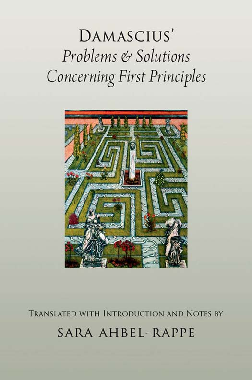
**Meta Description:** Explore Damascius, the last great Neoplatonist philosopher of antiquity, his metaphysical insigh...
View Board
Discover Clitomachus, the Carthaginian philosopher who shaped Academic skepticism. Explore his life, key arguments again...
View Board
Comments