Explore Any Narratives
Discover and contribute to detailed historical accounts and cultural stories. Share your knowledge and engage with enthusiasts worldwide.
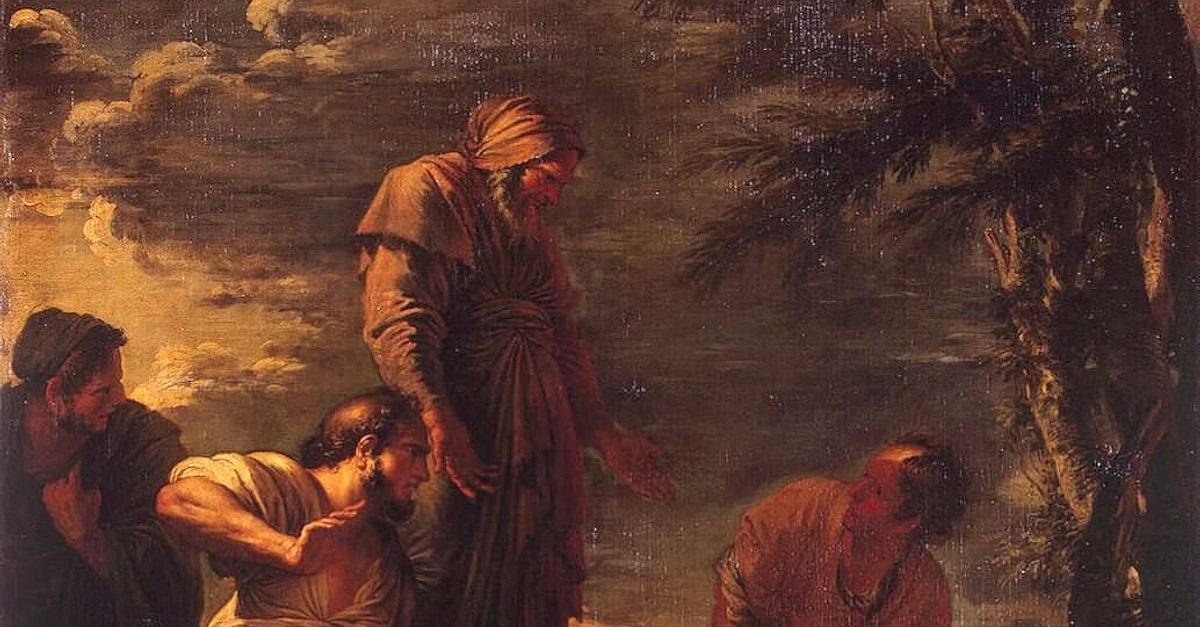
Protagoras, a pivotal figure in ancient Greek philosophy, is renowned as the first and most famous Sophist. Born around 490 BCE in Abdera, Thrace, he revolutionized education by charging fees to teach wealthy youth in rhetoric, virtue, and public speaking. His most famous dictum, "Man is the measure of all things", encapsulates his philosophy of subjective relativism, which has influenced countless debates in epistemology and ethics.
Protagoras' origins were humble, with some accounts suggesting he began his career as a porter. Despite his modest beginnings, he rose to prominence through his intellectual prowess and teaching abilities. His potential influence from Democritus, another notable philosopher from Abdera, remains a subject of debate among scholars.
Protagoras' journey to becoming a celebrated Sophist is a testament to his dedication and skill. He traveled to Athens, where he engaged in debates on moral, political, and educational questions. His emphasis on teachable virtue (aretē) was particularly appealing in the litigious culture of 5th-century BCE Athens.
One of Protagoras' most significant achievements was his association with Pericles, the influential Athenian statesman. This connection not only enhanced his reputation but also provided him with opportunities to influence the political and educational landscape of Athens. His involvement in drafting the constitution for the Athenian colony of Thurii around 444–443 BCE further solidified his status as a key figure in Greek philosophy and politics.
Protagoras' philosophical contributions are vast and varied, but he is best known for his relativistic views and his teachings on rhetoric. His famous dictum, "Man is the measure of all things", suggests that perceptions, knowledge, and judgments are subjective and vary from individual to individual.
This statement, often referred to as the homo mensura principle, is a cornerstone of Protagoras' philosophy. It implies that there are no absolute truths and that each person's perspective is valid in their own right. This idea has had a profound impact on subsequent philosophical thought, particularly in the realms of epistemology and ethics.
In his work On the Gods, Protagoras expressed a form of agnosticism. He stated that no one could know for certain whether the gods exist due to the obscurity of the topic. This stance was quite radical for its time and contributed to his reputation as a controversial thinker.
Protagoras' teachings focused on practical skills such as rhetoric and public speaking, which were essential for success in the civic life of ancient Greece. He believed that virtue could be taught and that these skills were crucial for effective participation in democratic processes.
Protagoras is often credited with inventing professional sophistry. He was one of the first to charge fees for his teachings, making education accessible to those who could afford it. His methods emphasized persuasive dialectic and language, which were highly valued in the competitive environment of Athenian politics.
Plato's dialogues, particularly Protagoras and Theaetetus, provide valuable insights into Protagoras' philosophical views. While Plato often critiques Protagoras' relativism and skepticism, these dialogues highlight the significance of Protagoras' contributions to philosophy. Socrates' engagement with Protagoras in these texts underscores the depth and complexity of his thought.
Protagoras' ideas continue to resonate in contemporary philosophy and education. His emphasis on subjective truth and the teachability of virtue has influenced modern debates in epistemology, postmodernism, and rhetoric. The concept of "post-truth" discourse, prevalent in today's media landscape, can trace some of its roots back to Protagoras' relativistic views.
Recent scholarship has focused on the scope of Protagoras' relativism, debating whether it applies primarily to perceptions or extends to ethical judgments. Additionally, the historicity of legends surrounding Protagoras, such as the alleged burning of his books for impiety, remains a topic of discussion among historians and philosophers.
The advent of digital humanities has opened new avenues for analyzing Platonic portrayals of Protagoras and other Sophists. Furthermore, there has been a sophistic revival in communication studies, highlighting the enduring relevance of Protagoras' teachings on rhetoric and persuasion.
In this first part of our exploration of Protagoras, we have delved into his early life, philosophical contributions, and enduring influence. His ideas on relativism and the teachability of virtue have left an indelible mark on philosophy and education. In the next part, we will further examine his teachings, his interactions with other philosophers, and the broader impact of his work on ancient and modern thought.
Protagoras' influence extended beyond philosophy into the political sphere of ancient Athens. His association with Pericles, the leading statesman of the era, granted him access to high-stakes civic debates. One of his most tangible political contributions was drafting the constitution for the Athenian colony of Thurii around 444–443 BCE, showcasing his practical application of rhetorical and legal expertise.
The constitution for Thurii was a significant undertaking that required balancing democratic principles with colonial governance. Protagoras’ work on this document demonstrated his ability to translate abstract philosophical ideas into functional legal frameworks. Though no complete copies survive, fragments and historical accounts highlight its innovative structure and emphasis on civic participation.
Athens’ litigious culture provided fertile ground for Protagoras’ teachings. He actively participated in public debates that often blended philosophy with legal argumentation. These discussions covered topics such as justice, governance, and the nature of law, reinforcing his reputation as a thinker who could navigate both theoretical and practical realms.
Plato dedicated two major dialogues—Protagoras and Theaetetus—to examining the Sophist’s ideas. These works remain critical for understanding Protagoras’ legacy, even as Plato often positions Socrates as his intellectual counterpart.
In Protagoras, Plato depicts the Sophist as a charismatic teacher who claims to instruct students in virtual virtue. Socrates challenges these assertions, arguing that true wisdom cannot be taught. This dialogue serves as a foundational text for debates about the teachability of ethics and the role of expertise in moral education.
Plato’s Theaetetus directly confronts Protagoras’ relativism through the character of Theodorus. Socrates questions whether “Man is the measure of all things” implies that perceptions—like illusion or error—are equally valid truths. The dialogue underscores tensions between subjective experience and objective reality that continue to shape epistemology.
“If Protagoras were right, then every human opinion would hold equal truth, making folly and wisdom indistinguishable.”
Contemporary scholarship continues to grapple with Protagoras’ complex legacy, particularly his views on relativism and the limits of knowledge. Recent analyses explore how his ideas resonate in today’s “post-truth” discourse and digital communication landscapes.
Scholars remain divided on whether Protagoras’ dictum applies solely to sensory perceptions or extends to moral and ethical judgments. This debate influences modern discussions about subjective truth in fields ranging from politics to artificial intelligence. Key points include:
The rise of digital humanities has enabled new methods for analyzing Protagoras’ influence. Researchers use text-mining tools to trace references to his work in Platonic dialogues and later philosophical texts. Meanwhile, communication studies have revived interest in his rhetorical techniques, highlighting their relevance to modern media and public discourse.
Protagoras’ belief that virtue can be taught remains a cornerstone of modern pedagogy. His approach—focusing on persuasive speech, critical thinking, and civic engagement—continues to inform debate programs, leadership training, and interdisciplinary curricula. Educational institutions often cite his methods when designing courses on logic, ethics, and rhetoric.
Protagoras’ philosophies continue to echo through modern academia, politics, and education. His radical embrace of subjective relativism challenges traditional notions of absolute truth, influencing fields from epistemology to communication studies.
As the first renowned Sophist, Protagoras set the standard for a generation of teachers who prioritized rhetoric over dogma. His approach to persuasive speech and civic engagement laid the groundwork for future scholars, including Gorgias and Prodicus. The Sophistic movement he helped pioneer emphasized practical wisdom over abstract theory, a focus that remains relevant in leadership training today.
Protagoras’ belief in the teachability of virtue (aretē) resonates in contemporary education. Modern curricula in public speaking, critical thinking, and ethics often draw from his methods. His emphasis on adapting arguments to audience and context mirrors modern strategies in debate clubs and corporate training programs.
In an era marked by “post-truth” discourse, Protagoras’ ideas gain renewed significance. His assertion that “Man is the measure of all things” parallels modern debates about subjective experience versus empirical evidence.
The rise of social media and fragmented information ecosystems mirrors the relativism Protagoras championed. His focus on persuasive language over absolute truth finds parallels in algorithm-driven content creation and viral rhetoric. Scholars increasingly analyze his techniques to understand how modern audiences navigate competing narratives.
Recent studies examine Protagoras through lenses of postmodernism and epistemology. Researchers debate whether his relativism applies to moral judgments or only sensory perceptions. Key arguments include:
“Protagoras’ legacy lies not in answers, but in the questions he forced humanity to confront about the nature of truth.”
Protagoras’ life and teachings exemplify the complexity of intellectual innovation in ancient Greece. From his humble beginnings to his role advising statesmen, he reshaped how society understood rhetoric, ethics, and knowledge. His dictum—“Man is the measure of all things”—remains a provocative challenge to modern assumptions about objectivity.
Protagoras’ influence extends far beyond his lifetime. His emphasis on subjective perspective, teachable virtue, and persuasive communication continues to inform education, philosophy, and public discourse. As debates over truth and authority evolve, his ideas offer timeless insights into the human condition.
In a world increasingly defined by diverse viewpoints and digital interaction, Protagoras’ legacy serves as both a mirror and a guide—reminding us that understanding begins with questioning what we accept as fact.



Your personal space to curate, organize, and share knowledge with the world.
Discover and contribute to detailed historical accounts and cultural stories. Share your knowledge and engage with enthusiasts worldwide.
Connect with others who share your interests. Create and participate in themed boards about any topic you have in mind.
Contribute your knowledge and insights. Create engaging content and participate in meaningful discussions across multiple languages.
Already have an account? Sign in here

Aristotle: The Father of Western Philosophy Aristotle, born in 384 BCE in the Macedonian city of Stagira, was a polymat...
View Board
Anaximenes of Miletus was a pre-Socratic philosopher who contributed to natural philosophy, metaphysics and empirical sc...
View Board
Explore the intellectual legacy of Prodicus of Ceos, the Sophist philosopher known for linguistic precision, ethical all...
View Board
"Discover Plato’s enduring legacy, his Theory of Forms, and timeless wisdom shaping modern thought. Explore the Academy,...
View Board
Socrates: The Philosopher Who Died for His Ideas Introduction to Socrates: The Father of Western Philosophy Socrates, t...
View Board
Discover how Plato, the revered ancient Greek philosopher, profoundly impacted Western thought through his extensive con...
View BoardExplore the intriguing life and groundbreaking contributions of Anaximander, the pioneer of pre-Socratic thought and cos...
View Board
Explore the groundbreaking ideas of Anaxagoras, the pre-Socratic philosopher who revolutionized ancient Greek thought by...
View Board
Discover the profound impact of Chrysippus, the "Second Founder of Stoicism," in shaping Stoic philosophy. Explore his g...
View Board
**Meta Description:** Explore Damascius, the last great Neoplatonist philosopher of antiquity, his metaphysical insigh...
View Board
Discover Prodikos of Keos, the ancient Greek philosopher who shaped ethics and language. Explore his groundbreaking theo...
View Board
Aspasia of Miletus: influential companion of Pericles, philosopher, and teacher in classical Athens who defied gender no...
View Board
Explore the life and profound impact of Seneca the Younger—Stoic philosopher, statesman, and playwright in ancient Rome....
View Board
"Explore Aristotle’s philosophy on thought, ethics, and human agency. Discover timeless wisdom for personal growth and m...
View Board
Discover Philolaus, the pre-Socratic pioneer who revolutionized philosophy and astronomy with his non-geocentric model a...
View Board
Discover the foundational principles of Aristotelian physics, exploring motion, causality, and the four causes. Uncover ...
View Board
Discover Hipparchia of Maroneia, the first female Cynic philosopher who defied wealth, class, and gender norms in 4th ce...
View Board
Explore the life and enduring legacy of Zeno of Citium, the founder of Stoicism, whose philosophical insights on virtue,...
View Board
Explore Socrates' timeless method and enduring legacy, from ancient Athens to modern AI ethics, in this journey through ...
View Board
Comments