Explore Any Narratives
Discover and contribute to detailed historical accounts and cultural stories. Share your knowledge and engage with enthusiasts worldwide.
The figure known as O-Swkraths-O-Filosofos-ths-Anazhthshs decodes to the profound title "The Philosopher of the Search." This epithet perfectly encapsulates the legacy of Socrates, the ancient Greek thinker whose relentless pursuit of truth through questioning reshaped human thought. His Socratic method established a timeless framework for investigation, logic, and ethical living. This exploration begins by tracing the roots of philosophy itself, from its etymological meaning to the pivotal shift from myth to reason.
The very word philosophy originates from the Ancient Greek philosophía. This term combines phílos, meaning "loving," with sophía, meaning "wisdom." Thus, philosophy is fundamentally the love of wisdom. It denotes not the possession of knowledge but the active and continuous pursuit of it. This pursuit began in earnest during the 6th century BCE in Ionia, a region of eastern Greece and modern-day Turkey.
This era marked a monumental transition from mythos (myth) to logos (reason). Early thinkers, now known as the Pre-Socratics, started to seek natural explanations for the universe's origins. They moved away from purely mythological narratives, influenced by cultural exchanges across the Eastern Mediterranean. This search for a rational principle, or archē, set the stage for all subsequent Western intellectual tradition.
As noted in scholarly sources, this Ionian revolution was a shift "from myth to rational thought," establishing a new way of understanding the world.
Before Socrates, a group of innovative thinkers laid the essential groundwork. Their primary focus was on cosmology and the fundamental substance of reality.
These Pre-Socratics asked the foundational questions that Socrates and his followers would later refine and redirect. Their work created the intellectual environment where Socratic inquiry could flourish.
Born in Athens around 470 BCE, Socrates represents the pivotal turn in ancient philosophy. Unlike his predecessors, his primary interest was not the cosmos but the human condition. He redirected philosophical inquiry inward, focusing on ethics, virtue, and the nature of a good life. Famously, he wrote nothing himself. Our knowledge of him comes almost entirely from the dialogues of his student, Plato.
Socrates' defining contribution was his dialectical method of questioning. He would engage citizens in conversation, probing their beliefs with a series of deceptively simple questions. This technique, the Socratic method, aimed to expose contradictions in unexamined opinions. His goal was not to provide answers but to illuminate ignorance and stimulate independent thought.
Socrates' famous dictum, "Know thyself," underscores his belief that true wisdom begins with an understanding of one's own limits and nature.
The Socratic method is a powerful tool for critical thinking that remains relevant today. It operates on a basic but profound structure designed to dismantle assumptions and encourage deeper analysis.
This process embodies the essence of being the philosopher of the search. For Socrates, the journey of questioning was more valuable than any fixed destination of dogma.
Socrates attracted a diverse circle of followers, collectively known as the Socratics. Each interpreted and developed his teachings in unique ways, leading to several distinct philosophical schools. Their shared focus was on ethics, logic, and the application of Socratic inquiry to daily life.
This circle demonstrates the fertile and divergent influence of Socrates' search for truth. His method was a tool that could be applied to various ethical and existential questions.
Socrates' relentless questioning of Athenian norms and authorities ultimately led to his downfall. In 399 BCE, he was tried and convicted on charges of impiety and corrupting the youth of Athens. He was sentenced to death by drinking hemlock. His trial and dignified acceptance of his sentence, as recorded in Plato's Apology and Phaedo, became a powerful symbol of the philosopher's commitment to truth over conformity.
His execution did not end his influence. Instead, it cemented his status as a martyr for philosophy. The work of his followers, especially Plato and, later, Plato's student Aristotle, ensured that Socratic inquiry would become the bedrock of Western philosophy. The questions he raised about knowledge, virtue, and governance continue to resonate over two millennia later.
The core principles of Socratic philosophy extend far beyond simple questioning. They form a comprehensive approach to life and knowledge. Central to this is the concept of intellectual humility. Socrates famously claimed to be wise only in knowing that he knew nothing. This admission of ignorance is not an end but the essential starting point for any genuine search for truth.
Another foundational principle is the belief that virtue is knowledge. Socrates argued that no one knowingly does evil. He taught that all wrongdoing stems from ignorance. Therefore, the path to ethical living is through education and rigorous self-examination. This links the pursuit of wisdom directly to the improvement of one's character and the betterment of society.
A key objective in Socratic dialogues was to arrive at clear, universal definitions. Socrates sought to move beyond specific examples to understand the essence of concepts like justice, piety, and courage.
This relentless drive for conceptual clarity remains a cornerstone of philosophical, scientific, and legal reasoning today. It prevents vague thinking and forces a deeper engagement with ideas.
The influence of Socratic inquiry did not remain confined to Athens. It radiated outward, shaping diverse intellectual traditions across the globe. The schools founded by his immediate followers were just the beginning. Plato's Academy, for instance, operated for nearly 900 years, making it one of the longest-running institutions in history.
From these Hellenistic roots, philosophical concepts traveled and transformed. The very word philosophy entered Arabic as falsafa, deeply influencing Islamic philosophers like Al-Farabi and Avicenna. Similarly, the logical frameworks developed from Socratic and Platonic thought found parallels in other traditions.
Scholars note that Socratic methods influenced logical schools in India, such as Nyaya (c. 450 CE), and the dialectical reasoning of Buddhist philosopher Nagarjuna (c. 150 CE), demonstrating a global intellectual thread.
The practical application of Socratic methods in education is one of its most lasting legacies. The Socratic seminar is a staple in modern classrooms, from law schools to secondary education.
This pedagogical approach directly channels the spirit of the philosopher of the search, creating an environment where knowledge is constructed through collaborative inquiry rather than passive reception.
In the 21st century, the principles of Socratic inquiry have found urgent new applications. The digital age, with its overwhelming flow of information and misinformation, demands the critical thinking skills that Socrates championed. His method provides a vital toolkit for navigating complex modern issues.
One significant area is AI ethics and technology. As artificial intelligence systems become more integrated into society, fundamental questions about bias, accountability, and consciousness arise. Socratic questioning forces developers and policymakers to examine their assumptions. It challenges them to define terms like "fairness" and "intelligence" with the same rigor Socrates demanded for "justice."
The Socratic method is a powerful defense against fake news and propaganda. By teaching individuals to question sources, analyze arguments, and seek underlying evidence, it builds intellectual resilience.
This structured form of skepticism is essential for responsible citizenship in the information age. It transforms consumers of media into active, discerning participants in public discourse.
Beyond academia and technology, Socratic principles are increasingly valued in professional and personal development. In leadership training, Socratic questioning helps managers coach employees more effectively by guiding them to find their own solutions.
In business strategy, it is used to challenge underlying business models and uncover innovative opportunities. The core idea of knowing what you do not know fosters a culture of continuous learning and adaptability, which is crucial for organizational success. Furthermore, the Socratic focus on self-examination aligns with modern practices in mindfulness and cognitive behavioral therapy, promoting mental clarity and ethical decision-making.
The legacy of Socrates: The Philosopher of the Search is not confined to history books. Contemporary scholarship continues to explore and reinterpret his methods and ideas. While no major breakthroughs were specifically noted in 2025, the academic engagement with Socratic thought is more vibrant than ever.
Modern philosophers and classicists use advanced tools to analyze the Socratic dialogues preserved by Plato. Digital humanities projects employ AI-enhanced text analysis to study patterns of argumentation, word usage, and logical structures. This allows for a deeper understanding of the nuances within the dialogues and the enduring power of Socratic inquiry.
The application of digital tools represents a 21st-century continuation of the search itself, using new methods to ask ancient questions about knowledge and virtue.
Recent scholarly trends highlight a renewed focus on the practical applications of Socratic ethics. Researchers are examining how his concepts of virtue and self-knowledge can address modern ethical dilemmas.
This ongoing research ensures that the philosophical search initiated in ancient Athens remains a living, evolving tradition relevant to contemporary life.
The influence of Socratic philosophy permeates our language and cultural consciousness in profound ways. Many phrases and concepts that originated in his circle have become embedded in Western thought. For instance, the Delphic maxim "Know Thyself," which Socrates championed, is a cornerstone of psychology and self-help.
Other notable aphorisms from the era, such as "He himself said it" (an appeal to Pythagorean authority) or "You can't take from one who has nothing," reflect the witty, paradoxical style of reasoning that characterized the Socratics. Even the Biblical warning in Colossians 2:8 against "philosophy and empty deceit" acknowledges the powerful cultural force that these Greek thinkers had become by the 1st century CE.
The archetype of the philosopher as a relentless questioner is a recurring theme in literature and film. Characters who challenge the status quo and seek deeper truth are modern heirs to the Socratic tradition.
Furthermore, the very structure of legal systems, particularly the adversarial process of cross-examination, is a direct descendant of the Socratic method. Lawyers engage in a form of elenchus, questioning witnesses to expose inconsistencies and arrive at a version of the truth. This demonstrates how a philosophical practice evolved into a foundational pillar of modern justice.
The journey through the life and ideas of Socrates, the Philosopher of the Search, reveals an intellectual heritage of unparalleled depth. From the Pre-Socratics' first rational inquiries into nature to Socrates' pivotal turn toward ethics and his enduring method of questioning, this tradition laid the groundwork for Western philosophy.
The core tenets—intellectual humility, the relentless pursuit of truth, the belief that virtue is knowledge, and the importance of conceptual clarity—are as vital today as they were in ancient Athens. His influence radiated through his followers, like Plato and Antisthenes, and spread across cultures, informing logic, ethics, and education for millennia.
To summarize the enduring lessons of this philosophical search, several key points stand out.
These principles provide a timeless framework for navigating the complexities of existence, from personal dilemmas to global challenges.
In a world increasingly dominated by soundbites, algorithms, and polarized opinions, the figure of Socrates serves as a powerful reminder of a different path. He embodies the spirit of patient, disciplined inquiry. The search for truth is not a destination to be reached but a continuous, active process.
The challenges of the digital age—misinformation, ethical dilemmas in technology, and superficial engagement—make the Socratic method more necessary than ever. It equips us with the tools to think critically, to defend our views rationally, and to remain open to new evidence. The legacy of the philosopher of the search is an invitation to each generation to embrace the love of wisdom. It is a call to engage in the courageous, lifelong work of questioning, learning, and striving to live a life of virtue and understanding. The search, as Socrates demonstrated, is the very essence of a meaningful life.
Your personal space to curate, organize, and share knowledge with the world.
Discover and contribute to detailed historical accounts and cultural stories. Share your knowledge and engage with enthusiasts worldwide.
Connect with others who share your interests. Create and participate in themed boards about any topic you have in mind.
Contribute your knowledge and insights. Create engaging content and participate in meaningful discussions across multiple languages.
Already have an account? Sign in here

Socrates: The Philosopher Who Died for His Ideas Introduction to Socrates: The Father of Western Philosophy Socrates, t...
View Board
"Discover Plato’s enduring legacy, his Theory of Forms, and timeless wisdom shaping modern thought. Explore the Academy,...
View Board
Aristotle: The Father of Western Philosophy Aristotle, born in 384 BCE in the Macedonian city of Stagira, was a polymat...
View Board
Discover how Plato, the revered ancient Greek philosopher, profoundly impacted Western thought through his extensive con...
View Board
Explore the timeless legacy of Hesiod, the poet of ancient wisdom and myth, whose works like "Theogony" and "Works and D...
View Board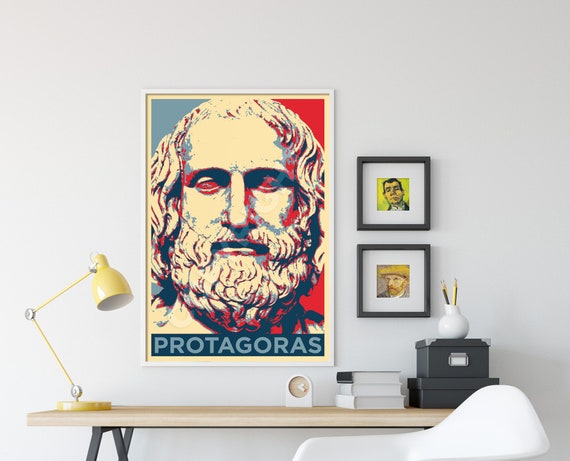
Protagoras: The Father of Sophistry and Relativism Introduction to Protagoras Protagoras, a pivotal figure in ancient G...
View Board
Explore the profound legacy of Scott Buchanan, a pioneering thinker in philosophy and liberal arts education. Discover h...
View Board
"Explore Aristotle’s philosophy on thought, ethics, and human agency. Discover timeless wisdom for personal growth and m...
View BoardExplore the intriguing life and groundbreaking contributions of Anaximander, the pioneer of pre-Socratic thought and cos...
View Board
Explore the groundbreaking ideas of Anaxagoras, the pre-Socratic philosopher who revolutionized ancient Greek thought by...
View Board
Discover Aristotle's life, legacy, and groundbreaking contributions to philosophy, science, and ethics. Explore his endu...
View Board
Explore the intellectual legacy of Prodicus of Ceos, the Sophist philosopher known for linguistic precision, ethical all...
View Board
Explore the life and profound impact of Seneca the Younger—Stoic philosopher, statesman, and playwright in ancient Rome....
View Board
Discover Prodikos of Keos, the ancient Greek philosopher who shaped ethics and language. Explore his groundbreaking theo...
View Board
Anaximenes of Miletus was a pre-Socratic philosopher who contributed to natural philosophy, metaphysics and empirical sc...
View Board
Discover the profound impact of Chrysippus, the "Second Founder of Stoicism," in shaping Stoic philosophy. Explore his g...
View Board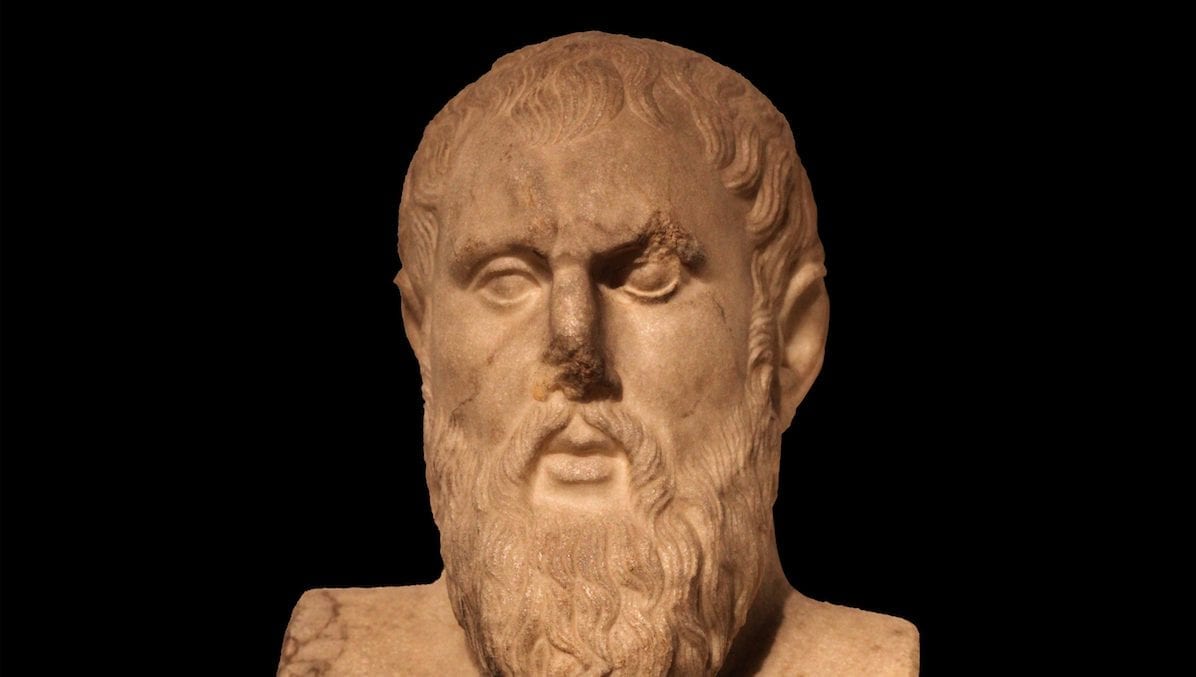
Explore the life and enduring legacy of Zeno of Citium, the founder of Stoicism, whose philosophical insights on virtue,...
View Board
"Discover Antisthenes, the first Cynic philosopher. Explore his radical ideas on self-sufficiency, challenging materiali...
View Board
Delve into Anaximander's cosmology, the boundless apeiron, and his pioneering scientific theories. Explore his profound ...
View Board
Comments