Explore Any Narratives
Discover and contribute to detailed historical accounts and cultural stories. Share your knowledge and engage with enthusiasts worldwide.
Aristotle, known in Greek as "Aristotelis o Megalos Filosofos tis Archaiotitas," stands as one of the most influential figures in Western philosophy and science. His empirical approach and systematic works have shaped countless disciplines, from logic to biology. This article explores his life, contributions, and enduring impact on modern thought.
Born in 384 BCE in Stagira, a small town in northern Greece, Aristotle was the son of Nicomachus, a physician to the Macedonian king Amyntas III. This medical background likely influenced his later interest in biology and empirical observation. At the age of 17, he joined Plato's Academy in Athens, where he studied for nearly 20 years.
Aristotle's time at the Academy was formative. He immersed himself in philosophy, mathematics, and the natural sciences. However, he eventually diverged from Plato's idealism, favoring a more empirical approach that emphasized observation and evidence over abstract theories.
In 343 BCE, Aristotle was invited by King Philip II of Macedon to tutor his son, Alexander the Great. This period, lasting about three years, was crucial in shaping Alexander's intellectual and strategic mindset. Aristotle's teachings on politics, ethics, and the natural world left a lasting impression on the future conqueror.
While the exact content of Aristotle's lessons remains speculative, it is believed he introduced Alexander to Greek culture, literature, and philosophy. This education played a role in Alexander's later efforts to spread Hellenistic culture across his vast empire.
After Alexander's ascent to power, Aristotle returned to Athens and founded the Lyceum in 335 BCE. Unlike Plato's Academy, which focused on abstract philosophy, the Lyceum emphasized research and empirical study. Aristotle's school became known as the Peripatetic school due to his habit of teaching while walking.
The Lyceum was a hub of intellectual activity, housing an extensive library, maps, and specimens. Aristotle and his students conducted groundbreaking research in biology, physics, and metaphysics. Their work laid the foundation for many modern scientific disciplines.
Aristotle's methodology was revolutionary for his time. He believed in the importance of observation and experimentation, a stark contrast to the abstract idealism of his predecessors. His work in biology, for instance, was based on meticulous dissection and detailed notes on animal anatomy.
One of his most notable contributions was his study of the chick embryo. Aristotle observed the development of the heart and blood vessels, providing early insights into embryology. His work in this field was so advanced that it remained influential for centuries.
Aristotle's empirical approach laid the groundwork for the scientific method. His emphasis on observation and evidence-based reasoning has influenced generations of scientists and philosophers. Even today, his ideas resonate in fields like AI ethics and environmental philosophy.
Modern digital humanities projects have digitized Aristotle's complete works, allowing for advanced analysis and new interpretations. His logic, in particular, underpins contemporary AI reasoning models, demonstrating his enduring relevance.
Aristotle's personal life was marked by both triumph and tragedy. He married Pythias, the adopted daughter of Hermias, a friend and ruler of Atarneus. After Pythias's death, he formed a relationship with Herpyllis, with whom he had a son, Nicomachus.
Following Alexander the Great's death in 323 BCE, anti-Macedonian sentiment grew in Athens. Aristotle, who had ties to the Macedonian court, fled to Chalcis to avoid persecution. He died there in 322 BCE, reportedly from a stomach illness.
Aristotle's influence extends far beyond his lifetime. His works have been studied and debated for over two millennia, shaping Western thought in profound ways. During the Middle Ages, his ideas were central to Christian Scholasticism, with thinkers like Thomas Aquinas integrating Aristotelian philosophy into Christian theology.
In the Islamic world, philosophers such as Averroes preserved and expanded upon Aristotle's ideas, ensuring their transmission to medieval Europe. Even during the Renaissance, when new scientific methods emerged, Aristotle's framework remained a touchstone for intellectual inquiry.
Aristotle's life and work represent a pivotal moment in the history of philosophy and science. His empirical approach, systematic works, and dedication to research have left an indelible mark on human knowledge. In the next part of this article, we will delve deeper into his major works, exploring their content and enduring significance.
Aristotle's written legacy is vast, with approximately 150 works attributed to him, though only about one-third survive. His treatises cover a wide range of subjects, from logic and metaphysics to ethics, politics, and the natural sciences. Below, we explore some of his most influential works and their impact on philosophy and science.
Aristotle's Organon is a collection of six works on logic, which together form the basis of formal logic. The most famous of these is the Prior Analytics, where Aristotle introduces the syllogism, a structured form of deductive reasoning. A syllogism consists of two premises and a conclusion, such as:
All humans are mortal. (Major premise)Socrates is a human. (Minor premise)
Therefore, Socrates is mortal. (Conclusion)
This framework became a cornerstone of logical reasoning and remains fundamental in philosophy, mathematics, and computer science. Aristotle's work in logic was so groundbreaking that it dominated the field for over two thousand years, until the advent of modern symbolic logic in the 19th century.
One of Aristotle's most enduring works, the Nicomachean Ethics, explores the nature of happiness, virtue, and human flourishing. Aristotle argues that the ultimate goal of human life is eudaimonia, often translated as "happiness" or "flourishing." Unlike mere pleasure, eudaimonia is achieved through a life of virtue and rational activity.
Aristotle identifies two types of virtues:
He introduces the concept of the "Golden Mean", the idea that virtue lies between extremes. For example, courage is the mean between recklessness and cowardice. This framework has influenced ethical theories for centuries and remains relevant in modern discussions of virtue ethics and moral psychology.
In his work Politics, Aristotle examines the nature of the state, citizenship, and governance. He argues that humans are "political animals", meaning that we naturally form communities and require social structures to thrive. Aristotle analyzes various forms of government, classifying them based on who holds power and whether the rule is just or corrupt.
He identifies six types of governance:
Aristotle favors a polity, a balanced system that combines elements of democracy and oligarchy, as the most stable and just form of government. His ideas have shaped political theory and continue to inform debates about governance and civic responsibility.
Aristotle's work in the natural sciences was as groundbreaking as his philosophical contributions. He approached the study of nature with a commitment to empirical observation, laying the foundation for modern biology, physics, and meteorology. His writings in these fields were so comprehensive that they remained authoritative for centuries.
Aristotle's biological works, such as History of Animals and On the Parts of Animals, demonstrate his meticulous approach to the study of life. He dissected over 50 species and made detailed observations of their anatomy, behavior, and development. His studies on the chick embryo, for example, revealed the early stages of heart development, a discovery that was ahead of its time.
Some of his key biological contributions include:
While some of Aristotle's biological theories were later corrected (e.g., his belief in spontaneous generation), his empirical methods set a precedent for future scientists. His work influenced later biologists, including Charles Darwin, who cited Aristotle's observations in On the Origin of Species.
In his work Physics, Aristotle explores the fundamental principles of nature, including motion, cause, and change. He introduces the concept of four causes, which explain why things exist and how they change:
Aristotle's physics also includes his theory of motion, where he argues that objects move toward their "natural place." For example, he believed that heavy objects fall because they are seeking their natural place at the center of the Earth. While this theory was later superseded by Newtonian physics, Aristotle's emphasis on teleology (purpose-driven explanation) influenced scientific thought for centuries.
Aristotle's Meteorology is one of the earliest known treatises on the subject. In this work, he explores natural phenomena such as weather, earthquakes, and celestial events. Some of his key ideas include:
While many of Aristotle's meteorological theories were later revised, his work laid the groundwork for the systematic study of Earth's processes. His emphasis on observation and classification set a standard for future scientific inquiry.
Aristotle's ideas have had a profound and lasting impact on Western thought. His works were preserved, translated, and expanded upon by scholars across cultures and centuries. Below, we explore some of the key ways his philosophy influenced later thinkers and movements.
During the Middle Ages, Aristotle's works were integrated into Christian theology through the efforts of scholars like Thomas Aquinas. Aquinas, a 13th-century theologian, sought to reconcile Aristotelian philosophy with Christian doctrine, particularly in his seminal work Summa Theologica.
Aquinas adopted Aristotle's logical frameworks and ethical theories, using them to explore questions of faith, morality, and the existence of God. For example, he employed Aristotle's concept of the "Unmoved Mover" (a prime cause of all motion) to argue for the existence of a divine being. This synthesis of philosophy and theology became known as Scholasticism and dominated medieval intellectual life.
Aristotle's works were also preserved and expanded upon by Islamic scholars, particularly during the Islamic Golden Age. One of the most influential figures in this tradition was Averroes (Ibn Rushd), a 12th-century Andalusian philosopher.
Averroes wrote extensive commentaries on Aristotle's works, defending his ideas against critics and clarifying his theories. His interpretations of Aristotle's logic and metaphysics were highly influential in both the Islamic world and medieval Europe. Averroes' commentaries played a crucial role in reintroducing Aristotelian thought to Western scholars after the decline of the Roman Empire.
During the Renaissance, Aristotle's works experienced a revival as scholars rediscovered classical texts. However, his ideas also faced challenges from emerging scientific methods. Thinkers like Galileo Galilei and René Descartes questioned Aristotelian physics, particularly his theories of motion and cosmology.
Despite these challenges, Aristotle's influence persisted. His emphasis on empirical observation and systematic inquiry laid the foundation for the scientific revolution. Even as new theories emerged, Aristotle's methods continued to shape the way scientists approached the study of nature.
In modern philosophy, Aristotle's ideas have seen a resurgence, particularly in the field of virtue ethics. Philosophers like Alasdair MacIntyre and Martha Nussbaum have drawn on Aristotle's Nicomachean Ethics to develop contemporary ethical theories that emphasize character, virtue, and human flourishing.
Aristotle's concepts have also found applications in psychology and artificial intelligence. His ideas about rational decision-making and moral development inform modern cognitive theories, while his logic underpins AI reasoning models. Additionally, his work on narrative structure in the Poetics has influenced modern storytelling, from literature to film.
Aristotle's contributions to philosophy, science, and ethics have left an indelible mark on human knowledge. His empirical approach, systematic works, and commitment to rational inquiry continue to inspire scholars and scientists today. Below, we highlight some of the key aspects of his enduring legacy.
Aristotle's influence on education is profound. His works formed the backbone of the liberal arts curriculum in medieval universities, where students studied the trivium (grammar, logic, and rhetoric) and the quadrivium (arithmetic, geometry, music, and astronomy). His logical frameworks, in particular, were central to the development of critical thinking skills.
Today, Aristotle's ideas continue to shape educational philosophies. His emphasis on holistic learning, which integrates ethics, science, and the arts, resonates with modern approaches to interdisciplinary education. Many contemporary educators advocate for a return to Aristotelian principles, particularly in the study of ethics and civic responsibility.
Aristotle's observations on the natural world have also found relevance in modern environmental philosophy. His teleological view of nature—where all things have a purpose or function—has been reinterpreted in the context of ecological systems. Scholars argue that Aristotle's emphasis on balance and harmony in nature aligns with contemporary ideas about sustainability and biodiversity.
His work on animal behavior and classification has also informed modern ecological studies. Aristotle's detailed descriptions of ecosystems and species interactions provide early insights into the interconnectedness of life, a concept central to modern environmental science.
Aristotle's ethical theories have practical applications in leadership and business ethics. His concept of the Golden Mean is often cited in discussions of effective leadership, where balance and moderation are key to decision-making. Additionally, his emphasis on virtue and character has influenced modern theories of ethical leadership.
In the business world, Aristotle's ideas about justice and fairness are applied to corporate governance and social responsibility. His belief that ethical behavior is essential for human flourishing resonates with modern efforts to create sustainable and socially responsible businesses.
Aristotle's life and work represent a cornerstone of Western intellectual tradition. His contributions to logic, ethics, politics, and the natural sciences have shaped countless disciplines and continue to inspire new generations of thinkers. In the final part of this article, we will explore Aristotle's cultural legacy, his impact on modern media, and the ongoing relevance of his ideas in today's world.
Aristotle's influence extends beyond academia into popular culture and modern media. His ideas have been referenced in films, literature, and digital content, making his philosophy accessible to a broader audience. This section explores how Aristotle's legacy continues to thrive in contemporary discussions and entertainment.
Aristotle's theories on storytelling, particularly in his work Poetics, have profoundly influenced modern narrative structures. His concept of tragedy, which includes elements like catharsis (emotional purification) and the three-act structure, remains a foundation for screenwriting and playwriting.
Some notable examples of Aristotle's influence in modern media include:
His work on rhetoric has also shaped modern communication, from political speeches to advertising. Aristotle's three modes of persuasion—ethos (credibility), pathos (emotion), and logos (logic)—are still taught in public speaking and marketing courses.
In the digital age, Aristotle's works have been preserved and analyzed through digital humanities projects. His complete writings have been digitized, allowing scholars to use AI and data analysis to uncover new insights. Some key developments include:
These digital initiatives ensure that Aristotle's philosophy remains dynamic and relevant in the 21st century.
Aristotle's empirical approach laid the groundwork for modern scientific inquiry. His methods of observation and classification influenced fields from biology to computer science. This section examines his lasting impact on technology and scientific thought.
Aristotle's logic, particularly his work on syllogisms, is foundational to artificial intelligence. Modern AI systems rely on logical frameworks to process information and make decisions. Some key connections include:
As AI continues to evolve, Aristotle's emphasis on rationality and purpose remains a guiding principle for developers.
Aristotle's observations on nature have found new relevance in environmental science. His teleological view—that nature operates with purpose—aligns with modern ecological theories. Key contributions include:
Environmental philosophers often cite Aristotle's work to argue for ethical stewardship of the planet.
Beyond academia and science, Aristotle's ideas offer practical wisdom for daily living. His theories on ethics, happiness, and human flourishing provide timeless guidance for personal growth and well-being.
Aristotle's virtue ethics emphasizes character development as the path to a fulfilling life. Modern applications include:
By focusing on virtues like courage, honesty, and compassion, individuals can achieve eudaimonia—a life of meaning and purpose.
Aristotle's theories on human behavior and emotions have influenced modern psychology. His work on the soul (De Anima) explores the relationship between mind and body, a topic central to cognitive science. Key connections include:
Psychologists continue to draw on Aristotle's ideas to understand human motivation and mental health.
Aristotle's contributions to philosophy, science, and ethics have shaped human thought for over two millennia. His empirical approach, systematic works, and emphasis on virtue continue to inspire scholars, scientists, and individuals seeking a meaningful life. Below are the key takeaways from his enduring legacy:
As we navigate the complexities of the modern world, Aristotle's wisdom offers a timeless guide to rational thinking, ethical living, and the pursuit of happiness. His legacy reminds us that the quest for knowledge and virtue is a journey worth undertaking.
In the words of Aristotle himself: "We are what we repeatedly do. Excellence, then, is not an act, but a habit." This principle, like his philosophy, endures as a beacon of insight and inspiration.
Your personal space to curate, organize, and share knowledge with the world.
Discover and contribute to detailed historical accounts and cultural stories. Share your knowledge and engage with enthusiasts worldwide.
Connect with others who share your interests. Create and participate in themed boards about any topic you have in mind.
Contribute your knowledge and insights. Create engaging content and participate in meaningful discussions across multiple languages.
Already have an account? Sign in here

"Discover Plato’s enduring legacy, his Theory of Forms, and timeless wisdom shaping modern thought. Explore the Academy,...
View Board
Explore the enduring legacy of Horace, one of Rome's revered poets, in this comprehensive article. Delve into his master...
View Board
Explore the life and profound impact of Seneca the Younger—Stoic philosopher, statesman, and playwright in ancient Rome....
View Board
Discover Aspasia of Miletus: the intellectual teacher and political influencer who shaped ancient Athens. Explore her en...
View Board
Discover the enduring legacy of Philolaus, a visionary Pre-Socratic philosopher who transformed ancient Greek philosophy...
View Board
Aristotle: The Father of Western Philosophy Aristotle, born in 384 BCE in the Macedonian city of Stagira, was a polymat...
View Board
Explore the timeless legacy of Hesiod, the poet of ancient wisdom and myth, whose works like "Theogony" and "Works and D...
View Board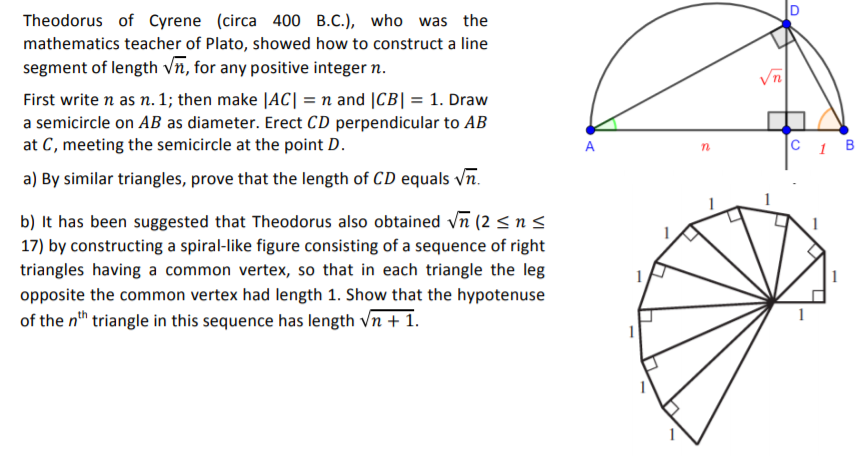
Theodorus of Cyrene, the ancient Greek mathematician and Plato's teacher, revolutionized geometry with his work on irrat...
View Board
"Discover Antisthenes, the first Cynic philosopher. Explore his radical ideas on self-sufficiency, challenging materiali...
View Board
>**Meta Description:** Explore the life and legacy of Sophocles, the master of Greek tragedy. Learn about his major work...
View Board
Discover Prodikos of Keos, the ancient Greek philosopher who shaped ethics and language. Explore his groundbreaking theo...
View Board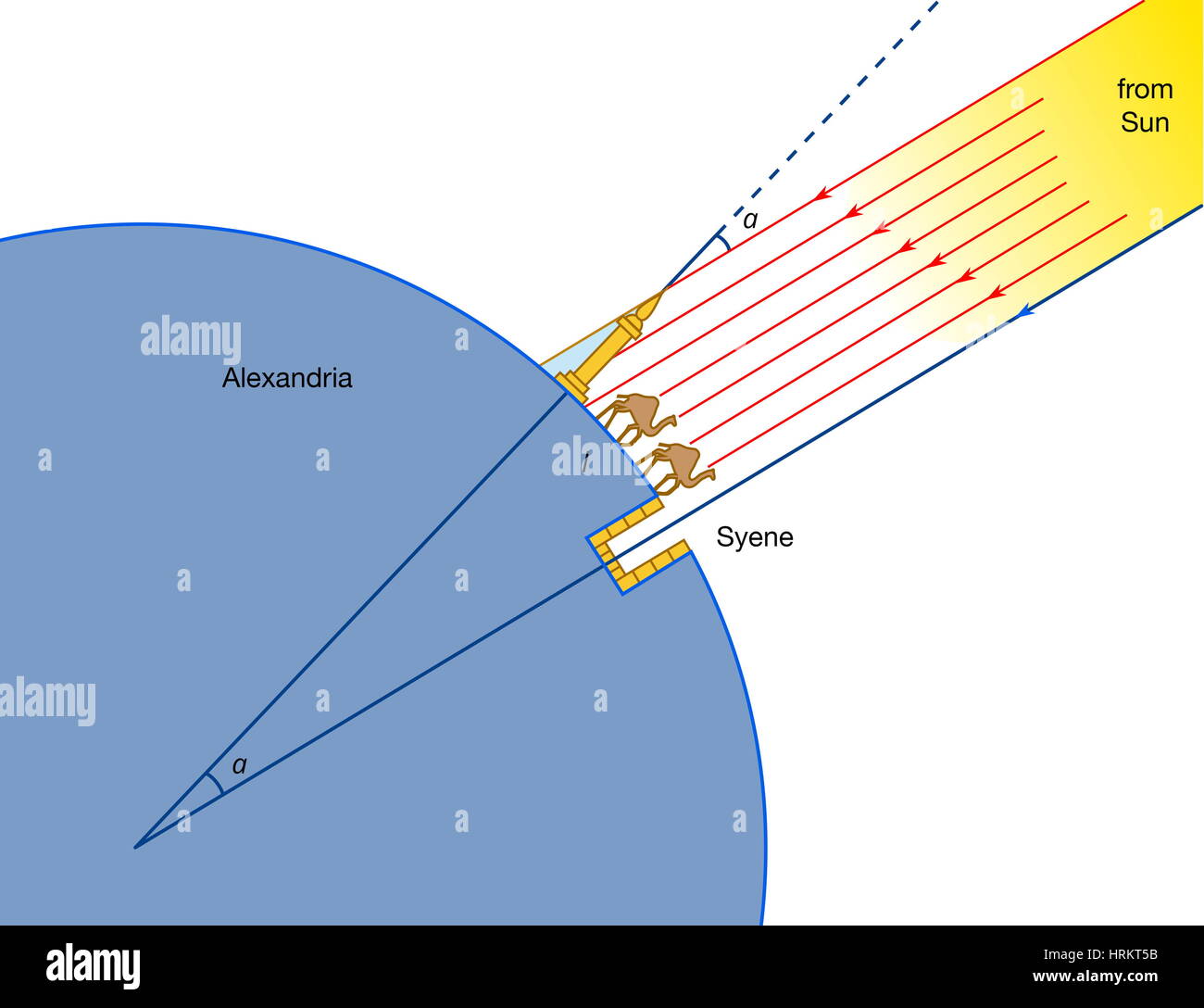
Eratosthenes: The Ptolemaic Genius of ancient Greece Eratosthenes of Cyrene (c. 276–194 BC) was not only a polymath and...
View Board
Discover the enigmatic life of Aspasia of Phocis, an influential yet overlooked figure in ancient history. Unveil her su...
View Board
Explore Socrates' timeless method and enduring legacy, from ancient Athens to modern AI ethics, in this journey through ...
View Board
**Meta Description:** Discover *Pythagoras*, the ancient Greek philosopher who shaped mathematics, philosophy, and sci...
View Board
Explore the profound legacy of Scott Buchanan, a pioneering thinker in philosophy and liberal arts education. Discover h...
View Board
Discover how Plato, the revered ancient Greek philosopher, profoundly impacted Western thought through his extensive con...
View Board
Explore the life and enduring legacy of Gaius Maecenas, the iconic Roman patron of the arts and political advisor whose ...
View Board
Delve into Anaximander's cosmology, the boundless apeiron, and his pioneering scientific theories. Explore his profound ...
View Board
Comments