Explore Any Narratives
Discover and contribute to detailed historical accounts and cultural stories. Share your knowledge and engage with enthusiasts worldwide.
Hipparchia of Maroneia stands as one of the most revolutionary figures in ancient philosophy. As the first recorded female Cynic philosopher, she radically rejected wealth, social class, and gender norms. Her life and choices in the 4th century BCE continue to resonate with modern discussions on equality, anti-materialism, and living authentically. This article explores her profound philosophical legacy and enduring relevance.
Hipparchia was born around 350 BCE in Maroneia, Thrace, into a life of privilege. Her family was wealthy, granting her a comfortable future. However, she encountered the teachings of a beggar-philosopher named Crates of Thebes. This meeting sparked an intellectual and spiritual transformation. She chose to abandon her aristocratic life entirely to embrace the harsh, ascetic principles of Cynicism.
Her decision was not merely personal but a direct challenge to societal structures. Her family strongly opposed the union, fearing the disgrace of her marrying a penniless, unconventional man. In response, Hipparchia issued an ultimatum that has echoed through history. She declared she would only marry Crates, threatening to take her own life if denied. Faced with her unwavering resolve, her parents relented.
Her famous statement to her family’s objections encapsulates the Cynic creed: "Is a man or woman who knows what everything is worth. Meaning to have everything but choose to have nothing because everything is worth nothing."
Marriage to Crates was just the beginning of her defiance. In ancient Athens, women were expected to remain in the domestic sphere, managing the household. Hipparchia shattered this convention. She donned the simple Cynic cloak, the tribōn, traditionally worn only by men. More shockingly, she lived and begged openly with her husband in public spaces.
She participated fully in the Cynic practice of "anaideia" or shamelessness. Ancient sources, like Diogenes Laërtius, note she shared her marital bed with Crates in public porticoes. This act was a philosophical statement, asserting that natural human acts held no inherent shame. It was a radical performance challenging artificial social propriety.
To grasp Hipparchia’s radicalism, one must understand the school she embraced. Cynicism originated with figures like Antisthenes and the famous Diogenes of Sinope. The philosophy was built on a core, simple principle: virtue (aretē) is the only good. Everything else—wealth, fame, social status, and even conventional morality—was considered an unnatural distraction.
The Cynic path to virtue was through rigorous askesis, or disciplined training. This meant renouncing material comforts and living "according to nature" in its simplest form. Cynics practiced self-sufficiency (autarkeia) by begging for food, wearing minimal clothing, and critiquing societal conventions (nomos) through provocative acts.
Hipparchia did not just marry a Cynic; she became a fully realized Cynic philosopher herself. She was not a silent follower but an active practitioner and debater. By living and dressing as an equal to male Cynics, she demonstrated that virtue had no gender. Her life was her primary philosophical treatise, proving that Cynic ideals of freedom and simplicity were accessible to all humans.
She also raised her son, Pasicles, within this tradition. This ensured the Cynic way of life extended to the family unit, challenging conventional child rearing practices of the elite. Her entire existence—from marriage to motherhood—was a continuous, public application of Cynic doctrine.
Unlike most women of her time, Hipparchia directly engaged in philosophical debates. Her intellectual prowess is famously documented in an encounter with the Cyrenaic philosopher Theodorus the Atheist. When he challenged her presence, suggesting she should be at home doing "women's work," she offered a brilliant rebuttal.
She asked Theodorus if he believed he had made a wrong choice in dedicating his life to philosophy. When he agreed he had not erred, Hipparchia applied the same logic to herself. She argued that if it was not wrong for Theodorus to spend his time on philosophy, then it could not be wrong for her either. Her argument was a masterful use of Socratic logic to dismantle gender-based exclusion.
This debate is historically monumental. It is one of the earliest recorded instances in Western thought where a woman successfully defended her right to intellectual pursuit on equal footing with men. She asserted her identity not as a woman who philosophizes, but simply as a philosopher, period. Her legacy is preserved through these accounts in Diogenes Laërtius's 3rd-century CE work, "Lives of Eminent Philosophers," which remains our primary source.
Hipparchia's story is extraordinary partly due to its rarity. The historical record of ancient Greek philosophy is overwhelmingly male. Analysis of databases like the Stanford Encyclopedia of Philosophy suggests that of approximately 300 known ancient Greek philosophers, only about 20 are documented women.
This places Hipparchia within a tiny minority, representing roughly 7% of recorded female thinkers from that era. Her documented presence and active voice make her an exceptionally important figure for understanding the full scope of ancient intellectual life.
While no new primary texts or major archaeological finds related to Hipparchia have emerged recently, scholarly and cultural interest in her has grown significantly. She is increasingly seen through a modern feminist lens as an early pioneer of gender equality. Philosophers like Martha C. Nussbaum have analyzed her in works examining Hellenistic ethics, such as "The Therapy of Desire."
The rise of digital education has also revived her legacy. Projects like the cited Prezi presentation make her story accessible to students globally. This aligns with a broader trend where interest in practical ancient philosophies, particularly Stoicism and Cynicism, has surged in the 21st century.
Hipparchia’s choice of radical poverty and freedom speaks directly to contemporary movements questioning materialism. Her life offers a historical blueprint for rejecting societal pressures in pursuit of a life of authentic virtue. Her story, preserved for millennia, continues to challenge and inspire.
Hipparchia of Maroneia's philosophy was not theoretical but intensely practical. Her entire life served as a performed argument for a radical worldview. The core pillars of her thought directly mirrored Cynic doctrine, yet she uniquely applied them as a woman in a patriarchal society. This application gave her philosophy a distinct edge focused on practical liberation.
Her primary goal was achieving autarkeia, or complete self-sufficiency. This meant freedom from all external dependencies: wealth, social opinion, and even traditional family structures. By marrying Crates and adopting a beggar’s life, she severed dependency on her wealthy birth family. Her choices demonstrated that true security comes from within, not from material or social capital.
Hipparchia embraced askesis, the rigorous training of desires. This discipline was her path to virtue. She actively trained herself to desire less, finding freedom in simplicity. Her ascetic practices included wearing a single rough cloak, carrying a beggar’s pouch, and sleeping in public temples or porticoes.
This discipline rejected Hellenistic ideals of feminine beauty and adornment. By refusing jewelry, fine clothes, and a sheltered home, she critiqued the system that valued women as ornamental objects. Her physical austerity was a powerful statement of intellectual and moral independence.
Her practice of anaideia, or shamelessness, was perhaps her most controversial tool. By ignoring taboos around public behavior, she exposed them as mere social conventions (nomos) with no basis in natural law (physis).
Placing Hipparchia's Cynicism alongside other contemporary philosophies highlights its radical nature. Unlike Plato’s Academy, which theorized about ideal forms in a polis, Cynicism was a philosophy of the streets. It also differed sharply from the emerging Epicureanism, which sought a tranquil life through moderated pleasure and private friendship.
The Stoics, who later adopted and softened many Cynic concepts, admired figures like Hipparchia. They shared the core ideal of living in accordance with nature and valuing virtue above all else. However, Stoics like Zeno of Citium believed in participating in public life, while Cynics like Hipparchia often renounced it entirely as corrupt.
The contrast with Aristotle, her rough contemporary, is stark. Aristotle famously argued women were "defective males" and naturally suited to subservient, domestic roles. Hipparchia’s entire existence was a living refutation of this biological and social determinism.
Her life posed a fundamental question: if a woman can achieve the Cynic ideal of virtue, does gender have any real philosophical significance? Her practical answer was a resounding "no".
Modern feminist philosophy has reclaimed Hipparchia as a proto-feminist icon. She is celebrated not for writing lengthy texts, but for using her life as a text itself. Her actions prefigured key feminist concepts, including the rejection of patriarchy, the performative nature of gender roles, and the pursuit of equality through radical personal choice.
Contemporary scholars analyze her through the lens of embodied philosophy. She demonstrated that the personal is indeed philosophical. Every choice—from her clothing to her marriage—was a philosophical act challenging the status quo. This makes her a compelling figure for existentialist and feminist thinkers who see freedom in self-definition.
Her legacy is also a reminder of the historical erasure of women's intellectual contributions. As one of only ~20 documented female philosophers from ancient Greece, her preserved story is statistically rare and critically important.
Hipparchia's role as a mother is a crucial but often overlooked part of her legacy. She and Crates raised their son, Pasicles, within the Cynic tradition. This was a revolutionary approach to child-rearing and education in the ancient world. Instead of preparing him for a career in politics or commerce, they educated him for a life of virtue and self-sufficiency.
This practice challenged the Athenian norm where a citizen’s son was groomed for public life and to inherit family wealth. By teaching Pasicles to value virtue over status, Hipparchia applied her philosophy to the family unit. She showed that Cynicism was not just for individuals but could form the basis of an alternative social structure.
The 21st century has seen a significant revival of interest in Hipparchia's story. This resurgence intersects with modern cultural movements that champion simplicity, ethical living, and gender equality. Her life provides a historical precedent for current anti-consumerist and minimalist trends.
In literature, she is the subject of novels and historical fiction that reimagine her inner world. In digital media, philosophy educators use her story in videos, blogs, and podcasts to introduce concepts of ancient ethics. She is often cited alongside Stoic figures in discussions about resilience and personal freedom, though her Cynicism was far more radical.
The post-2020 era, with its increased reflection on lifestyle and values, has created fertile ground for Hipparchia’s philosophy. Modern minimalism, which advocates owning fewer possessions to focus on what matters, echoes her radical renunciation. The data shows a tangible connection.
Hipparchia’s choice to "have everything but choose to have nothing" resonates deeply in an age of ecological crisis and material oversaturation. She represents the ultimate commitment to principle over comfort.
While inspirational, Hipparchia’s lifestyle and philosophy are not without their critics, both ancient and modern. Some ancient commentators viewed Cynic practices like begging and public indecency as mere performance rather than profound philosophy. They questioned whether such an extreme asceticism was necessary for a virtuous life.
A modern critique involves the philosophy’s sustainability and social responsibility. By renouncing all conventional work and living off alms, Cynics like Hipparchia were arguably dependent on the society they scorned. Furthermore, the complete rejection of civic participation could be seen as abandoning any effort to improve societal structures.
Very few people today could or would adopt Hipparchia’s level of asceticism. The relevance of her philosophy, therefore, lies not in literal imitation but in its core principles. The challenge she issues is to examine which conventions we follow unthinkingly, what we truly need to be free, and how courage can dismantle internalized limitations.
Her life asks enduring questions: How much of our identity is constructed by social expectation? What are we willing to give up for authentic freedom? In an era of digital personas and consumer identities, Hipparchia’s ancient, ragged cloak remains a powerful symbol of defiant self-possession.
Hipparchia of Maroneia was not a passive symbol but an active philosophical combatant. Her most famous recorded encounter, with Theodorus the Atheist, reveals the substance of her intellect. Theodorus challenged her presence in a philosophical debate, implying her place was at the loom. Her response was a masterclass in logical refutation grounded in Cynic principles.
She turned his own framework against him, asking if he believed his own life’s path was an error. When he said no, she concluded that her choice was equally valid. This exchange demonstrates her skill in dialectical argument. It also underscores a central Cynic tenet: that reason, not custom, should govern human affairs. She asserted her place not through request but through undeniable logic.
This debate is more than anecdote; it is a rare historical document of a woman claiming intellectual space in a male-dominated field through superior reasoning, making Hipparchia a figure of enduring scholarly significance.
Her use of shamelessness (anaideia) was strategic, not impulsive. By performing acts considered taboo, like public intimacy with Crates, she exposed social conventions as arbitrary. This practice aimed to shock observers into questioning why they felt shock. It was a performative critique designed to prove that natural acts hold no inherent shame.
This method was a direct inheritance from Diogenes of Sinope. However, as a woman employing it, her actions carried an amplified social charge. They challenged not just general propriety but specifically the controlled, private role of women in Athenian society. Her public existence was a continuous argument against gender segregation.
The primary source for Hipparchia's life remains Diogenes Laërtius's "Lives and Opinions of Eminent Philosophers," written in the 3rd century CE. This text, while invaluable, was compiled centuries after her death. No primary writings from Hipparchia herself are known to have survived, a common fate for many ancient philosophers, especially women.
As of late 2025, no major archaeological discoveries, such as inscriptions or artifacts directly linked to her, have been reported. Her historical footprint exists almost entirely in the literary and philosophical record. This makes the accounts of her life, while limited, critically precious for understanding the diversity of ancient thought.
Hipparchia’s story highlights the systemic erasure of women’s intellectual history. That she is one of only approximately 20 named female philosophers from ancient Greece underscores how extraordinary her documented presence is. Each account of her life is a fragment resisting complete historical silence.
This scarcity amplifies the importance of her narrative. It serves as a crucial datum point, proving that women did engage in and shape Hellenistic philosophy, even if their contributions were often marginalized or lost. Her existence demands a broader re-evaluation of the ancient intellectual landscape.
The direct line from Cynicism to Stoicism is well-documented. Zeno of Citium, the founder of Stoicism, was a student of Crates. Therefore, Hipparchia’s philosophical lifestyle and values indirectly influenced the development of one of antiquity's most enduring schools. The Stoic emphasis on virtue, self-control, and living according to nature are softened adaptations of Cynic asceticism.
Her more radical legacy, however, resurfaced in different contexts throughout history. Elements of her anti-materialism and social critique can be seen in early Christian asceticism, in certain medieval mendicant orders, and in the counter-cultural movements of the 1960s. She represents a perennial archetype: the philosopher who rejects society to live by a purer truth.
Hipparchia established an archetype of the female intellectual radical. She precedes figures like Simone de Beauvoir or Susan Sontag in embodying the principle that a woman’s life itself can be a philosophical project. Her deliberate construction of self outside of societal norms provides a powerful historical model for existentialist and feminist thought focused on authentic being.
This archetype continues to inspire narratives in literature and film about women who defy convention for principle. Her story validates the choice of radical authenticity over social compliance, a theme with timeless appeal.
One does not need to become a street-begging ascetic to learn from Hipparchia’s philosophy. Her core principles can be abstracted into a powerful framework for modern life. The key is to interrogate the sources of our values and the nature of our dependencies.
The modern pursuit of digital minimalism, for example, echoes her rejection of superfluous attachments. Consciously reducing one’s digital footprint and consumption of media is a contemporary form of askesis. It is a discipline aimed at achieving mental autarkeia—freedom from algorithmic influence and information overload.
Hipparchia’s life poses a formidable challenge: how much are we willing to risk for authentic freedom? In a world of curated social media personas and pressure to conform, her example is more provocative than ever. She reminds us that freedom often requires the courage to be seen as strange, difficult, or even offensive by mainstream standards.
Applying her philosophy today means identifying the "cloaks" we wear to fit in—be they brand logos, job titles, or social media personas—and having the bravery to sometimes set them aside. It means valuing virtue and integrity over likes and accolades.
Hipparchia of Maroneia was far more than an ancient curiosity. She was a pioneering philosopher who lived her principles with unprecedented consistency and courage. As the first recorded female Cynic, she broke gender barriers not through petition but through action, proving that virtue and intellectual rigor have no gender.
Her legacy is a multifaceted one. She is a feminist icon who claimed space in a man’s world. She is a philosophical radical whose life was her primary text. She is a historical figure who embodies the Cynic ideals of autarkeia, askesis, and parresia. And she is a cultural touchstone whose story gains fresh relevance with each generation questioning materialism and conformity.
Hipparchia’s story offers several profound lessons for the modern reader. First, that philosophy is a way of life, not just an academic pursuit. Her most powerful arguments were made not with words alone, but through her daily choices. Second, she demonstrates that challenging deeply ingrained social norms requires immense personal courage and conviction.
Finally, her life underscores the importance of defining success on one’s own terms. In a world that often equates worth with wealth, status, and appearance, Hipparchia’s choice to "have everything but choose to have nothing" remains one of history’s most radical and inspiring declarations of independence.
The statue of Hipparchia may be lost to time, but her philosophical stance endures. She stands as a permanent testament to the power of living authentically, a ragged cloak against the wind of convention, reminding us that the truest wealth is found not in what we own, but in what we dare to renounce for the sake of our own unchained souls.
Your personal space to curate, organize, and share knowledge with the world.
Discover and contribute to detailed historical accounts and cultural stories. Share your knowledge and engage with enthusiasts worldwide.
Connect with others who share your interests. Create and participate in themed boards about any topic you have in mind.
Contribute your knowledge and insights. Create engaging content and participate in meaningful discussions across multiple languages.
Already have an account? Sign in here
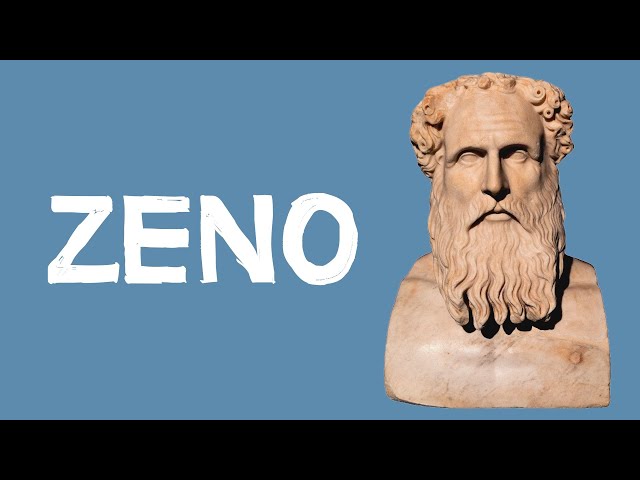
Discover Zeno of Citium, founder of Stoicism, whose timeless wisdom on virtue and resilience still transforms lives toda...
View Board
Discover Clitomachus, the Carthaginian philosopher who shaped Academic skepticism. Explore his life, key arguments again...
View Board
Discover the radical life of Diogenes, the Cynic philosopher who defied norms. Explore his extreme asceticism and lastin...
View Board
**Meta Description:** Explore Damascius, the last great Neoplatonist philosopher of antiquity, his metaphysical insigh...
View Board
Discover Prodikos of Keos, the ancient Greek philosopher who shaped ethics and language. Explore his groundbreaking theo...
View Board
Discover Philolaus, the pre-Socratic pioneer who revolutionized philosophy and astronomy with his non-geocentric model a...
View Board
Explore the groundbreaking ideas of Anaxagoras, the pre-Socratic philosopher who revolutionized ancient Greek thought by...
View Board
Aristotle: The Father of Western Philosophy Aristotle, born in 384 BCE in the Macedonian city of Stagira, was a polymat...
View Board
Discover how Plato, the revered ancient Greek philosopher, profoundly impacted Western thought through his extensive con...
View BoardExplore the intriguing life and groundbreaking contributions of Anaximander, the pioneer of pre-Socratic thought and cos...
View Board
Socrates: The Philosopher Who Died for His Ideas Introduction to Socrates: The Father of Western Philosophy Socrates, t...
View Board
"Discover Antisthenes, the first Cynic philosopher. Explore his radical ideas on self-sufficiency, challenging materiali...
View Board
"Discover Plato’s enduring legacy, his Theory of Forms, and timeless wisdom shaping modern thought. Explore the Academy,...
View Board
Anaximenes of Miletus was a pre-Socratic philosopher who contributed to natural philosophy, metaphysics and empirical sc...
View Board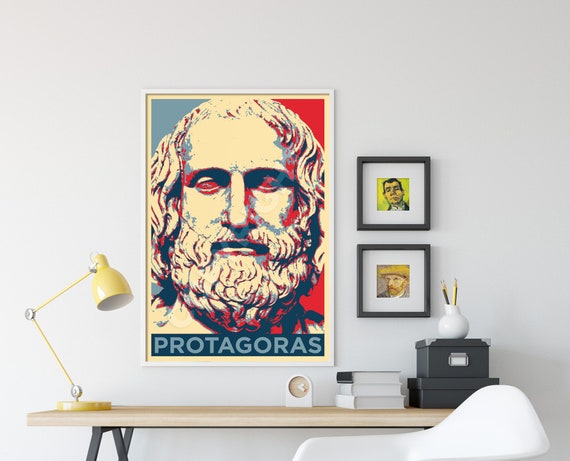
Protagoras: The Father of Sophistry and Relativism Introduction to Protagoras Protagoras, a pivotal figure in ancient G...
View Board
Explore the life and profound impact of Seneca the Younger—Stoic philosopher, statesman, and playwright in ancient Rome....
View Board
Antistene, pioniere della scuola cinica: la sua influenza sulla filosofia e l'arte attraverso ascesi, autarchia e psicol...
View Board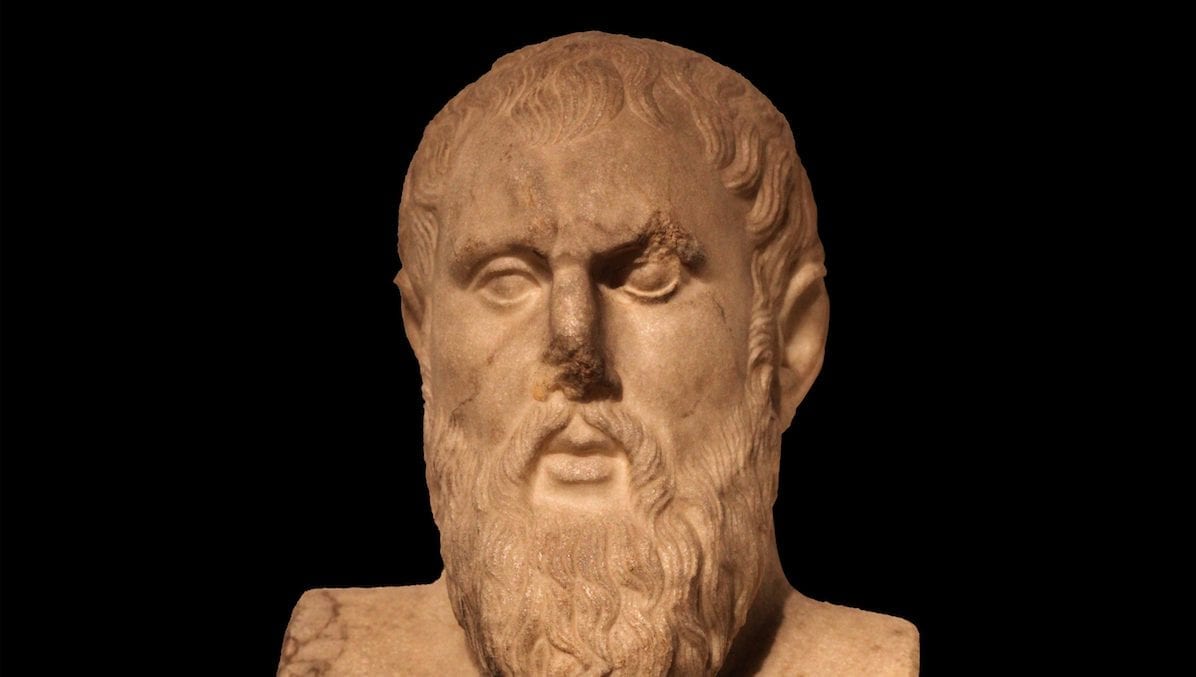
Explore the life and enduring legacy of Zeno of Citium, the founder of Stoicism, whose philosophical insights on virtue,...
View Board
Scopri Filolao di Crotone, filosofo pitagorico che rivoluzionò la cosmologia con il fuoco centrale, anticipando idee sci...
View Board
Comments