Explore Any Narratives
Discover and contribute to detailed historical accounts and cultural stories. Share your knowledge and engage with enthusiasts worldwide.
O Kleitomaxos O Diaprepes Filosofos, or Diogenes of Sinope, remains one of ancient history's most iconic figures. The archetypal Cynic philosopher challenged every social convention with his extreme asceticism. His life and provocative teachings continue to inspire debates on authenticity, virtue, and the simple life.
Diogenes was born around 404 BCE in Sinope, a prosperous Greek colony on the Black Sea. His father worked as a banker or mint master, providing a comfortable upbringing. This early exposure to currency would later define his philosophical mission in a most unexpected way.
Around age twenty or thirty, Diogenes and his father were exiled from Sinope. The charge was defacing the coinage, a serious crime. Diogenes transformed this literal accusation into a powerful metaphor. He interpreted it as an oracle's command to challenge societal false values.
He took the command to "deface the coinage" as a call to reject the false standards of a corrupt society.
This exile was the pivotal event that set him on his path to Athens. Stripped of status and wealth, he arrived in the city-state as a man with nothing to lose. His mission was to test and critique the very foundations of civilized life.
In Athens, Diogenes embraced an existence of radical poverty. He famously made his home in a large ceramic storage jar, or pithos, within the city's marketplace. This act was a direct rejection of the Athenian obsession with property and material comfort.
His possessions were whittled down to the barest essentials: a worn cloak, a staff, and a simple knapsack. Even these items were subject to his relentless minimalism. Legend states he threw away his wooden bowl after seeing a boy drink water from his cupped hands.
This extreme ascetic training, or askēsis, was not mere hardship for its own sake. It was a disciplined practice to achieve virtue (aretē) and complete independence from external goods.
Diogenes radicalized the teachings of Antisthenes, a disciple of Socrates. He became the living embodiment of Cynicism, a school of thought whose name derives from the Greek word kuōn, meaning "dog." His philosophy was built on several unshakable pillars.
Self-sufficiency (autarkeia) was the ultimate goal. By needing nothing from society—no luxury, no approval, no convention—one could become truly free. His life in the jar was the ultimate expression of this principle.
He practiced shamelessness (anaideia) to break the power of social taboo. His public acts, meant to show the naturalness of bodily functions, shocked polite society. This was a calculated effort to prove that convention, not nature, was the source of shame.
Perhaps his most famous trait was his outspokenness (parrhēsia). Diogenes believed in speaking truth to power without fear or flattery. He used sharp wit and satire to deflate the pompous and question the established order.
Virtue, for Diogenes, was a matter of action, not words or complex theory. He famously mocked Plato's abstract definition of a human as a "featherless biped." By presenting a plucked chicken, he demonstrated the folly of over-intellectualizing simple truths.
His philosophy advocated for a life lived in accordance with nature, rejecting the artificial constructs of civilization.
The Cynic sought happiness not through external goods but through internal fortitude. Training the body and mind to endure hardship was the path to a tranquil and virtuous life.
Diogenes's philosophy is preserved through vivid anecdotes rather than written texts. These stories illustrate his character and his relentless challenge to authority and norms.
One of the most enduring images is of Diogenes wandering Athens with a lit lantern in broad daylight. When asked what he was doing, he replied he was "looking for an honest man," or sometimes "a wise person (sophos)." This performative act critiqued the moral bankruptcy he perceived around him.
His legendary meeting with Alexander the Great encapsulates his stance toward power. The young conqueror, finding Diogenes sunbathing, offered him any favor.
Diogenes famously replied, "Stand out of my sunlight."
This stunning reply demonstrated that the philosopher possessed something—his simple contentment—that the world's most powerful man could neither give nor take away. Alexander is said to have remarked, "If I were not Alexander, I would wish to be Diogenes."
Other acts were designed to provoke and educate. His public masturbation was defended with the argument that if eating is not shameful in the marketplace, neither should other natural acts be. He aimed to distinguish natural necessity from artificial shame.
He consistently targeted Plato, whom he considered too abstract. Beyond the plucked chicken, he dismissed Plato's elaborate lectures as "bother" and claimed to see Plato's cups and tables but not his theoretical "cupness" and "tableness."
Through these stories, Diogenes taught that philosophy was not an academic exercise. It was a way of life demanding constant practice and courage.
Diogenes did not emerge in a vacuum. He arrived in Athens after his exile, initially seeking out Antisthenes. The older philosopher, known for his own asceticism, at first rejected him, even threatening him with a staff.
Diogenes reportedly said, "Strike, for you will find no wood hard enough to keep me away from you." Impressed by his determination, Antisthenes accepted him. Diogenes then took his teacher's principles to a far more radical and public extreme.
The Cynic's lifestyle earned him the nickname "the Dog." He embraced this, acting as a watchdog of humanity, barking at vice and folly. His mission was to bite the conscience of society and guard true virtue.
He lived as a public philosopher, using the city as his stage and its citizens as his audience.
His influence extended far beyond his lifetime. His most famous pupil, Crates of Thebes, and his wife Hipparchia, continued the Cynic tradition. More significantly, Diogenes directly inspired Zeno of Citium, the founder of Stoicism.
Zeno's philosophy adapted Cynic asceticism into a more socially adaptable system. The Roman Stoics, including Seneca and Epictetus, frequently referenced Diogenes. They admired his uncompromising freedom and self-mastery.
Diogenes lived to an old age, dying around 323 BCE in Corinth. Accounts of his death vary, with some suggesting he died from natural causes in his eighties. Others cite a more colorful end from an infected dog bite or from holding his breath.
His burial site remains unknown, fitting for a man who rejected all material attachments. His true legacy was not in monuments but in the enduring power of his ideas. He left no written works, relying entirely on his lived example and oral teachings.
All knowledge of his philosophy comes from anecdotes recorded by later historians, most notably Diogenes Laertius.
His influence, however, was immediate and profound. He trained disciples like Crates of Thebes, who passed the Cynic torch. More importantly, he laid the foundational ethics for Stoicism, which would become one of the most influential philosophies in the Greco-Roman world.
The story of his final instructions is telling. When asked how he wished to be buried, he reportedly said to be thrown outside the city walls for the animals. To his friends' dismay, he suggested a staff be placed to scare the beasts away. When questioned, he quipped he wished to be within reach of his friends.
The primary source for Diogenes’s life is the third-century CE compiler Diogenes Laertius. His work, Lives and Opinions of Eminent Philosophers, preserved hundreds of anecdotes and sayings. It is a colorful but sometimes uncritical collection of stories.
Laertius recorded approximately 200 aphorisms and quips attributed to Diogenes. These include famous lines like, “Good men are images of the gods,” and, “It is the privilege of the gods to want nothing, and of godlike men to want little.”
This reliance on anecdote makes separating the historical Diogenes from the legend challenging. Yet, the consistency of the character portrayed—sharp, principled, and deliberately provocative—has cemented his place in history.
Far beyond ancient philosophy, Diogenes has become a universal symbol of authenticity and defiance. His image has been reinterpreted in art, literature, and popular culture for centuries. He represents the ultimate critique of hypocrisy and empty convention.
Renaissance painters like Rubens depicted his life. Enlightenment thinkers admired his fearless reason. In the modern era, he resonates with movements skeptical of materialism and social pretense. His lantern search for an honest man is a timeless metaphor for societal critique.
He endures as a figure who valued truth over comfort and integrity over status.
In the 21st century, Diogenes finds new relevance. His extreme minimalism and rejection of consumerism align with modern movements like voluntary simplicity and tiny house living. His lifestyle is cited in discussions about wealth inequality and environmental sustainability.
Contemporary minimalists often cite Diogenes as a philosophical forefather. The concept of owning only what you need, and finding freedom in that limitation, is pure Cynicism. Podcasts and YouTube channels dedicated to philosophy regularly feature his life story.
Books by scholars like Luis Navia (Diogenes the Cynic) have revived academic and public interest. These works analyze his philosophy not as a historical relic but as a viable challenge to modern life. They highlight his humor and practical wisdom.
His image is frequently used in memes that critique modern politics or social media culture. The visual of a man in simple cloth with a lantern is instantly recognizable. It conveys a powerful message of searching for truth in a confusing world.
While often seen as a fringe or shock-value philosophy, Cynicism had a deep and structured impact. Diogenes established a philosophy of life centered on practice, not theory. For him, virtue was demonstrated through action, not debate in an academy.
This focus on ascetic training (askēsis) as the path to virtue was revolutionary. It proposed that happiness (eudaimonia) was achieved by wanting less, not by acquiring more. This directly challenged the foundational values of Athenian society.
The Cynic's role was that of a social critic, a "watchdog." Diogenes believed the philosopher’s duty was to challenge citizens to examine their lives. His barbs were meant to cure, not merely to insult. He targeted vanity, greed, and blind obedience to custom.
Cynicism taught that convention (nomos) was often the enemy of nature (physis) and true virtue.
The bridge from Diogenes to Stoicism is one of the most significant in Western thought. Zeno of Citium, the founder of Stoicism, was directly inspired by Diogenes and Crates. He read about the Cynic’s life in a bookshop and was transformed.
Zeno adopted the Cynic ideals of self-sufficiency and living in accordance with nature. However, he modified them for a broader audience. Stoicism became a more systematic and socially engaged philosophy. It retained the Cynic core of resilience and inner virtue.
Roman Stoics like Seneca, Epictetus, and Emperor Marcus Aurelius held Diogenes in high regard. They saw him as an exemplar of unyielding freedom and moral courage. His life proved that external circumstances could not enslave a disciplined mind.
Modern scholarship on Diogenes grapples with several questions. One central debate concerns the literal versus metaphorical interpretation of his actions. Were his shocking public displays genuine philosophical practice, or were they calculated performance art?
Another area of focus is his relationship with existing social structures. While he rejected convention, he lived within the city—the heart of civilization. Some scholars argue his goal was not to destroy society but to reform it from within by example.
His interactions with women, particularly hetairai (courtesans), are also analyzed. These anecdotes are often used to explore ancient gender dynamics. They question whether his rejection of shame extended to challenging gender norms of the time.
His philosophy continues to challenge scholars to separate the man from the myth.
There are no major archaeological discoveries directly linked to Diogenes post-2025. The "recent developments" are in interpretation, not excavation. His philosophy’s application to modern crises—climate change, political polarization, digital distraction—keeps him relevant.
Academic curricula in philosophy and classics consistently include him. He is studied not just for historical interest but for practical ethics and critical thinking. His methods force students to question the very foundations of their own values and lifestyles.
The lack of his own writings makes him a fascinating puzzle. Each generation reconstructs a Diogenes that speaks to its own time. This very adaptability is a testament to the power of his core message: live simply, speak truthfully, and challenge empty norms.
The figure of O Kleitomaxos O Diaprepes Filosofos has experienced a significant modern resurgence. He is frequently invoked in discussions about political dissent, personal integrity, and economic simplicity. His image provides a powerful counter-narrative in an age of mass consumption and digital conformity.
Social media platforms are filled with memes featuring Diogenes. These often show him with his lantern, offering a pithy retort to modern absurdities. This digital life extends his role as a public critic into the 21st century. He has become a shorthand for intellectual honesty and skepticism.
His transition from ancient scrolls to internet memes demonstrates the timeless appeal of his character.
Documentaries and popular philosophy YouTube channels dedicate full episodes to his life. These presentations often focus on his humor and practical lessons. They connect his asceticism to modern movements like tiny house living and digital minimalism.
In academic and self-help circles, Diogenes is presented as a model of resilience and anti-fragility. His ability to find contentment in possessing nothing is seen as the ultimate psychological freedom. Therapists and life coaches sometimes use his example to discuss dependency and happiness.
His confrontations with Alexander the Great are analyzed in leadership courses. They serve as a lesson in different forms of power and influence
Cynicism, as founded by Diogenes, was more than a philosophy—it was a public performance of values. Its legacy is not a set of doctrines but an attitude. This attitude of questioning authority and living simply has echoed through millennia.
The direct school of Cynicism had numerous followers after Diogenes. Figures like Crates, Hipparchia, and Menippus carried the tradition forward. However, its most significant impact was as a catalyst for Stoicism. The Stoic school refined Cynic ideas for broader social participation.
Elements of Cynic thought can be traced into early Christian asceticism. The desert fathers, who renounced material wealth, shared a similar ethos. Even modern satire and political protest inherit the Cynic spirit of using shock and humor to provoke thought.
The Cynic legacy is a thread woven into the fabric of Western critical thought.
What would Diogenes critique in today’s world? Scholars suggest he would target consumer culture, social media validation, and political spectacle. His lantern might search for authenticity in a curated online world. His barrel would stand in stark contrast to the obsession with real estate and luxury.
His philosophy challenges the very metrics of success. In an era defined by GDP growth and stock portfolios, he advocated for virtue and self-sufficiency as the only true wealth. This remains a radical and unsettling idea. It forces a re-evaluation of personal and societal goals.
Environmental activists draw parallels between his simple living and sustainable practices. His life demonstrates that a low-carbon footprint is not a sacrifice but a path to freedom. This makes him an unlikely icon for the climate-conscious movement.
Diogenes of Sinope, the philosopher known as O Kleitomaxos O Diaprepes Filosofos, carved a unique path through history. He left no books, built no schools, and owned nothing of value. Yet, he achieved immortality through the sheer power of his example and his uncompromising commitment to his ideals.
His life was a continuous experiment in living according to nature and reason. He rejected every unexamined convention, from basic manners to political power. His tools were wit, shock, and an indomitable will. He proved that philosophy is not merely what you think but how you live.
The story of Diogenes offers several enduring lessons for contemporary readers. These are not abstract theories but practical challenges to our daily lives.
His ultimate message is one of radical self-honesty and authenticity. In a world filled with performance and pretense, the image of a man in a barrel, telling an emperor to move from his sun, is powerfully liberating. It reminds us that the most profound power is control over one's own desires and fears.
Diogenes’s influence stretches far beyond the stoas of Athens. From the Stoics of Rome to the minimalist bloggers of today, his spirit persists. He represents the permanent human urge to strip away the unnecessary and seek a core of truth. In every generation, there are those who feel the pull of the barrel and the lantern.
There are no statues of Diogenes, no grand tombs. His monument is the ongoing conversation about how to live a good life. He forces us to ask: What are our barrels? What false coins have we accepted? And for what would we be willing to stand in the sun, asking nothing from an emperor?
He challenges us to deface the worn currency of our own unexamined lives and to seek a richer, truer value.
In the end, Diogenes the Cynic remains a symbol of intellectual courage. He is a reminder that sometimes the most profound wisdom looks like madness. And that the search for an honest person, though it may require a lantern in the day, is a search always worth undertaking.
In conclusion, Diogenes of Sinope lived as a radical challenge to societal norms, advocating for extreme asceticism and authentic virtue. His legacy continues to provoke thought on what constitutes a meaningful life, urging us to examine our own values and simplicity.
Your personal space to curate, organize, and share knowledge with the world.
Discover and contribute to detailed historical accounts and cultural stories. Share your knowledge and engage with enthusiasts worldwide.
Connect with others who share your interests. Create and participate in themed boards about any topic you have in mind.
Contribute your knowledge and insights. Create engaging content and participate in meaningful discussions across multiple languages.
Already have an account? Sign in here

Discover Hipparchia of Maroneia, the first female Cynic philosopher who defied wealth, class, and gender norms in 4th ce...
View Board
"Discover Antisthenes, the first Cynic philosopher. Explore his radical ideas on self-sufficiency, challenging materiali...
View Board
Aristotle: The Father of Western Philosophy Aristotle, born in 384 BCE in the Macedonian city of Stagira, was a polymat...
View Board
Discover Clitomachus, the Carthaginian philosopher who shaped Academic skepticism. Explore his life, key arguments again...
View Board
Socrates: The Philosopher Who Died for His Ideas Introduction to Socrates: The Father of Western Philosophy Socrates, t...
View Board
Discover the profound impact of Chrysippus, the "Second Founder of Stoicism," in shaping Stoic philosophy. Explore his g...
View Board
Discover Zeno of Citium, founder of Stoicism, whose timeless wisdom on virtue and resilience still transforms lives toda...
View Board
Explore the groundbreaking ideas of Anaxagoras, the pre-Socratic philosopher who revolutionized ancient Greek thought by...
View Board
"Discover Plato’s enduring legacy, his Theory of Forms, and timeless wisdom shaping modern thought. Explore the Academy,...
View Board
Anaximenes of Miletus was a pre-Socratic philosopher who contributed to natural philosophy, metaphysics and empirical sc...
View Board
Explore the life and profound impact of Seneca the Younger—Stoic philosopher, statesman, and playwright in ancient Rome....
View BoardExplore the intriguing life and groundbreaking contributions of Anaximander, the pioneer of pre-Socratic thought and cos...
View Board
Discover how Plato, the revered ancient Greek philosopher, profoundly impacted Western thought through his extensive con...
View Board
Discover Philolaus, the pre-Socratic pioneer who revolutionized philosophy and astronomy with his non-geocentric model a...
View Board
"Explore Aristotle’s philosophy on thought, ethics, and human agency. Discover timeless wisdom for personal growth and m...
View Board
Protagoras: The Father of Sophistry and Relativism Introduction to Protagoras Protagoras, a pivotal figure in ancient G...
View Board
Discover the foundational principles of Aristotelian physics, exploring motion, causality, and the four causes. Uncover ...
View Board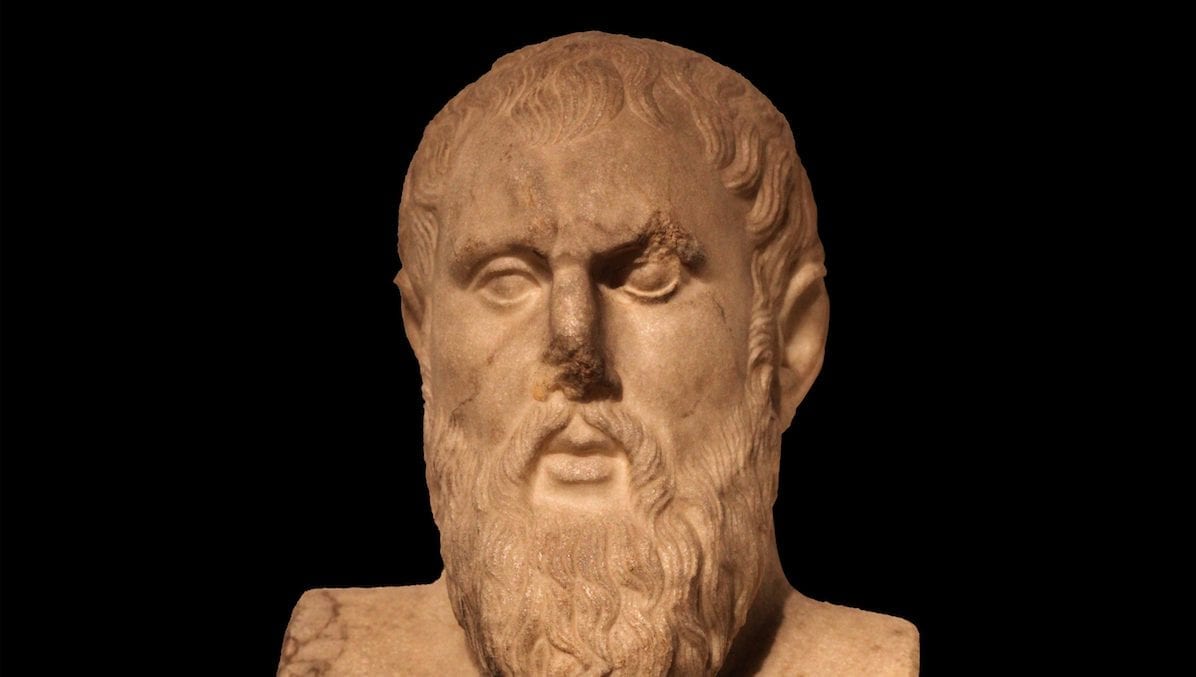
Explore the life and enduring legacy of Zeno of Citium, the founder of Stoicism, whose philosophical insights on virtue,...
View Board
Discover Prodikos of Keos, the ancient Greek philosopher who shaped ethics and language. Explore his groundbreaking theo...
View Board
Comments