Explore Any Narratives
Discover and contribute to detailed historical accounts and cultural stories. Share your knowledge and engage with enthusiasts worldwide.
The history of philosophy owes a great debt to Clitomachus, the Carthaginian-born thinker who became a pivotal leader of the Academic skeptic school. His journey from Hasdrubal to Clitomachus the philosopher represents a remarkable intellectual migration. He dedicated his life to preserving and advancing the radical skepticism of his teacher, Carneades. This exploration delves into the life and foundational contributions of this prolific yet largely forgotten figure.
Clitomachus was born in Carthage around 187/6 BC, during a period of significant tension between Carthage and Rome. Originally named Hasdrubal, a common Carthaginian name, he would later adopt his Greek name upon immersing himself in Athenian philosophy. His early life in a major mercantile and military power undoubtedly shaped his worldview before he turned entirely to philosophical pursuit.
In 163/2 BC, at approximately 24 years old, Clitomachus made the decisive move to Athens, the epicenter of philosophical thought. This journey marked a complete transformation in his life and identity. He began studying under Carneades of Cyrene, the charismatic founder of the New Academy and a formidable critic of Stoic epistemology. Carneades's arguments for suspending judgment clearly resonated deeply with the young scholar.
Clitomachus became head of the Academy around 127/6 BC, just two years after Carneades's death, demonstrating his established authority.
His succession to the leadership role was swift, indicating his peers recognized him as Carneades's true intellectual heir. He maintained his position as scholarch for nearly two decades, teaching in Athens until at least 111 BC. His tenure ensured the continuity of the Academic skeptical tradition during a critical period.
To understand Clitomachus's work, one must first grasp the core tenets of the Academic skeptic school. This philosophical movement, a dominant force in the Platonic Academy for centuries, radically questioned the possibility of certain knowledge. Unlike the dogmatic schools like Stoicism, Academics argued for epochē, the suspension of judgment.
Carneades, Clitomachus's mentor, was a revolutionary figure. He famously argued that all sense perceptions are fallible and that no criterion of truth is absolutely secure. His method involved constructing equally powerful arguments for and against any proposition. This left the philosopher in a state of reasoned doubt, which for Carneades was the most rational position. Clitomachus absorbed this methodology completely.
Clitomachus characterized the wise person as one who suspends judgment about the objectivity of human knowledge. He remained philosophically faithful to his master throughout his career, never dissenting from his core views. While he studied Stoic and Peripatetic philosophy, his primary mission was to defend and systematize Carneadean skepticism against its critics.
One of the most striking facts about Clitomachus is his astonishing literary output. Ancient sources record that he produced approximately 400 books. This number is extraordinary for the ancient world, indicating a lifetime of dedicated scholarship and teaching. His written works served as the primary vehicle for transmitting Carneades's complex and often improvised lectures.
Tragically, none of Clitomachus's original writings survive today. The loss of his 400 volumes represents a significant gap in our understanding of Hellenistic philosophy. However, his influence did not vanish with the papyrus. The Roman orator Cicero, who studied Academic philosophy, later drew heavily upon Clitomachus's works for his own philosophical dialogues. Through Cicero, echoes of Clitomachus's scholarship reached the Roman world and beyond.
Despite his complete professional life in Athens, Clitomachus never severed his emotional connection to his birthplace. The historical trauma of the Punic Wars between Rome and Carthage formed a poignant backdrop to his life. In 146 BC, during his time as a philosopher in Athens, the unthinkable happened: Rome destroyed Carthage utterly.
This event prompted Clitomachus to write a philosophical work intended to console his countrymen. This act reveals a man deeply divided between his adopted intellectual home and his native cultural roots. He sought to apply the principles of Hellenistic philosophy, particularly consolatory tropes, to a profound national tragedy. It underscores that his skepticism was not a detached intellectual exercise but a framework he believed could address human suffering.
The story of Clitomachus the philosopher is thus a tale of dual identity: a Carthaginian in Athens, a prolific writer whose works are lost, and a faithful disciple who became an essential leader. His role in shaping skeptical thought ensured that the critical, questioning spirit of the New Academy would challenge dogmatic certainty for generations to come.
Clitomachus dedicated his philosophical career to defending and elaborating the system of thought he inherited from Carneades. At its heart was the principle of non-assertion, or akatalēpsia, meaning that nothing can be truly apprehended with certainty. This was not a nihilistic denial of truth but a disciplined refusal to give unconditional assent to any impression. For Clitomachus, wisdom lay precisely in this intellectual restraint.
The central practice of Academic skepticism, as taught by Clitomachus, was epochē. This suspension of judgment was the reasonable response to the observation that for every compelling argument, an equally compelling counter-argument could be found. He argued that the wise person, confronted with this equipollence of opposing viewpoints, would naturally withhold assent. This state was not a conclusion but an ongoing, active method of inquiry.
This epistemic modesty directly challenged the Stoic ideal of the Sage who possesses secure knowledge. The Stoics claimed the Sage could distinguish between true and false impressions via a "cataleptic" grasp. Clitomachus, following Carneades, argued this criterion was impossible to secure, making universal doubt the only rational stance.
Clitomachus’s skepticism was therefore practical and therapeutic. It aimed to free the individual from the anxiety of error and dogmatic conflict. By never committing to a belief as definitively true, one could avoid the turmoil of being proven wrong. This created a state of ataraxia, or tranquility, which was the skeptic's practical goal.
As scholarch, Clitomachus was the chief defender of the Academy against rival schools. His 400 books likely contained detailed refutations of Stoic, Epicurean, and Peripatetic doctrines. His arguments were not original creations but meticulous elaborations and fortifications of Carneades's own dialectical warfare.
A primary battlefield was the Stoic theory of knowledge. The Stoics believed in cataleptic impressions—perceptions so clear and distinct they guaranteed their own truth. Carneades had famously dismantled this by showing that false impressions could possess all the clarity and force of true ones. Clitomachus's role was to systematize these attacks, providing exhaustive examples and logical frameworks to support them.
One of Carneades's most famous innovations was his theory of the pithanon—the persuasive or probable impression. Since absolute certainty was unattainable, he suggested we could guide life by following impressions that seem persuasive, while always remembering they are not guaranteed. Clitomachus played a crucial role in clarifying and defending this nuanced position.
He had to navigate a delicate line: explaining how one can act without belief. Clitomachus argued that assent could be given provisionally to the persuasive impression for the sake of action, but not with the dogmatic commitment that it represents reality. This allowed the skeptic to engage in everyday life, make decisions, and even hold philosophical discussions, all while maintaining an underlying suspension of judgment.
Although none of his writings survive, Clitomachus's influence permeated later philosophy through key intermediaries. His most important student and successor was Philo of Larissa, who would later modify Academic doctrine. More significantly, the Roman statesman Cicero became the primary channel through which Clitomachus's ideas reached the modern world.
Marcus Tullius Cicero studied Academic philosophy in Athens and explicitly relied on Clitomachus's works. In his philosophical dialogues, such as Academica and De Natura Deorum, Cicero presents Academic skeptical arguments that he directly attributes to Clitomachus. These texts are our most vital source for reconstructing Clitomachus's thought.
Cicero’s use of Clitomachus ensured that the arguments for suspending judgment became a permanent part of the Western intellectual toolkit, influencing later thinkers from Augustine to Descartes.
Through Cicero, Clitomachus’s rigorous defense of skepticism became a cornerstone of Roman philosophical discourse. This connection highlights a critical historical relay: from Carneades to Clitomachus to Cicero, and thus to posterity. Without Clitomachus's faithful compilation and teaching, Carneades's ideas might have been lost.
Clitomachus's death in 110/09 BC marked the end of an era. His successor, Philo of Larissa, began to soften the Academy's radical skepticism, eventually blending it with more dogmatic elements. This shift, known as the "Philonian/Metrodorian controversy," led toward what would become Middle Platonism. Clitomachus thus represents the last great scholarch of the purely skeptical Academy.
His steadfast commitment to Carneadean orthodoxy provided a clear benchmark against which later developments were measured. Historians of philosophy see his leadership as maintaining the integrity of skeptical thought for a critical generation. After him, the Academy began its gradual transformation into a different kind of philosophical institution.
The philosophical issues championed by Clitomachus remain startlingly relevant. His relentless questioning of the foundations of knowledge prefigures modern debates in epistemology. The problem of the criterion of truth—how we know our standards of knowledge are correct—is still a central puzzle in philosophy.
Modern forms of skepticism, from Descartes's methodical doubt to contemporary brain-in-a-vat thought experiments, echo the challenges posed by Clitomachus. His arguments about the fallibility of perception and the lack of a secure starting point for knowledge directly inform ongoing discussions about justification, evidence, and belief.
Clitomachus’s work forces us to confront a fundamental question: Can we live meaningfully while admitting that absolute certainty is unattainable? His answer, developed within the Academy, was a resounding yes. A life guided by reasoned inquiry, intellectual humility, and probabilistic judgment is not only possible but may be the most rational and tranquil path available.
For centuries, Clitomachus the philosopher existed primarily as a footnote in the story of Carneades. However, modern scholarship has begun to reassess his individual importance. As the principal transmitter and systematizer of New Academy skepticism, his role is now recognized as fundamental, not merely derivative. Without his diligent work, a crucial chapter in Hellenistic thought might have been lost entirely.
The primary obstacle to understanding Clitomachus is the total loss of his written works. Scholars must piece together his philosophy from fragmentary references in later authors like Cicero, Sextus Empiricus, and Diogenes Laërtius. This is a detective story of intellectual history, where a single sentence in Cicero's Academica might represent the only surviving trace of one of his 400 books.
This reliance on secondary sources means we see Clitomachus through the lens of his admirers and critics. Yet, the consistency of his portrayal as Carneades's faithful lieutenant suggests a reliable core tradition.
Recent academic work focuses on distinguishing where Cicero is channeling Clitomachus directly versus presenting his own synthesis. This meticulous source criticism helps isolate the authentic voice of Clitomachus from the Roman adaptation of his ideas. It confirms that he was a formidable philosopher in his own right, not just a scribe.
To fully appreciate Clitomachus's place, we must situate him within the long arc of skeptical philosophy. He represents a specific, institutionalized form of skepticism that differs from its Pyrrhonian cousin. While both schools advocated for epochē, Academic skepticism under Clitomachus was more directly engaged in doctrinal combat with other schools, particularly Stoicism.
The Pyrrhonian skeptics, documented later by Sextus Empiricus, claimed to make no assertions whatsoever, not even that knowledge was impossible. The Academics, as led by Clitomachus, were willing to assert that certain knowledge is unattainable. This is a subtle but profound difference. Clitomachus's position is a negative dogmatism—a positive claim about the limits of human understanding.
This distinction highlights Clitomachus's role as a philosophical defender. His skepticism was a weapon in the arena of Hellenistic debate, crafted to win arguments against dogmatists and provide a coherent alternative worldview.
The transmission of Clitomachus's ideas through Cicero had far-reaching consequences. Cicero's works were studied extensively by early Church Fathers and medieval scholars. The Academic skeptical arguments against the reliability of the senses and the possibility of certain knowledge became a challenge that Augustine of Hippo, for instance, felt compelled to answer in his quest for divine certainty.
Thus, Clitomachus indirectly shaped the development of Christian epistemology. By forcing theologians to confront and overcome radical doubt, his legacy contributed to the intellectual rigor of medieval and early modern philosophy. The very need to establish a secure foundation for faith was, in part, a response to the problems he so eloquently posed.
In an age of information overload and entrenched dogma, the philosophy of Clitomachus offers surprisingly timely lessons. His emphasis on intellectual humility, critical scrutiny of persuasive impressions, and the ethical pursuit of tranquility provides a framework for navigating modern complexities.
The Clitomachean practice of withholding immediate assent is a vital skill today. Faced with a constant stream of "persuasive impressions" from media, advertising, and social networks, the disciplined suspension of judgment is a form of mental self-defense. Clitomachus would advise us to question the internal feeling of certainty that often accompanies compelling narratives.
Applying his methods means actively seeking equipollent counter-arguments for any strong claim we encounter, fostering a more balanced and less dogmatic worldview.
This does not lead to inaction but to more probabilistic and nuanced decision-making. In personal, professional, and civic life, the ability to act on the best available evidence while acknowledging its potential fallibility is a mark of mature judgment. It is the practical application of the pithanon.
For Clitomachus, skepticism was not just an epistemological stance but an ethical one. The dogmatic adherence to beliefs is a source of conflict, anger, and suffering. By cultivating doubt, one cultivates ataraxia—peace of mind. In a polarized world, this aspect of his thought is particularly resonant.
This positions Clitomachus not merely as a critic of knowledge but as a proponent of a specific, flourishing way of life. His philosophy aimed at human well-being through reasoned inquiry.
Clitomachus of Carthage stands as a monumental, if under-appreciated, figure in the history of ideas. His life's work ensured the survival and clarification of Carneadean skepticism at a critical juncture. As scholarch of the Academy for nearly two decades, he was the guardian of a radical intellectual tradition that questioned the very foundations of knowledge.
His contributions can be summarized in three enduring achievements. First, he systematized and defended the arguments of Carneades against powerful rival schools. Second, through his prodigious literary output, he created the textual foundation that allowed Cicero to transmit these ideas to Rome and beyond. Third, he embodied the practical application of skepticism as a path to tranquility, maintaining his philosophical rigor even in the face of personal and national tragedy.
The loss of his 400 books is one of the great cultural tragedies of antiquity. Yet, the fragments that remain, refracted through Cicero and others, reveal a thinker of profound depth and consistency. He challenges us to examine the strength of our convictions and to consider the possibility that wisdom lies not in answers, but in the quality of our questions.
In rediscovering Clitomachus, we reclaim a powerful strand of the philosophical tradition that values critical inquiry over comforting certainty. His legacy is a reminder that in the pursuit of truth, the skeptical pause, the withheld assent, is not a weakness but a disciplined and ethical strength. The questions he raised about knowledge, perception, and belief continue to echo, making Clitomachus the philosopher a surprisingly contemporary guide for our uncertain world.
Your personal space to curate, organize, and share knowledge with the world.
Discover and contribute to detailed historical accounts and cultural stories. Share your knowledge and engage with enthusiasts worldwide.
Connect with others who share your interests. Create and participate in themed boards about any topic you have in mind.
Contribute your knowledge and insights. Create engaging content and participate in meaningful discussions across multiple languages.
Already have an account? Sign in here

Discover Hipparchia of Maroneia, the first female Cynic philosopher who defied wealth, class, and gender norms in 4th ce...
View Board
Discover Zeno of Citium, founder of Stoicism, whose timeless wisdom on virtue and resilience still transforms lives toda...
View Board
Discover Philolaus, the pre-Socratic pioneer who revolutionized philosophy and astronomy with his non-geocentric model a...
View Board
**Meta Description:** Explore Damascius, the last great Neoplatonist philosopher of antiquity, his metaphysical insigh...
View Board
Explore the groundbreaking ideas of Anaxagoras, the pre-Socratic philosopher who revolutionized ancient Greek thought by...
View Board
Discover how Plato, the revered ancient Greek philosopher, profoundly impacted Western thought through his extensive con...
View Board
Discover the radical life of Diogenes, the Cynic philosopher who defied norms. Explore his extreme asceticism and lastin...
View Board
Anaximenes of Miletus was a pre-Socratic philosopher who contributed to natural philosophy, metaphysics and empirical sc...
View Board
Aristotle: The Father of Western Philosophy Aristotle, born in 384 BCE in the Macedonian city of Stagira, was a polymat...
View BoardExplore the intriguing life and groundbreaking contributions of Anaximander, the pioneer of pre-Socratic thought and cos...
View Board
Discover Prodikos of Keos, the ancient Greek philosopher who shaped ethics and language. Explore his groundbreaking theo...
View Board
Socrates: The Philosopher Who Died for His Ideas Introduction to Socrates: The Father of Western Philosophy Socrates, t...
View Board
Scopri Filolao di Crotone, filosofo pitagorico che rivoluzionò la cosmologia con il fuoco centrale, anticipando idee sci...
View Board
Antistene, pioniere della scuola cinica: la sua influenza sulla filosofia e l'arte attraverso ascesi, autarchia e psicol...
View Board
"Discover Plato’s enduring legacy, his Theory of Forms, and timeless wisdom shaping modern thought. Explore the Academy,...
View Board
"Explore Aristotle’s philosophy on thought, ethics, and human agency. Discover timeless wisdom for personal growth and m...
View Board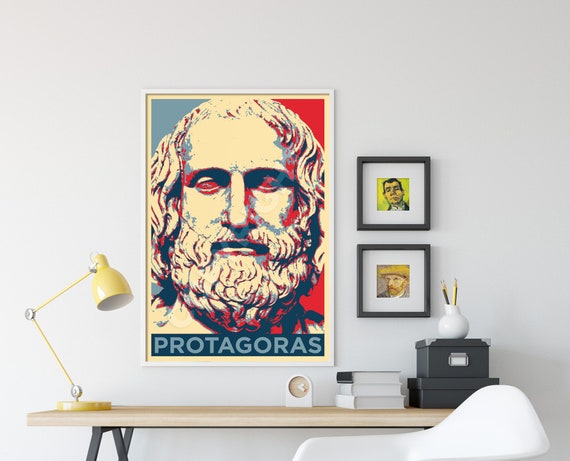
Protagoras: The Father of Sophistry and Relativism Introduction to Protagoras Protagoras, a pivotal figure in ancient G...
View Board
Discover the foundational principles of Aristotelian physics, exploring motion, causality, and the four causes. Uncover ...
View Board
Discover the profound impact of Chrysippus, the "Second Founder of Stoicism," in shaping Stoic philosophy. Explore his g...
View Board
Comments