Explore Any Narratives
Discover and contribute to detailed historical accounts and cultural stories. Share your knowledge and engage with enthusiasts worldwide.
Gabriele Falloppio, often referred to as Fallopius, was a groundbreaking 16th-century Italian anatomist whose contributions to medical science remain influential today. His work in describing the fallopian tubes and advancements in reproductive anatomy earned him the title of a pioneering scientist of regeneration. This article explores his life, discoveries, and lasting impact on modern medicine.
Born in 1523 in Modena, Italy, Gabriele Falloppio dedicated his life to the study of human anatomy and medical science. His early education in classical studies and philosophy laid the foundation for his future contributions to anatomy and physiology. Falloppio's relentless pursuit of knowledge led him to become one of the most respected figures in the Renaissance medical community.
Falloppio's academic journey began at the University of Ferrara, where he studied under renowned scholars. His exposure to the works of ancient Greek and Roman physicians inspired his later research. The intellectual environment of the Italian Renaissance played a crucial role in shaping his scientific inquiries.
Falloppio's most notable achievement was his detailed description of the fallopian tubes, which he named "tubae uterinae". This discovery revolutionized the understanding of female reproductive anatomy and laid the groundwork for future studies in gynecology and obstetrics. His work, published in the seminal text "Observationes Anatomicae", remains a cornerstone of anatomical literature.
While Falloppio is primarily known for his anatomical discoveries, his work also had a profound impact on the field of regenerative medicine. His studies on the reproductive system and tissue regeneration provided early insights into the body's ability to heal and renew itself. These insights have influenced modern research in stem cell therapy and tissue engineering.
Falloppio's observations on the reproductive organs highlighted the body's capacity for self-repair and regeneration. His detailed descriptions of the fallopian tubes and their function in fertility and reproduction offered valuable clues about the mechanisms of cellular regeneration. These findings have been instrumental in the development of contemporary regenerative therapies.
The principles established by Falloppio continue to inform modern medical practices. His emphasis on empirical observation and detailed anatomical study set a precedent for future generations of medical researchers. Today, his work is cited in numerous studies on reproductive health and regenerative medicine, underscoring his enduring legacy.
To fully appreciate Falloppio's contributions, it is essential to understand the historical context in which he worked. The 16th century was a period of significant advancements in medical science, driven by the Renaissance spirit of inquiry and the rediscovery of ancient texts.
The Italian Renaissance was a time of intellectual and artistic flourishing, which extended to the field of medicine. Scholars like Falloppio benefited from the revival of classical knowledge and the development of new scientific methods. This period saw the publication of influential works such as Andreas Vesalius's "De Humani Corporis Fabrica", which challenged traditional anatomical beliefs.
Falloppio's work was part of a broader scientific revolution that transformed the understanding of the human body. His meticulous dissections and detailed recordings of anatomical structures set new standards for medical research. By emphasizing evidence-based practice, Falloppio helped shift the focus of medicine from theoretical speculation to empirical observation.
Falloppio's contributions to medical science are documented in his numerous publications, which provide a comprehensive account of his anatomical discoveries. His most famous work, "Observationes Anatomicae", is a testament to his scientific rigor and innovative thinking.
Published in 1561, "Observationes Anatomicae" is a landmark text in the history of anatomy. In this work, Falloppio provided detailed descriptions of various anatomical structures, including the fallopian tubes, the inner ear, and the reproductive organs. His observations were based on direct dissections, ensuring a high degree of accuracy and reliability.
In addition to his major publication, Falloppio authored several other influential texts. These include studies on the circulatory system, the nervous system, and the anatomy of the head and neck. His work on the anatomy of the eye and the structure of the skull also contributed significantly to the field of ophthalmology and neurology.
Gabriele Falloppio's contributions to medical science have left an indelible mark on the field of anatomy and beyond. His pioneering spirit and commitment to empirical research continue to inspire medical professionals and researchers worldwide. As we delve deeper into the complexities of human anatomy and regenerative medicine, Falloppio's work remains a guiding light, reminding us of the power of scientific inquiry and the importance of detailed observation.
Falloppio's influence extends beyond his immediate discoveries. His methodological approach to anatomical study has shaped the way medical research is conducted today. By emphasizing the importance of direct observation and detailed recording, Falloppio set a precedent for future generations of anatomists and medical researchers.
The principles established by Falloppio continue to find applications in modern medicine. His studies on the reproductive system and tissue regeneration have informed contemporary research in fertility treatments and regenerative therapies. As we explore new frontiers in medical science, Falloppio's work serves as a foundation for innovation and discovery.
Gabriele Falloppio's approach to anatomical study was characterized by rigorous empirical observation and systematic dissection. His methodology set new standards for medical research during the Renaissance period and continues to influence scientific practices today. By prioritizing direct evidence over theoretical speculation, Falloppio contributed to the shift toward evidence-based medicine.
Unlike many of his contemporaries, Falloppio relied heavily on human dissections to validate his anatomical findings. He conducted numerous dissections, often working with fresh cadavers to ensure accuracy. This hands-on approach allowed him to correct previous misconceptions about the human body, particularly in the areas of reproductive anatomy and the nervous system.
His meticulous recordings of these dissections provided detailed illustrations and descriptions that were unprecedented in their precision. These records became invaluable resources for future anatomists, offering a comprehensive guide to the complexities of human anatomy.
Falloppio's work often challenged the long-held beliefs of his time, particularly those derived from the writings of ancient scholars like Galen. For instance, his detailed study of the fallopian tubes corrected earlier misconceptions about their structure and function. This willingness to question established doctrines was a hallmark of his scientific approach.
His critiques were not limited to anatomical structures but extended to medical practices of the era. Falloppio advocated for scientific validation of treatments, emphasizing the need for clinical evidence to support medical interventions. This perspective laid the groundwork for modern clinical trials and evidence-based treatments.
One of Falloppio's most enduring legacies is his work on reproductive anatomy. His detailed descriptions of the female reproductive system revolutionized the understanding of fertility and reproduction. The fallopian tubes, named in his honor, remain a critical focus of study in gynecology and obstetrics.
Falloppio's description of the fallopian tubes was a landmark achievement in anatomical science. Prior to his work, the structure and function of these tubes were poorly understood. Falloppio's observations revealed their role in transporting eggs from the ovaries to the uterus, a discovery that fundamentally changed the understanding of human reproduction.
His findings were documented in "Observationes Anatomicae", where he provided detailed illustrations and explanations of the tubes' anatomy. This work not only advanced the field of reproductive medicine but also inspired further research into fertility and embryonic development.
Falloppio's contributions had a profound impact on the fields of gynecology and obstetrics. His detailed anatomical descriptions provided a foundation for understanding reproductive health and diagnosing conditions such as infertility and ectopic pregnancies. Modern gynecological practices, including in vitro fertilization (IVF), owe much to his early insights.
Additionally, his work influenced the development of surgical techniques related to the reproductive system. Procedures such as tubal ligation and treatments for fallopian tube blockages are directly linked to the anatomical knowledge established by Falloppio. His legacy continues to shape women's health and reproductive medicine.
While Falloppio is primarily celebrated for his anatomical discoveries, his work also laid the groundwork for modern regenerative medicine. His observations on tissue repair and the body's ability to regenerate have influenced contemporary research in stem cell therapy and tissue engineering.
Falloppio's studies on the reproductive system provided early insights into the body's capacity for self-repair. His detailed descriptions of the fallopian tubes and their role in fertility highlighted the dynamic nature of cellular regeneration. These observations were among the first to suggest that the body could heal and renew itself at a cellular level.
His work on the regeneration of tissues was particularly notable. Falloppio observed that certain tissues, such as those in the reproductive organs, exhibited remarkable resilience and regenerative properties. These findings have since been expanded upon in modern studies on stem cells and tissue repair mechanisms.
The principles established by Falloppio have found applications in stem cell research, a cornerstone of modern regenerative medicine. His early observations on cellular regeneration have informed contemporary studies on how stem cells can be harnessed to repair damaged tissues and organs. Researchers today build on his foundational work to develop innovative therapies for conditions such as spinal cord injuries and degenerative diseases.
For example, the use of embryonic stem cells and induced pluripotent stem cells (iPSCs) in regenerative medicine can trace its conceptual roots back to Falloppio's insights. His emphasis on the body's natural regenerative processes has inspired scientists to explore new ways to enhance and accelerate healing.
Beyond his direct contributions to anatomy and medicine, Gabriele Falloppio played a pivotal role in the evolution of medical education. His teaching methods and emphasis on hands-on learning transformed the way medical knowledge was disseminated during the Renaissance and beyond.
Falloppio was not only a prolific researcher but also a dedicated educator. He held teaching positions at several prestigious institutions, including the University of Padua, where he mentored numerous students who went on to become influential figures in medicine. His interactive teaching style emphasized practical dissection and direct observation, ensuring that his students gained firsthand experience in anatomical study.
His approach to education was revolutionary for its time. By incorporating dissection demonstrations into his lectures, Falloppio provided students with a deeper understanding of the human body. This method of experiential learning became a model for medical education, influencing the development of modern medical schools.
Falloppio's publications, particularly "Observationes Anatomicae", served as essential educational resources for generations of medical students. His detailed illustrations and descriptions made complex anatomical concepts accessible, bridging the gap between theoretical knowledge and practical application.
These texts were widely circulated and translated, ensuring that his findings reached a broad audience. As a result, Falloppio's work became a cornerstone of anatomical education, shaping the curriculum of medical schools across Europe. His commitment to clear and accurate documentation set a new standard for medical literature.
In the 21st century, Gabriele Falloppio's contributions continue to be recognized and celebrated. His work has been honored in various ways, from the naming of anatomical structures to the establishment of academic awards and research initiatives in his honor.
The most prominent tribute to Falloppio is the naming of the fallopian tubes, a testament to his groundbreaking work in reproductive anatomy. Additionally, other structures such as the Fallopian aqueduct in the inner ear and the Fallopian canal bear his name, reflecting his broad contributions to anatomical science.
These eponyms serve as a constant reminder of Falloppio's lasting impact on the field of medicine. They also highlight the importance of his work in shaping our understanding of the human body and its intricate systems.
Numerous academic institutions and scientific organizations have recognized Falloppio's contributions through awards and research grants. For instance, the Gabriele Falloppio Award is presented to outstanding researchers in the field of reproductive medicine, honoring those who continue his legacy of innovation.
Furthermore, modern research initiatives often reference Falloppio's work as a foundation for new discoveries. His emphasis on empirical evidence and detailed observation remains a guiding principle in contemporary medical research, ensuring that his influence endures in the scientific community.
Despite his significant contributions, there are several misconceptions about Gabriele Falloppio's work and legacy. Addressing these myths is essential to fully appreciate his impact on medical science.
While Falloppio is best known for his work on the fallopian tubes, his research extended far beyond the female reproductive system. He made substantial contributions to the study of the nervous system, the circulatory system, and the anatomy of the head and neck. His comprehensive approach to anatomy ensured that his work had a broad and lasting impact.
Contrary to popular belief, Falloppio's findings were not universally accepted during his lifetime. Many of his contemporaries were resistant to his innovative ideas, particularly those that challenged established beliefs. It was only through the accumulation of evidence and the support of later researchers that his work gained widespread recognition.
Some may assume that Falloppio's work is purely of historical interest, with little relevance to modern medicine. However, his principles and discoveries continue to inform contemporary research. From regenerative medicine to advanced surgical techniques, Falloppio's insights remain integral to the evolution of medical science.
The legacy of Gabriele Falloppio continues to inspire new directions in medical research. His emphasis on empirical observation and detailed anatomical study provides a foundation for exploring emerging fields such as bioengineering and personalized medicine.
Modern bioengineering efforts, particularly in the development of artificial organs and tissue scaffolds, draw on Falloppio's insights into the body's regenerative capabilities. Researchers are now able to create biocompatible materials that mimic the structure and function of natural tissues, thanks in part to the anatomical knowledge established by Falloppio.
The field of personalized medicine, which tailors treatments to individual genetic profiles, also benefits from Falloppio's foundational work. His detailed anatomical studies have contributed to our understanding of genetic variations and their impact on health. This knowledge is crucial for developing targeted therapies that address the unique needs of each patient.
As regenerative medicine advances, ethical considerations become increasingly important. Falloppio's commitment to scientific integrity and patient-centered research serves as a model for addressing these challenges. His work reminds us of the importance of ethical practices in medical research, ensuring that innovations are both effective and responsible.
Gabriele Falloppio's contributions transcended the boundaries of 16th-century Italy, influencing medical practices and anatomical studies across Europe and beyond. His work laid the foundation for a global understanding of human anatomy, particularly in the fields of reproductive health and regenerative medicine.
Falloppio's publications, including "Observationes Anatomicae", were translated into multiple languages, ensuring that his discoveries reached a diverse international audience. These translations facilitated the spread of anatomical knowledge to medical schools and universities throughout Europe, from France and Germany to the Low Countries.
The widespread dissemination of his work contributed to the standardization of anatomical terminology and practices. Medical professionals across different regions began to adopt Falloppio's detailed descriptions and illustrations, leading to a more unified approach to the study of the human body.
While Falloppio's direct influence was most pronounced in Europe, his work indirectly impacted medical traditions in other parts of the world. As European medical knowledge spread through colonial exchanges and scientific missions, Falloppio's anatomical insights became integrated into the broader global understanding of medicine.
For instance, in regions where traditional medicine was prevalent, Falloppio's emphasis on empirical observation encouraged a shift toward more evidence-based practices. This fusion of knowledge systems enriched medical science, fostering a more comprehensive and inclusive approach to healthcare.
In the face of modern medical challenges, Gabriele Falloppio's principles and discoveries remain remarkably relevant. His emphasis on detailed observation and scientific rigor provides a framework for addressing contemporary issues such as infertility, chronic diseases, and regenerative therapies.
One of the most pressing medical challenges today is infertility, a condition that affects millions of individuals worldwide. Falloppio's detailed study of the fallopian tubes and the female reproductive system has been instrumental in developing treatments such as in vitro fertilization (IVF) and assisted reproductive technologies (ART).
Modern techniques for diagnosing and treating fallopian tube blockages and other reproductive issues are directly linked to Falloppio's anatomical insights. His work has enabled medical professionals to better understand the underlying causes of infertility and to develop targeted interventions that improve patient outcomes.
Falloppio's contributions to the understanding of tissue regeneration have also influenced the management of chronic diseases. Conditions such as diabetes, cardiovascular diseases, and neurodegenerative disorders often involve the deterioration of tissues and organs. Falloppio's early insights into the body's regenerative capabilities have inspired research into stem cell therapies and other regenerative treatments.
For example, the use of mesenchymal stem cells to repair damaged heart tissue in patients with heart failure is a direct application of the principles Falloppio explored. His work continues to drive innovation in the development of disease-modifying therapies that aim to restore function and improve quality of life.
To ensure that Gabriele Falloppio's contributions are not forgotten, numerous educational initiatives have been established to honor his legacy. These programs aim to inspire future generations of medical professionals and researchers, emphasizing the importance of empirical research and anatomical precision.
Many medical schools and universities have incorporated Falloppio's work into their curricula, highlighting his role in the evolution of anatomical science. Institutions such as the University of Padua, where Falloppio once taught, continue to celebrate his contributions through specialized courses and research programs.
These educational initiatives often include hands-on dissection workshops, reflecting Falloppio's emphasis on practical learning. By engaging students in direct anatomical study, these programs foster a deeper appreciation for the complexities of the human body and the importance of scientific inquiry.
To further honor Falloppio's legacy, various scholarships and research grants have been established in his name. These awards support promising students and researchers who are dedicated to advancing the fields of anatomy, reproductive medicine, and regenerative science.
For example, the Gabriele Falloppio Research Grant provides funding for innovative projects that explore the regenerative potential of human tissues. By supporting cutting-edge research, these initiatives ensure that Falloppio's spirit of scientific exploration continues to thrive in the modern era.
Gabriele Falloppio's commitment to ethical practices in medical research sets a timeless example for the scientific community. His work was characterized by a deep respect for the human body and a dedication to scientific integrity, principles that remain essential in contemporary medical ethics.
Falloppio conducted his anatomical studies with a profound sense of respect for human dignity. He recognized the importance of ethical sourcing of cadavers and ensured that his dissections were performed with the utmost care and reverence. This approach underscored his belief in the sanctity of life and the necessity of conducting research in a manner that honors the individuals involved.
His ethical stance has influenced modern bioethical guidelines, which emphasize the importance of informed consent and respectful treatment of human subjects in medical research. Falloppio's example reminds us that scientific progress must always be balanced with moral responsibility.
Falloppio was a staunch advocate for transparency in scientific research. He believed that findings should be accurately documented and shared openly with the scientific community. This commitment to scientific integrity ensured that his work was both reliable and reproducible, setting a standard for future generations of researchers.
In today's medical landscape, where data reproducibility and research transparency are critical concerns, Falloppio's principles serve as a guiding light. His emphasis on honest reporting and rigorous methodology continues to inspire efforts to maintain the highest ethical standards in scientific inquiry.
As we look to the future of anatomical science, Gabriele Falloppio's work provides a solid foundation for continued innovation. His contributions have paved the way for advanced imaging techniques, computational anatomy, and personalized medical treatments, all of which are shaping the next frontier of healthcare.
Modern imaging technologies, such as MRI and CT scans, have revolutionized our ability to study the human body in unprecedented detail. These advancements build on Falloppio's anatomical precision, allowing researchers to explore structures and functions that were previously inaccessible.
Furthermore, the field of computational anatomy uses digital models to simulate and analyze anatomical structures, offering new insights into disease mechanisms and treatment strategies. Falloppio's detailed descriptions serve as a reference point for these digital reconstructions, ensuring their accuracy and reliability.
The concept of personalized medicine, which tailors treatments to individual patients based on their unique anatomical and genetic profiles, is another area where Falloppio's work remains relevant. His emphasis on the individual variability of the human body has informed modern approaches to customized healthcare.
By leveraging genomic data and advanced diagnostic tools, medical professionals can now develop targeted therapies that address the specific needs of each patient. This approach reflects Falloppio's belief in the importance of detailed observation and individualized care.
Gabriele Falloppio's contributions to anatomy, reproductive medicine, and regenerative science have left an indelible mark on the medical community. His pioneering work on the fallopian tubes and his emphasis on empirical observation have shaped our understanding of the human body and continue to inspire innovations in healthcare.
From his detailed dissections to his commitment to scientific integrity, Falloppio's legacy is a testament to the power of curiosity-driven research. His principles have guided generations of medical professionals, fostering advancements that have improved countless lives.
As we move forward, Falloppio's work reminds us of the importance of rigorous scientific inquiry and the potential for medical breakthroughs to transform healthcare. His enduring influence serves as a beacon, illuminating the path toward a future where regenerative medicine, personalized treatments, and ethical research practices converge to create a healthier world.
In celebrating Gabriele Falloppio, we honor not only a pioneering scientist but also a visionary whose insights continue to resonate in the ever-evolving landscape of medical science. His story is a powerful reminder that the pursuit of knowledge, grounded in empirical evidence and moral responsibility, can lead to discoveries that transcend time and transform lives.
Your personal space to curate, organize, and share knowledge with the world.
Discover and contribute to detailed historical accounts and cultural stories. Share your knowledge and engage with enthusiasts worldwide.
Connect with others who share your interests. Create and participate in themed boards about any topic you have in mind.
Contribute your knowledge and insights. Create engaging content and participate in meaningful discussions across multiple languages.
Already have an account? Sign in here

Explore the profound legacy of Gabriele Falloppio, the Renaissance anatomist who revolutionized medical science with his...
View Board
Explore the life and legacy of Karl Landsteiner, the visionary who revolutionized medical science with the discovery of ...
View Board
Discover the groundbreaking journey of Barry Marshall, a trailblazer in gastroenterology whose bold hypotheses and revol...
View Board
Discover the fascinating legacy of Félix d'Herelle, the self-taught pioneer behind bacteriophage therapy. This captivati...
View Board
> **Meta Description:** Explore the life and legacy of Galen, the father of medicine, whose groundbreaking work in anato...
View Board
"Discover Luigi Galvani's frog leg experiments that sparked modern neurophysiology. Learn how his work shaped neuroscien...
View Board
Discover how AI is revolutionizing the fight against antibiotic resistance by accelerating drug discovery, predicting ou...
View Board
Explore the inspiring journey of Gerty Cori, the first woman Nobel laureate in Physiology or Medicine, who defied societ...
View Board
Discover how Louis Pasteur revolutionized medicine with germ theory, vaccines, and pasteurization. Explore his enduring ...
View Board
Discover the groundbreaking journey of Ronald Ross, the pioneering scientist whose revolutionary understanding of malari...
View Board
Explore the life and legacy of Claude Bernard, the trailblazer of experimental medicine. Discover how his scientific rig...
View Board
"Discover how Fleming's 1928 penicillin discovery revolutionized medicine, saving millions. Learn about the antibiotic e...
View Board
**Meta Description:** Discover how Francisco Mojica, the Spanish microbiologist behind CRISPR’s groundbreaking discove...
View Board
"Explore how Santiago Ramón y Cajal, father of modern neuroscience, revolutionized brain science with the neuron doctrin...
View Board
"Explore Manuel García's vocal science legacy & laryngoscope invention. Discover how his innovations shaped modern voice...
View Board
Discover the groundbreaking journey of Nobel Laureate Shinya Yamanaka, whose pioneering work in induced pluripotent stem...
View Board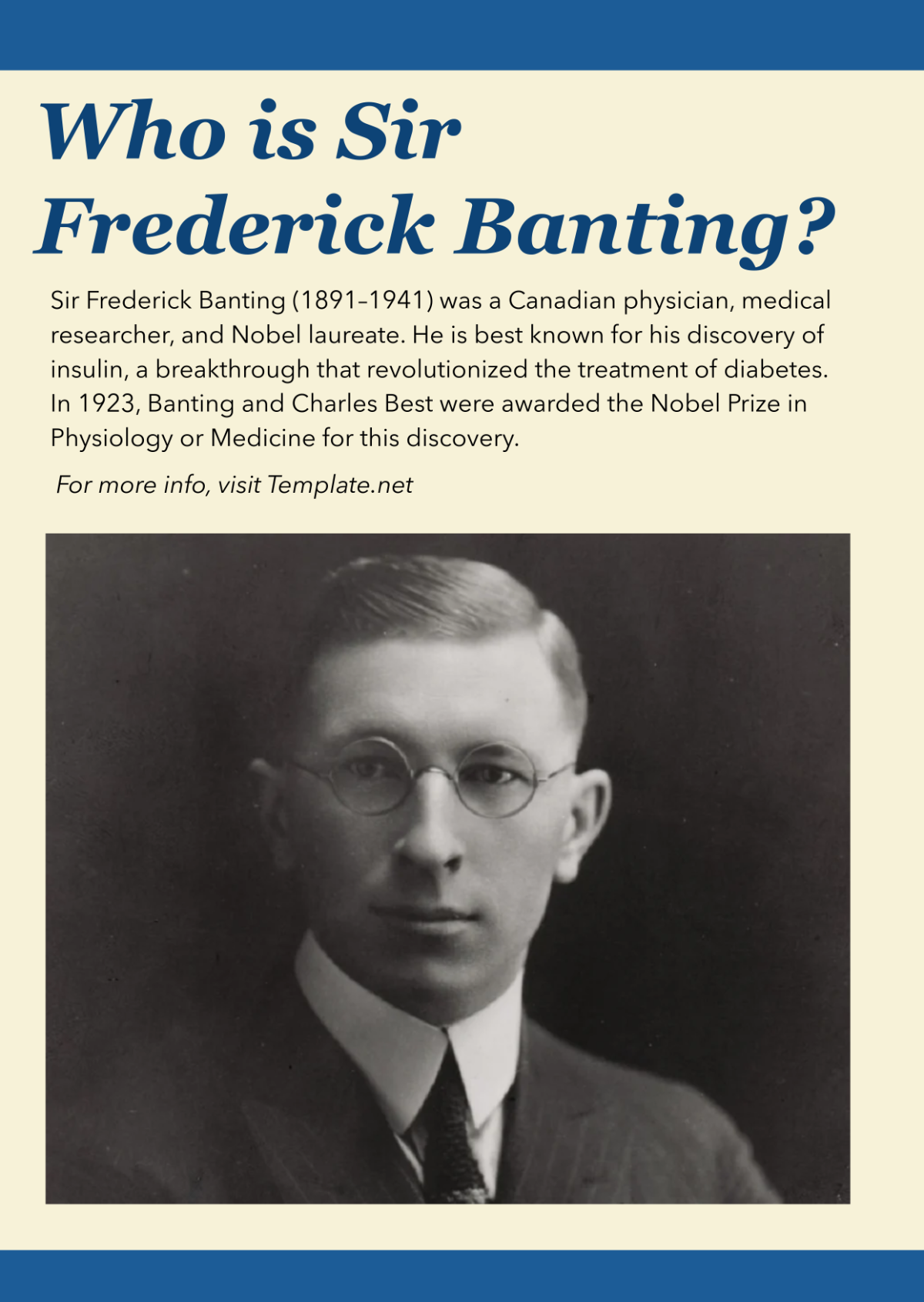
Discover how Frederick Banting's groundbreaking insulin discovery revolutionized diabetes treatment, saving millions. Ex...
View Board
Explore the transformative legacy of Paul Broca, a pioneering figure in neuroanatomy whose groundbreaking discovery of “...
View Board
Discover the compelling journey of Tu Youyou, the legendary scientist who revolutionized malaria treatment by integratin...
View Board
"Manuel Elkin Patarroyo, a pioneering immunologist, developed a malaria vaccine and advocates for global health, inspiri...
View Board
Comments