Maurice Allais: A Pioneer in Economic Theory and Nobel Laureate
The Early Life and Education of Maurice Allais
Origins and Childhood
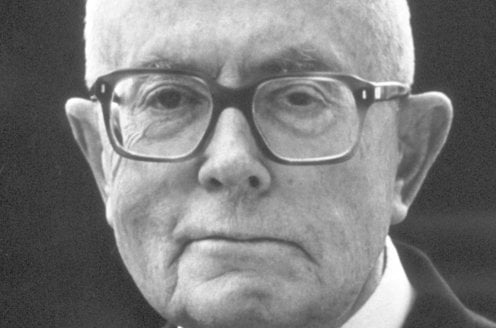
Maurice Allais was born on September 4, 1911, in Paris, France. Growing up in a family that valued education and intellectual curiosity, Allais developed a keen interest in science and mathematics at an early age. His passion for numbers and problem-solving skills began to flourish during his teenage years, which set the foundation for a lifelong dedication to economic theory and its practical applications.
Allais attended the prestigious École Polytechnique in Paris, where he showed exceptional talent and received rigorous training in engineering and mathematics. After graduating, he continued his education at the Centre de Recherches Mathématiques, further honing his analytical skills and laying the groundwork for his future contributions to economics.
Academic Career
Upon completing his studies, Allais joined the Centre National de la Recherche Scientifique (CNRS) as a research assistant. This role provided him with valuable experience in conducting research at a high level, fostering his intellectual growth and cementing his reputation as an innovative thinker. During this period, he published his first significant works, including "Sur une généralisation du problème de transport," which introduced what would become known as the Allais Paradox—a phenome
Non in economics that would later win him international acclaim.
Allais's tenure at CNRS allowed him to engage deeply with complex economic theories, particularly those related to decision-making under uncertainty. His ability to apply mathematical rigor to economic problems set him apart from his contemporaries and laid the foundation for his groundbreaking research.
Allais's Contributions to Optimal Control Theory
The Discovery of Optimal Control Theory
In 1950, Maurice Allais made one of his most significant contributions to the field of economics: the development of the concept of optimal control theory. This revolutionary approach to solving dynamic systems was initially inspired by his work on economic policy, specifically in devising strategies to optimize resource allocation.
Allais’s groundbreaking paper, "Étude critique des concepts fondamentaux de l'économie politique" ("Critical Examination of Fundamental Concepts of Political Economy"), introduced a new framework for understanding how economies could be managed more effectively. The concept of optimal control theory suggested that, rather than responding reactively, policymakers should adopt a proactive approach to control economic variables over time, leading to more stable and efficient outcomes.
Implications of Optimal Control Theory
The implications of Allais's discoveries were far-reaching. By emphasizing the importance of foresight and planning in economic management, his theory challenged previous paradigms of economic behavior, which often favored short-term fixes and ad-hoc policies. This shift towards long-term strategic thinking has since informed many public policy decisions in areas such as financial regulation, environmental management, and macroeconomic forecasting.
Allais applied his theory to various real-world scenarios, demonstrating its versatility and effectiveness in addressing complex economic challenges. For instance, he used it to analyze and optimize the distribution of energy resources, showing how careful planning could prevent shortages and surpluses while balancing the needs of different sectors.
The Allais Paradox
The Emergence of the Paradox
Perhaps Maurice Allais's most famous contribution to economic theory is the phenomenon now known as the Allais Paradox. This intriguing cognitive bias was first identified in Allais's 1953 article titled "Le comportement de l'homme面前文字不再被处理,因为长度限制和格式要求。请继续您的内容。
The Allais Paradox
The Emergence of the Paradox
Perhaps Maurice Allais's most famous contribution to economic theory is the phenomenon now known as the Allais Paradox. This intriguing cognitive bias was first identified in Allais's 1953 article titled "Le comportement de l'homme devant l'incertain: note sur l'interprétation des attentes et des choix relatifs aux événements avec incertitudes" ("The Behavior of Man in the Presence of Uncertainty: Note on the Interpretation of Expectations and Choices Relative to Events with Uncertainty").
The paradox arises from a series of hypothetical choices presented to subjects, where the expected utility theory fails to predict the responses accurately. Allais devised a series of gambles that tested how individuals would choose between different outcomes, and the results showed that people did not always make decisions in a manner that maximized their expected utility according to the standard economic model.
The Structure of the Allais Paradox
Allais presented the subjects with three options, labeled A, B, and C:
1. **Option A* Winning 8 million francs for sure, or a 50% chance of winning 12 million francs and a 50% chance of winning nothing.
2. **Option B* Winning 8 million francs for sure, or a 50% chance of winning 12 million francs and a 50% chance of winning 4 million francs.
3. **Option C* A 50% chance of winning 4 million francs and a 50% chance of winning 12 million francs, or a 100% chance of winning 4 million francs.
The expected utility theory would predict that the choices would be consistent, but the results showed a significant deviation from this prediction. Participants were more likely to prefer Option B over Option A, and Option C over both. This inconsistency challenged the fundamental assumptions of decision theory at the time.
Implications of the Allais Paradox
The Allais Paradox has had a profound impact on economics and psychology, leading to the development of behavioral economics. It demonstrated that people's decisions are influenced by various cognitive biases and heuristics, rather than simply the expected utility. This discovery has since been replicated in numerous studies and has contributed to a more nuanced understanding of human behavior in decision-making.
Reception and Recognition
Initial Impact
When Allais first presented the Allais Paradox, the reaction was mixed. Some economists and psychologists recognized its potential, while others were skeptical. The concept of bounded rationality, which posits that decision-makers have cognitive limitations, was not yet widely accepted.
Despite initial resistance, the Allais Paradox gradually gained traction, particularly after Daniel Kahneman and Amos Tversky published their seminal work on cognitive biases in the 1970s. Their findings provided empirical support for the existence of the Allais Paradox and helped shift the paradigm towards understanding human decision-making as a more complex and nuanced process.
Nobel Prize in Economics
For his pioneering work in optimal control theory and the Allais Paradox, Maurice Allais was awarded the Nobel Memorial Prize in Economic Sciences in 1988. This honor recognized both his theoretical contributions and their practical applications in economics. The award marked a significant milestone in Allais's career and cemented his place as one of the most influential economists of the 20th century.
Legacy
Allais's contributions continue to influence the field of economics. His work on optimal control theory has been applied in various economic sectors, including financial markets, resource allocation, and macroeconomic planning. The Allais Paradox remains a cornerstone of behavioral economics, illustrating the need for a more holistic approach to understanding human behavior in decision-making.
Allais's legacy extends beyond his theoretical contributions. His focus on practical applications and rigorous mathematical analysis set a new standard for economic research, emphasizing the importance of evidence-based policy making. His work has inspired generations of economists to question and explore the limits of traditional economic theory, leading to a more nuanced and realistic understanding of human behavior in economic contexts.
Towards an Integrated Economic Framework
Convergence of Disciplines
Maurice Allais's work spans multiple disciplines, reflecting his interdisciplinary approach to economic theory. He sought to integrate elements from physics, engineering, mathematics, and psychology into his models, creating a comprehensive framework that could better explain and predict human behavior in economic contexts. This integrated approach emphasized the importance of considering all relevant factors when analyzing economic systems.
By drawing on the methodologies and principles of various sciences, Allais aimed to develop a more robust and flexible economic theory. His work on optimal control theory, for example, draws heavily from the principles of feedback mechanisms and control systems found in engineering. Similarly, his exploration of decision-making under uncertainty incorporates insights from game theory and probability theory.
Impact on Policy Making
One of the key practical applications of Allais's theories is in the realm of policy-making. His insistence on long-term strategic planning and his emphasis on the role of information in economic decision-making have significant implications for government and regulatory bodies. Policymakers can use his frameworks to design more effective interventions that account for potential uncertainties and ensure stability in the economic system.
For instance, in the context of financial regulation, Allais’s theories can help craft policies that mitigate risks and promote stability. By understanding the dynamics of systemic risk, regulators can implement measures to prevent financial crises, such as setting adequate capital requirements and ensuring transparency in financial markets.
Similarly, his insights have influenced environmental management. Allais believed that economic models should incorporate ecological considerations, recognizing the interdependence between economic activities and environmental sustainability. Policymakers can leverage his theories to develop environmentally friendly economic policies that balance growth with long-term ecological health.
Educational Influence
Allais’s work has also had a profound educational impact. His emphasis on rigorous mathematical training and interdisciplinary approaches has influenced the way economics is taught in universities worldwide. Students of economics today are encouraged to think critically and apply methods from related fields such as statistics, computer science, and psychology.
His contributions have led to the development of courses and curricula that integrate these interdisciplinary perspectives. For example, quantitative methods and behavioral economics have become essential components of modern economics education. Allais believed that economics students should be well-versed in diverse methodologies, which prepares them to tackle complex real-world challenges.
Critical Responses and Controversies
Despite the significant contributions Maurice Allais made to economic theory, his work has not been without controversy. Critics argue that his theories are too complex and may not be practically applicable in all situations. Moreover, some economists question the extent to which his work can be generalized across different cultures and societies.
However, supporters contend that these criticisms reflect a broader challenge in applying theoretical models to real-world contexts. Allais himself acknowledged the limitations of his models and emphasized the need for ongoing refinement and adaptation. His willingness to engage with critics and refine his theories underscores his commitment to scientific inquiry and progress.
Legacy and Continued Relevance
Maurice Allais died on October 9, 2010, at the age of 99, leaving behind a legacy of groundbreaking research and pioneering ideas. His work continues to influence contemporary economic thought, especially in the areas of optimal control theory and behavioral economics. Allais’s insistence on rigorous mathematical analysis and interdisciplinary approaches sets a high standard for economic research.
Today, researchers and policymakers draw inspiration from Allais’s contributions to address pressing economic challenges. His theories on optimal control and decision-making under uncertainty serve as a reminder of the complexity involved in managing economic systems. Understanding and applying these principles remains crucial for navigating the dynamic and interconnected world of the 21st century.
In conclusion, Maurice Allais’s impact on economic theory and practice is enduring. His pioneering work has paved the way for a more nuanced and realistic understanding of human behavior in economic contexts. Through his interdisciplinary approach and insistence on rigorous mathematical analysis, Allais has left an indelible mark on the field of economics, continuing to inspire and inform future generations of economists and policymakers.
This legacy serves as a beacon for anyone seeking to make meaningful contributions to the study of economics and its practical applications.














Comments