Exploring Film Noir Aesthetics: The Dark Allure of Cinema
The realm of film noir, a cinematic art form that emerged in the early 1940s, remains an enchanting enigma steeped in shadows, intrigue, and a perpetual dance between light and darkness. Its aesthetics, marked by stark contrasts and thematic ambiguity, have fascinated filmmakers and audiences alike for decades. The distinct visual and thematic motifs of film noir continue to influence contemporary cinema, ensuring its place in the pantheon of timeless storytelling. This article delves into the heart of film noir aesthetics, exploring the elements that define its enduring allure.
The Origins of Film Noir
Film noir, French for "black film," is not merely a genre but a style—a mood that encapsulates a specific worldview. Its origins can be traced back to the tumultuous backdrop of post-World War I society and the visual storytelling methods crystallized during the German Expressionist movement. The despair and disenchantment of the era filtered into American cinema amidst the economic strain of the Great Depression and the looming threats of World War II, sparking an appetite for narratives tinged with cynicism and moral complexity.
Visitors from the European cinematic wilds, including directors fleeing the rise of fascism, brought with them an arsenal of expressionistic techniques that merged with American storytelling. Films like Fritz Lang's "M" and Robert Wiene's "The Cabinet of Dr. Caligari" showcased stark, shadow-laden visuals and menacing thematic undertones that would serve as precursors to film noir. Hollywood filmmakers, drawing from these visual styles, married them with American hard-boiled crime fiction, creating a new genre that captured the darker aspects of human nature.
Visual Aesthetics: The Dance of Light and Shadow
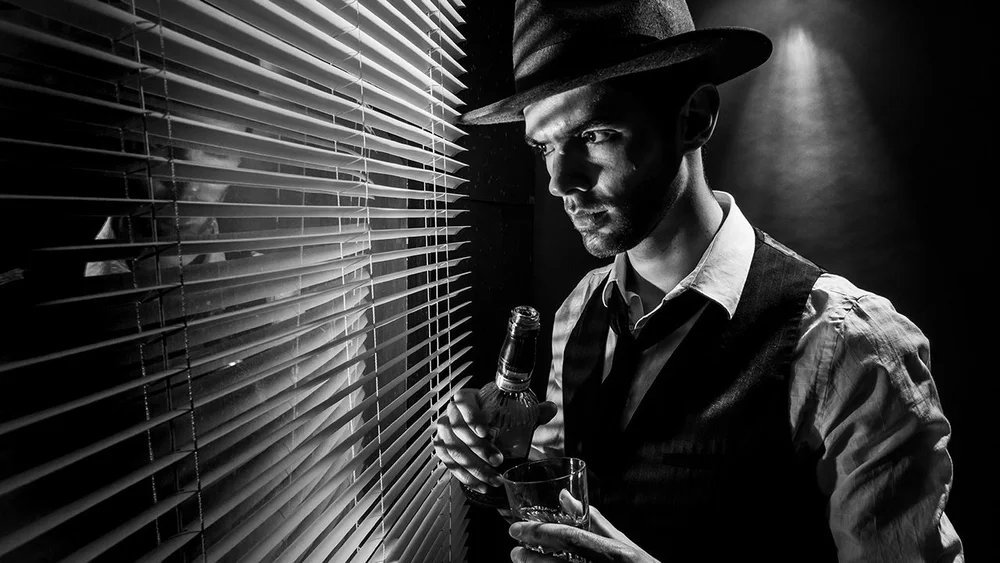
The heart of film noir aesthetics lies in its visual language—a chiaroscuro interplay of light and shadow that underscores its narratives of moral ambiguity. Cinematographers, wielding light as both a sculptor’s chisel and a painter’s brush, created worlds where darkness was not just a setting but a character itself. Dramatic contrasts are achieved through high-key lighting techniques, casting long, deep shadows that wrap around characters and settings like a filmic shroud.
This use of lighting serves to emphasize the psychological landscapes of its characters, highlighting the duality of human nature. Expressionistic lighting is accompanied by unconventional camera angles and framing, echoing the distorted realities and emotional turbulence of protagonists caught in webs of deceit, betrayal, and existential despair. The tilted angles, often called "Dutch angles," disorient the viewer, reflecting the internal chaos of characters grappling with the disarray of their lives.
Narrative Structure and Thematic Elements
Film noir narratives often mirror the shadowy visuals that define them. These stories are characterized by their labyrinthine plots involving crime, mystery, and the pervasive influence of fate. Unlike the more straightforward classic storytelling formula, noir's structure is often non-linear, incorporating flashbacks and voice-overs to disorient the audience much like its protagonists are disoriented by events spiraling beyond their control.
Central to the thematic core of film noir is the concept of moral ambiguity. The protagonists of noir films are frequently flawed, entangled in circumstances that challenge conventional morality. Characters like private detectives and anti-heroes inhabit a grey world where the line between right and wrong is blurred, each decision laden with unforeseen consequences. The classic film noir anti-hero is a complex character, often driven by a code that is personal rather than societal, making choices that are morally ambivalent at best.
Themes of alienation, existential dread, and the inescapability of fate pervade the storytelling in film noir. The mood is often pessimistic, reflecting a worldview where justice is arbitrary and the innocent are not always spared. This outlook resonates in the themes of corruption and betrayal that dominate noir plots, where the supposed moral order is upended and crime seems to pay—at least temporarily.
The Femme Fatale: An Icon of Noir
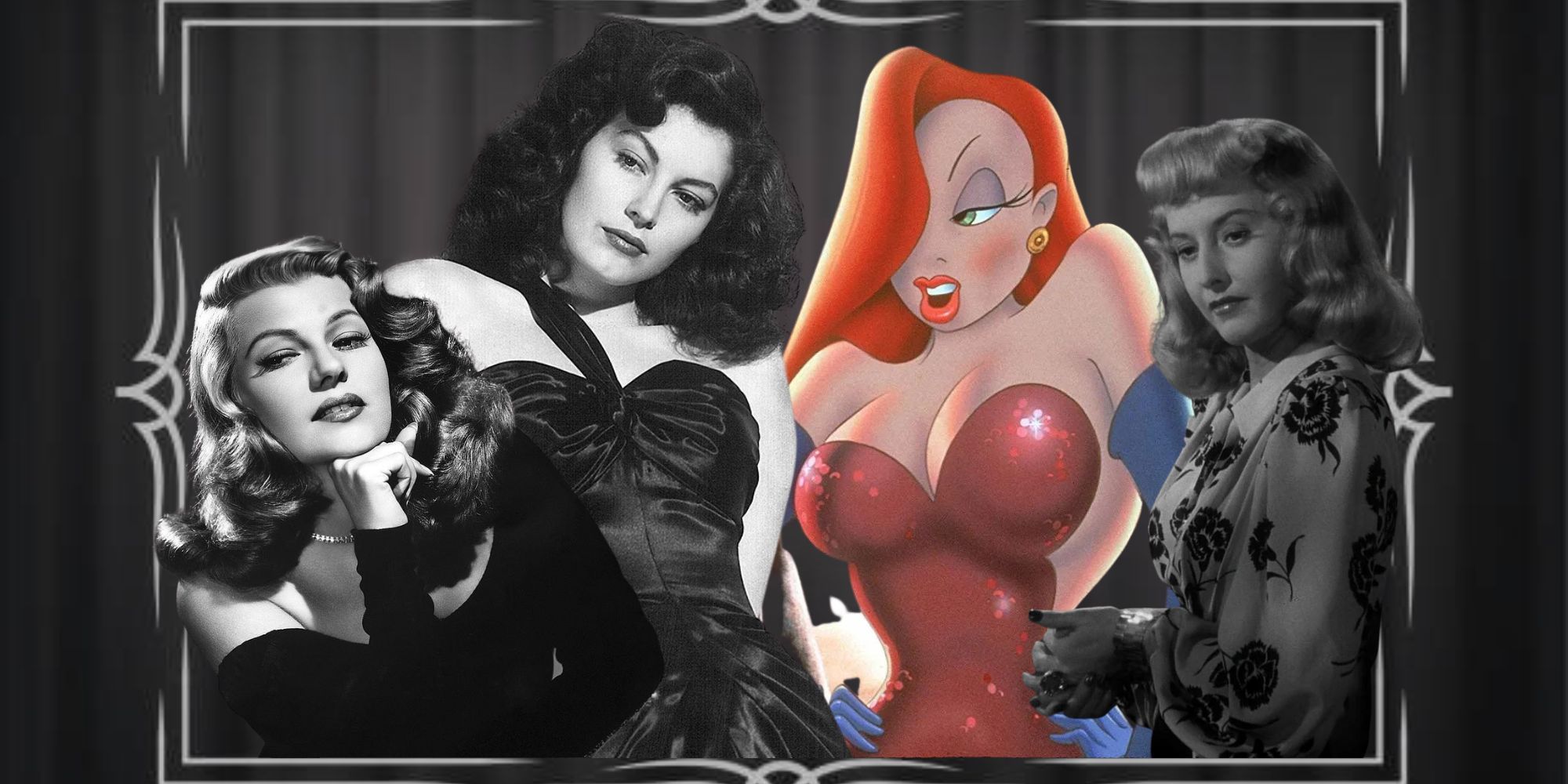
No exploration of film noir aesthetics is complete without acknowledging the iconic figure of the femme fatale—a central character trope around which many noir stories revolve. The femme fatale is a complex, often deceitful woman whose charisma and beauty spell doom for the male protagonist. Her presence within the narrative serves as a catalyst for the unraveling of the protagonist’s path, leading him invariably towards downfall.
These enigmatic women, embodied by characters like Phyllis Dietrichson in "Double Indemnity" and Kathie Moffat in "Out of the Past," reflect the shifting gender dynamics of the period. They challenge traditional female roles, utilizing their allure and intellect to manipulate events to their advantage. Yet, they too are caught in the era’s restrictive societal norms, often facing the consequences of their defiance, leading to portrayals that are both alluring and tragic.
Influence and Legacy
Though the film noir style peaked between the 1940s and the late 1950s, its influence echoes through contemporary cinema. Directors like Martin Scorsese, Quentin Tarantino, and the Coen Brothers have drawn heavily from noir's visual and thematic elements, incorporating them into modern narrative forms. Films such as "Chinatown," "Blade Runner," and "L.A. Confidential" attest to noir’s enduring impact, employing its stylistic features to explore new storytelling frontiers.
The legacy of film noir extends beyond mere homage; it has enriched the cinematic vocabulary, providing a toolkit for filmmakers to explore nuanced stories of complexity and contradiction. Its visual language of shadows and light continues to inspire artistic exploration, cementing film noir as a timeless, evocative cinematic style.
As we delve further into the exploration of film noir aesthetics, understanding its cultural significance and the underlying human truths it artfully unveils offers a window into the indelible impact of this darkly romantic realm of cinema.
The Psychological Undercurrents of Film Noir
As we continue to explore the depth of film noir, it becomes evident that its aesthetics are not merely a visual pastime but a reflection of deeper psychological undercurrents. Characteristically, noir cinema illustrates an intertwining relationship between external visuals and internal emotional states, crafting a cinematic experience that resonates with our subconscious fears and desires.
One of the fascinating psychological components of film noir is its exploration of identity and self-discovery. The protagonists often embark on a reluctant journey into the deeper recesses of their psyche. They are typically unsatisfied with their roles or positions, manifesting in a sense of disillusionment with a seemingly indifferent universe. This existential crisis dominates the narrative, driving the characters to question themselves and those around them, a reflection of post-war societal fears and identities in transition.
Moreover, noir films delve into the human psyche by presenting flawed characters who embody the Jungian concept of the shadow—a dark, repressed side of the psyche. These films project external worlds that are as flawed and distorted as the characters themselves, making the audience confront themes of inner darkness and moral complexity. The use of night-time settings, relentless rain, and claustrophobic urban environments not only serve to build tension but also echo the inner turmoil of the characters, suggesting that the darkness outside is merely a mirror of what lies within.
Iconic Examples of Film Noir
Certain films stand out as paragons of the film noir aesthetic, showcasing the quintessential elements that define this cinematic style. "The Maltese Falcon" (1941), directed by John Huston and starring Humphrey Bogart, is often credited with helping usher film noir into the American cinematic landscape. Its intricate plot, filled with deception and fraud, epitomizes the tension and psychological nuance that are hallmark traits of noir.
Another classic, "Double Indemnity" (1944), directed by Billy Wilder, offers a masterclass in blending narrative and visual style with moral uncertainty. Wilder, along with co-writer Raymond Chandler, created a narrative punctuated by a mix of greed, seduction, and betrayal, all set against a backdrop of precise, moody lighting that enhances the story’s tension and ambiguity.
Orson Welles’ "Touch of Evil" (1958) is an example of the genre's evolution, seamlessly merging its dark visual stylings with an exploration of corruption and chaos. Each frame is meticulously crafted, with Welles employing long takes and deep focus to draw audiences into a world rife with moral ambiguity and decay.
The Role of Music in Film Noir
The auditory landscape of film noir is as intricately woven as its visual style. The soundtracks often complement the visual motifs of these films, enhancing the overall sensation of tension and suspense. The music is usually atmospheric, with an inclination towards jazz, reflecting both the improvisational style of the narrative and the emotional currents that run beneath its surface.
Consider Miklós Rózsa’s score in "Double Indemnity," which sets the mood from the first frame, guiding the audience through the convoluted moral landscape of the characters. In a similar vein, Bernard Herrmann’s score for "Taxi Driver," while crafted for a film outside the classic film noir timeline, captures the brooding essence of noir through dissonant strings and haunting melodies.
Composers often utilize leitmotifs—recurring musical themes linked to particular characters or ideas—to underscore the psychological struggles of the characters. The resulting soundscape evokes a sense of unease and inevitability, much like the dimly lit urban alleys and shadow-draped rooms where the stories unfold.
Gender Dynamics in Film Noir
Beyond the allure of the femme fatale, film noir illuminates complex gender dynamics that reflect and challenge the societal norms of the era. Women in these narratives are often portrayed with a level of agency and autonomy that deviates from the traditional female roles prevalent in mainstream cinema of the time. At the same time, these portrayals can reinforce the dangers of stepping out of traditional societal roles, as these characters often meet tragic or violent ends.
The power dynamics between the femme fatale and the male protagonist offer insights into the changing landscape of gender roles during the mid-20th century. As women returned to traditional roles following World War II, film noir reflected the tensions of this transition. The femme fatale is both a threat and an object of desire—a complication that male characters struggle to navigate, leading to their eventual downfall.
However, not all women in film noir are femmes fatales. Characters like Mary Astor’s Brigid O'Shaughnessy in "The Maltese Falcon" and Gloria Grahame’s Debby Marsh in "The Big Heat" add layers of complexity to the narrative, capturing the duality of attraction and danger women posed in film noir.
Continuing Influence and Modern Interpretations
Today, the influence of film noir can be seen in the neo-noir cinema movement, which carries forward the fundamental elements while adapting them to contemporary themes and styles. Neo-noir films like "Se7en" and "Drive" maintain the core aesthetic—moody lighting, psychological complexity, and moral ambiguity—while integrating modern issues and more diverse narratives.
The legacy of film noir also extends into television and digital media, where series like "True Detective" and "Mindhunter" incorporate noir-inspired visuals and themes to craft compelling explorations of crime and the human psyche.
In understanding film noir, it's clear that while the trappings of the style may evolve, the core themes of darkness—both literal and metaphorical—continue to resonate with creators and audiences. As a reflection of societal anxieties and individual moral dilemmas, film noir captures the timeless struggle between light and shadow, both on the screen and within the human spirit.
The Cultural Reflection of Film Noir
Film noir does more than create visually stunning and psychologically complex narratives; it serves as a cultural mirror reflecting the collective consciousness and sociopolitical climate of its time. During the 1940s and 1950s, America grappled with the aftermath of World War II, the onset of the Cold War, and widespread suburbanization. These factors, laced with anxiety and evolving societal norms, found narrative expression within the dark veins of film noir.
The post-war era was a time of palpable tension. The depictions of crime and corruption in noir films mirrored the public's concerns over real-life issues—ranging from fears of nuclear annihilation to the undermining of civic institutions by mob and corruption. The paranoia and distrust that pervade noir narratives can be seen as a direct response to the suspicion and unease of the McCarthy era's hunt for communists.
Furthermore, noir's striking imagery of urban landscapes, characterized by shadowy alleys and rain-slicked streets, symbolizes the alienation and disillusionment felt by many of the time. These films often position the gritty realism of the city as the stage for human darkness, bringing to life the complexities of urban existence where anonymity and crime lurk in equal measure.
Symbolism and Visual Metaphors
The power of noir lies not only in its stark contrast and moody visuals but in its profound use of symbolism and visual metaphors. Every element—be it a shadow cast across a villain’s face or the symbolic use of light cutting through fog—serves a dual purpose: crafting the mise-en-scène and emboldening the narrative’s metaphorical depth.
Windows, mirrors, and reflections are recurring motifs in film noir, symbolizing the duality and deceit inherent in both self and others. They often correspond to a character's split personality or moral duplicity, emphasizing the choice between redemption and fall. In films like "The Lady from Shanghai," Orson Welles famously employs a hall of mirrors for a climactic shootout, a visual representation of life's convolutions and conflicting duplicities.
Rain and fog—constant companions to noir narratives—enhance the films' atmospheres while serving as metaphors for confusion and obscurity. These elements physically distort the world, tessellating the boundaries between right and wrong, predator and prey, leaving both the audience and the characters to navigate unreliable perceptions.
The Global Influence of Noir
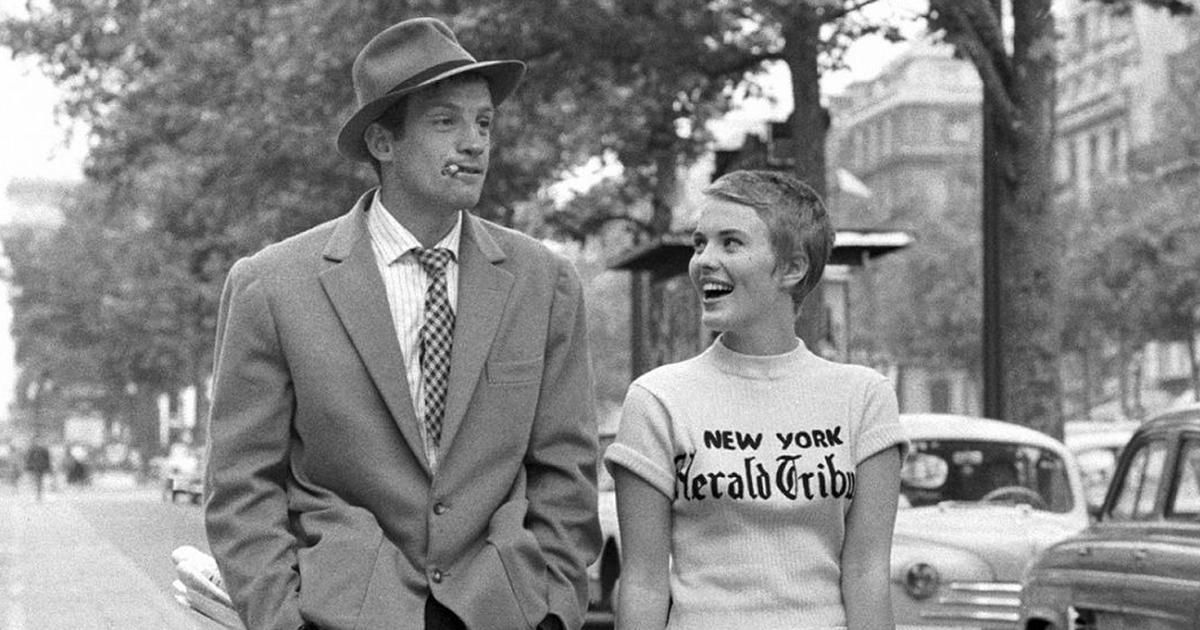
Though film noir is rooted deeply in American culture, its influence has extended beyond borders, shaping the storytelling techniques and aesthetic sensibilities of filmmakers worldwide. The style effectively traveled back across the Atlantic, impacting European cinema, influencing filmmakers like Jean-Luc Godard and François Truffaut, whose French New Wave movement drew stylistic and thematic lessons from noir.
In Asian cinema, directors like Akira Kurosawa and Wong Kar-wai have integrated noir sensibilities, capturing the atmospheric tension and character complexities inherent in settings as diverse as post-war Japan to bustling Hong Kong. Films like "Chungking Express" echo noir’s stylistic flair and existential musings, bringing the timeless struggle against inner and outer darkness into new cultural contexts.
Furthermore, the language of noir has transcended time and technology, influencing genres beyond crime fiction. From psychological thrillers to science fiction, elements of noir storytelling surface subtly yet distinctly, showcasing the adaptability and enduring appeal of its distinctive approach to human narratives.
Film Noir and the Modern Viewer
While rooted in the past, film noir continues to captivate modern audiences, who find its themes of moral ambiguity and existential angst particularly resonant in today's complex world. Contemporary viewers can explore these timeless narratives with a contemporary lens, noticing parallels with current issues such as systemic corruption, economic despair, and shifting power dynamics.
Modern interpretations of noir, or neo-noir, contextualize these traditional elements within today's societal constructs. Movies like "No Country for Old Men" and "Gone Girl" adapt the noir style to present-day narratives, exploring modern fears and the darker side of human nature whilst staying true to the atmospheric tension and psychological intrigue that define classic noir.
Moreover, the aesthetic allure of noir continues to influence the visual artistry of films, television, and other media, adding layers of complexity and beauty to contemporary storytelling. Noir succeeds in blending stylized elegance with narrative grit, offering creators a unique palette to craft stories that dissect human motives and morality.
Conclusion: The Enduring Appeal of Film Noir
Film noir stands as a testament to the power of cinema to delve into human complexities in an aesthetically captivating manner. Its blend of visual allure and psychological depth has echoed across cinematic history, shaping the way stories of darkness, intrigue, and human frailty are told. The aesthetics of noir, with its chiaroscuro lighting, narrative non-linearity, and exploration of ambiguous morality, provide a timeless blueprint for filmmakers exploring the eternal darkness within human hearts and society.
The power of film noir lies in its ability to speak to universal questions about identity, morality, and fate, themes that resonate as much today as they did at the height of its influence. In a world perpetually thrown into the shadows of its own making, the allure of film noir—its stark beauty and its unflinching examination of the human condition—remains ever pertinent. Whether through the smoky haze of streetlamps or the psychological shadows cast across a detective's face, film noir continues to illuminate the darker corners of our imagination, reminding us of the fragile dance between light and darkness within us all.
Haporium is a revolutionary platform that lets you organize your web browsing experience with customizable dashboards and boards. Create, manage, and share your favorite content collections.
Join us today and get:
The right to be one of the first pioneers
Unlimited dashboards and boards
Access to exclusive beta features
Priority support from our team
We use cookies to enhance your experience. By continuing to use this site, you agree to our Cookie Policy.











Comments