




Explore Any Narratives
Discover and contribute to detailed historical accounts and cultural stories. Share your knowledge and engage with enthusiasts worldwide.
The parchment is yellowed, the ink faded to a dull brown. John Hancock's famous signature sprawls across the bottom, a defiant flourish meant for a king's eyes. But the true power of the document housed in the National Archives isn't in its physicality. It's in the 1,337 words that precede the signatures. Words that sparked a rebellion, birthed a nation, and launched an experiment that continues, fractiously and hopefully, to this day. As the United States approaches its Semiquincentennial—its 250th birthday on July 4, 2026—the Declaration of Independence demands a fresh reckoning. Not as a relic, but as a living, arguing, and profoundly disruptive force.
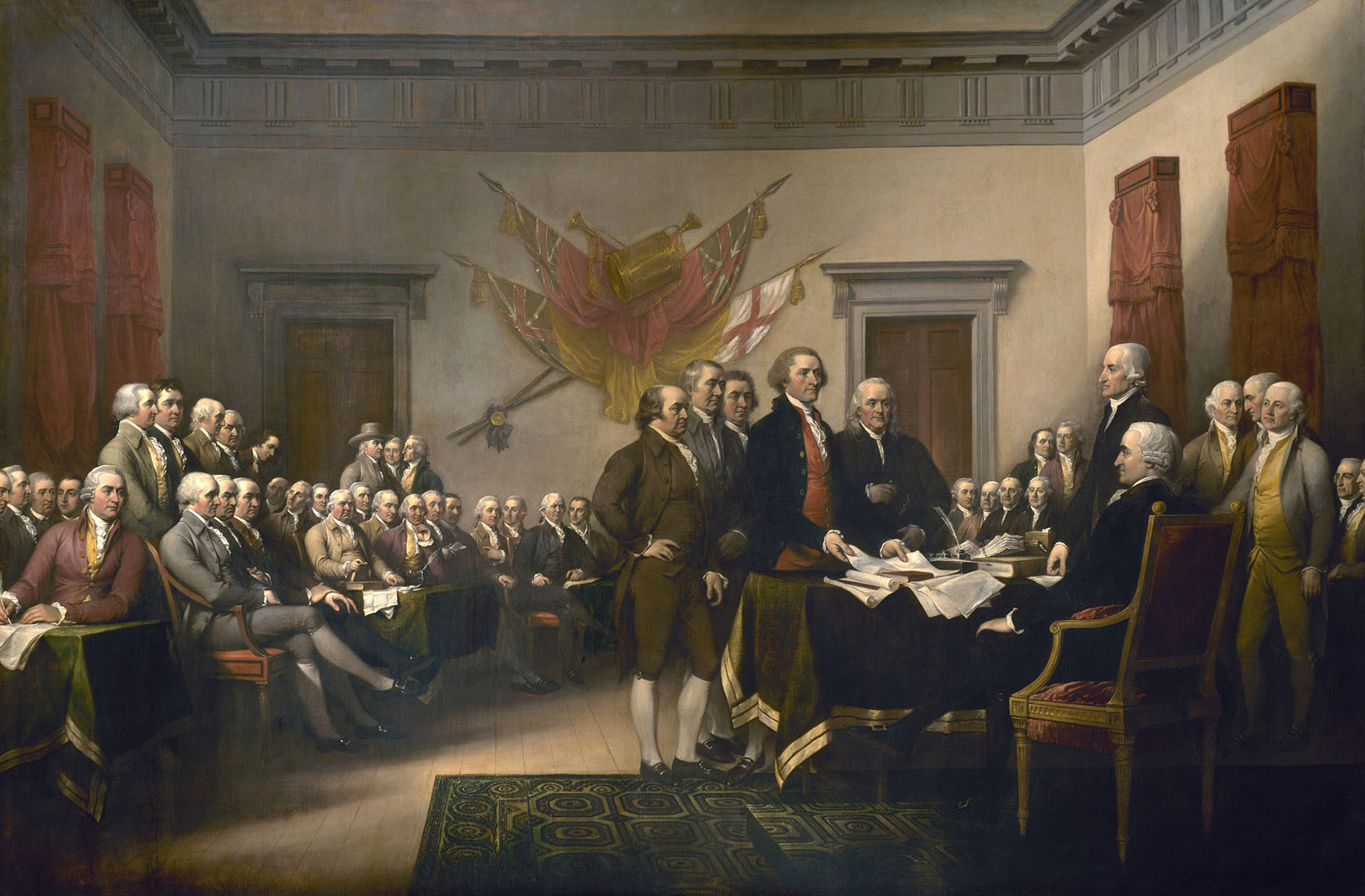
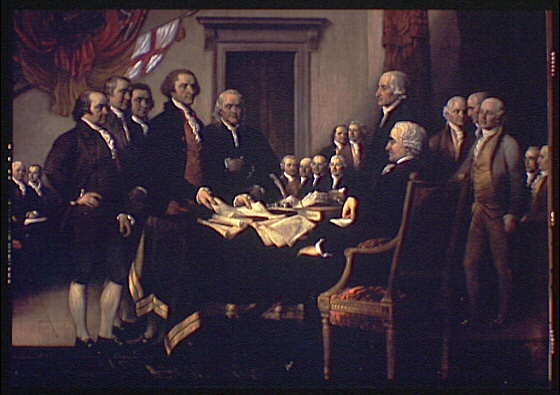
The story begins not with celebration, but with profound risk. In the summer of 1776, Philadelphia was stifling. Inside the Pennsylvania State House, now Independence Hall, a group of 56 men from thirteen distinct colonies debated a step that felt, to many, like a leap into an abyss. The motion for independence, introduced by Richard Henry Lee of Virginia on June 7, 1776, had been tabled for three weeks of agonizing discussion. These were not wild-eyed radicals by trade; they were planters, lawyers, merchants, and landowners. They understood the legal and personal consequences with chilling clarity.
Signing the document Thomas Jefferson had drafted was not an act of patriotic branding. It was an explicit act of high treason against the British Crown, a crime punishable by hanging, drawing, and quartering. Their property was forfeit, their families in jeopardy. "We must all hang together," Benjamin Franklin is famously reported to have said, "or, most assuredly, we shall all hang separately." The gravity of that moment cannot be overstated. They were not merely declaring a new political reality. They were betting their lives on a philosophical premise.
According to historian Joseph Ellis, "The Declaration was a political document, not a philosophical treatise. But its genius was in linking the colonial cause to a set of self-evident truths that transcended the immediate conflict. They were making an appeal to the court of world opinion, and to the future."
The final days of deliberation, from July 1 to July 4, 1776, were marked by intense editing. Congress deleted nearly a quarter of Jefferson's original text, including a passionate passage condemning the slave trade—a contradiction many in the room lived intimately. The adopted version was a compromise, a collective statement. On that fourth day, Congress approved the text. New York's delegation, lacking instructions, abstained. It wasn't until July 19, 1776, that an "engrossed" copy on parchment was ordered, and not until August 2 that most signatures were finally affixed. The birth certificate of the United States of America—the first document to use that name publicly—was, from its first breath, a document of both soaring ideals and painful pragmatism.
The Declaration's structure is deceptively simple, a three-part legal and rhetorical argument designed to persuade a skeptical world. It operates with the precision of a courtroom brief and the thunder of a sermon.
The opening lines are its beating heart. They do not mention Great Britain, taxes, or tea. They begin with a cosmic claim about the "Laws of Nature and of Nature's God." Then comes the seismic statement: "We hold these truths to be self-evident, that all men are created equal, that they are endowed by their Creator with certain unalienable Rights, that among these are Life, Liberty and the pursuit of Happiness." This was radical in the extreme. In a world of monarchs, aristocrats, and divine right, it asserted that legitimate government flows not from tradition or bloodline, but from the consent of the governed. The purpose of government was not to rule, but to secure these pre-existing rights. When it fails, people have a duty—a right—to alter or abolish it.
Judge Michael Warren, co-founder of Constitution Day, argues, "The Declaration established four foundational principles for the new nation: the rule of law, unalienable rights, limited government, and equality. It wasn't just a breakup letter. It was a philosophical blueprint for a new kind of social contract."
The second section, the longest, is a forensic list of 27 grievances against King George III. It's a strategic masterpiece. By focusing blame squarely on the person of the king—"He has refused his Assent to Laws... He has obstructed the Administration of Justice... He has plundered our seas, ravaged our Coasts, burnt our towns"—the Congress cut through the complexity of parliamentary conflict. It personalized the tyranny. The list moves from specific legal and economic complaints to acts of war, building a narrative of an escalating pattern of abuse that left no peaceful recourse. This section was the legal and emotional justification for the final, inevitable act.
The final section is stark and declarative. Having laid out the philosophical justification and the factual indictment, the document states its conclusion. "We, therefore... solemnly publish and declare, That these United Colonies are, and of Right ought to be Free and Independent States." It absolves the colonies of all allegiance to the British Crown, severs all political connection, and asserts the full powers of sovereign states to levy war, conclude peace, and engage in commerce. The war, which had already begun with the shots at Lexington and Concord in April 1775, now had a definitive political endgame: not reconciliation, but sovereignty.
The document was immediately put to practical use. Hundreds of copies were printed by John Dunlap on the night of July 4-5 and rushed by horseback across the colonies and to European capitals. It was a diplomatic instrument, a plea for recognition and aid from France and Spain. It was read aloud to General George Washington's troops in New York on July 9, 1776, to rally an army facing grim odds. It was, from the start, both a timeless statement of principle and a timely tool of survival.
As the first public fireworks of the 250th anniversary cycle begin to light the sky, the question hangs in the air: what are we actually celebrating? The signing of a document? The military victory that followed seven years later? Or the enduring, unstable, and galvanizing power of an idea that was launched into the world on that hot Philadelphia day? The answer, perhaps, is all three. But the legacy of the Declaration lies less in the war it justified than in the endless revolution of expectation it ignited.
If the Declaration of Independence were merely a historical artifact, its 250th anniversary would be a simple birthday party. But the document refuses to stay in its glass case. It vibrates with unresolved tension. It is, and has always been, a promissory note whose full payment remains in dispute. The journey from its adoption in 1776 to the eve of its Semiquincentennial is not a straight line of progress. It is a jagged graph of revolutionary expansion and violent contraction, of ideals invoked by both the emancipator and the enslaver. To understand America at 250, one must trace how those 56 signatures unleashed a force far more volatile than any of the signers could have imagined.
The physical dispersion of the document’s early copies tells a story of deliberate propagation. After the Dunlap broadsides, official engravings were made to broadcast the text. In December 2025, a remarkable piece of this material history resurfaced. An 1818 Owen Tyler reproduction was presented to Poplar Forest, Thomas Jefferson’s private retreat in Virginia. This wasn’t a modern photocopy. It was an original engraving from the early republic, a direct link to the generation that first grappled with the Declaration’s meaning.
"This is an 1818 Owen Tyler reproduction of the Declaration of Independence, and it was the first time that the new American citizens could actually see the names of the signers." — Alyson Ramsey, President and CEO of Poplar Forest
Ramsey’s point is sharper than it first appears. For decades, the signers’ identities were not common public knowledge, their act shrouded in a collective “Congress.” The Tyler engraving, going on public display at Poplar Forest starting January 10, 2026, personalized the revolution. It transformed abstract “patriots” into men with names, with property, with legacies to defend or hide from. It made the treason tangible. This specific artifact, one of the very few surviving copies, underscores a critical truth: the Declaration was always meant to be seen, read, and internalized by the public. It was populist propaganda of the highest order.
The core philosophical power—and the enduring conflict—springs from 36 words: "We hold these truths to be self-evident, that all men are created equal, that they are endowed by their Creator with certain unalienable Rights, that among these are Life, Liberty and the pursuit of Happiness." The genius and the agony lie in the opening phrase: "We hold these truths to be self-evident." It is a statement of faith, not empirical proof. It declares a premise upon which a new logic will be built. This was its radical break. Rights were not granted by a king or a parliament; they were inherent, endowed by a Creator. Government’s job was merely to secure them.
But who constituted "men"? What did "equal" mean in practice? The document’s authors left these questions spectacularly unanswered. They planted a philosophical landmine that would detonate repeatedly throughout American history. The grievances listed against King George III read like a checklist of the very abuses future generations would level against the American government itself: "imposing taxes on us without our consent," "depriving us, in many cases, of the benefits of trial by jury," "suspending our own Legislatures, and declaring themselves invested with power to legislate for us in all cases whatsoever." The language of revolution, once unleashed, could not be contained. It became the native tongue of every subsequent protest.
This brings us to the central, uncomfortable paradox of the Semiquincentennial. How does a nation celebrate a document that has been the primary weapon for its most marginalized citizens to bludgeon the state into living up to its own promises? The answer is, it celebrates it uneasily. The Declaration is not a feel-good origin story. It is a yardstick against which the nation’s failures are constantly measured.
"The Declaration was the founding ideals of the nation, and preserves national and international symbols of freedom and democracy." — National Park Service, on Independence Hall
The NPS description of Independence Hall, where both the Declaration and Constitution were forged, is diplomatic. It smooths over the raucous, bitter, and profoundly conflicted debates that occurred within those walls. To stand in that room is not to stand in a shrine of unanimous consensus. It is to stand on a battlefield of ideas, where the future was hacked out clause by clause, compromise by bloody compromise. The "symbols of freedom" were born in a context of profound unfreedom, a dissonance that has never been resolved.
The true history of the Declaration of Independence is not what happened in 1776. It is what happened next. The document’s meaning has been fought over in every generation, its interpretation expanding and contracting with the national mood. It became a tool for inclusion and a cudgel for exclusion, often simultaneously.
In the 19th century, abolitionists like Frederick Douglass wielded its words with devastating precision. They exposed the hypocrisy of a nation founded on a creed of universal equality that practiced race-based chattel slavery. At the 1852 Fourth of July celebration in Rochester, New York, Douglass asked, "What, to the American slave, is your Fourth of July?" He answered by quoting the Declaration’s own lofty language back at his audience, highlighting the "shocking and bloody" disparity between ideal and reality. The suffragists of the 1848 Seneca Falls Convention did the same, issuing a "Declaration of Sentiments" that deliberately mimicked Jefferson’s structure and language, substituting "all men" with "all men and women" and listing grievances against patriarchal tyranny.
The 20th century saw the document mobilized in the labor movement, the Civil Rights movement, and the struggle for LGBTQ+ equality. Dr. Martin Luther King Jr.’s "I Have a Dream" speech was, at its core, a sermon on the promissory note of the Declaration and the Constitution. He framed the civil rights struggle not as a demand for new privileges, but as a demand for the nation to finally make good on the check it had written in 1776. The Declaration provided the moral high ground; it was the nation’s own foundational text that activists used to justify civil disobedience. Its final, solemn vow—"we mutually pledge to each other our lives, our fortunes, and our sacred honor"—was a language of sacrifice that resonated with sit-in participants and Freedom Riders facing fire hoses and police dogs.
"It was not just a copy but an original engraving over 200 years old; one of the very few of these that still remain." — Alyson Ramsey, on the Tyler reproduction
The rarity of artifacts like the Tyler engraving speaks to a paradox. We venerate these physical objects precisely because the idea they contain is so fragile, so constantly threatened by human failing. We need the tangible parchment to remind us of the intangible promise. But this fetishization of the document can also sanitize it. It can turn a revolutionary manifesto into a patriotic prop.
Here lies the critical challenge for the 250th commemoration. Will it be an exercise in uncritical self-congratulation, or will it embrace what the historian Jill Lepore calls the "argument of America"? The data points are mixed. The planned festivities, the military parades, the inevitable fireworks over the National Mall—these suggest a celebration of triumph. But the simultaneous, grassroots discussions about the limits of that triumph, the ongoing debates about voting rights, economic liberty, and whose happiness the state is bound to protect, are the true legacy of July 4, 1776. The Declaration didn’t create a perfect union. It created a permanent argument about what a more perfect union should be.
Is the American experiment, at 250, a success? The question itself is flawed. The experiment, by its nature, is never concluded. The final clause of the Declaration, the pledge of "lives, fortunes, and sacred honor," was not a one-time offer. It is a recurring demand placed upon every generation. Some have honored it in full. Others have betrayed it for comfort or power. The parchment in the Archives is silent. The ideas it launched are deafening. As we approach 2026, the most fitting commemoration would not be to simply admire the document under glass, but to read it again—aloud, in public squares, in classrooms, in courtrooms—and ask, with brutal honesty: are we holding these truths yet? And if not, what are we prepared to pledge to finally make them so?
The significance of the Declaration of Independence explodes far beyond American borders. Its true legacy is not the founding of a single nation, but the codification of a universal script for rebellion. The document provided a masterclass in political rhetoric: start with first principles of human rights, list specific grievances to justify action, and conclude with a bold, irrevocable statement of sovereignty. This template was contagious. It traveled in diplomatic pouches and aboard merchant ships, landing in the hands of revolutionaries who saw their own struggles reflected in its paragraphs.
Within decades, its influence was unmistakable. The French Declaration of the Rights of Man and of the Citizen in 1789 bore its direct imprint, though it leaned harder into collective "citizen" rights over the American focus on individual "man." Simón Bolívar carried its ideas through South America. The 1945 Vietnamese Declaration of Independence, drafted by Ho Chi Minh, opens with a deliberate quotation of its famous second sentence. Movements for self-determination from India to Ghana have invoked its spirit. It became, as the historian David Armitage argues, the first document of a new genre: the declaratory genre of independence. Its power lies in its adaptability. It provides a language of justification that can be detached from its original authors and their very specific, very flawed historical context.
"The Declaration of Independence was the founding ideals of the nation, and preserves national and international symbols of freedom and democracy." — National Park Service, on Independence Hall
The NPS statement, while understated, hints at this dual identity. Independence Hall is a UNESCO World Heritage Site not because it is a uniquely American shrine, but because the ideas debated there are considered part of the world’s cultural heritage. The building is a monument to a moment when political philosophy became actionable, public policy. This global resonance is the ultimate measure of the Declaration’s significance. It transformed a colonial tax revolt into a chapter in the Enlightenment’s global project, making the American Revolution a reference point—both aspirational and cautionary—for every subsequent fight against empire.
Any honest assessment must confront the foundational flaw, the rot in the timber. The Declaration’s most soaring pronouncement—"all men are created equal"—was penned by a man who owned over 600 human beings during his lifetime. It was signed by multiple slaveholders. It was adopted by a Congress that represented colonies where slavery was not just legal, but economically essential. This is not a minor historical footnote to be acknowledged and then set aside. It is the central, corrosive contradiction that has shaped the entire American political project. The nation was born with a theory of universal liberty and a practice of brutal, race-based subjugation.
The criticism here is not the cheap, presentist one of judging the past by modern standards. It is more profound. The founders themselves recognized the contradiction. Jefferson’s original draft included a clause condemning the slave trade, which Congress removed. The dissonance haunted them. It created what scholars call the "American paradox," a cognitive dissonance baked into the national DNA. This original sin meant that the noble language of the Declaration would, for nearly a century, exist in a state of suspended animation. It was a promise deferred, a check marked "insufficient funds." The Civil War was the violent, bloody reconciliation of that account. The failure of Reconstruction and the imposition of Jim Crow was a national decision to renege on the payment once more.
The document’s critics, from abolitionists to modern scholars, rightly point out that its vague universality allowed it to be co-opted. Its language of "self-evident" truths could be, and was, used to exclude. If rights were endowed by a "Creator," whose Creator counted? The document’s silence on the mechanism for realizing its ideals left a vacuum that power and prejudice rushed to fill. Celebrating the Declaration without wrestling with this hypocrisy is an act of historical bad faith. It turns a complex, troubling, and revolutionary text into a feel-good slogan.
The approach of the Semiquincentennial is already shaping a national conversation. The commemoration is not a single event on July 4, 2026, but a multi-year process of reckoning. Institutions are preparing. The display of the 1818 Owen Tyler engraving at Poplar Forest, available for viewing throughout 2026, is one early piece of this. Major exhibitions are planned at the National Archives, the Smithsonian, and hundreds of local historical societies. The challenge for these institutions will be to move beyond mere display and into dialogue.
Predictions for the anniversary year are fraught. There will undoubtedly be grand, unifying spectacles: a massive flotilla in New York Harbor, a televised reading of the Declaration from Independence Hall, a presidential address. But the more significant activity will happen at the edges. Expect scholarly conferences with titles questioning the very premise of celebration. Expect activist groups to organize alternative "Un-Independence Day" events highlighting communities for whom the promise remains unfulfilled. Expect political figures to quote the Declaration’s grievances section verbatim, applying them to contemporary authorities. The document will be weaponized in the culture wars, claimed by all sides.
The most concrete legacy of the 250th may be pedagogical. There is a growing push, evident in state curriculum debates from Texas to California, to teach the Declaration not as a static, sacred text, but as the opening argument in an ongoing national debate. This approach treats the document as a living source of conflict, its meaning continually reinterpreted by each generation. The goal is not to instill blind reverence, but to equip citizens with the foundational language of their own civic arguments.
The parchment in the National Archives will remain, carefully monitored under argon gas, its ink continuing its slow fade. But the words have long since escaped their physical cage. They live in court briefs, on protest signs, in naturalization ceremonies, and in the quiet, persistent demands of people claiming their piece of an ancient promise. The experiment launched in that sweltering Philadelphia room continues, not because of its perfection, but because of its potent, unfinished imperfection. The final question posed by America at 250 is not whether the nation has lived up to the Declaration. It is whether, after all this time, we have even agreed on what it says.
Your personal space to curate, organize, and share knowledge with the world.
Discover and contribute to detailed historical accounts and cultural stories. Share your knowledge and engage with enthusiasts worldwide.
Connect with others who share your interests. Create and participate in themed boards about any topic you have in mind.
Contribute your knowledge and insights. Create engaging content and participate in meaningful discussions across multiple languages.
Already have an account? Sign in here

As America nears the 250th anniversary of 1776, the Declaration of Independence’s legacy is being fiercely debated, resh...
View Board
Two centuries after his death, Thomas Jefferson’s legacy remains a battleground—visionary founder or flawed hypocrite? E...
View Board
In 1932, desperate WWI veterans marched on Washington for promised bonuses, only to face tanks, tear gas, and fire from ...
View Board
Black Patriots were central to the Revolutionary War, with thousands serving in integrated units from Lexington to Yorkt...
View Board_in_1824_fr_-_(MeisterDrucke-419943).jpg)
On April 10, 1826, 10,000 Greeks fled besieged Missolonghi into Ottoman gunfire, forging a national martyrdom that shock...
View Board
The Times Square Ball, a 12-foot crystal sphere, honors U.S. history with its annual descent, evolving from a 1907 marit...
View Board
On January 3, 1777, George Washington’s audacious night march and decisive victory at Princeton saved the American Revol...
View Board
Gettysburg’s 2026 Winter Lecture Series challenges Civil War memory, linking diplomacy, Reconstruction, and global stake...
View Board
Historic sites undergo massive restoration and reinterpretation as America gears up for its 250th anniversary, blending ...
View Board
Jimmy Carter, morto a 100 anni, lascia un'eredità di umiltà, fallimenti politici e successi umanitari senza precedenti, ...
View Board
Navajo women's untold WWII roles—sustaining families, managing resources, and preserving culture—challenge the Code Talk...
View Board
81 years after liberation, Soviet soldiers' chilling discovery of Auschwitz reveals industrial-scale horror through surv...
View Board
The Forgotten Women of the Farm Security Administration The most famous photograph in American history bears a single na...
View Board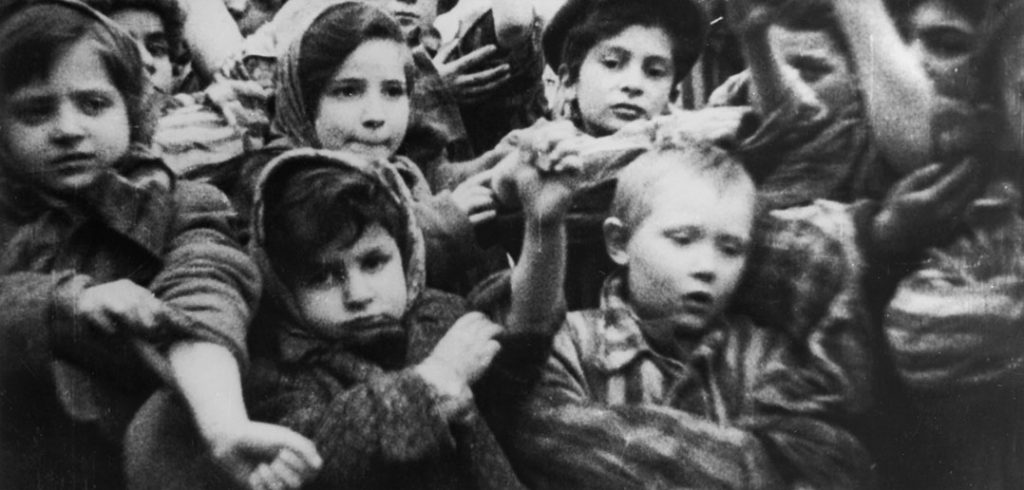
On January 27, 1945, Soviet soldiers uncovered Auschwitz, liberating 7,000 skeletal survivors and exposing the Nazi regi...
View Board
The Black Death wiped out 30-60% of Europe, but in its wake, women’s wages surged by 20-30% as they filled labor gaps, r...
View Board
The 1174 Canterbury Cathedral Fire: An Architectural Phoenix Smoke, thick and acrid, choked the Kentish sky on the fift...
View BoardTabriz, a 3,000‑year‑old Silk Road hub scarred by quakes, birthed the Safavids, fueled revolution, and still throbs with...
View Board
Archaeologists uncover Belize's first Maya king, Te K’ab Chaak, in a 1,700-year-old tomb, rewriting Caracol’s origins wi...
View Board
Cebu: The Scorched Earth Where the Philippines Began The concrete sprawl of modern Cebu City hums with a familiar urban ...
View Board
Ozella Williams' 1994 account of quilts as Underground Railroad signals sparked a national debate, blending oral traditi...
View Board
Comments