
Explore Any Narratives
Discover and contribute to detailed historical accounts and cultural stories. Share your knowledge and engage with enthusiasts worldwide.
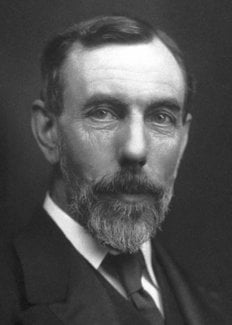
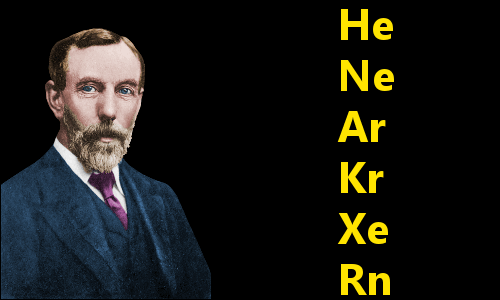
The scientific world was forever changed by the work of Sir William Ramsay, a Scottish chemist whose pioneering research filled an entire column of the periodic table. His systematic discovery of the noble gases—helium, argon, krypton, xenon, neon, and radon—fundamentally reshaped chemical theory. This article explores the life, groundbreaking experiments, and enduring impact of this Nobel Prize-winning scientist.
The story of the noble gases begins in Scotland with the birth of William Ramsay. Born in Glasgow on October 2, 1852, he was immersed in an academic and industrial environment from a young age. His family's scientific background and the city's reputation for engineering excellence nurtured his burgeoning curiosity.
Ramsay's formal academic journey saw him pursue an advanced degree far from home. He traveled to Germany to study under the guidance of renowned chemist Robert Bunsen at the University of Tübingen. There, he earned his Ph.D. in organic chemistry in 1872 with a dissertation on toluic acid and nitrotoluic acid. This rigorous training in German laboratory methods proved invaluable for his future work.
Upon returning to Great Britain, he held several academic posts, beginning at the University of Glasgow. It was during this period that his research interests began to shift. The meticulous approach he learned in Germany would later be applied to inorganic chemistry with revolutionary results. His eventual move to University College London (UCL) in 1887 provided the platform for his historic discoveries.
Ramsay's world-changing work was sparked by a collaborative investigation into a scientific anomaly. In the early 1890s, physicist Lord Rayleigh (John William Strutt) published a puzzling observation. He had found a slight discrepancy between the density of nitrogen derived from air and nitrogen produced from chemical compounds.
Rayleigh's nitrogen from air was consistently denser. Intrigued by this mystery, Ramsay proposed a collaboration to determine its cause. This partnership between a chemist and a physicist would set the stage for one of the most significant discoveries in chemical history.
Ramsay devised an elegant experimental method to solve the nitrogen puzzle. He passed atmospheric nitrogen over heated magnesium, which reacted with the nitrogen to form magnesium nitride. He reasoned that any unreacted gas left over must be something else entirely. After removing all oxygen, carbon dioxide, and water vapor, he meticulously removed the nitrogen.
The resulting residual gas amounted to roughly 1 percent of the original air sample. Spectroscopic analysis revealed a set of spectral lines unknown to science, confirming a new element.
This new gas was remarkably unreactive. Ramsay and Rayleigh named it argon, from the Greek word "argos" meaning "idle" or "lazy." Their joint announcement in 1894 of this chemically inert constituent of the atmosphere stunned the scientific community and challenged existing atomic theory.
The discovery of argon presented a profound conceptual problem for contemporary chemists. The known periodic table, as conceptualized by Dmitri Mendeleev, had no obvious place for a monatomic element with zero valence. Its atomic weight suggested it should sit between chlorine and potassium, but its properties were utterly alien.
Ramsay, however, saw a pattern. He hypothesized that argon might not be alone. He recalled earlier observations of a mysterious yellow spectral line in sunlight, detected during a 1868 solar eclipse and named "helium" after the Greek sun god, Helios. If a solar element existed, could it also be found on Earth and share argon's inert properties?
Guided by this bold hypothesis, Ramsay began a methodical search for terrestrial helium in 1895. He obtained a sample of the uranium mineral cleveite. By treating it with acid and collecting the resulting gases, he isolated a small, non-reactive sample. He then sent it for spectroscopic analysis to Sir William Crookes, a leading expert in spectroscopy.
The result was definitive. Crookes confirmed the spectrum's principal line was identical to that of the solar helium line. Ramsay had successfully isolated helium on Earth, proving it was not solely a solar element but a new terrestrial gas with an atomic weight lower than lithium. This discovery strongly supported his idea of a new family of elements.
To find the remaining family members, Ramsay needed to process truly massive volumes of air. Fractional distillation of liquified air was the key technological leap. By cooling air to extremely low temperatures, it could be turned into a liquid. As this liquid air slowly warmed, different components would boil off at their specific boiling points, allowing for separation.
Ramsay, now working with a brilliant young assistant named Morris Travers, built a sophisticated apparatus to liquefy and fractionate air. They started with a large quantity of liquefied air and meticulously captured the fractions that evaporated after the nitrogen, oxygen, and argon had boiled away. What remained were the heavier, rarer components.
Their painstaking work in 1898 led to a cascade of discoveries. Through repeated distillation and spectroscopic examination, they identified three new elements in quick succession from the least volatile fractions of liquid air. Ramsay named them based on Greek words reflecting their hidden or strange nature, forever embedding their discovery story in their names.
The year 1898 marked an unprecedented period of discovery in William Ramsay's laboratory. With a refined apparatus for fractional distillation of liquid air, he and Morris Travers embarked on a meticulous hunt for the remaining atmospheric gases. Their method involved isolating increasingly smaller and rarer fractions, each revealing a new element with unique spectral signatures.
The first of these three discoveries was krypton, named from the Greek word "kryptos" for "hidden." Ramsay and Travers found it in the residue left after the more volatile components of liquid air had evaporated. Following krypton, they identified neon, from "neos" meaning "new," which produced a brilliant crimson light when electrically stimulated. The final and heaviest of the trio was xenon, the "stranger," distinguished by its deep blue spectral lines.
Confirming the existence of these three new elements relied heavily on the analytical power of spectroscopy. Each gas produced a unique and distinctive spectrum when an electrical current was passed through it. The identification of neon was particularly dramatic, as described by Morris Travers.
Travers later wrote that the sight of the "glow of crimson light" from the first sample of neon was a moment of unforgettable brilliance and confirmation of their success.
These discoveries were monumental. In the span of just a few weeks, Ramsay and his team had expanded the periodic table by three new permanent gases. This rapid succession of discoveries solidified the existence of a completely new group of elements and demonstrated the power of systematic, precise experimental chemistry.
By 1900, five noble gases were known, but Ramsay suspected the group might not be complete. His attention turned to the new and mysterious field of radioactivity. He began investigating the "emanations" given off by radioactive elements like thorium and radium, gases that were themselves radioactive.
In 1910, Ramsay successfully isolated the emanation from radium, working with Robert Whytlaw-Gray. Through careful experimentation, they liquefied and solidified the gas, determining its atomic weight. Ramsay named it niton (from the Latin "nitens" meaning "shining"), though it later became known as radon.
Radon presented a unique case. It possessed the characteristic chemical inertness of the noble gases, confirming its place in Group 18. However, it was radioactive, with a half-life of only 3.8 days for its most stable isotope, radon-222. This discovery powerfully linked the new group of elements to the pioneering science of nuclear physics and radioactivity.
The identification of radon completed the set of naturally occurring noble gases. Ramsay had systematically uncovered an entire chemical family, from the lightest, helium, to the heaviest and radioactive, radon. This achievement provided a complete picture of the inert gases and their fundamental properties.
The discovery of the noble gases forced a fundamental reorganization of the periodic table. Dmitri Mendeleev's original table had no place for a group of inert elements. Ramsay's work demonstrated the necessity for a new group, which was inserted between the highly reactive halogens (Group 17) and the alkali metals (Group 1).
This addition was not merely an expansion; it was a validation of the periodic law itself. The atomic weights and properties of the noble gases fit perfectly into the pattern, reinforcing the predictive power of Mendeleev's system. The table was now more complete and its underlying principles more robust than ever before.
The existence of elements with a valence of zero was a radical concept. Before Ramsay's discoveries, all known elements participated in chemical bonding to some degree. The profound inertness of the noble gases led to a deeper theoretical understanding of atomic structure.
Their lack of reactivity was later explained by the Bohr model and modern quantum theory, which showed their stable electron configurations with complete outer electron shells. Ramsay's empirical discoveries thus paved the way for revolutionary theoretical advances in the 20th century.
William Ramsay's success was not only due to his hypotheses but also his mastery of experimental precision. He was renowned for his ingenious laboratory techniques, particularly in handling gases and measuring their properties with exceptional accuracy. His work set new standards for analytical chemistry.
A key innovation was his refinement of methods for determining the molecular weights of substances in the gaseous and liquid states. He developed techniques for measuring vapor density with a precision that allowed him to correctly identify the monatomic nature of the noble gases, a critical insight that distinguished them from diatomic gases like nitrogen and oxygen.
Many of Ramsay's discoveries involved working with extremely small quantities of material. The noble gases, especially krypton and xenon, constitute only tiny fractions of the atmosphere. Isolating and identifying them required microchemical techniques that were pioneering for the time.
His ability to obtain clear spectroscopic results from minute samples was a testament to his skill. Ramsay combined chemical separation methods with physical analytical techniques, creating a multidisciplinary approach that became a model for modern chemical research. His work demonstrated that major discoveries could come from analyzing substances present in trace amounts.
Ramsay's meticulous approach allowed him to work with samples of krypton and xenon that amounted to only a few milliliters, yet he determined their densities and atomic weights with remarkable accuracy.
The significance of William Ramsay's discoveries was swiftly acknowledged by the international scientific community. In 1904, the Royal Swedish Academy of Sciences awarded him the Nobel Prize in Chemistry "in recognition of his services in the discovery of the inert gaseous elements in air, and his determination of their place in the periodic system." This prestigious honor cemented his legacy.
Notably, his collaborator Lord Rayleigh received the Nobel Prize in Physics the same year for his related investigations of gas densities. This dual recognition highlighted the groundbreaking nature of their collaborative work. Ramsay's award was particularly historic, as he became the first British chemist to ever receive a Nobel Prize in that category.
Beyond the Nobel Prize, Ramsay received numerous other accolades throughout his illustrious career. He was knighted in 1902, becoming Sir William Ramsay, in recognition of his contributions to science. He was also a Fellow of the Royal Society (FRS) and received its prestigious Davy Medal in 1895.
Ramsay was deeply involved in the scientific community's leadership. He served as the President of the Chemical Society from 1907 to 1909 and was President of the British Association for the Advancement of Science in 1911. These roles allowed him to influence the direction of chemical research and education across Britain and beyond.
The inert properties of the noble gases, once a scientific curiosity, have led to a vast array of practical applications that define modern technology. William Ramsay's pure samples of these elements unlocked possibilities he could scarcely have imagined, transforming industries from lighting to medicine.
Perhaps the most visible application is in lighting. Neon lighting, utilizing the gas's brilliant red-orange glow, revolutionized advertising and urban landscapes in the 20th century. Argon is used to fill incandescent and fluorescent light bulbs, preventing filament oxidation. Krypton and xenon are essential in high-performance flashlights, strobe lights, and specialized headlamps.
Beyond lighting, noble gases are indispensable in high-tech and medical fields. Helium is critical for cooling superconducting magnets in MRI scanners, enabling non-invasive medical diagnostics. It is also vital for deep-sea diving gas mixtures, welding, and as a protective atmosphere in semiconductor manufacturing.
Argon provides an inert shield in arc welding and titanium production. Xenon finds use in specialized anesthesia and as a propellant in ion thrusters for spacecraft. Even radioactive radon, while a health hazard, was historically used in radiotherapy.
Today, helium is a strategically important resource, with global markets and supply chains depending on its unique properties, which were first isolated and understood by Ramsay.
After his monumental noble gas discoveries, Ramsay continued his research with vigor. He investigated the rate of diffusion of gases and pursued early work in radioactivity, including experiments that led to the first isolation of radon. He remained a prolific author and a respected professor at University College London until his retirement in 1912.
His influence extended through his students, many of whom became prominent scientists themselves. Morris Travers, his key collaborator, went on to have a distinguished career and wrote a definitive biography of Ramsay. The Ramsay Memorial Fellowship was established in his honor to support young chemists.
Sir William Ramsay died on July 23, 1916, in High Wycombe, Buckinghamshire, at the age of 63. His passing marked the end of an era of fundamental discovery in chemistry. His work fundamentally completed the periodic table as it was known in his time and provided the empirical foundation for the modern understanding of atomic structure.
His legacy is not merely a list of elements discovered. It is a testament to the power of systematic inquiry, meticulous experimentation, and collaborative science. He demonstrated how solving a small anomaly—the density of nitrogen—could unlock an entirely new realm of matter.
Sir William Ramsay's career stands as a pillar of modern chemical science. Through a combination of sharp intuition, collaborative spirit, and experimental genius, he discovered an entire family of elements that had eluded scientists for centuries. His work filled the final column of the periodic table, providing a complete picture of the elements that form our physical world.
The noble gases are more than just a group on a chart; they are a cornerstone of modern technology and theory. From the deep-sea diver breathing a helium mix to the patient undergoing an MRI scan, Ramsay's discoveries touch everyday life. His research bridged chemistry and physics, influencing the development of atomic theory and our understanding of valence and chemical bonding.
In the annals of science, William Ramsay is remembered as the architect who revealed the noble gases. He showed that the air we breathe held secrets of profound chemical significance, patiently waiting for a researcher with the skill and vision to reveal them. His legacy is etched not only in the periodic table but in the very fabric of contemporary scientific and technological progress.



Your personal space to curate, organize, and share knowledge with the world.
Discover and contribute to detailed historical accounts and cultural stories. Share your knowledge and engage with enthusiasts worldwide.
Connect with others who share your interests. Create and participate in themed boards about any topic you have in mind.
Contribute your knowledge and insights. Create engaging content and participate in meaningful discussions across multiple languages.
Already have an account? Sign in here

Discover the legacy of Henri Moissan, a trailblazer in chemistry whose groundbreaking work on fluorine and the electric ...
View Board
Explore the legacy of William Ramsay, the pioneering Scottish chemist who transformed chemistry by discovering the noble...
View Board
Discover how William Ramsay's groundbreaking discovery of noble gases revolutionized chemistry and opened new horizons i...
View Board
Explore the trailblazing journey of Marie Curie, a pioneering scientist whose groundbreaking discoveries in radioactivit...
View Board
Explore the life and legacy of Dmitri Mendeleev, the visionary architect of the periodic table. Discover how his groundb...
View Board
Fritz Haber: A Chemist Whose Work Changed the World The Rise of a Scientist Fritz Haber was born on December 9, 1868, i...
View BoardDiscover the transformative legacy of Louis Paul Cailletet, the French physicist whose groundbreaking work with gases re...
View Board
Alessandro Volta, a pioneering Italian physicist, revolutionized electricity with the invention of the voltaic pile, sha...
View Board
Explore the fascinating life of Michael Faraday, the pioneering scientist whose groundbreaking work in electromagnetism ...
View Board
Discover the intriguing life of Léon Foucault, the pioneering French physicist who elegantly demonstrated the Earth's ro...
View Board
Discover the life and legacy of James Chadwick, the pioneering physicist who discovered the neutron and revolutionized n...
View Board
Explore the remarkable life and enduring legacy of Max von Laue, the pioneering physicist behind the groundbreaking tech...
View Board
158 ̩ Meta Description: Explore the groundbreaking contributions of Giovanni Battista Amici - the Italian physicist w...
View Board
Alessandro Volta, inventor of the electric battery and pioneer of electrical science, revolutionized energy with the Vol...
View Board
Discover how Louis-Paul Cailletet revolutionized science with his groundbreaking gas liquefaction experiments, paving th...
View Board
"Discover Glenn Seaborg, Nobel laureate who found plutonium, revolutionizing nuclear science. Learn his impact on energy...
View Board
Discover the legacy of Michael Faraday, the self-taught genius hailed as the Father of Electromagnetism. From his humble...
View Board
Explore the life and legacy of Hans Geiger, the pioneering physicist behind the revolutionary Geiger counter. From his e...
View Board
Explore the life of Galileo Galilei, the pioneering scientist who revolutionized our understanding of the universe. Delv...
View Board
Explore the groundbreaking contributions of Albert A. Michelson, the first American Nobel Prize winner in Physics, known...
View Board
Comments