Explore Any Narratives
Discover and contribute to detailed historical accounts and cultural stories. Share your knowledge and engage with enthusiasts worldwide.
Glenn T. Seaborg stands as one of the most influential scientists of the 20th century. His groundbreaking work in nuclear chemistry reshaped modern science, earning him a Nobel Prize and a lasting legacy. This article explores his life, contributions, and the enduring impact of his discoveries.
Born in 1912 in Ishpeming, Michigan, Seaborg exhibited an early passion for science. He pursued chemistry at UCLA, where his brilliance quickly became evident. His academic journey laid the foundation for his future achievements in nuclear research.
Seaborg’s most famous achievement came in 1940, when he and his team discovered plutonium. This element became crucial in the development of nuclear energy and weapons, marking a turning point in scientific history.
The discovery of plutonium had far-reaching consequences:
In 1951, Seaborg was awarded the Nobel Prize in Chemistry for his work on transuranium elements. His research didn’t stop there—he continued to expand the periodic table, discovering several new elements.
His contributions include the discovery or co-discovery of:
Seaborg’s work extended beyond the lab. He served as chairman of the U.S. Atomic Energy Commission and advised multiple presidents. His dedication to science education inspired generations of researchers.
Among his many accolades:
Glenn Seaborg’s contributions to science remain unparalleled. From the discovery of plutonium to his role in shaping nuclear policy, his work continues to influence technology, energy, and global security. His story is a testament to the power of curiosity and innovation.
Stay tuned for Part 2, where we delve deeper into Seaborg’s political influence and his impact on nuclear energy development.
Beyond his scientific breakthroughs, Glenn Seaborg played a pivotal role in shaping U.S. nuclear policy. As chairman of the Atomic Energy Commission (AEC) from 1961 to 1971, he influenced key decisions during the Cold War era. His leadership helped establish frameworks for nuclear safety, arms control, and the peaceful use of atomic energy.
Seaborg’s work revolutionized our understanding of the periodic table. His research focused on transuranium elements—elements heavier than uranium—expanding the boundaries of chemistry. By bombarding uranium with neutrons, he and his team synthesized new elements, proving their existence through meticulous experimentation.
Seaborg employed innovative methods, including:
The discovery of plutonium was a game-changer for energy production. Today, nuclear power generates about 10% of the world’s electricity, with plutonium playing a critical role in reactor fuel. Seaborg’s work laid the foundation for sustainable energy solutions, reducing reliance on fossil fuels.
Seaborg was deeply committed to science education. He mentored countless students at UC Berkeley, many of whom became leading scientists. His teaching philosophy emphasized hands-on research and interdisciplinary collaboration, shaping future generations of chemists and physicists.
Despite his achievements, Seaborg faced criticism for his role in nuclear weapons development. The atomic bomb raised ethical debates about scientific responsibility. Seaborg defended his work, arguing that nuclear deterrence was necessary for global stability, but he also advocated for arms control.
Even after retiring from the AEC, Seaborg remained active in science. He continued research at UC Berkeley, published over 500 scientific papers, and advocated for federal funding in education. His later work focused on nuclear medicine, exploring radioactive isotopes for cancer treatment.
In Part 3, we’ll explore Seaborg’s cultural impact, including his appearances in media, his influence on pop culture, and the enduring relevance of his discoveries in today’s scientific landscape.
Glenn Seaborg wasn’t just a scientist—he became a cultural icon. His work appeared in documentaries, textbooks, and even popular media, shaping public perception of nuclear science. His discoveries were featured in films like “The Day After Trinity”, highlighting the dual nature of nuclear power: its potential for destruction and progress.
Seaborg’s legacy extends beyond his discoveries—he inspired generations of scientists. His story is taught in schools worldwide, demonstrating how curiosity and perseverance can change the world. Many young researchers cite him as a role model, particularly in STEM education.
Beyond energy and weapons, Seaborg’s research contributed to medical advancements. His work on radioactive isotopes led to breakthroughs in cancer treatment and diagnostic imaging. Today, isotopes like plutonium-238 are used in pacemakers and radiation therapy.
Seaborg’s work sparked ongoing debates about scientific ethics. While his discoveries advanced technology, they also raised questions about responsibility. Should scientists be held accountable for how their inventions are used? Seaborg himself grappled with this, advocating for peaceful applications of nuclear science.
Today, Seaborg’s influence persists in modern science. Researchers continue to explore transuranium elements, and nuclear energy remains a critical topic in climate discussions. His life reminds us that science is not just about discovery—it’s about impact, responsibility, and legacy.
Glenn Seaborg’s journey—from a small-town student to a Nobel Prize-winning scientist—is a testament to the power of human ingenuity. His discoveries reshaped energy, medicine, and global policy, leaving an indelible mark on history. As we face modern challenges like climate change and energy security, his work remains more relevant than ever.
Seaborg once said,
“The most exciting phrase to hear in science, the one that heralds new discoveries, is not ‘Eureka!’ but ‘That’s funny…’”His legacy encourages us to keep asking questions, pushing boundaries, and striving for a better future through science.
From the discovery of plutonium to his role in nuclear policy, Glenn Seaborg’s story is one of curiosity, innovation, and enduring impact—a true icon of 20th-century science.
Your personal space to curate, organize, and share knowledge with the world.
Discover and contribute to detailed historical accounts and cultural stories. Share your knowledge and engage with enthusiasts worldwide.
Connect with others who share your interests. Create and participate in themed boards about any topic you have in mind.
Contribute your knowledge and insights. Create engaging content and participate in meaningful discussions across multiple languages.
Already have an account? Sign in here

Pioneering innovator Charles Hard Townes revolutionised science with his groundbreaking work on the maser and laser, ear...
View Board
Discover how Yves Chauvin's Nobel-winning olefin metathesis revolutionized chemistry, enabling greener, efficient indust...
View Board
Explore the life and legacy of Dmitri Mendeleev, the visionary architect of the periodic table. Discover how his groundb...
View Board
Explore the fascinating life of Michael Faraday, the pioneering scientist whose groundbreaking work in electromagnetism ...
View Board
Fritz Haber: A Chemist Whose Work Changed the World The Rise of a Scientist Fritz Haber was born on December 9, 1868, i...
View Board
Discover the legacy of Michael Faraday, the self-taught genius hailed as the Father of Electromagnetism. From his humble...
View Board
Max Born was a renowned theoretical physicist and Nobel laureate known for his statistical interpretation of quantum mec...
View Board
Explore the trailblazing journey of Marie Curie, a pioneering scientist whose groundbreaking discoveries in radioactivit...
View Board
"Discover how Ernest Rutherford, the father of nuclear physics, revolutionized science with his atomic discoveries. Expl...
View Board
> **Meta Description:** Explore the life and legacy of Albert Einstein, the genius who reshaped physics with relativity,...
View Board
"Louis 'Luis' Alvarez: A scientific genius who pioneered new frontiers. Explore his early life, education, and groundbre...
View Board
Explore the remarkable life and enduring legacy of Max von Laue, the pioneering physicist behind the groundbreaking tech...
View Board
Discover Archimedes, ancient Greece's greatest scientist. Explore his life, groundbreaking work in math, physics, and en...
View Board
Discover the legacy of Henri Moissan, a trailblazer in chemistry whose groundbreaking work on fluorine and the electric ...
View Board
768 **Meta Description:** Explore the life of Enrico Fermi, the architect of the nuclear age. From quantum theory to th...
View Board
Discover the intriguing life of Léon Foucault, the pioneering French physicist who elegantly demonstrated the Earth's ro...
View BoardDiscover the transformative legacy of Louis Paul Cailletet, the French physicist whose groundbreaking work with gases re...
View Board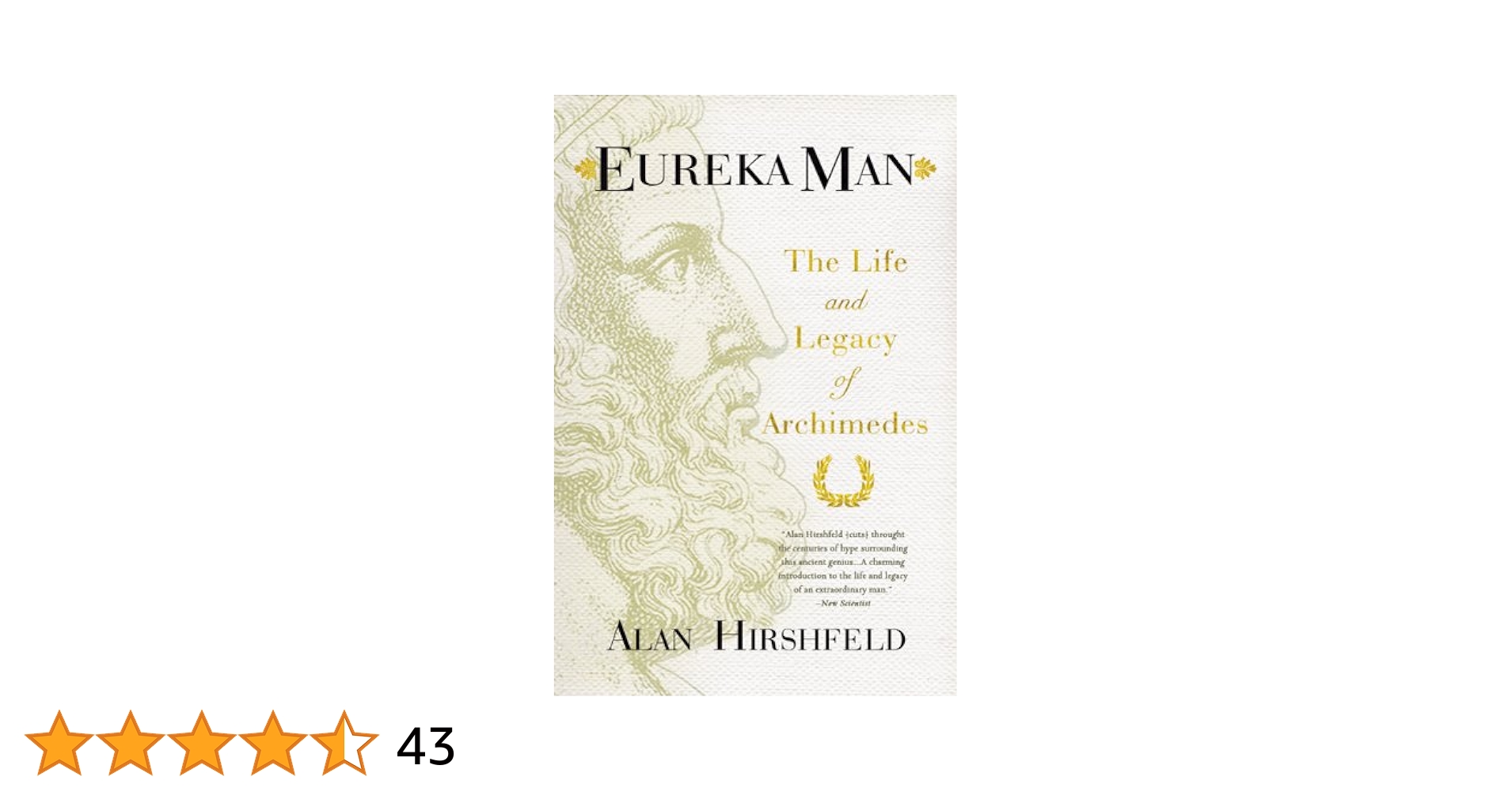
Archimedes, the genius of ancient Greece, revolutionized mathematics, physics, and engineering with discoveries like pi,...
View Board
Émile Borel: A Pioneering Mathematician and Physicist The Early Life and Education of Émile Borel Émile Borel, born on...
View Board
Explore the life and enduring legacy of Julio Palacios, a pioneering physicist from the 20th century whose groundbreakin...
View Board
Comments