Glenn Seaborg: The Life and Legacy of a Nobel Scientist
Introduction to a Scientific Icon
Glenn T. Seaborg stands as one of the most influential scientists of the 20th century. His groundbreaking work in nuclear chemistry reshaped modern science, earning him a Nobel Prize and a lasting legacy. This article explores his life, contributions, and the enduring impact of his discoveries.
Early Life and Education
Born in 1912 in Ishpeming, Michigan, Seaborg exhibited an early passion for science. He pursued chemistry at UCLA, where his brilliance quickly became evident. His academic journey laid the foundation for his future achievements in nuclear research.
Key Milestones in Seaborg’s Education
- Graduated from UCLA with a degree in chemistry
- Earned his Ph.D. from the University of California, Berkeley
- Began his lifelong association with the Lawrence Berkeley National Laboratory
The Discovery of Plutonium
Seaborg’s most famous achievement came in 1940, when he and his team discovered plutonium. This element became crucial in the development of nuclear energy and weapons, marking a turning point in scientific history.
Impact of Plutonium on Modern Science
The discovery of plutonium had far-reaching consequences:
- Enabled the creation of the atomic bomb, altering global power dynamics
- Paved the way for nuclear energy, a key component of modern power generation
- Established Seaborg as a leading figure in nuclear chemistry
Nobel Prize and Later Contributions
In 1951, Seaborg was awarded the Nobel Prize in Chemistry for his work on transuranium elements. His research didn’t stop there—he continued to expand the periodic table, discovering several new elements.
Seaborg’s Elements on the Periodic Table
His contributions include the discovery or co-discovery of:
- Plutonium (Pu)
- Americium (Am)
- Curium (Cm)
- Berkelium (Bk)
- Californium (Cf)
Legacy and Influence
Seaborg’s work extended beyond the lab. He served as chairman of the U.S. Atomic Energy Commission and advised multiple presidents. His dedication to science education inspired generations of researchers.
Honors and Recognitions
Among his many accolades:
- Element 106 was named Seaborgium (Sg) in his honor
- Received the National Medal of Science
- Inducted into the National Inventors Hall of Fame
Conclusion: A Lasting Scientific Legacy
Glenn Seaborg’s contributions to science remain unparalleled. From the discovery of plutonium to his role in shaping nuclear policy, his work continues to influence technology, energy, and global security. His story is a testament to the power of curiosity and innovation.
Stay tuned for Part 2, where we delve deeper into Seaborg’s political influence and his impact on nuclear energy development.
Seaborg’s Role in Nuclear Policy and Global Security
Beyond his scientific breakthroughs, Glenn Seaborg played a pivotal role in shaping U.S. nuclear policy. As chairman of the Atomic Energy Commission (AEC) from 1961 to 1971, he influenced key decisions during the Cold War era. His leadership helped establish frameworks for nuclear safety, arms control, and the peaceful use of atomic energy.
Key Policy Contributions
- Advised Presidents Kennedy, Johnson, and Nixon on nuclear strategy
- Championed the Non-Proliferation Treaty (NPT) to limit nuclear weapons spread
- Promoted civilian nuclear energy programs, including the development of nuclear power plants
The Science Behind Seaborg’s Discoveries
Seaborg’s work revolutionized our understanding of the periodic table. His research focused on transuranium elements—elements heavier than uranium—expanding the boundaries of chemistry. By bombarding uranium with neutrons, he and his team synthesized new elements, proving their existence through meticulous experimentation.
Breakthrough Techniques
Seaborg employed innovative methods, including:
- Neutron capture to create heavier isotopes
- Chemical separation to isolate new elements
- Radiation detection to confirm elemental properties
Seaborg’s Impact on Modern Energy
The discovery of plutonium was a game-changer for energy production. Today, nuclear power generates about 10% of the world’s electricity, with plutonium playing a critical role in reactor fuel. Seaborg’s work laid the foundation for sustainable energy solutions, reducing reliance on fossil fuels.
Nuclear Energy by the Numbers
- 440+ nuclear reactors operate globally, powering millions of homes
- Nuclear energy produces zero carbon emissions, aiding climate goals
- The U.S. alone generates over 800 billion kWh annually from nuclear power
Educational Legacy and Mentorship
Seaborg was deeply committed to science education. He mentored countless students at UC Berkeley, many of whom became leading scientists. His teaching philosophy emphasized hands-on research and interdisciplinary collaboration, shaping future generations of chemists and physicists.
Notable Students and Protégés
- Darryle J. Busch, a renowned inorganic chemist
- Albert Ghiorso, co-discoverer of multiple elements
- Edwin McMillan, Nobel laureate and colleague in transuranium research
Challenges and Controversies
Despite his achievements, Seaborg faced criticism for his role in nuclear weapons development. The atomic bomb raised ethical debates about scientific responsibility. Seaborg defended his work, arguing that nuclear deterrence was necessary for global stability, but he also advocated for arms control.
Public Perception and Debates
- Some viewed his contributions as essential for national security
- Critics questioned the moral implications of nuclear weapons
- Seaborg later supported disarmament efforts to reduce nuclear threats
Seaborg’s Later Years and Final Contributions
Even after retiring from the AEC, Seaborg remained active in science. He continued research at UC Berkeley, published over 500 scientific papers, and advocated for federal funding in education. His later work focused on nuclear medicine, exploring radioactive isotopes for cancer treatment.
Lasting Achievements
- Co-authored the “Seaborg Report” on nuclear waste management
- Received the Enrico Fermi Award for lifetime contributions
- Remained a public advocate for science until his passing in 1999
In Part 3, we’ll explore Seaborg’s cultural impact, including his appearances in media, his influence on pop culture, and the enduring relevance of his discoveries in today’s scientific landscape.
Seaborg’s Cultural and Media Influence
Glenn Seaborg wasn’t just a scientist—he became a cultural icon. His work appeared in documentaries, textbooks, and even popular media, shaping public perception of nuclear science. His discoveries were featured in films like “The Day After Trinity”, highlighting the dual nature of nuclear power: its potential for destruction and progress.
Seaborg in Books and Documentaries
- Featured in “The Making of the Atomic Bomb” by Richard Rhodes
- Subject of the PBS documentary “Modern Marvels: The Atom”
- Mentioned in “The Disappearing Spoon” by Sam Kean, a book on the periodic table
The Seaborg Effect: Inspiring Future Scientists
Seaborg’s legacy extends beyond his discoveries—he inspired generations of scientists. His story is taught in schools worldwide, demonstrating how curiosity and perseverance can change the world. Many young researchers cite him as a role model, particularly in STEM education.
Programs Named in His Honor
- The Glenn T. Seaborg Center in Michigan promotes science literacy
- The Seaborg Institute at Lawrence Livermore National Laboratory
- Numerous scholarships and awards for chemistry students
Seaborg’s Role in Nuclear Medicine
Beyond energy and weapons, Seaborg’s research contributed to medical advancements. His work on radioactive isotopes led to breakthroughs in cancer treatment and diagnostic imaging. Today, isotopes like plutonium-238 are used in pacemakers and radiation therapy.
Medical Applications of His Discoveries
- Radiation therapy for cancer patients
- Nuclear imaging techniques like PET scans
- Isotope-powered medical devices
Debates and Ethical Considerations
Seaborg’s work sparked ongoing debates about scientific ethics. While his discoveries advanced technology, they also raised questions about responsibility. Should scientists be held accountable for how their inventions are used? Seaborg himself grappled with this, advocating for peaceful applications of nuclear science.
Key Ethical Questions
- Balancing national security with global safety
- The moral implications of nuclear weapons
- Ensuring responsible innovation in science
The Future of Seaborg’s Legacy
Today, Seaborg’s influence persists in modern science. Researchers continue to explore transuranium elements, and nuclear energy remains a critical topic in climate discussions. His life reminds us that science is not just about discovery—it’s about impact, responsibility, and legacy.
Current Research Inspired by Seaborg
- New element synthesis at laboratories like CERN
- Advancements in nuclear fusion technology
- Innovations in radioactive waste management
Conclusion: A Life of Discovery and Influence
Glenn Seaborg’s journey—from a small-town student to a Nobel Prize-winning scientist—is a testament to the power of human ingenuity. His discoveries reshaped energy, medicine, and global policy, leaving an indelible mark on history. As we face modern challenges like climate change and energy security, his work remains more relevant than ever.
Seaborg once said,
“The most exciting phrase to hear in science, the one that heralds new discoveries, is not ‘Eureka!’ but ‘That’s funny…’”His legacy encourages us to keep asking questions, pushing boundaries, and striving for a better future through science.
From the discovery of plutonium to his role in nuclear policy, Glenn Seaborg’s story is one of curiosity, innovation, and enduring impact—a true icon of 20th-century science.
2025's Archaeology Boom: Reshaping Ancient History
The year 2025 has witnessed an unprecedented wave of archaeological discoveries, a global phenomenon experts are calling an "archaeology boom." From lost royal tombs to entire prehistoric cities, these breakthroughs are reshaping history as we know it. This surge is driven by cutting-edge technology and renewed global collaboration, revealing secrets from the Neolithic era to the Roman Empire.
The sheer volume and significance of finds across continents mark 2025 as a historic year for the field. Discoveries in Egypt, Turkey, and London are challenging long-held timelines and forcing textbooks to be rewritten. This article explores the key finds and the forces behind this remarkable period of revelation.
The Driving Forces Behind the 2025 Archaeology Boom
Several key factors have converged to create the perfect conditions for the 2025 archaeology boom. Post-pandemic funding increases have enabled larger, longer-term projects to restart with vigor. Furthermore, international partnerships have pooled expertise and resources like never before, such as Azerbaijani-Japanese and Polish-Sudanese teams.
The most transformative element, however, is the rapid integration of advanced technology. These tools are allowing archaeologists to see beneath the earth and analyze finds with revolutionary precision.
Revolutionary Technologies in the Field
LiDAR (Light Detection and Ranging) has been a game-changer, especially in dense jungles and rugged terrains. By using laser pulses from aircraft, it creates detailed 3D maps of the ground surface, stripping away vegetation to reveal hidden structures. This technology was pivotal in mapping the newly discovered Mayan complex in Guatemala.
Drones and advanced aerial photography provide high-resolution surveys of vast areas quickly and cheaply. They were instrumental in identifying over 1,200 archaeological sites in Sudan's Bayuda Desert and in revealing the outlines of a vast Avar-era cemetery in Hungary.
The Power of AI and Collaboration
Artificial intelligence is now assisting in pattern recognition within satellite imagery and even in the fragment reconstruction of pottery and texts. Meanwhile, global collaboration ensures that diverse specialists can work on a single site simultaneously. This multidisciplinary approach accelerates analysis and leads to more nuanced interpretations of the past.
The 2025 archaeology boom stems from a powerful synergy of post-pandemic funding, advanced tech like LiDAR and AI, and unprecedented international collaboration.
Monumental Finds: Rewriting Prehistoric Societies
The most paradigm-shifting discoveries of 2025 come from the prehistoric era, dramatically pushing back the dates for complex social organization and monumental architecture. Sites in Anatolia are proving that socieites capable of large-scale, coordinated projects existed much earlier than previously believed.
Karahantepe: Turkey's Neolithic Amphitheater
At the site of Karahantepe in Turkey, ongoing excavations have revealed a stunning structure dating to approximately 9400–8000 BCE. The centerpiece is a 17-meter-diameter circular "amphitheater" featuring stone benches and over 250 distinctive T-shaped pillars.
This discovery, a close contemporary to the famous Göbekli Tepe, includes elaborate carvings of human and animal figures. It suggests these early Neolithic communities gathered in large numbers for social or ritual purposes, challenging the notion that monument-building only began with settled agricultural societies.
- Structure: 17-meter circular "amphitheater" with benches.
- Scale: Over 250 T-shaped pillars and intricate sculptures.
- Significance: Expands evidence of pre-agricultural monumental building and complex social organization.
The Vast Neolithic Landscape of Anatolia
Karahantepe is not an isolated find. It is part of the sprawling Taş Tepeler (Stone Hills) project, which encompasses 12 major sites. The ongoing work reveals a vast, interconnected Neolithic landscape where people shared iconography and architectural styles across large distances.
These finds from October 2025 confirm that the region was a hotspot of cultural innovation at the dawn of civilization. The sophistication of the carvings and the sheer labor required for construction continue to astound researchers and reshape our understanding of human prehistory.
Royal Splendor: The Egyptian Valley of the Kings Revelation
In Egypt, a discovery has captured the world's imagination and filled a critical gap in pharaonic history. The potential uncovering of the tomb of Pharaoh Thutmose II in the Valley of the Kings stands as one of the most significant Egyptian finds in a century.
The Last Missing Tomb of the 18th Dynasty?
Thutmose II, who ruled from around 1493 to 1479 BCE, was a key ruler of Egypt's mighty New Kingdom period. Until 2025, his final resting place had never been conclusively identified. The recent discovery of a tomb containing identified funerary furniture attributed to him changes everything.
Egypt's Supreme Council of Antiquities has hailed this as potentially the last missing royal tomb from the illustrious 18th Dynasty. If confirmed, it would be the first such royal tomb discovery in the Valley since Howard Carter found Tutankhamun's in 1922.
Implications for Egyptian History
The contents of this tomb could provide invaluable new data on the royal lineage, burial practices, and material culture of the early 18th Dynasty. It offers a direct window into a period of immense power and wealth in ancient Egypt.
This find underscores that even the world's most famous archaeological landscape still holds profound secrets. It revitalizes interest in Egyptian archaeology and demonstrates how traditional excavation, when combined with modern analysis techniques, continues to yield earth-shattering results.
Urban Archaeology Uncovered: From Roman London to Mayan Guatemala
The 2025 archaeology boom is not confined to remote deserts or hidden valleys. Major discoveries within modern urban centers and beneath ancient cities are providing stunning new insights into daily life, governance, and engineering. These finds reveal the sophistication of ancient urban planning on a global scale.
From the heart of a European capital to the depths of a Central American jungle, urban archaeology is flourishing. It demonstrates how past societies managed water, built infrastructure, and organized communal spaces, lessons that often resonate with contemporary challenges.
London's Lost Roman Basilica: A Metropolis Beneath the Metropolis
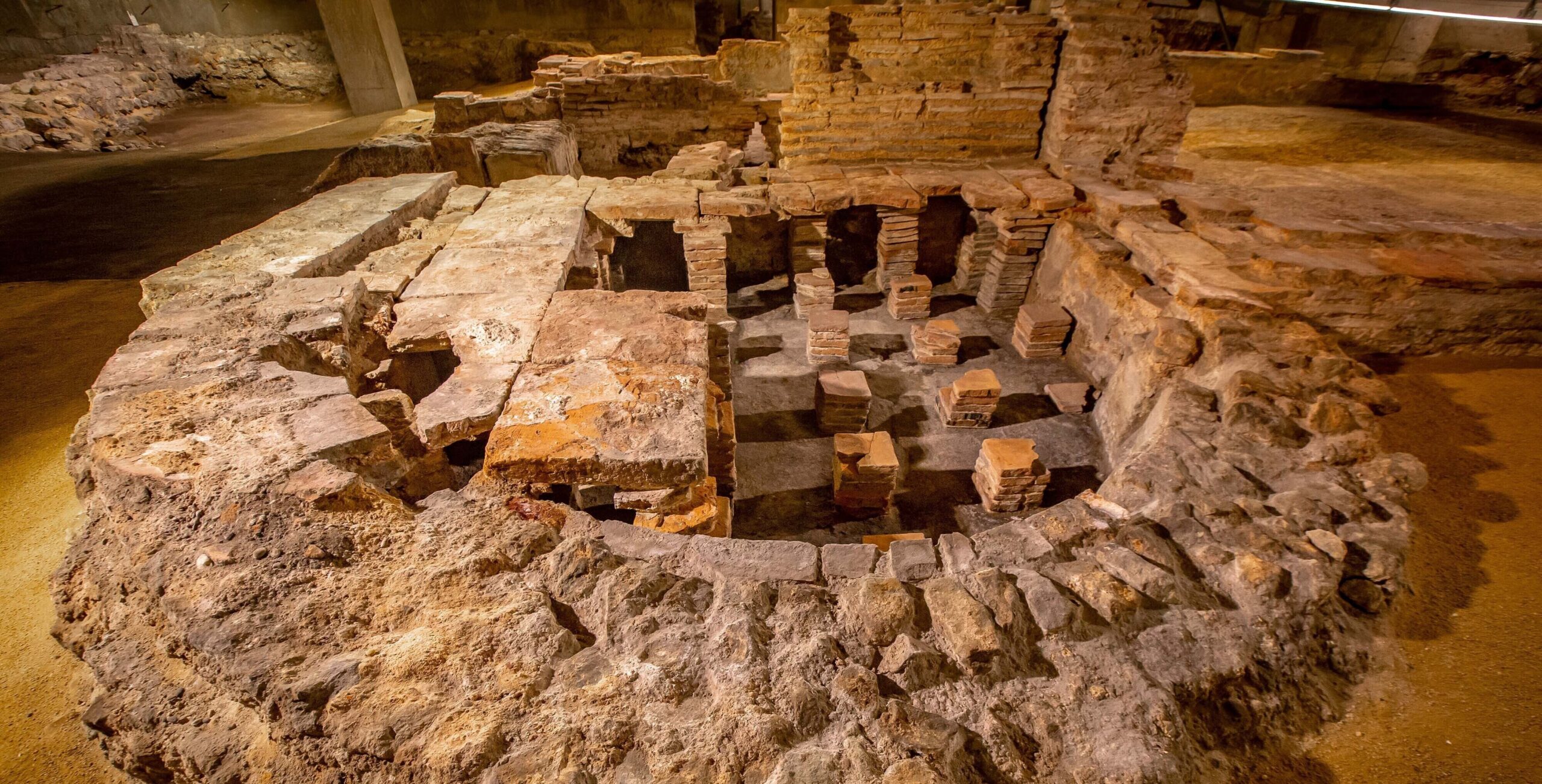
Beneath a modern skyscraper in the City of London, archaeologists uncovered one of the largest Roman buildings ever found in Britain. The vast Roman basilica, dating from 78–84 CE, served as the civic heart and administrative center of Londinium, the Roman settlement that became London.
Its scale underscores the importance of this provincial capital within the Roman Empire. The discovery includes architectural fragments and floor surfaces that speak to the building's grandeur. Developers have announced plans to preserve and publicly exhibit the remains in the building's basement, integrating ancient history into the modern cityscape.
- Date: Constructed 78–84 CE, during the early peak of Roman Britain.
- Significance: One of Britain's largest Roman basilicas, central to Londinium's civic life.
- Future: Slated for public display, a model for urban archaeological preservation.
The Hydraulic Mayan Complex of Guatemala
While excavating in northern Guatemala, researchers used LiDAR and ground surveys to reveal an extensive Mayan complex dating back approximately 3,000 years. The site features pyramids, ceremonial sanctuaries, and an intricate network of canals and reservoirs.
This discovery highlights the advanced hydrological engineering of the Preclassic Maya. The sophisticated water management system was crucial for supporting a large population in a tropical environment, revealing a deep understanding of landscape modification and sustainability long before the Maya's classic period zenith.
The 2025 urban finds, from London's basilica to Mayan canals, prove ancient cities were hubs of sophisticated engineering and administration, fundamentally reshaping our view of daily life in antiquity.
The Tapestry of Conflict and Culture: Iron Age to Punic War
Archaeology often illuminates the pivotal moments where cultures collided and history turned. Several major 2025 finds are directly tied to periods of warfare, trade, and cultural exchange, providing tangible evidence for events previously known only from texts. These discoveries ground historical narratives in physical reality.
From a British hoard buried in fear to a Spanish city sacked by Rome, these sites offer a poignant look at moments of crisis and conquest. They tell stories of wealth hidden, cities destroyed, and the indelible marks left by empire.
The Melsonby Hoard: An Iron Age Treasure Hidden in Crisis
In January 2025, a significant cache of Iron Age artifacts was announced in Melsonby, England. The Melsonby Hoard contains a large collection of items, including ornaments, tools, and possibly coinage, buried by their owners likely during a period of invasion or social upheaval.
Such hoards are time capsules of material culture and economic life. They represent wealth deliberately hidden for safekeeping, whose owners never returned to reclaim it. The analysis of this hoard will provide exceptional detail about craftsmanship, trade networks, and the turbulent final centuries before the Roman conquest of Britain.
Cissa: An Iberian City from the Second Punic War
In Catalonia, Spain, excavations have identified the remains of the Iberian city of Cissa. This settlement is historically significant as the site of a early battle in the Second Punic War (218-201 BCE) between Roman and Carthaginian forces.
Finding the physical location of Cissa, mentioned in ancient chronicles, allows archaeologists to ground a major historical event in a specific landscape. Artifacts from the site can reveal the material culture of the Iberian people caught between two expanding empires, offering evidence of the conflict's destruction and its impact on local societies.
Preservation in Peril: Climate Change and Modern Threats
The incredible pace of discovery in 2025 exists alongside growing threats to the world's archaeological heritage. Climate change is now a primary concern, with rising sea levels, increased droughts, and extreme weather events putting fragile sites at immediate risk. The race is on to document and preserve history before it is erased.
Paradoxically, some climate effects are also revealing new sites, as melting ice and shifting sands expose previously hidden remains. This creates an urgent dual mandate for archaeologists: to rapidly record these emergent finds while developing strategies for long-term protection of all vulnerable heritage.
Sudan's Bayuda Desert: A Landscape Revealed and at Risk
A major survey in Sudan's Bayuda Desert announced in January 2025 documented over 1,200 new archaeological sites. These were identified around a ancient natron paleolake, a resource that attracted human activity for millennia.
While this discovery is monumental, the fragile desert environment is highly vulnerable to climate shifts and human encroachment. The sites, which range from prehistoric tool scatters to more complex settlements, offer an unparalleled record of human adaptation to arid environments. Their preservation is now a critical international priority.
The Eternal Challenge of Pompeii and Organic Artifacts
Even long-excavated sites like Pompeii face new challenges. While 2025 brought stunning discoveries like new Dionysian frescoes, the site constantly battles the elements. Conservation scientists are increasingly focused on preserving organic materials—wood, textiles, food remains—that decay rapidly once exposed.
These materials, if preserved, provide the richest details of daily life. The ongoing work at Pompeii is a global laboratory for developing conservation techniques that can be applied worldwide. It highlights that excavation is only the first step; sustaining a find for future generations is the ongoing mission.
- Climate Threat: Rising temperatures and erosion endanger desert and coastal sites globally.
- Urgent Archaeology: The need for "rescue archaeology" is accelerating due to climate change and development.
- Technological Aid: 3D scanning and digital archiving create immutable records of sites that may be lost.
The Unusual and the Human: Everyday Life in Antiquity
Beyond grand monuments and royal tombs, some of the most evocative finds of 2025 speak to the intimate details of ancient lives. These discoveries of personal objects, health remedies, and burial practices remind us that history is made of individuals. They provide a direct, often poignant, connection to our shared human experience across millennia.
From evidence of prehistoric cosmetics to the remains of a community, these finds complete the picture of ancient societies. They answer fundamental questions about how people cared for themselves, expressed identity, and honored their dead.
Prehistoric "Sunscreen" and Ancient Ingenuity
Analysis of residues in ancient containers has provided evidence of what experts call a prehistoric "sunscreen" or protective balm. This find, highlighted in 2025 retrospectives, indicates an early understanding of dermatological protection against sun exposure.
Such a discovery is a powerful testament to practical human ingenuity. It moves beyond mere survival and suggests the development of specialized knowledge for improving comfort and health, reflecting a sophisticated relationship with the natural environment.
The 2,200-Year-Old Ptolemaic Pyramid in the Judean Desert
In the Judean Desert, a small but significant Ptolemaic pyramid dating back 2,200 years was excavated. The structure, from the Hellenistic period following Alexander the Great's conquests, contained valuable artifacts including papyri documents, coins, and weapons.
This pyramid is not a royal tomb but likely a monument for a local elite or official, showcasing the spread of Hellenistic architectural styles into the region. The papyri are particularly exciting, as textual evidence from this period can provide unparalleled insights into administration, law, and daily affairs in a multicultural frontier of the ancient world.
The Global Scale of the 2025 Discoveries
The archaeology boom of 2025 is truly a worldwide phenomenon, with no single continent untouched by major revelations. This geographic diversity enriches our collective history, showing parallel innovations and distinct cultural pathways. From European villas to Asian figurines, the year's finds paint a connected yet wonderfully varied picture of the human past.
The sheer geographic spread underscores a vital point: groundbreaking archaeology is no longer the sole domain of a few traditional regions. International teams are working in more countries than ever before, driven by shared technology and a collaborative spirit. This global effort is yielding a more inclusive and comprehensive historical record.
European Highlights Beyond Rome and Pompeii
While London's basilica and Pompeii's frescoes grabbed headlines, other European finds were equally profound. In Auxerre, France, a sprawling 4,000 m² Roman villa complex was unveiled on June 5th, revealing the opulent rural lifestyle of the Gallo-Roman elite.
In Hungary, aerial photography led to the discovery of a significant Avar-era cemetery. The Avars, a nomadic group that dominated Central Europe in the Early Middle Ages, left behind grave goods that shed light on their warrior culture and artistic sensibilities. These diverse finds illustrate the layered history of the European continent.
Discoveries in the Caucasus and Beyond
A remarkable 8,400-year-old Mesolithic figurine was uncovered in Azerbaijan, a product of a successful Azerbaijani-Japanese collaboration. This exquisitely crafted object, from a period often considered less artistically complex, demonstrates advanced symbolic thought and artistry among hunter-gatherer societies.
This find, along with the ongoing work at sites like Karahantepe in Turkey, highlights the Caucasus and Anatolia as cradle regions for early human artistic and monumental expression. It challenges older models that placed the origins of such complexity elsewhere.
The global distribution of 2025's discoveries—from France to Azerbaijan, Sudan to Guatemala—proves that every region holds unique and pivotal chapters in the story of humanity.
Methodology and Analysis: How We Know What We Know
The breakthroughs of 2025 are not just about what was found, but about how it was found and understood. Modern archaeology is a fusion of traditional fieldwork with laboratory science and digital analysis. This multimodal methodology accelerates discoveries and extracts far more information from each site and artifact than was possible just a decade ago.
Painstaking excavation remains foundational, but it is now augmented by a suite of tools that act as force multipliers. From the initial survey to the final publication, every stage of the archaeological process has been transformed by technology, leading to faster, deeper, and more accurate interpretations.
From Survey to Synthesis: The Workflow of Modern Discovery
The process often begins with non-invasive remote sensing. LiDAR, ground-penetrating radar, and drone surveys identify promising anomalies without breaking ground. This preserves sites and allows for strategic, targeted excavation. The Bayuda Desert's 1,200+ sites were first identified through such systematic aerial survey.
During excavation, 3D photogrammetry creates precise digital models of every layer and find in situ. Back in the lab, artifacts undergo materials analysis, DNA studies, and radiocarbon dating. Data from all these streams is then synthesized, often using specialized database software, to build a coherent narrative of the site.
- Phase 1: Remote Sensing. LiDAR, drones, and satellite imagery to locate sites.
- Phase 2: Digital Excavation. 3D modeling and precise spatial recording of all finds.
- Phase 3: Laboratory Analysis. Scientific dating, material sourcing, and biological studies.
- Phase 4: Data Synthesis. Integrating all evidence to reconstruct historical context.
Why 2025 Stands Out: Quantifying the Boom
While every year yields important finds, 2025 has been exceptional in both quantity and quality. Historically, a typical year might see 10 to 20 major archaeological announcements globally. By mid-2025, dedicated lists and Wikipedia's comprehensive "2025 in archaeology" page already cataloged over 20 major discoveries, with more announced throughout the second half of the year.
This volume is a direct result of the factors previously discussed: a backlog of post-pandemic research, technological leaps, and global collaboration. The discoveries are not only numerous but also high-impact, each contributing to a significant shift in our understanding of a particular era or civilization. They are not just incremental adds; they are paradigm-shifting breakthroughs.
A Selection of Top-Ranked 2025 Finds
Several mid-year retrospectives by leading publications attempted to rank the year's top discoveries. Consistently appearing on these lists were finds that combined shock value with deep scholarly impact. These rankings highlight what the professional community views as the most transformative work of the year.
- Sutton Hoo Artifacts Re-examined: New analysis of this iconic English ship burial using modern techniques yielded fresh data on trade networks and craftsmanship.
- Sanctuaries of Apollo: Ongoing work at key Greek sanctuaries like Despotiko and Delphi revealed new structures and offerings, refining our view of ancient Greek religion.
- The Karahantepe "Amphitheater": Universally listed for its profound implications on the origins of communal architecture and social complexity.
- The Potential Tomb of Thutmose II: Celebrated as the Egyptian discovery of the generation, filling a critical historical gap.
Looking Forward: The Legacy and Future of the Boom
The momentum of 2025 shows no signs of slowing. Major journals and magazines have already projected key themes for 2026 retrospectives, including studies on Indo-European speakers, newly discovered Minoan circles on Crete, and the world's oldest mummies. The archaeology boom has established a new normal for the pace and scope of discovery.
This legacy will be one of raised public engagement, higher expectations for interdisciplinary research, and a renewed emphasis on preservation. The successes of 2025 provide a powerful template for future work, demonstrating what is possible when resources, technology, and international goodwill align.
Challenges and Responsibilities Ahead
With great discovery comes great responsibility. The influx of new sites, particularly those exposed by climate change, creates an enormous conservation burden. Museums and institutions must manage and curate a growing flood of artifacts and data. Furthermore, there is an ethical imperative to ensure that discoveries are shared with, and benefit, local communities and source nations.
The field must also grapple with making this avalanche of information accessible and comprehensible to the public. Digital archives, virtual reality reconstructions, and thoughtful museum exhibitions will be crucial in translating these complex finds into public knowledge. The goal is to turn the 2025 archaeology boom into a lasting boom in historical literacy.
Conclusion: History Reshaped
The archaeological discoveries of 2025 have collectively initiated a major revision of human history. They have pushed back the timeline of complex society, filled glaring gaps in famous dynasties, revealed the astonishing scale of ancient cities, and provided intimate glimpses into the minds and lives of our ancestors. This year has proven that the past is still very much alive, capable of surprising us and demanding that we reconsider long-held assumptions.
The driving forces behind this boom—advanced technology, global collaboration, and increased funding—are now embedded in the field's practice. This suggests that the pace of discovery will not diminish but may even accelerate. We are living in a golden age of archaeological revelation, where each dig season holds the potential to rewrite a chapter in our shared story.
The most important takeaway from 2025 is that history is not a static record in a book. It is a dynamic, physical, and often fragile inheritance buried all around us. The breakthroughs of this remarkable year remind us of the depth of human ingenuity across time and our enduring quest to understand our own origins. As analysis continues on this year's finds, one thing is certain: our perception of the ancient world will never be the same again.