Explore Any Narratives
Discover and contribute to detailed historical accounts and cultural stories. Share your knowledge and engage with enthusiasts worldwide.
Sextus Propertius, one of the most significant elegiac poets of ancient Rome, left an indelible mark on Latin literature during the Augustan Age. His passionate and innovative work revolutionized the poetic form, blending intense personal emotion with sophisticated artistry. This exploration of Propertius's life and literary legacy reveals the enduring power of his elegies.
Propertius lived during a period of immense change, approximately from 50 to 1 BCE. He emerged as a major literary figure at a time when Rome was transitioning from a republic to an empire under Augustus. His first book of elegies, published around 28 BCE, immediately established his distinctive voice in the Roman literary scene.
Unlike many of his contemporaries, Propertius maintained a deliberately un-Roman stance, prioritizing his dedication to love and artistic expression over traditional Roman values of civic duty and military glory. This perspective gave his work a unique and deeply personal quality that resonated with readers then and now.
The Augustan Age was a golden era for Roman literature, producing some of history's most celebrated poets. Propertius worked alongside figures like Virgil and Horace, yet his focus remained intensely personal. His poetry provides a fascinating counterpoint to the public, imperial themes favored by his peers.
Living through Rome's transformation, Propertius witnessed the aftermath of civil wars and the establishment of a new political order. These experiences subtly influenced his work, adding layers of meaning to his seemingly intimate verses.
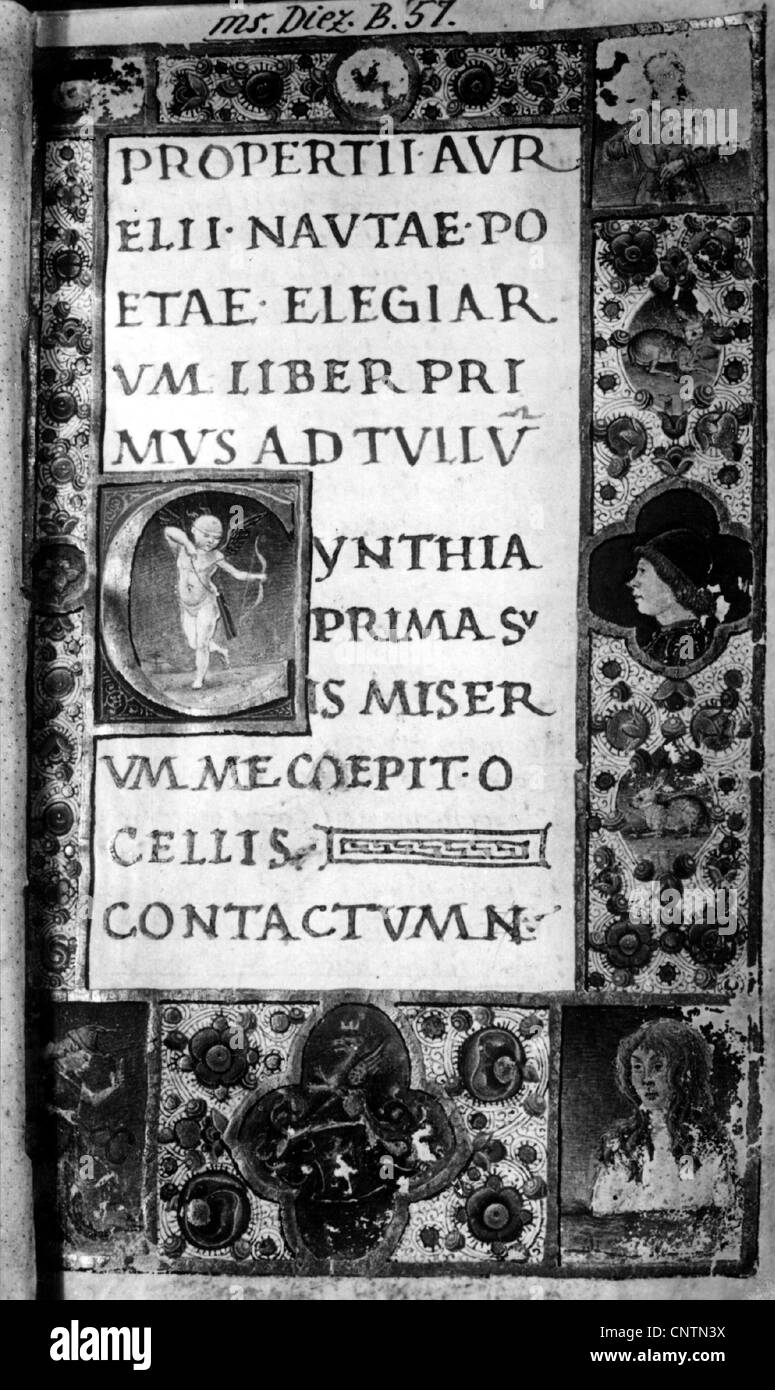
The central subject of Propertius's most famous poetry is his relationship with a woman he called Cynthia. This figure dominates his first book and appears throughout his subsequent works. The Cynthia elegies represent a landmark achievement in the exploration of romantic psychology and desire.
Propertius's treatment of his affair with Cynthia was revolutionary for its time. He explored the full spectrum of romantic attachment—from ecstatic passion to bitter jealousy—with unprecedented psychological depth.
Propertius brought remarkable innovation to the theme of love in Roman literature. His work offers crucial insights into the origins of Western attitudes toward erotic feeling and romantic relationships. The poet's approach to gender and desire broke new ground in its complexity and honesty.
Key characteristics of his erotic poetry include:
Propertius's technical mastery of the elegiac form sets him apart as a consummate artist. His work is characterized by challenging syntax, wide-ranging mythological allusions, and novel diction that pushed the boundaries of Latin poetic expression.
Perhaps most remarkably, Propertius demonstrated what modern readers would recognize as a strikingly contemporary sensibility. His voice feels surprisingly modern—passionate, wry, self-scrutinizing, and richly ironic. This quality gives his ancient poetry remarkable accessibility and emotional resonance for contemporary readers.
Scholars have long noted the sophisticated metapoetic qualities in Propertius's work. His poetry frequently reflects on its own creation and engages in complex dialogues with literary traditions. This intertextual richness adds multiple layers of meaning to his elegies.
Propertius skillfully weaves subtle satire throughout his work, offering commentary on both personal relationships and broader Roman society. His engagement with Hellenistic literary traditions, particularly evident in poems like his treatment of the myth of Hylas, demonstrates his deep learning and artistic sophistication.
Propertius's first book of elegies, containing 22 poems published in 28 BCE, remains the earliest extant book of Latin love-elegy and continues to be translated and analyzed by contemporary scholars.
Propertius's literary output consists of four books of elegies that collectively showcase his remarkable evolution as a poet. Each book represents a distinct phase in his artistic development, moving from intensely personal themes toward broader engagement with public and political concerns.
This progression demonstrates Propertius's growing confidence and expanding artistic vision. While his early work focuses predominantly on his relationship with Cynthia, his later poetry engages more directly with Rome's historical transition from republic to empire.
The evolution of themes across Propertius's four books reveals a poet constantly pushing against the boundaries of his chosen form. His work gradually incorporates reflections on the trauma of civil wars, nostalgia for Rome's past, social legislation, and the cultural impact of foreign trade and conquest.
This thematic expansion never entirely supplants the personal focus of his poetry. Instead, Propertius develops increasingly sophisticated ways to weave public themes into the emotional experiences of his first-person narrator, creating a rich tapestry of personal and political commentary.
Propertius's poetry demonstrates a fascinating evolution from a private focus on erotic love to more public and political themes. This transition mirrors Rome's own historical transformation during the Augustan Age. His work engages deeply with the trauma of civil wars, nostalgia for the past, and the cultural impact of foreign trade and conquest.
This thematic expansion represents a significant development in Roman elegiac poetry. While maintaining his distinctive voice, Propertius found innovative ways to weave contemporary social commentary into his personal narratives. The resulting blend of private emotion and public concern creates a uniquely rich poetic tapestry.
The progression in Propertius's four books reveals a poet constantly expanding his artistic horizons. His early work focuses intensely on his relationship with Cynthia, exploring the psychology of love and desire with unprecedented depth. Later elegies incorporate reflections on Rome's political transformation under Augustus.
This shift demonstrates Propertius's growing confidence as a poet and his engagement with the world beyond his personal relationships. His poetry became a vehicle for examining broader cultural and political questions while maintaining its distinctive emotional resonance.
Propertius's technical mastery of the elegiac form established him as a consummate artist who deftly wove public themes into emotional experiences. His work is characterized by challenging syntax, wide-ranging mythological allusions, and novel use of diction that pushed the boundaries of Latin poetic expression.
Perhaps most remarkably, Propertius demonstrated what modern readers would recognize as a strikingly contemporary sensibility. This quality gives his ancient poetry remarkable accessibility and emotional resonance for contemporary readers.
Propertius employed a sophisticated approach to language that distinguished his work from his contemporaries. His challenging syntax often requires careful reading to unpack complex thoughts and emotions. This linguistic complexity serves to mirror the psychological complexity of his subjects.
Key innovations in Propertius's literary technique include:
Propertius's use of mythology represents one of his most significant contributions to Latin poetry. Rather than simply referencing mythological figures, he integrates them deeply into his exploration of contemporary experience. His treatment of myths like that of Hylas demonstrates sophisticated engagement with Hellenistic literary traditions.
This mythological integration allows Propertius to explore universal themes through specific stories. His approach transforms traditional myths into vehicles for examining contemporary relationships and social dynamics.
Propertius was known for weaving subtle satire throughout his work and employing challenging syntax, wide-ranging mythological allusions, and novel use of diction.
Propertius maintained a deliberately un-Roman stance that set him apart from many of his contemporaries. While figures like Virgil celebrated Augustan values and imperial ambition, Propertius prioritized personal devotion to love and artistic expression. This position represents a significant alternative voice in Augustan literature.
His poetry offers fascinating insights into aspects of Roman society often overlooked in more official accounts. Through his focus on personal relationships and emotional experience, Propertius provides a valuable counterpoint to the public narratives of his time.
Propertius's treatment of gender and desire was innovative for his time, offering crucial insights into the origins of Western attitudes toward erotic feeling. His exploration of these themes demonstrates remarkable psychological insight and complexity.
The poet's approach to gender dynamics challenges conventional Roman values in several ways:
Propertius's work has attracted sustained scholarly attention across centuries. His poetry is studied for its metapoetic qualities, intertextual relationships, and the way his repetitious amatory discourse engages with broader literary traditions. This ongoing scholarly interest testifies to the enduring richness of his work.
Modern scholarship continues to uncover new dimensions in Propertius's poetry. Contemporary approaches often focus on the sophisticated ways his work engages with political and social issues beneath its surface of personal emotion.
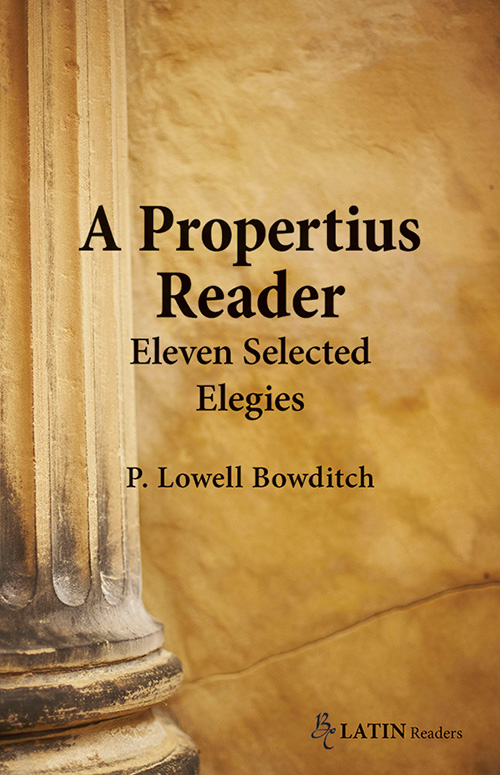
The availability of modern editions with commentary and verse translations has made Propertius's work accessible to readers without Latin. These translations help reveal Propertius as a poet who defined a uniquely Roman genre of literature while speaking to universal human experiences.
Recent translations have particularly emphasized the contemporary relevance of Propertius's exploration of love, power, and artistic expression. This ongoing work of translation and interpretation ensures that new generations of readers can appreciate his literary achievement.
Key contributions to Propertian scholarship include:
The continued vitality of Propertius studies demonstrates the enduring power of his literary vision. His work remains essential reading for anyone seeking to understand the full range of Roman literary achievement during the Augustan Age.
The influence of Propertius extends far beyond his own lifetime, shaping the development of love poetry in Western literature for centuries. His innovative approach to the elegiac form established a template that would be revisited and reinterpreted by generations of poets. From the Renaissance to modern times, Propertius has remained a touchstone for poets exploring the complexities of love and desire.
His work represents a crucial bridge between Greek literary traditions and later European poetry. The sophisticated ways in which Propertius adapted Hellenistic models influenced countless writers who sought to express personal emotion within formal poetic structures. This enduring influence testifies to the timeless quality of his artistic vision.
The rediscovery of Propertius during the Renaissance marked a significant moment in literary history. Humanist scholars recognized in his work a sophistication and psychological depth that resonated with their own artistic values. This rediscovery helped shape the development of the love sonnet and other forms of Renaissance love poetry.
Key aspects of Propertius's influence include:
Propertius's exploration of themes such as love, power, gender dynamics, and artistic expression continues to resonate with modern readers. His sophisticated treatment of these subjects demonstrates a remarkable understanding of human psychology that transcends historical context. This timeless quality explains why his work remains actively studied and appreciated today.
The poet's examination of the tension between personal desire and social expectations speaks powerfully to contemporary concerns. His nuanced portrayal of relationships and emotional experience offers insights that remain relevant in modern discussions of love and intimacy.
One of Propertius's most significant contributions lies in his exploration of the relationship between love and power. His poetry examines how emotional attachment creates complex power dynamics that challenge conventional social hierarchies. This focus represents a radical departure from traditional Roman values that prioritized public achievement over private emotion.
Propertius's treatment of these themes demonstrates remarkable subtlety and complexity. Rather than presenting simple oppositions, his work explores the intricate ways in which personal relationships intersect with broader social structures.
Propertius's work engages with Rome's historical transition from republic to empire, incorporating reflections on the trauma of civil wars, nostalgia for the past, social legislation, and the cultural impact of foreign trade and conquest.
Propertius's technical achievements in the elegiac form established new possibilities for Latin poetry. His innovative approach to meter, diction, and structure expanded the expressive range of the elegy, transforming it from a relatively limited form into a vehicle for complex psychological and social exploration. This technical mastery remains a subject of admiration and study for contemporary poets and scholars.
His ability to weave multiple layers of meaning into formally precise poetry represents one of his most significant contributions to literary history. The sophistication of his technique matches the depth of his thematic concerns, creating works of enduring artistic value.
The poetic persona that Propertius developed represents one of his most innovative contributions to literary history. This persona—passionate, self-aware, ironic, and intellectually sophisticated—established a model that would influence countless later writers. The complexity of this voice allows for multiple levels of interpretation and engagement.
Key characteristics of the Propertian persona include:
Propertius stands as one of the most original and influential voices in Latin literature. His transformation of the elegiac form created new possibilities for poetic expression that continue to resonate with readers and writers. The psychological depth, technical sophistication, and emotional honesty of his work ensure its enduring place in the literary canon.
Through his exploration of love, desire, and the complexities of human relationships, Propertius created a body of work that speaks across centuries. His ability to weave personal emotion with broader cultural commentary represents a achievement of lasting significance in Western literature.
The legacy of Propertius includes several fundamental contributions to literary history. His development of the love elegy established a genre that would influence European poetry for millennia. His sophisticated approach to poetic persona created new possibilities for self-expression in literature.
Perhaps most importantly, Propertius demonstrated that poetry could engage simultaneously with the most intimate aspects of human experience and the broadest cultural questions. This dual engagement represents his most enduring gift to subsequent generations of writers and readers.
Final key takeaways about Propertius's significance:
As contemporary readers continue to discover Propertius through modern translations and scholarly studies, his voice remains as vital and compelling as it was two thousand years ago. The ongoing relevance of his work testifies to his profound understanding of the human heart and his unparalleled skill in giving that understanding lasting artistic form. Through his elegies, Propertius achieved the immortality that he himself recognized as poetry's greatest gift—the ability to speak across time to the eternal aspects of human experience.


Your personal space to curate, organize, and share knowledge with the world.
Discover and contribute to detailed historical accounts and cultural stories. Share your knowledge and engage with enthusiasts worldwide.
Connect with others who share your interests. Create and participate in themed boards about any topic you have in mind.
Contribute your knowledge and insights. Create engaging content and participate in meaningful discussions across multiple languages.
Already have an account? Sign in here

Discover Theocritus, the ancient Greek poet who invented pastoral poetry. Explore his life, the famous Idylls, and his e...
View Board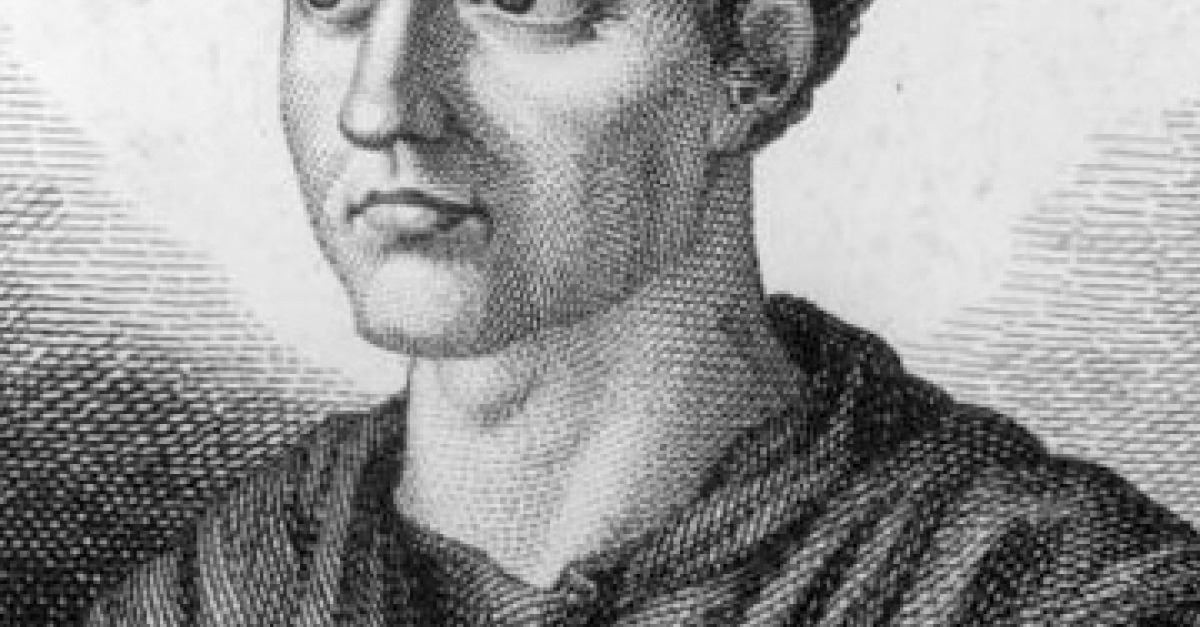
Discover Gaius Petronius Arbiter, the enigmatic Roman arbiter of elegance, whose life of luxury and wit left a lasting l...
View Board
Discover Gaius Valerius Catullus, Rome’s fiery poet of love and scandal. Explore his 116 surviving poems, from passionat...
View Board
Explore the enduring legacy of Horace, one of Rome's revered poets, in this comprehensive article. Delve into his master...
View Board
Discover the profound impact of Quintus Ennius, the pioneering poet who transformed Roman literature. Explore his life, ...
View Board
**Meta Description:** Découvrez Gaius Valerius Catullus, poète romain emblématique connu pour ses vers passionnés et s...
View Board
Discover the life and enduring legacy of Theocritus, the father of pastoral poetry. Explore his pioneering work in ancie...
View Board
Ennius : Le Père de la Poésie Latine - Biographie, Œuvres et Influence Méta Description Découvrez Ennius, père de la p...
View Board
Explore the enigmatic life and enduring legacy of Gaius Petronius Arbiter, Nero's arbiter of elegance. Delve into his ma...
View Board
Explore the life and enduring legacy of Gaius Maecenas, the iconic Roman patron of the arts and political advisor whose ...
View Board
Livy, Rome's great historian, chronicled its rise from myth to empire in "Ab Urbe Condita," blending fact and legend to ...
View Board
Discover Callimachus, the pioneer of Hellenistic poetry. Explore his refined works, scholarly innovations, and enduring ...
View Board
Discover how Tiberius Gracchus's bold land reforms in 133 BC sparked a crisis that led to his assassination and marked t...
View Board
Discover Emperor Trajan's legacy: military conquests, monumental architecture, and social welfare that shaped Rome's gol...
View Board
Discover Julia Domna, Rome’s powerful Syrian empress who shaped imperial politics, culture, and legacy for over two deca...
View Board
Discover Callimachus, the revolutionary poet-scholar of ancient Alexandria. Explore his 800 works, the first scientific ...
View Board
Discover the fascinating life and works of Aulus Gellius, a 2nd-century Roman author, grammarian, and rhetorician, and e...
View Board
Explore the captivating life and enduring influence of Roman poet Ovid in "The Enigmatic Life and Timeless Legacy of Ovi...
View Board
>**Meta Description:** Explore the life and legacy of Sophocles, the master of Greek tragedy. Learn about his major work...
View Board
Discover Octavia the Younger, Rome’s virtuous sister of Augustus. Explore her strategic marriages, diplomatic skills, an...
View Board
Comments