Theocritus: Ancient Inventor of Pastoral Poetry and Idylls
Theocritus is the foundational Sicilian Greek poet who created the pastoral genre. Living in the 3rd century BC, he authored the famous Idylls, a collection shaping Western literature. His idealized depictions of rural life introduced themes of love, nature, and song that resonated for millennia. This article explores his life, works, and enduring legacy.
The Life and Origins of Theocritus
Details about the poet's life are scarce, pieced together from his poems. Theocritus was born around 300 BC in Syracuse, Sicily. Some historical analyses suggest a slightly earlier birth near 315 BC. He died sometime after 260 BC, having lived in several major cultural centers.
Key Locations and Patronage
His career took him from Sicily to the island of Cos and, crucially, to Alexandria in Egypt. There, under the rule of Ptolemy II Philadelphus, he found royal favor. Theocritus secured patronage by writing a celebratory poem for Ptolemy's marriage to Arsinoe around 277 BC.
This move to Alexandria placed Theocritus at the heart of Hellenistic culture, blending rustic Sicilian themes with sophisticated courtly expectations.
He possibly also spent time in Rhodes or southern Italy. His parents are believed to be Praxagoras and Philinna, though this is inferred rather than confirmed. His travels deeply influenced the variety and scope of his poetic subjects.
Theocritus and the Invention of the Pastoral
Theocritus's greatest contribution is the invention of pastoral or bucolic poetry. Before him, no distinct literary genre focused so intently on idealized shepherds and rural landscapes. His Idylls established the core conventions.
- Rural Settings: Scenes are set in the countryside of Sicily and Cos.
- Shepherd Characters: Figures like Daphnis and Thyrsis sing of love and loss.
- Song Contests: Poetic competitions between herdsmen are a recurring motif.
- Mythological Blending: Gods and myths interweave with rustic life.
This genre was not mere escapism. It often contained subtle allegories critiquing contemporary urban society and politics. The contrast between the simple pastoral world and the complexity of Hellenistic city life, like Alexandria, was a powerful poetic device.
Understanding Theocritus's Major Works: The Idylls
The core of Theocritus's surviving work is a collection of about thirty poems known as the Idylls (from the Greek *eidyllia*, meaning "little pictures"). Not all are considered authentically his; scholars debate the authorship of several. Approximately 20 to 24 idylls are widely accepted as genuine.
Notable Examples from the Idylls
The poems are diverse, mixing bucolic themes with urban mime, encomiastic praise, and erotic lyric. They are primarily written in the Doric Greek dialect, adding a rustic flavor.
Idyll 1: Thyrsis is perhaps the most famous. It features a shepherd's lament for the mythical cowherd Daphnis, establishing a central pastoral trope of ungratified love and poignant song.
Idyll 11: Cyclops humorously portrays the monster Polyphemus pining for the sea-nymph Galatea. This poem reimagines a Homeric figure through a pastoral, lovelorn lens.
Idyll 7: Thalysia ("The Harvest Festival") is set on Cos and is considered highly autobiographical. It presents a poetic manifesto and references other poets like Philitas of Cos.
Poems Beyond the Bucolic
Theocritus's range extended beyond shepherd songs. Idyll 15 is a urban mime set in Alexandria, depicting women attending a festival. Idyll 17 is a panegyric directly praising Ptolemy II. Idyll 12 is an intense erotic poem addressed to a youth, showcasing the poet's exploration of homoerotic themes.
The Hellenistic Context and Poetic Innovation
Theocritus wrote during the vibrant Hellenistic period, following Alexander the Great's conquests. This era valued *poikilia* (variety, intricacy), which is reflected in his work. He skillfully blended high and low literary registers.
His poetry bridged the Classical and Hellenistic worlds, combining Sicilian folk tradition with learned Alexandrian sophistication.
He explicitly references and claims fame alongside earlier greats, calling Homer the "Chian bard." His work shows a self-conscious artistry that defined much of Hellenistic literature. The poems are carefully crafted artifacts, not spontaneous folk songs, despite their rustic subject matter.
This context explains the mixture of forms within the Idylls. Readers encounter epic echoes, lyrical songs, dramatic dialogues, and realistic mimes. This formal diversity was a hallmark of the innovative Alexandrian poetic scene in which Theocritus participated.
The Legacy and Influence of Theocritus on Later Literature
The influence of Theocritus on the Western literary tradition is immense and direct. He established a genre that poets adapted for centuries to express complex emotions and ideas through pastoral guise. His immediate successors in the Greek world were Bion and Moschus, who wrote their own pastoral poetry.
Theocritus's true successor in terms of monumental influence was the Roman poet Virgil, whose Eclogues transformed Sicilian pasture into the timeless Arcadia.
Virgil adopted the Theocritean model but shifted its geographical and tonal focus. He used the pastoral framework for political and allegorical commentary, addressing issues like land confiscations. This move cemented the pastoral as a versatile mode for both personal and public expression.
The Pastoral Tradition from Rome to the Renaissance
The thread from Theocritus to Virgil created an unbroken chain of influence. Later Roman writers like Calpurnius Siculus continued the tradition. In the Renaissance, Theocritus's work was rediscovered and fervently studied alongside Virgil's.
Poets such as Edmund Spenser (The Shepheardes Calender) and John Milton (Lycidas) drew directly from the Theocritean wellspring. The pastoral elegies of the Romantic period, including Percy Bysshe Shelley's Adonais, trace their lineage back to the lament for Daphnis in Idyll 1. This demonstrates the genre's enduring power to frame grief and reflection.
Analyzing the Theocritean Idyll: Form, Style, and Dialect
A deep dive into the technical aspects of Theocritus's poetry reveals a master craftsman. His choice of the Doric Greek dialect was a deliberate artistic decision, not his native Syracusan tongue alone. It lent an air of rustic authenticity and connected his poems to a broader Peloponnesian cultural tradition.
The Poetic Structure of the Idylls
The poems are not uniform in structure. They employ a variety of meters, with the dactylic hexameter being the most prominent. This is the meter of epic poetry, which Theocritus adapted for his pastoral scenes, creating a resonant contrast between form and content.
- Dramatic Mime: Some Idylls, like 2 and 15, are structured as dramatic scenes with implied characters and action.
- Lyric Song: Others, such as Idylls 1 and 11, are presented as songs sung by shepherds within the poem's frame.
- Narrative and Dialogue: Many blend third-person narrative with direct, lively dialogue between characters.
This formal experimentation is a key feature of Hellenistic poetry. The "little picture" could be painted in many different ways, showcasing the poet's technical skill and inventive spirit.
Major Themes in Theocritus's Pastoral World
The seemingly simple world of Theocritus's shepherds explores profound and universal human concerns. Love, both fulfilled and unrequited, is a dominant theme, as seen in the pining of Polyphemus or the lament for Daphnis.
Music and poetic competition are central to pastoral life, representing the creative impulse itself. The natural environment is never just a backdrop; it is an active, sympathetic participant in the human drama. Furthermore, a tension often exists between the idealized rural life and the hints of urban complexity or royal power, reflecting the poet's own position between two worlds.
Modern Scholarship and Theocritus: Textual Analysis and New Readings
Contemporary study of Theocritus focuses heavily on philology and textual criticism. Since no major new archaeological discoveries of his work are expected, scholarship concentrates on manuscript analysis and the creation of authoritative editions.
Debates over the authenticity of certain Idylls continue, with a modern consensus identifying a core of roughly 20-24 poems as genuinely Theocritean.
The 1746 Foulis Press edition remains a landmark, but modern digital editions and translations are making his work more accessible than ever. The goal is to establish the most accurate possible text from the surviving medieval manuscript traditions.
Contemporary Theoretical Approaches to the Idylls
Beyond textual studies, modern literary theory has opened new avenues for interpreting Theocritus. Queer theory offers insightful readings of poems like Idyll 12 and the homoerotic undercurrents in the shepherd songs. These analyses explore ancient constructions of sexuality and desire within the pastoral framework.
Ecocriticism examines the poet's representation of the natural world, questioning the "idealized" landscape and its relationship to real environmental attitudes. Additionally, postcolonial readings consider the poems in the context of Hellenistic cultural displacement and hybridization, especially those set in the cosmopolitan center of Alexandria.
Theocritus in the Digital Age and Popular Culture
While not a mainstream figure in popular culture, Theocritus's legacy permeates it indirectly. The entire concept of the pastoral—the romanticized view of countryside life—informs countless books, films, and artworks. Fewer than 30 surviving poems have spawned an entire genre that remains recognizable today.
Accessibility and Online Resources
The internet has dramatically increased access to Theocritus's work. Key online resources include:
- Digital Library Collections: Scans of important early printed editions and manuscripts.
- Open-Access Translations: Public domain English translations of the Idylls are widely available.
- Academic Databases: Sites hosting peer-reviewed articles and philological commentaries for scholars.
- Educational Portals: Summaries and analyses designed for students and general readers.
These resources ensure that the study of this foundational poet continues to evolve. They allow a global audience to engage with the origins of pastoral literature directly from primary sources, albeit in translation.
The Problem of Authenticity: What Did Theocritus Really Write?
One of the greatest challenges in Theocritean studies is determining the authentic corpus. The collection of Idylls handed down through antiquity contains poems of varying style and quality. Scholars must use multiple criteria to make judgments.
Criteria for Determining Authenticity
Philologists examine several factors when assessing whether an Idyll is by Theocritus. The use of the Doric dialect is a primary marker, though imitators could replicate this. Internal consistency of style, thematic depth, and historical references within the poems are all considered.
Manuscript evidence is also crucial; the way poems were grouped in ancient collections provides clues. For example, the so-called "bucolic" Idylls (1-11, part of 14-17) are generally accepted. Poems that seem overly derivative or stylistically inconsistent are more likely to be later imitations by other poets from the Hellenistic period.
This scholarly work is vital. It allows us to distinguish the voice of the inventor from the voices of his many admirers. This ensures that our understanding of Theocritus's true innovation remains clear.
The Enduring Cultural Impact of Pastoral Poetry
The cultural footprint of Theocritus extends far beyond academic circles. The pastoral mode he invented became a fundamental way for Western art to process its relationship with nature, simplicity, and the past. This influence is visible not just in literature, but in painting, music, and landscape design for centuries.
Painters like Nicolas Poussin and Claude Lorrain created visual equivalents of the Arcadian ideal, directly inspired by the literary tradition Virgil inherited from Theocritus. The concept of an idyllic, harmonious countryside served as a powerful artistic counterpoint to urbanization and industrial progress. This demonstrates the profound and adaptable nature of the Theocritean vision.
Pastoral Elements in Modern Media
Even in contemporary film and literature, the pastoral archetype persists. Stories that contrast urban corruption with rural innocence, or that use a retreat to nature as a catalyst for personal transformation, are heirs to Theocritus. The enduring appeal of the shepherd figure as a symbol of poetic voice and connection to the earth is his direct legacy.
This long-term impact is remarkable considering the small number of surviving works. It underscores how Theocritus tapped into a universal and timeless human longing. His invention provided a flexible artistic language for exploring complex emotions through deceptively simple scenarios.
Comparative Analysis: Theocritus and His Contemporaries
To fully appreciate Theocritus's uniqueness, it is helpful to place him in the context of other Hellenistic poets. He was part of a vibrant intellectual scene that included figures like Callimachus and Apollonius of Rhodes. While these poets shared a commitment to learned, polished verse, their approaches differed significantly.
Callimachus championed short, finely-wrought poems, a principle of artistry that aligns with Theocritus's own condensed "little pictures" in the Idylls.
Apollonius of Rhodes wrote the epic Argonautica, a long narrative poem. Theocritus, in contrast, favored the shorter, more focused form of the idyll. This preference for compression and intensity over epic scope was a hallmark of the period's avant-garde. His use of the Doric dialect also set him apart, giving his work a distinctive regional flavor.
Shared Hellenistic Characteristics
Despite their differences, Theocritus shared key traits with his contemporaries. These hallmarks of Hellenistic poetry include:
- Poikilia (Variety): A delight in mixing genres, tones, and subjects within a single work.
- Scholar-Poet Model: The poet as a learned figure, displaying erudition and artistic self-consciousness.
- Interest in Everyday Life: Focusing on realistic details and intimate emotions, even within mythological frameworks.
- Technical Mastery: A preoccupation with metrical precision and intricate wordplay.
These shared values show that Theocritus was both an innovator and a product of his highly sophisticated age.
Translating Theocritus: Challenges and Interpretations
Translating the Idylls presents a unique set of challenges that reveal the depth of Theocritus's art. The primary obstacle is the Doric dialect, which possesses a specific musical and rustic quality lost in standardized English. Translators must decide whether to invent a regional English dialect or to aim for a more neutral, poetic tone.
Another major challenge is capturing the blend of high and low styles. The poems shift seamlessly from earthy humor to profound pathos, from coarse jokes to sublime descriptions of nature. A successful translation must preserve this stylistic range and complexity. The musicality of the verse, meant to be performed or sung, is also difficult to convey on the silent page.
The Evolution of Theocritus in English
English translations of Theocritus have evolved significantly over time. Early translators often smoothed out the rough edges and bawdy humor to conform to their own era's poetic decorum. Modern translations tend to be more faithful to the text's original vitality and variety.
Notable translators include J. M. Edmonds in the early 20th century and more recently, Anthony Verity and Richard Hunter. Each translation offers a different interpretation, highlighting certain themes—such as the homoerotic elements or the ecological consciousness—depending on the translator's focus. This ongoing work of translation keeps the poems alive and relevant for new generations.
Conclusion: The Timeless Voice of Theocritus
Theocritus of Syracuse holds a pivotal position in literary history. From his innovative fusion of Sicilian folk tradition and Alexandrian refinement, he created the enduring genre of pastoral poetry. His Idylls established a powerful literary model that inspired Virgil and shaped Western literature for two millennia.
The core themes of his work—love, nature, music, and the tension between rural and urban life—remain profoundly resonant. His ability to explore deep human emotions through the seemingly simple world of shepherds is a testament to his genius. The poems are not escapist fantasies but nuanced artistic creations that reflect the complexities of the Hellenistic world.
Key Takeaways from Theocritus's Legacy
In summary, the significance of Theocritus can be distilled into several key points:
- Genre Invention: He is the undisputed creator of pastoral (bucolic) poetry.
- Artistic Innovation: His work exemplifies the Hellenistic values of variety, learning, and technical skill.
- Profound Influence: His model was adopted and adapted by Virgil, creating a tradition that influenced literature and art into the modern era.
- Enduring Relevance: Modern scholarly approaches, from queer theory to ecocriticism, find fertile ground in his poems.
- Textual Challenges: The study of his work continues to focus on philology and the intriguing problem of authenticity.
Theocritus's voice, capturing the songs of ancient Sicilian shepherds, continues to echo. It speaks to the enduring power of poetry to idealize, critique, and find beauty in the interplay between humanity and the natural world. His small collection of Idylls stands as a monumental achievement, a foundational pillar upon which a significant part of our literary heritage is built. The "inventor of pastoral" remains a vital and fascinating figure for anyone interested in the origins of Western literature.
Propertius: Ancient Roman Poet and Elegiac Genius
Sextus Propertius, one of the most significant elegiac poets of ancient Rome, left an indelible mark on Latin literature during the Augustan Age. His passionate and innovative work revolutionized the poetic form, blending intense personal emotion with sophisticated artistry. This exploration of Propertius's life and literary legacy reveals the enduring power of his elegies.
The Life and Times of Sextus Propertius
Propertius lived during a period of immense change, approximately from 50 to 1 BCE. He emerged as a major literary figure at a time when Rome was transitioning from a republic to an empire under Augustus. His first book of elegies, published around 28 BCE, immediately established his distinctive voice in the Roman literary scene.
Unlike many of his contemporaries, Propertius maintained a deliberately un-Roman stance, prioritizing his dedication to love and artistic expression over traditional Roman values of civic duty and military glory. This perspective gave his work a unique and deeply personal quality that resonated with readers then and now.
Historical Context of the Augustan Age
The Augustan Age was a golden era for Roman literature, producing some of history's most celebrated poets. Propertius worked alongside figures like Virgil and Horace, yet his focus remained intensely personal. His poetry provides a fascinating counterpoint to the public, imperial themes favored by his peers.
Living through Rome's transformation, Propertius witnessed the aftermath of civil wars and the establishment of a new political order. These experiences subtly influenced his work, adding layers of meaning to his seemingly intimate verses.
The Cynthia Elegies: A Monument of Latin Love Poetry
The central subject of Propertius's most famous poetry is his relationship with a woman he called Cynthia. This figure dominates his first book and appears throughout his subsequent works. The Cynthia elegies represent a landmark achievement in the exploration of romantic psychology and desire.
Propertius's treatment of his affair with Cynthia was revolutionary for its time. He explored the full spectrum of romantic attachment—from ecstatic passion to bitter jealousy—with unprecedented psychological depth.
Innovations in Erotic Poetry
Propertius brought remarkable innovation to the theme of love in Roman literature. His work offers crucial insights into the origins of Western attitudes toward erotic feeling and romantic relationships. The poet's approach to gender and desire broke new ground in its complexity and honesty.
Key characteristics of his erotic poetry include:
- Psychological realism in depicting emotional states
- Innovative use of mythological parallels to explore contemporary relationships
- A voice that is simultaneously passionate, self-reflective, and ironic
- Sophisticated exploration of power dynamics within romantic relationships
Literary Technique and Poetic Innovation
Propertius's technical mastery of the elegiac form sets him apart as a consummate artist. His work is characterized by challenging syntax, wide-ranging mythological allusions, and novel diction that pushed the boundaries of Latin poetic expression.
Perhaps most remarkably, Propertius demonstrated what modern readers would recognize as a strikingly contemporary sensibility. His voice feels surprisingly modern—passionate, wry, self-scrutinizing, and richly ironic. This quality gives his ancient poetry remarkable accessibility and emotional resonance for contemporary readers.
Metapoetic Qualities and Intertextuality
Scholars have long noted the sophisticated metapoetic qualities in Propertius's work. His poetry frequently reflects on its own creation and engages in complex dialogues with literary traditions. This intertextual richness adds multiple layers of meaning to his elegies.
Propertius skillfully weaves subtle satire throughout his work, offering commentary on both personal relationships and broader Roman society. His engagement with Hellenistic literary traditions, particularly evident in poems like his treatment of the myth of Hylas, demonstrates his deep learning and artistic sophistication.
Propertius's first book of elegies, containing 22 poems published in 28 BCE, remains the earliest extant book of Latin love-elegy and continues to be translated and analyzed by contemporary scholars.
The Four Books of Elegies: An Evolutionary Journey
Propertius's literary output consists of four books of elegies that collectively showcase his remarkable evolution as a poet. Each book represents a distinct phase in his artistic development, moving from intensely personal themes toward broader engagement with public and political concerns.
This progression demonstrates Propertius's growing confidence and expanding artistic vision. While his early work focuses predominantly on his relationship with Cynthia, his later poetry engages more directly with Rome's historical transition from republic to empire.
Thematic Expansion Across the Corpus
The evolution of themes across Propertius's four books reveals a poet constantly pushing against the boundaries of his chosen form. His work gradually incorporates reflections on the trauma of civil wars, nostalgia for Rome's past, social legislation, and the cultural impact of foreign trade and conquest.
This thematic expansion never entirely supplants the personal focus of his poetry. Instead, Propertius develops increasingly sophisticated ways to weave public themes into the emotional experiences of his first-person narrator, creating a rich tapestry of personal and political commentary.
The Evolution of Propertian Themes
Propertius's poetry demonstrates a fascinating evolution from a private focus on erotic love to more public and political themes. This transition mirrors Rome's own historical transformation during the Augustan Age. His work engages deeply with the trauma of civil wars, nostalgia for the past, and the cultural impact of foreign trade and conquest.
This thematic expansion represents a significant development in Roman elegiac poetry. While maintaining his distinctive voice, Propertius found innovative ways to weave contemporary social commentary into his personal narratives. The resulting blend of private emotion and public concern creates a uniquely rich poetic tapestry.
From Personal to Political
The progression in Propertius's four books reveals a poet constantly expanding his artistic horizons. His early work focuses intensely on his relationship with Cynthia, exploring the psychology of love and desire with unprecedented depth. Later elegies incorporate reflections on Rome's political transformation under Augustus.
This shift demonstrates Propertius's growing confidence as a poet and his engagement with the world beyond his personal relationships. His poetry became a vehicle for examining broader cultural and political questions while maintaining its distinctive emotional resonance.
Literary Technique and Innovation
Propertius's technical mastery of the elegiac form established him as a consummate artist who deftly wove public themes into emotional experiences. His work is characterized by challenging syntax, wide-ranging mythological allusions, and novel use of diction that pushed the boundaries of Latin poetic expression.
Perhaps most remarkably, Propertius demonstrated what modern readers would recognize as a strikingly contemporary sensibility. This quality gives his ancient poetry remarkable accessibility and emotional resonance for contemporary readers.
Syntax and Diction
Propertius employed a sophisticated approach to language that distinguished his work from his contemporaries. His challenging syntax often requires careful reading to unpack complex thoughts and emotions. This linguistic complexity serves to mirror the psychological complexity of his subjects.
Key innovations in Propertius's literary technique include:
- Complex sentence structures that reflect emotional complexity
- Innovative use of mythological parallels to explore contemporary relationships
- A distinctive poetic voice combining passion with intellectual sophistication
- Subtle satire woven throughout his exploration of Roman society
Mythological Integration
Propertius's use of mythology represents one of his most significant contributions to Latin poetry. Rather than simply referencing mythological figures, he integrates them deeply into his exploration of contemporary experience. His treatment of myths like that of Hylas demonstrates sophisticated engagement with Hellenistic literary traditions.
This mythological integration allows Propertius to explore universal themes through specific stories. His approach transforms traditional myths into vehicles for examining contemporary relationships and social dynamics.
Propertius was known for weaving subtle satire throughout his work and employing challenging syntax, wide-ranging mythological allusions, and novel use of diction.
Propertius and Roman Society
Propertius maintained a deliberately un-Roman stance that set him apart from many of his contemporaries. While figures like Virgil celebrated Augustan values and imperial ambition, Propertius prioritized personal devotion to love and artistic expression. This position represents a significant alternative voice in Augustan literature.
His poetry offers fascinating insights into aspects of Roman society often overlooked in more official accounts. Through his focus on personal relationships and emotional experience, Propertius provides a valuable counterpoint to the public narratives of his time.
Gender and Desire in Propertian Elegy
Propertius's treatment of gender and desire was innovative for his time, offering crucial insights into the origins of Western attitudes toward erotic feeling. His exploration of these themes demonstrates remarkable psychological insight and complexity.
The poet's approach to gender dynamics challenges conventional Roman values in several ways:
- Presentation of female subjectivity and agency through figures like Cynthia
- Exploration of power dynamics within romantic relationships
- Subtle critique of traditional Roman gender roles
- Innovative portrayal of male vulnerability and emotional expression
Scholarly Reception Through the Ages
Propertius's work has attracted sustained scholarly attention across centuries. His poetry is studied for its metapoetic qualities, intertextual relationships, and the way his repetitious amatory discourse engages with broader literary traditions. This ongoing scholarly interest testifies to the enduring richness of his work.
Modern scholarship continues to uncover new dimensions in Propertius's poetry. Contemporary approaches often focus on the sophisticated ways his work engages with political and social issues beneath its surface of personal emotion.
Modern Translations and Accessibility
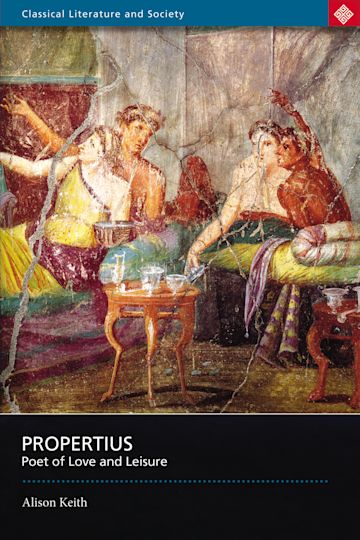
The availability of modern editions with commentary and verse translations has made Propertius's work accessible to readers without Latin. These translations help reveal Propertius as a poet who defined a uniquely Roman genre of literature while speaking to universal human experiences.
Recent translations have particularly emphasized the contemporary relevance of Propertius's exploration of love, power, and artistic expression. This ongoing work of translation and interpretation ensures that new generations of readers can appreciate his literary achievement.
Key contributions to Propertian scholarship include:
- Critical editions with extensive textual commentary
- Verse translations that capture both meaning and poetic quality
- Studies focusing on his engagement with Greek literary traditions
- Analyses of his influence on later European literature
The continued vitality of Propertius studies demonstrates the enduring power of his literary vision. His work remains essential reading for anyone seeking to understand the full range of Roman literary achievement during the Augustan Age.
Propertius's Enduring Legacy in World Literature
The influence of Propertius extends far beyond his own lifetime, shaping the development of love poetry in Western literature for centuries. His innovative approach to the elegiac form established a template that would be revisited and reinterpreted by generations of poets. From the Renaissance to modern times, Propertius has remained a touchstone for poets exploring the complexities of love and desire.
His work represents a crucial bridge between Greek literary traditions and later European poetry. The sophisticated ways in which Propertius adapted Hellenistic models influenced countless writers who sought to express personal emotion within formal poetic structures. This enduring influence testifies to the timeless quality of his artistic vision.
Renaissance Rediscovery and Beyond
The rediscovery of Propertius during the Renaissance marked a significant moment in literary history. Humanist scholars recognized in his work a sophistication and psychological depth that resonated with their own artistic values. This rediscovery helped shape the development of the love sonnet and other forms of Renaissance love poetry.
Key aspects of Propertius's influence include:
- Psychological realism in depicting emotional states
- Innovative use of mythological parallels to explore contemporary experience
- The creation of a complex poetic persona
- Sophisticated interplay between personal emotion and cultural commentary
Thematic Depth and Contemporary Relevance
Propertius's exploration of themes such as love, power, gender dynamics, and artistic expression continues to resonate with modern readers. His sophisticated treatment of these subjects demonstrates a remarkable understanding of human psychology that transcends historical context. This timeless quality explains why his work remains actively studied and appreciated today.
The poet's examination of the tension between personal desire and social expectations speaks powerfully to contemporary concerns. His nuanced portrayal of relationships and emotional experience offers insights that remain relevant in modern discussions of love and intimacy.
Love and Power in Propertian Poetry
One of Propertius's most significant contributions lies in his exploration of the relationship between love and power. His poetry examines how emotional attachment creates complex power dynamics that challenge conventional social hierarchies. This focus represents a radical departure from traditional Roman values that prioritized public achievement over private emotion.
Propertius's treatment of these themes demonstrates remarkable subtlety and complexity. Rather than presenting simple oppositions, his work explores the intricate ways in which personal relationships intersect with broader social structures.
Propertius's work engages with Rome's historical transition from republic to empire, incorporating reflections on the trauma of civil wars, nostalgia for the past, social legislation, and the cultural impact of foreign trade and conquest.
Literary Innovation and Technical Mastery
Propertius's technical achievements in the elegiac form established new possibilities for Latin poetry. His innovative approach to meter, diction, and structure expanded the expressive range of the elegy, transforming it from a relatively limited form into a vehicle for complex psychological and social exploration. This technical mastery remains a subject of admiration and study for contemporary poets and scholars.
His ability to weave multiple layers of meaning into formally precise poetry represents one of his most significant contributions to literary history. The sophistication of his technique matches the depth of his thematic concerns, creating works of enduring artistic value.
The Propertian Persona
The poetic persona that Propertius developed represents one of his most innovative contributions to literary history. This persona—passionate, self-aware, ironic, and intellectually sophisticated—established a model that would influence countless later writers. The complexity of this voice allows for multiple levels of interpretation and engagement.
Key characteristics of the Propertian persona include:
- Emotional authenticity combined with artistic self-consciousness
- A voice that is simultaneously personal and universal
- Sophisticated use of irony and ambiguity
- Integration of literary tradition with personal innovation
Conclusion: The Timeless Voice of Propertius
Propertius stands as one of the most original and influential voices in Latin literature. His transformation of the elegiac form created new possibilities for poetic expression that continue to resonate with readers and writers. The psychological depth, technical sophistication, and emotional honesty of his work ensure its enduring place in the literary canon.
Through his exploration of love, desire, and the complexities of human relationships, Propertius created a body of work that speaks across centuries. His ability to weave personal emotion with broader cultural commentary represents a achievement of lasting significance in Western literature.
Key Contributions to World Literature
The legacy of Propertius includes several fundamental contributions to literary history. His development of the love elegy established a genre that would influence European poetry for millennia. His sophisticated approach to poetic persona created new possibilities for self-expression in literature.
Perhaps most importantly, Propertius demonstrated that poetry could engage simultaneously with the most intimate aspects of human experience and the broadest cultural questions. This dual engagement represents his most enduring gift to subsequent generations of writers and readers.
Final key takeaways about Propertius's significance:
- Revolutionized the Latin love elegy with psychological depth and technical innovation
- Created a sophisticated poetic persona that influenced centuries of love poetry
- Successfully integrated personal emotion with cultural and political commentary
- Established a model for exploring gender dynamics and power relationships in literature
- Demonstrated the enduring power of poetry to capture complex human experience
As contemporary readers continue to discover Propertius through modern translations and scholarly studies, his voice remains as vital and compelling as it was two thousand years ago. The ongoing relevance of his work testifies to his profound understanding of the human heart and his unparalleled skill in giving that understanding lasting artistic form. Through his elegies, Propertius achieved the immortality that he himself recognized as poetry's greatest gift—the ability to speak across time to the eternal aspects of human experience.