
Explore Any Narratives
Discover and contribute to detailed historical accounts and cultural stories. Share your knowledge and engage with enthusiasts worldwide.
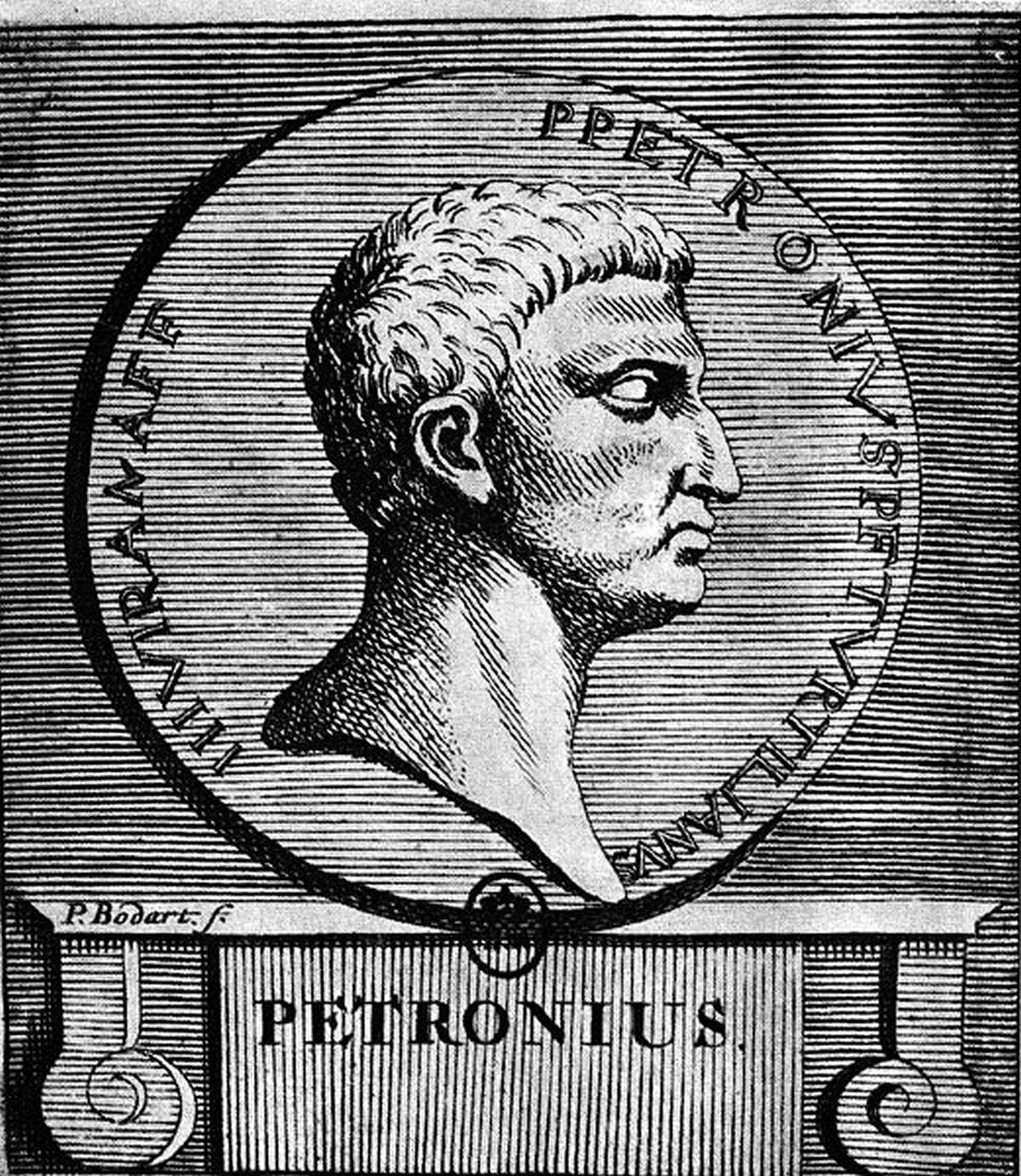
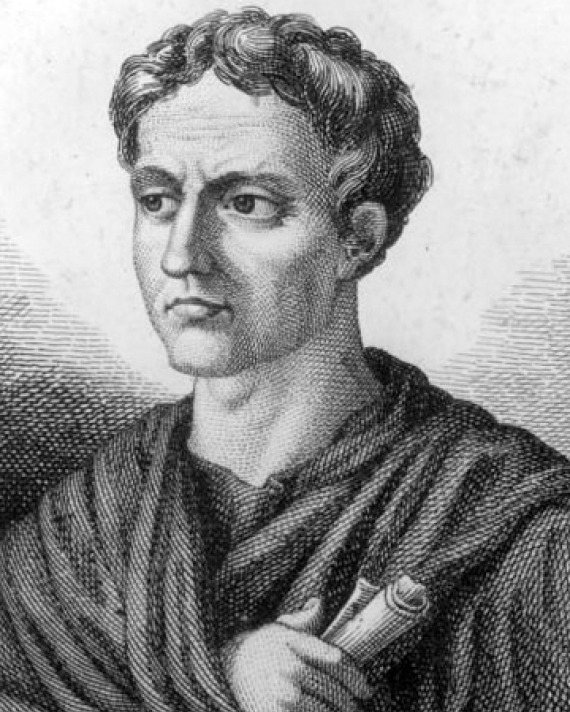
Gaius Petronius Arbiter stands as one of the most enigmatic and fascinating figures of the Roman 1st century AD. His life was a paradox of calculated idleness and unexpected capability, making him a unique character in the tumultuous reign of Emperor Nero. The legacy of Gaius Petronius Arbiter is preserved through his suspected authorship of the Satyricon and the dramatic account of his death by the historian Tacitus.
Unraveling the true identity of this historical figure presents an immediate challenge. The historian Tacitus referred to him as Gaius Petronius, but evidence suggests his correct name was likely Titus Petronius Niger. This discrepancy has fueled scholarly debate for centuries regarding his precise lineage and background.
Gaius Petronius Arbiter was born around 27 AD, possibly in the city of Massilia, modern-day Marseille. He hailed from a noble Roman family, which provided him with significant wealth and high social standing from birth. This privileged position allowed him to pursue a life of leisure and intellectual cultivation without the immediate pressures faced by less fortunate contemporaries.
His early adulthood was marked by a deliberate and paradoxical approach to life. While most Roman aristocrats built their reputations through military service or political maneuvering, Petronius cultivated fame through idleness. Tacitus famously described him as a man who "idled into fame," a phrase that perfectly captures his unconventional path to prominence.
Petronius was recognized as being deeply "learned in luxury," possessing considerable culture, wit, and a refined aesthetic sense. This lifestyle stood in stark contrast to the prevailing Stoic philosophy of the era. Philosophers like Seneca the Younger criticized men who, like Petronius, "turned night into day" in their pursuit of pleasure.
Despite this criticism, Petronius's idleness was not mere laziness. It was a carefully crafted performance, a philosophical statement on living life according to one's own principles of beauty and enjoyment. This performance would later become the foundation of his influential role in Nero's court.
Contrary to the image of a mere pleasure-seeker, Gaius Petronius Arbiter demonstrated significant administrative skill when called upon for public service. His political career reveals a man of surprising depth and capability, complicating the simplistic view of him as a decadent courtier.
Petronius served as the proconsul, or governor, of the Asian province of Bithynia. In this role, far from the distractions of Rome, he proved himself to be an energetic and highly capable administrator. He managed public affairs with a competence that belied his reputation for indolence, showing that his talents extended far beyond the realm of luxury.
This period of service demonstrated a key duality in his character: the man who excelled in the practical governance of a province was the same man who would soon become the supreme authority on extravagance in Nero's Rome. This ability to switch between seriousness and frivolity was a hallmark of his enigmatic personality.
His successful tenure in Bithynia paved the way for higher office. Around 62-63 AD, Petronius achieved the pinnacle of a Roman political career when he was appointed consul, one of the two chief magistrates of the Roman Republic. This position was a testament to his genuine abilities and the respect he commanded within certain circles of power.
Holding the consulship placed him at the very heart of Roman political life. It was during this time that he likely attracted the attention of Emperor Nero, who was always seeking talented and interesting individuals to populate his inner circle. The stage was set for Petronius's most famous role.
After his consulship, Emperor Nero elevated Petronius to a unique and influential position: arbiter elegantiae, which translates to "arbiter of elegance" or "judge of taste." This title, from which his enduring epithet "Arbiter" derives, made him the supreme authority on all matters of aesthetic judgment within the imperial court.
For an emperor like Nero, who fancied himself a great artist and connoisseur of Greek culture, Petronius became an indispensable oracle. His word on artistic values, fashion, entertainment, and decor was considered final. He was the ultimate trendsetter, whose approval could make or break a reputation in the highly competitive world of the Roman elite.
Petronius became the supreme authority on matters of taste and artistic values within Nero's court. This title, from which the epithet "Arbiter" became permanently attached to his name.
This role perfectly suited his natural talents for discernment and his "learning in luxury." He was not just a critic but a creator of the court's cultural atmosphere, shaping the very definition of what was considered elegant and refined during one of Rome's most opulent periods.
The position of arbiter elegantiae was not without its dangers. While it brought him close to the center of power and immense influence, it also made him a target for envy. His prominence bred jealousy, particularly from other powerful figures in Nero's court who vied for the emperor's favor.
Chief among his rivals was Ophonius Tigellinus, the ruthless Praetorian Prefect. Tigellinus represented a far more brutal and cynical approach to power, and he harbored a deep hatred for Petronius. This rivalry would ultimately have fatal consequences, setting the stage for the dramatic conclusion of Petronius's life.
Gaius Petronius Arbiter is generally believed to be the author of the Satyricon, a fragmented, satirical novel considered a masterpiece of Roman literature. This work provides an unparalleled, gritty glimpse into the social mores and daily life of the 1st century AD. Its picaresque narrative and bold satire have cemented its place as a crucial historical and literary document.
The attribution of the Satyricon to Petronius is supported by a medieval manuscript from around 1450 that credited "Titus Petronius" as the author. Most scholars accept this traditional identification as probable, aligning the novel's content with the known world of Neronian Rome. The internal evidence of customs, language, and social critique strongly points to a 1st-century origin.
However, some scholars dispute this, arguing on stylistic grounds and specific details that the work dates from the 2nd or 3rd century AD. Despite this minority view, the consensus remains that the satirical target of the novel—the vulgar nouveaux riches and a decadent elite—fits perfectly within the context of Nero's reign and Petronius's own position as the arbiter elegantiae.
The most famous and best-preserved section of the Satyricon is the "Cena Trimalchionis" or "Dinner of Trimalchio." This extended episode is a masterclass in social satire, depicting a lavish, absurd banquet hosted by the freedman Trimalchio. The character is a brilliant caricature of wealth without taste, ambition without education, and the crude excesses of the rising commercial class.
The novel's most famous section, the "Cena Trimalchionis" (Dinner of Trimalchio), exemplifies Petronius's satirical genius in depicting Roman excess and social pretension.
Trimalchio's desperate attempts to appear cultured and sophisticated, through misplaced literary references and grotesquely opulent displays, are thought by many scholars to be a satirical mirror of Emperor Nero himself. The dinner party, with its endless, bizarre courses and the host's profound ignorance, serves as Petronius's sharp critique of a society obsessed with status and material display over genuine substance.
Petronius's high status as the emperor's arbiter of taste placed him in a perilous position within the volatile politics of Nero's inner circle. His influence inevitably bred powerful enemies who waited for an opportunity to destroy him. The catalyst for his downfall was one of the most significant political events of Nero's reign.
In 65 AD, a major conspiracy to assassinate Nero and replace him with the senator Gaius Calpurnius Piso was uncovered. The plot involved numerous senators, knights, and even military officers. While Petronius was not a direct participant, his association with certain conspirators provided his enemies with the ammunition they needed.
The praetorian prefect, Ofonius Tigellinus, Petronius's primary rival, seized upon the chaos of the conspiracy's aftermath. Tigellinus accused Petronius of having contacts with one of the plot's leaders. In the paranoid atmosphere following the betrayal, such an accusation, whether fully substantiated or not, was often a death sentence.
Facing almost certain execution on the orders of an increasingly tyrannical Nero, Petronius was arrested. The charges likely included treason (maiestas) and association with enemies of the emperor. For a man who had lived his life with such deliberate artistry and control, the prospect of a shameful, state-mandated death was unacceptable.
Petronius understood the fate that awaited him: a public condemnation, the confiscation of his property, and a brutal execution designed to terrify others into submission. Rather than grant the emperor that satisfaction, he resolved to orchestrate his final act with the same elegance he had applied to life.
The death of Gaius Petronius Arbiter, as recorded by Tacitus, is one of the most memorable and defiant suicide narratives from antiquity. It was a meticulously staged performance, transforming an act of forced death into a final statement of autonomy and wit.
Petronius chose to die on his own terms. He organized a final feast with close friends, creating an atmosphere of cultured conviviality rather than mourning. As his guests dined and conversed, he opened his veins in the Roman method of suicide. However, he did not seek a quick end.
In a deliberate act of control, he periodically tightened bandages around his wounds to slow the bleeding. This extended his death over several hours, allowing him to maintain the role of gracious host until the very end. He listened to poetry and light music, discussed philosophy, and disposed of his property.
This secret catalog of imperial depravity was then sealed and sent directly to Nero. By revealing that he knew the emperor's darkest secrets, Petronius delivered a final, stinging rebuke. He denied Nero the moral high ground and framed the emperor, not himself, as the truly corrupt party.
In his final act of defiance, he refused to declare loyalty to Nero as was customary... instead composing and sending the emperor a detailed account of his debaucheries and vices.
Petronius died in 66 AD, a year after the forced suicide of the Stoic philosopher Seneca. His death marked the extinguishing of a unique voice—one of wit, aesthetic judgment, and subtle resistance—from Nero's court. He demonstrated that even in the face of absolute power, an individual could maintain dignity and agency through the meticulous curation of their own end.
The historical figure of Gaius Petronius Arbiter remains compelling because he consistently defies simple categorization. He was a bundle of contradictions that challenge modern understanding of Roman society, politics, and personal identity.
Petronius embodied several key paradoxes that make him a fascinating subject for historians:
These contradictions illuminate the complex tensions within the Roman elite during the Julio-Claudian dynasty. They show that the categories of "good emperor" versus "bad emperor" or "virtuous senator" versus "debauched courtier" are often insufficient to capture the nuanced realities of lived experience.
The enigmatic life and dramatic death of Petronius have inspired countless modern interpretations. He has been portrayed in literature and film, most notably as the character Petronius in Henryk Sienkiewicz's novel Quo Vadis and its subsequent film adaptations. These portrayals often focus on his role as a cynical observer and doomed aesthete in Nero's corrupt court.
His story resonates because it touches on universal themes: the clash between art and power, the search for personal authenticity under tyranny, and the human desire to author one's own story, especially its conclusion. The Satyricon continues to be studied not only as a literary artifact but as a psychological portrait of its likely author—a man who saw the absurdity of his world and chose to meet it with style and irony until the very end.
The Satyricon offers an invaluable, albeit satirical, portrait of Roman society under Nero's rule. Its narrative, focused on the misadventures of the narrator Encolpius and his companions, traverses the bustling, diverse world of 1st-century Italy. The novel provides a unique bottom-up perspective, contrasting sharply with the elite-focused histories of senators like Tacitus.
A central theme of the Satyricon is the rising influence of freedmen—former slaves who had gained their freedom and often considerable wealth. The character of Trimalchio is the archetype of the nouveau riche freedman, whose extravagant banquet symbolizes both the possibilities and anxieties of social mobility. Petronius critiques their ostentatious display and lack of traditional education, but also captures their energy and ambition.
This focus reflects a significant social reality of the early Empire. Freedmen played crucial roles in the imperial bureaucracy and commerce, accumulating wealth that sometimes rivaled that of the ancient aristocratic families. The Satyricon captures the cultural friction between old money and new money, a tension that defined the era.
One of the most revolutionary aspects of the Satyricon is its use of language. Petronius masterfully blends elevated Latin with vulgar street slang, creating a realistic soundscape of Roman life. This linguistic realism was unprecedented in surviving Roman literature, which typically maintained a formal, homogeneous style.
By giving his characters distinct voices—from the educated musings of Encolpius to the crude boasts of Trimalchio—Petronius presents a more authentic and multifaceted view of his world. This technique makes the Satyricon a critical resource for linguists and historians studying the everyday speech of common Romans, a perspective largely absent from other sources.
The legacy of Gaius Petronius Arbiter has evolved significantly over the centuries. From near-total obscurity in the Middle Ages to his rediscovery during the Renaissance, his story and suspected work have fascinated scholars, artists, and writers for generations.
The text of the Satyricon survived the Middle Ages in a highly fragmented state. The most significant manuscript, known as the Codex Traguriensis, was discovered in Trogir, Dalmatia, around 1650. This manuscript, dating from the Carolingian period, contained the longest continuous fragment, the "Cena Trimalchionis."
The attribution remains somewhat disputed among scholars, with some arguing... that the work should be dated to the 2nd or 3rd century instead. However, the majority of scholars accept the traditional identification as probable.
The publication and translation of these fragments sparked renewed interest in Petronius. Scholars of the Enlightenment and Romantic eras were captivated by the novel's realism, humour, and unflinching portrayal of ancient life, seeing it as a refreshing alternative to more formal classical texts.
The Satyricon has exerted a profound influence on Western literature, particularly on the development of the novel. Its picaresque structure, focusing on the adventures of a rogueish anti-hero, became a model for later writers.
In the 20th century, Petronius's life became a subject of artistic interest in its own right. His portrayal as a cynical, elegant philosopher of pleasure facing a tyrannical regime resonated deeply in an era marked by totalitarianism and world wars.
Perhaps the greatest challenge in understanding Gaius Petronius Arbiter is separating the historical man from the literary legend. Our primary source, the historian Tacitus, had his own biases and narrative goals, painting a portrait that is as much a moral exemplum as a historical record.
Tacitus, a senator writing under the emperors Trajan and Hadrian, viewed the reign of Nero as a low point for the Roman aristocracy. His depiction of Petronius serves a specific purpose within his broader historical critique. The figure of Petronius—the capable man who chooses a life of pleasure—allows Tacitus to comment on the corruption of talent and virtue under a bad emperor.
By highlighting Petronius's competence in Bithynia and his consulship, Tacitus emphasizes what was lost when intelligent men were forced to divert their energies into frivolous pursuits to survive in a corrupt court. His dramatic account of Petronius's death is a powerful indictment of Nero's tyranny, showcasing a Stoic-adjacent ideal of a noble death, but on Petronius's own unconventional terms.
Modern historians approach Petronius with a more nuanced perspective. While acknowledging the kernels of truth in Tacitus's account, they recognize the layers of literary construction. The man known today is a composite of:
Scholars now see him less as a simple hedonist and more as a complex individual navigating an impossible political situation. His "idleness" can be interpreted as a form of passive resistance or a strategy for self-preservation in a court where overt ambition could be fatal.
Gaius Petronius Arbiter remains one of the most captivating figures to emerge from ancient Rome. His life presents a series of compelling contradictions that continue to intrigue historians, literary critics, and general readers alike. He was a man who mastered the art of living and the art of dying with equal precision.
The key takeaways from his enigmatic story are profound. He demonstrates that historical figures defy simple labels. The capable administrator and the arbiter of elegance were one and the same. His legacy, primarily through the Satyricon, provides an unparalleled window into the vibrant, complex, and often vulgar reality of everyday Roman life, a perspective absent from most official histories.
Most importantly, Petronius's final act stands as a timeless testament to individual agency. In an age of absolute power, he asserted control over the one thing left to him: the manner of his departure. By orchestrating his death as a final, elegant performance and sending a bold critique to the emperor, he achieved a form of immortality.
Gaius Petronius Arbiter is more than a historical footnote; he is a symbol of wit in the face of power, of style as a form of substance, and of the enduring human desire to author one's own story, from the first page to the very last line. His enigmatic smile, preserved across two millennia, continues to challenge us to look beyond simple judgments and appreciate the profound complexities of the human character.



Your personal space to curate, organize, and share knowledge with the world.
Discover and contribute to detailed historical accounts and cultural stories. Share your knowledge and engage with enthusiasts worldwide.
Connect with others who share your interests. Create and participate in themed boards about any topic you have in mind.
Contribute your knowledge and insights. Create engaging content and participate in meaningful discussions across multiple languages.
Already have an account? Sign in here

Explore the life of Gaius Petronius Arbiter, Nero's 'arbiter of elegance,' and author of the *Satyricon*. Discover his i...
View Board
Explore the life of Drusus the Elder, a Roman general and stepson of Augustus. Discover his military campaigns, Rhine co...
View Board:max_bytes(150000):strip_icc()/98952842-57a929c05f9b58974a9ef26d.jpg)
Discover Faustina the Younger, Roman Empress and wife of Marcus Aurelius. Explore her philanthropy, influence, and the c...
View Board
Explore the life of Ovid, the Roman poet behind Metamorphoses & Ars amatoria. Discover his early successes, exile, and l...
View Board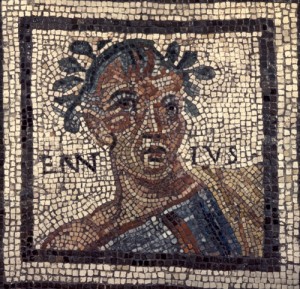
Discover Quintus Ennius, the father of Roman poetry! Learn about his epic 'Annales,' his influence on Virgil, and how he...
View Board
Discover Octavia the Younger's pivotal role in Roman history! Sister of Augustus, wife of Antony, and a master of diplom...
View Board
Explore the reign of Theodosius I, the last emperor to rule a unified Roman Empire. Discover his military achievements, ...
View Board
Discover the life of Poppaea Sabina, Roman Empress and wife of Nero. Explore her ambition, beauty, and the controversies...
View Board
Discover Gaius Valerius Catullus, Rome's most scandalous poet! Explore his passionate love poems, political attacks, and...
View Board
Discover the truth behind Messalina, the enigmatic wife of Emperor Claudius. Explore her political power, scandalous leg...
View Board
Discover Callimachus of Cyrene, a pivotal figure in Alexandrian literature. Explore his influential poetry, the groundbr...
View Board
Explore the controversial reign of Julian the Apostate, Roman Emperor who rejected Christianity. Discover his reforms, m...
View Board
Explore the life of Pompey the Great, a Roman general whose ambition shaped the Republic. Discover his triumphs, politic...
View Board
Explore the life of Caracalla, the controversial Roman Emperor. Discover his brutal reign, key reforms like the Constitu...
View Board
Discover Marius Maximus, the lost biographer of Roman Emperors from Nerva to Elagabalus. Explore his life, political car...
View Board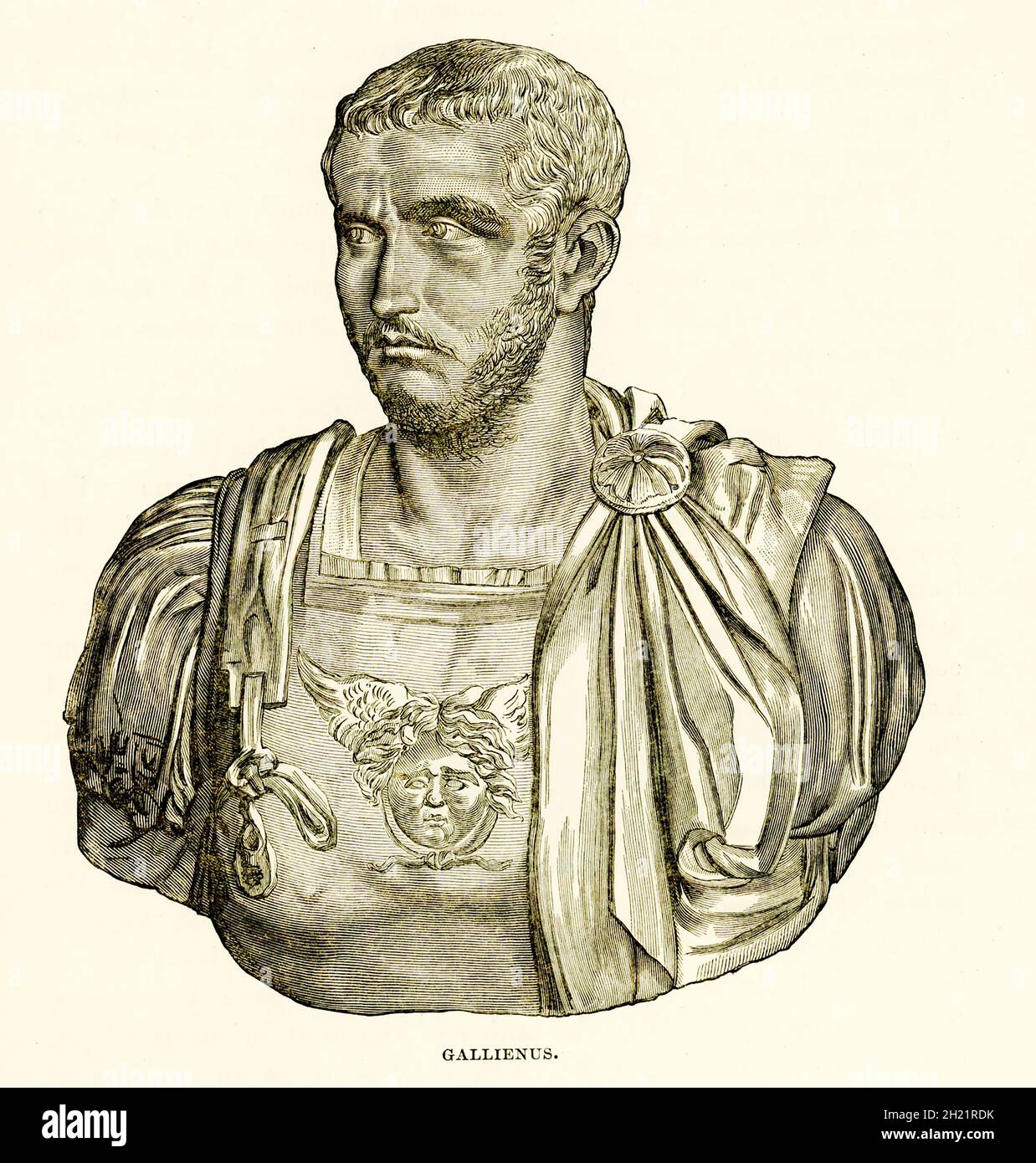
Explore the reign of Gallienus, the Roman Emperor often blamed for the Crisis of the Third Century. Discover modern reas...
View Board
Explore the reign of Lucius Septimius Severus, Rome's first African emperor. Discover his military conquests, political ...
View Board
Discover the story of Naevius Sutorius Macro, the ambitious Roman prefect! Learn how he orchestrated Sejanus's downfall,...
View Board
Discover the life of Pliny the Younger, a Roman lawyer and author, famous for witnessing the Vesuvius eruption. Explore ...
View Board
Explore the life and legacy of Titus, Rome's popular emperor. From military victories to disaster relief, discover his i...
View Board
Comments