

Explore Any Narratives
Discover and contribute to detailed historical accounts and cultural stories. Share your knowledge and engage with enthusiasts worldwide.
Julia Domna was one of the most powerful and influential women in Roman history. Rising from a Syrian priestly family, she became empress and a cornerstone of the Severan dynasty. For over two decades, she shaped imperial ideology, advised emperors, and managed state affairs.
Her story is a compelling narrative of power, intellect, and survival in the turbulent world of ancient Rome. This article explores her life, her unprecedented political role, and her lasting legacy as a key figure in Roman imperial history.
Julia Domna was born around 160 CE in Emesa, a major city in Roman Syria, modern-day Homs. She was the daughter of Julius Bassianus, the high priest of the powerful sun god Elagabal. This elite religious and political background was her first platform.
A crucial prophecy set her destiny in motion. It was foretold that her horoscope predicted she would marry a king. This prophecy attracted the ambitious Roman general, Septimius Severus. He married her around 187 CE, years before he became emperor.
The marriage to Severus was a masterstroke of political alliance. Severus, from Leptis Magna in Africa, combined his influence with Domna's prestigious Eastern lineage. This created a powerful cross-continental base of support.
Julia Domna quickly became more than just a wife. She was a vital partner in building the image and stability of Severus's rule after he seized the imperial throne in 193 CE following a civil war.
Her union with Severus founded the Severan dynasty, which would rule Rome for 42 years from 193 to 235 CE.
As empress, Julia Domna broke traditional molds. She actively participated in her husband's military campaigns across the empire. This visibility with the legions was strategic and earned her immense loyalty.
In 195 CE, she was granted the extraordinary title "Mater Castrorum" or "Mother of the Camps." This title, previously reserved for only one other woman, directly linked her to the army's morale and well-being.
Her titles expanded significantly over time, becoming a key part of Severan propaganda. They were prominently displayed on coins and public monuments to reinforce dynastic strength.
Historians note she held more official titles than any prior Roman empress. These honorifics were not empty. They publicly declared her central role in the empire's military, political, and social fabric.
Julia Domna was the mother of two emperors: Caracalla and Geta. Her position as the emperor's wife and the emperor's mother gave her unique and sustained authority. She was a constant in a period of great instability.
She played a crucial role in promoting the dynasty's image as a united, divine family. Official portraiture often showed her with Severus and their sons, emphasizing harmony and legitimate succession.
Her power faced significant challenges, most notably from the Praetorian Prefect Plautianus. Plautianus grew so powerful he was considered a co-emperor. Accusations of adultery against Julia Domna were circulated, likely by Plautianus himself.
However, her influence prevailed. Plautianus was executed in 205 CE, cementing her and Severus's control. This incident highlights the dangerous court intrigues she navigated successfully.
Beyond politics, Julia Domna was a renowned patron of arts, philosophy, and literature. She surrounded herself with leading intellectuals of her era, creating a vibrant cultural circle often called her "salon."
This group included the famous sophist Philostratus, whom she commissioned to write the "Life of Apollonius of Tyana." Her patronage helped preserve classical culture during her time.
Her court in Rome and later in Antioch became a center for philosophical debate and literary production, enhancing the dynasty's prestige as enlightened rulers.
This intellectual role distinguished her from many predecessors and added a layer of soft power to her political influence. It solidified her reputation as a sophisticated and learned leader.
Emperor Septimius Severus died in 211 CE in Eboracum (modern-day York, Britain). His final wish was for his two sons, Caracalla and Geta, to rule the empire jointly. This arrangement was fraught with peril from the start.
Julia Domna played a critical role in the immediate aftermath. She used her authority as their mother to persuade the bitterly rivalrous brothers to accept their father's will. Her presence was essential to temporarily maintaining a fragile peace between them.
The brothers returned to Rome, but their co-rule was characterized by deep hostility, forcing them to divide the imperial palace into separate, guarded quarters.
Despite Julia Domna's efforts to mediate, the hatred between Caracalla and Geta escalated. Caracalla, determined to rule alone, orchestrated a brutal plot. In December 211 CE, he had his younger brother, Geta, murdered in their mother's arms.
This act of fratricide was a devastating personal and political blow to Julia Domna. She was forced to witness the violent disintegration of her family, the very dynasty she had worked so hard to build and protect.
Following Geta's murder, Caracalla embarked on extensive military campaigns. He left the day-to-day administration of the vast Roman Empire to his mother. Julia Domna established her base in Antioch, one of the empire's largest cities.
From Antioch, she effectively became the empire's chief administrator. Her responsibilities were vast and crucial to maintaining imperial stability while her son was away at war.
Historical accounts, including the work of the historian Cassius Dio, detail the scope of her power. Julia Domna handled a wide range of governmental affairs with remarkable competence.
This period from 212 to 217 CE represents one of the most significant examples of a woman exercising direct, de facto rulership in Roman history. Her administration was noted for its efficiency and intelligence.
Julia Domna's Syrian heritage had a profound impact on Roman culture and religion. She was a prominent figure in introducing and popularizing Eastern religious ideas and deities within the Roman world.
The sun god Elagabal, whom her family served as high priests, gained increased prominence in Rome during her time. This set a precedent for the later, more radical introduction of the god by her great-nephew, Elagabalus.
Julia Domna was a key figure in the religious and philosophical syncretism characteristic of the Severan period. She supported the blending of Greco-Roman and Eastern traditions.
Her intellectual salon was not merely academic; it had ideological purpose. Philosophers like Philostratus helped craft a vision of a universal, cosmopolitan empire that mirrored the diverse origins of the Severan family itself.
Her patronage helped shape a more inclusive imperial ideology, reflecting the growing importance of the Eastern provinces to the Roman Empire's identity and economy.
In April 217 CE, while campaigning in the East, Emperor Caracalla was assassinated by the Praetorian Prefect, Macrinus. This event marked the end of the direct Severan male line and catapulted Julia Domna into an impossible position.
Macrinus, seeking to legitimize his own rule, initially allowed Julia Domna to retain her status and household. However, he soon perceived her enduring influence and popularity as a direct threat to his precarious authority.
Facing pressure from Macrinus and perhaps despairing at the collapse of her life's work, Julia Domna chose her own fate. According to most historical sources, she refused to eat and died by starvation.
Some accounts suggest she may have taken a more direct path, but her death in 217 CE was almost certainly a calculated act of defiance. It was a refusal to live under the rule of her son's murderer and the end of her dynasty.
Macrinus's reign was short-lived. In 218 CE, Julia Domna's great-nephew, Elagabalus, led a rebellion that restored the Severan bloodline to the throne. One of his first acts was to honor his great-aunt.
Elagabalus had Julia Domna deified, officially declaring her a goddess. This act was politically astute, linking his own controversial rule to the respected legacy of Septimius Severus and his influential empress.
Julia Domna's image remained powerful long after her death. She is prominently featured in some of the most significant surviving monuments from the Severan era.
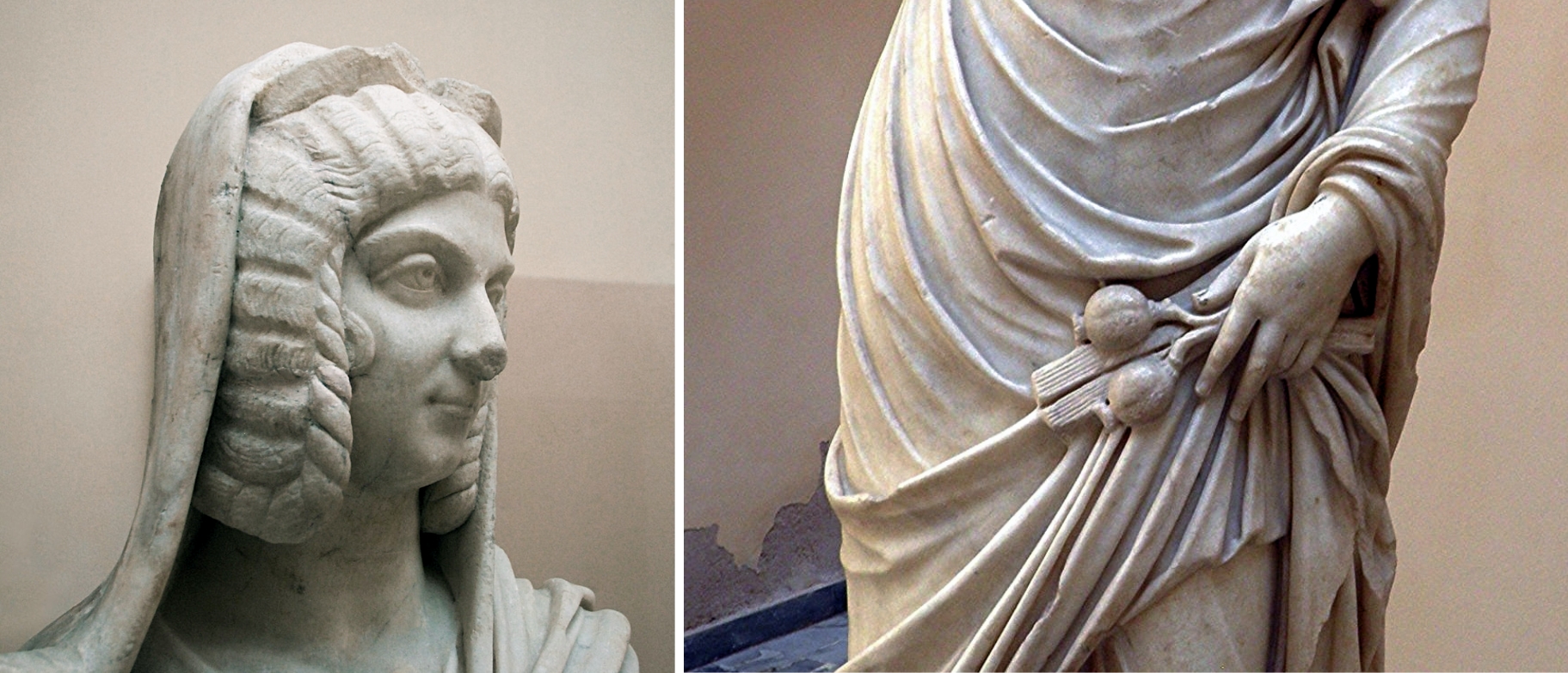
Her likeness can be seen on the Arch of the Argentarii in Rome and the Severan Arch in Leptis Magna. These sculptures continue to testify to her central role in the dynasty's public image and propaganda.
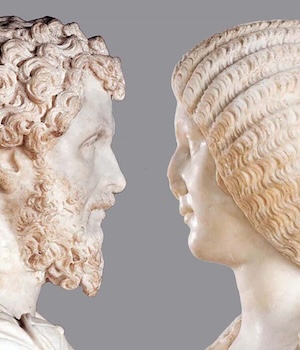
Coins bearing her portrait, with elaborate hairstyles and titles like "Julia Augusta," circulated throughout the empire. They serve as lasting physical evidence of her unprecedented status and the widespread recognition of her authority.
Contemporary historians continue to analyze the nature of Julia Domna's influence. Debate centers on whether her titles and responsibilities constituted genuine, independent political power or were largely ideological constructs for dynastic propaganda.
Scholars like Julia Langford have provided nuanced analyses, suggesting her role must be understood within the constraints of the Roman patriarchal system. Her power was real but often exercised through traditional channels like advising her husband and sons.
Despite academic debates, consensus affirms she achieved a public prominence and administrative role "unprecedented" among Roman empresses up to that time.
Her title "Mother of the Camps" is a key point of study. While it cemented army loyalty to the Severan family, it did not grant her formal military command. Her power was immense but derived from her proximity to the emperor—first as wife, then as mother.
Her administration in Antioch, however, demonstrates a significant level of operational authority. Handling state correspondence and petitions required deep understanding of law, finance, and diplomacy.
After Julia Domna's death, the Severan dynasty continued under her great-nephews, Elagabalus and Severus Alexander. Their reigns were unstable, and the dynasty finally ended in 235 CE with Alexander's assassination.
Julia Domna's legacy, however, endured beyond the dynasty's fall. She remained a powerful symbol of Syrian influence and a model for subsequent ambitious imperial women. Later empresses looked to her example of intellectual patronage and public engagement.
Modern historians emphasize her crucial role in dynastic continuity. Her great-nephew Elagabalus claimed the throne by declaring himself the illegitimate son of Caracalla, a fiction made plausible by his familial link to Julia Domna.
Thus, she acted as the vital genealogical and symbolic link between the first Severan emperors (Septimius Severus, Caracalla, Geta) and the later ones (Elagabalus, Severus Alexander). Her deification by Elagabalus was a deliberate political act to harness her lasting prestige.
Interest in Julia Domna has seen a resurgence in recent years. She features in documentaries, historical fiction, and online educational content, often highlighted for her unique background and powerful story.
A 2022 YouTube documentary, for instance, focuses extensively on her Syrian heritage and administrative acumen. This reflects broader modern trends in re-examining historical figures from the Roman East.
In today's context, Julia Domna is frequently presented as a figure of cross-cultural fusion. She represents the complex identity of the Roman Empire at its height—a Syrian woman wielding power at the very heart of Rome.
Her life story is used to explore themes of immigration, cultural integration, and the often-overlooked contributions of the Eastern provinces to Roman history. This makes her a highly relevant figure for contemporary audiences.
To fully grasp Julia Domna's impact, reviewing the key data of her life and era is essential. These statistics underscore the scale of her influence and the dynasty she helped build.
Julia Domna was actively involved in Roman imperial politics for over 24 years, from her husband's accession in 193 CE to her death in 217 CE.
The following points consolidate crucial facts and figures related to her historical significance.
Julia Domna's journey from the temple of Emesa to the pinnacle of Roman power is a remarkable historical narrative. She skillfully navigated the lethal politics of the Roman imperial court for nearly a quarter of a century.
Her legacy is multifaceted. She was a dynastic matriarch, an administrative ruler, an intellectual patron, and a religious innovator. She helped steer the Roman Empire during a critical period of its history.
While ancient sources, often biased against powerful women, sometimes included unverified rumors about her, the factual record of her achievements stands firm. She wielded more documented, public authority than any empress before her.
Julia Domna demonstrated that power in the ancient world could be exercised through intelligence, patronage, and adept political partnership. She expanded the very possibility of what an imperial woman could be and do.
Her story concludes not with the end of the Severan dynasty, but with her enduring image in stone and history. Julia Domna remains a powerful symbol of the interconnectedness of the ancient world and a testament to the profound influence one individual could have on the course of the Roman Empire. Her life continues to inform our understanding of power, culture, and identity in the ancient Mediterranean.


Your personal space to curate, organize, and share knowledge with the world.
Discover and contribute to detailed historical accounts and cultural stories. Share your knowledge and engage with enthusiasts worldwide.
Connect with others who share your interests. Create and participate in themed boards about any topic you have in mind.
Contribute your knowledge and insights. Create engaging content and participate in meaningful discussions across multiple languages.
Already have an account? Sign in here

Discover Poppaea Sabina, the powerful empress of Nero’s Rome. Explore her strategic marriages, political influence, and ...
View Board
Discover the truth behind Messalina, the enigmatic wife of Emperor Claudius. Explore her political power, scandalous leg...
View Board:max_bytes(150000):strip_icc()/98952842-57a929c05f9b58974a9ef26d.jpg)
Discover the fascinating life of Faustina the Younger, the influential Roman empress known for her philanthropy, scandal...
View Board
Drusus the Elder: The Prominent Pontifex and Consul of Ancient Rome The Background and Early Life Drusus the Elder, kn...
View Board
Scopri come Septimius Severus, il primo imperatore africano, trasformò Roma in una monarchia militare, cambiando per sem...
View Board
Discover how Marcus Licinius Crassus became the richest man in Rome through ruthless business tactics and political ambi...
View Board
Discover Octavia the Younger, Rome’s virtuous sister of Augustus. Explore her strategic marriages, diplomatic skills, an...
View Board
Discover the fascinating life and legacy of Drusus the Younger, a Roman prince whose brilliant career was cut short by t...
View Board
Discover how Tiberius Gracchus's bold land reforms in 133 BC sparked a crisis that led to his assassination and marked t...
View Board
**Meta Description:** Discover Emperor Aurelian, the "Restorer of the World," who reunified Rome in just 5 years. Lear...
View Board
Explore the complex journey of Clodius Albinus in "Clodius Albinus: The Unfulfilled Aspirations of a Roman Usurper," as ...
View Board
**Meta Description:** Discover the rise and dramatic fall of Lucius Aelius Sejanus, Rome’s most infamous Praetorian Pr...
View Board
Discover Attalus III, the last king of Pergamon, whose strategic bequest to Rome shaped ancient history. Explore his rei...
View Board
Scopri la vita controversa dell'imperatore Commodo, dal suo regno eccentrico alla passione per i gladiatori. Esplora la ...
View Board
Discover Alexander Severus' rise, reign, and tragic fall. Explore his reforms, religious tolerance, and the chaos that f...
View Board:focal(1134x648:1135x649)/https://tf-cmsv2-smithsonianmag-media.s3.amazonaws.com/filer_public/49/26/4926c5f7-b1c9-4b5c-842c-cfe6cdb13a1d/panoramica_1.jpg)
Explore the intriguing and controversial reign of Nero, one of Rome's most infamous emperors, in our comprehensive artic...
View Board
Explore the pivotal role of Sextus Afranius Burrus, Rome's Praetorian Prefect, in maintaining imperial stability during ...
View Board:max_bytes(150000):strip_icc()/bronze-statue-of-augustus-the-roman-emperor-at-the-entrance-of-the-reconstructed-saalburg-the-roman-fort-limes-taunus-hesse-germany-150964537-589a394c3df78caebc6facb5.jpg)
Discover Antoninus Pius, Rome's peaceful emperor, whose 23-year reign brought stability, legal reforms, and prosperity. ...
View Board
Discover the pivotal role of Lucius Verus, Rome's first co-emperor, in the Parthian War and his lasting impact on Roman ...
View Board
Theodosius I: last ruler of united Rome. Explore his military victories, Christian reforms, and the empire's final divis...
View Board
Comments