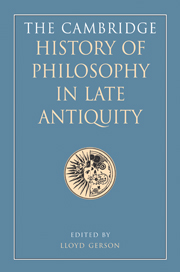

Explore Any Narratives
Discover and contribute to detailed historical accounts and cultural stories. Share your knowledge and engage with enthusiasts worldwide.
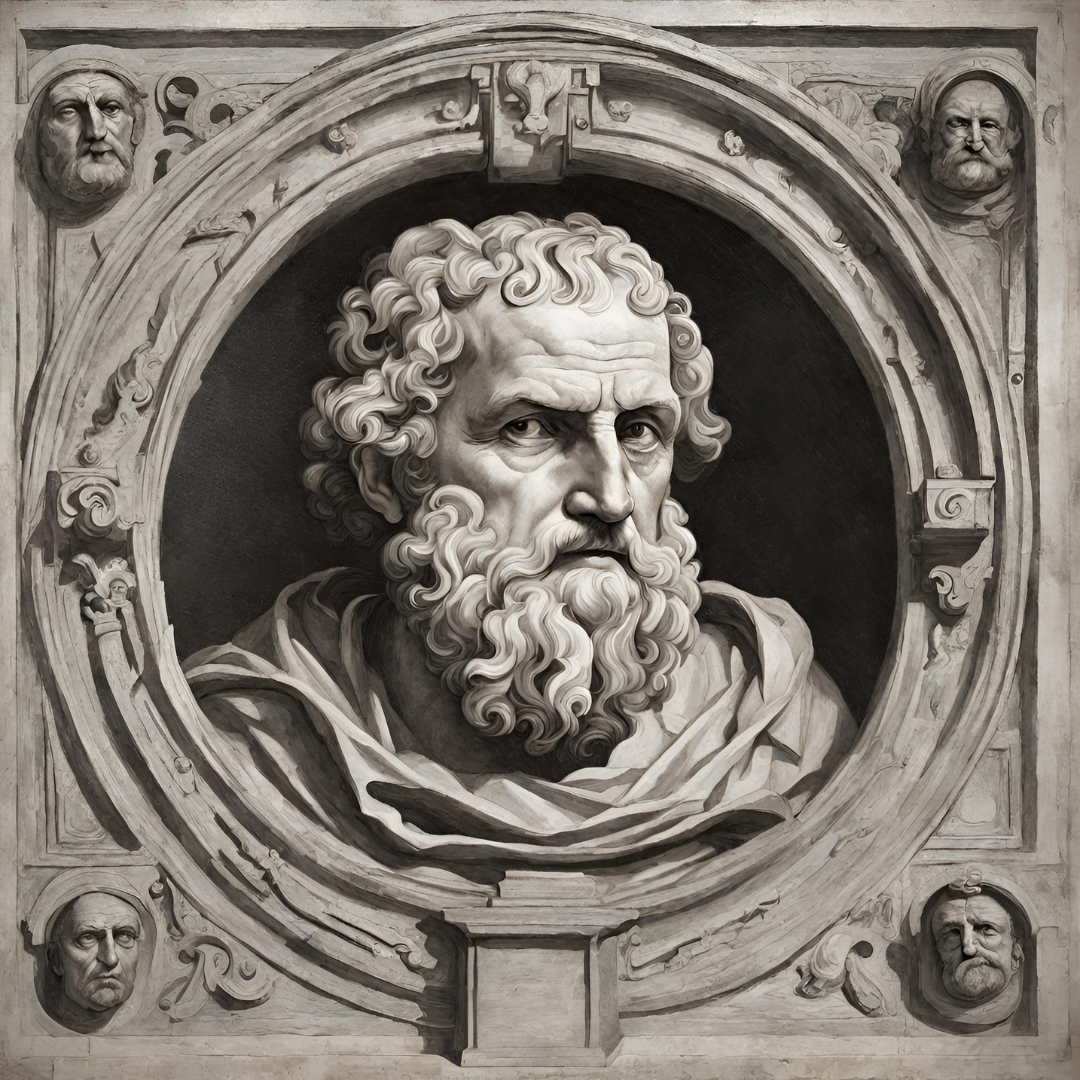
Damascius, often regarded as the last great philosopher of Neoplatonism, stands as a pivotal figure in the intellectual history of late antiquity. As the final head of the Athenian Academy before its closure by Emperor Justinian in 529 AD, Damascius represents the culmination of a philosophical tradition that sought to reconcile Greek thought with mystical and theological elements. His works, though not as widely known as those of Plato or Aristotle, offer profound insights into metaphysics, epistemology, and the nature of the divine. This article explores his life, philosophical contributions, and his enduring legacy in the face of a changing world.
Born around 462 AD in Damascus, Syria, Damascius came of age during a period of significant cultural and political transformation. The Roman Empire was fracturing, and Christianity was becoming the dominant religion, challenging the pagan philosophical traditions that had flourished for centuries. Little is known about his early years, but it is likely that he received a classical education in rhetoric and philosophy, possibly in Alexandria, a hub of intellectual activity at the time.
Damascius studied under prominent Neoplatonists, including Ammonius Hermiae, who also taught the renowned philosopher Simplicius. His education would have included rigorous training in Plato’s dialogues, Aristotle’s works, and the mystical traditions associated with Neoplatonism. By the time he arrived in Athens to join the Academy, he was already a seasoned philosopher deeply immersed in the intellectual currents of his time.
Damascius became the head (or "diadochos") of the Athenian Academy in the early 6th century, succeeding Marinus of Neapolis. The Academy, founded by Plato in the 4th century BCE, had long been a symbol of pagan intellectual resistance to Christianity. Under Damascius’ leadership, the institution continued to promote Neoplatonic thought, emphasizing the study of Plato’s works while engaging with broader philosophical and theological questions.
The Academy was not merely a center for abstract speculation; it was also a vibrant community where students and scholars engaged in debates, wrote commentaries, and sought to live according to philosophical principles. Damascius’ tenure, however, coincided with increasing hostility from the Christian authorities. The Byzantine Emperor Justinian, seeking to consolidate religious and political authority, issued an edict in 529 AD banning pagan teachings and ordering the closure of the Academy. This marked the end of an era for Greek philosophy as an institutionalized tradition.
Damascius’ surviving works reveal a thinker deeply engaged with the complexities of Neoplatonism. His philosophy can be characterized by its systematic approach to metaphysical questions and its emphasis on the ineffable nature of the ultimate reality. Below are some of his key contributions:
At the heart of Damascius’ metaphysics is the concept of the "Ineffable," a reality beyond all names, categories, and even being itself. Drawing on Plotinus’ notion of "The One," Damascius argued that the ultimate principle transcends all description and intellectual grasp. Unlike earlier Neoplatonists, who attempted to define The One positively, Damascius insisted on its absolute transcendence. This stance reflects a profound skepticism about the limits of human language and reason when confronting the divine.
Damascius was not uncritical of his predecessors. In his works, he engaged in detailed critiques of Plotinus, Proclus, and other Neoplatonists, refining their ideas and pointing out inconsistencies. For instance, he questioned Proclus’ hierarchical structuring of reality, arguing that it risked reducing the ineffable to a series of intellectual constructs. His critical approach demonstrates a commitment to philosophical rigor and a willingness to challenge established doctrines.
Damascius also explored the nature of the soul, a central theme in Neoplatonism. He grappled with questions about the soul’s descent into the material world, its relationship to the body, and its potential for reascent to the divine. Unlike some of his predecessors, he emphasized the soul’s freedom and its capacity to transcend deterministic frameworks. His views on the soul reflect a synthesis of Platonic and Aristotelian ideas, tempered by his own innovations.
Following the closure of the Academy, Damascius and his fellow philosophers faced persecution and exile. Along with six other Neoplatonists, including Simplicius, he sought refuge in the court of the Persian King Khosrow I. Although they were initially welcomed, the group eventually returned to the Byzantine Empire after Khosrow secured an agreement with Justinian allowing them to practice their philosophy without interference. The details of Damascius’ later life remain obscure, but it is believed that he continued to write and teach until his death.
Damascius’ legacy is complex. As the last head of the Athenian Academy, he symbolizes the end of ancient Greek philosophy as an institutional tradition. Yet his works, preserved in fragments and later commentaries, influenced medieval Islamic and Christian thought. His emphasis on the ineffable nature of the divine resonated with mystical traditions, while his critical approach to philosophy set a precedent for later metaphysical inquiry.
In the modern era, Damascius has been rediscovered as a thinker whose ideas anticipate contemporary questions about language, reality, and the limits of human understanding. His work continues to inspire scholars and philosophers who seek to bridge the gap between ancient wisdom and modern thought.
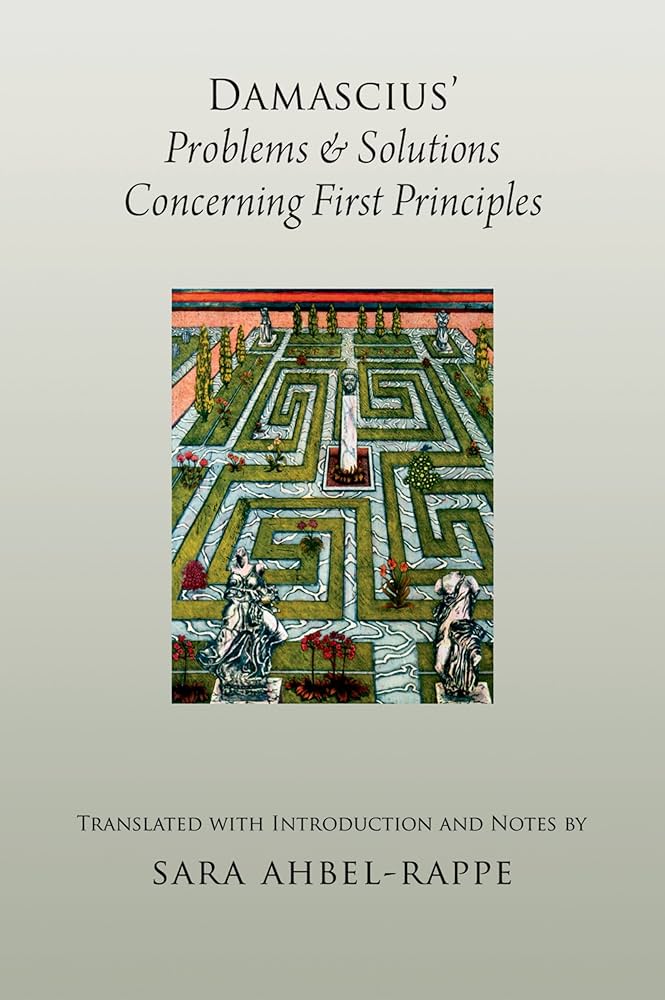
Damascius' philosophical contributions are primarily preserved through his written works, which, though not as extensive as those of some of his predecessors, offer profound insights into his thought. His most significant surviving work is Problems and Solutions Concerning First Principles (also known as On First Principles), a dense and complex text that explores the nature of ultimate reality. In this work, Damascius systematically examines the limitations of human language and reason when attempting to describe the divine, reinforcing his belief in the ineffability of the highest principle. Another important text, Commentary on the Parmenides, delves into Plato's dialogue, offering a detailed analysis of the One and the Many, further developing his metaphysical framework.
Damascius' writings are notable for their rigorous logical structure and their willingness to question established doctrines. Unlike many of his contemporaries, he did not shy away from critiquing the ideas of earlier Neoplatonists, including Plotinus and Proclus. His approach was not merely academic; it was deeply personal, reflecting his own philosophical journey and his commitment to uncovering truth. His works also provide valuable historical context, shedding light on the intellectual climate of late antiquity and the challenges faced by pagan philosophers in a Christianizing world.
The closure of the Athenian Academy in 529 AD marked a turning point in the history of philosophy. For centuries, the Academy had been a beacon of intellectual freedom, fostering the development of ideas that would shape Western thought. Damascius' leadership during this tumultuous period was characterized by resilience and a steadfast commitment to preserving the legacy of Greek philosophy. His efforts to defend the Academy against political and religious pressures were ultimately unsuccessful, but they underscored the enduring value of philosophical inquiry.
Damascius' exile and the dispersal of the Neoplatonists following the Academy's closure had far-reaching consequences. Many of his students and colleagues sought refuge in the East, particularly in Persia, where they continued their intellectual pursuits. This migration facilitated the transmission of Greek philosophy to the Islamic world, where it would later influence thinkers such as Avicenna and Averroes. In this way, Damascius' legacy extended beyond the borders of the Byzantine Empire, contributing to the preservation and evolution of classical thought.
Despite the decline of Neoplatonism as a dominant philosophical school, Damascius' ideas continued to resonate in various intellectual traditions. In the medieval period, his works were studied by Christian theologians who sought to reconcile Greek philosophy with Christian doctrine. His emphasis on the ineffability of God found echoes in the mystical theology of figures like Pseudo-Dionysius the Areopagite, who drew heavily on Neoplatonic concepts.
During the Renaissance, Damascius' writings were rediscovered and studied by humanists who sought to revive classical
Damascius' influence extends far beyond the ancient world, as his ideas continue to resonate with contemporary philosophical and theological discussions. His emphasis on the ineffable nature of ultimate reality has found new relevance in modern metaphysics, particularly in debates about the limits of language and human understanding. Philosophers such as Martin Heidegger and Jacques Derrida have drawn upon Damascius' skepticism toward fixed definitions, using it to challenge traditional notions of truth and meaning. His work has also been revisited by scholars interested in the intersection of philosophy and mysticism, as his ideas about the divine transcendence align with certain strands of postmodern thought.
In the 20th and 21st centuries, Damascius has been the subject of renewed scholarly interest, with translations of his works making his ideas more accessible to a global audience. His critiques of earlier Neoplatonists have been particularly influential, as they offer a model for how to engage with philosophical traditions critically while remaining respectful of their insights. This approach has inspired contemporary philosophers to re-examine the foundations of their own disciplines, questioning assumptions and exploring new ways of thinking about reality.
One of the most enduring aspects of Damascius' philosophy is his relentless pursuit of truth, even when it leads to paradox or uncertainty. His willingness to embrace the unknown and acknowledge the limits of human knowledge sets him apart from many of his predecessors. This humility in the face of the unknowable has made his work particularly appealing to those who seek a more open-ended approach to philosophy, one that does not claim to have all the answers but instead remains open to new possibilities.
Damascius' exploration of the soul's relationship to the divine has also found echoes in modern psychology and spirituality. His ideas about the soul's journey and its potential for transcendence resonate with contemporary discussions about consciousness and the nature of the self. Psychologists and spiritual teachers alike have drawn upon his insights to explore the deeper dimensions of human experience, finding in his work a bridge between ancient wisdom and modern inquiry.
Damascius stands as a towering figure in the history of philosophy, not only for his contributions to Neoplatonism but also for his enduring influence on subsequent generations of thinkers. His work challenges us to question our assumptions, to embrace the limits of our understanding, and to remain open to the mysteries of existence. In a world that often seeks quick answers and easy solutions, Damascius' philosophy offers a reminder of the value of deep reflection and intellectual humility.
As we continue to grapple with the big questions of life, meaning, and the nature of reality, Damascius' insights remain as relevant as ever. His legacy is not just a historical curiosity but a living tradition that continues to inspire and challenge us. Whether in the halls of academia or the quiet moments of personal reflection, his voice still speaks to those who are willing to listen, offering a vision of philosophy as a lifelong journey toward truth.



Your personal space to curate, organize, and share knowledge with the world.
Discover and contribute to detailed historical accounts and cultural stories. Share your knowledge and engage with enthusiasts worldwide.
Connect with others who share your interests. Create and participate in themed boards about any topic you have in mind.
Contribute your knowledge and insights. Create engaging content and participate in meaningful discussions across multiple languages.
Already have an account? Sign in here
Explore the profound influence of Plato, the Athenian philosopher! Discover his Theory of Forms, ideal state, and lastin...
View BoardDiscover Anaximander, the pre-Socratic philosopher who revolutionized cosmology! Learn about his concept of the *apeiron...
View Board
Ανακαλύψτε τον Πλάτωνα, τον σπουδαίο φιλόσοφο της αρχαιότητας! Μάθετε για τη ζωή, την Ακαδημία, τη θεωρία των Ιδεών και ...
View Board
Explore Chrysippus of Soli, the 'second founder' of Stoicism. Discover his groundbreaking logic, ethics, and physics tha...
View Board
Μάθετε για τον Αντίσθενη, τον ιδρυτή της Κυνικής σχολής και πρωτοπόρο της φιλοσοφίας της αυτάρκειας. Ανακαλύψτε τη ζωή, ...
View Board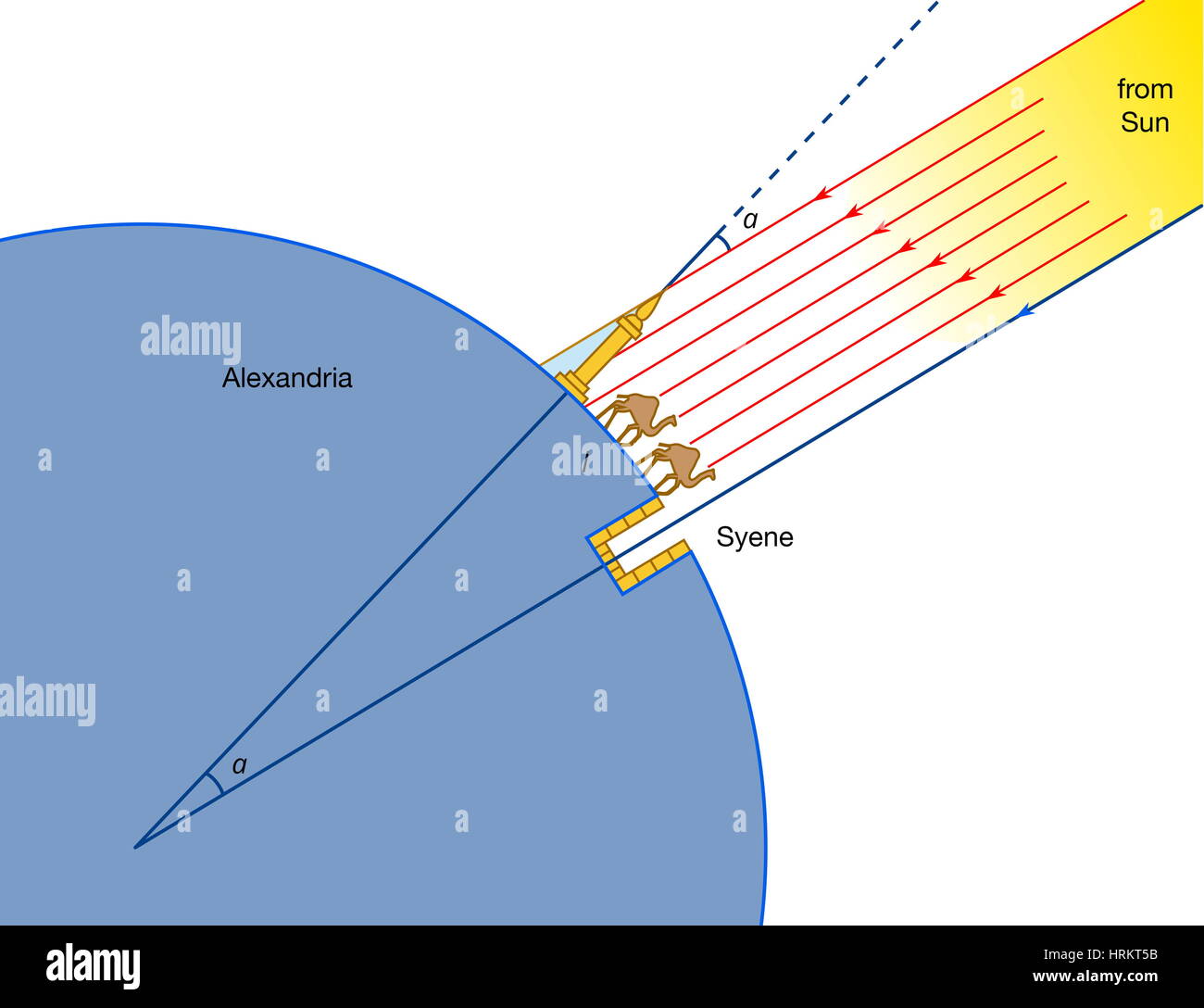
Explore the brilliance of Eratosthenes, the Ptolemaic polymath. Discover his groundbreaking calculation of Earth's circu...
View Board
Uncover the captivating story of Aspasia of Miletus, Pericles' companion! Explore her intellectual power, rhetorical ski...
View Board
Discover Scott Buchanan, the visionary behind the Great Books program. Learn about his impact on liberal arts education ...
View Board
Explore the work of Rajiv Malhotra, a leading voice in Indic thought. Discover his contributions to Dharma, challenges t...
View Board
Explore the controversial reign of Julian the Apostate, Roman Emperor who rejected Christianity. Discover his reforms, m...
View Board
Discover Theophrastus, the 'Father of Botany'! Explore his groundbreaking plant classification, ecological insights, & l...
View Board
Explore the world of Hesiod, an influential ancient Greek poet. Discover his life, major works like Theogony & Works and...
View Board
Explore the life of Gaius Petronius Arbiter, Nero's 'arbiter of elegance,' and author of the *Satyricon*. Discover his i...
View Board
Discover Cassiodorus, the Roman statesman and monk who preserved classical knowledge during the Dark Ages. Learn about V...
View Board
Discover Callimachus of Cyrene, a pivotal figure in Alexandrian literature. Explore his influential poetry, the groundbr...
View Board
Discover Paul Painlevé: the brilliant mathematician behind Painlevé transcendents & two-time Prime Minister of France. E...
View Board
Explore Albert Einstein's groundbreaking theories, from relativity to E=mc², and his impact on modern physics. Discover ...
View Board
Discover Maurice Allais, the groundbreaking French economist and Nobel laureate. Learn about his innovative theories on ...
View Board
Explore Henri Cartan's profound impact on modern mathematics. Learn about his contributions to algebraic topology, Bourb...
View Board
Discover Juba II, the scholar king of Mauretania! Learn about his reign, scholarship, Roman alliance, and legacy in Nort...
View Board
Comments