Rajiv Malhotra: A Voice for Indic Thought in the Modern World
Introduction
Rajiv Malhotra is a name that has become synonymous with the advocacy and dissemination of Indic thought and traditions in the contemporary global arena. As an Indian-American researcher, author, and public intellectual, Malhotra has been actively engaged in reshaping the discourse around Indian culture, philosophy, and spirituality. His works have sparked dialogue worldwide, challenging both Western and Eastern thinkers to reconsider and, often, decolonize their perspectives on India.
Early Life and Background
Rajiv Malhotra was born on September 15, 1950, in New Delhi, India. He pursued his education in elite institutions, graduating from the prestigious St. Stephen's College in Delhi before moving to the United States. There, he furthered his studies at Syracuse University, where he delved into physics and computer science, fields that would initially shape his early professional life.
However, Malhotra's career trajectory took a significant turn as he grew increasingly interested in Indian philosophies and traditions. This interest was not merely academic; it was personal and deeply rooted in his desire to address the cultural and intellectual narratives that often sidelined or misrepresented Indian thought in the Western academic and media landscapes.
The Awakening of an Intellectual Warrior
As Malhotra immersed himself in the study of Dharmic traditions, he became keenly aware of the biases and misconceptions prevalent in Western interpretations of Indian culture and spirituality. His awareness motivated him to leave behind a successful career in the corporate world and instead dedicate his life to a cause that he felt was far more significant: defending and promoting the rich heritage of Indic wisdom on the global stage.
In 1995, Malhotra founded the Infinity Foundation in Princeton, New Jersey, with a mission to foster research and education that highlights India's contributions to global intellectual and cultural life. This foundation became a pivotal platform for Malhotra's projects, enabling him to fund initiatives that support his vision of correcting misconceptions about Indian civilization.
The Controversial Voice of Dharmic Traditions
Malhotra's work over the past few decades has been both influential and contentious. Through his books, lectures, and articles, he has consistently challenged prevailing academic narratives about India, often accusing Western scholars of misappropriating and misrepresenting Indian culture. His critiques are particularly directed at what he sees as the Eurocentric lens through which many scholars analyze and interpret Indian traditions.
His book "Breaking India," co-authored with Aravindan Neelakandan, is one such effort to critique what he perceives as a systematic attempt to undermine the unity and integrity of India through external influences. In this work, he details how various socio-political and religious factions, with alleged foreign support, may contribute to the fragmentation of Indian society.
Malhotra's confrontational style and strong opinions have drawn both admiration and criticism. Supporters laud him as a necessary voice that stands up for an often overlooked civilization, while detractors accuse him of fostering divisiveness and of being overly critical of Western academics.
Expanding the Discourse
Beyond critiquing Western academia, Malhotra advocates for a more profound engagement with Indian knowledge systems on their own terms. He emphasizes the need for a purva-paksha, a traditional Indian practice of understanding opposing views before critically engaging with them. Through this practice, Malhotra argues that dialogue between different cultural perspectives can be enriched, allowing for a more genuine exchange of knowledge.
One of his most acclaimed works, "Being Different: An Indian Challenge to Western Universalism," exemplifies this approach. In this book, Malhotra argues for the distinctiveness of Indian culture and thought and challenges the assumptions of Western universalism. He insists that it is essential to recognize and respect diversity in global philosophical thought rather than imposing a singular narrative.
Creating New Pathways for Global Engagement
Rajiv Malhotra's influence extends beyond his writings and seminars; he is a prominent figure in nurturing a global community interested in exploring and understanding Indian traditions. His advocacy for a more balanced and nuanced portrayal of Indian civilization has won him both a dedicated following and a plethora of critics who challenge his ideas and methods.
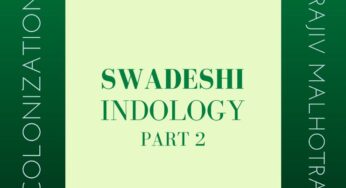
Central to Malhotra’s philosophy is the idea of Swadeshi Indology, which calls for the development of a body of research produced by scholars who are indigenous to the Indian tradition. By championing this idea, Malhotra seeks to encourage scholars from within India and its diaspora to study and annotate their culture how they see fit, thus developing an inherently unique perspective that contributes to global academia.
Conclusion
Rajiv Malhotra's journey from a mainstream technocrat to an impassioned scholar of Indic traditions is a testament to his dedication to cultural integrity and intellectual inquiry. As we examine the impact of his work, whether through approbation or critique, it is clear that he has successfully sparked a global conversation about the place and perception of Indian thought in the modern world.
In the subsequent parts of this article, we will further explore the key themes in Malhotra’s works and their implications, dissecting the nuanced layers of his thought leadership in both a contemporary and historical context.
Deconstructing Rajiv Malhotra's Core Themes
Rajiv Malhotra's work can be encapsulated by several recurring themes and objectives that reflect his mission to preserve and promote Indic traditions. His writings cover a wide array of topics including cultural property rights, the challenges of post-colonial narratives, and the reclamation of India's historical and philosophical identity. One of his key themes is the critique of what he calls the "Colonial Matrix of Power," an intricate network of socio-political forces that continue to influence how the non-Western world is perceived and studied.
Cultural Continuity vs. Disruption
Central to Malhotra’s thesis is the concept of cultural continuity, which he juxtaposes against what he perceives as efforts to disrupt and fragment Indian civilization. He argues that Indian culture is not merely an ancient relic but a living, evolving tradition that has retained its core principles despite centuries of foreign influences and colonial rule.
Malhotra suggests that this continuity is often overlooked or misunderstood by outside observers who impose their cultural frameworks onto Indian realities. To counter this, he highlights the need for a renaissance of traditional knowledge systems that affirm and preserve the unique intellectual heritage of India. He posits that modern Indians must reclaim and reinvigorate their cultural narratives, which often involves challenging existing academic paradigms that fail to recognize the depth and breadth of India's continuous history and philosophy.
Intellectual Property and Cultural Parity
Another significant area of Malhotra's focus is intellectual property and cultural parity. He asserts that Indian knowledge systems have often been appropriated without due acknowledgment or respect for their origins. This extends beyond historical texts and into areas like yoga, Ayurveda, and other traditional Indian sciences, which have been commercialized and embraced globally often without proper credit to their Indian roots.
In books such as "Indra’s Net: Defending Hinduism's Philosophical Unity," Malhotra explores how various intellectual frameworks originating from India have been instrumentalized while dismissing their inherent value and context. He brings attention to the paradox of celebrating certain Indian-derived concepts and practices in isolation while disregarding their holistic narratives.
Malhotra's advocacy seeks to equalize this imbalance by promoting better understanding and respect for the origin and integrity of Indian intellectual contributions to world knowledge. He calls for an intellectual property framework that serves to honor and protect traditional knowledge systems as part of a broader effort to achieve cultural parity.
Decolonizing the Curriculum
Attached to his critiques of Western hegemony over knowledge is Malhotra's call for decolonizing academic curricula, particularly in the field of Indic studies. He believes that many educational programs, both in India and abroad, have been heavily influenced by external interpretations of Indian culture, often leading to an erasure or distortion of genuine Indic perspectives.
Malhotra emphasizes the importance of indigenous voices in crafting educational narratives that truly reflect their subject matter. He urges for a re-examination of historiography concerning India, advocating for curricula that authentically incorporate Indian philosophies, literature, and sciences. By placing Indian history and thought in its rightful context, he argues that students will develop a more balanced understanding of India's role in the global historical narrative.
Controversies and Criticisms
Given Malhotra's outspoken positions, it’s unsurprising that he has been at the center of numerous controversies. His critiques of Western academia and insistence on cultural authenticity have often drawn ire from scholars who accuse him of fostering anti-Western sentiments and subscribing to nationalist ideologies. Critics argue that while Malhotra raises valuable questions regarding representation and knowledge, his approach sometimes sidelines meaningful cross-cultural dialogues in favor of adversarial narratives.
Some scholars have also accused him of cherry-picking historical facts and selectively interpreting Indian tradition in a manner that supports his views while overlooking its inherent complexities and contradictions. These critiques suggest that Malhotra's emphasis on a monolithic Indian identity may oversimplify the diverse and multifaceted nature of India's own cultural history.
Supporters, however, see Malhotra’s confrontational style as both necessary and groundbreaking. They argue that his work has been pivotal in highlighting the structural inequities inherent in global intellectual interactions and has initiated crucial conversations about the recognition of non-Western traditions within international academia.
Legacy and Influence
Despite the polarized reception of his work, Rajiv Malhotra remains an influential figure advocating for a deeper understanding and integration of Indic knowledge systems into global discourses. His efforts have galvanized a movement among scholars, practitioners, and cultural advocates committed to rectifying the imbalances and biases that characterize the study and portrayal of Indian culture and philosophy.
By challenging both Indian and international audiences to reconsider established intellectual hierarchies, Malhotra has encouraged a new generation of thinkers to explore and celebrate India's rich and diverse intellectual heritage. His vision of an intellectually self-reliant India seeks to redefine India's role not just as a contributor, but as an architect of global cultural and philosophical dialogues.
Conclusion
In deconstructing Rajiv Malhotra's work, we see a persistent theme of pushing back against prevalent norms, whether they arise from within India or from beyond its borders. His bold challenges to accepted narratives have not only created space for greater discourse about Indic traditions but have also fostered a more robust global understanding of one of the world's oldest civilizations. The final part of this article will delve deeper into the lasting impact of Malhotra's work and the future possibilities for his vision of intercultural engagement.
Rajiv Malhotra’s Vision for the Future
As Rajiv Malhotra’s work has progressed, he has consistently articulated a future vision in which Indian thought is not only preserved but dynamically integrated into global discourses. His vision is rooted in creating a global ecosystem where diverse philosophical and cultural paradigms coexist, influence, and enrich each other.
The Role of Technology and Media
Understanding the power of technology and media in shaping public perception, Malhotra emphasizes their strategic use in disseminating Indic knowledge and traditions to a wider audience. He has leveraged various digital platforms and social media channels to engage a global audience, encourage dialogue, and challenge misconceptions regarding Indian civilization.
Through webinars, podcasts, and online forums, Malhotra seeks to create a digitally connected community that transcends geographical boundaries, inclusive of both the Indian diaspora and international scholars interested in Indian culture. This approach not only enhances accessibility but also reinforces the collaborative aspect of his vision, inviting diverse voices into the conversation.
Moreover, he argues that technology can serve as a powerful tool to modernize and adapt traditional knowledge systems without compromising their essence. Initiatives aimed at digitizing ancient texts and making them widely available align with Malhotra’s goal of creating a repository of knowledge that is accessible and appreciated worldwide.
Building Swadeshi Models for Education and Research
In advancing his idea of Swadeshi Indology, Malhotra suggests building models for education and research that are indigenous to India, yet globally relevant. This involves not just the incorporation of Dharmic philosophies and sciences into mainstream curricula, but also encouraging original research that honors India’s intellectual traditions and methodologies.
Malhotra has proposed the establishment of dedicated think tanks and research institutions in India that prioritize indigenous methodologies and develop scholarship that challenges the global reliance on Western academic frameworks. By doing so, he envisions creating an environment where Indian scholars lead the development of unique theoretical contributions, thus asserting India’s intellectual sovereignty on the global stage.
Fostering Intercultural Dialogues
A significant aspect of Malhotra’s future vision is fostering intercultural dialogues that are based on mutual respect and understanding, rather than assimilation or appropriation. He advocates for genuine engagements that encourage different civilizations to contribute to a collective pool of knowledge.
Malhotra's emphasis on purva-paksha as a methodological tool in academic and intercultural exchanges is foundational in this vision. Engaging this practice would involve scholars from different backgrounds thoroughly researching and understanding each other’s cultures before forming critical opinions. This process not only deepens intercultural respect but promotes more fruitful scholarly exchanges.
Impact on the Global Stage
Rajiv Malhotra’s efforts have already begun to reshape the discourse surrounding Indian identity and its contributions to the world. His initiatives have started dialogues that are increasingly recognized in global academic and intellectual circles. As a result, some institutions and scholars have begun to reconsider previously unchallenged narratives regarding Indian civilization, opening up pathways for more inclusive perspectives.
Furthermore, Malhotra's work has inspired a new generation of Indian thinkers and cultural advocates who are eager to continue exploring and expanding on his ideas. This emerging cohort stands ready to further impact global perspectives on India, demonstrating the ongoing influence of Malhotra’s groundwork.
Conclusion: A Legacy of Intellectual Revival
Rajiv Malhotra’s story is one of transformation—from a successful executive to an influential intellectual championing India’s civilizational narrative on a global scale. His journey reflects both the trials and triumphs of challenging entrenched historical and cultural narratives, and resonates with those who seek to forge a future where diverse knowledge systems are acknowledged and respected in their fullness.
Malhotra’s body of work serves not only as a reminder of the rich and complex heritage India offers the world but also as a clarion call for reinvigorating this heritage to meet contemporary challenges and opportunities. By promoting a robust dialogue that values all perspectives, Malhotra envisions a world where intellectual curiosity and cultural understanding transcend borders, creating a more harmonious global community.
His legacy will likely be measured not just by the controversies his work has sparked, but by the enduring questions it raises and the countless discussions it continues to inspire. Rajiv Malhotra has undeniably carved a niche for himself as a pivotal figure in the global arena of cultural and philosophical discourse, leaving a lasting imprint and laying the groundwork for future generations to build upon.
Haporium is a revolutionary platform that lets you organize your web browsing experience with customizable dashboards and boards. Create, manage, and share your favorite content collections.
Join us today and get:
The right to be one of the first pioneers
Unlimited dashboards and boards
Access to exclusive beta features
Priority support from our team
We use cookies to enhance your experience. By continuing to use this site, you agree to our Cookie Policy.

















Comments